








P2Pool Model for Full-Chain Game Matching Mechanism
TechFlow Selected TechFlow Selected
P2Pool Model for Full-Chain Game Matching Mechanism
DeFi's success stems not only from the technological innovation of "putting financial rules on-chain," but also from complementary innovations in operations and token economics.
 Navigating Web3 tides with focused insights
Author: Gametaverse
The P2Pool Model in DeFi
Recently, I've come across three projects that have made notable innovations in the operation and token economics of on-chain games. Two of them extend the game matching mechanism from the previous P2P model to a P2Pool model, while another expands the concept of liquidity pools into fully on-chain gaming.
I believe there were actually three key innovations during DeFi Summer:
-
Encoding financial rules into smart contracts, enabling decentralization and serverless backend infrastructure for the industry.
-
To address the inefficiency of on-chain peer-to-peer (P2P) counterparty matching, the ecosystem evolved from P2P to a P2Pool model. For example, AAVE initially used an order book-based P2P model but later transitioned to a pooled lending model. Similarly, exchanges upgraded from order books to Automated Market Maker (AMM) models, significantly improving trade execution efficiency. See my article "What is the 'AMM Moment' for On-Chain Games?" for further analysis.
-
Tokenomics: To align with this new matching mechanism, DeFi protocols introduced liquidity mining incentives for pool participants.
The P2Pool Model in On-Chain Game Matching
Matching mechanisms are crucial in games, widely used in various turn-based genres such as card games, poker, betting, and strategy games (SLG and RTS), typically operating under a P2P (peer-to-peer) model.
Their primary functions include:
-
Fair Competition: Ensures players are matched with opponents of similar skill levels, promoting balanced and fair gameplay—essential for maintaining competitiveness and engagement.
-
Game Progression: Matches players based on skill level, experience, or progression, ensuring challenges remain engaging and meaningful.
-
Learning and Growth: Playing against diverse opponents allows players to learn new strategies and improve their skills, sustaining motivation and interest.
-
Reduced Waiting Time: Efficient matchmaking reduces the time spent searching for suitable opponents, enhancing gameplay fluidity and user satisfaction.
-
Social Interaction: Encourages social connections by enabling play with different individuals, potentially forming communities and friendships.
-
Freshness and Variety: By exposing players to varied opponents and strategies, the game remains dynamic and prevents monotony.
In current on-chain games, due to blockchain performance limitations, either room-based systems (manual P2P)—where players choose their own opponents—or simple off-chain matchmaking models are employed.
Mods Protocol's P2Pool Model
Recently, Mods Protocol (@modsprotocol) adapted the popular DeFi P2Pool model to on-chain gaming, introducing its PvPool model.
Take the classic Rock-Paper-Scissors game as an example.
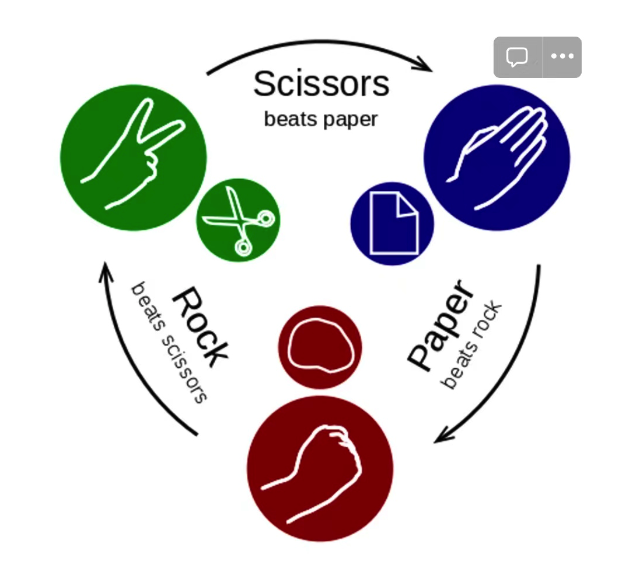
Traditional on-chain Rock-Paper-Scissors games usually follow one of two designs:
-
Player A creates a room, then Player B selects and joins it for a duel.
-
Off-chain randomized matchmaking: Players click "Play," and the system automatically pairs two players.
With Mods Protocol, players first mint Rock, Paper, or Scissors items. After obtaining these items, they have two options:
-
Stake them in a pool to earn a share of the prize rewards. The number of items in the pool is publicly visible.
-
Use them directly as in-game assets.
Let’s focus on the pool mechanic. When a player engages in a game, their chosen item battles against a randomly selected item from the pool. The winner takes the opponent’s item; in case of a tie, both items are forcibly staked into the pool and wrapped automatically. As the counterparty, the pool enables stakers not only to earn staking yields but also to win additional items—which are also immediately staked within the pool.
Sky Strife's P2Pool Model
Another project adopting the P2Pool approach is the recently popular Sky Strife.
Sky Strife (@skystrifeHQ) is a fully on-chain real-time strategy (RTS) game built using the MUD engine, developed by Lattice's internal design and engineering team. Its gameplay resembles traditional RTS titles. In a four-player match, each participant starts at one corner of the map in their main base. The objective is to gather more resources—called Gold (g)—to produce soldiers and ultimately eliminate other players. Different troop types with varying attack power and movement speed can be produced by spending Gold at the main base.
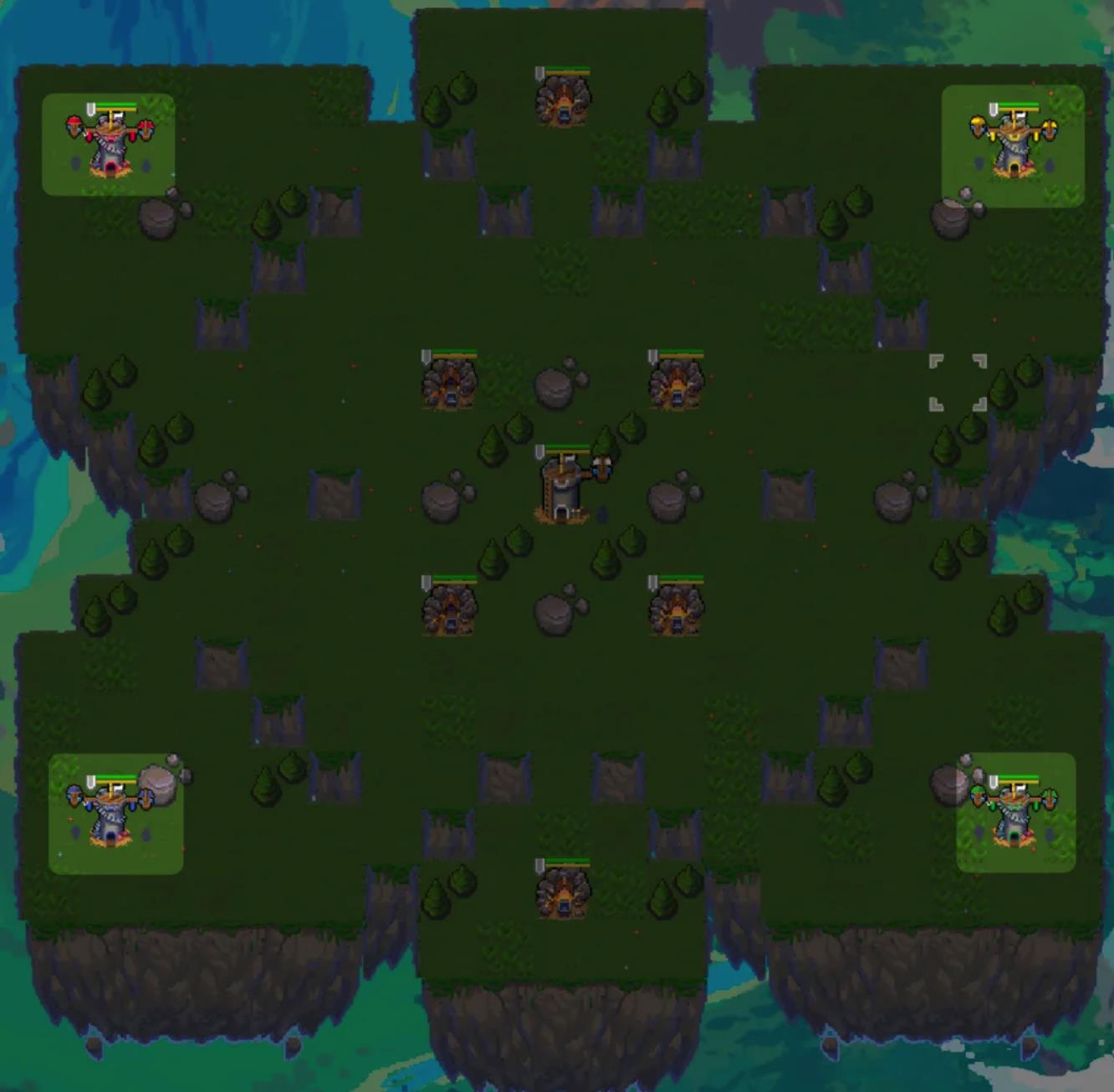
Currently, Sky Strife has issued ORB tokens only on testnet as the "Entrance Fee" for creating game rooms. All players start the season without any $ORB. Initial matches are therefore initiated at regular intervals by the "Sky Pool" smart contract. At present, the only way to obtain $ORB is by winning matches. Besides setting up game rooms (configuring entry fees, prize distribution, etc.), the "Sky Pool" has no authority over $ORB tokens—such as withdrawing or transferring them.
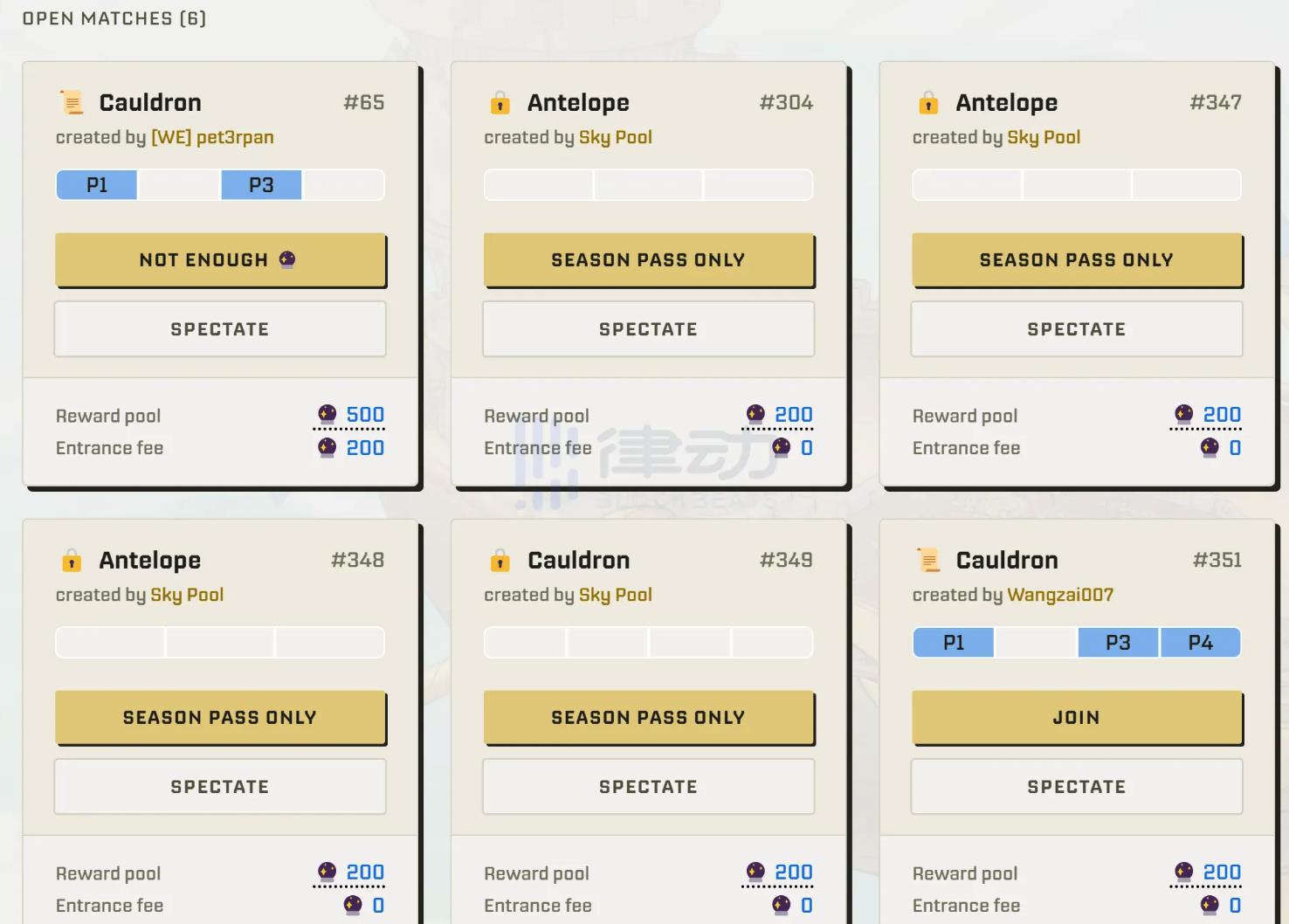
Comparing the Two Models
From the above analysis, we can see that the essence of the P2Pool model is essentially "real players versus smart contracts." In DeFi, matching real trading counterparties is inefficient, so liquidity providers pool their assets, and the smart contract acts as the pool’s representative to serve as the counterparty—greatly improving matching efficiency. Similarly, in on-chain games, finding real-time opponents suffers from low efficiency, so having a smart contract represent a pool as a counterparty offers a viable solution. This approach brings two main benefits:
-
Provides sufficient opponents. In turn-based games, players often struggle to find available counterparts when they want to play. A pool/smart contract ensures consistent availability.
-
Enables relatively fair token distribution. In DeFi, governance tokens are commonly distributed to users who provide liquidity to pools. Likewise, in on-chain games, players can earn tokens by contributing items to the pool or participating in matches hosted by the pool.
Upon closer inspection, however, Mods Protocol and Sky Strife differ significantly.
Recall how things work in DeFi: When Liquidity Providers (LPs) deposit token pairs into a pool, they increase its liquidity. When users borrow or trade from the pool, they effectively reduce its liquidity. In Mods Protocol, players contribute in-game items to the pool—acting as Props Providers—who enhance the pool’s playability. Here, real players directly compete against the pool. In contrast, Sky Strife does not require players to contribute game items. Instead, the smart contract simply opens a room where multiple players compete against each other—the pool acts merely as a neutral facilitator.
Anome's Asset Pool Model
Beyond Mods Protocol and Sky Strife leveraging pools to improve matchmaking, Anome attempts to bring DeFi-style asset pooling into on-chain gaming, innovating in tokenomics.
Anome (@Anome_Official) recently launched a TCG game with a novel idea: integrating gaming with DeFi. Players don’t need to buy NFT cards outright. Instead, they stake stablecoins to receive corresponding NFT cards. Different rarity tiers require different amounts of staked stablecoins, and NFTs can be swapped back to stablecoins at any time—ensuring player capital protection and enabling “buy and sell anytime” flexibility. If revenue isn't derived from direct NFT sales, how do developers profit?
During early development, the team encourages users to stake stablecoins to receive NFTs, gradually building up a liquidity pool. The funds in this pool are then deployed into DeFi protocols to generate yield, which supports ongoing game development. Once the game becomes engaging and mature, players begin spending ("pay-to-win" or in-game consumption), generating profits for both the development team and early NFT holders. Throughout this process, the staked funds continue earning DeFi yields.
In short, capital drawn in through gameplay forms a staking pool. With this pool, revenue can be generated via financial yield and in-game monetization—avoiding pure Ponzi-style tokenomics and instead earning income from external sources. This creates a hybrid model of Game + DeFi.
Join TechFlow official community to stay tuned
Telegram:https://t.me/TechFlowDaily
X (Twitter):https://x.com/TechFlowPost
X (Twitter) EN:https://x.com/BlockFlow_News












