Which U.S. state is the most friendly toward Bitcoin holders?
TechFlow Selected TechFlow Selected
Which U.S. state is the most friendly toward Bitcoin holders?
The Bitcoin Index is a new tool for Bitcoin enthusiasts seeking the perfect place to live.
 Navigating Web3 tides with focused insights
Authors: David Waugh, Dave Birnbaum
Translation: Luffy, Foresight News
Voting in elections is often seen as a civic duty, but statistically its impact on election outcomes is negligible. Research shows minimal policy differences between Republican and Democratic state governments across the U.S.
Politicians frequently claim that every election is "the most important of our lifetime" to rally their supporters. Yet, despite increased voter turnout, meaningful change remains elusive. Governments continue evolving, yet public trust in and satisfaction with government institutions keeps declining. Seventy percent of Americans do not fully trust the president; 74% believe economic conditions are worsening.
Vote With Your Money
Beyond ballots, individuals have other ways to influence change. For example, consumers “vote” with their money by choosing which goods and services to support, sending signals to entrepreneurs and companies about what the market wants produced.
A notorious example is Coca-Cola’s introduction of “New Coke” in 1985. Angry consumers rejected the new flavor. Some even launched campaigns urging the company to bring back the original formula. Within a year, Coca-Cola reversed course and admitted its mistake.
Today, marketers regard New Coke as one of history’s most famous product failures. But this episode also demonstrates the speed of consumer feedback loops and the power of voting with one’s wallet.
Vote With Your Feet
Another method is “voting with your feet”—moving to regions where cultural norms, economic opportunities, and other factors better align with personal values.
During the coronavirus pandemic, many Americans left states with strict business and school closure policies. A historic population shift occurred as people moved from states like California and New York to Florida and Tennessee. In 2020, California experienced its first population decline in over a century.
Harder Money 2.0
Bitcoin advocates take these actions further by completely abandoning fiat currency. However, this may present unique challenges depending on where they live. This raises the question: which locations best meet the needs of Bitcoin enthusiasts?
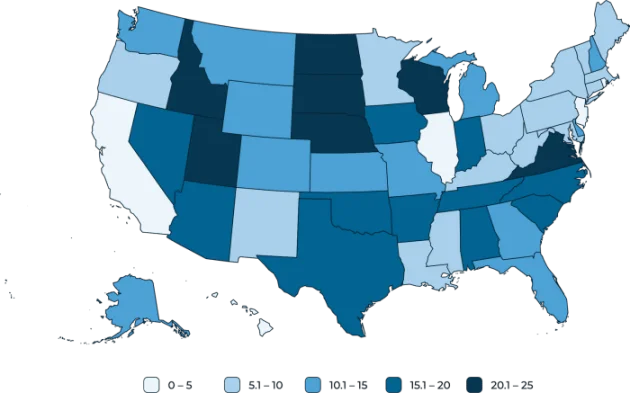
In seeking answers, we were inspired to compile our research into a report we call the Bitcoin Index—ranking all 50 U.S. states based on factors that Bitcoin holders might prioritize (on a scale of <0–100).
The Bitcoin Index
Inspiration for the index includes the Sound Money Defense League’s Sound Money Index and the Cato Institute’s Freedom in the 50 States Index. The Free State Project in New Hampshire—an initiative aiming to attract enough libertarians to influence state policy—is another source of inspiration. What sets the Bitcoin Index apart is that it was created by Bitcoin enthusiasts themselves.
Building the Bitcoin Index
The Bitcoin Index analyzes all 50 states using four broad categories (comprising nine metrics): cost of living, business friendliness, monetary freedom, and proactive positioning. Each category is worth up to 25 points, for a maximum total score of 100 per state. States may receive negative scores if policies strongly conflict with Bitcoin-related priorities.
Cost of Living
Cost of living is estimated through tax burden, electricity, and housing costs.
Business Friendliness
The business friendliness metric includes right-to-work status, business environment, and fiscal stability.
Monetary Freedom
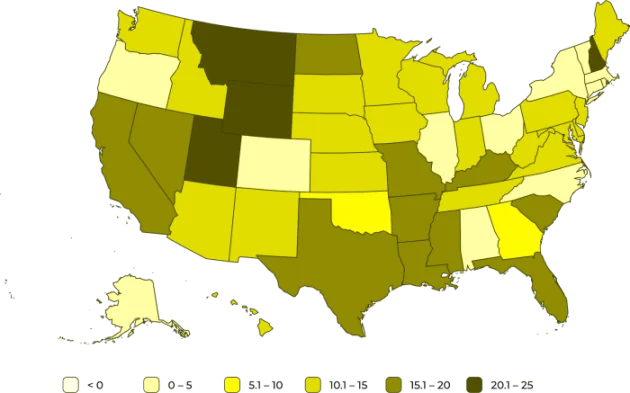
Monetary freedom is assessed based on requirements for money transmission licenses and cryptocurrency mining regulations.
Proactive Positioning
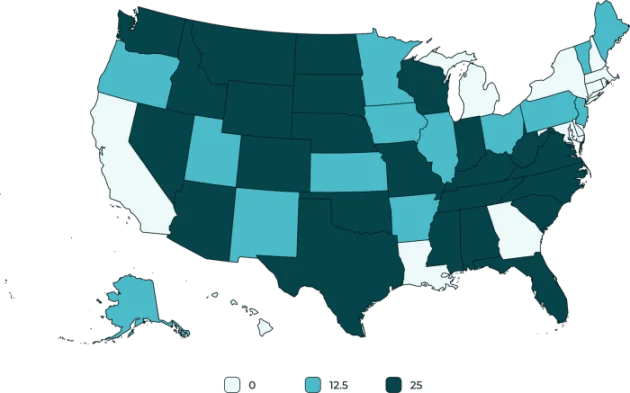
Proactive Positioning relies on a single metric capturing distinctions not reflected in traditional indicators—such as public officials’ statements supporting or opposing Bitcoin.
Using the Index
Technology enables greater freedom in choosing where to live and work, and the number of Bitcoin holders grows daily. As mobility increases and remote work becomes more common, governments must pay closer attention to the needs of Bitcoin holders when shaping policies.
It’s not far-fetched to imagine cities and national governments around the world explicitly crafting rules and regulations to attract Bitcoin enthusiasts. This has already happened in El Salvador—and our research on the Bitcoin Index reveals similar trends emerging in several U.S. states.
We hope the Bitcoin Index serves as a useful guide for the Bitcoin community in identifying ideal places to live, work, and raise families.
Join TechFlow official community to stay tuned
Telegram:https://t.me/TechFlowDaily
X (Twitter):https://x.com/TechFlowPost
X (Twitter) EN:https://x.com/BlockFlow_News
 @BitcoinMagazine