10,000-Word Analysis of Nostr: The Decentralized Social Networking Protocol
TechFlow Selected TechFlow Selected
10,000-Word Analysis of Nostr: The Decentralized Social Networking Protocol
The decentralized social networking space, where Nostr resides, is gradually becoming a hotspot in the blockchain and cryptography领域, particularly in terms of privacy protection and censorship resistance.
 Navigating Web3 tides with focused insights
Author: 0x00pluto
Question: What exactly is Nostr?
While digging deeper, I found a large number of online articles and resources (special thanks to the authors of these articles), so I've organized this information into a structured format.
On one hand, I hope this will be useful for others; on the other, it serves as a summary to enhance my own learning.
Because of passion, continuous learning and exploration continues~
First, let's introduce the project in plain language
Imagine Nostr as a boundless social plaza where everyone can freely speak, share, and listen—without a central broadcast tower or designated announcers. It’s a decentralized social network that doesn’t rely on any single server or company to store and manage data. Instead, it uses a distributed approach: anyone can set up their own "receiver" (Relay), much like tuning a personal radio, to receive messages from others.
In this network, your identity is protected by a pair of cryptographic keys—a public key and a private key—similar to your mailbox address and its physical key. Your address (public key) is visible so people know where to send messages, while the key (private key) remains secret, allowing only you to open and retrieve messages. Every message you send is digitally “signed” with your private key, proving you are the sender—just like signing a letter by hand.
Nostr resembles a vast ocean made up of countless tiny mailboxes. Anyone can toss messages into the sea, and others can choose to tune into your channel and pick them up. With no central control, each person becomes the master of their own voice, forming a truly user-owned social network.
If you're looking for a simple understanding of the project, what's above should suffice. Below is the full study note.
0. Project Overview
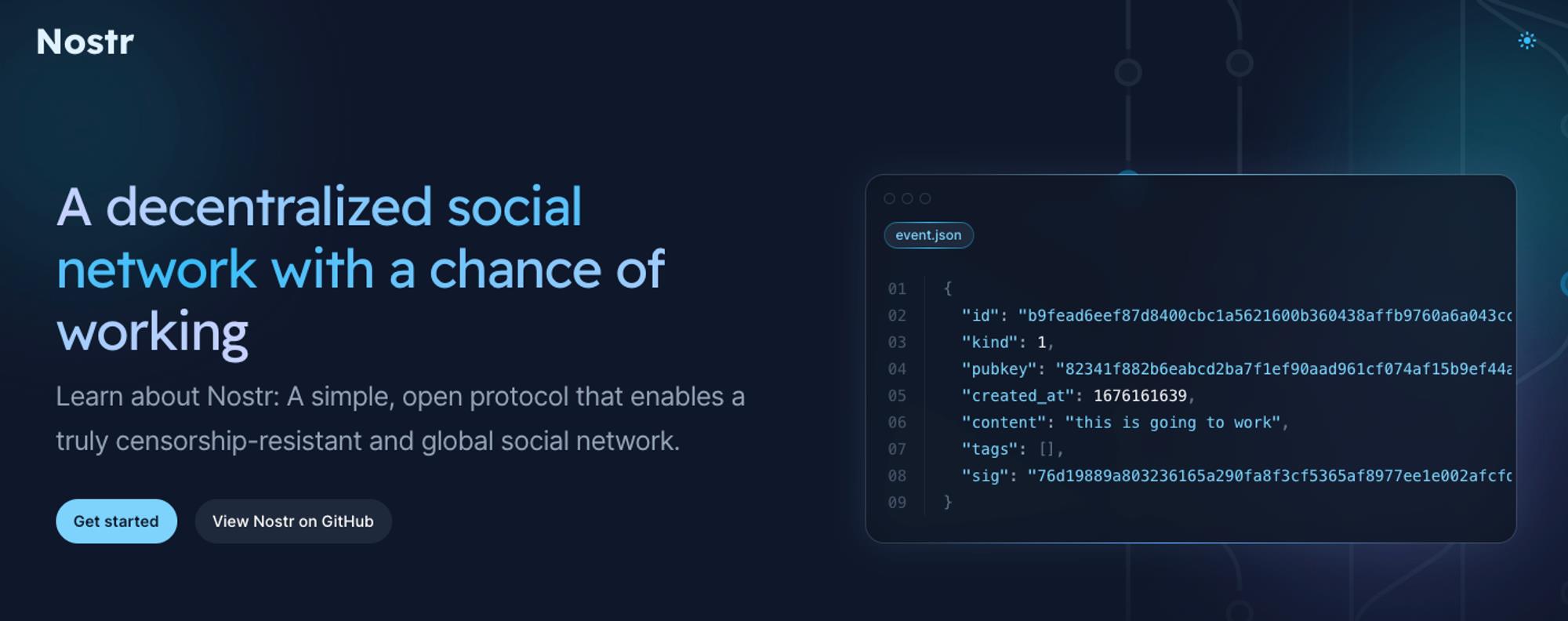
Nostr is a decentralized social networking protocol that provides an open, permissionless social platform through a distributed network.
1. Research Highlights
1.1. Core Investment Logic
Team: Specific details about the Nostr team members are limited. However, given the project’s open-source nature and decentralized philosophy, the team likely consists of cross-domain developers collaborating to advance the project.
Funding: As an open-source protocol, Nostr has no clear funding history. Open-source projects typically rely on community support, including donations, volunteer contributions, and potential sponsorships.
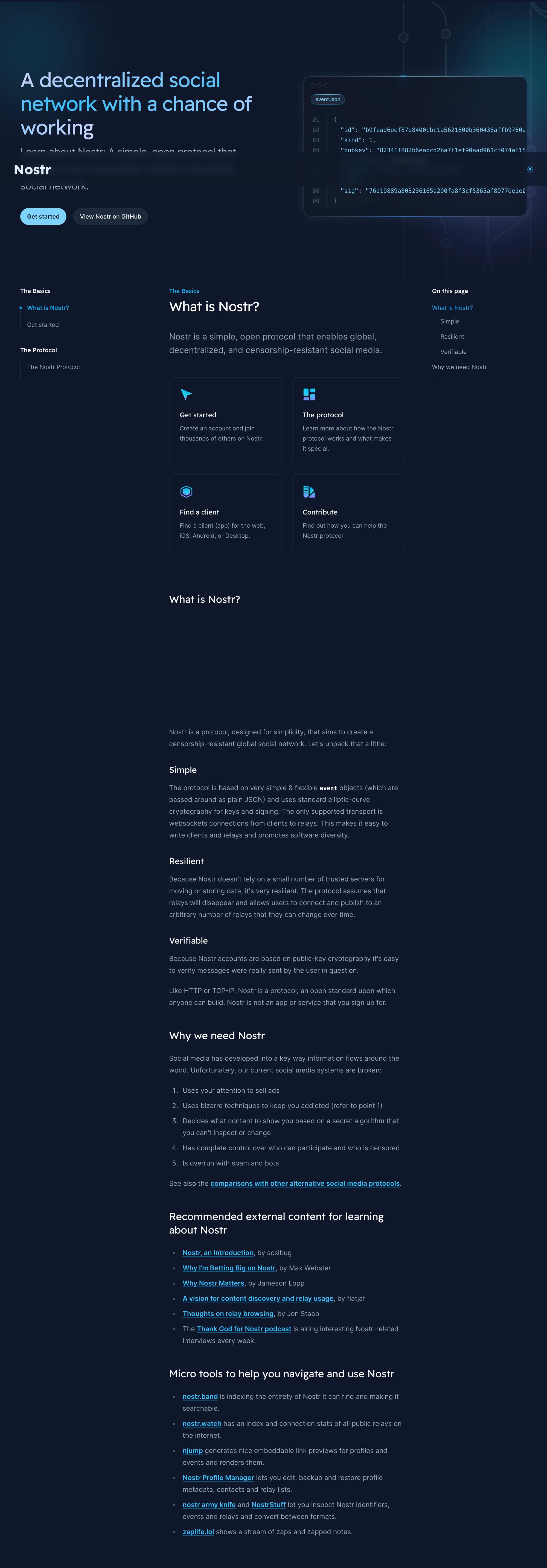
Technology: Nostr achieves its functionality using a simple data structure and network protocol. Events are the basic unit of data, and Relays serve as nodes that relay events. Users interact with Relays via clients to publish and subscribe to content.
Sector: The decentralized social network sector, where Nostr resides, is becoming increasingly prominent within blockchain and cryptography, especially regarding privacy protection and censorship resistance. This sector’s potential grows alongside rising awareness of digital autonomy and data ownership among users.
1.2. Valuation
Since Nostr is an open-source project without commercial operations, there is currently no defined market valuation. Traditional valuation factors such as user base, business model, revenue streams, and market potential either don't apply or lack transparency in the case of Nostr.
1.3. Project Risks
-
Technical Implementation Risk: Nostr relies on the stability and scalability of decentralized technologies. Any technical flaws could impact user experience and system security.
-
Market Adoption: Decentralized social networks have not yet gained widespread mainstream adoption. User habits and education remain significant challenges.
-
Regulatory Risk: Different countries and regions have varying legal stances toward cryptographic technologies and decentralized applications, leading to regulatory uncertainty.
-
Security Risk: As a decentralized network, Nostr may face threats such as 51% attacks or collusion among nodes.
In summary, Nostr as a decentralized social protocol presents a unique way of building social networks but also faces implementation challenges and market risks. Investors considering support for such projects should carefully evaluate these factors.
2. Project Overview
2.1. Basic Project Information
Nostr is a decentralized protocol designed to create a censorship-resistant global social network. It does not depend on centralized servers, instead using cryptographic keys and signatures to secure communications, and relies on multiple relay servers to forward posts.
2.2. Team Background
2.2.1. General Situation
The overall team situation for Nostr appears somewhat mysterious, as it lacks a traditional corporate team structure due to being a decentralized open-source project. Initially, discussions around Nostr began in a Telegram group in November 2020, where participants explored possibilities for decentralized social networks and ways to fund such initiatives. From the start, contributors considered effective strategies for promoting the Nostr platform.
2.2.2. Key Members
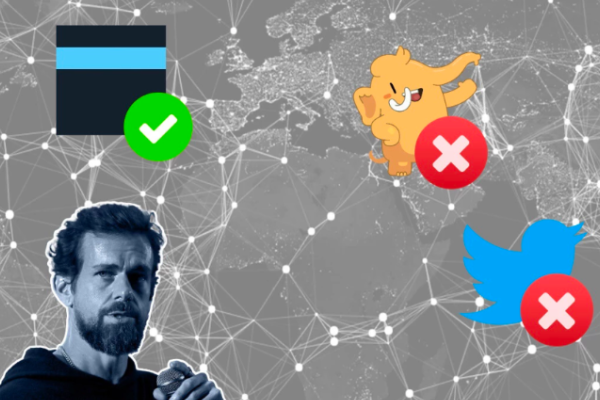
Nostr was founded by Fiatjaf, who is also a developer of Bitcoin and the Lightning Network, providing crucial technical support for the project. Jack Dorsey, former CEO of Twitter, has publicly supported Nostr and joined the project as a backer and advocate, contributing financial support. Both individuals are pivotal figures whose involvement has significantly boosted Nostr’s visibility and credibility.
2.3. Funding Status
As an open-source decentralized social network protocol, Nostr’s funding differs from traditional companies. Based on available information, Nostr has not undergone conventional funding rounds. In its early development phase, community members likely contributed voluntarily out of passion for the project and belief in decentralization. As the project evolved, Jack Dorsey donated 14 bitcoins to Nostr, representing one known source of financial support. Other investors, if any, remain unidentified.
2.4. Historical Development and Roadmap
2.4.1. Past Development
The Nostr project originated in 2020, quickly drawing attention for its decentralized architecture and censorship resistance. Its growth has been closely tied to active community participation, especially after Jack Dorsey’s endorsement significantly increased its visibility and accelerated development.
2.4.2. Current Progress
Currently, the Nostr protocol supports multiple client applications—for example, Damus, a decentralized social platform built on Nostr. The emergence and evolution of these apps indicate a growing Nostr ecosystem.
2.4.3. Development Plans and Roadmap
Although detailed development plans and roadmaps are not yet publicly available, Nostr’s openness and decentralized nature have attracted extensive exploration and innovation from developers and the community. Given current activity levels and trends, the Nostr ecosystem is expected to continue evolving, potentially spawning new business models and applications.
3. Project Analysis
3.1. Project Background
The emergence of Nostr stems from multiple factors. First, it represents a reflection on and innovation beyond existing social media models, particularly in terms of anti-censorship and decentralization. Second, Nostr responds to concerns over data privacy violations and censorship policies enforced by centralized platforms. Against this backdrop, Nostr aims to redefine online social experiences through a decentralized approach, enabling users to bypass control and censorship by centralized social media corporations.
3.1.1. Development Context
The design philosophy behind Nostr challenges existing social media paradigms, especially in pursuit of free speech and censorship resistance. Due to increasing concerns over surveillance and privacy on centralized platforms, users are seeking more open and free alternatives. Nostr’s core idea is to provide a censorship-resistant social experience through a decentralized network protocol.
3.1.2. Technical Background
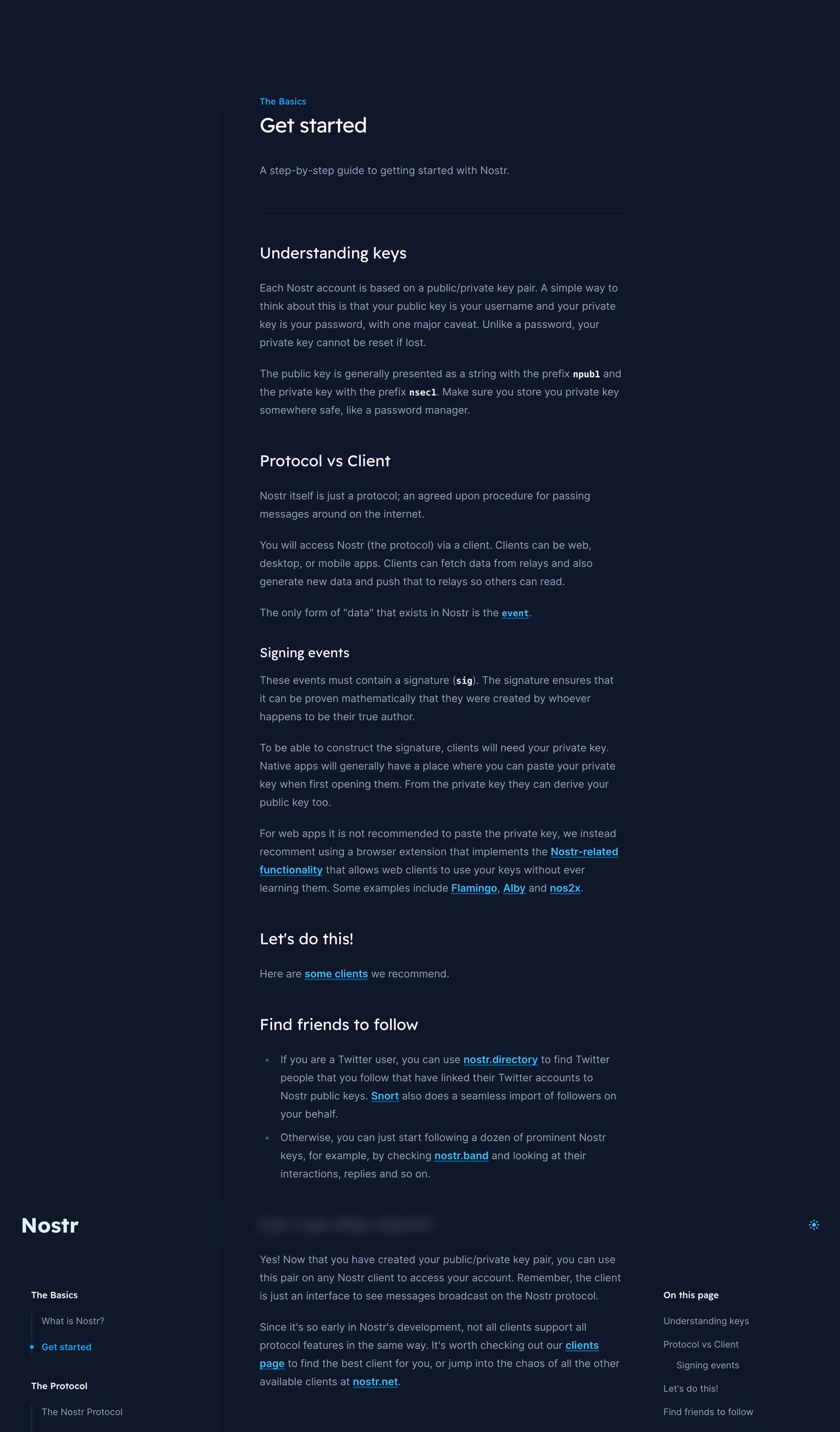
Technically, Nostr employs a public-private key pair system for accounts, replacing traditional usernames and passwords with a mechanism similar to cryptocurrencies. Public and private keys enhance user anonymity and security. The key pair forms the foundation of user identity: the public key acts like a username, while the private key signs messages, ensuring authenticity and integrity. Nostr operates without central servers, relying instead on clients and relays. Relays forward messages between users but do not store data permanently, eliminating single points of failure or censorship.
This technical framework challenges centralized platforms’ control over user data and their ability to censor content. Such designs give users greater autonomy and freedom of expression. Furthermore, Nostr’s architecture and philosophy align closely with cryptocurrency and Web3 ideals, which partly explains its traction within crypto communities.
3.2. Project Principles
At its core, Nostr aims to establish a simple, open-source decentralized social protocol for creating a global, censorship-resistant social network. Nostr operates based on several foundational concepts: public-private key pairs, clients, and relays—all essential components supporting the protocol.
Public-private key pairs form the basis of Nostr accounts, akin to cryptocurrency authentication methods. The public key functions as a username, and the private key acts as a password. This ensures identity security and privacy, though losing the private key means permanent loss of access—unlike traditional systems that allow password resets.
Nostr operates without central servers, leveraging cryptography and digital signatures. Each user runs a client—either locally or via web—and interacts with relays to publish and update content. Users sign content with their private keys and send it to multiple relays, which can be hosted by others or self-operated. To receive updates, users query these relays. This design allows anyone to run a relay, simplifies data transmission, and eliminates the need to trust relays since all signature verification happens at the client level.
Unlike platforms like Twitter, which may restrict users due to business models or censorship policies, Nostr empowers users to control their data and reduce reliance on third-party services. The project’s key principles lie in its decentralized structure and key-based identity verification, aiming to create a persistent, uncensored, and authority-free social space—enabling free communication and publishing without compromising privacy or security.
3.3. Technical Features
Nostr leverages several key technical features to realize its vision of a decentralized social network. It adopts a unique service framework comprising clients and “relays.” In this model, clients connect to one or more geographically distributed relays, which operate independently and do not communicate directly with each other.
This structure enables clients to function independently of both each other and the relays, while relays act primarily as temporary data storage points. Users can privately share their relay URLs through centralized platforms or software, allowing others to load data stored on those relays via Nostr client apps and engage in conversations.
To use Nostr applications, users must meet two requirements: download a Nostr client and subscribe to a relay. They can either host their own relay server or use existing public relays. Some “public relays” even offer registration features, generating key pairs for users without requiring them to set up their own infrastructure.
From a technical standpoint, when a client sends data to a relay, it must send that data to all subscribed relays per protocol standards (though not strictly enforced). Regarding accounts, Nostr user identities are independent of relays and can be generated locally in the client. The private key serves as the password, and the public key acts as the identifier.
For data transmission, clients and relays communicate via WebSocket using JSON-formatted messages. Standard message format follows a simple structure: ["command", param, param...]. For instance, when publishing an event, the client uses the "EVENT" command along with a JSON-formatted event object, with specific behavior determined by the "kind" parameter value.

3.4. Ecosystem Applications
The Nostr ecosystem includes multiple projects. Damus, an iOS app based on the Nostr protocol, offers core social media features such as home feed, direct messaging, search, and notifications. Another application, Amethyst, available only on Android, provides group chat functionality. A key feature across these apps is that users don’t need accounts or passwords—they log in using their private keys, with public keys serving as identity IDs.
Beyond these, Nostr recommends various frontend social apps such as Anigma, Branle, Nostr.ch, and Nostros, offering diverse interfaces and environments. Overall, the Nostr ecosystem now encompasses 46 projects, including niche tools like NIP-05 (a unique domain naming proposal), Jester (a Nostr-based online chess game), Blockcore Notes (a note-taking app supporting Nostr and Web5), and NostrID (an iOS app for managing Nostr IDs).
Regarding operational flow, Nostr focuses on providing social infrastructure at the protocol layer, leaving productization to third-party apps. Social activities across different apps remain interoperable, making the Nostr ecosystem both decentralized and flexible.
3.5. Project Data
Since its inception, Nostr has shown steady growth. Discussions about the project began in a Telegram group on November 16, 2020, focusing on decentralized social networking and funding mechanisms. Over the following months, the team developed browser-based applications and discussed technical aspects like private keys and standardized event types. In December 2022, Jack Dorsey, former CEO of Twitter, joined as a supporter and spokesperson, dramatically increasing attention. GitHub stars for the Nostr protocol surged accordingly. On the user front, the Damus app surpassed 720,000 users within days of launch. These metrics reflect Nostr’s trajectory from initial concept to growing user acceptance.
4. Industry Potential and Market Space
4.1. Sector Analysis
4.1.1. Project Classification
Nostr falls under the category of social media protocols, aiming to solve issues of censorship and data ownership prevalent in centralized platforms through decentralization.
4.1.2. Market (Sector) Size
Since the early 2000s, rapid growth in social media has created giants like Twitter, WeChat, and Instagram. With the rise of decentralization, social protocols are gaining focus for traits like censorship resistance and immutability—offering ample room for projects like Nostr to grow.
4.1.3. Core Competitive Factors
Decentralized social protocols like Nostr compete with traditional platforms primarily through decentralization, permissionlessness, and censorship resistance. These attributes help attract users disillusioned with centralized social media monopolies.
4.2. Competitor Analysis
As a decentralized social network protocol, Nostr faces competition from projects like ActivityPub, Farcaster, and Lens Protocol. These platforms also aim to build decentralized social ecosystems, each with distinct technical approaches and community strategies. Nostr’s competitive edge lies in its simplicity, scalability, and strong emphasis on privacy and user sovereignty.
5. Preliminary Value Assessment
5.1. Key Questions
Question 1: Which operational stage is the project in?
Nostr is currently in its early development phase. Since its inception in November 2020, the protocol has gradually matured. By early 2023, Nostr and its client Damus experienced explosive user growth, with public keys exceeding 500,000—indicating strong momentum.
Question 2: What are the main operational variables?
Key operational variables include the simplicity of its technical architecture, solutions to user trust issues, and its non-tokenized economic model. It operates by enabling users to send information via public keys in the simplest possible way. Growth and community formation depend on Nostr’s censorship resistance and openness—factors that remain difficult to quantify.
Question 3: How is the project managed and governed?
Clear information on Nostr’s management and governance structure is currently unavailable. The project’s philosophy leans toward decentralization and libertarianism, assuming minimal client and relay complexity, and leaving economic incentives to market forces.
Question 4: Does the project have solid competitive advantages?
Nostr’s strengths lie in its minimalist design and censorship resistance. Users can freely switch between multiple relays, preserving communication freedom and privacy. Additionally, integration with Bitcoin and the Lightning Network offers unique advantages.
Question 5: How do Relays work? Who can run them?
A Relay, or forwarding node, is an essential component of the Nostr protocol responsible for propagating user messages. Any individual or organization with a server can set up their own Relay. The process is straightforward: users can deploy on cloud servers or VPS hosts, often using free trial services to test without cost. A domain name must be registered and pointed to the server’s IP address.
Operationally, users remotely access the server via SSH, install tools like Umbrel, and use a single command to deploy the Nostr Relay app. After installation, they can access the backend via a web browser, install the relay from an app store, configure settings, and begin operating the relay.
This streamlined process lowers technical barriers, enabling anyone interested in decentralized social networks to contribute to and strengthen the health and resilience of the Nostr network.
Question 6: What is Nostr’s relationship with blockchain?
Nostr’s relationship with blockchain technology is indirect. While sharing the ethos of decentralization, their mechanisms differ. Nostr is an open-source decentralized social network protocol—not a blockchain project—but rather infrastructure for decentralized applications. The protocol comprises clients and relays. Clients handle message signing and verification, operated by users. Relays capture, store temporarily, and forward messages between connected clients. Anyone can run a relay, but unlike blockchains, relays do not communicate directly with each other.
Nostr allows flexible use of tags and event kinds ("kind"), enabling users to customize interactions for specific scenarios. For example, referencing another post by including its ID in a tag, or marking a post for deletion by referencing its ID. This flexibility enhances Nostr’s functional adaptability and extensibility.
Crucially, Nostr differs from traditional blockchain projects: it does not rely on blockchain technology to maintain the network or validate transactions. It does not use a chain structure for data storage, instead depending on relays for data transmission and caching. Thus, Nostr requires no mining or cryptocurrency mechanisms to operate. Its decentralization arises from network topology and open-source principles—not blockchain technology.
In summary, Nostr is a blockchain-independent decentralized social protocol. Its innovation lies in enabling open participation from anyone. Though inspired by decentralization, it achieves its goals through a unique client-relay architecture rather than blockchain. This allows anyone to build and operate relays, supporting the development of decentralized social platforms.
6. SWOT Analysis
Strengths
-
Nostr is an open social protocol, meaning anyone can build or modify clients, fostering innovation.
-
It introduces a novel economic model via Bitcoin tips, reducing dependence on advertising compared to traditional social media.
-
Nostr has attracted high-profile supporters like Jack Dorsey, boosting its visibility and credibility.
Weaknesses
-
Currently, applications in the Nostr ecosystem are in early stages, with incomplete features and bugs affecting user experience.
-
Insufficient user and content creator adoption may limit growth and influence.
Opportunities
-
As a decentralized protocol, Nostr has the potential to disrupt existing social media monopolies and attract users prioritizing privacy and free speech.
-
It can integrate with other technologies like the Lightning Network to expand functionality and use cases.
Threats
-
Regulatory pressure on cryptocurrency and decentralized services poses ongoing challenges.
-
Established social media giants may respond by suppressing or copying Nostr’s distinctive features, undermining its uniqueness.
Join TechFlow official community to stay tuned
Telegram:https://t.me/TechFlowDaily
X (Twitter):https://x.com/TechFlowPost
X (Twitter) EN:https://x.com/BlockFlow_News
 @0x00pluto