A Quick Guide to Understanding Cross-Chain NFTs: Principles and Related Projects
TechFlow Selected TechFlow Selected
A Quick Guide to Understanding Cross-Chain NFTs: Principles and Related Projects
Holograph is working to establish hNFTs as the standard for tokenizing real-world assets, decoupling the asset layer from the blockchain layer.
 Navigating Web3 tides with focused insights
By: WILLIAM M. PEASTER
Compiled by: TechFlow
When it comes to moving NFTs from one blockchain to another, there isn't actually a single "correct method." So far, we've seen various different approaches, each with their own trade-offs.
For me, the first approach that comes to mind is equivalent bridging—like moving an NFT from Ethereum to a chain that's protocol-level equivalent to Ethereum, such as the Optimism Layer 2 scaling solution.
Indeed, after this year’s Bedrock upgrade, Optimism has nearly identical functionality to Ethereum. Therefore, bridging an NFT from Ethereum to Optimism is almost like bridging an NFT from Ethereum to Ethereum itself.
The Quix marketplace used to offer such NFT bridging, but now may only serve as a theoretical example—the last time I tried it, it didn’t work.
Admittedly, we haven’t yet seen much equivalent bridging in the NFT ecosystem. More common instead is the more primitive but quite practical “burn and mint” method for migrating entire collections.
“Burn and mint” means that a collection holder can burn their NFT on one chain and receive an officially sanctioned re-mint on a new chain. This is often referred to as a “bridging” experience. An example is y00ts, which used this method twice—first migrating from Solana to Polygon, then from Polygon to Ethereum.
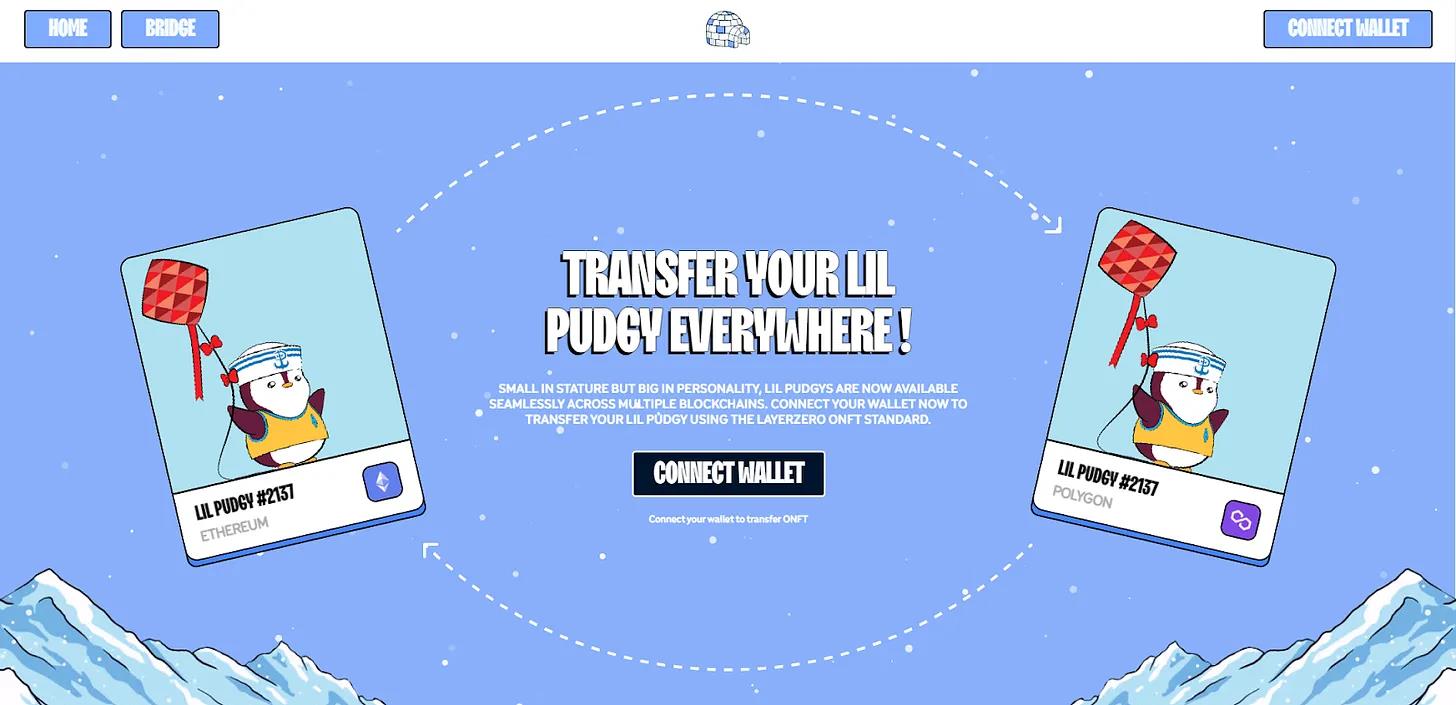
Another recently popularized method is “lock and mint,” promoted by interoperability protocol LayerZero’s Omnichain NFTs. You might have already seen this in action via the Lil Pudgys Bridge, which supports transfers to Arbitrum, BNB Chain, and Polygon.
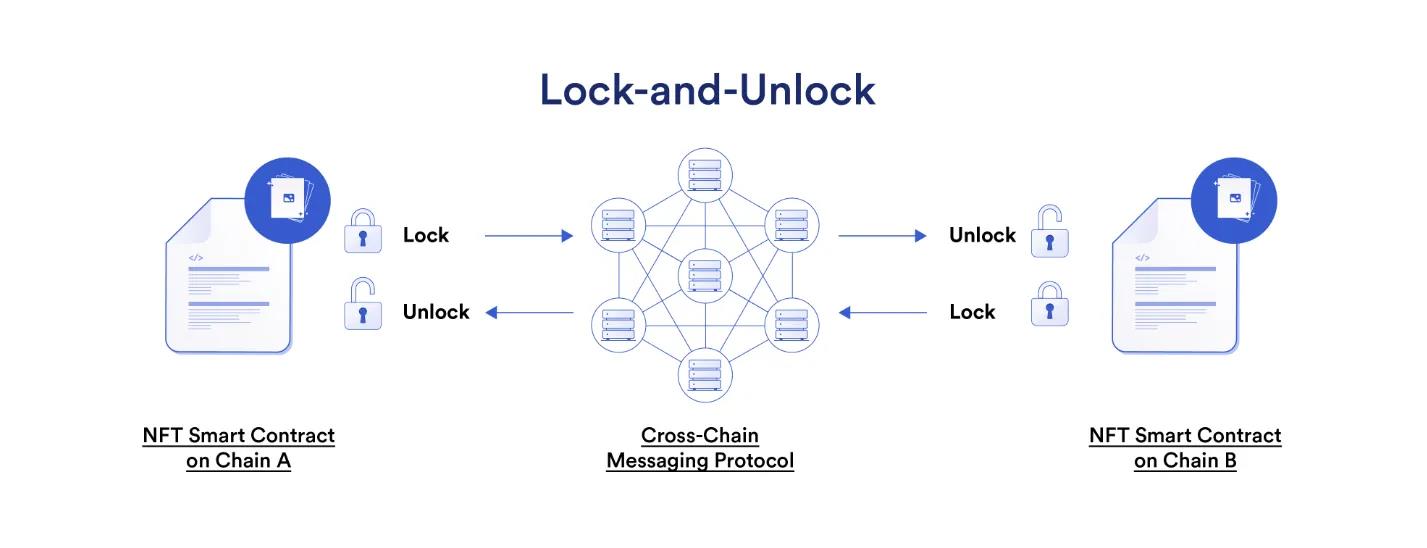
This architecture works by using LayerZero’s smart contract system to convert regular NFTs into ONFTs (Omnichain NFTs), which can then be deployed across any chain supported by LayerZero.
Then, for cross-chain transfers, the ONFT is locked on the source chain and minted on the destination chain. To return, the ONFT is locked on the new source chain, and the original NFT is unlocked back on the original source chain.
However, LayerZero is just one interoperability protocol. A notable project actively supporting both LayerZero and other messaging protocols is Holograph.
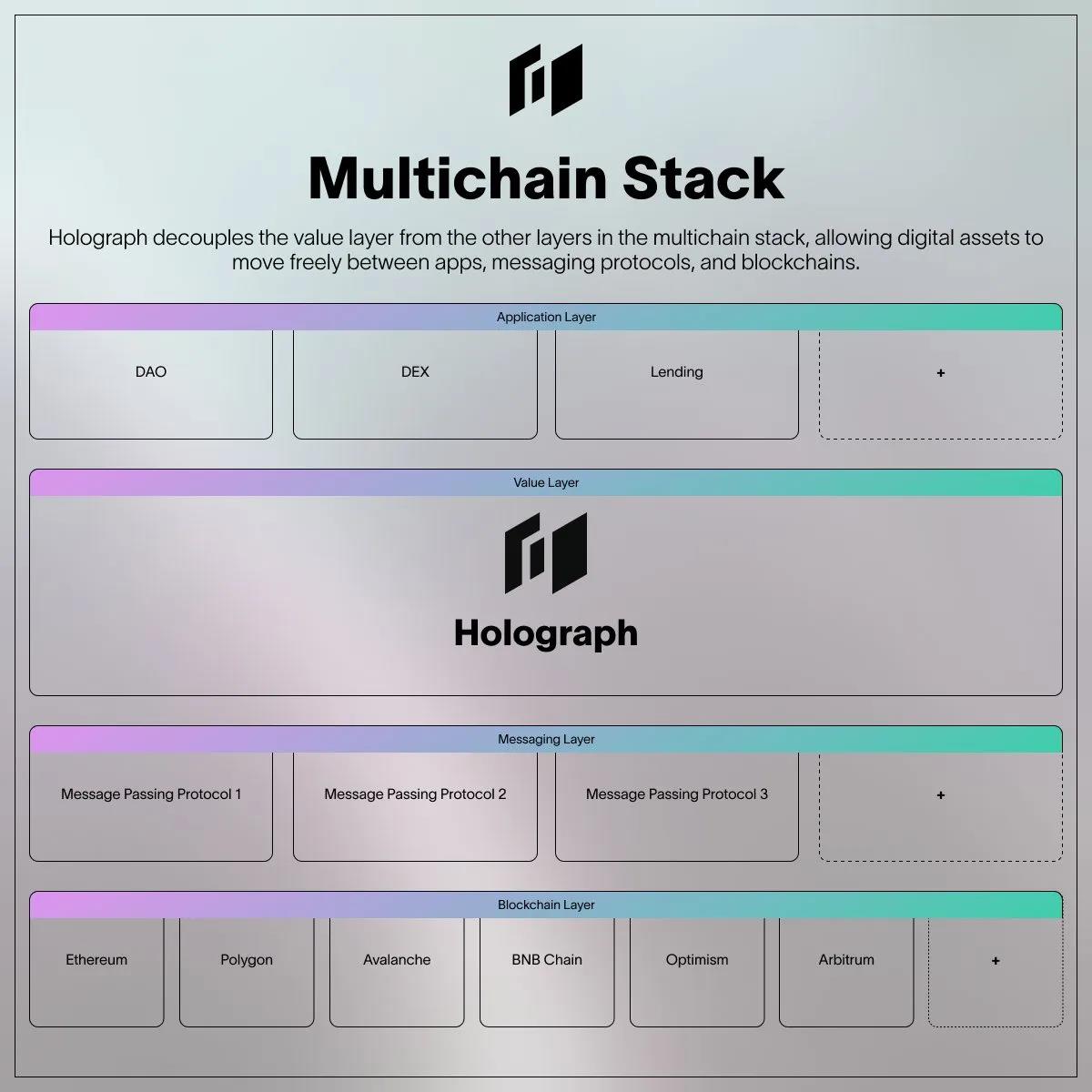
Specifically, Holograph has created a new primitive known as "Holographic Assets," one instance of which is hNFTs—enabling users to mint NFTs that maintain the same contract address and token ID across all EVM environments, thus allowing seamless transfer between different blockchains.
Holograph is working to establish hNFTs as a standard for tokenizing real-world assets, aiming to “decouple the asset layer from the blockchain layer.”
Yet regarding other messaging protocols, another showing significant promise is Chainlink’s new Cross-Chain Interoperability Protocol (CCIP). Of course, the CCIP system aims to do more than just support cross-chain NFTs—it excels across a range of use cases such as cross-chain gaming, cross-chain NFTfi, and universal NFTs. DeFi project Affine is specifically leveraging this system to support its Affine Pass NFTs.
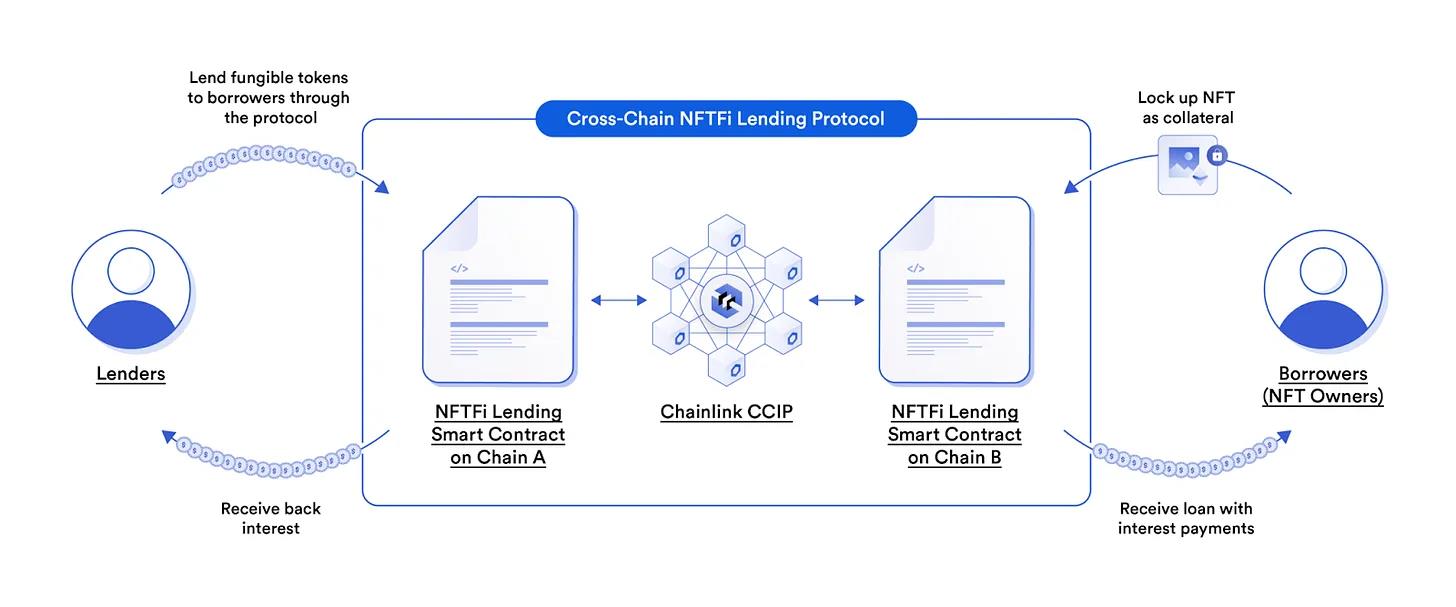
Thus, while some initiatives like CCIP hope to provide a universal way to achieve cross-chain compatibility, others are building custom cross-chain solutions tailored to their specific needs.
In this regard, I’m thinking of the on-chain RPG Pirate Nation, which developed a custom “mirroring” system enabling “trade on L1 / play on L2”: original Founder Pirate NFTs remain on Ethereum, while their mirrors enable gas-free gameplay on Arbitrum Nova.
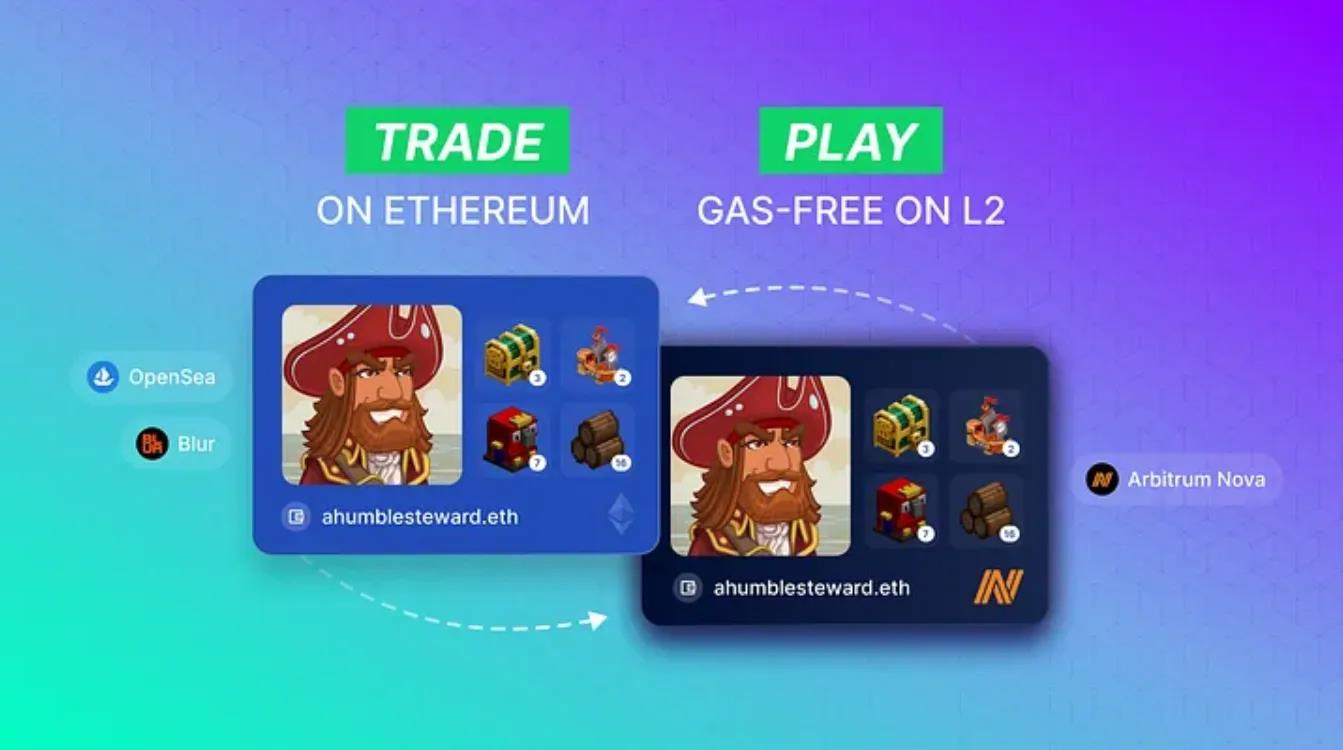
This concept brings us back to having NFTs on one chain while being able to “use” them on another without physically moving them across chains. This utility is enabled by services like UMA’s Optimistic Oracle, which can reference NFTs on one chain while executing actions on another.
Clearly, when it comes to NFTs, the boundaries between different blockchains are gradually blurring, with various cross-chain efforts beginning to emerge. In the short term, this space will face numerous challenges and obstacles—but also unlock new possibilities, innovations, and experiences.
Join TechFlow official community to stay tuned
Telegram:https://t.me/TechFlowDaily
X (Twitter):https://x.com/TechFlowPost
X (Twitter) EN:https://x.com/BlockFlow_News
 @WPeaster