








Leading the Web3 Wallet Race: 3 Core Product Principles of OKX Wallet
TechFlow Selected TechFlow Selected
Leading the Web3 Wallet Race: 3 Core Product Principles of OKX Wallet
As a committed builder and leader in Web3, the OKX Web3 Wallet continues to meet diverse user needs in its own way.
 Navigating Web3 tides with focused insights
Elon Musk, Steve Jobs, and Allen Zhang are rightfully regarded as the "godfathers" of product management. They built the tech giants of the Web2 era—Tesla, the world's most valuable automaker; Apple, the world's most valuable technology company; and WeChat, the world's largest messaging platform. Their product philosophies—returning to first principles, relentless innovation, and designing from human needs—have profoundly influenced generations of product managers. Even amid the transition from Web2 to Web3, these principles remain universally relevant.
In leading Web3 products like the OKX Web3 Wallet, one can clearly see the inheritance and evolution of excellent product concepts from the Web2 era—innovation and user-centric design. As a product under the "OKX" brand, the OKX Wallet team carries both prestige and pressure. While gaining attention through the OKX name, they are also held to higher and more rigorous expectations. In an environment where MetaMask leads and competitors race closely behind, the OKX Web3 Wallet team has meticulously refined their product—from minor UI details to overarching product models and strategy—steadily advancing through focused research and development. Over three years, they have risen from inception to center stage, becoming builders and leaders in the Web3 wallet space. According to data from DefiLlama, nearly all protocols ranked within the top 100 DeFi projects have integrated with the OKX Web3 Wallet.
In 2008, inspired by Bitcoin’s decentralization ideals, awareness around personal data sovereignty and trust began awakening. The Web3 wave became unstoppable, with freedom and fairness ultimately emerging as defining values of the era. As a leading Web3 product today, this article uses the OKX Web3 Wallet as a starting point to explore new Web3 product philosophies—including its underlying perspectives on users, values, and worldview.
Deeply Understanding and Meeting User Needs
“Every day, 500 million people tell us we’re doing it wrong, and another 100 million want to teach me how to build products,” said Allen Zhang, founder of WeChat, at the 2019 WeChat Open Class. Despite countless voices, no one holds greater authority on product philosophy in China than Allen Zhang. Tencent’s Q3 2022 financial report revealed that WeChat reached 1.309 billion monthly active users.
Zhang once noted that when building products, we often only meet users’ “functional needs.” Such products aren’t useless—but their value is limited. If your product not only satisfies functional needs but also taps into psychological needs—the deep-seated human desires such as greed, anger, and delusion—then it has the foundation to go viral.
The pinnacle of Web2 products lies in understanding and fulfilling human nature—understanding and meeting user needs. This same principle applies to Web3. Regardless of whether Web3 seeks fairness, freedom, or trust transformation, returning to the essence of product means serving users. Yet many current Web3 products are straying from this essence—building for Web3’s sake, pursuing decentralization without purpose, or passively iterating to follow competitors, rather than starting from genuine user needs. For example, many Web2 gamers show little interest in blockchain "Play-to-Earn" (P2E) games, while crypto yield farmers love them—suggesting P2E may not truly align with mainstream gamer demand. Products must start by identifying and understanding their target users.
OKX Web3 Wallet consistently begins with user needs, rapidly translating real user demands into product features—never mistaking internal assumptions for actual user needs. In fact, this philosophy aligns closely with Elon Musk’s first principles thinking—returning to the root of the problem. For instance, many crypto users want to interact early with new projects to qualify for potential airdrops—seeking high returns at low cost and risk. However, discovering such projects is difficult and time-consuming. To address this, OKX launched Cryptopedia—a one-stop DApp discovery and reward platform—that regularly hosts themed events across different blockchain networks, partnering with projects to set interactive tasks. This reduces search costs and enables users to engage precisely during fragmented moments.
Similarly, many users wish to participate in on-chain investing, but face challenges due to fragmented project quality and lack of intuitive comparison tools. In response, OKX Web3 Wallet introduced its DeFi section—an all-in-one on-chain investment platform. Aggregating over 10 blockchains, 60+ projects, and 200+ protocols, it supports V3 liquidity pools, cross-chain one-click investments, automatic yield calculation, and gas optimization—making DeFi investing exceptionally simple.
The Web3 industry itself breaks traditional frameworks and offers limited reference points. Creating truly valuable services requires deep technical, user, and use-case understanding. By stepping beyond conventional thinking early and maintaining a user-first approach, the OKX Web3 Wallet team has earned the trust of both industry partners and users.
As of September 20, according to OKX Web3 Wallet’s latest ecosystem overview, it supports over 70 blockchains in its wallet module, integrates more than 120 DeFi protocols, aggregates over 30 NFT marketplaces, and covers Game, Social, MEME, Tool, and other ecosystems—totaling support for over 300 platforms and protocols.
User Asset Security Is the First Principle
What comes after meeting user needs? Undoubtedly, product security. Just as safety is the lifeline of automakers like Tesla, protecting user assets is the core principle of the OKX Web3 Wallet. Web3 solves trust issues through decentralization, yet frequent on-chain security incidents and incomplete decentralization have triggered trust crises. As the primary tool for managing user assets, Web3 wallets empower individuals with data sovereignty, but also expose them to risks such as lost or stolen private keys, airdrop scams, malicious contracts, and phishing links—both on-chain and off-chain.
Since launch, OKX Web3 Wallet has gradually built a robust 7×24 security system, maintaining a zero-security-breach record. Wallet-related security issues fall into two main categories: from the user side, loss or theft of private keys; from the wallet side, misuse of user keys or insider theft. To prove it does not misuse private keys, OKX Web3 Wallet has fully open-sourced its multi-chain signature SDK, MPC keyless wallet core algorithm, AA wallet, and BRC-20-S standard. For user-level key loss or theft, it supports multiple backup methods—iCloud/Google Drive cloud storage, manual backups, hardware wallets—and compatibility with major hardware wallets like Ledger, Keystone, and Onekey—ensuring users retain full control over their keys. Moreover, OKX Web3 Wallet pioneered MPC keyless wallets and AA smart contract wallets with social recovery, transforming private key security “from prevention to cure.”
On-chain security threats represent another major challenge beyond the wallet’s own integrity. Like telecom fraud, these third-party-originated threats fall outside traditional product security scope—but OKX Web3 Wallet treats them as critical, building a powerful defense system: KYT (Know Your Transaction) Tianyan (Sky Eye) Security System. One key feature is risk authorization alerts. With a database of over 3.2 billion labeled on-chain addresses—continuously updated—the system effectively detects and automatically warns users about interactions with malicious addresses or suspicious transactions. Future enhancements will include tiered labeling: whitelisted addresses receive neutral notifications, graylisted trigger warnings, and blacklisted addresses are blocked outright. When users encounter scam tokens (“Pi Xiu” schemes) or phishing sites, the KYT system automatically identifies and alerts them to prevent risky transactions.
Another useful feature is one-click authorization management. If a user accidentally grants permissions to a risky contract during on-chain interaction, they can use OKX Web3 Wallet to manage and revoke those authorizations in bulk, proactively clearing risks before damage occurs.
Recently, OKX Web3 Wallet added support for Flashbots, protecting users against MEV (Maximal Extractable Value) attacks. Users can enable MEV protection in ETH chain SWAP transactions via the “More” menu. This routes transactions through trusted third-party nodes (e.g., Flashbots’ private pool) instead of the public mempool, ensuring transaction order cannot be manipulated.
The entire Web3 industry and every project within it operate around 'trust.' Trust is a core product message conveyed by OKX Web3 Wallet—and a cornerstone of its long-term brand strength. When trust creates a positive feedback loop between users and the product, it could propel OKX Web3 Wallet toward becoming a 'super app' in Web3. But the prerequisite for trust is clear: the product must be secure enough.
Sustained Innovation, Leading Innovation
In Web2, innovation was Steve Jobs’ unwavering commitment—and the key to Apple becoming the world’s most valuable company. In Web3, innovation is the core driving force behind OKX Web3 Wallet and the secret to its continued leadership.
In 2023, terms like 'first,' 'pioneer,' and 'industry-first' have become hallmarks of OKX Web3 Wallet, reflecting its innovative spirit. For example, in April, OKX Web3 Wallet became the first multi-chain wallet to support Ordinals BTC NFTs and introduced a unique one-click network fee payment function—allowing users to pay Gas fees for BTC NFT transfers using balances from other addresses within the same wallet, ensuring safe NFT transfers.
Also in April, OKX Web3 Wallet launched its MPC keyless wallet—the first 2-out-of-3 multi-chain keyless wallet on the market, supporting 37 blockchains. It features an industry-first “emergency exit” function: in urgent situations, users can export their private key and withdraw assets using just two self-managed key shards, achieving true decentralized, self-custodial, keyless ownership. Users can create this wallet directly via their OKX account—no need to manage complex private keys or seed phrases—making entry into the decentralized Web3 world effortless.
On August 2, OKX Web3 Wallet boldly launched its AA smart contract wallet—an event hailed by the industry as the “iPhone moment” for Web3 wallets. By lowering barriers to entry and introducing new functionalities, it opens vast possibilities and could permanently reshape the blockchain landscape—much like the iPhone didn’t invent smartphones but made them accessible to the masses.
Innovation is deeply embedded in every aspect of OKX Web3 Wallet—from design and functionality to user experience. Reviewing its app version history is essentially reading a chronicle of continuous innovation.
Dream Big, Stay Passionate, Keep Building
Beyond the three principles discussed above, OKX Web3 Wallet also adheres to other core tenets: simplification, one-stop access, comprehensiveness, and never making choices for users.
Today, abstract Web3 concepts, cumbersome operations, and laggy interfaces remain major obstacles preventing Web2 users from transitioning to Web3. Vitalik Buterin has tested purchasing coffee with ETH in various locations worldwide, but several attempts failed due to gas limits and network latency. He acknowledged the gap: compared to seamless Web2 experiences, Web3 usability remains poor and requires significant improvement. Poor UX is Web3’s original sin. OKX Web3 Wallet remains committed to simplification, striving to onboard one billion users into Web3.
For example, to streamline gas fee payments, OKX Web3 Wallet introduced one-click “Gas Swap,” enabling instant gas purchases anytime, anywhere. Supporting over 70 blockchains allows seamless switching across ecosystems—greatly enhancing user experience.
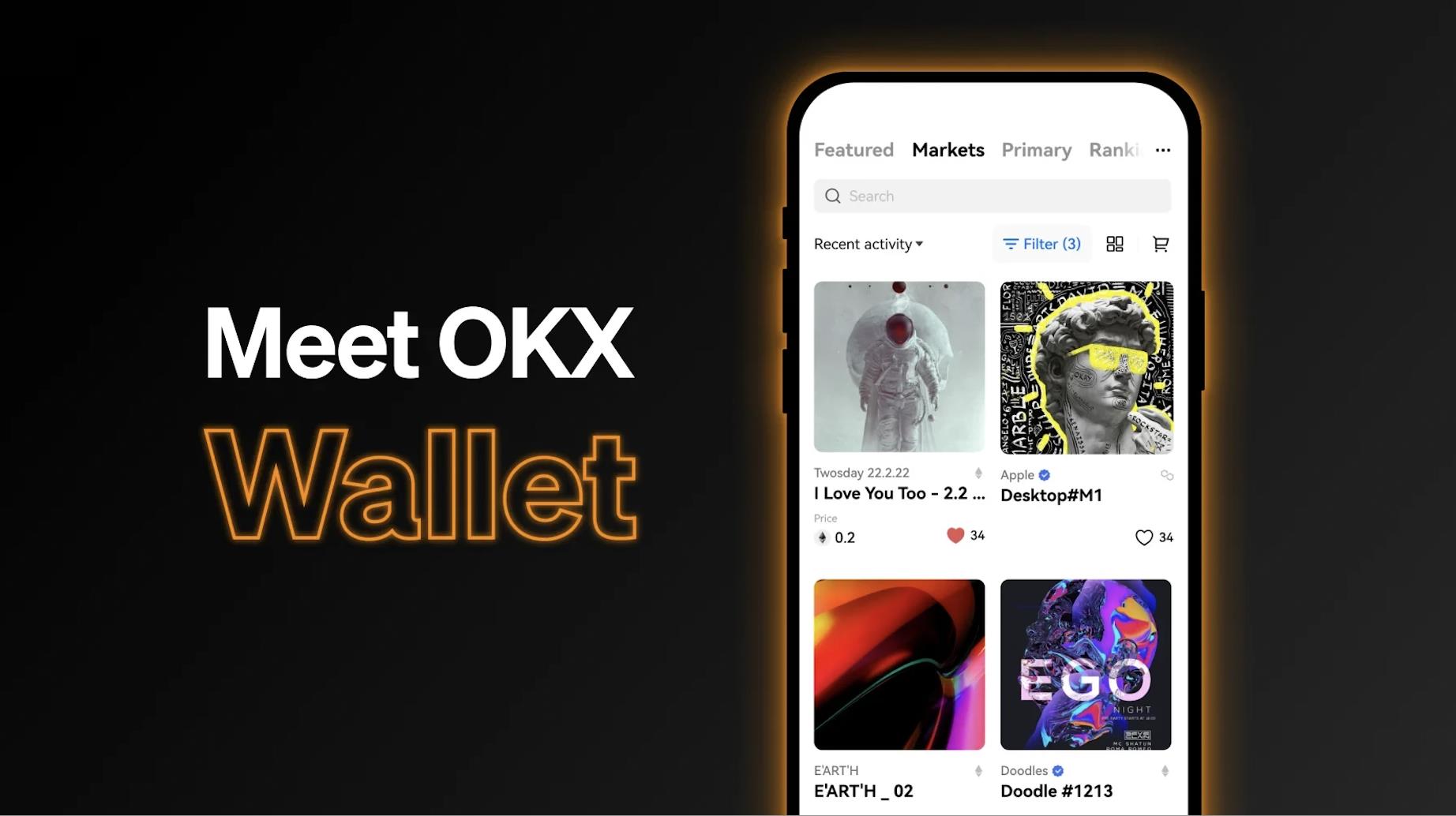
When discussing WeChat’s “Drift Bottle” feature, Allen Zhang shared an insightful perspective: “We shouldn’t make choices for users. Instead, place them in an environment and let them choose for themselves.” Initially, the team debated creating special bottles—say, only receivable by people in certain regions or of specific genders. But they decided to build only the basic function and leave creative use to users. If someone wanted a specialized bottle, they could customize it themselves. This philosophy resonates perfectly with OKX Web3 Wallet: provide the tools, don’t dictate usage. OKX Web3 Wallet includes five major modules—wallet, DEX, DeFi, NFT marketplace, and DApp discovery—meeting diverse Web3 needs in one place. Users freely choose which functions to use and explore Web3 on their own terms.
As a steadfast builder and leader in Web3, OKX Web3 Wallet continues to meet diverse user needs in its own way. It believes Web3 will ultimately bring freedom and fairness. With persistent effort and practical action, it leaves the rest to time.
Join TechFlow official community to stay tuned
Telegram:https://t.me/TechFlowDaily
X (Twitter):https://x.com/TechFlowPost
X (Twitter) EN:https://x.com/BlockFlow_News
 OKX
OKX


