Stars Arena: How to Stand Out Among Friend.tech Clones?
TechFlow Selected TechFlow Selected
Stars Arena: How to Stand Out Among Friend.tech Clones?
This article will analyze the similarities and differences between SA and Friend.tech, as well as examine what truly sets it apart.
 Navigating Web3 tides with focused insights
Written by: TechFlow
I believe Friend.tech has already become a well-known product. However, at the beginning of this article, I still want to briefly summarize this leading Social Ponzi project before diving into its Avalanche-based clone, Stars Arena.
Recap of Friend.tech
Let’s go back to the early morning of August 10th. Friend.tech attracted a large number of degens and reward farmers. Originally thought to be just a fleeting phenomenon during a bear market—a social token experiment built on Twitter profiles—it surprisingly secured seed funding from Paradigm within its first week, fueling even greater user interest and TVL growth.
Like Blur, another Paradigm-backed product, Friend.tech uses a points system to turn Twitter users into core app users, leveraging anticipated token airdrops and offering tangible, visible points as incentives. Starting August 19, Friend.tech began distributing 100 million total points over a six-month testing period, with weekly distributions every Friday. Points are tracked off-chain, and the official team retains full discretion over the final interpretation of the rules.
According to Coinbase senior software engineer yuga.eth, Friend.tech was built by Racer, the lead developer of TweetDAO and Stealcam. The platform's economic model primarily consists of a share price growth mechanism, fee structure, and point incentives.
When new users join, they must first purchase their own Share to become a "room owner," which also laid the groundwork for today’s bot-driven flipping behavior. The only variable affecting the price per Share is the total number of issued Shares. Each transaction incurs a 10% fee: 5% goes to shareholders, and 5% to the treasury.
After Friend.tech drew attention to SocialFi, numerous clones emerged across different blockchains. During the recent holiday period, Stars Arena (hereinafter referred to as SA) surged to the top among these clones in terms of热度 and TVL, showing strong potential to challenge Friend.tech itself. Let’s now examine the similarities and differences between SA and Friend.tech, and analyze what sets it apart.
The Rise of Stars Arena
Stars Arena is a Friend.tech clone deployed on the Avalanche blockchain. It replaces the term “Share” with “Ticket.” Similar to Friend.tech, purchasing someone’s Ticket grants access to their private chat room. However, there’s a key difference: in Friend.tech, if the room owner doesn’t respond, other members cannot see messages sent by that member. In SA, both the owner’s and members’ messages are fully visible.
Beyond this, SA introduces a major enhancement: a public feed where users can post Twitter-like updates and receive reposts, likes, and tips. Additionally, it adjusts the revenue-sharing model—7% of transaction fees go to creators, 2% to the platform, and 1% to referrers.
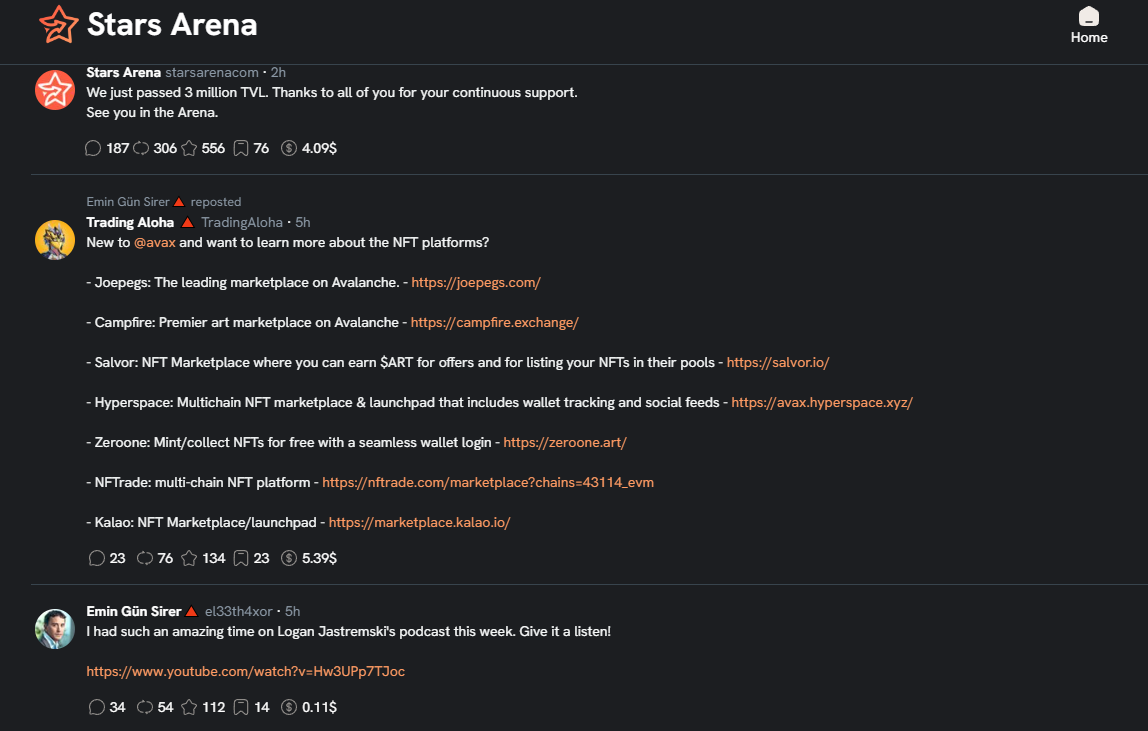
In other words, compared to Friend.tech, SA allocates a larger portion of fees to creators and adds a referral commission mechanism, aiming to attract more new users.
Whether it’s SA or other clones, degens ultimately care about financial incentives and fundraising potential. If everyone is essentially trading 10% “shitcoins,” what makes SA stand out enough to retain speculators among the sea of clones?
SA offers a significantly smoother user experience compared to other clones. It launched initially on desktop, with mobile support now available. Its UI is clean and intuitive. For example, on the profile page, SA clearly separates a KOL’s Followers and Following within the platform versus those on Twitter. The personal dashboard is well-organized, displaying Buy/Sell volumes and price curves directly—no need to switch to external tools like with Friend.tech.
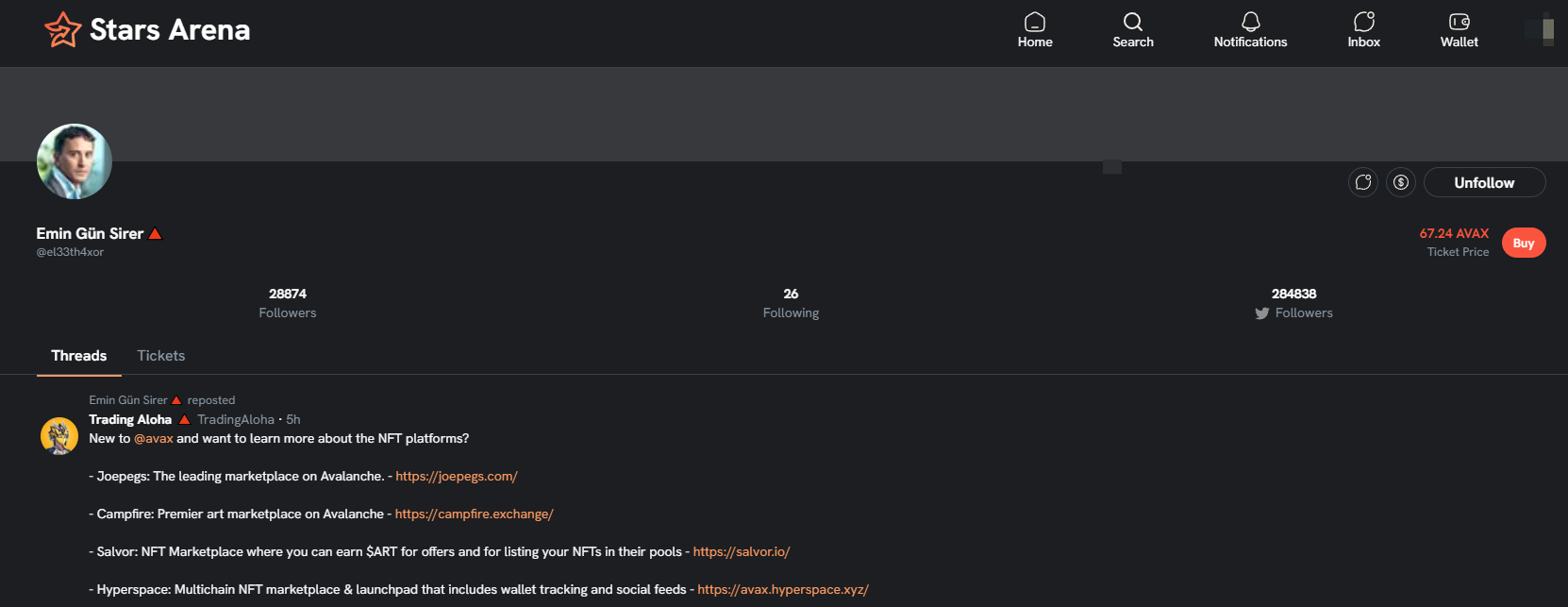
Most importantly, SA has revitalized on-chain activity on Avalanche, earning strong support from the Avalanche team. Both the official Avalanche account and Avalanche founder Emin Gün Sirer have joined Stars Arena, and the founder has recently mentioned SA frequently on Twitter. This official endorsement is one of the key reasons retail investors are willing to participate.
To sum up, the main differences between Friend.tech and SA are:
-
No requirement to buy your own ticket upon joining; priced in AVAX;
-
Launched on PC with mobile compatibility;
-
Added a Twitter-style public feed with repost, comment, like, and tip functions;
-
Chat rooms support image sharing;
-
Clearer UI with separate sections for platform and Twitter followers/following;
-
Price curve visible on personal profile;
-
Different revenue split: 7% to creators, 2% to platform, 1% to referrer.
Performance Data
SA’s rise coincided with the National Day holiday period. Data from Dune shows that since October 2nd, SA’s daily TVL has grown noticeably, peaking around October 6th at approximately $1.45 million.

When comparing various SocialFi products, data shows that since late September, SA’s daily trading volume (red line in chart below) has steadily increased, gradually surpassing Friend.tech and accounting for over 60% of total trading volume across the entire SocialFi sector.
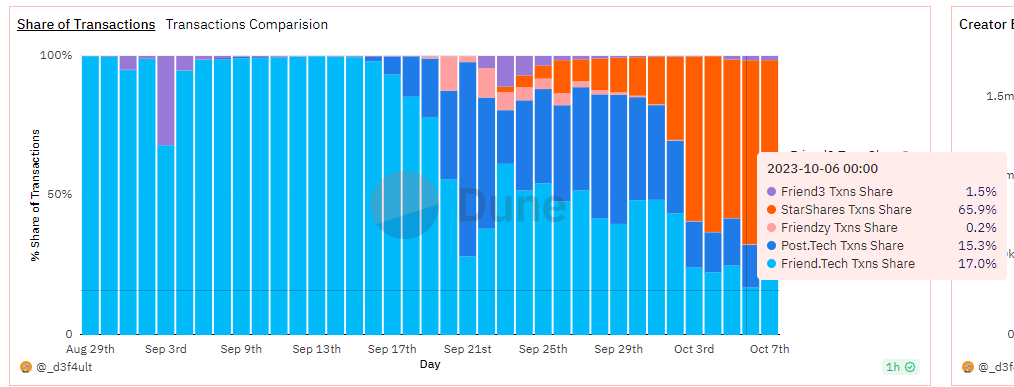
This performance indicates that after Friend.tech created initial hype, capital quickly spilled over into clones, seeking potentially higher returns.
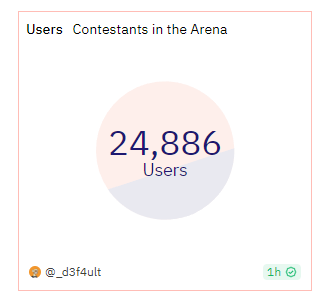
However, compared to Friend.tech’s relatively large user base, SA currently has only around 25,000 active users—meaning fewer users are generating significantly higher trading volumes, highlighting intense short-term speculation.

Beyond the numbers, firsthand experience reveals that newly registered accounts on SA immediately see buying and selling activity—just like Friend.tech, bots are rampant. The surge in short-term activity and trading volume may be partly driven by bot operations. Whether SA can sustain Friend.tech-level momentum for 2–3 months remains to be seen.
Moreover, despite impressive metrics, rapid success hides underlying issues.
As this article was being published, SA’s official Twitter announced a critical vulnerability in its smart contract and urged users not to deposit any new funds. While bugs and issues are inevitable for new projects during initial rollout, security flaws involving core contracts and user funds demand extreme caution.
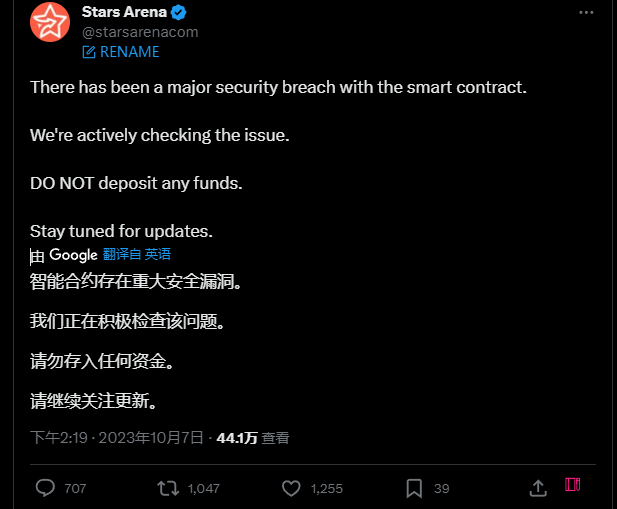
Indeed, this vulnerability highlights a common dilemma faced by copycat projects: moving fast risks overlooking details and creating security hazards, while meticulous development may cause them to miss the window of opportunity and fail to capture momentum.
Whether it’s Friend.tech or Stars Arena, standing out and achieving sustainable growth remains a long journey ahead.
Join TechFlow official community to stay tuned
Telegram:https://t.me/TechFlowDaily
X (Twitter):https://x.com/TechFlowPost
X (Twitter) EN:https://x.com/BlockFlow_News
 深潮TechFlow