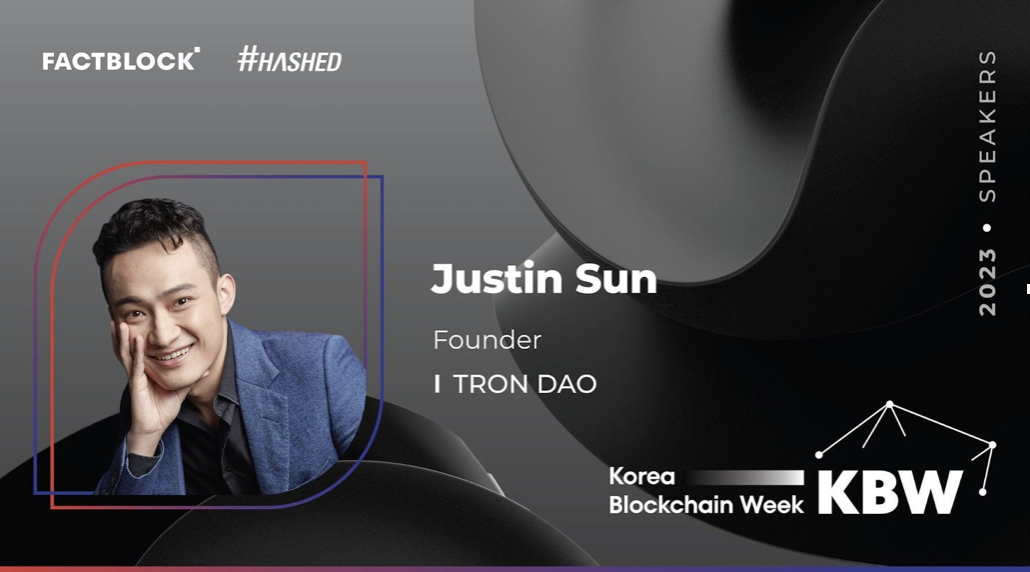
Bridging Asia and the world's future, Justin Sun embraces Web3's next boom at KBW
TechFlow Selected TechFlow Selected
Bridging Asia and the world's future, Justin Sun embraces Web3's next boom at KBW
Cryptocurrency is a global strategy, a global protocol—eventually, everyone will get involved in cryptocurrency. It's just like the internet.
 Navigating Web3 tides with focused insights
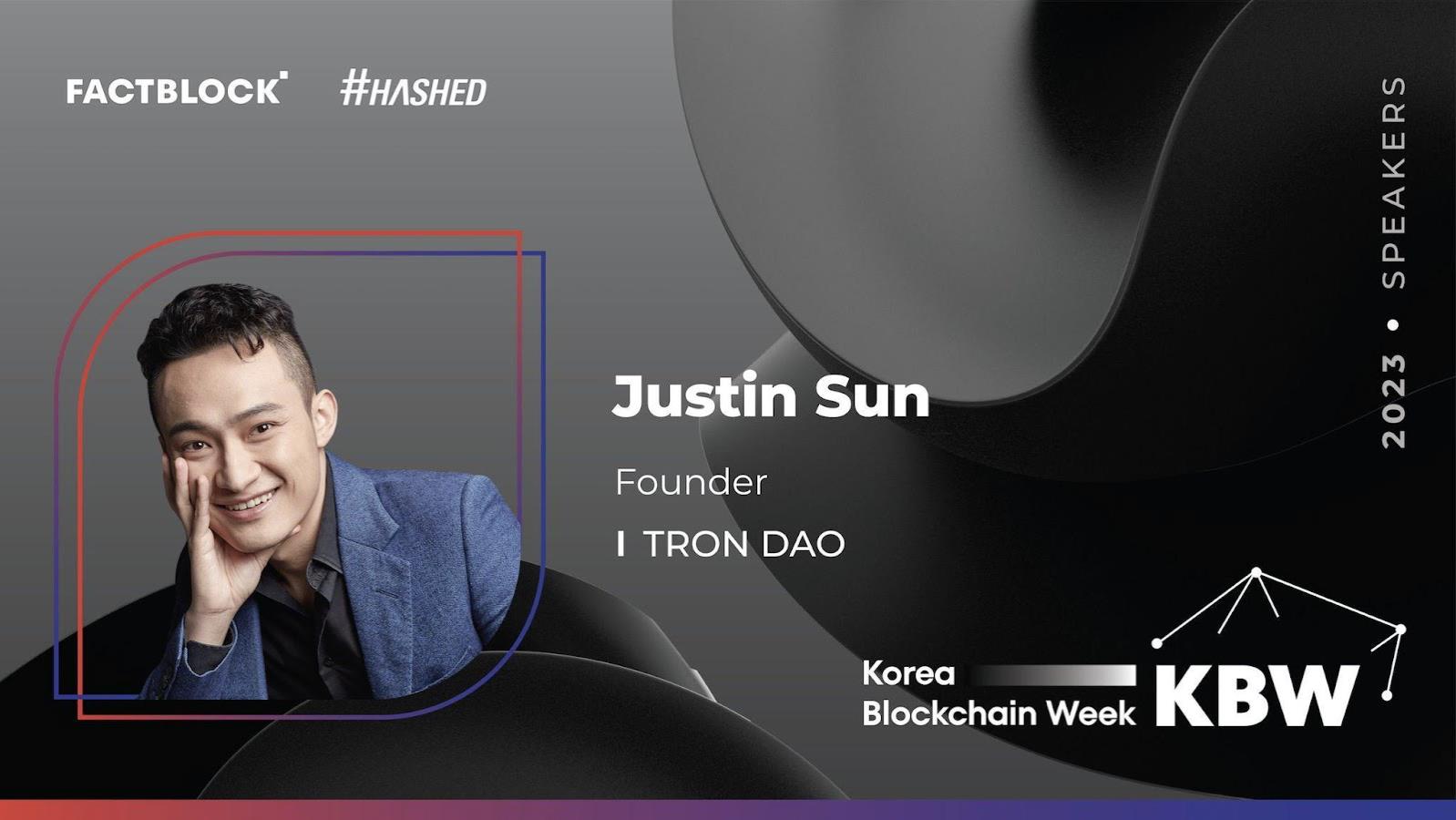
The KBW 2023 (Korean Blockchain Week 2023), Asia's most influential blockchain conference, has officially commenced. Justin Sun, founder of TRON and member of the Huobi Global Advisory Board, will attend key events during the conference days (September 5–6), focusing on discussions about the industry’s future development under current conditions.
More than a year has passed since the crypto winter abruptly arrived in 2022. With prolonged bear markets, increasing regulatory pressures, and rising industry risks, the Crypto/Web3.0 sector now stands at a pivotal crossroads of transformation.
Shifting focus eastward may be a shared strategic choice for the industry. Over the past year, Hong Kong has repeatedly sent friendly signals toward Web3.0. As a major Asian financial hub, its ambition to lead in the next technological era is now unmistakable. Meanwhile, South Korea has already emerged as an undeniable force within the crypto world.
Justin Sun, founder of TRON and member of the Huobi Global Advisory Board, was clearly among the first industry leaders to recognize this trend.
In April this year, Justin Sun made a surprise appearance at the 2023 Hong Kong Web3.0 Festival, joining government officials and experts from various fields to discuss the future development and strategic positioning of Hong Kong's Web3.0 ecosystem.
This week, Asia’s premier blockchain event—Korean Blockchain Week (KBW)—is being held in Seoul. It is reported that Justin Sun will participate in major sessions during the core conference days (September 5–6).
Aside from Justin Sun, KBW 2023 has gathered numerous high-profile figures, including Ethereum co-founder Vitalik Buterin, Circle CEO Jeremy Allaire, BitGo co-founder and CEO Mike Belshe, and Polygon co-founder Sandeep Nailwal—highlighting the summit’s exceptional stature.
Under the new global dynamic of Web3.0 shifting “from West to East,” Asian forces, particularly those represented by Chinese entrepreneurs, are demonstrating remarkable vitality.
Restarting From Asia
At KBW 2023, Justin Sun stated that due to aggressive legal actions taken by the U.S. Securities and Exchange Commission (SEC) against prominent cryptocurrency projects—and cooperation with crypto exchanges—many crypto initiatives have shifted toward Asia. This shift, however, has helped address decentralization challenges: "Our goal—both for TRON and Huobi—is diversification. We will invest more resources in South Korea, Japan, and Southeast Asia."
TRON and Huobi’s intensified investment in the East reflects not only considerations regarding Asia’s market scale and development foundation but also a positive response to recent improvements in the region’s regulatory environment.
During the early stages of the crypto industry, regions such as South Korea, Japan, and Hong Kong were globally significant players in cryptocurrency and laid the earliest historical foundations for Asian Web3.0 development. Moreover, stablecoins like TRC20-USDT shaped the overall market structure and size, standing as outstanding examples of how Asian innovation contributes value to the global Web3.0 landscape.
"Since 2017, Hong Kong has actually hosted many crypto assets; well-known platforms like Phoenix, Binance, and FTX all established their presence there initially. However, we know that around 2021, China introduced stricter crypto regulations, causing many capital-intensive operations to leave Hong Kong," noted Justin Sun.
It is evident that regulatory environments and policy friendliness directly shape the developmental trajectory of a country or region’s crypto industry.
As highlighted in Citi’s RWA report *Money, Tokens, and Games*: While the blockchain revolution began on the fringes, achieving mass adoption requires support from sovereign governments, regulated financial institutions, large corporations, and native crypto innovators who drive change and progress.
Earlier at Japan’s WebX conference, Justin Sun remarked: "Today’s Web3.0, much like many historical precedents, cannot fully realize its vision of innovation without a permissive regulatory framework."
Hong Kong’s bold regulatory experiments have clearly created a "breaking-the-ice" effect. "Recently, the Hong Kong Special Administrative Region government adopted open policies aiming to reattract crypto businesses. This competitive dynamic has also prompted Singapore to act swiftly to maintain its regional leadership. The rivalry between Hong Kong and Singapore will benefit the global crypto industry by offering investors and entrepreneurs more options," said Justin Sun.
This is precisely why Justin Sun is now fully committed—with TRON and Huobi—to building an Asian Web3.0 hub: leveraging Asia’s robust industry infrastructure and favorable policy winds to accelerate mainstream adoption of Web3.0.
"Because ultimately, cryptocurrency is a global strategy, a universal protocol. Eventually, everyone will engage with crypto—just like the internet," added Justin Sun.
Driving Industry Transformation Through RWA
Justin Sun will bring the RWA concept to this summit, delivering keynote speeches and participating in multiple closed-door meetings during the main conference days (September 5–6). He will engage in deep discussions with top Korean investment institutions and blockchain teams on new drivers for the Web3.0 industry, shaping new milestones.
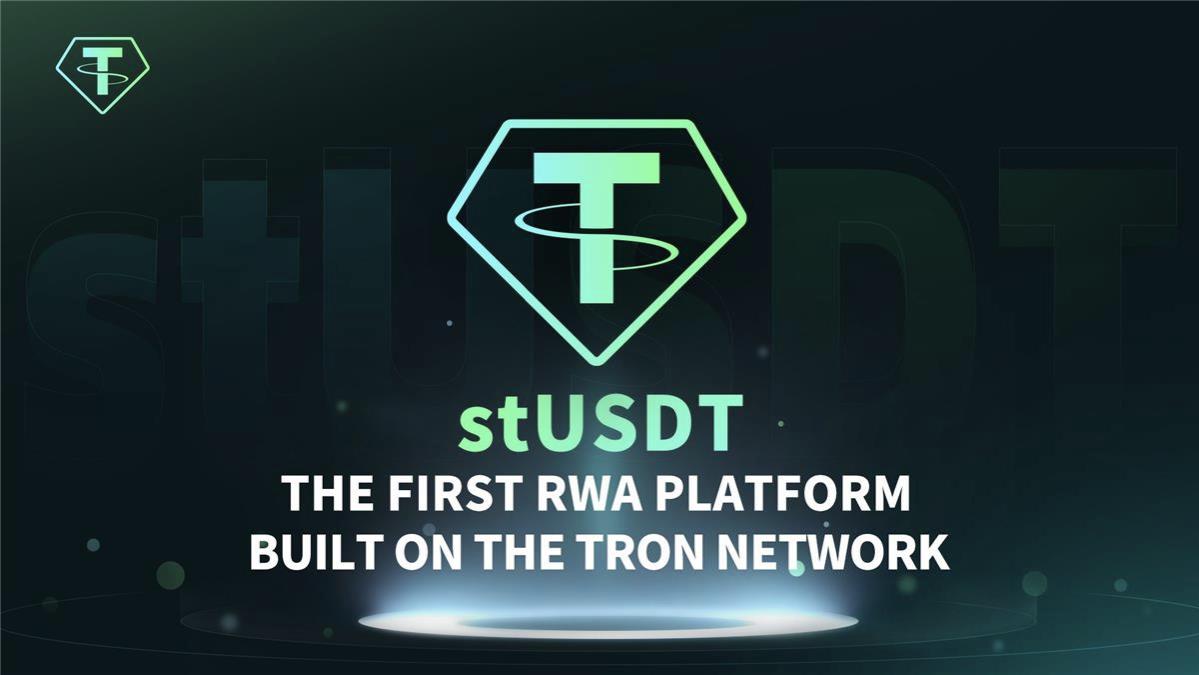
stUSDT, recently launched by TRON, is a flagship RWA product modeled after Lido’s restaking mechanism, distributing stablecoin yields to all holders. Currently, the total value locked (TVL) in stUSDT, the USDT-based RWA restaking product, has reached $759 million.
It is widely known that TRON hosts the largest circulation of the world’s leading stablecoin USDT, accounting for 52% of the global USDT supply—over $44 billion. Thanks to its massive liquidity and near-zero entry barriers, stUSDT was instantly dubbed the "Yu’E Bao of Web3.0" upon launch.
Stablecoins have long served as gateways for capital entering and exiting the crypto market, making them an unavoidable giant in the RWA space.
For today’s $1 trillion crypto market, ongoing macroeconomic instability leaves the ecosystem lacking stable-yield financial products.
Native yield sources in crypto—such as ETH-based liquid staking derivatives (LSD) returns—are limited by the relatively small scale of the crypto market, restricting broader potential. To overcome these limitations, external forces must be introduced—finding value anchors and income streams from the real economy.
This is exactly why the RWA narrative is gaining momentum.
RWA stands for Real World Assets Tokenization—the process of converting rights (ownership, revenue rights, usage rights, etc.) associated with tangible or intangible real-world assets into digital tokens. Since the early days of blockchain technology, market participants have sought ways to bring RWAs on-chain.
Even traditional finance heavyweight Citigroup forecasts that up to $5 trillion could migrate to new forms of digital currency by 2030. Under favorable regulation, real-world asset tokenization (RWA) could become the killer application propelling the blockchain industry into a multi-trillion-dollar domain.
Of course, integrating over one billion users and tens of trillions of dollars in assets into the Crypto/Web3 ecosystem requires mature technical and legal frameworks to support and sustain the entire system.
Yet from every perspective, embracing Web3 technologies represents the inevitable endgame for financial evolution. The low friction, flexibility, composability, transparency, and traceability offered by DeFi will truly transform traditional finance.
In Asia, especially across East Asian nations, governments and regulators in countries like South Korea and Japan have clearly recognized the transformative power of Web3.0 for the financial sector and are actively embracing the technology—providing solid foundational support for RWA’s next phase of growth.
We look forward to seeing more Asian and particularly Chinese-led voices at KBW 2023 discussing RWA development, with greater institutional and regulatory participation in conversations around compliant RWA operations. At this critical juncture of crypto transformation, let RWA become the primary engine driving the next bull market.
To conclude, echoing Justin Sun’s remarks at KBW 2023, we welcome the next stage of Web3 evolution: "We’re seeing many exciting developments emerge—RWA representing real-world assets—with new deployments every week. We’re witnessing ZK solutions and all kinds of new technologies taking off. I believe this is a hopeful moment, and I’m very excited to incubate and support all developers growing in this space."
References:
*Money, Tokens, and Games*, Citi GPS
*Real World Assets: The Bridge Between Tradfi and Defi*, Binance Research
Join TechFlow official community to stay tuned
Telegram:https://t.me/TechFlowDaily
X (Twitter):https://x.com/TechFlowPost
X (Twitter) EN:https://x.com/BlockFlow_News