








Podcast Notes | Conversation with Standard Crypto Partner: This Is the Best Bear Market Cycle in History
TechFlow Selected TechFlow Selected
Podcast Notes | Conversation with Standard Crypto Partner: This Is the Best Bear Market Cycle in History
Alok believes the next cycle may be driven by new applications, as we are no longer constrained by infrastructure the way we were before.
 Navigating Web3 tides with focused insights
Compiled & Translated by TechFlow
In this episode, The Block interviewed Alok Vasudev, co-founder of Standard Crypto. In the conversation, Alok discussed changes and trends during bear markets, reasons behind market shifts, and shared his view that each crypto cycle sees a new blockchain application driving the bull market. They also explored the potential of blockchain gaming and economic crises, as well as the convergence of AI, zero-knowledge proofs (ZK), and blockchain technology.
Spend 5 minutes reading this podcast summary to save 40 minutes.
Below are key takeaways from the discussion, transcribed and compiled by TechFlow:
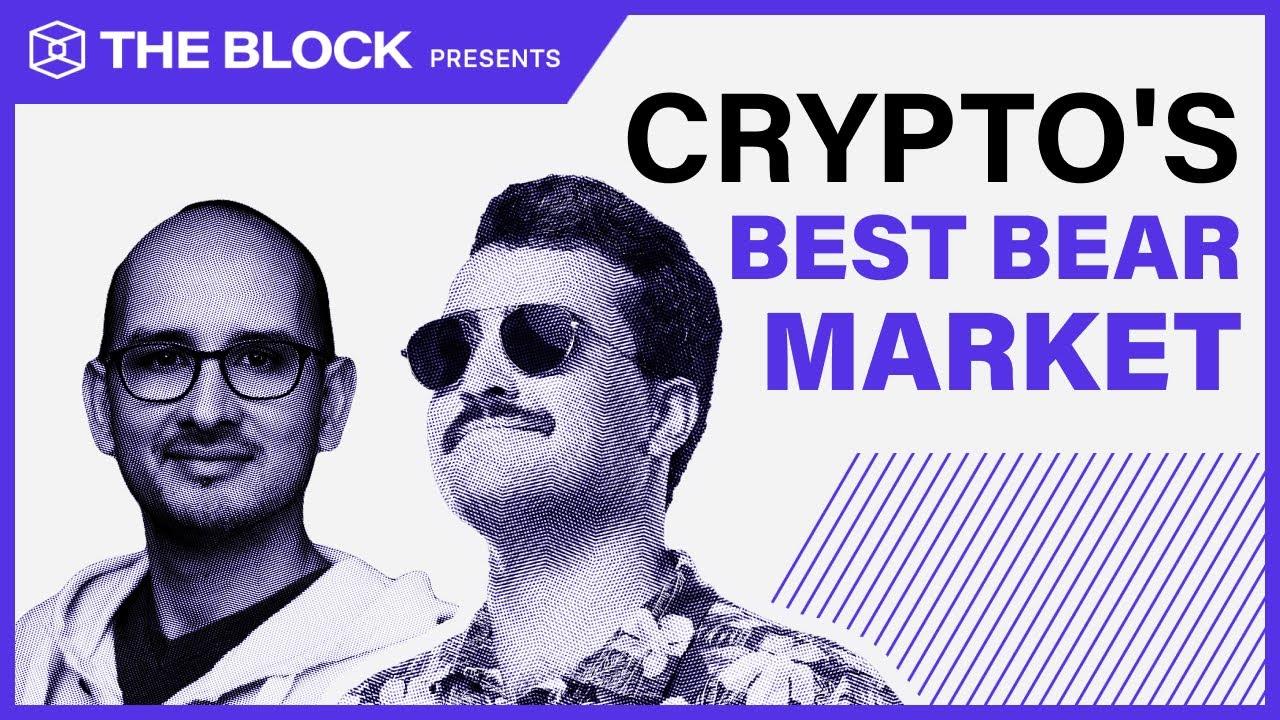
Host: Frank Chaparro, The Block
Guest: Alok Vasudev, Co-Founder of Standard Crypto
Original Title: "Crypto's 'Best Bear Market Of All-Time'"
Podcast: The Block
Episode: Link
Bull and Bear Market Evolution and Application-Layer Breakouts
-
Alok discussed several changes and trends in the current bear market. He noted that while trading activity slows down during bear markets, the quality of trades improves. According to Alok, today’s market participants are more serious—no longer joining simply because crypto seems trendy or due to hype. Instead, many founders entering the space now are doing so for the second or third time, bringing deeper experience and better understanding.
-
Frank and Alok examined the reasons behind recent market shifts. Alok pointed out that Larry Fink, CEO of BlackRock, changing his stance on Bitcoin and cryptocurrencies could be a significant catalyst. He added that crypto may have been undervalued in November and December last year, as blockchain technology represents the right direction of historical development, and asset prices should reflect progress made toward equilibrium value.
-
On crypto market cycles, Alok believes each cycle is driven by a novel blockchain application fueling the bull run. For instance, the 2013 bull market was Bitcoin-driven, 2017 was powered by tokens and ICOs, and 2021 was led by DeFi protocols and NFTs. He suggests the next cycle will likely be driven by new applications, as we’re no longer constrained by infrastructure limitations as before.
-
They discussed the biggest barriers to an application-layer breakout. Alok emphasized that for consumer-grade apps to thrive, users must first adopt wallets. As wallet usage grows, their usability needs to improve—becoming as simple as using a web browser. Cryptocurrency wallets need to become more user-friendly, accessible, and easy to operate to drive broader adoption.
-
Alok introduced the concept of “small network effects,” where the value of a product or service increases with its number of users. Network effects are a common economic phenomenon indicating that a product’s value scales positively with user growth.
-
He believes there are now enough early adopters to begin forming these small network effects within new products. As more users engage with a product—such as a crypto wallet or app—its value rises through improved UX, added features, enhanced security, and greater utility.
-
Alok argued that successful social networks start relatively niche and avoid onboarding celebrities too early. The most successful platforms cultivate their own influencers internally rather than relying on external stars to bring in followers.
-
The big opportunity in social lies in identifying tomorrow’s status games—potentially involving NFTs and other crypto-native features. Crypto-centric social networks are particularly promising because they remain niche but align with long-term trends, and many in the crypto community are on the right side of history, according to Alok.
Potential of Blockchain Gaming and Economic Crises
-
Alok and Frank shifted focus to gaming. Alok highlighted an interesting investment strategy: reviewing projects from the previous market cycle that resonated but didn’t fully succeed. These can represent strong investment opportunities. He cited two examples: Cryptokitties and Axie Infinity. Both achieved partial success but had flaws. Nevertheless, they demonstrated the immense potential of gaming in crypto.
-
They discussed economic crises within games and how to manage them. Alok explained that such crises often stem from token price drops, market volatility, or poor design. To maintain engagement, developers must implement measures to keep gameplay appealing. Financialization, he said, is an effective solution—providing incentives that attract and retain players.
-
Financialization in blockchain gaming can be achieved through token rewards, tokenomics models, and integration with DeFi protocols. These mechanisms help attract players and offer additional incentives. Alok sees this as a powerful way to sustain interest even when token prices face downward pressure.
-
Alok noted that Axie Infinity was a pivotal moment for many game developers, pushing them to explore crypto more deeply. Its success showed that games can remain compelling even amid falling token prices—thanks largely to financialization strategies that incentivize continued participation.
Convergence of AI, ZK, and Blockchain
-
Alok shared his firm’s investment philosophy, emphasizing a focus on identifying high-potential founders over chasing specific investment themes. In their view, successful investing hinges on backing exceptional entrepreneurs, not rigid theoretical frameworks.
-
They explored intersections between artificial intelligence and crypto. Alok sees deep connections between the two fields—both are technology-driven, rapidly evolving, and hold transformative potential. Each is exploring novel business models and use cases capable of reshaping society and the economy.
-
AI and crypto both demand vast data and computational power. Crypto can provide AI with secure, transparent, and decentralized platforms for data exchange and computation. Conversely, AI can enhance crypto by enabling smarter, more efficient transaction processing and smart contract execution.
-
Alok added that AI can help predict market dynamics and assess risks in crypto, while crypto can offer AI safer, more efficient payment and transaction systems.
-
As blockchain and crypto technologies advance, NPCs (non-player characters) in games might eventually own bank accounts and accumulate wealth. This would unlock new creative and interactive possibilities for developers and players alike.
-
For example, NPCs could trade, invest, or engage in financial activities with players. Such capabilities would make games more immersive and realistic, allowing complex interactions and richer experiences. It would also open new revenue streams for developers—through NPC-based advertising, promotions, or commerce.
-
Alok discussed the impact of technological advancements on crypto markets, especially progress in zero-knowledge proofs (ZK). He explained that ZK allows one party to prove the truth of a statement to another without revealing any additional information. This has broad applications in crypto, including privacy-preserving transactions and verifying smart contract integrity.
-
Alok believes ZK technology will strengthen market trust. By enabling verification of transaction validity without exposing sensitive data, ZK enhances transparency and confidence. Moreover, ZK improves market efficiency—allowing faster, more secure settlements, boosting liquidity and transaction speed.
-
Finally, ZK expands the scope of market applications. By better addressing user demands for privacy and security, ZK makes crypto more appealing to a wider audience, thereby broadening adoption and use cases.
Impact of Market Cycles on Tech Development and DeFi
-
Alok believes market cycles play a crucial role in advancing technological R&D. Bull markets generate capital inflows—rising crypto prices increase investor wealth, freeing up funds for research and development. This capital fuels innovation, optimization of existing systems, and expansion into new applications.
-
Alok emphasized that crypto has advanced far beyond past levels, with stronger fundamentals today—including more participants, diverse applications, accelerated tech innovation, and improved regulatory compliance.
-
Alok specifically highlighted DeFi protocols as ideal venture investments. He outlined several advantages:
-
Low capital requirements: DeFi protocols typically require minimal upfront capital since they run on decentralized blockchains without legacy centralized infrastructure—making them attractive to investors.
-
Strong defensibility: Being decentralized, DeFi protocols are highly resistant to attacks and manipulation, enhancing their stability and security in the market.
-
High operating leverage: With near-zero operating expenses and users covering transaction fees, DeFi protocols operate efficiently and generate outsized returns.
-
-
Alok also noted that DeFi protocol revenues differ significantly from traditional software companies. While software firms incur high operational costs, DeFi protocols have negligible overhead—users pay transaction fees instead. This enables superior efficiency and profitability. Alok called DeFi “the best business model ever created.”
-
Alok expressed optimism about a potential Bitcoin revival. He believes Bitcoin may be entering a renaissance phase. Once a vibrant ecosystem attracting top developers and tech enthusiasts, Bitcoin lost some momentum over time. But now, he sees signs of renewed energy—though many newcomers may still underestimate Bitcoin’s long-term potential.
Join TechFlow official community to stay tuned
Telegram:https://t.me/TechFlowDaily
X (Twitter):https://x.com/TechFlowPost
X (Twitter) EN:https://x.com/BlockFlow_News
 深潮TechFlow











