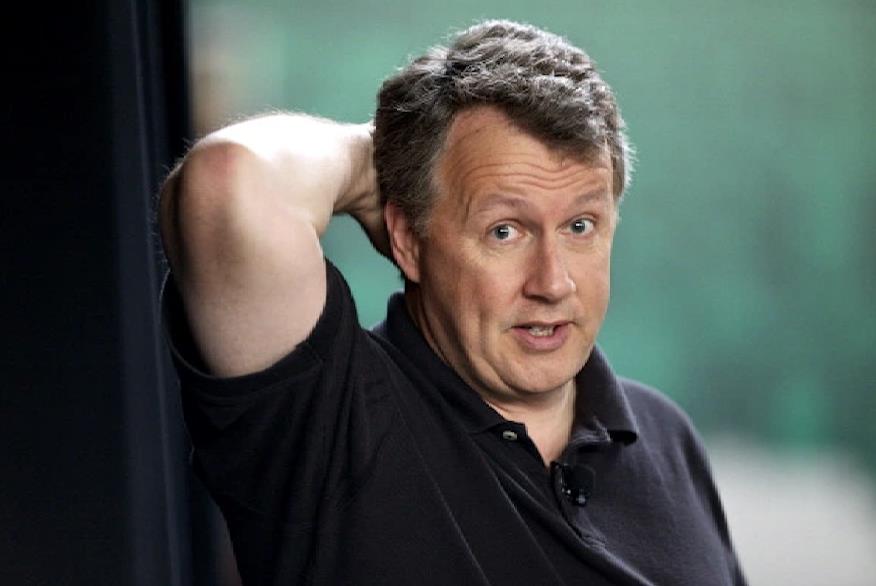
Paul Graham, the father of Silicon Valley startups, on how to achieve outstanding accomplishments?
TechFlow Selected TechFlow Selected
Paul Graham, the father of Silicon Valley startups, on how to achieve outstanding accomplishments?
If we compile a list of skills required to achieve great things across different fields, what would their intersection be?
 Navigating Web3 tides with focused insights
By Paul Graham | Translated by f.chen
Paul Graham has finally released his long-awaited article, “How to Do Great Work”—a 20,000+ word essay that stands as one of the most practical guides to meaningful work I’ve ever read.
In this piece, I not only see PG’s scattered methodologies from earlier essays and books—inevitably including Hackers & Painters, but also “Why Smart People Have Bad Ideas,” “Cities and Ambition,” “Do Things That Don’t Scale,” “How to Work Hard,” and more*—but also resonances with brilliant works like A Mathematician’s Apology and Why Greatness Cannot Be Planned. I spent a full week reading, organizing, and preparing this translation for you, and in doing so, I hope to re-energize my own commitment to publishing high-quality content consistently after a month-long hiatus!
Also, the footnotes are well worth reading — to preserve flow in the main text, I chose not to insert them into the body, but these 29 footnotes are packed with golden insights and just as compelling as the essay itself.
This article was published on Paul Graham’s personal blog in July 2023, originally titled “How to Do Great Work.”
If we were to collect a list of techniques used to achieve greatness across different fields, what would their intersection look like? I decided to find out through practice.
I have two goals: first, to create a guide applicable to practitioners in any field; second, I’m genuinely curious about the shape of this intersection—it turns out it does have a “definite shape,” not merely a single point labeled “work hard.”
The following guide assumes you have ambition.
The first step is deciding what to do. The work we choose must possess three qualities:
1. We have talent for it;
2. We have deep interest in it;
3. It offers room for exceptional achievement.
In practice, we needn’t worry too much about the third point—visible opportunities are already conservative for ambitious people. So our real task is finding something we’re talented at and deeply interested in.[1]
This sounds simple, but it’s often difficult. When we’re young, we don’t know what we’re good at, what different kinds of work are really like, or even whether some jobs we might end up doing currently exist. While some people know at fourteen what they want to do, most need time to figure it out.
The way to figure out what to do is through work. If we’re unsure, guess—but pick something and start doing it. We might be wrong, but that’s fine; knowing many things is valuable. Some of the greatest discoveries come from noticing connections between different fields.
Cultivate the habit of initiating and driving your own projects. Don’t let “work” mean only what others tell you to do. If you ever achieve something remarkable, it will likely begin with a project you initiated yourself—even if embedded within a larger effort, you’ll be the one pushing part of it forward.
What should your projects be? Anything that excites you and fills you with purpose. As we age, our taste in projects evolves, and excitement increasingly correlates with importance—building massive Lego models may be thrilling at seven; teaching yourself calculus exciting at fourteen; exploring unsolved problems in physics electrifying at twenty-one—but whatever it is, it must remain exciting.
Curiosity, fueled by excitement, is the engine and rudder of great work. It not only drives us forward, but if we let it, it also tells us where to go.
What are you curiously obsessed with—so intensely that most others would find it boring? That’s what you’re looking for.
Once you find something you’re unusually excited about, the next step is learning enough to reach the frontier of knowledge in that field. Knowledge expands fractally—seen from afar, its edge looks smooth, but once we learn enough to approach it, we find it full of gaps.
Next, notice those gaps. This takes skill because our brains prefer to ignore them, constructing simpler mental models. Many great discoveries arise from questioning what everyone takes for granted. [2]
If the answer seems strange, all the better—great achievements often carry a tint of strangeness, visible from painting to mathematics. Trying to force this strangeness is artificial, but if it appears, embrace it.
Pursue unpopular ideas boldly, even if others aren’t interested—in fact, especially when they aren’t. If you’re excited about a possibility everyone else overlooks, and you have enough expertise to precisely articulate what they’re missing, that’s your best bet. [3]
Four steps:
1. Choose a field;
2. Learn enough to reach the frontier;
3. Notice gaps in the field;
4. Explore promising gaps.
—this is how nearly everyone who achieves greatness, from painters to physicists, gets there.
Steps two and four require hard work. I can’t prove in words that hard work is necessary for great achievements, but empirical evidence is as solid as evidence of death. That’s why we must work on something we’re deeply interested in—interest pushes us harder than mere diligence ever could.
The three most powerful internal motivators are curiosity, pleasure, and the desire to impress others—and when they converge, they form an especially potent combination.
The greatest reward is discovering a new fractal bud. You spot a crack in the surface of knowledge, pry it open, and find an entire world inside.
Let’s examine the complex problem of figuring out what to do. The main difficulty is that except for work we’ve done ourselves, we can’t truly understand most types of work. This means the four steps above overlap: we may need to spend years doing something before knowing how much we enjoy it or how good we are at it; meanwhile, not doing most other types of work means we’re not learning about them. So at worst, we make choices at the wrong time with highly incomplete information. [4]
Ambition itself compounds this issue. There are two forms: ambition that exists before interest in the work, and ambition that grows during the work. Most people who achieve greatness have a mix, but the less the former, the harder it is to decide what to do.
Most education systems pretend deciding what to do is easy—they expect us to make decisions before we know what a field is actually like. So, from the optimal trajectory, an ambitious person often appears abnormal to the system.
It would help if these systems admitted this—that they not only fail to help us figure out what to do, but are designed on the assumption that we magically guess correctly in our teens. They won’t say it, but I will: When it comes to figuring out what to do, we’re on our own. Some get lucky and guess right immediately, while others find themselves running off-track from the path everyone is assumed to follow.
If we’re young, ambitious, but unsure what to do, what should we do? We know we shouldn’t drift passively, assuming the problem will resolve itself. We need to act, but no systematic procedure exists. Reading biographies of people who achieved greatness reveals how much luck plays a role: they discovered their calling through chance encounters, books they happened to pick up, etc. So we must become conspicuous targets for luck—by staying curious: trying many things, meeting many people, reading widely, asking questions. [5]
When in doubt, prioritize interesting things. As we learn more, our understanding of fields changes—for example, what mathematicians actually do differs vastly from high school math. So give different kinds of work a chance to show themselves—but as we learn more, it should grow increasingly interesting; if not, it’s probably not for us.
If you find yourself interested in things others don’t care about, don’t worry—the stranger your interests, the better. Strangeness often correlates with intensity, and strong feelings about work lead to extraordinary productivity. Plus, exploring where few have gone increases the likelihood of finding something new.
When you enjoy work that others find dull or frightening, that’s a sign you’re suited for it.
But fields aren’t people—we don’t owe them loyalty. If while doing one thing, you discover another more exciting pursuit, don’t hesitate to switch.
If you’re building something for others, ensure it’s something people actually want. The best way: build what you want. Write the story you’d love to read, make the tool you’d use. Since your friends likely share similar interests, this gives you an initial “audience.”
This follows naturally from the rule of excitement—obviously, the most exciting story is the one you want to read. I emphasize this because many get it wrong: instead of making what they want, they try to make what an imagined, more sophisticated audience wants. Once you take that path, you’re lost. [6]
When trying to figure out what to do, many forces mislead us: pretension, trends, fear, money, politics, others’ expectations, clever scammers. But if we stick to what genuinely interests us, we resist all of these—if we’re interested, we can’t go astray.
Following your interests may sound passive, but in practice, it often involves overcoming obstacles, risking rejection and failure—requiring considerable courage.
We need courage, but usually not elaborate plans. For most, the way to achieve greatness is simple: work hard on exciting projects that fuel ambition, and good things happen naturally. We don’t need to devise and execute a plan—just maintain certain invariants.
Plans fail because they only work for achievements describable in advance. We can decide to win gold or get rich and pursue that goal relentlessly, but we can’t plan for something like natural selection.
I think the right strategy for most wanting to achieve greatness is not over-planning. At each stage, do whatever seems most interesting and opens the best future options. I call this method “staying upwind”—and it seems to be how most great achievements unfold.
Even after finding exciting work, doing it isn’t always easy. Sometimes a new idea makes you leap out of bed eager to start, but often the opposite is true.
You can’t just unfurl your sails and let inspiration carry you—you’ll face headwinds, tides, hidden reefs. So, working is like sailing: it requires technique.
For example, while we must work hard, overwork is possible. In such states, diminishing returns set in: fatigue makes us stupid, and eventually harms health. The threshold varies by work type—some of the hardest tasks allow only 4–5 productive hours per day.
Ideally, these hours should be contiguous. Try to structure your life to carve out large blocks of uninterrupted time. If interruptions are likely, avoid tackling demanding tasks.
Starting work is often harder than continuing. You frequently need to trick yourself past the initial barrier. Don’t worry—this is normal, not a flaw in your character. Work demands “activation energy”—daily and per project—but since it exceeds the energy needed to continue, the barrier is somewhat illusory. A little self-deception helps cross it.
Self-deception is usually wrong if you aim for greatness, but there are rare exceptions. Whenever I dread starting in the morning, I often lie to myself: “I’ll just review what I’ve done so far.” Five minutes later, I spot something wrong or incomplete—and start working.
Similar tricks work for starting new projects. It’s okay to lie to yourself about the workload. Many great endeavors began when someone asked, “How hard could it be?”
This is one area where youth have an advantage—they’re more optimistic. Though partly due to ignorance, in this case, ignorance sometimes beats expertise.
Still, try to finish what you start, even if it takes far longer than expected. Completing something isn’t just neatness or discipline—often, the peak achievement lies beyond what was supposed to be the final stage.
Another acceptable deception is exaggerating the importance of your work in your mind. If it helps you discover something new, it may not have been a lie after all. [7]
Since “starting work” has two meanings—daily and per project—there are two forms of procrastination. Project-level procrastination is far more dangerous than daily delay. We keep postponing that ambitious project year after year, saying “not yet”—but over years, we could accomplish so much. [8]
One reason project procrastination is so dangerous is that it disguises itself as “work.” We’re not idle—we’re diligently working on other things. So unlike daily delays, it doesn’t trigger alarm bells—we’re too busy to notice.
To defeat project procrastination, occasionally pause and ask: “Am I doing what I most want to do?” When young, it’s okay if the answer is sometimes “no,” but as we age, this becomes increasingly risky. [9]
Great achievements usually demand spending far more time on a problem than most consider reasonable. We can’t view this time as a cost—it would seem too high. We must find sufficient appeal in the work itself.
Some work requires grinding through hated tasks for years to reach enjoyable parts, but that’s not how great achievements happen. Greatness comes from sustained focus on what genuinely interests you—then, looking back, you’ll be amazed at how far you’ve come.
We underestimate the cumulative effect of work. Writing one page a day seems trivial, but doing it daily yields a book yearly. This is the key: consistency. People who achieve greatness don’t do huge amounts every day—they just do something instead of nothing.
If your work has compounding effects, you gain exponential growth. Most doing such work aren’t aware of it, but it’s worth pausing to consider. Learning exemplifies this: the more you know, the easier it is to learn more. Audience growth works similarly: the more fans you have, the more new ones they attract.
The problem with exponential growth is that early on, the curve feels flat. But it’s still beautiful—our intuition just fails us, so we undervalue the early stages.
Something capable of exponential growth can become immensely valuable—worth special effort to ignite. Yet because we undervalue early growth, this mostly happens unconsciously: people persist through the initial, unrewarding phase of learning because experience shows learning always needs a push, or they gradually grow their audience simply because they have nothing better to do. If people realized they could invest in exponential growth, more would do it.
Work doesn’t only happen when we’re actively laboring. While walking, showering, or lying in bed, we engage in undirected thinking, which can be powerful. By letting our minds wander slightly, we often solve problems resistant to direct attack.
However, we benefit from this only if we’re already working hard normally. We can’t just daydream aimlessly. Undirected thinking must alternate with conscious effort—work guides our thoughts toward real problems. [10]
Everyone knows to avoid distractions while working, but it’s equally vital during the other half of the cycle. When our thoughts wander, they drift toward what concerns us most. So avoid distractions that displace work from top priority—or we’ll waste this precious mode of thought (exception: don’t avoid love!).
Cultivate taste in your field consciously. Unless we know what’s best and why, we don’t know what we’re aiming for.
That’s what we should aim for—because unless we strive to be the best, we won’t even be good. This observation has been made across fields, so it’s worth pondering why:
1. Perhaps in pursuing ambition, errors almost all lean one way—almost every missed shot falls short;
2. Perhaps striving to be the best differs qualitatively from merely wanting to be good;
3. Perhaps “good” is simply too vague a standard compared to “best.”
—all three may be true. [11]
Fortunately, economies of scale apply here too. Though striving to be best may seem burdensome, we often gain net benefits. It’s exhilarating—a wonderful liberation. Things simplify: in some ways, aiming highest is easier than merely trying to be good.
One way to aim high is to try creating something people will care about a century from now. Not because their opinion matters more than contemporaries’, but because if something still looks good in a hundred years, it’s more likely genuinely good.
Don’t try to work in a unique style—just try to do your work as well as possible. We can’t help but be unique.
Style emerges as uniqueness without trying; trying creates pretense.
Pretense is essentially pretending to be someone else. We adopt an impressive but false persona. Though we may feel satisfied impressing others, the work reflects a fake self. [12]
Young people are most tempted to “become someone else,” often feeling insignificant. But never worry—you don’t need to fix this. If you persistently work on promising projects, the issue resolves itself. If you succeed in a great project, you’re not a nobody—you’re the one who did it. Just work, and your identity will sort itself out.
“Avoid pretense” is a useful rule, but how do we positively express what to be instead? The best answer is authenticity. Being authentic avoids not only pretense but a whole suite of related vices.
At its core, authenticity is honesty. We’re taught honesty as a selfless virtue—a sacrifice. But it’s actually a source of strength. To see new ideas, we need exceptional sensitivity to truth. Suppose you’re trying to see more truth than anyone else has—how can you develop that sensitivity if you’re intellectually dishonest?
One way to maintain intellectual honesty is to keep a slight positive pressure—be willing to admit mistakes actively. Once you acknowledge being wrong, you’re free; until then, you must carry it. [13]
Another, subtler component of authenticity is informality. Informality matters far more than grammar suggests. It’s not just doing less, but focusing on what matters, not trivia.
Both formality and pretense involve doing work while simultaneously trying to appear a certain way. Any energy spent on “surface efforts” is diverted from important tasks. This is one reason nerds excel at great work: they spend minimal effort on appearances. In fact, that’s almost the definition of a nerd.
Nerds possess a naive boldness essential for great work. It’s not learned—it’s preserved from childhood. Keep it. Be the one making things, not sitting behind offering sophisticated critiques. “Criticism is easy” is literally true, but the path to greatness is never easy.
Pessimism might help in some work, but for greatness, optimism is advantageous—even if it risks looking foolish. Old traditions advise otherwise: stay quiet lest you look foolish. But that’s advice for seeming smart. If you truly want to discover new things, better to risk sharing your ideas.
Some are naturally authentic; others need conscious effort. Either suffices. But I suspect great work is impossible without authenticity, and even with it, it’s hard. We lack margin for error to accommodate influence, intellectual dishonesty, formality, trendiness, or coolness-induced reality distortion. [14]
Good work aligns not only with its creator but with itself. Often, good work is systematic—so when facing choices, ask which option is more consistent.
We may need to discard and restart. We’re not obliged to, but must be willing—this may take effort. When needing to redo, inertia and laziness combine to make us deny it. To overcome, ask: If I’d already changed, would I want to revert?
Have the confidence and determination to abandon. Don’t keep something unsuitable just because you’re proud of it or invested effort.
In some work, stripping layers to grasp the essence is beneficial. Results become clearer, we understand them better, and can’t lie to ourselves—forcing us to confront whether anything truly important remains.
Mathematical elegance might sound purely metaphorical, borrowed from art—I thought so when first hearing proofs described as “elegant.” But now I suspect it’s conceptually prior—artistic elegance largely derives from mathematical elegance. Regardless, it’s a useful standard beyond math.
Yet, elegance is a long-term bet. Laborious solutions often gain higher prestige initially—they demand effort and are hard to grasp, both impressive, perhaps temporarily.
Conversely, some best work seems to require relatively little effort—because in a sense, it already exists. It doesn’t need creating, just seeing. When you can’t tell whether you’re inventing or discovering something, that’s an excellent sign.
When your work feels like creation or discovery, lean toward discovery. Imagine yourself as a conduit, letting ideas form naturally.
(Oddly, choosing which problem to solve is an exception. It’s usually seen as search, but at its best, it’s more like creation—we create a domain as we explore.)
Similarly, if building a powerful tool, make it as unrestricted as possible. Powerful tools get used in unforeseen ways—this is almost their definition—so eliminate restrictions, even if you don’t know the benefit.
Great work often functions like a tool, enabling others to build upon it. So if you’re generating usable ideas or revealing answerable questions, that’s a good sign—the best ideas impact multiple fields.
Express your ideas in their most general form—they’ll be truer than expected.
Of course, truth alone isn’t enough—great ideas must be both true and novel. Even after reaching the frontier, seeing new ideas requires ability.
English names this ability originality, creativity, imagination. Giving it a distinct name makes sense—it seems a separate skill. We may excel technically yet lack this ability to see new ideas.
I’ve never liked the term “creative process”—it seems misleading. Originality isn’t a process, but a mental habit. Original thinkers generate new ideas regardless of topic, like angle grinders throwing sparks—uncontrollable.
If focused on poorly understood topics, these ideas may not be good. One highly original thinker I know, post-divorce, focused on dating—knowing little more than an average 15-year-old—yet produced surprisingly good insights. Seeing originality separated from expertise clarifies its nature.
I don’t know if originality can be cultivated, but methods exist to maximize what you have. For instance, original ideas emerge more while working. They don’t come from deliberate attempts, but from trying to build or understand slightly challenging things. [15]
Discussing or writing about what interests us generates new ideas. Articulating thoughts creates a “pull”—drawing new ideas out. Some thinking can only happen through writing.
Changing environments may help. Visiting a new place (where “place” is loosely defined, not strictly physical) often sparks ideas—travel itself inspires. But we may not need to go far—sometimes a walk suffices. [16]
Exploring diverse fields helps too. More domains mean more potential ideas—like giving an angle grinder a larger surface. Also, analogies are fertile ground for new ideas.
Still, don’t spread attention evenly across many fields—you’ll dilute it. Allocate attention according to a power law [17]—be “professionally curious” about a few subjects, “casually curious” about many more.
Curiosity and originality are closely linked. Superficially, curiosity feeds originality by providing raw material, but the connection runs deeper—curiosity itself is a form of originality, roughly “originality of questions,” as valuable as “originality of answers.” And since ideal questions heavily influence answers, ideally, curiosity is creativity.
Having new ideas is a strange game—often it means seeing what’s right before us. Once seen, a new idea often seems obvious—why didn’t anyone think of this before?
When an idea feels both novel and obvious, it might be a good one.
Seeing the obvious sounds easy, yet producing new ideas is empirically hard. What explains this paradox? Seeing new ideas usually requires changing how we view the world. We see through mental models that both help and constrain us. Fixing flawed models makes new ideas obvious, but noticing and fixing flawed models is hard—that’s why new ideas are both obvious and elusive. After doing hard work, they’re easy to see.
One way to spot flawed models is being more rigorous than others. Flawed models leave traces when clashing with reality, but most don’t want to see them. Conservatively, people rely on current models—this is how they think—so they ignore clues of model failure, however clear in hindsight.
To find new ideas, grab those clues, don’t avoid them. That’s what Einstein did—he grasped Maxwell’s equations’ significance not by seeking new ideas, but by being more rigorous.
Another thing: be willing to break rules. Paradoxically, to correct your world model, being habitually rule-breaking helps. From the old model’s view, the new one usually violates implicit rules—even you initially believe this.
Few realize how much rule-breaking is needed because successful new ideas appear conservative afterward. Once using a new world model, it seems perfectly reasonable, but initially wasn’t. Geocentric models persisted among astronomers for nearly a century despite seeming absurd—everyone knew they were wrong.
Reflecting, a good new idea must seem bad to most—otherwise, someone would’ve explored it. So we seek ideas that are crazy in the right way—seemingly insane but correct. How to identify them? Uncertain. Often, bad ideas are indeed bad. But right-kind crazy ideas feel exciting, pregnant with meaning, while plain bad ideas feel draining.
Two paths lead to natural rule-breaking: enjoying breaking rules, or simply ignoring them—I call these active and passive independence.
Active independents are rebels. Rules don’t stop them—breaking them energizes them. For them, sheer audacity can provide the “activation energy” to start a project.
Another way: not caring about or knowing rules—why beginners and outsiders often make discoveries. Their ignorance of field assumptions acts as temporary passive independence. Autistic individuals seem immune to conventional dogma—several I know say this helps them generate new ideas.
“Rigorous + rule-breaking” sounds odd. In mainstream culture, they’re opposites, but here mainstream models are flawed—they assume problems are trivial, and in trivial matters, rigor and rule-breaking oppose. But in truly important problems, only rule-breakers are truly rigorous.
An overlooked idea often loses in the semifinals. We subconsciously glimpse it, but another subconscious part rejects it—too strange, risky, troublesome, controversial. But this implies an exciting possibility: if we disable these filters, we could see more new ideas.
One way: ask yourself, “What do others think are good ideas?” Then your subconscious won’t reject them for self-protection.
We can also uncover overlooked ideas by examining what obscures them. Around every cherished but false principle lies a habitat of valuable but unexplored ideas, excluded for contradicting the principle.
Religions are collections of cherished but false principles. So, literally or metaphorically, under anything described as religious lies valuable unexplored ideas—Copernicus and Darwin made such discoveries. [18]
In your field, what rules are over-relied upon, possibly unjustified? What possibilities emerge if we discard this principle?
People show far more originality solving problems than choosing which problems to solve. Even the smartest can shockingly conserve in choice—those who wouldn’t chase fashion elsewhere get sucked into trendy problems.
Problems demand big bets—partly why people are more conservative choosing than solving. A problem may occupy years; exploring a solution takes days. Still, I think most are overly conservative—not just avoiding risk, but chasing trends. Unpopular problems are undervalued.
The most intriguing unpopular problems are those deemed fully explored but aren’t. Great achievements often stem from existing things, but problem-discoverers delve deeper, revealing untapped potential. Durer and Watt did this. So if interested in fields others deem exhausted, don’t let their skepticism deter you—they often err.
Solving unpopular problems can be deeply satisfying—no hype or frenzy. Opportunists and critics are busy elsewhere, so your work gains calm stability. There’s a satisfying economy in nurturing ideas “otherwise wasted.”
But most overlooked problems aren’t explicitly unpopular—they’re not outdated, just seem less important than they are. How to find them? Through self-indulgence—let curiosity roam freely, at least temporarily silencing the inner voice saying we should only work on “important” problems.
We must focus on important problems, but nearly everyone is too conservative judging importance. Moreover, if a significant but neglected problem surrounds us, it’s likely already on our subconscious radar. So ask yourself: If I took time off “serious” work just for fun, what would I do? The answer may matter more than it seems.
Originality in choosing problems seems more crucial than in solving them—this distinguishes pioneers who discover entirely new fields. So what seems a preliminary step—deciding what to do—is in a sense the whole game.
Few grasp this. A major misconception about new ideas is the ratio of problem to answer. People think the answer is key, but often the insight lies in the question.
We underestimate questions partly due to schooling. In school, problems exist briefly—like unstable particles—before being solved. But a truly good problem can be more: part of the discovery itself. How are new species created? Is the force pulling objects to Earth the same keeping planets in orbit? Merely posing such questions places us in exciting new territory.
Unsolved problems haunt us, a burden. But the more we carry, the greater chance of solutions—or more excitingly, discovering two unanswered questions are one.
Sometimes a problem stays with us for years. Great achievements often spring from issues first noticed years ago—even in childhood—that we couldn’t stop pondering. People talk about keeping youthful dreams alive, but preserving youthful questions is equally vital. [19]
One key difference between expert reality and popular perception: experts aren’t confident—they thrive on confusion, provided (a) the confusion concerns important matters, and (b) no one else understands them.
Consider what precedes a new idea’s discovery: typically, someone with sufficient expertise is confused about something—meaning confusion is part of originality. Chaos! We must welcome a world full of mysteries, feel comfortable with it—but not so comfortable we don’t want to solve them. [20]
Having many unanswered questions is wonderful. It’s also why the rich get richer—the best way to get new questions is trying to answer existing ones. Questions lead not only to answers but to more questions.
The best questions grow when answered. You notice a loose thread in the current paradigm and pull—it gets longer. So don’t demand clarity on a question’s “size” before answering—we rarely predict this. Just spotting the thread is hard enough, let alone foreseeing what unravels when pulled.
Best approach: maintain broad curiosity—tug lightly on many threads, see what happens. Big things start small—initial versions are often experiments, side projects, talks—gradually becoming bigger. So start many small things.
High output is underrated. The more we try, the greater chance of discovery. But trying many things means trying many failures—we can’t have many good ideas without many bad ones. [21]
Entering a field, starting by trying may seem less responsible than studying predecessors, but we learn faster and enjoy more. Later, studying prior work, we’ll understand it better. So in early stages, don’t fear mistakes. Also, starting small is easier—these two ideas fit together perfectly.
How to make something great from small beginnings? Through continuity. Great work almost always emerges from a series of connected efforts. Start small, evolve it—the final version ends up better and more visionary than any planned alternative.
When building for others, iterative versions are especially useful—quickly release an initial version, then evolve based on feedback.
Try the simplest thing that might work. Surprisingly, it often does. If not, at least it gets you started.
Don’t cram too much novelty into any single version. Names exist for this—delivery delays for first versions, second-system effect for second—but these are just instances of a broader principle.
Early versions of new projects are sometimes dismissed as toys. When this happens, it’s a good sign—it means the idea has everything needed except scale, which often follows. [22]
An alternative to growing from small is planning upfront. Planning seems
Join TechFlow official community to stay tuned
Telegram:https://t.me/TechFlowDaily
X (Twitter):https://x.com/TechFlowPost
X (Twitter) EN:https://x.com/BlockFlow_News