Interpreting the Decentralized Asset Management Sector: The Evolution of On-chain Asset Management Tools from DeBank
TechFlow Selected TechFlow Selected
Interpreting the Decentralized Asset Management Sector: The Evolution of On-chain Asset Management Tools from DeBank
As blockchain technology continues to evolve and the DeFi market matures, data asset management protocols will have broader development prospects in the future.
 Navigating Web3 tides with focused insights
Authors: Tillock, Oscar, Kyle, Bing Ventures
DeFi has been one of the most popular cryptocurrency application areas in recent years, experiencing rapid growth following the "DeFi Summer" of 2020 and attracting increasing attention and investment. Since the rise of DeFi, the market has witnessed the development of various DeFi protocols such as AMMs, lending, derivatives, and synthetic assets, with each sector seeing active innovation and representative projects.
Asset management, a major product category in traditional finance, has not advanced at the same pace as the broader DeFi ecosystem. However, decentralized asset management is beginning to take shape with increasingly mature models, and it holds strong growth potential as the range of digital assets expands.
This edition of Bing Ventures’ deep industry research focuses on the decentralized asset management sector, offering insights into its competitive landscape, evolution, and future trends.
What is Decentralized Asset Management?
Decentralized asset management leverages blockchain-based smart contracts to provide asset management services in a tamper-proof, trustless, and censorship-resistant manner. This approach allows investors to delegate investment decisions to third parties without sacrificing control or trust. Key products in this space include on-chain actively managed funds, passively managed index funds, and structured financial products.
-
User Profiles for Decentralized Asset Management Protocols
1. Individual Investors: A primary market participant group, including retail investors, crypto enthusiasts, and high-net-worth individuals seeking better returns and risk management through professional asset management.
2. Fund Managers and Investment Professionals: Traditional fund managers and financial experts are exploring opportunities in decentralized asset management. They see potential in blockchain platforms to deliver more efficient, transparent, and innovative solutions.
3. Institutional Investors: Institutions such as funds and investment firms with large capital pools aiming to allocate assets across diverse categories for long-term returns and risk diversification.
-
What Problems Does Decentralized Asset Management Solve?
Decentralized asset management protocols aim to significantly improve upon traditional asset management processes, which are often costly and inefficient due to centralized, bureaucratic structures.
By leveraging blockchain and smart contract technologies, decentralized asset management improves along the following dimensions:
-
Lower Setup Costs — This is arguably the most significant and direct improvement. In traditional finance, legal, registration, and notarization fees for launching a fund can range from $10,000 to over $200,000. In contrast, launching an on-chain fund on Ethereum costs less than $100. On high-throughput Layer 1 chains, this cost could drop to just a few dollars.
-
Shorter Launch Time — Establishing a fund in traditional finance may take months. Decentralized alternatives can complete the process in minutes.
-
No Minimum Investment Requirements — Most traditional funds require minimum investments ranging from $10,000 to $10 million. Decentralized funds eliminate such barriers entirely.
-
Non-custodial / Trustless Operation — In blockchain-based funds, fund managers cannot custody or withdraw investor funds; they can only execute predefined investment actions using those funds.
-
Transparency — Traditional asset management suffers from limited transparency due to reliance on physical contracts, external auditors, and delayed reporting. Blockchain’s real-time, immutable ledger ensures full transparency, with every portfolio change recorded instantly.
-
Composability — While traditional finance operates in siloed systems, DeFi has evolved into interconnected, modular “money legos.” This enables seamless integration between decentralized asset management and other DeFi services—such as trading, reporting, leverage, insurance, and swaps.
-
Prominent Decentralized Asset Management Protocols
The table below highlights currently operational blockchain-based asset management protocols, excluding defunct ones like Bskt, TAAS, and others.
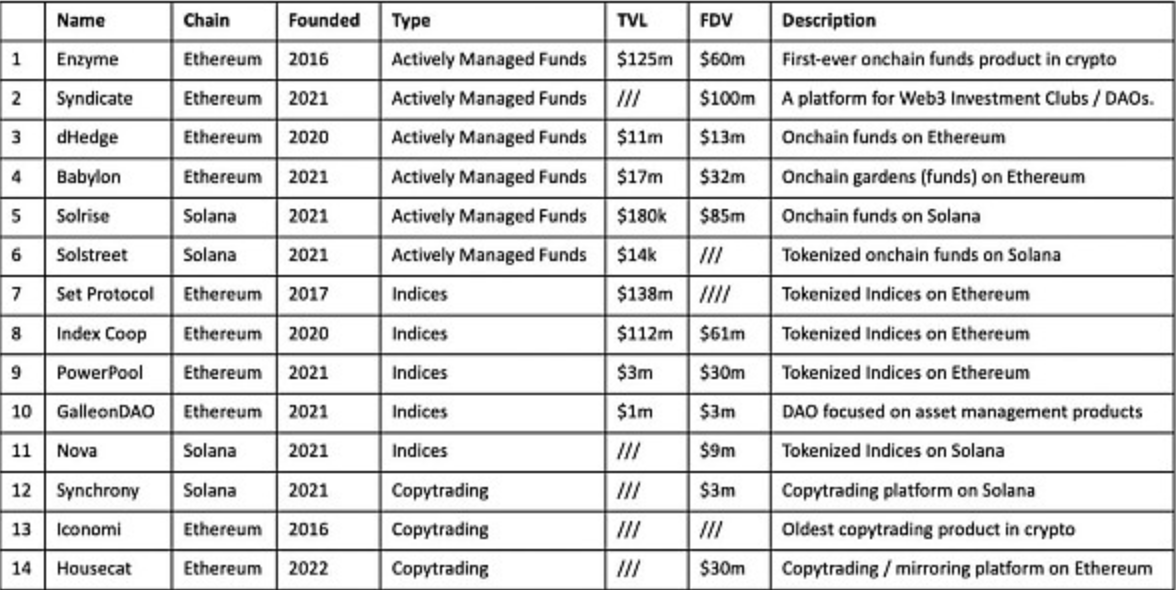
TVL and FDV of major decentralized asset management protocols as of May 2022
-
A brief introduction to the top-ranked @Enzyme:
-
Enzyme (formerly Melon) is an on-chain asset management protocol launched in 2017. Fund managers can create their own portfolios, while investors can choose specific managers to invest with. Enzyme’s key advantage lies in its broad compatibility across Ethereum, supporting a wide range of synthetic assets and enabling rich, strategic portfolio configurations.
-
Its vision is simple — putting hedge funds on the blockchain. The platform hosts around 1,000 “vaults,” most structured like on-chain funds managed by individuals, while some are DAO treasuries governed by community members.
-
In early 2021, Enzyme launched version V2, supporting over 180 assets, integrating AMM pools for shorting and liquidity mining. It also introduced Sulu, a new DeFi product with 9 major upgrades, including borrowing capabilities (previously only lending), tokenization and transfer of vault shares, integration with major DeFi protocols like Aave and Balancer, and fee compensation for portfolio managers via on-chain transactions.
-
Business Logic: Traditional vs. Decentralized Asset Management Protocols
-
In traditional asset management, the platform acts as a centralized entity providing management services. Investors entrust funds to the platform, which deploys them via internal fund managers responsible for selecting assets, formulating strategies, and executing trades. Investment products represent these managed portfolios, and investors gain exposure by purchasing shares. Ultimately, investors benefit from professional management and capital appreciation.
-
In contrast, decentralized asset management replaces the centralized structure with smart contracts that automatically enforce investment rules without intermediaries. The role of fund managers is replaced by programmable logic within the contract, which governs assets based on pre-defined conditions. Investment products become self-executing, automated components of the protocol.
-
Crucially, users interact directly with smart contracts rather than going through centralized entities. They can buy, redeem, or transfer assets and adjust strategies according to personal goals. The transparency and immutability of smart contracts ensure real-time visibility and verifiability of holdings.
Decentralized Asset Management & DeFi
On-chain asset management, alongside stablecoins and custody, was among the earliest conceptualized blockchain use cases. Today, decentralized asset management can be seen as a broader category than DeFi itself.
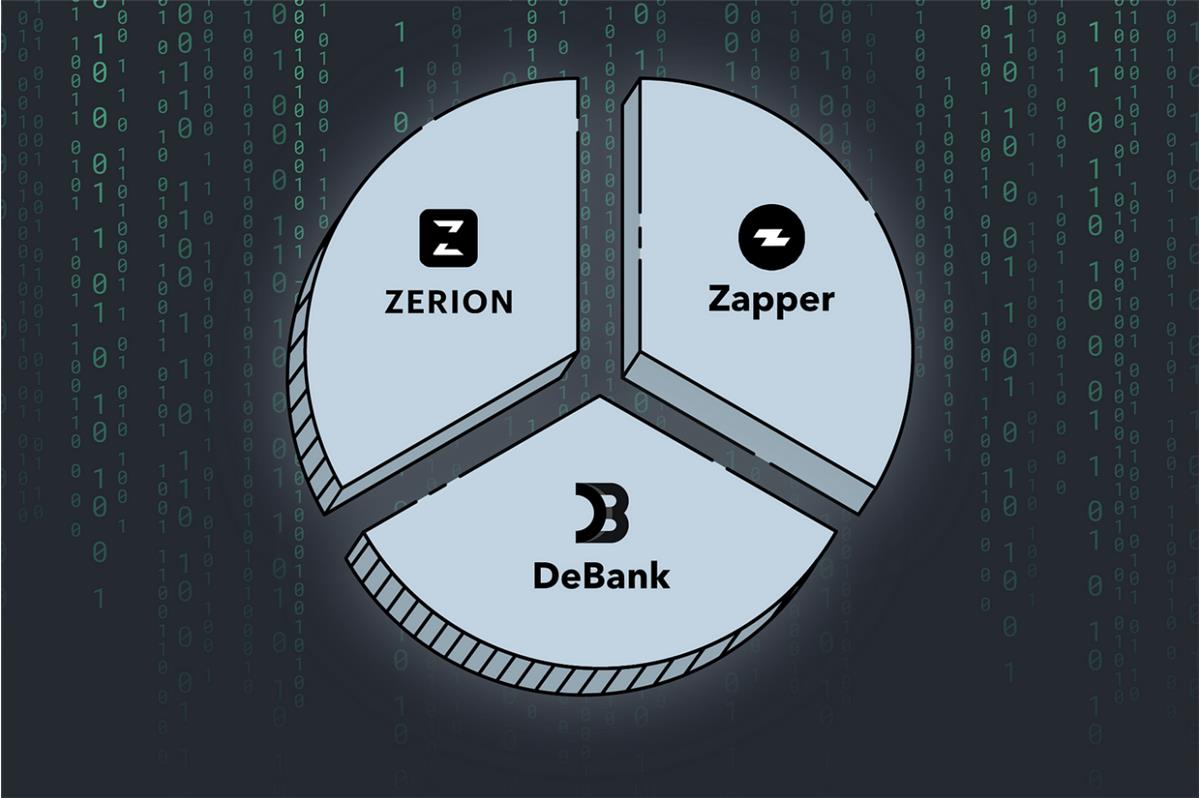
One particularly notable subset of tools within DeFi includes data-driven asset management platforms like DeBank, Zerion, and Zapper. These tools track and visualize on-chain assets, offering convenience and clarity for DeFi users navigating complex ecosystems.
-
The Rising Complexity of DeFi Creates Opportunities for Asset Management
As DeFi diversifies, the complexity of yield-generating strategies increases dramatically. From Bitcoin to public blockchains to DeFi and NFTs, complexity rises step by step—and will continue to grow. With more exotic assets entering the chain and enhanced composability, the variety of yields and financial instruments multiplies. The greater the complexity, the larger the opportunity for decentralized asset management.
Importance of Asset Management in Blockchain
While DeFi unlocks numerous profit channels, it also fragments our crypto assets. Users engage across multiple applications—some requiring collateral, others involving conversions, issuing new tokens, or locking assets in contracts. As strategies multiply, it's easy to lose track of past interactions. On-chain asset management tools effectively solve this problem.
They allow users to manage cross-chain assets from a single interface, opening up a new world of decentralized, non-custodial, and highly accessible investment opportunities for anyone participating in DeFi.
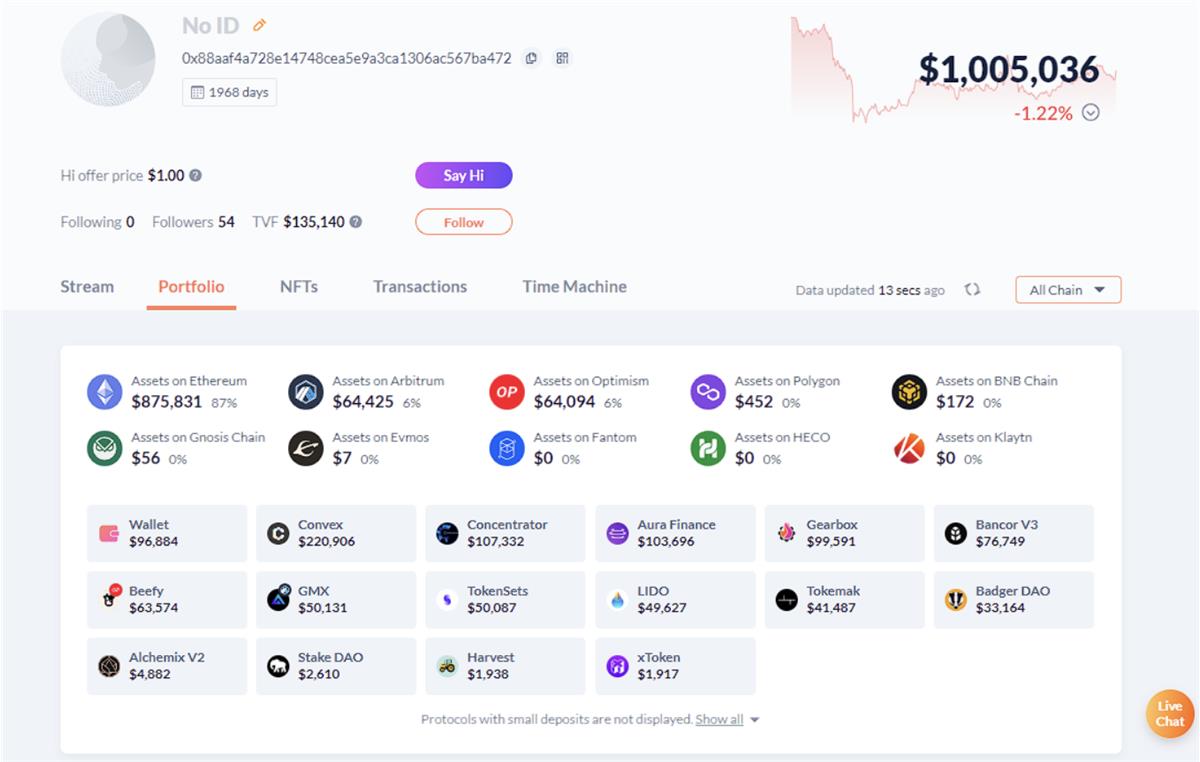
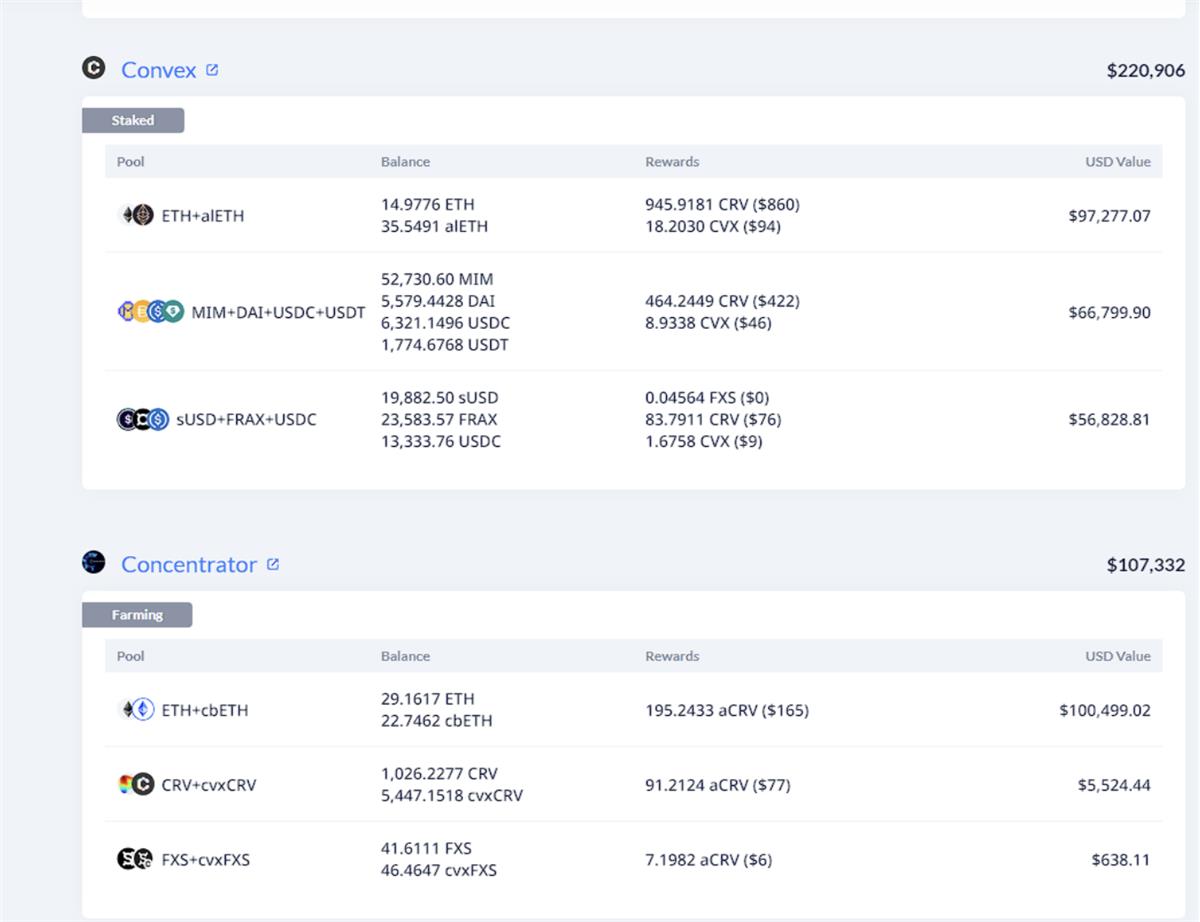
Visualization of a user’s wallet on DeBank
The image clearly shows the projects the wallet has participated in, assets held within each project, investment structures, and profitability—all presented in a clear, data-rich format.
Competitor Comparison
Project Overview
-
DeBank helps users track DeFi portfolios, discover DeFi projects, compare interest rates, and identify investment opportunities through detailed real-time data.
In short, it’s an information aggregation platform covering all major DeFi projects. Users can check rankings and updated details without visiting multiple websites. By connecting their wallets, users get real-time insights into their asset performance. Its asset-tracking feature is also widely used to monitor “smart money” wallets.
1. Key features available on DeBank:
a) Whale monitoring: For example, if interested in $OP, users can track large $OP holders and analyze their behavior.
b) Personal asset tracking: View all on-chain assets and interaction history across chains for a given wallet.
c) Data-driven investing: Aggregates statistics across four markets—collateralized lending, stablecoins, leveraged trading, and spot trading—and presents data across assets, yields, and liabilities.
d) Users can log in via Web3 wallets to access DeBank Hi, enabling Web3-native social interactions and governance voting.
e) Comprehensive project database with categorization, descriptions, token distribution, and pool types for easy reference.
f) Social feed integrating user posts and latest crypto news.
Main competitors: Zerion, Zapper
-
Zerion allows users to trade, invest, lend, swap, and perform all DeFi activities while retaining full custody of their funds. Acting as a gateway to DeFi protocols, users connect their wallets to manage assets seamlessly. It also offers on-chain data viewing capabilities.
-
Zapper is a DeFi asset management platform designed for one-stop investment, monitoring, and management of all DeFi assets and liabilities.
Positioning
1. DeBank
a) DeBank positions itself as a “decentralized digital asset management platform,” focusing heavily on asset tracking and comprehensive portfolio oversight. Compared to others, DeBank emphasizes depth in data and analytics.
b) Ideal for investors who want full visibility into every protocol and exchange they interact with, especially those focused on DeFi data analysis.
2. Zapper
a) Zapper aims to become the “Web3 homepage,” managing users’ entire Web3 portfolios—from DeFi to NFTs and emerging assets—through a unified investment interface.
b) Its appeal lies in balanced functionality that works together seamlessly, allowing users to closely monitor their overall DeFi portfolio.
3. Zerion
a) Zerion defines itself as a “DeFi investment and management platform,” enabling users to build and easily manage full DeFi portfolios from a single entry point. Its core asset-tracking features resemble Zapper’s.
b) Zerion is ideal for active crypto traders looking to diversify their portfolios efficiently.
-
Overall, all three platforms serve DeFi users but differ in focus: DeBank prioritizes comprehensive asset tracking, Zapper emphasizes investment optimization, and Zerion centers on trading and portfolio activity.
Product Models
1. DeBank operates as a decentralized asset management platform, delivering holistic digital asset management. Aligned with its mission to bridge investors and the DeFi world, DeBank excels at helping users deeply understand the data behind DeFi.
-
Account Overview: Includes DeBank’s red leaderboard (linked to social features), profile details tied to the address (e.g., duration of use, associated Twitter, Discord, email), and total asset balances across all chains under the same address.
-
Address Interaction Info: Displays who the address follows, who follows it, and the total assets of followed addresses. Clicking “Following” or “Followers” reveals full lists.
-
Wallet & Token Details: Shows information about all tokens held under the same address.
-
Project Details: Provides insight into how much the address has invested in each project and granular details about those investments.
-
NFT Information: Accessible via the NFT tab, showing all NFTs owned across chains (within DeBank’s index) and their market values.
-
Zapper stands out due to its well-balanced feature set that helps users monitor their entire DeFi portfolio. Notably, Zapper places special emphasis on liquidity provision and yield farming.
-
Zapper enables users to directly invest in liquidity pools, turning them into liquidity providers (LPs) within minutes. Beyond its user-friendly interface, Zapper simplifies liquidity provisioning by automating tasks related to optimizing asset allocation across pools.
-
Zerion offers similar core functions to Zapper, with added support for accessing lending markets, liquidity pools, and yield farms. It also supports fiat on-ramps.
-
Compared to DeBank, both Zerion and Zapper are decentralized asset management platforms but differ in product design. While all offer asset tracking, Zerion provides a scalable solution spanning AMMs, lending, derivatives, and synthetic assets. Zapper, while aggregating trades, also focuses on emerging assets like NFT mints and ENS registrations.
At their core, DeBank, Zerion, and Zapper all deliver convenient digital asset management. However, they differ in execution and points of innovation. Beyond serving diverse DeFi needs and data tracking, each platform innovates in unique ways.
For instance, DeBank launched DeBank Hi, enabling Web3-style community engagement. Zapper expanded into NFTs, announcing integrations with Arbitrum and Optimism.
Advantages of DeBank as a DeFi Aggregation Platform:
Strengths:
-
Multi-chain Support: DeBank covers over 30 major blockchains, enabling cross-chain asset management and monitoring.
-
Extensive Project Coverage: Over 1,000 DeFi projects indexed, including mainstream protocols, facilitating easy discovery and management.
-
Address Following Feature: Users can follow other addresses to monitor their asset movements and activities in real time.
-
Detailed Asset & Project Insights: Offers comprehensive views on assets, investments, NFTs, and transaction history for informed decision-making.
-
Real-Time Updates: Continuously updates supported projects and chains to stay aligned with market developments.
However, there are areas where DeBank could improve:
Areas for Improvement:
-
Real-Time Alerts: Currently lacks push notifications. Users must manually refresh to see updates. Adding alert functionality would enhance responsiveness.
-
Broaden Project & Chain Support: Despite extensive coverage, some projects and chains remain unsupported. Expanding indexing scope would improve user experience.
-
Mobile Experience Optimization: Mobile and desktop versions differ in functionality. Enhancing mobile parity with desktop features would create a more consistent experience.
Revenue Models
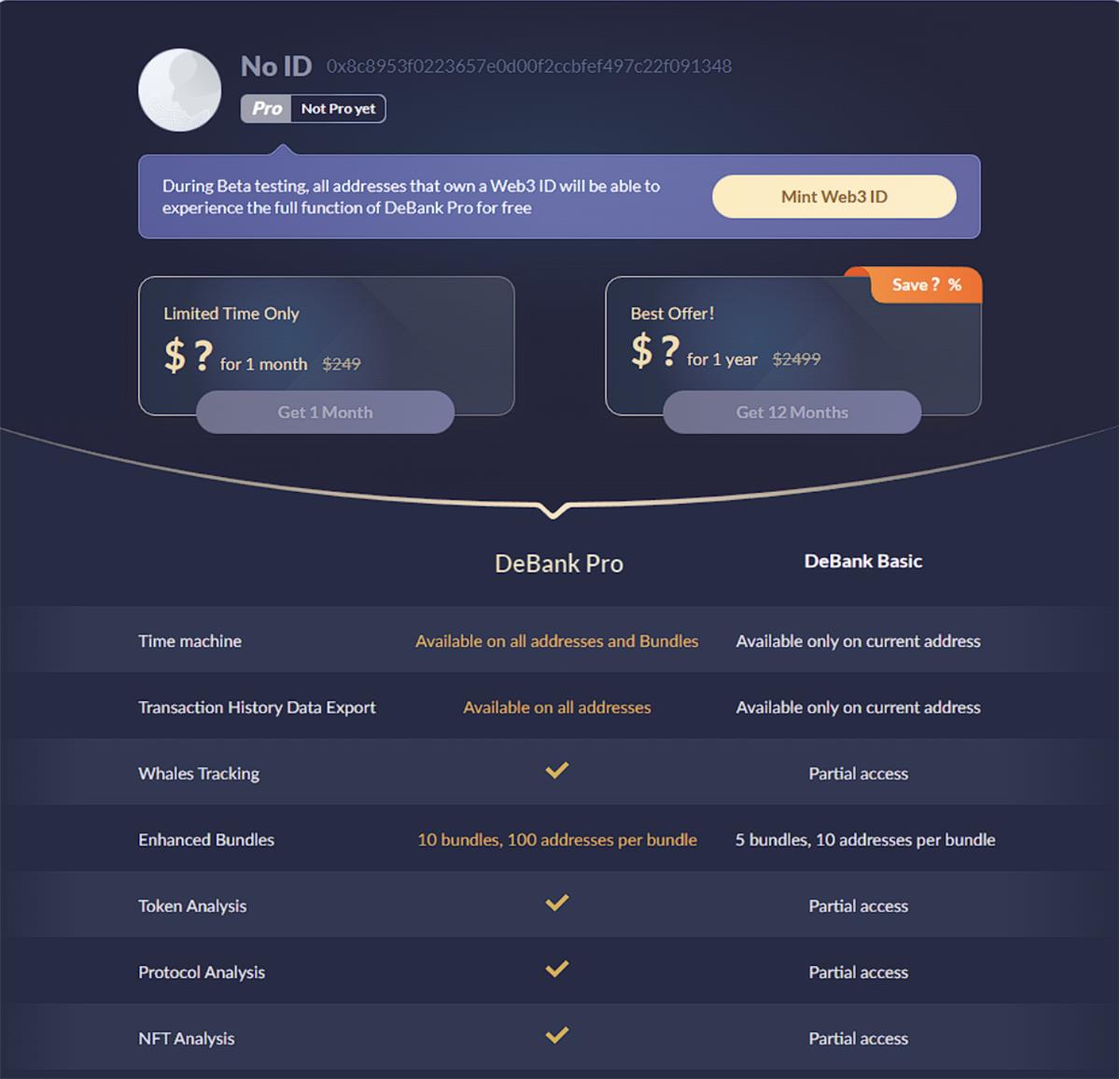
DeBank: Primary revenue comes from Web3 ID and DeBank Hi. Minting a Web3 ID costs $96, and posting a message on DeBank Hi costs $1. A premium DeBank Pro version is planned for future monetization.
Zapper: Monetizes primarily by selling its Zapper API, providing data to other protocols—including DeFi metrics, NFT valuations, and liquidity and pricing data across AMMs.
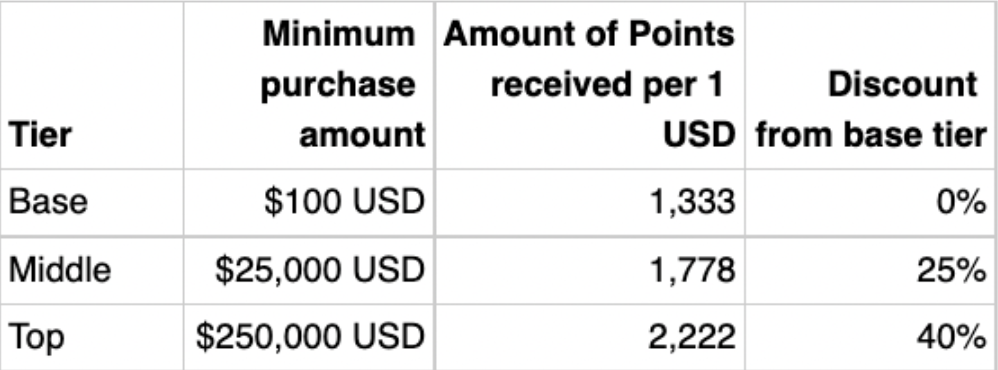
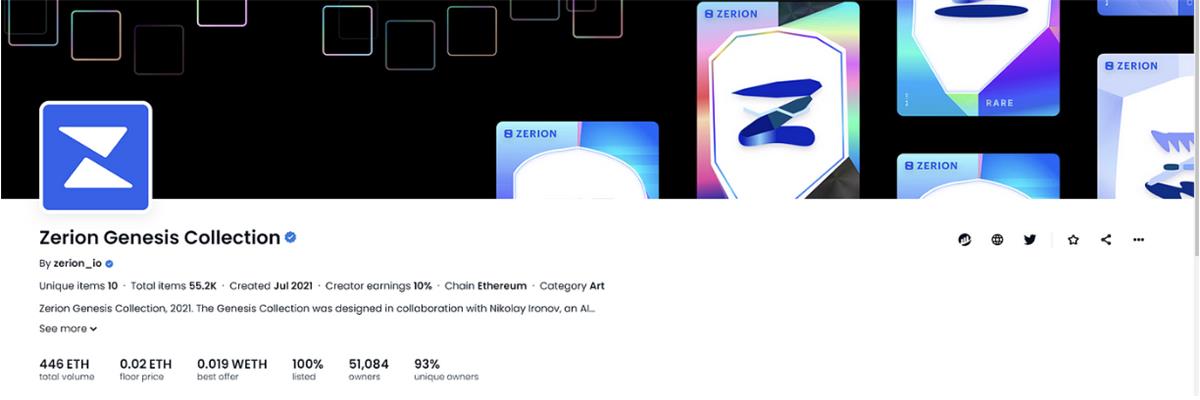
Zerion: Main revenue sources are its native Swap function and transaction fees from the Zerion Genesis Card. Each Ethereum swap incurs a 0.5% fee, though Genesis Card holders enjoy fee waivers and priority routing.
-
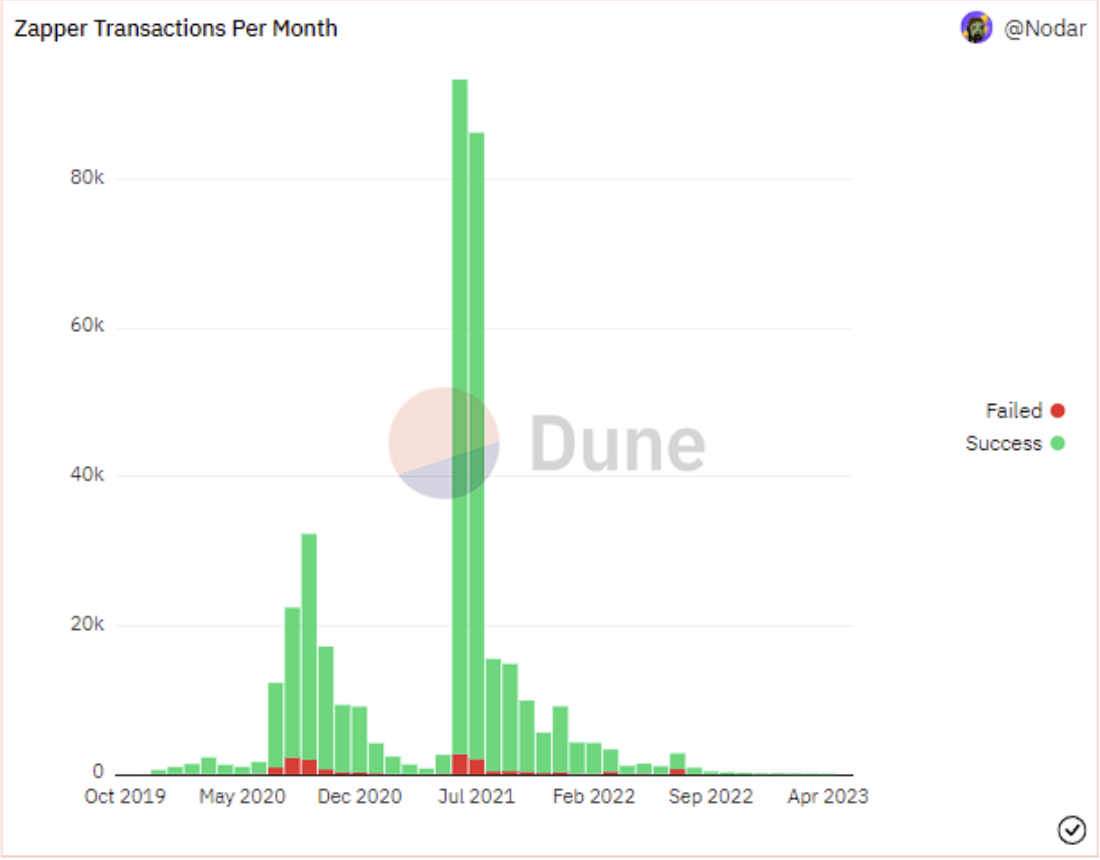
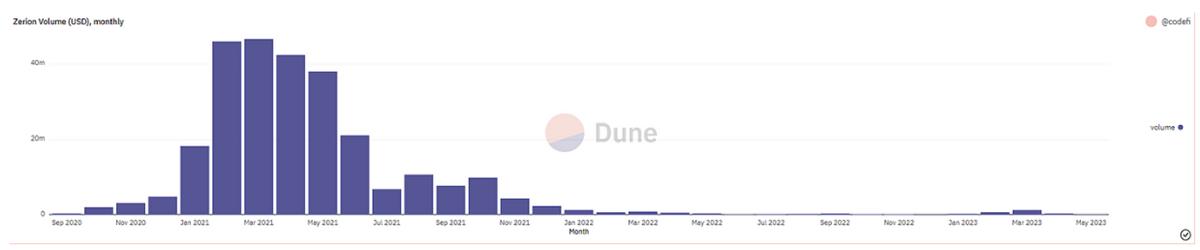
Monthly Trading Volume Comparison: Zapper vs. Zerion
Zapper
Zerion
Funding History
DeBank
In December 2021, DeBank raised $25 million in equity financing at a $200 million valuation, led by Sequoia China, with participation from Dragonfly, Hash Global, Youbi, Coinbase Ventures, Crypto.com, Circle, Ledger, and Distributed Capital.
Zerion
In December 2019, Zerion raised $2 million in seed funding, led by Placeholder.
In July 2021, it completed an $8.2 million Series A round led by Mosaic Ventures, with participation from Placeholder, DCG, Lightspeed, Blockchain.com Ventures, and others.
Zapper
In May 2021, Zapper raised $15 million in a Series A round led by Framework Ventures, with participation from Sound Ventures, entrepreneur Mark Cuban, Nascent, ParaFi Capital, Distributed Global, Spartan Group, DeFiance Capital, Maven Capital, Sino Global Capital, LongHash Ventures, Cooley LLP, and Stani Kulechov.
Website Analytics
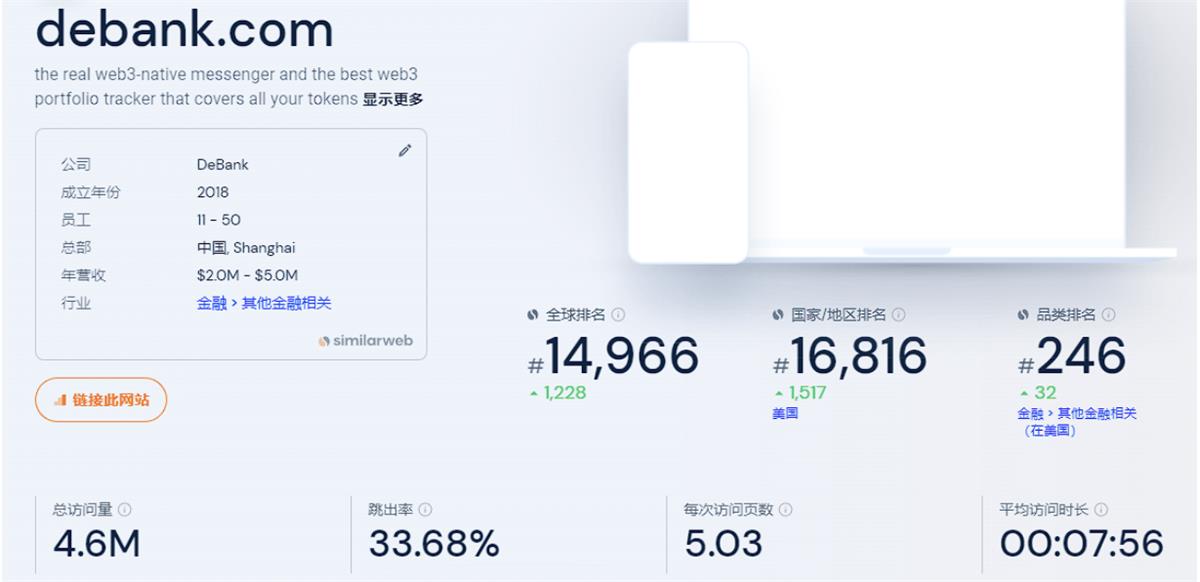
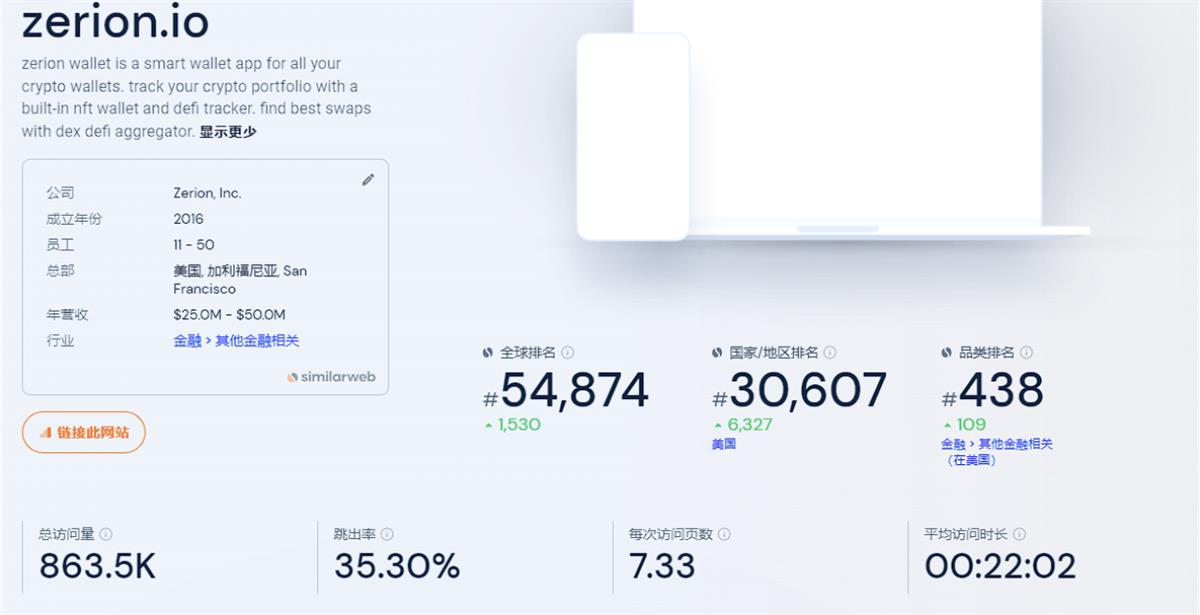
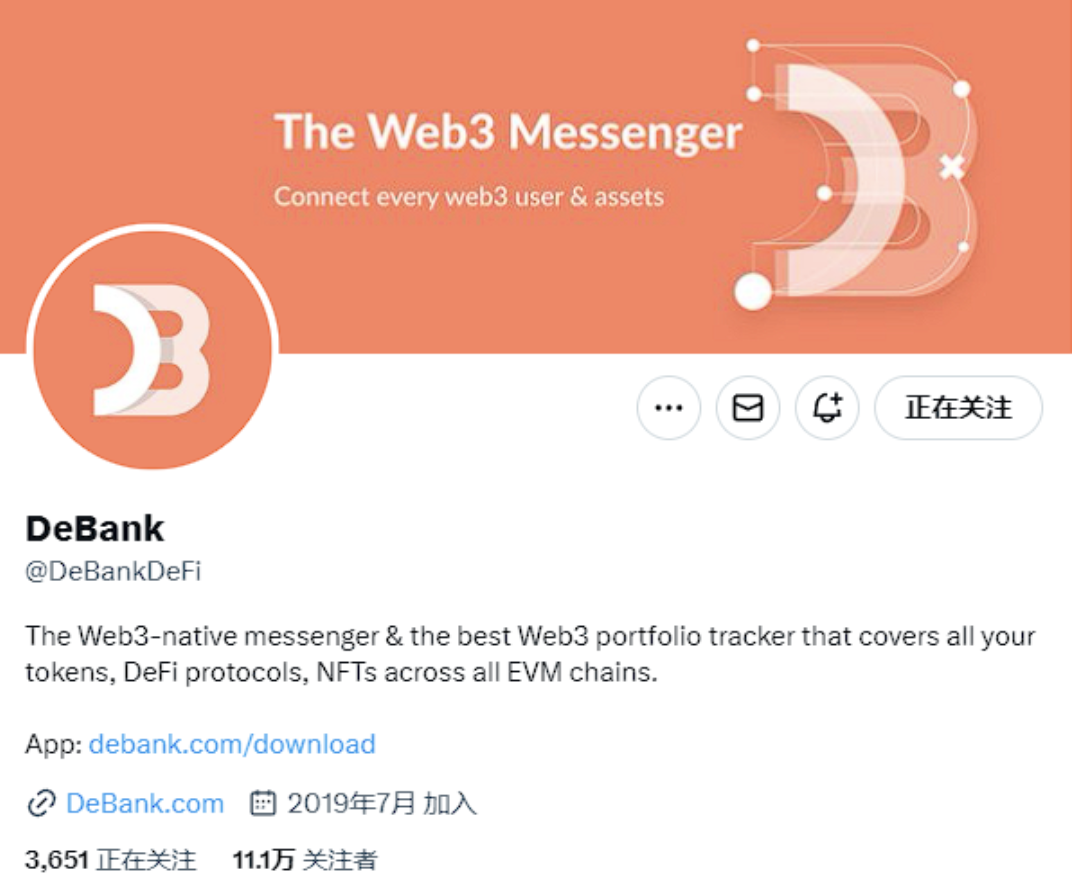
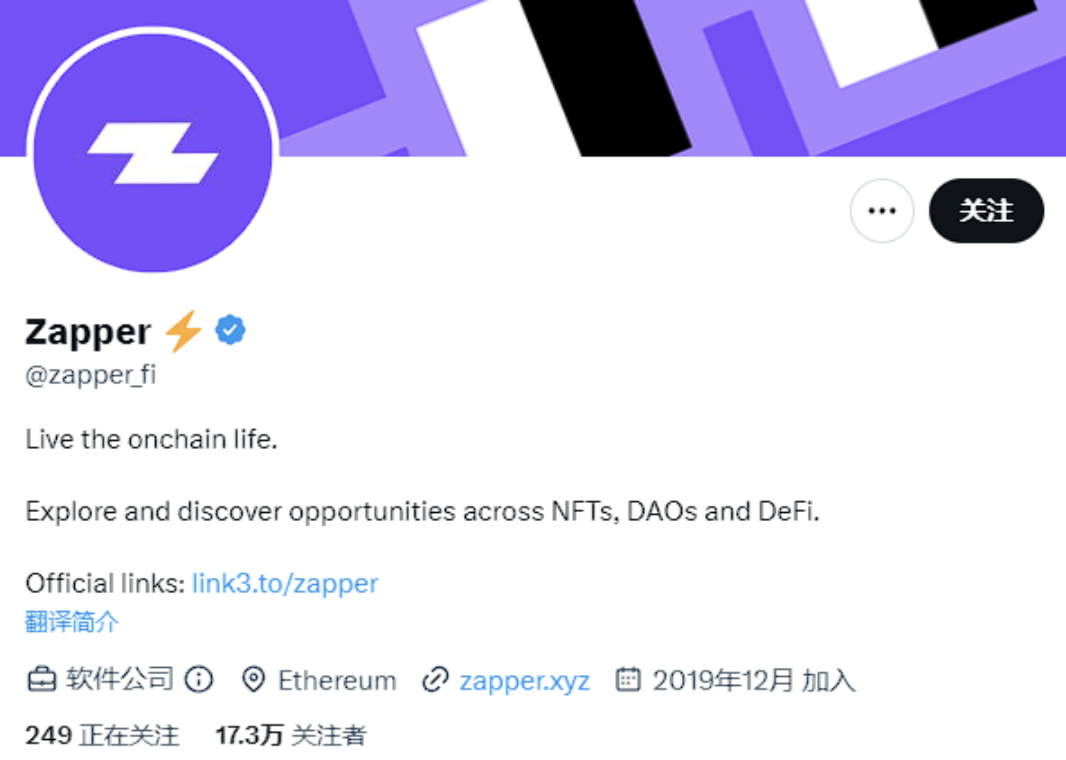
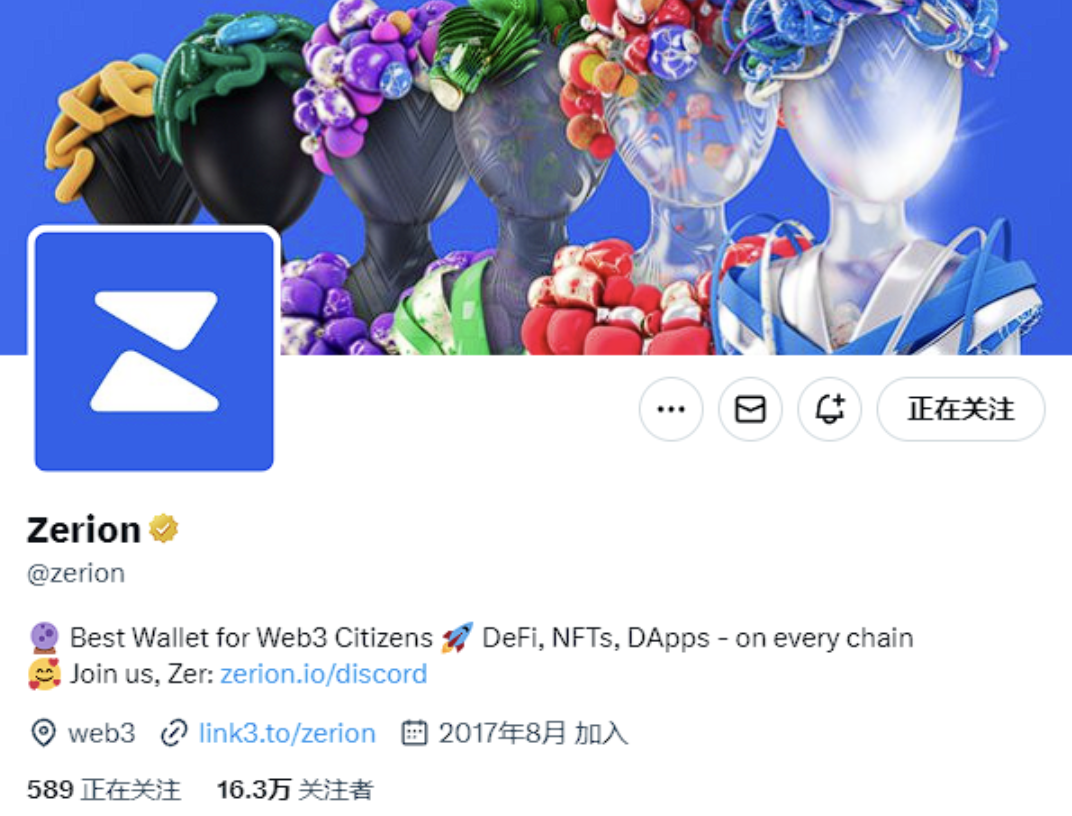
Social Media Metrics
Challenges
-
Currently, no single decentralized asset management product offers all-in-one functionality. For individual platforms, differentiation is crucial. The optimal approach for users is combining multiple tools. Moreover, the biggest challenge for decentralized asset management may stem less from product limitations and more from declining enthusiasm in the broader DeFi market.
-
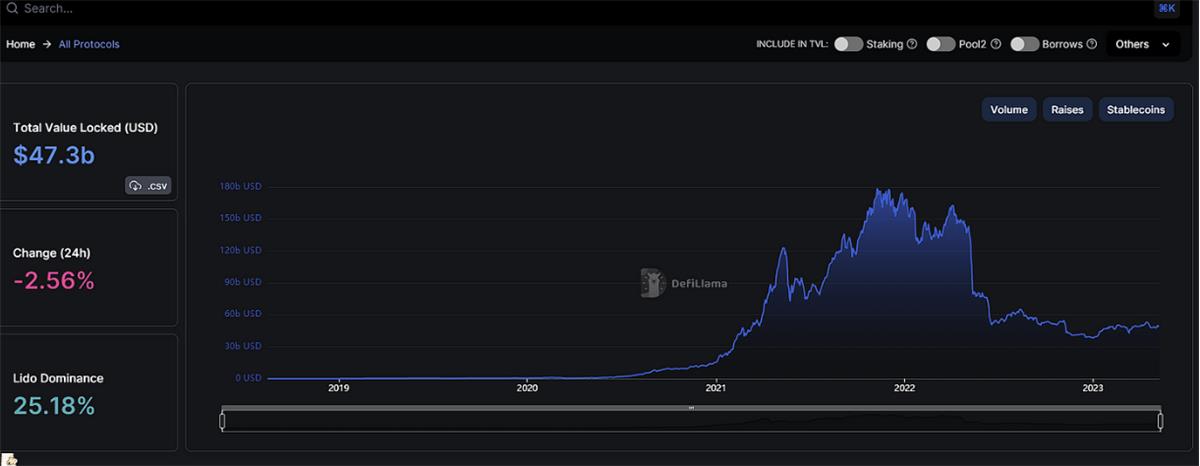
DeBank, Zapper, and Zerion primarily serve on-chain DeFi users. Given the macro environment, DeFi’s TVL has significantly declined since 2021, reflecting waning interest. Under such pessimistic conditions, driving substantial traffic to any single product becomes extremely difficult. Furthermore, rapid DeFi growth is unlikely in the near term—it will be a long, arduous journey of innovation and development.
-
Due to the inherent complexity of asset management protocols, meeting all user needs is extremely challenging. Different users have varying asset allocations, risk tolerances, and return expectations, making it difficult to design a one-size-fits-all solution.
-
In a competitive market, speed of onboarding new assets becomes critical. As new protocols emerge rapidly, asset management platforms must adapt quickly to integrate them and attract users. However, this is no small task. Platforms must conduct thorough security audits to ensure reliability, consuming significant time and resources—often resulting in slow listing speeds.
Outlook
-
With ongoing advancements in blockchain technology and the maturation of DeFi markets, data-driven asset management protocols hold vast future potential. Currently, these protocols have proven effective in asset tracking and data querying. As new DeFi innovations emerge, platforms that keep pace with market trends will gain traction.
-
Looking ahead, asset management protocols may deepen integration with other fields—such as artificial intelligence and RWA (real-world assets)—to deliver smarter, more comprehensive financial services.
a) In today’s AI-driven landscape, the fusion of asset management and AI could attract growing interest. Potential high-impact use cases include:
i) Automated Portfolio Management: AI-powered machine learning models can handle portfolio planning, strategy evaluation, pool weighting, signal generation, and sentiment monitoring, enabling autonomous agents for active management.
ii) Fraudulent Wallet Detection & Tagging: AI can analyze individual addresses, trace associated wallets, detect scam patterns, and flag malicious accounts in databases—helping users avoid fraud.
iii) Market Forecasting & Intelligent Investment Decisions: Leveraging machine learning and predictive analytics, AI can enhance market prediction accuracy, offering technical and fundamental analysis for automated DeFi trading and portfolio management.
b) Synergy with RWA (real-world assets): RWA is gaining momentum as a bridge linking DeFi with the multi-trillion-dollar traditional finance (TradFi) industry. By tokenizing physical or intangible off-chain assets, they become tradable on-chain. If asset management protocols can strategically integrate with RWA, they stand to access a vastly larger market.
Overall, the future of asset management protocols remains highly promising. To stand out, individual platforms must continuously adapt to market shifts, embrace new innovations, and carve out unique value propositions through sustained creativity.
Join TechFlow official community to stay tuned
Telegram:https://t.me/TechFlowDaily
X (Twitter):https://x.com/TechFlowPost
X (Twitter) EN:https://x.com/BlockFlow_News
 Bing Ventures