








Analyzing Ethscriptions on Ethereum: Backward Step or New Exploration?
TechFlow Selected TechFlow Selected
Analyzing Ethscriptions on Ethereum: Backward Step or New Exploration?
There is much debate over whether Ethscriptions are a fleeting bubble or an exciting new trend, and ultimately, this will be decided by community consensus.
 Navigating Web3 tides with focused insights
Author: Pedro Solimano
Compiled by: TechFlow

Over the weekend, a new protocol for inscribing images on Ethereum sparked significant interest, enabling digital objects to be created and shared on Ethereum using call data—called Ethscriptions, an apparent nod to Ordinal Inscriptions.
Developed by Tom Lehman, co-founder and former CEO of Genius.com, the project ignited explosive attention upon launch. According to Lehman, nearly 30,000 Ethscriptions were created in under 18 hours, and he declared the release a "huge success" on Twitter.
How Do Ethscriptions Work?
-
Any successful Ethereum transaction whose input data (when interpreted as UTF-8) is a valid data URI will create an Ethscription, provided that the data URI is unique. Duplicate content is ignored. All valid MIME types are supported.
-
For a URI to remain unique, no earlier transaction in the same block or in previous blocks must contain an Ethscription with identical content.
-
Any Ethereum transaction whose input data is the hash of a valid Ethscription constitutes a valid transfer of that Ethscription, provided the sender owns the Ethscription.
Ethscriptions allow non-financial and arbitrary data to be written onto the Ethereum blockchain, as long as file sizes do not exceed 96 kilobytes, enabling users to inscribe any type of file. Although currently limited to images, the creator says this will change in the future.
These inscriptions leverage Ethereum's so-called "calldata," which refers to data provided during smart contract calls. Lehman noted this method is cheaper and more decentralized than using contract storage. The protocol "guarantees uniqueness of all valid Ethscription content," wrote its creator on Twitter.
Unlike Ordinals, the Ethereum community has shown clear openness toward this innovation and experimentation.
"What excites me about Ethscriptions, much like Ordinals, is seeing developers use blockchain technology creatively again," said Adam McBride, self-described NFT archaeologist. "It's precisely this kind of experimentation that drives innovation and adoption." Mirroring the frenzy around Ordinals, Ethscriptions have also drawn massive user interest, even causing several outages on the Ethscriptions platform.
Here’s a simple guide using ETHS as an example to demonstrate how to mint an Ethscription:
-
Copy the code: data:,{"p":"erc-20","op":"mint","tick":"eths","id":"any number within 21000","amt":"1000"}, and encode it into hexadecimal via a conversion tool;
-
Open your wallet, send 0 ETH to your own address, and paste the generated hexadecimal into the data field;
-
Confirm the transaction.
As always, with FOMO comes FUD. Some in the community believe Ethscriptions represent a step backward. Crypto KOL Chainleft also argued that Ethscriptions bring little innovation. First, although the protocol debuted over the weekend, people have been storing custom data/art in calldata since as early as 2016. This technique has existed for years. They achieved it by pushing the boundaries of available tools and technologies at the time, though it was never considered an ideal way to store art. While accessible, such data wasn't assigned to tokens, which is why Ethscriptions attempts to solve this through off-chain consensus (fairness).

Second, from a functional standpoint, state data offers superior capabilities, such as runtime dynamism or programmable art. Compared to Inscriptions (IS), Ethscriptions (ES) are far more likely to be pruned. IS also benefit from more storage nodes than ES. Additionally, ES can be natively called by Ethereum smart contracts, whereas IS cannot. Neither supports executing runtime functions.
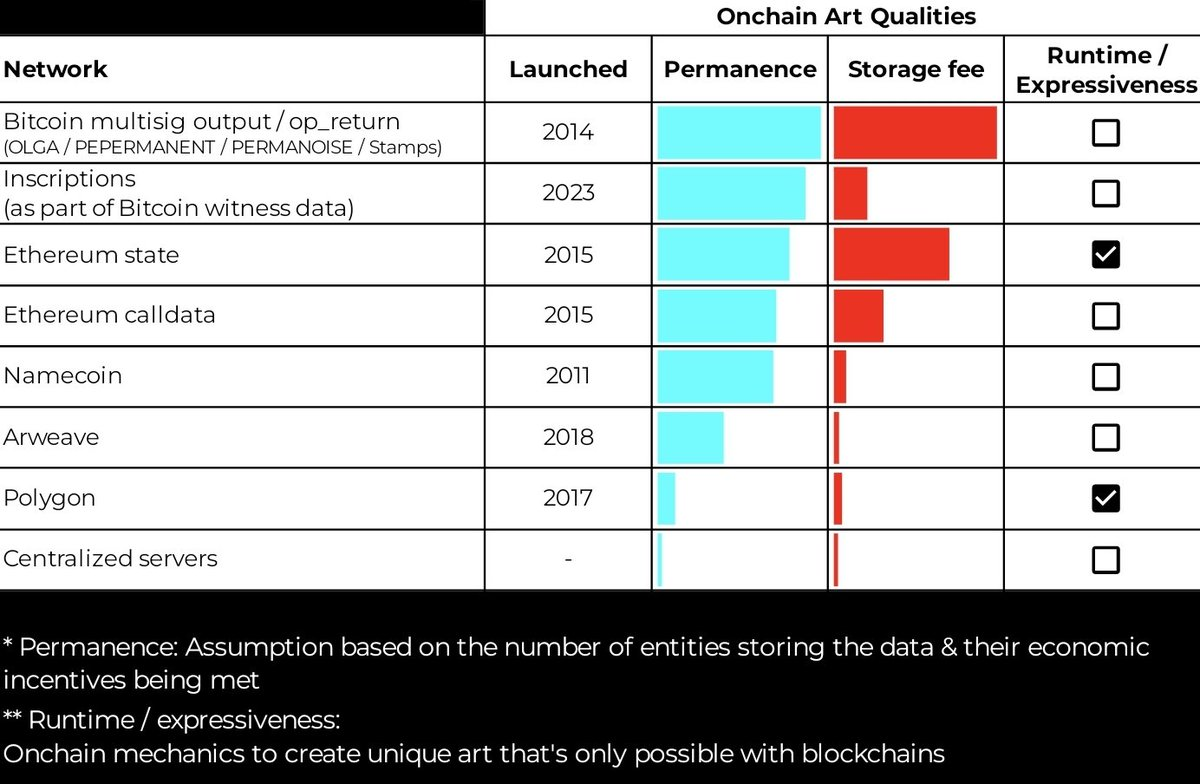
Overall, opinions vary widely on whether Ethscriptions are a fleeting bubble or an exciting new trend—the ultimate verdict depending entirely on community consensus.
References:
https://twitter.com/ChainLeftist/status/1670071115064942599
https://twitter.com/dumbnamenumbers/status/1669822912579223552
Join TechFlow official community to stay tuned
Telegram:https://t.me/TechFlowDaily
X (Twitter):https://x.com/TechFlowPost
X (Twitter) EN:https://x.com/BlockFlow_News
 Decrypt


