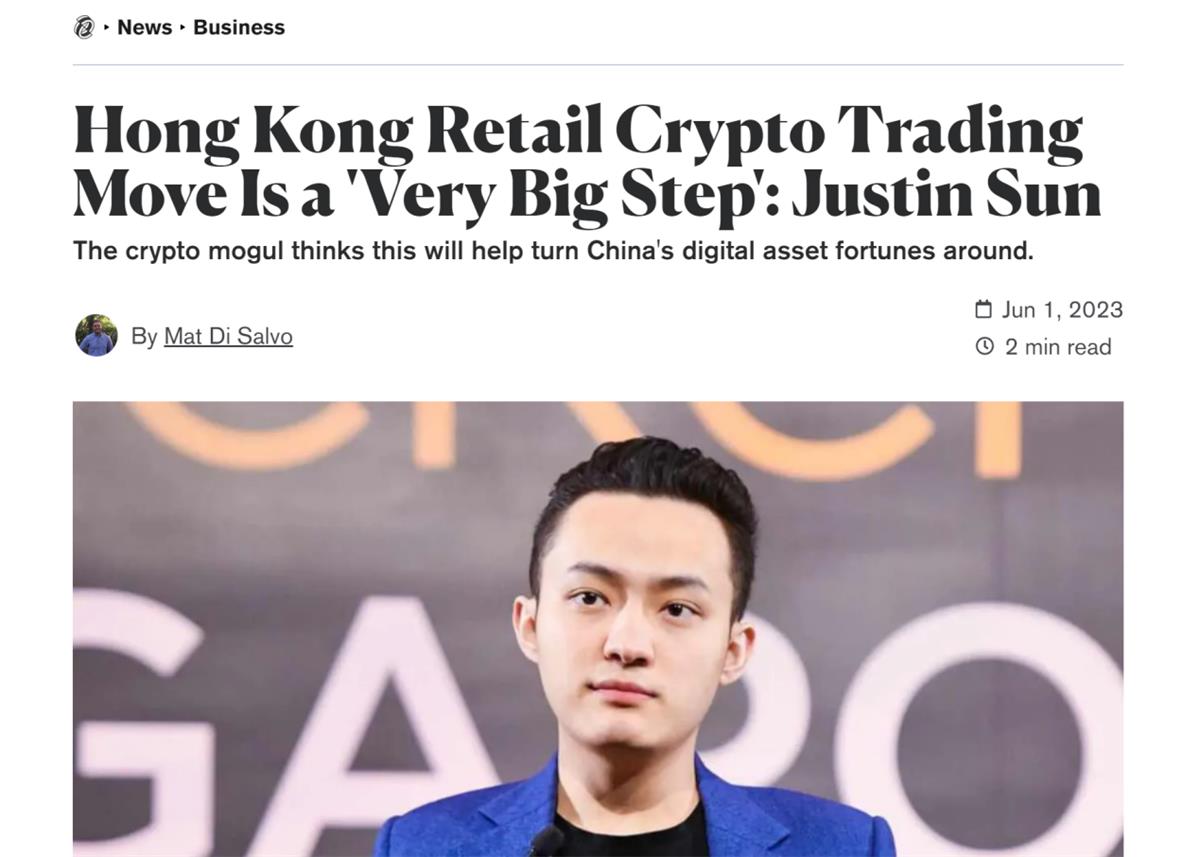
Decrypt Exclusive Interview with Justin Sun: Hong Kong's Opening of Crypto Retail Trading is "A Major Step Forward"
TechFlow Selected TechFlow Selected
Decrypt Exclusive Interview with Justin Sun: Hong Kong's Opening of Crypto Retail Trading is "A Major Step Forward"
There are many overlapping areas between cryptocurrency and AI, which offer significant potential and opportunities for the development of both.
 Navigating Web3 tides with focused insights
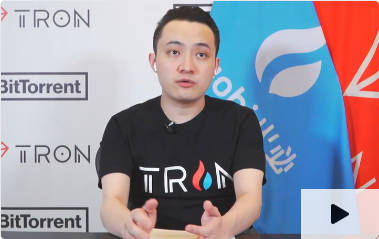
Recently, Justin Sun, founder of TRON and member of Huobi Global Advisory Board, sat down for an exclusive interview with Decrypt, a leading international blockchain media outlet. He shared detailed insights on Hong Kong's latest crypto regulations, Huobi's expansion in Hong Kong, the Dominica National Token, and how AI is empowering the crypto industry.
Justin Sun stated that starting June 1, retail investors will be fully permitted to trade cryptocurrencies in Hong Kong. Aside from Ukraine and Japan, Hong Kong is now the third jurisdiction globally to fully license cryptocurrency exchanges. He emphasized that this is highly significant and will set a strong precedent for participants across Asia.
According to Justin Sun, Huobi lists BTC, ETH, TRX, and most of the top 20 ranked tokens in the market in Hong Kong. However, he noted that Huobi still requires clearer guidance from Hong Kong regulators regarding which specific crypto tokens are eligible for listing.
Justin Sun mentioned that under Hong Kong’s new crypto policies, certain qualified Chinese citizens can now engage in crypto trading on Huobi.
With continuous technological advancements, Justin Sun also expressed his anticipation for a closer integration between AI and cryptocurrencies in the future, delivering more advanced, secure, and efficient services to users.
Hong Kong Takes a Key Step Forward—Huobi Moves In
In his interview with Decrypt, Justin Sun revealed that Huobi will begin serving Hong Kong users starting June 1. The Hong Kong Monetary Authority (HKMA) has announced that crypto firms have an 18-month grace period to apply for licenses and continue offering services.
“During this period, there will be a licensing application process. So we could obtain approval from the Hong Kong government at any time. Meanwhile, we’re also gaining access to more detailed information about how to operate a crypto exchange in Hong Kong. I think we’re doing everything simultaneously. Regulation isn’t being released all at once—it’s coming in batches. Therefore, we need to follow step by step,” said Justin Sun.
“This is a major step forward for China in the field of cryptocurrency,” he added.
He further explained that the appeal of Hong Kong’s crypto policy lies in the fact that Chinese citizens who hold Hong Kong residency can also trade on Huobi.
As a Special Administrative Region established under China’s “One Country, Two Systems” framework, Hong Kong enjoys a high degree of autonomy.
Under Hong Kong’s new rules, retail investors are allowed to trade mainstream digital assets such as Bitcoin and Ethereum. However, crypto firms must comply with regulations set by the Securities and Futures Commission (SFC) and register accordingly, or face penalties.
As Justin Sun noted, Huobi currently lists BTC, ETH, TRX, and most of the top 20 market-ranked tokens in Hong Kong. Still, he believes Huobi needs more explicit guidance from Hong Kong authorities regarding which tokens are eligible for listing.
However, Justin Sun pointed out that so far, the Hong Kong government has only provided high-level standards concerning liquidity or crypto indices, without specifying exact index requirements or minimum liquidity thresholds. As a result, Huobi plans to support as many crypto tokens as possible during the initial phase. “Ultimately, we’ll maintain regular communication with regulators. If they determine certain tokens are unsuitable for listing, we may delist them,” he said.
Legalization of Crypto Trading in Hong Kong Will Create Ripple Effects
“China’s cryptocurrency regulation has historically been very strict. For a long time, the environment was uncertain. Therefore, it wasn’t clear whether trading crypto in Hong Kong was legal. But starting June 1, it will be fully permitted. Aside from Ukraine and Japan, Hong Kong is now the third region globally to fully license crypto exchanges. I believe this is extremely important—it will set a strong example for every participant across Asia, and we’ll also benefit from shifts in U.S. crypto regulatory policies,” said Justin Sun.
Justin Sun also noted that the U.S. remains highly restrictive in its crypto regulation, and the industry may see more companies “fleeing” to other jurisdictions. Today, U.S.-based exchanges including Coinbase and Gemini are already exploring alternative locations such as the UAE.
Moreover, Justin Sun believes that Hong Kong’s legalization of crypto trading platforms will impact mainland Chinese users.
“Over 20 million people from mainland China visit Hong Kong annually. So even opening a free zone within Hong Kong’s jurisdiction provides a massive experimental ground.”
Regarding uncertainties in crypto regulation, Justin Sun emphasized the remarkable resilience of the crypto industry.
“Just like Satoshi Nakamoto designed Bitcoin. All the different founders designed cryptocurrencies to be decentralized, private, and secure. Therefore, I believe that even in the face of regulatory crackdowns, cryptocurrencies remain highly resilient.”
Justin Sun stressed that prior to Hong Kong’s new policy, there were disadvantages. Many non-crypto natives, especially ordinary investors, were easily influenced by media reports and regulatory warnings. Not just in China, but also in countries like India and Malaysia, where regulators issued various warnings, potentially deterring many investors from entering the crypto space. Hong Kong, however, offers clarity and reassurance to investors.
Dominica’s National Token Holds Great Promise—AI Will Accelerate Industry Growth
While discussing Hong Kong’s new crypto policies, Justin Sun also provided detailed insights into the Dominica National Token. Last November, Huobi, TRON, DMC Labs, and the government of Dominica announced a major collaboration. The government authorized TRON to issue the Dominica Coin (DMC) and decentralized digital identities (DID). Token holders will be granted national digital identity from Dominica.
Justin Sun described the Dominica National Token as a decentralized identity program with great potential. In fact, before Dominica entered this space, small nations like Estonia and Palau had already pioneered similar initiatives. Users with valid government IDs can register themselves on an NFT protocol—a concept known in the industry as soulbound tokens—where they retain ownership of their identity, KYC data, and related information.
“Now, when users register on Huobi, they can also obtain a Metaverse ID card from Dominica. Of course, it’s fully KYC-compliant. Huobi has a three-tier KYC system, and users must pass official verification,” explained Justin Sun.
Additionally, Justin Sun shared his perspective on the convergence of AI technology and the crypto industry.
“I believe AI and crypto have significant synergies. For instance, if crypto addresses are operated by AI bots, they can conduct trades based on their own analysis. They can trade on platforms like Uniswap and Sushiswap, execute derivatives trading on decentralized exchanges like DYDX, and even automate operations on centralized exchanges as long as wireless access and KYC procedures are completed. In reality, AI bots can deploy capital across different exchanges and trade autonomously. I believe this will become one of the most important industries for generating profits through AI and crypto in the future,” said Justin Sun.
Furthermore, Justin Sun believes that cryptocurrencies and blockchain can offer more secure and decentralized data storage and transmission—critical for AI applications that require processing and analyzing vast amounts of sensitive data. By leveraging decentralized technologies, AI applications can ensure data security, privacy, and censorship resistance. This integration also helps reduce potential security risks and the likelihood of data breaches.
In conclusion, Justin Sun emphasized that crypto and AI can mutually drive innovation. As the crypto market continues to expand, it presents a huge opportunity for advanced AI technologies to assist investors through better trading strategies, risk management, and investment recommendations. At the same time, advancements in AI can bring new solutions to the crypto space, such as automated trading platforms, intelligent advisory services, and more secure wallet management tools.
In short, there are many overlapping areas between cryptocurrency and AI, offering tremendous potential and opportunities for both fields. With continuous technological progress, Justin Sun looks forward to a tighter integration between these two domains in the future, delivering more advanced, secure, and efficient services to users.
Join TechFlow official community to stay tuned
Telegram:https://t.me/TechFlowDaily
X (Twitter):https://x.com/TechFlowPost
X (Twitter) EN:https://x.com/BlockFlow_News
 TRON DAO