Worldcoin: Not Just a Cryptocurrency, but an "ID" for the AI Era
TechFlow Selected TechFlow Selected
Worldcoin: Not Just a Cryptocurrency, but an "ID" for the AI Era
Achieving WorldCoin's ambitious goals still faces a series of challenges.
 Navigating Web3 tides with focused insights
Written by: Zelda
ChatGPT has triggered an artificial intelligence boom, as well as concerns about the blurring line between humans and machines. The rise of large language models (LLMs) enables AI to mimic human expression in astonishing ways, making it increasingly difficult to distinguish whether a piece of text or conversation was generated by a human or a machine. In this context, proving that one is human rather than a robot has become a critical task.
Recently, the United States held its first major hearing on artificial intelligence, where OpenAI CEO Sam Altman called for AI regulation, expressed support for legislation in the field, and voiced concerns about AI's disruptive impact on the labor market.
Interestingly, Sam Altman is attempting to address AI-related challenges through cryptocurrency and blockchain technology. He co-founded WorldCoin, which launched its ecosystem wallet, World App, in May this year, drawing widespread attention. The company aims to tackle a series of issues brought by artificial intelligence by integrating biometric iris scanning with distributed ledger technology, creating a better, fairer, and more just world. It seeks to serve as infrastructure for implementing universal basic income and contribute to solving job displacement caused by AI.
Clearly, Altman has set ambitious goals for WorldCoin, once declaring a plan to reach a milestone of 1 billion users by 2023—yet the official website currently shows only 1.7 million users. So, will WorldCoin deliver a utopian future or merely turn out to be a short-lived "get-rich-quick" scheme? This article explores the importance of proof of personhood in the age of AI, examines the solutions offered by Worldcoin, and explains how interested users can participate in the WorldCoin airdrop.
01Why Is Proving You're Human Important in the Age of AI?
There’s a famous saying on the internet: “On the internet, nobody knows you’re a dog.” Today, this problem is becoming even more serious. Imagine spending over ten hours online every day, unsure whether you’ve spent five or six of those hours conversing with various forms of neural networks—it would be terrifying.
Since the invention of the internet, digital identity has remained an unresolved issue. According to McKinsey Global Institute's report, "Digital Identity: A Key to Inclusive Growth," more than 4.4 billion people globally lack legal identification or the ability to verify their identity digitally—this remains a major barrier to accessing financial services.
Meanwhile, deep learning models continue to improve rapidly, surpassing human performance at an accelerating pace across various benchmarks. Large language models (LLMs) have also made significant progress recently, achieving performance levels comparable to the top 20% of humans in most traditional evaluations. The advancement from GPT-3.5 to GPT-4 is particularly notable.
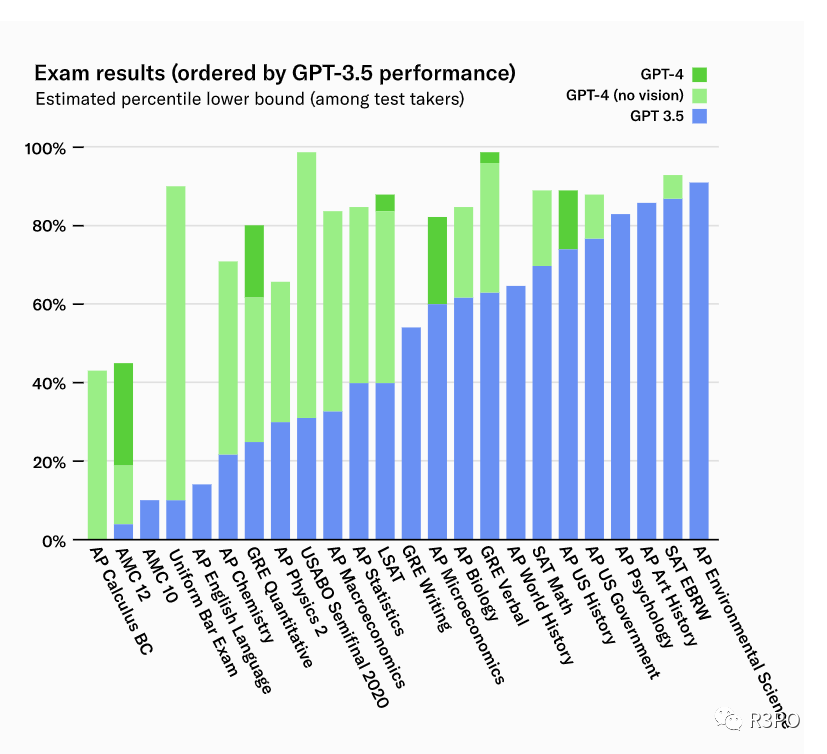
We are entering a new era of artificial intelligence, making the solution to personhood verification more important than ever. On one hand, we must ensure that benefits generated by future systems are fairly distributed, guaranteeing everyone's economic rights and interests in the Web3.0 and AI eras. Sybil attacks—where multiple fake accounts are created to gain unfair advantages or influence—highlight the need to limit the number of accounts per individual. This is crucial for digital and decentralized governance and helps equitably distribute scarce resources such as universal basic income, social welfare, and subsidies. On the other hand, we need to clearly identify whom and what information to trust online, preventing the spread of AI-generated content that could lead to mass deception or misinformation.
Currently, methods like the Turing test or facial video verification are used to confirm humanity, but Altman believes these approaches are insufficient for distinguishing between AI and humans. With rapid technological advances, AI has already passed the Turing test, while deepfake technologies enabling face-swapping have shown that video-based identity verification is increasingly unreliable.
02Worldcoin Is More Than Just Cryptocurrency—It Wants to Be the "ID Card" of the AI Era
So, how can we ensure that registered users are real humans and limited to one account each?
WorldCoin launched the open identity protocol World ID and developed the Orb device, which scans a person’s iris to verify their uniqueness and humanity, assigning them a “World ID” that functions as a global digital passport. The WorldCoin team found that in biometric contexts, higher entropy means more unique and unpredictable features. Iris patterns have higher entropy than fingerprints or facial recognition, are less affected by external factors, and are less prone to demographic bias—making irises more suitable than faces or fingerprints for proof of personhood.
Through Proof-of-Personhood (PoP) credentials, the World ID protocol allows individuals to prove their humanity online without relying on third-party institutions. This innovative authentication method uses zero-knowledge proofs to maximize user privacy and ensures security through user-managed World IDs.
WorldApp serves not only as an "ID card" in the AI era but also makes it easier for ordinary people to enter the crypto space.
The rise of cryptocurrency is driving massive transformation in the global economy. However, current crypto users represent only 3% of the world’s population. A key barrier is accessibility—most people still find it difficult to engage with this domain.
The founders of WorldCoin deeply understand this challenge. In early 2020, Alex Blania connected with Sam Altman and Max Novendstern around a shared idea: “What if there were a way to freely distribute shares of a digital token to every person on Earth?” The three founders believed that the more people holding the currency, the easier it would be to send and receive payments. They aim to expand cryptocurrency adoption by building user-friendly tools and systems, enabling everyone—regardless of location, income level, or background—to easily access digital assets with just a few clicks for simple buying, selling, and managing.
WorldCoin is committed to building the world’s largest, fairest digital identity and digital currency system, operating as a public utility so that everyone has ownership. It is designed to be decentralized, meaning ultimate governance and decision-making will eventually rest with its user community. The system consists of three components:
-
World ID—a privacy-focused digital identity that verifies an individual’s unique personhood.
-
$WLD Token—the first global digital token freely distributed to unique individuals, intended for utility and future governance.
-
World App—a platform enabling global payments, purchases, and transfers using WorldCoin tokens, digital assets, stablecoins, and traditional currencies.
Since its initial release, 1.5 million people have joined the pre-release version of World App, with over 500,000 active monthly users. On average, the app processes around 60,000 transactions and 25,000 World ID verifications daily. The WorldCoin team believes that if successful, World ID could become the largest network of verified real humans on the internet—an open public good available to all.

In terms of token distribution, the Worldcoin token ($WLD) has a total supply cap of 10 billion:
-
8 billion allocated to the community.
-
1 billion reserved for long-term funding of the Worldcoin protocol (including grants to developers).
-
1 billion provided to contributors and investors in the Worldcoin protocol and tools. (An initial $100 million worth of tokens were allocated to seed round investors.)
WorldCoin officials emphasize that 80% of the allocation will be granted—not sold publicly. The Worldcoin token is expected to launch in the first half of this year.
So, how can users obtain the token?
-
Download the World App.
-
Find the nearest Worldcoin operator within the World App.
-
Complete the QR code scan and verification process with assistance from a Worldcoin operator using the Orb device.
-
Receive a unique, fully functional World ID.
WorldCoin specifically notes that World ID is designed to verify user uniqueness, not personal identity. Given the use of biometrics, privacy is maintained at the highest standards. Images are processed locally in the Orb’s memory and then deleted immediately. The output is only an iris code—a digital representation of iris texture. Users may optionally choose to back up their image data.
Once verified, users can hold their World ID in the World App or in wallets developed by future WorldCoin protocol partners. They can use it to seamlessly log into websites, mobile apps, and crypto dApps. Users can also earn small amounts of free cryptocurrency through the “Learn & Earn” feature within the World App.
03Altman Is Building a Utopia in Web3
The backing behind WorldCoin is formidable. Early last year, Worldcoin raised $100 million in a token sale valuing its total token supply at $3 billion, with participation from a16z and Khosla Ventures. According to the Financial Times, Altman recently plans to raise another $100 million for Worldcoin.
While investors are certainly drawn by the founder’s reputation, what exactly gives this project value? One reason hindering the crypto industry from becoming a global virtual economy is the lack of a credit system and arbitration mechanisms. Bad actors can exploit multiple identities to commit fraud, creating chaos that impedes cryptocurrency development. Therefore, to enable the crypto industry to evolve into a global Web3 economy, it’s essential to ensure each person has a unique, verifiable identity on the blockchain. This reduces fraud and malicious behavior while increasing trust—why DID (Decentralized Identity) projects are often considered high-potential ventures. By using iris recognition, WorldCoin solves the problem of verifying unique real-world identities. Its reliable digital identity system reduces malfeasance, enhances trust, and makes DeFi more inclusive and innovative.
The utopia envisioned by Altman is built precisely upon this foundation of verified unique identities.
Due to generative AI models, many sectors are already seeing clear job losses. Yet Altman has predicted that AI will generate enough wealth to provide every adult with a certain amount of money. To realize this vision, Worldcoin firmly believes decentralization must be established from the outset to guard against future currency devaluation, placing universal basic income at the core of its mission to offset AI-driven job displacement. WorldCoin aims to create a utopia and hopes to become the foundational infrastructure for implementing universal basic income, contributing to solutions for job loss caused by AI.
Additionally, WorldCoin seeks to enable global governance and digital collective decision-making. Many Web3 projects adopt token-based governance, where each token equals one vote. While this model achieves some degree of decentralization and democratization, it risks excluding individuals and favoring those with greater financial power. To overcome this, a reliable mechanism resistant to Sybil attacks is needed to simplify governance based on unique human identities.
Here, WorldCoin’s Proof-of-Personhood (PoP) credential system plays a pivotal role. By leveraging PoP, WorldCoin achieves true people-driven protocol governance, ensuring everyone benefits equally. This mechanism emphasizes the principle of “one person, one vote,” allowing everyone to participate equally in decision-making without interference from duplicate identities.
Conclusion
Achieving WorldCoin’s grand ambitions still faces numerous challenges.
First is the feasibility and sustainability of universal basic income. While the vision of providing UBI to everyone is appealing, the practicalities of raising and distributing funds remain complex. WorldCoin needs to develop a sustainable economic model to ensure responsible management of funding sources and expenditures.
Second, user privacy and data security are paramount. As the foundation of digital identity verification, World ID must safeguard user privacy and data integrity, comply with relevant data protection regulations, and protect personal information. Moreover, WorldCoin must navigate challenges from traditional financial institutions and governments.
Despite these obstacles, the utopian world WorldCoin envisions remains highly promising.
R3PO believes that Web3 development must go beyond superficial fundraising and ICO booms. True Web3 revolution requires visionary innovation aligned with Web3 principles and long-term commitment. WorldCoin has the potential to provide more equitable and inclusive economic opportunities for people worldwide. We look forward to the day when Worldcoin, much like the emergence of OpenAI, becomes a transformative force driving industry change and contributing significantly to a fairer, better world.
Join TechFlow official community to stay tuned
Telegram:https://t.me/TechFlowDaily
X (Twitter):https://x.com/TechFlowPost
X (Twitter) EN:https://x.com/BlockFlow_News
 R3PO
R3PO