Opportunities and Challenges for SushiSwap's Return to the Center of the Market After a Series of Scandals
TechFlow Selected TechFlow Selected
Opportunities and Challenges for SushiSwap's Return to the Center of the Market After a Series of Scandals
Sushi is an early DeFi protocol and one of the most well-known decentralized exchanges.
 Navigating Web3 tides with focused insights
Written by: Matt Fiebach, Blockworks Research
Translated by: TechFlow
Sushi is an early DeFi protocol and one of the most well-known decentralized exchanges.
At launch, it siphoned off more than 50% of Uniswap’s liquidity and attracted several high-profile early supporters, such as SBF and Alameda.
According to Nansen, Alameda still holds SUSHI tokens.

GoldenChain, the cryptocurrency division of GoldenTree, has announced a $5.3 million investment into SUSHI and pledged active support for ecosystem development and new token design. GoldenTree manages over $45 billion in assets and enjoys a strong global reputation.
Sushi is backed by builders such as 0xMaki, LEVX, ControlCplusControlV, as well as community managers and DAO participants.
Compared to other DAOs, Sushi has relatively high efficiency in proposal execution. Additionally, a new leader, Jared Grey, has joined the Sushi DAO to help shape and drive its future direction.
The team and DAO are continuously releasing updates and staying aligned with current narratives. As a result, Sushi is involved across multiple aspects of crypto:
-
Concentrated liquidity (Trident)
-
NFTs (Shoyu)
-
IDO (Miso)
-
Yield vaults (BentoBox)
-
Lending (Kashi)
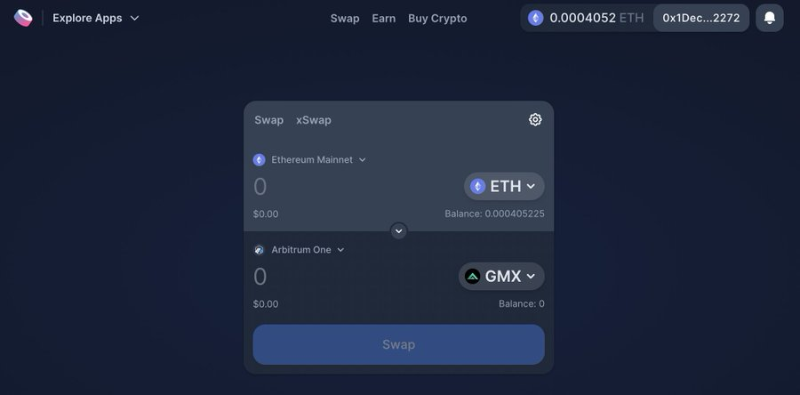
Sushi’s recently launched xSwap: a cross-chain AMM leveraging Stargate Finance, placing DEXs at the forefront of a multi-chain future. The DAO also has a new governance proposal to leverage THORChain for exchanging more assets across additional ecosystems.
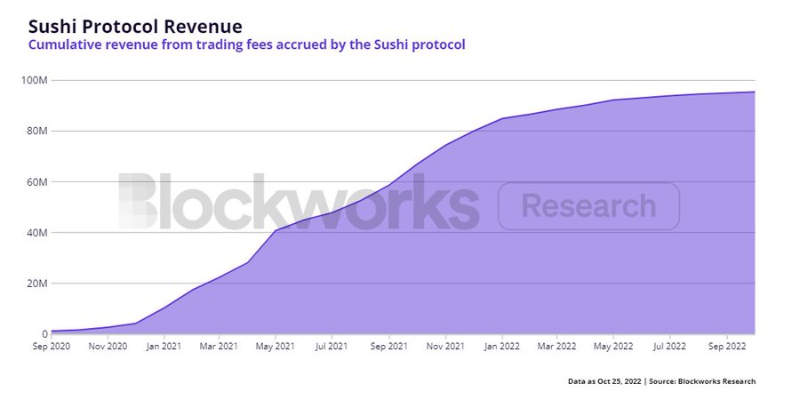
Sushi is also one of the few protocols unafraid to return revenue to token holders—a sharp contrast to its main competitor, Uniswap.
Most projects hesitate to distribute earnings to token holders due to concerns that their tokens might be classified as securities under regulation.
Despite Sushi’s strengths, it has wasted significant funds and developer time on failed initiatives.
Kashi (lending)’s most liquid market has only around $110,000 in TVL; Shoyu (NFT) has been shut down (though anticipation remains for future updates).
The IDO platform Miso has performed somewhat better, launching over 200 projects, though most raised negligible funding.
All these activities come at a cost. The treasury is now disorganized, currently consisting of approximately $2 million in USDC, $20 million in SUSHI, and $200,000 in ETH. Additionally, some Sushi DAO members remain unpaid for fees owed to developers and team members.
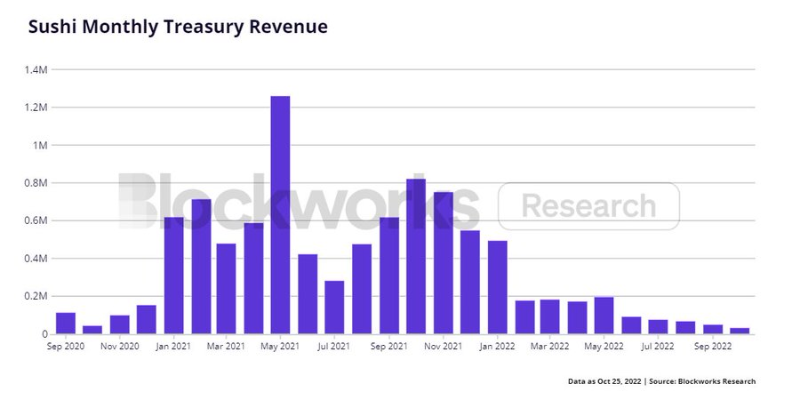
Sushi’s recent visibility has revived memories of past controversies.
The original creator "Nomi" dumped all his tokens, although he eventually returned the funds. Later, the CTO Joseph Delong departed under unpleasant circumstances, further damaging market sentiment toward Sushi.
The AMM currently lacks liquidity and volume, and this may not change. Sushi still relies on Uniswap V2’s outdated technology, making it uncompetitive under current conditions and unable to guarantee adoption or success for Trident.
Finally, future innovations on L2s and other chains could significantly advance on-chain order books, potentially rendering the entire concept of AMMs obsolete.
For Sushi to regain attention, it will largely depend on four key factors:
i. The success of a more capital-efficient AMM (Trident) capable of supporting liquidity, trading volume, and revenue.
ii. Aligning its finances and expenditures—largely dependent on the new leadership’s audit capabilities and management.
iii. Successfully capturing the “cross-chain” DEX market.
iv. Redesigning tokenomics to attract new investors into the ecosystem.
Join TechFlow official community to stay tuned
Telegram:https://t.me/TechFlowDaily
X (Twitter):https://x.com/TechFlowPost
X (Twitter) EN:https://x.com/BlockFlow_News
 @blockworksres