Shi Xingguo in Conversation with Wang Yuehua: A Top Silicon Valley VC Investor Reveals New Opportunities in Global Web3 Niche Sectors
TechFlow Selected TechFlow Selected
Shi Xingguo in Conversation with Wang Yuehua: A Top Silicon Valley VC Investor Reveals New Opportunities in Global Web3 Niche Sectors
Mr. Wang Yuehua shared his investment philosophy and strategic plans in the Web3 and metaverse sectors, as well as his unique insights on hot topics such as new public blockchains and GameFi.
 Navigating Web3 tides with focused insights
On the evening of August 15, the third episode of the fifth season of "Guo Huo Lang Ya Bang" was broadcast. In this episode, host Shi Xingguo (a member of the Blockchain Committee of the China Computer Federation, recipient of the National Science and Technology Progress Award, founder of Hyperchain, and former Chief Engineer at the Internet Lab of the Institute of Software, Chinese Academy of Sciences) welcomed as his guest Mr. Wang Yuehua, partner at DraperDragon Innovation Fund. With 20 years of experience in the semiconductor industry, Mr. Wang's personal investment interests span integrated circuits, blockchain, fintech, and he is currently focused on IoT, artificial intelligence applications, digital assets, and blockchain technology.
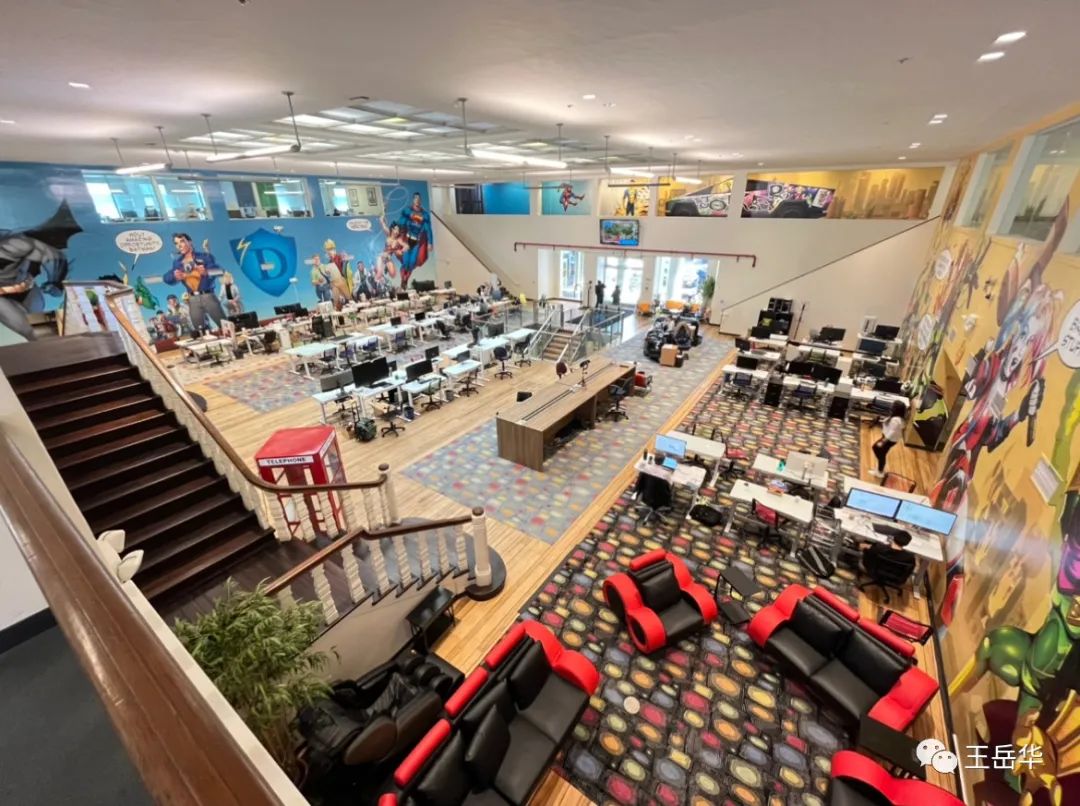
DraperDragon Innovation Fund is a top-tier Silicon Valley-based investment firm established in 2006, specializing in cross-border high-tech investments across IT, intelligent manufacturing, biomedicine, blockchain, and digital assets. In recent years, the fund has invested in major blockchain projects such as Coinbase (digital asset exchange), Ledger (digital asset security solutions), MakersPlace (NFT marketplace), and HKbitEX (digital financial services platform).
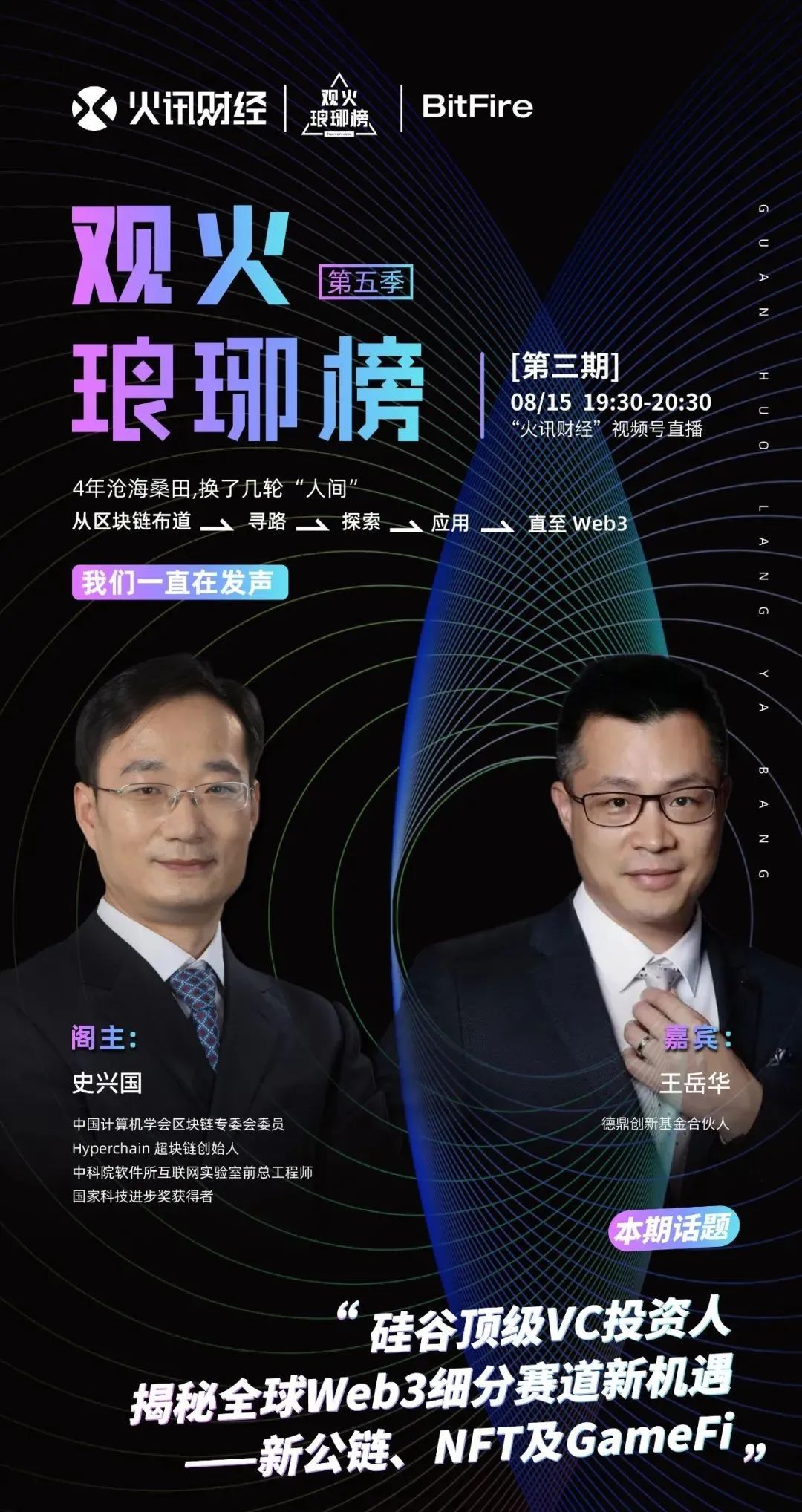
In this episode, the two experts discussed the topic: "A Top Silicon Valley VC Investor Reveals New Opportunities in Global Web3 Sub-Sectors—New Public Chains, NFTs, and GameFi." Mr. Wang shared his investment philosophy, strategic planning, and unique insights into Web3, the metaverse, new public chains, and GameFi.
Highlights from this episode:
1. Decoding the Web3 investment logic of top Silicon Valley VCs: Which Web3 sub-sectors hold the most future potential?
2. What are the current technical bottlenecks and challenges facing Web3?
3. When will the metaverse reach its turning point? What are the development differences between China and the U.S. in the metaverse space?
4. How has the recent crypto market crash impacted DeFi and the Web3 industry? What lessons can we learn from this crisis?
5. Why are institutions like a16z, FTX, and Coinbase making big bets on new public chains? What defines a new public chain’s core competitiveness?
6. Amid fierce competition among new public chains, where might the next breakthrough occur?
7. What is the real value and future trend of NFTs?
8. From a technological perspective, how should blockchain architecture evolve to better address governance issues in DeFi protocols?
9. Does GameFi inherently rely on Ponzi schemes to launch? Where does its future lie?
The full video of this interview is available for replay on the WeChat channel “Huoxun Finance” under “Live Replay.”
Transcript (edited):
Part One: Web3
Shi Xingguo:
Currently, major capital players are aggressively betting on Web3. According to incomplete statistics, 107 Web3-related funds were launched in the first half of 2022, totaling $39.9 billion. a16z stated in their new fund announcement that we are now entering the golden age of Web3. Mr. Wang, as a renowned investor who has traveled globally this year—from San Francisco and Miami to Singapore, Taipei, and Dubai—could you share DraperDragon Innovation Fund’s investment logic in Web3? Which specific Web3 sub-sectors do you see as having the greatest future opportunities?
Wang Yuehua:
Thank you, Mr. Shi, for hosting me today. Earlier this year, I had the opportunity to return to our Silicon Valley headquarters, where I engaged with many new entrepreneurs and discussed emerging blockchain projects. Since 2015, our firm has been actively investing in blockchain, crypto assets, and now Web3. As investors, our evaluation criteria vary by sector and project—we focus on the intrinsic commercial value or innovative models of each venture. When investing in Web3, it's crucial first to understand what Web3 really means. I see Web3 as striving toward a state of freedom and trust. No single authority or individual can define Web3—it must be co-built by all entrepreneurs.
Secondly, from an implementation standpoint, Web3 can be broadly divided into two categories: application-layer projects involving end users—such as user data and identity infrastructure—which we favor more in our investment strategy, including social, e-commerce, and gaming; and infrastructure-layer projects, including decentralized computing and storage.
Since the endpoint of any system is ultimately the user, when evaluating the Web3 landscape, we consider both applications and infrastructure. Many firms invest in over 100 Web3 projects at once. But as institutional investors, regardless of the scale or scope of tools and services, the key lies in how each project creates added value and enhances intrinsic worth through internal engines—that’s the essence of smart investing.
Wang Yuehua:
Mr. Shi, as a highly skilled technical expert, what do you see as the current technological bottlenecks and challenges in Web3?
Shi Xingguo:
First, I fully agree with your point that “almost no one can define Web3.” In fact, compared to many aspects of today’s crypto markets—and especially cryptocurrencies themselves—Web3 encompasses far broader implications. While some used to describe crypto’s next phase as “broad finance,” I believe Web3 goes even further than that.
As you described, Web3 resembles a philosophical concept—a new way of reorganizing various industries, enabled by technology. I completely agree. Yet, there remain many things Web3 aims to achieve that current technology cannot yet support. For instance, today’s Web3 mainly supports tokenized assets, but in the future, it should represent much more complex forms—composite assets, diverse rights mappings, and collaborative autonomous organizations—all of which are currently beyond blockchain’s expressive capacity. At present, blockchains still struggle to adequately express these rights and asset representations.
Moreover, transaction complexity in Web3 vastly exceeds the processing capabilities of current blockchain smart contracts. For example, while cross-chain bridges allow asset transfers, they don’t enable direct contract interoperability. But in a true Web3 environment, we cannot accept fragmented silos where each contract operates only within isolated domains. Contracts must interact seamlessly across the entire network. This reality shows that without fundamental architectural breakthroughs, blockchains will struggle to support Web3’s evolution.
Another issue is transaction volume. Even today’s crypto transaction loads stress existing chains. But imagine the future scale of Web3 transactions—they’ll dwarf current levels because Web3 won’t just abstract assets, but also human behaviors. While people often discuss performance in terms of TPS, the real concern going forward will be chain capacity—an impending crisis that deserves greater attention. The future transaction volume of Web3 will far exceed today’s crypto volumes, not only abstracting diverse assets but also capturing human actions. So while people talk about chain performance using TPS, chain capacity will become a latent crisis and a critical area of focus.
From a technical readiness standpoint, mainstream technologies have only proven feasibility in theory. But in practical engineering—regarding scalability, interoperability, business interaction capability, and usability—there remain significant shortcomings. In short, current technology hasn’t yet achieved the foundational support needed for robust business operations.
Unlike Web1 and Web2 eras, where scaling server capacity could easily accommodate growing demand—even supporting billions of users—Web3 cannot follow this path due to blockchain’s inherent architectural constraints.
For Web3 to truly thrive, we need innovative chain architectures that unify or interconnect trust domains. Think of each chain as a trust domain—interoperating across different trust domains is extremely difficult, whereas seamless interaction occurs naturally within a unified trust framework. Only then can contracts easily cross chains, capacity scale efficiently, and performance break through existing ceilings. Whether for Web3 or the evolving metaverse, today’s blockchains must achieve several orders-of-magnitude improvements in capacity and performance—and such leaps require architectural transformation.
Two: The Metaverse
Shi Xingguo:
Let’s turn to another hot topic: the metaverse. On July 18, the metaverse made the cover of New York’s Time magazine with the headline “The Metaverse Will Reshape Our Lives,” reigniting global interest. The metaverse is also a key focus for DraperDragon Innovation Fund. Earlier this year, you mentioned in an interview that the fund planned to invest another $50 million in metaverse projects. Half a year later, what progress has been made? Has your investment strategy shifted for the second half of the year?
Wang Yuehua:
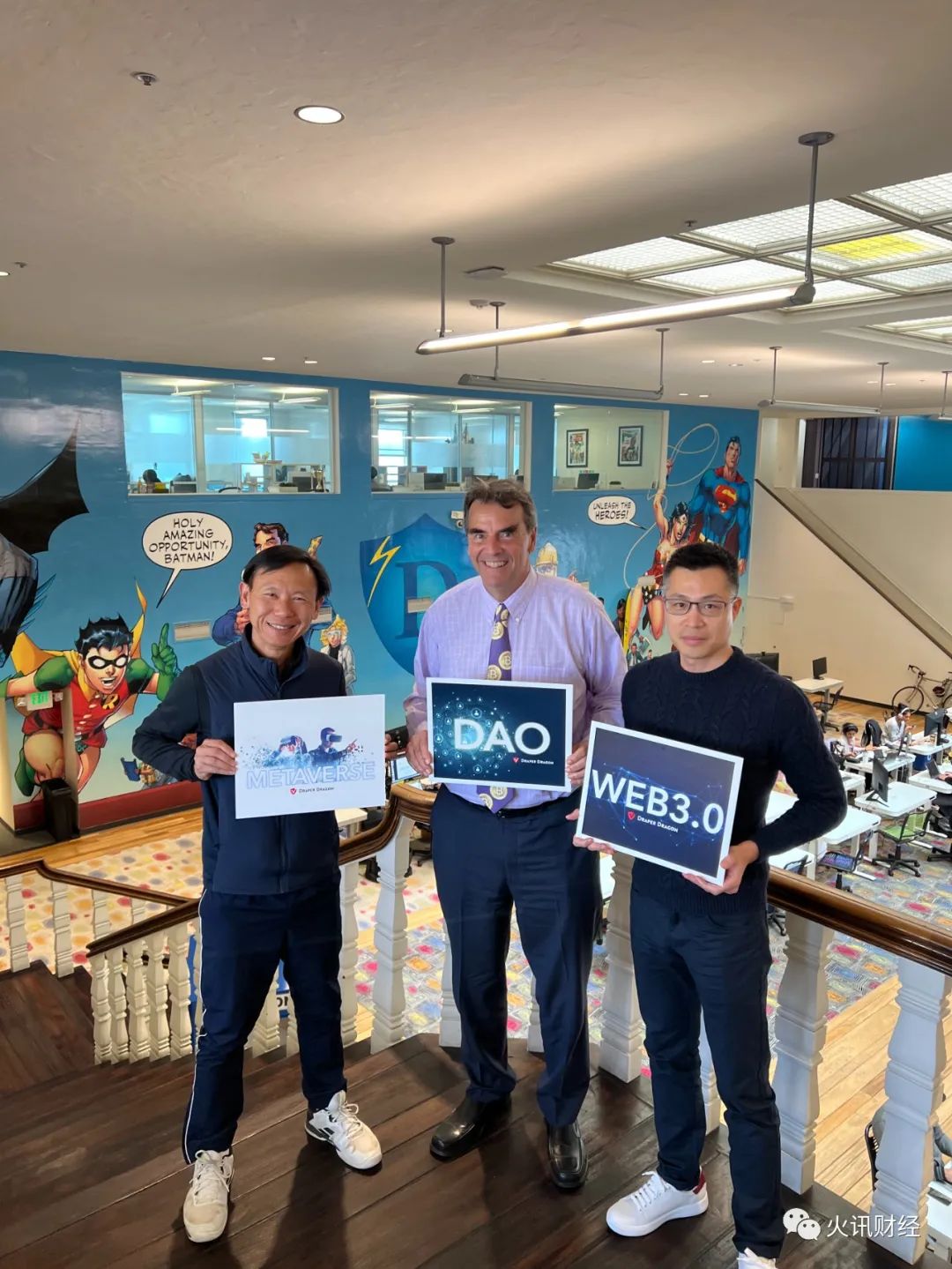
Our current fund—the second dedicated blockchain/crypto fund—focuses on three main directions: the metaverse, DAOs, and Web3.
We view the metaverse as an internet-based project, entirely online. But what makes it different from other internet ventures? I believe it represents a new form of human lifestyle—one where real-life experiences are fully digitized and experienced virtually. You enter your home, go shopping in a virtual mall, everything rendered with deep immersion. These aren't just physical replicas—they're virtual objects with digital presence. As we know, NFTs provide provenance, allowing each item to be uniquely tokenized, incorporating scarcity, collectibility, and functionality.
Our metaverse investments fall into two categories. First, applications transitioning from Web2 to Web3, which benefit from inheriting large Web2 user bases. Second, native Web3 applications—innovative projects built from the ground up for Web3. We’ve backed several such projects, including the well-known “High Street.” The second category includes tooling—supporting immersive experiences requires various enabling tools. Returning to traditional tech, we also invest in hard tech like human-computer interfaces, motion capture systems, and digital human startups.
Shi Xingguo:
Earlier this year, you predicted the metaverse inflection point would arrive in about three years. What led to that forecast? What signs would indicate its arrival? And based on your observations, what are the key differences in metaverse development between China and the U.S.?
Wang Yuehua:
This prediction reflects a growing anxiety among many Web2 companies: how can they transition into Web3? They possess legacy advantages—traffic, content—but lack Web3 DNA, technology, or even mindset. Their urgency drives massive investments across Web3. From an investor’s view, if you deploy capital widely enough, even if 1 out of 100 projects succeeds, that’s a win.
Observing the pace of investment by internet giants, we see a gradual maturation process. Whether a startup begins from scratch or transitions from another field, we estimate it takes roughly two to three years to develop a viable, scalable project with solid user traction. That’s why I predict the metaverse inflection point will come in about three years—based on the time needed to refine a project and the level of investment required.
Regarding differences between China and the U.S., 90% of our portfolio consists of U.S.-based projects, which tend to deliver stronger metaverse experiences. Beyond immersive design, American teams excel at inventing new business models. The U.S. is generally more open to tokens, allowing foreign projects to leverage tokenomics creatively—an advantage rooted in innovation. Of course, innovation must operate within legal frameworks, but laws often lag behind. True progress requires pushing boundaries responsibly.
In contrast, domestic projects face tighter regulatory constraints. Despite having excellent talent, Chinese entrepreneurs are limited by policy, often focusing only on enhancing online experiences. The ability to create novel business models—something central to the metaverse—is currently out of reach in China. This gap represents the most significant difference between the two ecosystems.
Three: Crypto Crisis
Shi Xingguo:
Mid-year saw the collapse of Three Arrows Capital and Celsius, marking a “Lehman Moment” for the crypto industry. Interestingly, 100 days before the crisis, Nobel laureate Paul Krugman published an article titled “How Cryptocurrency Became the New Subprime Crisis.” He drew striking parallels: “Before 2007, many marginal Americans gained reckless leverage. When the housing bubble burst, those gambling on luck became the spark. Today, crypto risks disproportionately affect those unaware and unprepared.”
What impact has this crash had on DeFi and Web3? What lessons can we draw? What is your stance on regulation in the crypto industry? Could you summarize a few principles?
Wang Yuehua:
The largest application of blockchain by output value is finance—various financial services and products. Firms like Three Arrows Capital engage in practices similar to subprime lending: repackaging assets into leveraged derivatives. This model involves upstream and downstream actors—borrowers and lenders. When economic conditions are favorable, it works; but when credit tightens, leverage collapses.
Crypto markets mirror the subprime financial logic. Still, every event carries both negative and instructive elements. First, never approach financial management with a gambler’s mentality—not just in crypto, but in all finance. Avoid aggressive leverage. Traders and entrepreneurs alike must adopt more cautious, conservative, and mature strategies moving forward. As an investor, my goal is returns—but only after rational analysis confirms viability.
History repeats itself. Similar crises will happen again, but each acts as an industry cleanse—revealing who swims naked when the tide recedes. High-quality teams and projects in DeFi, NFTs, and beyond will survive. Of course, macroeconomic factors matter—like rising interest rates dampening enthusiasm. Also, crisis cycles may shorten—from once every ten years to every five, then every three.
On regulation: as institutional investors, we believe regulation is necessary, inevitable, and essential. Without it, we can’t operate securely or protect investor capital. We must act responsibly to avoid future litigation. Compliance is fundamental—it’s non-negotiable.
Wang Yuehua:
Mr. Shi, what are your thoughts on the impact and lessons of this crisis?
Shi Xingguo:
As a technologist, I offer only tentative views on finance. But regarding this so-called crisis, I largely agree with your perspective. However, I see it tied to a belief I’ve long held: real-world industries haven’t entered the crypto space at the expected pace.
Crypto can support genuinely value-adding businesses, but their adoption has been slow. Meanwhile, derivative businesses grow much faster than fundamental ones, leading to internal cannibalization. Technological advances, such as DEX platforms lowering entry barriers and expanding accessibility, have allowed teams previously incapable of handling crypto operations to enter quickly. Once inside, they fuel speculation, inflating market sentiment until—as you noted—people stop evaluating projects’ technical merit or business potential, treating it instead as a party: how high can it go?
In this sense, I don’t see this as a true crisis—it’s more of a correction following mass hysteria. Aggressive firms with risky product designs suffered the most, but this adjustment serves as a healthy ecosystem reset. Long-term, no industry can sustain growth amid collective frenzy. While speculative trading and derivative games exist in every sector, crypto amplifies them due to speed and simplicity.
So yes, this downturn represents a welcome return to rationality. I also strongly agree with your view on regulation. Without oversight, the industry descends into pure gaming. But I believe regulation—especially domestically—should function like accounting: monitoring compliance rather than serving as the foundation or legs of industry growth. Healthy industries aren’t created by regulation alone; they emerge when the ecosystem reaches dynamic equilibrium—when participants reach consensus and voluntarily adhere to rules governing serious violations.
That said, the long-term trend of blockchain-driven digital trust remains unchanged and unaffected. The delay stems from traditional industries not yet finding suitable entry points—but therein lies the opportunity. I look forward to Web3 offering better technological pathways for traditional sectors to join crypto, shifting away from self-referential financial games.
As more industries enter crypto—and indeed, more asset types continue flowing in—I remain confident in its future. As long as this trend persists, a tipping point will come. Moreover, regulation always lags innovation. Industry must mature first before regulators understand what and how to regulate. This tension is inevitable, yet it drives progress. It’s this dual-track motion that shapes the industry’s future.
Four: New Public Chains
Shi Xingguo:
The story of new public chains isn’t over. Solana, Avalanche, and Near haven’t fully satisfied users. On July 26, Aptos, a new chain founded by ex-Meta employees, was reportedly seeking funding at a $2.75 billion valuation. Days earlier, Sui’s developer Mysten Labs sought at least $200 million at a $2 billion valuation. In early July, Linera, a blockchain project by ex-Facebook staff aiming to bring Web2 scalability and low latency to Web3, raised $6 million led by a16z. At the end of March, Layer Zero Labs raised $135 million in an A+ round at a $1 billion valuation, co-led by a16z, FTX Ventures, and Sequoia, with participation from Coinbase Ventures, PayPal Ventures, Tiger Global, and Uniswap Labs. These moves brought fresh energy to a bearish crypto market.
How do you interpret these big bets by a16z, FTX, and Coinbase on new public chains? In your view, what defines a new public chain’s core competitiveness? Can you share DraperDragon’s strategy in this space?
Wang Yuehua:
Thank you, Mr. Shi. Since we began investing in public chains back in 2015, we’ve seen many of today’s pain points emerge. Take LayerZero Labs—they’re building cross-chain infrastructure because existing chains aren’t universal enough. Gaps create opportunities, especially as skilled technologists—including university professors—enter the space.
When existing Layer 1 chains fail to meet needs, developers seek alternatives. I believe Ethereum will remain in the top tier, while others rotate in and out of favor every few months. But established Layer 1s have already locked in their core tech, making fundamental upgrades nearly impossible. They now compete through ecosystem growth, developer incentives, and expanding DeFi, NFT, and GameFi applications. Thus, a new chain’s edge must lie in technology—specifically overcoming the blockchain trilemma. TPS can never be too high; higher is better. Data volume and user counts will only grow. Security, too, depends on consensus mechanisms—no system is 100% secure, but aiming for 99% resilience helps. Each corner of the trilemma still has gaps. Lastly, valuation considerations remain a major factor in our decisions.
Public chains are a key focus for us. Among ongoing projects, we’ve invested in a DAG-based chain, a D-ID-focused chain, and a privacy-oriented chain. Identifying and backing unique strengths is our job.
Wang Yuehua:
Mr. Shi, where do you think the next breakthrough in the fiercely competitive new public chain race might occur?
Shi Xingguo:
As you mentioned, teams like Meta identified current public chain flaws and decided to build solutions. Only those deeply involved in development can truly grasp these pain points. From our perspective as底层 blockchain tech developers, knowing how flawed current chains are reveals just how vast the opportunity is—especially given the enormous market ahead.
All current public chains use serial architectures. You can boost performance, but scalability remains zero—the capacity cap is fixed at deployment and immutable. We firmly believe blockchain architecture must shift to parallelism. But even parallelism has limits due to blockchain’s requirement for strict data consistency.
In serial architecture, each chain is a separate world—a distinct trust domain. Users across domains can’t directly interact, much like LAN users before the internet. Cross-chain bridges today resemble old workarounds: pledge collateral, then transfer assets. So current bridges solve partial problems but fail at fundamental contract-level interoperability.
Therefore, simply connecting chains isn’t enough—we must solve the underlying pain points. If connectivity doesn’t resolve core issues, it’s meaningless. Three breakthroughs are needed: first, overcome scalability limits; second, unify trust domains—whether via interconnected serial chains or inherently unified architectures; third, enable cross-chain contracts. Asset portability alone is insufficient. All three are architectural challenges—no single technical fix can solve them. Only architectural redesign will suffice.
Five: NFTs
Shi Xingguo:
With the onset of the crypto bear market, the global NFT boom—lasting over a year—appears to be cooling down. This sharp decline has sparked renewed debate: some defend NFTs’ intrinsic value, others dismiss them as technological illusions; some see bubbles bursting, others view it as cyclical fluctuation. Mr. Wang, what is your take on NFTs’ real value and future trajectory? What guides your investment logic in NFTs, and which types of projects do you favor?
Wang Yuehua:
We’ve invested in several NFT projects, including NFT exchanges. At its core, an NFT is a digital certificate proving ownership—a new paradigm enabling broader applications and commercial value for digital-native and even physical assets, potentially spawning new business models.
The NFT space comprises roughly three sectors. First, issuance: not all assets can be tokenized; it requires technical infrastructure. Two examples: airplane tickets are unique but not permanently owned; property deeds are also unique and resemble NFTs. Because NFTs reside on blockchain, they can be split, combined, and restructured—their essence is digital certification. Second, NFT derivatives: after minting, NFTs can spawn financial, IP-based, or rights-based derivatives—highly diverse. In investing, trading and derivatives offer the highest returns.
On NFT properties: collectibility is widely recognized. Functionality is increasingly evident. And asset-likeness is emerging. These three traits aren’t mutually exclusive—they combine differently across use cases. Currently, speculation focuses on derivatives and asset-likeness. Issuance is simpler. My focus is unlocking NFT functionality to generate commercial value. That’s where we see the biggest future opportunities—our ongoing NFT investments reflect this direction.
Wang Yuehua:
Mr. Shi, what is your outlook on the second-half NFT market trends?
Shi Xingguo:
I fully agree with your view: NFTs can represent richer rights and unlock new business possibilities. But why did they explode last year after years of quiet development? From a technical angle, prior to DEXs, the crypto ecosystem revolved around centralized exchanges, ill-suited for low-frequency, multi-category, small-scale NFT trades. The rise of DeFi and DEXs drastically lowered NFT transaction barriers, attracting more users and business players, triggering a rapid avalanche effect.
Even so, today’s NFTs remain simplistic. Like you said, most are simple representations of artwork rights, lacking deep use cases or business depth. Going forward, NFTs will express complex bundles of rights, enable new collaborations, and spawn novel consumption patterns. Real-world integration will enrich both NFTs and crypto assets overall. This benefits the entire NFT market—and the broader crypto space—by helping it gradually shift from speculation to substance. Today’s NFTs are merely prophecies. Their true value explosion lies ahead.
Six: DeFi
Wang Yuehua:
From a technological standpoint, Mr. Shi, how should the current blockchain architecture evolve to better address governance challenges in DeFi protocols?
Shi Xingguo:
DeFi protocol governance remains controversial. To some extent, this discussion transcends pure technology. Within current technical limits, blockchains lack sufficient performance and scalability to properly support DeFi and DAOs. Governance demands more than token management—it requires overseeing participant behavior: voting, interactions, etc.—but current blockchains lack fine-grained support for such operations.
Additionally, capital concentration influences DeFi and DAO outcomes—funding campaigns, vote manipulation—drawing criticism. But we must acknowledge capital strength as legitimate influence; capital decisions deserve respect.
The root problem is that DeFi and DAO governance remains overly coarse—due to both business design and technical limitations. Current tech restricts governance granularity. Finer control would allow timely interventions in participant decisions, leading to fairer outcomes. Also, decision-making is an abstraction process—each layer introduces distortion, causing divergence from original intent.
The finer the governance, the less distortion. Given today’s coarse approaches, skepticism toward the technology is understandable. Strictly speaking, blockchain can only remove technical barriers. True fairness in DeFi or DAOs depends on three factors: technical barriers, information asymmetry, and cognitive limitations. We assume participants are fully informed and rational, but reality falls short.
We’re steadily addressing technical hurdles through innovation. But information gaps persist despite internet access—misinformation and knowledge disparities remain. Cognitive limitations cannot be solved by technology—they require individual effort.
Seven: GameFi
Shi Xingguo:
Now let’s examine the GameFi sector. After the crypto bear market hit, flaws in various “X-to-Earn” models surfaced. Two leaders—Axie Infinity and Stepn—saw their SLP and GST tokens drop over 99%. Mr. Wang, must GameFi rely on Ponzi schemes to launch? Where does its future lie? What challenges must be addressed for healthy development?
Wang Yuehua:
Thank you, Mr. Shi, for raising this. We have several GameFi projects, two of which have been quite profitable. We’re highly confident in this space, particularly given gaming’s massive potential. The gaming industry has spawned dozens of public companies—it’s a huge market. GameFi is absolutely worth investing in.
But what is GameFi’s core? I believe Fi isn’t the core—GameFi is Game. Financial elements are foundational and pervasive. You hear terms like SocialFi—financial layers added to everything. But Fi isn’t the essence. We must return to gameplay. Fun and engagement are fundamental. Only compelling gameplay retains users. GameFi builds on blockchain, integrating financial features and services—this just adds diversity.
Games must emphasize playability. Through Fi, NFTs, and innovative models, we can extend the lifecycle of gameplay. Internet apps need constant user acquisition. Model innovations enable social mechanics within games—or integrate Fi and NFTs to deepen and broaden user acquisition. Beyond gameplay, we explore expandability: integrating non-game elements to drive sustained user growth and retention. These are key areas we watch closely. By evolving through Web3, the gaming industry can reinvigorate its integration with users’ lifestyles. We’re extremely bullish.
Join TechFlow official community to stay tuned
Telegram:https://t.me/TechFlowDaily
X (Twitter):https://x.com/TechFlowPost
X (Twitter) EN:https://x.com/BlockFlow_News