








After the bubble bursts, how can NFTs create value in real-world business?
TechFlow Selected TechFlow Selected
After the bubble bursts, how can NFTs create value in real-world business?
The future development of NFTs does not necessarily depend on grand narratives such as the metaverse.
 Navigating Web3 tides with focused insights
By: Miro Jin
Key Takeaways:
● The creator economy remains too utopian, and the hype-driven economy is unsustainable. Pioneers in the NFT space must now focus on creating tangible value within real-world commerce.
● NFTs are built upon solid user demand foundations: status signaling, community attraction, and collecting passions.
● NFTs not only transform brand marketing but can also unlock entirely new business models. More strategic initiatives like Nike’s virtual sneakers, Starbucks’ “digital third place,” and Louis Vuitton’s treasure hunt game will emerge.
● From Twitter, Instagram, Facebook to Netflix, YouTube, and Samsung Smart TVs, NFTs are increasingly embedded into daily life through mainstream social and content platforms.
● NFTs remain in their early stages. Their future forms and value realization will extend far beyond what we currently observe. Builders must create next-generation social and cultural vehicles based on real consumer (C-end) and enterprise (B-end) needs.
01 Grand Narratives vs. Harsh Realities
Globally, NFT market enthusiasm has cooled rapidly in recent months. For example, OpenSea, the largest NFT marketplace, saw its June trading volume drop over 80% from its peak in January 2022.
When speculation no longer drives profits, does genuine demand for NFTs still exist? What will continue to attract institutions and users? And how can pioneers in the NFT space generate sustainable commercial value?
The NFT boom has always been fueled by two contrasting forces: one rooted in a utopian vision of democratizing ownership, the other driven by speculative get-rich-quick ambitions.
Interestingly, the ideological leaders of the former have been influential venture capital firms—especially a16z and Variant Capital.
Their narratives around "making the internet ownable" and empowering creators convinced many that NFTs were the gateway to a vast digital frontier.
Speculative energy, meanwhile, thrived on American social platforms like Reddit, Twitter, and YouTube, where young participants proudly called themselves "Degens" (short for degenerates), rallying under the YOLO ("You Only Live Once") mantra to justify reckless bets.
Yet many who embraced the dream of a creator economy now face harsh realities. Content creators find that NFTs don’t solve their core problem of gaining visibility, while those making real money from NFTs tend to be either already-famous influencers or owners of a few top-tier PFP (Profile Picture) projects.
Even dedicated NFT holders, though they may believe they own “a piece of the future internet,” often feel powerless when project teams suddenly vanish, intellectual property rights remain ambiguous, or their assets are stolen with no recourse.
Speculators, meanwhile, have dispersed even faster. Once FOMO (Fear of Missing Out) fades, they lose interest in the so-called next-generation internet. Online forums are now filled with dark humor: “exiting DAOs to return to McDonald’s,” “work-to-earn is the next big thing,” and “Web3 has become Web0.3.”
This is the dilemma facing the NFT space: speculative demand brings volatility, while the creator economy alone cannot sustain it today.
But since the summer of 2021, we’ve seen that people want NFTs for reasons beyond speculation. Meanwhile, numerous companies have recognized the transformative potential NFTs offer to their business models.
02 Why People Need NFTs
The NFT market has undergone a rollercoaster journey, yet there's no denying it has broken into the mainstream in less than two years, becoming a significant part of many users' cultural and social lives. We see that NFTs fulfill several genuine user needs:
Status Symbol
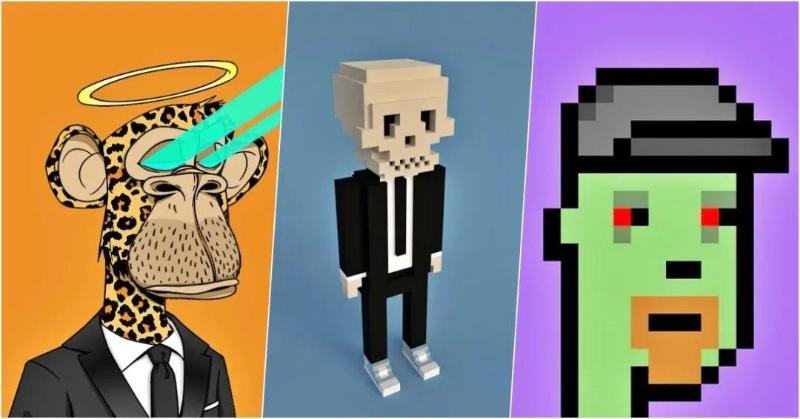
PFPs (Profile Pictures) dominate half of today’s NFT market because people need symbolic representations of identity in online social spaces. They use these to signal status, interests, affiliations, or uniqueness. Offline, people express themselves through luxury cars, fashion, and personal styling; online, profile pictures serve as the most direct medium.
Since 2021, more and more celebrities, athletes, and influencers have replaced their Twitter and Instagram avatars with NFT artworks. Choosing an NFT signals boldness and alignment with cutting-edge culture and technology, while the specific choice reflects individual taste and cultural identity.
This trend quickly gained momentum. An increasing number of people purchase NFT avatars to represent themselves online. The movement became so powerful that Twitter integrated NFT avatar verification as a core feature, and other giants like Instagram and Facebook are preparing similar NFT integration plans.
We’ve long known from phenomena like QQ Show and in-game gear that young people spend money on digital representations of themselves.
The value of NFTs lies in their cross-platform interoperability and blockchain-verified uniqueness, enabling them to serve as distinct identity markers across an open, borderless digital society.
Community Attraction
The secret behind the success of one of the most valuable NFT avatar projects—the Bored Ape Yacht Club—lies in community power. Launched in April 2021, it lacked the historical prestige of earlier classics like CryptoPunks, but from day one prioritized community building. Its website featured a collaborative graffiti wall inviting members to co-create. On Twitter, once you own one of the 10,000 Ape avatars, you instantly gain access to a culture of “apes follow apes,” potentially gaining thousands of followers overnight.
Bored Ape actively encourages community-driven derivative works. Fans have created animated series, opened Bored Ape bars, and launched various Apes-branded consumer products. The community strongly supports entrepreneurial efforts by fellow ape owners, giving grassroots creations instant fanbases. This fuels broader desire to join the tribe.
We see similar community dynamics in other NFT avatar collections. The veteran series CryptoPunks fosters a different kind of culture. Due to consistently high prices, its community consists largely of early crypto adopters or wealthy individuals willing to spend tens of thousands—or even hundreds of thousands—on small digital images. There are private CryptoPunks groups worldwide, populated by elite entrepreneurs, with entry requiring wallet verification to prove actual ownership—a gatekeeping mechanism ensuring both financial capacity and forward-thinking mindset.
The desire for belonging, shared interests, and mutual support is a strong universal need. A thriving community requires both a unifying bond and meaningful barriers to entry. The bond sustains cohesion and engagement; the barrier ensures high internal consensus. NFTs are perfectly suited to play this dual role.
Collecting Passion
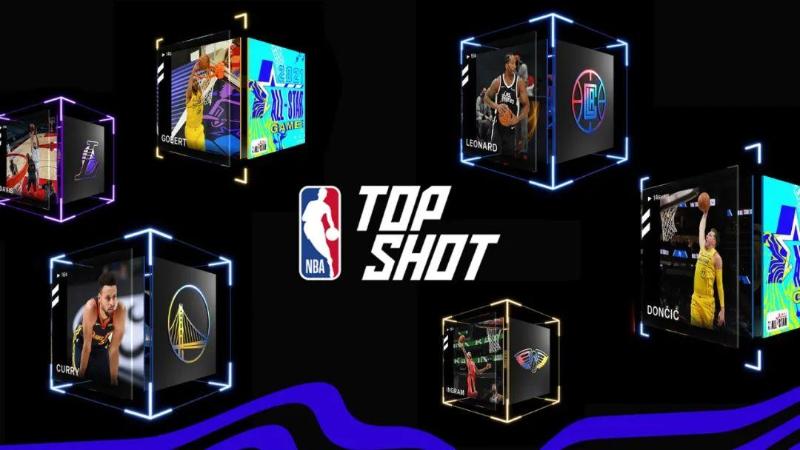
NBA Top Shots was among the first NFT collections to bring digital collecting into the mainstream. Many sports fans already collect physical player cards; NFTs offered them a new way to own iconic moments from their favorite athletes. The success of NBA Top Shots shows that NFT collecting parallels long-standing hobbies like stamp or card collecting, or youth trends like limited-edition sneakers and designer toys.
For deeply held passions, people often seek memorabilia—what could be called Proof of Passion. These collections allow individuals to demonstrate the depth of their devotion, especially to others who share the same interest, serving as conversation starters and badges of honor.
In the rapid rise of NFTs, we've seen that younger generations have no issue with virtual rather than physical keepsakes. With blockchain-guaranteed uniqueness and immutability, NFTs align perfectly with the preferences of digital natives.
Luxury goods and collectibles also have secondary markets. Before NFTs, financialization went too far—but beyond price speculation, users have plenty of valid reasons to own NFTs.
NFTs meet multi-layered user needs: they can function like luxury items to display status and define social circles, act as spiritual symbols to unite communities, and serve as vessels for cultural passions.
03 Why Businesses Need NFTs
Almost every day now brings news of another major brand jumping on the NFT bandwagon. Notably, more and more companies are integrating NFTs deeply into their overall business strategies. I identify the following patterns in corporate NFT adoption:
New Brand Marketing Tool
Many companies recognize that NFTs attract their target demographics and generate media attention. Fearing being left behind by a major trend, they either buy prominent NFTs or launch their own.
Examples include Visa purchasing a CryptoPunk, Chinese sportswear brand Li-Ning acquiring a Bored Ape, and Hong Kong’s New World Development buying virtual land in the metaverse game SANDBOX.
Some go further and launch branded NFTs, though often without linking them to core operations—these are usually experimental or symbolic gestures. Fast-food brands like Taco Bell and McDonald's have released NFTs, and even Alibaba’s Ele.me launched a China-themed food NFT series, starting with “Cod Lion’s Head.”
From a branding perspective, such efforts are highly effective—they generate novelty, make brands appear cool and cutting-edge, and deliver better ROI than traditional advertising. The NFT assets created may even appreciate in value over time.
As we noted in previous articles, NFTs turn brand marketing from pure spending into potentially profitable investments.
However, this model doesn't directly connect to core business functions or redefine brand essence—it's primarily an attention-grabbing tactic. While we’ll see more brands using NFTs for promotion, NFTs are more than just media; they are value carriers, and thus capable of much more.
New Model for Value Creation
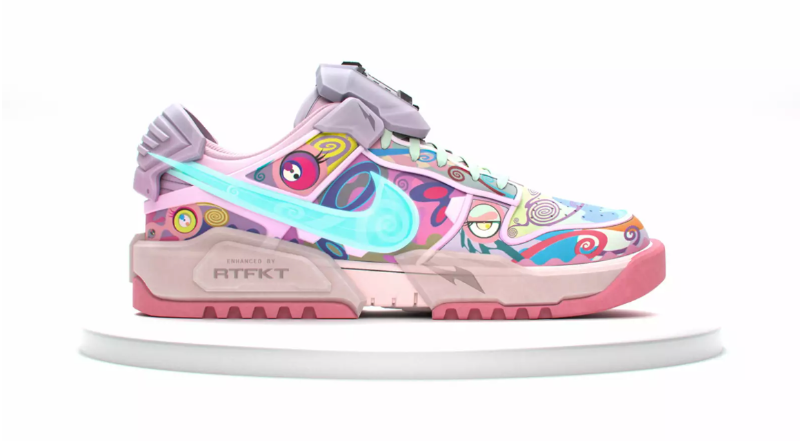
Li-Ning and Adidas partnered with the established Bored Ape project, but Nike took a bolder step by acquiring RTFKT, a virtual sneaker NFT company. This ambition goes beyond brand visibility—Nike is positioning itself for life in the digital realm.
Nike has long positioned itself as a tech company, not just a footwear seller. It previously launched digital products like Nike Running Club. It sees NFTs as emerging technology with transformative potential. Virtual sports—like e-sports, football, and basketball manager games—are already multibillion-dollar industries. NFTs could become the bridge between physical and digital athletic experiences.
Nike Running Club already tracks fitness data, builds communities, and offers virtual rewards. When combined with NFT-based incentives, it could generate even stronger positive feedback loops.
In April, Nike and RTFKT launched their first sneaker NFT collection: CryptoKicks, along with customizable skins called Skin Vials.
Sneakers already have a mature secondhand market as collectibles. For young users active on platforms like Poizon (DECO), shoes have never been just about wearing. Poizon recently launched its own digital collectibles platform.
Therefore, virtual sneaker NFTs could unlock massive incremental markets not just for sportswear, but for the entire sports industry.
Another powerful force is luxury brands. Given that one of NFTs’ key roles is status signaling, they naturally align with luxury goods. Recognizing this, luxury brands aren’t just enhancing their image—they’re viewing NFTs as potential future product formats.
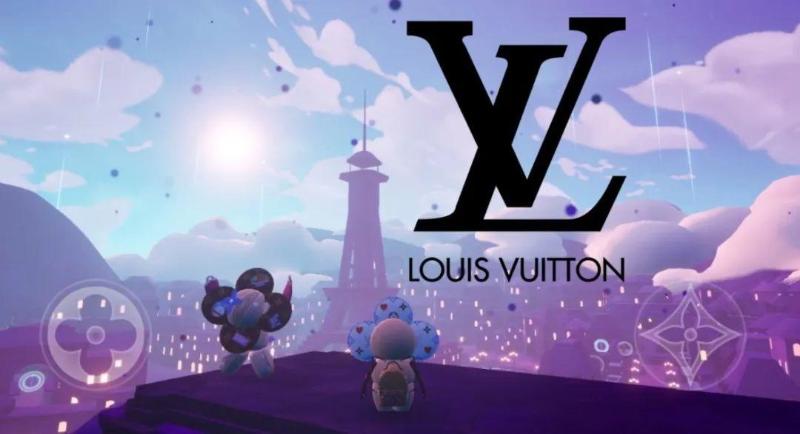
Louis Vuitton, for instance, collaborated with renowned crypto-native artist Beeple to launch an NFT, then boldly turned it into a game: *Louis: The Game*. Players join LV’s mascot Vivienne on a treasure-hunting adventure.
In fact, nearly all high-end fashion and automotive brands now have NFT initiatives—from Burberry and Gucci to Lamborghini and Porsche.
Luxury brands understand they don’t sell clothes, bags, or cars—they sell identity, status, and cultural symbolism. NFTs are the natural digital vessels for these intangible values.
New Customer Community Model
As mentioned earlier, NFTs make excellent community bonds and entry barriers. They’re also ideal as proof-of-ownership tools—common in blockchain via airdrops, which distribute benefits to specific wallet addresses.
For businesses focused on customer community management, NFTs can enhance traditional loyalty programs, membership clubs, and point systems with stronger feedback loops and greater personalization.
In May, Starbucks announced it would launch NFT-based membership tokens. Historically centered on creating a “third place” between home and work, Starbucks now reveals a bolder vision: building a “digital third place”—a global virtual community united through shared experiences, collaboration, and collective ownership. Starting with coffee, it will expand into art, music, and literature.
Starbucks recognizes that NFTs offer more than digital ownership or a replacement for Starbucks Rewards. They can help build an entirely new ecosystem: a customer community spanning virtual worlds and physical stores, a self-reinforcing business model benefiting all participants, and diverse, enriching member benefits and experiences.
Starbucks is gradually integrating its 50 years of cultural assets and 27 million members into this ambitious NFT strategy.
Another standout brand redefining fan relationships through NFTs is the NFL. During Super Bowl in February, it distributed game tickets as NFTs—transforming event access into digital memorabilia commemorating major sporting events. In May, the NFL announced it was partnering with Mythical Games to develop *NFL Rivals*, an NFT-based game where players build teams and compete to win NFTs.
An increasing number of companies like Starbucks and the NFL now recognize NFTs’ power to energize and expand customer communities. These communities are among the most valuable assets for brands, and NFTs are powerful tools to amplify and monetize them.
04 NFTs Will Still Change the World
During the previous hype cycle, NFTs’ financial aspects were overly emphasized, while integration with real-world commerce lagged—leading outsiders to mock it as “a casino where young people scalp each other.” But NFT value extends far beyond speculation. Their true potential lies in becoming the next generation’s social and cultural infrastructure.
People will always crave scarce social and cultural products to satisfy needs for identity, community, and emotional fulfillment—this is the foundation of NFTs’ existence and growth.
The trend of integrating NFTs with real-world commerce continues to strengthen. The examples above represent only a fraction. Nearly every company involved in culture and social interaction will eventually adopt NFTs. As traditional enterprises enter this space, they’ll need partners across content creation, community management, technical upgrades, and infrastructure development.
These real C-end and B-end demands should be the compass guiding the next wave of NFT innovators.
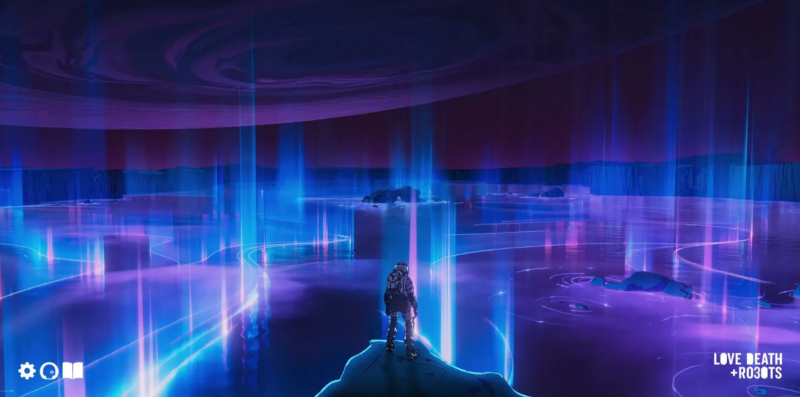
Netflix’s flagship series *Love, Death & Robots* surprised viewers by displaying a QR code mid-episode leading to an NFT treasure hunt. Samsung has partnered with Nifty Gateway to launch an NFT platform on its smart TVs, allowing users to browse NFT markets or showcase their collections on their living room screens. YouTube has announced plans to provide NFT tools for creators.
Through mainstream social and content platforms, the integration of NFTs into everyday life is inevitable.
NFTs remain in their infancy. Today’s static images, simple videos, audio clips, or 3D animations won’t define their ultimate form. They will evolve to become smarter, more interactive, and capable of carrying far greater value than we currently imagine.
Future NFT development may not depend on grand narratives like the metaverse. Even without a fully immersive, self-contained virtual world, NFTs can integrate into real life. They can spark powerful synergies with existing internet platforms and traditional consumer brands.
After the bubble bursts, NFT pioneers can steadily penetrate various industries, building sustainable business models while gradually letting NFTs’ inherent DNA—decentralization, openness, diversity, and immutability—reshape the world.
Join TechFlow official community to stay tuned
Telegram:https://t.me/TechFlowDaily
X (Twitter):https://x.com/TechFlowPost
X (Twitter) EN:https://x.com/BlockFlow_News






