Sharp Sell-Off in Tech Stocks Unlikely to Deter Hawkish Pace; Fed's 25-Basis-Point December Rate Hike Virtually Certain
Author: Yang Dapan, Jin10
The hawkish-leaning Federal Reserve is preparing to push for another rate hike in December, crushing the hopes of investors battered by market volatility. Although most traders have already bet on a 25-basis-point increase next month, severe stock market swings have altered market expectations regarding the pace of subsequent hikes.
In September this year, the Fed raised its target interest rate to 3.75%-4.0% to address fuel price surges triggered by the conflict between Trump and Iran. Although the Fed chose to hold steady in October, the September hike and expectations for further tightening in December have already led to tighter financial conditions and a stronger dollar, thereby depressing imported goods prices.
With international oil prices retreating, the need for the Fed to deliver a substantial 50-basis-point hike in December has vanished. While officials recognize that an AI trading crash could impact the economy, given that the 2% inflation target has been missed for nearly six consecutive years, they maintain that another 25-basis-point increase remains necessary.
Strong Data and AI Inflation Spillover Reinforce Hawkish Stance
Official data released Wednesday showed the Fed's preferred inflation gauge ticked up slightly to 3.8% in October. Excluding volatile food and energy prices, the core personal consumption expenditures (PCE) price index, considered a better measure of underlying price pressures, accelerated year-over-year from 3.1% to 3.3%.
Another report released the same day showed the US economy expanded at an annualized rate of 4.3% in the third quarter, significantly higher than the 2.2% growth in the second quarter.
The White House also announced a new round of tariff measures on Wednesday, meaning the inflationary effect of Trump's tariffs may continue to materialize.
The tone inside the Fed is currently firm, with officials concerned that strong economic growth, partly driven by the AI boom, combined with a robust labor market, could embed inflation above the target level. The AI surge is driving up prices for goods beyond computer chips and software, a trend that has alerted the central bank.
Goolsbee, who will have a vote on monetary policy starting in 2027, told reporters last week that he sees worrying signs of inflation "outside the data center space."
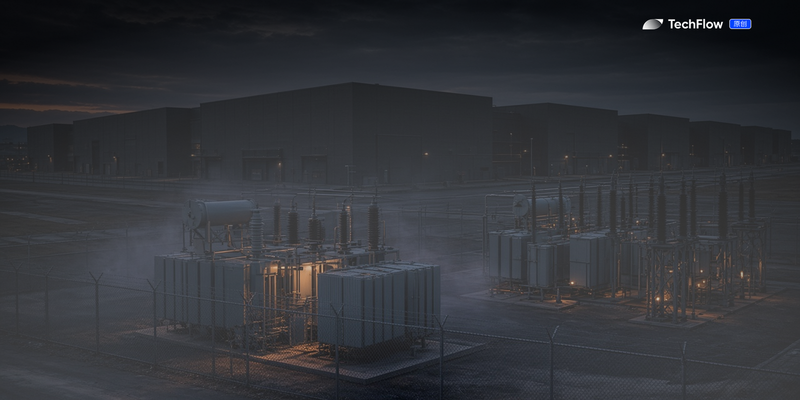
Goolsbee revealed, "We are getting a lot of feedback like, 'Wow, construction costs are super expensive,' especially for any electrical components. Prices are skyrocketing for any products similar to those used in data centers."
Harvard University Professor Gita Gopinath, who formerly served alongside Fed Chair Powell in the Group of Thirty, noted, "Powell mentioned after the last Fed rate decision that we are entering a period of information intensity. Almost every piece of data released since then points to the need for action; the only factor moving in the opposite direction is risk sentiment."
Heavy Selloff in Tech Stocks Sparks Warnings from Wall Street and Treasury
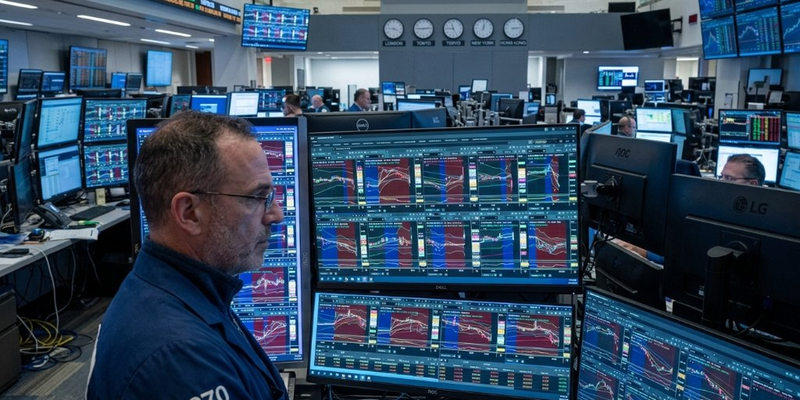
Since October, the Nasdaq Composite, heavily weighted toward tech stocks, has tumbled sharply, wiping out most of its gains for the year. Markets are broadly worried that persistently rising borrowing costs will dampen the spending frenzy in the AI sector.
On Monday, Nvidia reinstated CEO Jensen Huang, who had been embroiled in controversy, sparking a brief tech rebound and easing fears of a market crash. However, selling pressure returned later in the week, with both the S&P 500 and Nasdaq Composite closing lower on Wednesday ahead of the Thanksgiving holiday.
Fears of sudden unwinding in AI trades have prompted economists, market participants, and even U.S. Treasury Secretary Bessent to urge the Fed to pause rate hikes in December. Bessent believes that hawkish rhetoric from some central bank officials has contributed to the stock market decline.
In an interview with CBS News last Sunday, Bessent stated, "Many believe that if they tighten too much, they could make a policy mistake." Hedge fund manager Ackerman also claimed on social media this week that continued Fed rate hikes would "drag the United States and the world into a recession."
Torsten Sløks, Chief Economist at Apollo Global Management, pointed out, "If they look at inflation, they should raise rates. But if they look at the prospects for AI, they might need to cut rates." He argued that recent market turbulence provides a strong case for exercising extreme caution on rate hikes.
Facing volatile market sentiment swinging with individual stocks, Eric Wallerstein, Chief Macro Strategist at Clocktower Group and former advisor to ex-Fed Governor Milan, bluntly stated, "People's rate expectations are completely being led by Nvidia's stock price. This doesn't seem like the right way to conduct monetary policy."
"Fed Put" Absent, Powell's Resolve Tested
However, traders betting on the Fed to bail out the market may be underestimating the chairman's resolve to curb inflation. Guy Miller, Chief Market Strategist at Zurich Insurance Group, said, "The so-called 'Fed put' that potentially supported markets for years no longer exists today."
The so-called "Fed put" refers to a market belief that formed during the tenure of former Fed Chairman Alan Greenspan, where investors believed the central bank would prop up markets by injecting cheap liquidity when stock prices faltered.
Claudia Sahm, Chief Economist at Century Advisory LLC, similarly believes the Fed will not pivot in the near term due to stock market pullbacks. She stated, "At this juncture, it's hard to imagine them abandoning their focus on inflation. For a stock market drop to force the Fed to change its stance, the decline would need to be much larger."