From MEV Hunter to High-Frequency Market Maker: A Dropout's Crypto Trading Startup Journey
Author: yieldmaxi (@0xyieldmaxi)
Translated by: TechFlow
TechFlow Summary: Behind the mysterious halo of quantitative trading, the real barrier to high-frequency crypto market making is often not complex mathematical formulas. Starting with no financial background after dropping out of college, the author injects an on-chain MEV hunter's arbitrage instinct into centralized exchanges, revealing the industry truth that the core logic of early-stage market making often consists of fewer than a hundred lines of code.
From voluntarily accepting marginal losses in fiercely competitive markets to secure top-tier VIP fee channels across platforms, to cross-exchange arbitrage and joint harvesting of CEX-DEX, to organizational lessons from key personnel striking out on their own, this article is not only a rare post-mortem of hands-on high-frequency market making but also outlines a new lightweight paradigm reshaped by large models reconstructing the quantitative R&D workflow.
A short while ago, I wrote my first article since entering the crypto industry—the only one at the time—detailing how I entered the crypto world, developed my first MEV strategy, and experienced various on-chain games. At the end of that piece, I explained why we decided to slow down our on-chain operations and shift most of our energy toward centralized exchanges (CEX).
Four years have passed since that long article was published, and it has been over a full year since I completely stopped market making operations.
Lately, the explosion of Large Language Models (LLMs) has attracted a wave of newcomers to systematic quantitative trading. Recently, I've seen many fascinating discussions on X regarding systematic trading and High-Frequency Trading (HFT), especially in the context of crypto asset markets. This prompted me to write this second article, sharing how I gradually built an entire market-making trading system without any prior trading experience, traditional finance background, or formal academic training.
A bit of personal background: I dropped out of college in early 2020, having never worked in traditional finance before. When I first started, I knew almost nothing about the trading industry.
All the skills I later acquired came entirely from self-directed research, iterative experimentation, writing code, and humbly seeking advice from those with vastly more experience than me.
First Encounter with Crypto Market Making: An Accidental Startup Born from Unimplemented Compliance
In late 2022, right after FTX collapsed, my most profitable on-chain MEV alpha returns had completely faded away. I grew tired of endlessly hunting for new opportunities on-chain and decided to take a few months off to travel and unwind in Southeast Asia. I've already written a whole article documenting the story leading up to this trip, so I won't dwell on it here.
However, my leisurely vacation didn't last long.
My business partner reached out to me with a collaboration opportunity: A close friend was preparing to launch a brand-new centralized exchange in our local market (Switzerland) and needed someone to build its market-making infrastructure. The core idea was essentially to act as an internal market maker, similar to the Alameda Research model, though absolutely excluding the part about misappropriating user funds.
Neither of us had ever written a market-making system before, but we were confident in our ability to pull it off.
Our plan was simple: spend a few months building the required infrastructure, use this to deeply understand the underlying mechanics of CEXs, uncover other opportunities along the way, and eventually start proprietary trading with our own capital.
Ironically, that exchange was never actually launched.
Nevertheless, we ended up with three full months' worth of trading infrastructure development: highly stable direct backend connections to multiple major exchanges and a profound understanding of what it takes to compete fiercely in this market.
So, we founded a micro trading firm in Switzerland, consisting of just the two of us. The goal was straightforward: leverage our ready-made trading infrastructure to conduct crypto market making using Prop Capital. At the time, we hadn't even backtested or run any real-world quant strategies; we just dove in based on intuition.

The First Strategy and MEV Mindset: Never Take Position Risk, Fast In, Fast Out
Compared to some crypto-native HFT competitors, we weren't early movers in this space. But objectively, the timing favored us. After FTX's collapse, numerous former market-making titans exited, leaving behind massive liquidity voids and abundant structural opportunities across the market.
We started with the most intuitive logic to us: placing two-sided limit orders on the order book with a fixed spread, and as soon as filled, immediately closing the position at the fastest speed possible.
The core logic was extremely simplistic: calculate the maximum volume you can quote, determine the required spread width, and then mechanically repeat the execution.
We knew this crude model had massive room for optimization, but we had to take that first step.
We approached market making with the hardened mindset of MEV searchers. We fundamentally disliked taking overnight or long-term inventory risk. Our philosophy was: fast in, fast out, precisely capturing any tiny risk-free pricing discrepancies in between.
Habituated to strategies where PnL could be realized nearly instantaneously in the past, we naturally began wondering: how could we transform the traditionally lengthy market-making process into a model highly resembling the instant arbitrage we were used to?
Given that, instead of passively waiting for another maker order to close a position, why not immediately fire a counter taker order right upon fill for instant hedging? Obviously, doing this within the same exchange and same trading pair would never be profitable.
Cross-Exchange Arbitrage in Action: Fewer Than 100 Lines of Core Code, Victory Lies Entirely in Latency and Fees
At the time, we had already integrated Bybit's API, and they had listed many perpetual contract pairs identical to Binance's.
The arbitrage concept was crystal clear: passively place maker orders on Binance, and upon receiving a fill notification, the system would instantly send a taker order in the opposite direction on Bybit milliseconds later to hedge the risk.
We went live with great anticipation. The execution logic ran perfectly, yet our account rapidly bled money. The pace of our losses was quite alarming.
We immediately halted everything and started meticulously backtesting every single filled order with a magnifying glass. In the days that followed, reviewing order data became one of my favorite activities. I poured an unimaginable amount of time into analyzing market microstructure, which ultimately became the absolute cornerstone for all our future trading iterations. Our daily grind was obsessively dissecting every failed fill to pinpoint the exact problem and then coding fixes.
Soon, the root cause of the losses surfaced: we were consistently a step behind. By the time our taker orders navigated through the network to reach Bybit, the hedging liquidity we were trying to lock in had already been consumed faster by competing firms.
Rather than discouraging us, this discovery made the game incredibly enticing. It was an engineering problem we fully understood—precisely the type of competition we excelled at during on-chain front-running.
We were convinced we could be faster.
Our codebase was already highly refined. When you're lagging competitors by dozens of milliseconds in the market, spending countless hours optimizing system internals by a few microseconds is pointless. Clearly, we had overlooked deeper physical bottlenecks.
We proactively reached out to the commercial and technical teams within the exchanges to figure out the source of this massive physical latency disadvantage.
This fog lifted quickly.
We applied to both exchanges for more competitive VIP rate discounts and connected to high-speed dedicated WebSocket nodes with lower push latency. Meanwhile, we partnered with low-latency telecom provider Avelacom for testing, set up dedicated leased lines, and relaunched the strategy.
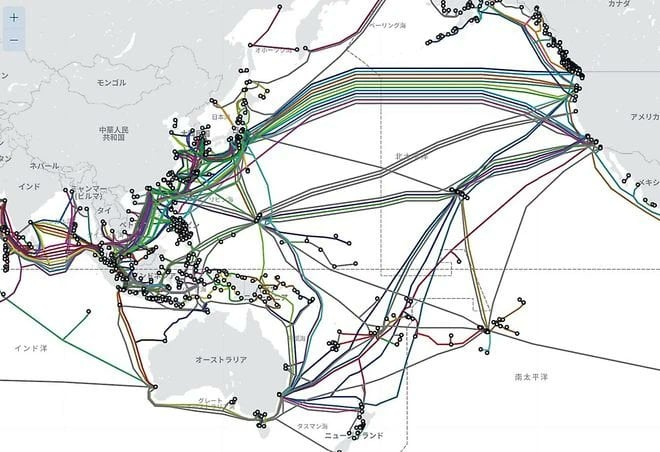
A miracle occurred: the strategy finally worked flawlessly. Although minor details still needed tweaking, our network speed had become highly competitive. Combined with the newly secured discounted fee rates, the economic model of this cross-exchange arbitrage strategy looked exceptionally strong.
To maintain access to the top-tier fee discount tiers, we needed to generate astonishing trading volume across multiple exchanges. This meant we couldn't be picky; we absolutely couldn't limit ourselves to only trading the most profitable pairs.
We had to trade everything, including some of the fiercest mainstream markets where we'd actively absorb tiny losses due to intense competition.
From a commercial standpoint, we were willingly paying tuition in specific ultra-competitive markets because only by driving volume through these could we crash our overall fee tier enough to earn multiplied profits in most other suboptimal markets.
We relied on this cross-exchange architecture for a considerable period before seamlessly integrating OKX, spending the following months progressively refining the entire backend.
Looking back, the most dramatic aspect of that period was: the entire trading system we spent months nurturing day and night consisted of fewer than 100 lines of actual core code responsible for executing trades. We almost never wasted time deriving sophisticated mathematical pricing models or digging for fancy alpha signals. Nearly all our effort was poured into network protocols, exchange direct connections, order execution pathways, and deciphering each exchange's quirky micro-matching mechanisms.
In hindsight, during our first year in market making, the trading logic itself turned out to be the easiest and simplest component of the entire system.
Scaling Up: Pivoting to the CEX-DEX Blue Ocean, and Why We Missed Hyperliquid
By this stage, we possessed a solid foundation of CEX HFT infrastructure, highly competitive VIP fee tiers, and massive proprietary capital parked across various CEXs.
The next logical move was virtually undeniable: expanding into cross-market arbitrage between CEXs and Decentralized Exchanges (DEXs).

This was essentially returning to our original turf, but this time armed with a dimension-reducing arsenal of brand-new tools.
Shortly after FTX's collapse, holding enormous proprietary capital in CEXs without safeguards was psychologically uncomfortable. But the profitability of this strategy was so staggering that the outsized gains made us perfectly comfortable accepting that platform counterparty risk.
It was at this turning point that things truly exploded. Almost all of our subsequent profits ultimately came from cross-market arbitrage between CEXs and DEXs. It felt like there were hardly any scaled professional competitors in this blue ocean, allowing us to exponentially scale our trading size.
To expand our footprint, we onboarded two new full-time partners who had previously collaborated with my business partner on another project years prior.
Meanwhile, Hyperliquid was quietly rising, yet we completely lacked any trading activity on it.
I'd love to fabricate some profound strategic reasons to explain why we missed Hyperliquid, but the reality wasn't nearly that complex: we were completely trapped in our existing profit flywheel. We were obsessed with optimizing what we already had, entirely losing the ability to look up and recognize the new battlegrounds we should have been targeting.
When you're raking in hard cash with existing strategies, staying sharp enough to seize the next wave of entirely new opportunities is often far harder than it seems.
Built a Trading System Was Easy, Running a Trading Firm Was Hard: Team Fracture and Burnout
We traded smoothly relying on this efficient system until late 2024, when the situation took a sharp turn.
Initially, the erupting issues were almost entirely unrelated to the trading strategy itself.
Two of the team members we brought on board later decided to strike out independently, taking their accumulated tech with them. I don't want to publicly elaborate on the specifics of our disagreements, but it was undeniably a massive blow.
Due to our early-stage rudimentary company structure and profit-sharing mechanism, their departure evaporated a significant portion of our profit stream overnight. Repairing and filling this operational gap required at least several months.
By then, we had grown into top-tier engineers exceptionally skilled at writing precision trading systems for the crypto market.
Regrettably, however, we never learned how to properly operate a truly mature trading firm.
We invested an astronomical amount of time into mastering exchange operations, squeezing out every microsecond of execution latency, and extracting even the slightest excess alpha from liquidity games.
Yet, we never devoted sufficient thought to seriously considering how to build a robust, fair, and antifragile commercial organization and corporate governance framework around it all.
Regardless, we picked ourselves up and continued operating in the shrunken market with reduced proprietary capital.
At the time, overall crypto market volume remained high, but most of our competitive advantages had severely eroded. More critically, I felt increasingly exhausted and weary from maintaining this cumbersome behemoth day after day. There was still meat on the table, but my inner drive to chase it had been completely depleted.
In early summer 2025, I formally decided to step away and give myself a complete sabbatical. My passion for trading and the crypto industry had nearly hit zero, and I started looking toward entirely new ideas.
Unlike my half-hearted break at the end of 2022, this time, my departure lasted for a considerably longer stretch.
Returning to the Crypto Battlefield: When Large Models Turn HFT Back Into a Pure Hobby
Earlier this year, I co-founded a new company. We are currently in stealth mode developing in the prediction market sector, which has become my current primary full-time focus.
And more than a year after completely leaving crypto quantitative trading, I recently quietly dusted off the old tools and resumed writing strategy code.
The biggest catalyst driving me back to the battlefield was precisely the disruptive restructuring that LLMs brought to the entire software development and quant research workflow.
As a veteran who painstakingly built trading infrastructures from scratch for years, witnessing firsthand how LLMs are now automating acceleration of what was once grueling and dry infrastructure engineering was profoundly thrilling. The time from conceptualizing a trading idea to actually writing the code and completing live backtests has been compressed by orders of magnitude.
I rediscovered the primal urge to tinker with trading systems—a spark of excitement I hadn't felt in years.
But this time, my mindset is completely different. My sole objective is to build entirely new strategies far removed from what I've done before, and to enjoy the pure joy of learning new knowledge throughout this exploration.
The biggest shift is: this time, I carry no baggage. I don't need to mold this system into a massive financial institution, hire a swarm of employees, drown myself managing HR drama, desperately scale operations, nor prove to anyone why I'm exploring research directions that might fail.
Due to running my prediction market startup, my daily available time for this trading project is relatively limited. But thanks to LLMs multiplying my personal R&D efficiency by a hundredfold, combined with completely shedding the heavy shackles of running a physical trading firm, I find the entire exploration process incredibly light and purely enjoyable.
On some level, this feeling is like going back to when I first entered the crypto scene: just me, a few simple ideas in my head, and genuine curiosity about whether I could actually make them work.
After long periods of career ups and downs, writing trading systems has finally reverted to being a pure hobby rather than a suffocating job.
I'd love to keep this ideal state forever, but who knows? After all, I'm notoriously known for changing my mind easily.
Join TechFlow official community to stay tuned
Telegram:https://t.me/TechFlowDaily
X (Twitter):https://x.com/TechFlowPost
X (Twitter) EN:https://x.com/BlockFlow_News
 0xyieldmaxi