
Morgan Stanley Research Analysis: AI Theme Volatility Drags on Base Metals, Copper and Aluminum Fundamentals Diverge
Author: Chaoxiang Research
As the Fed resumes rate hikes amid severe volatility in AI-related trades, the metals market is undergoing a comprehensive reshuffle of speculative positions. Amy Gower, commodity strategist at Morgan Stanley, noted in a report released on November 18, 2026, that as the US completes one rate hike and the market prices in another for December, coupled with a strengthening dollar and doubts over the pace of AI computing infrastructure construction, long capital previously poured into base metals and gold is accelerating its exit. Morgan Stanley anticipates a structural deficit for copper in 2027, viewing any sharp pullbacks as attractive buying opportunities, but remains cautious toward aluminum, which still faces crowded longs and oversupply conditions.
Dual Squeeze from Rate Hikes and AI Volatility Drives Comprehensive Long Liquidation in Metals
The golden age of metal assets typically emerges during periods where low interest rates resonate with strong thematic trends.
The rate-cut cycle from 2024 to 2025, combined with the boom in AI computing infrastructure and growing global emphasis on strategic minerals, once pushed global speculative positions in metals back to record highs seen in 2021-2022. Today, however, the macroeconomic tide has completely reversed.
With the US having already implemented one rate hike and the market pricing in continued increases for December 2026, the cost of holding non-yielding assets has surged sharply. Rising interest rates directly suppress terminal demand in construction and automotive sectors, which are sensitive to financing costs, while a strong dollar further amplifies downward pressure on commodities.
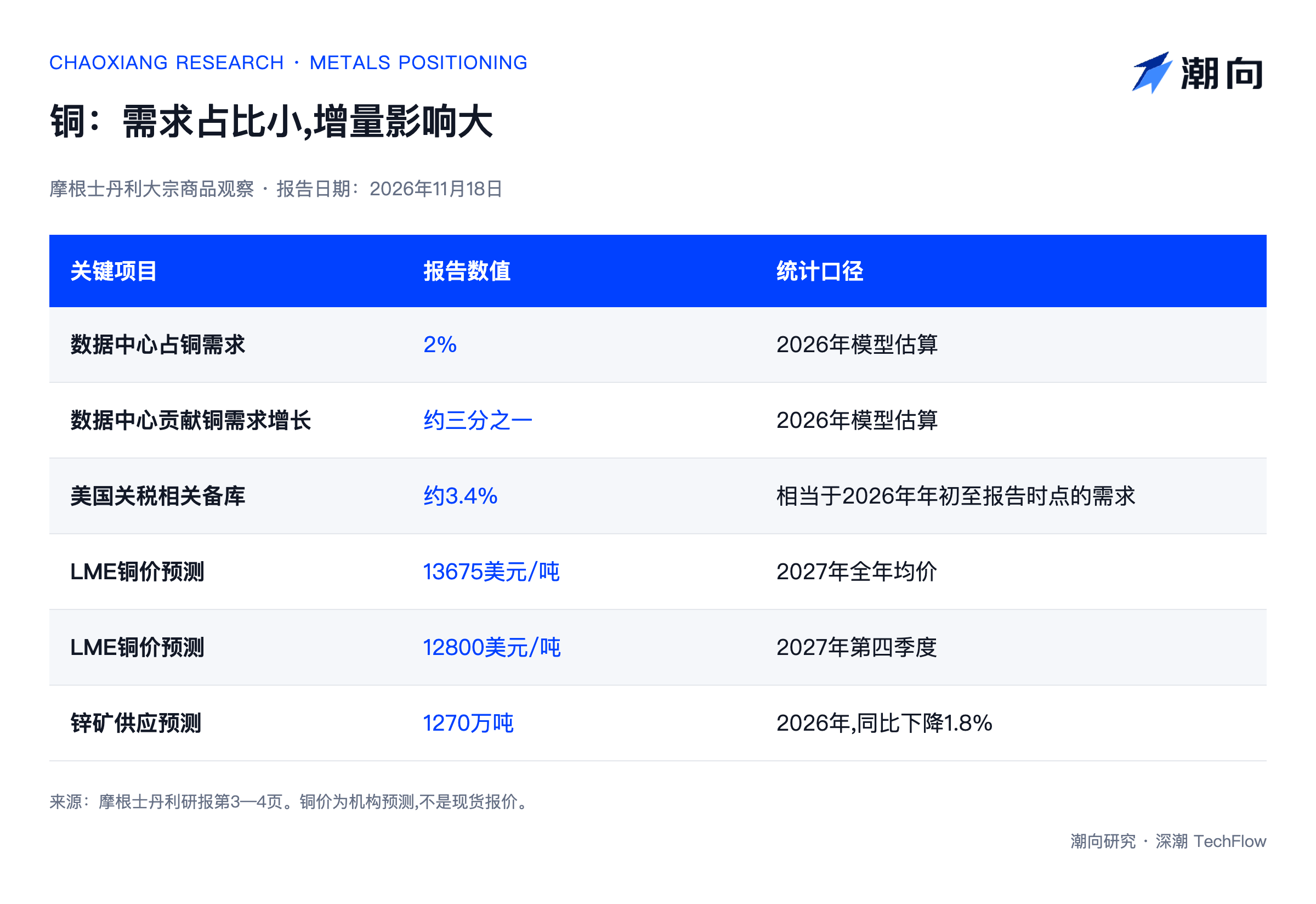
The buying logic previously underpinned by AI computing infrastructure demand is also weakening. As a core asset highly positively correlated with the US tech giants known as the "Mag7," copper has recently been severely impacted by selling in the AI sector. Morgan Stanley estimates that data centers accounted for only 2% of total global copper demand in 2026 but contributed one-third of the demand growth, giving them high marginal pricing power. Consequently, market concerns over the pace of data center construction have directly triggered a stampede among longs.
Copper Deficit Thesis Intact, But Crowded Aluminum Longs Leave Room for Further Downside
The intensity of fund withdrawals shows stark divergence across different metal varieties.
Although macro headwinds for copper hit harder than expected, supply and demand fundamentals remain solid. Previously spurred by potential US tariff policies, traders rushed to ship and stockpile copper ahead of time, with this restocking demand contributing 3.4% to global copper demand year-to-date in 2026. Currently, as the January 1, 2027 tariff deadline approaches, shipments to the US are slowing, and some copper inventories are even flowing back to Asia due to high premiums on China's spot market.
Despite this, Morgan Stanley's assessment of a supply deficit in the copper market for 2027 remains unchanged, forecasting the LME copper average price for 2027 to reach $13,675/ton ($12,800/ton for Q4). During the Q3 earnings season, several mining companies lowered production guidance; notably, Chile's National Copper Commission (Cochilco) revised down supply expectations by approximately 400,000 tons, and scrap copper supply remains tight. Morgan Stanley explicitly stated that if copper prices overshoot lower due to sentiment-driven panic, it will present an attractive buying opportunity.
Aluminum, conversely, faces a markedly different situation. Although recent tightness in the cash market briefly widened spreads, and aluminum prices held firmly above $3,000/ton before September, Morgan Stanley maintains its view of an aluminum oversupply in 2027, driven primarily by new capacity ramp-ups in Indonesia and Angola, resumption of production in the Middle East, and restarts of smaller smelters in Europe and the US. With LME aluminum longs remaining the most crowded across all base metals, compounded by the drag of high interest rates on economic slowdown, aluminum prices still face risks of further downside.
The zinc market, meanwhile, is locked in a fierce battle between bulls and bears. Morgan Stanley forecasts global zinc mine output will contract by 1.8% to 12.7 million metric tons in 2026 (below 2015 levels), with 2027 incremental output concentrated in the second half of the year. Short-term supply remains tight, but global demand growth is under 1%. Meanwhile, both longs and shorts at the LME for zinc are significantly increasing their positions, making high volatility the new normal.
Nickel, Lead, and Iron Ore Show Resilience; Gold Faces Short-Term Pressure but Long-Term Bullish Trend Intact
In a broadly declining market, commodities that were heavily shorted previously or trading near cost lines instead demonstrated relative resilience.
Nickel and iron ore both receive strong support from marginal costs. Morgan Stanley calculates that current nickel spot prices have fallen 11% below the 90th percentile of the global C1 cash cost curve, with some Indonesian miners signaling production cuts due to soaring energy and sulfuric acid costs. The market is closely watching Indonesia's upcoming 2027 mining quota allocations (RKAB), and with LME nickel positions at neutral levels, its defensive characteristics stand out.
Iron ore has similarly fallen to its lowest level since late 2022, with net short positions at the Singapore Exchange (SGX) hitting a record high since tracking began in 2023. Although slowing Chinese steel production and accelerated production ramps at Guinea's Simandou iron ore mine pressure fundamentals, high ocean freight and diesel costs have forced some Brazilian high-cost mines to make minor production cuts, limiting further downside. Lead has performed relatively well in this liquidation wave due to short positions nearing historical extremes and minimal AI exposure.
Gold has served as a liquidity "ATM" for the market. Dragged by rising rate hike expectations, recovering real yields on 10-year US Treasury bonds, and the dollar index hitting a peak since 2025, COMEX gold net longs have retreated to the lower bound of their range since early 2024. Nevertheless, physical buying remains robust; the People's Bank of China added 26 tons of gold in October 2026, annual central bank purchases globally are projected to surpass 2025 levels, and gold ETF selling has been extremely restrained.
Morgan Stanley believes the long-term thesis for gold, driven by sovereign debt and fiscal sustainability concerns, remains intact. If oil prices decline further or the market confirms the Fed's rate hiking cycle has peaked, gold will resume its upward trajectory. However, until clear signals emerge that the Fed has stopped raising rates, extreme volatility across the entire metals complex will persist.
This article is a compilation and analysis by Chaoxiang Research of third-party brokerage research reports. Ratings, target prices, earnings forecasts, and related judgments cited herein represent the views of analysts at those respective brokerages, reflect only the stance of their affiliated institutions, do not represent the views of Chaoxiang Research, and do not constitute any investment advice.
Markets carry risk; decisions must be independent. This article should not serve as the basis for trading any securities.
Join TechFlow official community to stay tuned
Telegram:https://t.me/TechFlowDaily
X (Twitter):https://x.com/TechFlowPost
X (Twitter) EN:https://x.com/BlockFlow_News
 @chaoxiangooo