The US Dollar Index recovers "Liberation Day" losses as Federal Reserve rate-hike expectations continue to build.
By Yang Dapan, Jinshi Data
The U.S. dollar is completing a significant reversal. As U.S. inflationary pressures persist and expectations for further Federal Reserve rate hikes strengthen, the Dollar Index has recovered all losses since President Trump announced sweeping tariff measures in April 2025. By Tuesday, the Dollar Index had risen approximately 1.7% for the month, reclaiming levels seen when U.S. President Trump announced his so-called "Liberation Day" tariff policies on April 2 of last year.
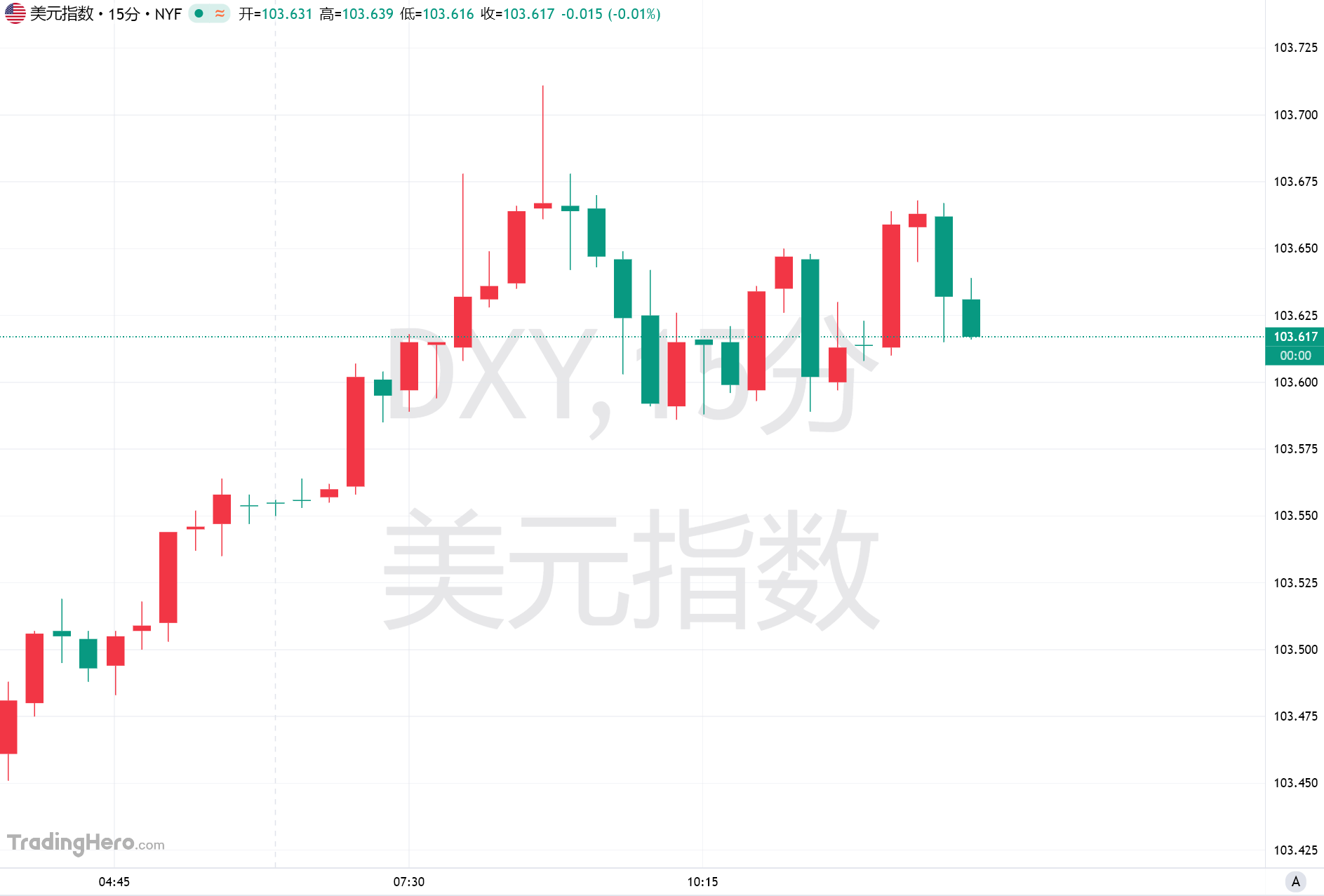
On Wednesday, the Dollar Index hovered near 103.6, maintaining its strength following an earlier touch of a 19-month high. The euro fell below the 1.10 level against the dollar for the first time since the April 2025 tariff shock.
Compared to last year's market concern over U.S. trade policy harming economic growth—which led to a sell-off of the dollar—the primary drivers of exchange rates have now shifted to the Fed's policy outlook and the relative resilience of the U.S. economy.
Inflation exceeds expectations, Fed rate hike bets become main driver of USD rally
The core driver of this dollar uptrend is market repricing of the U.S. interest rate path. The Federal Reserve implemented its first rate hike since 2023 in September this year, raising the target range for the federal funds rate to 3.75%–4.00%.
Thereafter, U.S. inflation data consistently came in above forecasts, further reinforcing market judgments of monetary tightening. The October U.S. Consumer Price Index rose 0.4% month-over-month, beating expectations. Federal Reserve Governor Waller previously stated that if inflation pressures persist, the Fed should consider a one-time 50-basis-point hike in December.
Interest rate futures data show traders have largely priced in a 25-basis-point hike in December and anticipate two additional hikes of the same magnitude by 2027.
St. Louis Fed President Musalem further indicated on Tuesday that to keep pace with inflation control, the U.S. economy may need to undergo several rate hikes before spring 2027. He believes the current policy rate may be roughly 1 percentage point below the level required to restore price stability.
As markets adjust rate expectations upward, U.S. Treasury yields have climbed significantly. The 10-year yield has broken back above 5%, and the bond market experienced its most severe selloff in 18 months last week.
Higher yields on U.S. dollar-denominated assets have further enhanced their appeal to international capital. ING strategist Francesco Pesole argues this is a macro-driven dollar rally. Persistently high U.S. inflation and the Fed's hawkish stance continuously push rate expectations higher, while declining energy prices lead investors to question how much longer other central banks can continue hiking.
U.S. economy shows resilience, European debt risks amplify dollar advantage
Beyond monetary policy, relatively robust U.S. economic performance is another key factor behind the dollar's recovery. Despite headwinds from the U.S.-Iran war, trade policy uncertainty, and a recent pullback in tech stocks, the U.S. economy continues to demonstrate resilience.
Latest data shows U.S. third-quarter GDP expanded at an annualized rate of 3.4%. October retail sales rose 0.2% month-over-month, with core retail sales excluding autos, gasoline, building materials, and food services increasing 0.6%, surpassing market forecasts.
This performance supports the market view that the U.S. economy can still endure higher interest rates.
Van Luu, Global Solutions Strategy Head at Russell Investments, stated that a hawkish Fed combined with the prior strong performance of the U.S. stock market has created a favorable environment for dollar appreciation.
Meanwhile, economic and political risks outside the U.S. are mounting. European investors remain focused on fiscal sustainability issues in France and Belgium, and rising debt pressures in some eurozone countries are weighing on the euro and other major currencies.
Lee Hardman, Senior Forex Analyst at MUFG, noted that despite declining energy prices and U.S. tech stock declines posing some headwinds for the dollar, it has remained highly resilient over the past month. The other nine major G10 currencies have all depreciated against the dollar.
Concerns over policy independence ease, emerging markets face dual pressures
Another shift in dollar dynamics stems from a reassessment of Fed independence. Previously, some investors worried the Trump administration might pressure the Fed to maintain lower rates, thereby undermining the attractiveness of dollar assets.
However, following the November U.S. midterm elections, with Democrats taking control of both chambers of Congress, some institutions believe the political pressure on the Fed may have eased.
Barclays analysts pointed out on Tuesday that the midterm results have reduced market fears of intervention undermining Fed independence. Nevertheless, the dollar's sustained appreciation is increasingly pressuring emerging markets.
A stronger dollar typically means higher repayment costs for dollar-denominated debts, while simultaneously exacerbating risks of capital outflows and local currency depreciation in emerging economies.
Simon Kihano-Evans, Strategy Director at Macro Hive, believes that some emerging market currencies are facing a dual shock of rising dollar values and domestic political uncertainty.
For the dollar's future trajectory, market attention will turn to the Fed's December policy meeting, and whether upcoming inflation and employment data can continue to support further rate hikes.
If U.S. inflation slows down again, or if continued tech sector adjustments dampen international capital inflows, the dollar could still face new downward correction pressure.