Polygon Not Content With Just Being a Public Chain: Plans to Spend Up to $100 Million to Acquire Payment License
Author: TechFlow
On November 18, according to an official interview with Moneycontrol, Sandeep Nailwal, co-founder of the official ecosystem portal for Ethereum scaling network Polygon, revealed that the team plans to invest $50 million to $100 million over the next one to two years to obtain compliant payment licenses in emerging markets by acquiring licensed enterprises.
This global compliance M&A campaign primarily targets North America, the European Union, Latin America, and Southeast Asia. Nailwal noted that Polygon's core long-term goal is to obtain a US Banking Charter, upgrading into a global correspondent bank that directly provides fund clearing services to large multinational institutions.
Global Licensing M&A Landscape and $100 Million Capital Expenditure
In the capital allocation plan, the dedicated budget of $50 million to $100 million to be invested in the future will be targeted at acquiring local licensed financial institutions with mature licenses within their respective jurisdictions. This aims to bypass the lengthy approval cycles of several years required to apply for financial qualifications from scratch, enabling efficient implementation of compliant operations.
In terms of regional layout, North America and the EU will handle compliance access for large multinational institutions and corporate treasuries, while Brazil, Mexico, and Southeast Asia will focus on building cross-border remittance and fiat currency deposit and withdrawal channels. By holding stakes in local licensed entities, Polygon will directly connect the local real-time clearing networks of multiple central banks.
Public Chain Network Transitioning to Institutional-Level Global Correspondent Clearing Bank
Traditional cross-border fund settlements heavily rely on correspondent banking networks dominated by a few large commercial banks, where individual cross-currency transfers often suffer from multi-layer transit fees and fund settlement delays. Polygon seeks to deeply integrate high-performance blockchain settlement rails with compliant banking account systems to reconstruct the underlying cross-border clearing pathways.
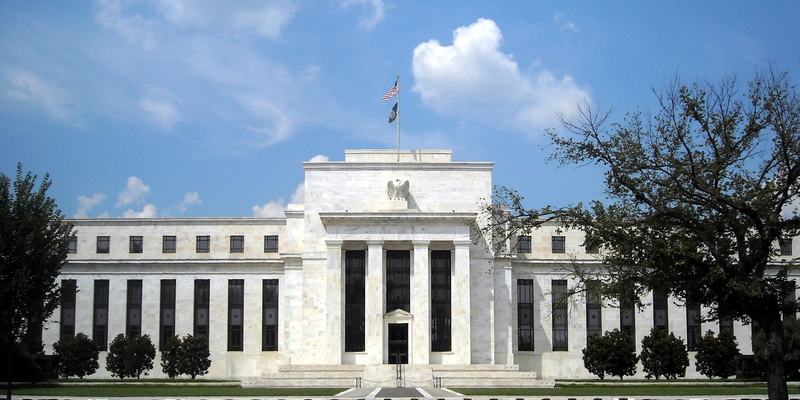
If it successfully obtains a US Banking Charter, Polygon will gain potential direct access to Federal Reserve accounts and nationwide interstate fiat custody and clearing authority. This would allow it to directly provide 24/7 real-time USD and stablecoin cross-border clearing and settlement for multinational corporate treasury departments, eliminating reliance on external correspondent banking networks.
Advancement of North American and European M&A and MTL License Integration
Before this M&A plan, Polygon has already made key preparatory moves in North America. In January 2026, Polygon completed the wholly-owned acquisition of the US licensed crypto cash service provider Coinme and smart wallet developer Sequence for approximately $250 million, thereby directly securing Money Transmitter License (MTL) status across numerous US states.
Nailwal revealed that the team is currently deepening acquisition negotiations with another North American licensed institution and has extended an acquisition offer to a European compliance enterprise. The aim is to accelerate the acquisition of European Electronic Money Institution (EMI) or related crypto qualifications, completing the compliance network puzzle in core Western financial jurisdictions.
$500 Million Ample Reserves and Subsequent Compliance Operational Milestones
The substantial capital reserves provide backing for Polygon's counter-cyclical licensing expansion. Polygon has raised approximately $450 million to date, with investors including SoftBank Vision Fund II and Tiger Global. Based on cumulative fundraising figures, the current maximum $100 million M&A budget accounts for only about 22.22% of historical total financing, leaving ample capital reserves.
Nailwal explicitly stated that the team currently faces no pressure for external financing and will not evaluate a new round until at least late 2027 or early 2028. Moving forward, a tripartite working group will focus on concrete operational execution surrounding regulatory approvals for changes of control by Western authorities, preliminary architectural framework reviews for the US banking charter, and integration into local clearing nodes in emerging markets.
Join TechFlow official community to stay tuned
Telegram:https://t.me/TechFlowDaily
X (Twitter):https://x.com/TechFlowPost
X (Twitter) EN:https://x.com/BlockFlow_News
 深潮TechFlow