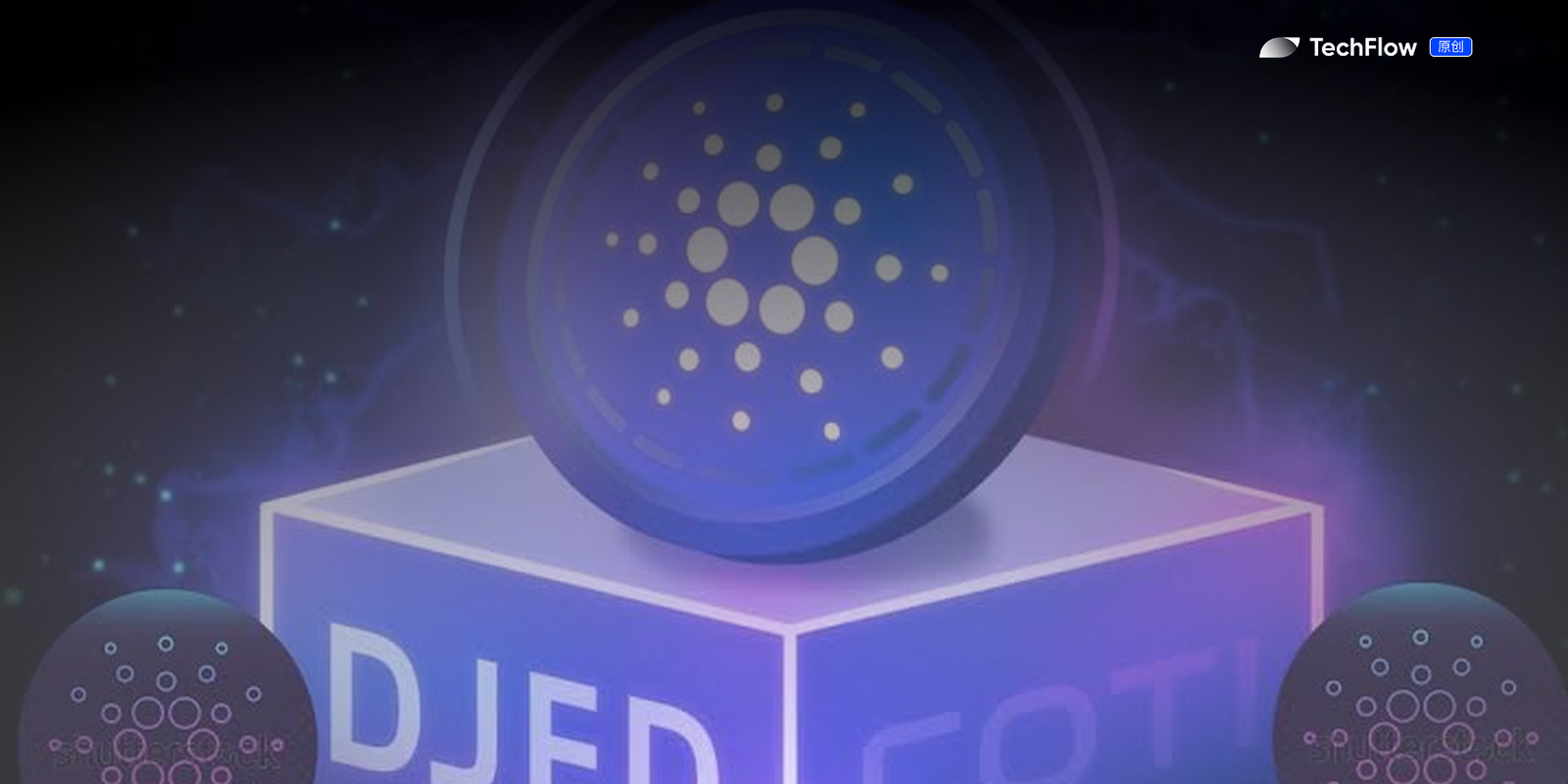
Cardano Ecosystem Stablecoin DJED Announces Shutdown: After Nearly Four Years of Operation, Holders Must Complete Redemption Before New Year's Day
Author: TechFlow
On November 18, the core over-collateralized algorithmic stablecoin protocol within the ecosystem of the Official Cardano Public Chain Portal, specifically the Official Decentralized Stablecoin Protocol DJED, has officially announced its service suspension, declaring that the algorithmic stablecoin DJED and its reserve token SHEN will formally cease all operations at 07:59 Beijing Time on January 1, 2027.
The official team confirmed that the underlying smart contracts and front-end interaction interface are currently fully operational. The clearance and redemption channels have been fully opened and will continue to be maintained until the service suspension deadline. All holders must complete asset liquidation through the official protocol before the deadline, converting their DJED and SHEN back into the underlying collateral asset, ADA.
Service Suspension Deadline and Core Rules for Reserve Redemption
According to the official schedule, there is a 43-day buffer window until the final service suspension node at 07:59 Beijing Time on January 1, 2027. During this period, the protocol's native minting and burning engine remains operational, allowing users to directly initiate on-chain redemption requests via the official interface to complete asset cash-out.
As a native stablecoin issued and operated by the infrastructure network's Official COTI Developer and featuring underlying algorithm design from the blockchain R&D institution Official IOG R&D Institution, DJED employs a dual-token reserve model. DJED is anchored to a $1 value, while SHEN serves to absorb the price volatility risk of the collateral.
Smart Contract Liquidation Mechanism Under Reserve Ratio Constraints
All on-chain redemption operations are strictly governed by built-in smart contract rules regarding the reserve ratio. Under normal protocol operation, the reserve ratio typically fluctuates between 400% and 800%. This ratio represents the total value of ADA reserves relative to the total circulating supply of DJED.
When the system reserve ratio drops below the 400% lower threshold, the smart contract will automatically trigger protective restrictions, freezing active redemption operations by SHEN holders to prioritize safeguarding DJED holders' rigid liquidation right to receive full $1 equivalent in ADA. Conversely, when the reserve ratio exceeds the 800% upper limit, the protocol restricts the new minting of SHEN.
External Liquidity Withdrawal and Practical Protocol Redemption Guidelines
For users who have deployed assets in external decentralized finance protocols, the official team provides clear warnings regarding the operational path. Currently, liquidity pools within the Cardano ecosystem such as DEXs Minswap, SundaeSwap, and WingRiders, as well as the lending protocol Liqwid, hold a portion of these token assets.
Users must first visit the aforementioned third-party platforms to remove liquidity provision (LP) positions, withdraw single-asset staking, or repay lending positions, and transfer the tokens back to a non-custodial wallet. After aggregation, users must directly access the official protocol interface to execute burn redemptions. Users should avoid market-price selling on exhausted secondary markets to prevent suffering from high slippage.
Lessons from the Rise and Fall of the Algorithmic Stablecoin Model in the Public Chain Ecosystem
Since its launch, DJED has effectively avoided the common death spiral risks associated with uncollateralized algorithmic stablecoins, thanks to its high over-collateralization mechanism ranging from 400% to 800%. However, as the competitive landscape of public chain stablecoins shifts toward fiat-backed stablecoins with higher capital efficiency—which require reserve models locking over 4 times the excess capital—the DJED model has gradually revealed limitations in low capital utilization rates.
As the service suspension node at 07:59 Beijing Time on January 1, 2027, approaches, the development team will gradually lock snapshots of the on-chain reserve contracts. The official announcement clearly states that after the formal termination of services, the remaining ADA reserves accumulated in the smart contract pool will be distributed to token holders who failed to complete redemptions before the deadline, according to the proportion indicated in the contract snapshots.
Join TechFlow official community to stay tuned
Telegram:https://t.me/TechFlowDaily
X (Twitter):https://x.com/TechFlowPost
X (Twitter) EN:https://x.com/BlockFlow_News
 深潮TechFlow