AI Has Not Left Behind Small-Town Merchants
Author: Li Su (GeekPark), Editor: Zheng Xuan
Understanding local commerce is the new course after AI steps out of the laboratory.
In recent years, the stories that the AI community excels at telling have changed.
Initially focused on discussing technology, parameter scales, computing speeds, and benchmark scores surpassing others, the narrative has gradually shifted toward practical applications: how AI can generate business plans in one minute, and how it offers emotionally supportive advice to people troubled by daily life.
Having left the lab, where does AI go next? Behind this lies a story of "AI democratization" told only halfway. The first half covered consumers: ordinary people using AI to gather information, draft proposals, and create travel guides. The unfinished half lies with operators. For small shop owners, whether AI is truly democratized has never been about whether they can chat with it, but whether it can help them manage finances, inventory, and customer traffic.
In November, OpenAI launched a beta feature called "Businesses in ChatGPT," allowing merchants to claim profiles, maintain information, and see how users interact with them within ChatGPT. The feature is modest, but the signal is clear: tech giants are now making room for "merchants."
On the domestic front, businesses have actually moved faster on this. Data from Meituan shows that over the past month, the number of merchants using the Meituan AI assistant in third-tier and lower cities increased by more than 200% month-on-month, while the volume of spontaneously initiated conversations grew by approximately three times.
For ToB AI implementations, one path leads upward into office buildings to serve white-collar work; the other goes inward into streets and alleys to serve small shops that operate fourteen hours a day. The latter is actually harder. It tests not how smart the model is, but whether it understands local commerce and comprehends the complexities of the physical world. It needs to decipher a delivery shop’s menu ranking and perceive subtle price shifts between a hotel and its nearby competitors.
From food stalls in Rizhao, Shandong, and Chaoyang, Liaoning, to hotels in Chifeng, Inner Mongolia, small-town managers are starting to use AI store managers. Currently, Meituan has rolled out a series of AI operation assistants targeting industries like dining, hospitality, and pharmaceuticals. These AI capabilities have also been integrated into the management backends used daily by SMEs. AI is not only stepping into the most grounded aspects of local commerce but is also beginning to serve a massive market composed of millions of small shops.
Transforming Business Starts with a Takeout Menu
Previously, Ai Ze, owner of a pizza shop in Rizhao, Shandong, judged business performance mainly by how tired he was. "If I’m too busy to rest, I feel like today’s sales must be good." But after adopting Miaoshou Takeout Edition in July this year, exposure, conversion rates, and product performance were laid out side by side. He discovered that data-driven insights often diverge from intuition.
Creating combo meals was the first thing that changed his perspective.
Originally, Ai Ze thought customers who wanted something could simply order à la carte, making specialized combos unnecessary. However, the analysis provided by AI made him realize that in the takeout business, a combo meal corresponds to a clearer consumer demand, helps customers make choices faster, and retains specific target demographics.
He began reorganizing the menu, revising images and selling-point copy, adjusting product rankings, and designing combo meals he previously refused to offer. While saving thousands of yuan monthly on agency operations, Ai Ze transformed from someone "idle enough to watch ants on the roadside" to someone "too busy even for a sip of water." According to Ai Ze, within half a month of using AI, takeout orders in his shop more than doubled, with "thirty to forty orders just during peak hours every day."
"Now, the first thing I do when I arrive at the shop each morning is ask Miaoshou to review yesterday’s operations: which items sold well, which didn’t, and why." Today, AI has become a crucial component of Ai Ze’s shop management. He has gradually found his own rhythm. After adjusting the menu, he allocates time to observe results before deciding on further changes. "In the past, I had to dig through the backend myself to calculate accounts bit by bit. Now, AI directly pulls data, conducts analysis, and provides adjustment recommendations. I am becoming increasingly adept at running this business."
Traveling north from the coastal tourist town of Rizhao to Cifeng, Inner Mongolia—a fourth-tier inland city—hotel owner Peng Peng faces a different anxiety: everyone else is cutting prices. Should he follow suit?
His hotel lacks dedicated revenue management staff. How to set room rates, design promotions, and adjust occupancy statuses requires his personal oversight. This July and August marked Inner Mongolia’s peak tourism season, prompting many nearby hotels to slash prices to attract guests. Dropping prices risks revenue loss; holding firm risks losing guests to competitors.
Facing this dilemma, Peng Peng began dedicating an hour each day to discuss the issue with Meituan’s AI assistant for hotel merchants, "Miaoshou Jibai."
Unexpectedly, AI did not mechanically urge him into a price war. Instead, it consolidated the hotel’s specific order details, gaps compared to nearby competitors, browse-to-conversion rankings, and the hotel’s strengths and weaknesses. Previously, such consolidation required Peng Peng to compile everything manually. "During summer peaks, just to get a clearer picture of the shop’s operations, I had to spend at least half a day each week, relying entirely on our experience to make judgments—which weren't always accurate."
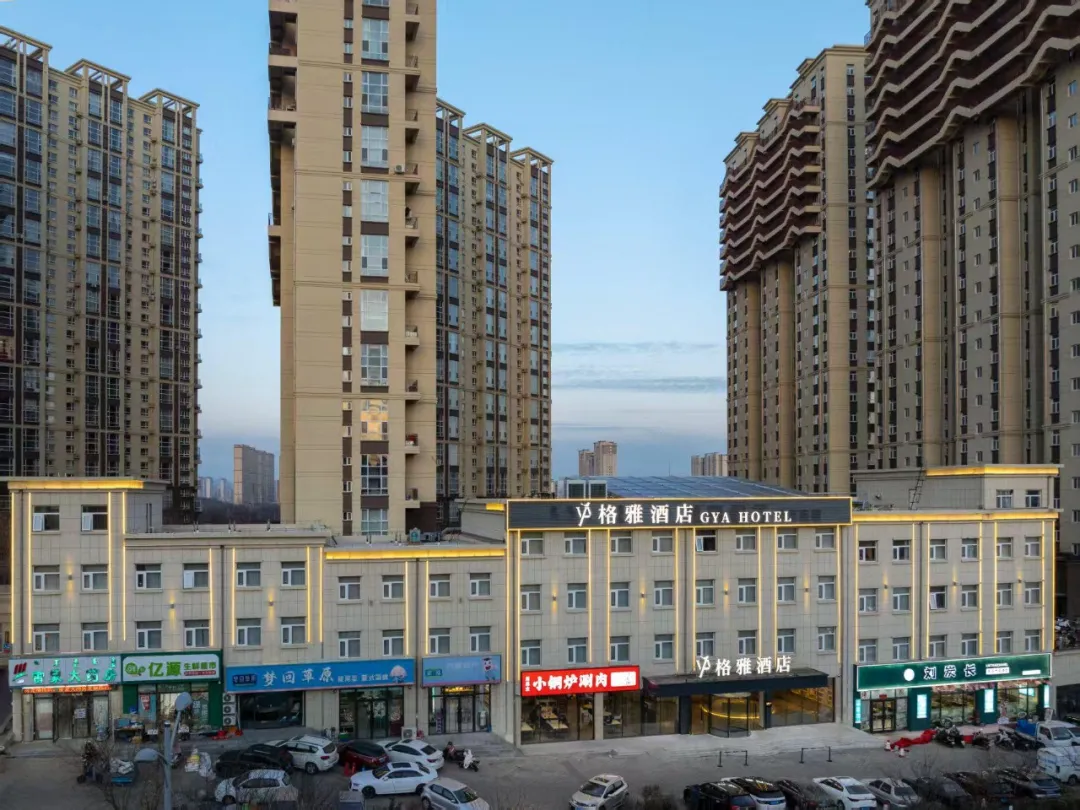
Figure: Peng Peng's hotel in Cifeng, Inner Mongolia (Image source: Interviewee)
According to Peng Peng, during the period when surrounding hotels cut prices, AI’s advice to "maintain current pricing" gave him confidence. He didn't rush to follow suit. Instead, leveraging the analysis, he implemented other operational adjustments, elevating his shop’s booking conversion ranking to the top five among similarly sized hotels in the same city.
In county-level cities like Chaoyang, Liaoning, AI takes on even more foundational tasks.
Next to a high school in Jianping County, Wang Huan and his family run a spring roll shop that has been operating for four years. They prepare goods from 7 a.m. to 8 p.m. daily. When students finish school and rush in, they’re sometimes so busy they don’t even have time to tap the screen to confirm outgoing orders. He also tried outsourced operations but encountered slow response times and communication difficulties.
Only a few days ago did Wang Huan start using Miaoshou Takeout Edition. During the initial AI-powered store diagnostics, he noticed that the shop’s signature family portrait spring rolls lacked even a basic product description. Following the generated proposal, he added selling-point copy and adjusted the homepage product rankings. Those operational details long postponed due to daily hustle finally began getting addressed.
Whether it’s Ai Ze, Peng Peng, or Wang Huan, their adoption of AI starts with minor daily operational tasks: adding descriptions, checking conversions, adjusting menus. They don’t need to study technical parameters first. Instead, they begin with familiar operational challenges, review the suggestions, and then make adjustments tailored to their shop’s specific situation.
Commerce-Understanding AI Is Filling the Role Small Shops Have Always Lacked
Stepping back from these individual shops reveals the fundamental landscape of the tier-3 and lower markets: vast in scale but highly fragmented in demand.
Latest data shows that county-level regions account for ninety percent of China’s land area, house fifty percent of the permanent population, and contribute forty percent to the total economic output. By late July 2026, registered individual businesses in the tier-3 and lower markets exceeded 78 million, with eighty-six percent engaged in service-related industries, including restaurants, homestays, and more.
Meanwhile, county-level commerce is undergoing transformation. Meituan’s "2026 Annual County Consumption Report" indicates that in the first half of that year, the number of county-level merchants conducting online transactions on the platform grew nearly ten percent year-on-year, while county-level chain brand merchants saw a year-on-year increase of nearly twenty percent.
As merchant numbers grow, county-level commerce is moving toward more refined management. Small physical stores in small towns must cater to local regulars while ensuring first-time visitors can easily find them on mobile devices. They need to excel at product quality while also mastering online page layouts and promotion setups. Chain brands rely on professional headquarters teams, whereas small shops often depend entirely on a single owner managing everything.
"What small shops truly lack is an operations role that has long remained vacant in their staffing structure." An industry insider noted to GeekPark. "For small shops in third-tier and lower cities, achieving refined operations not only tests the owner’s understanding of the business but also demands time and energy that exhausted, full-day operators simply cannot spare."
Outsourced operations were once considered a solution to fill this gap. But as Ai Ze pointed out, payment doesn't guarantee reliability in response speed or service quality. Wang Huan added that AI-adoption among merchants in county-level areas remains low. Some prefer relying on long-accumulated experience, while others inhabit regions heavily impacted by predatory online courses and agency scams. The moment they hear they need to pay for tools, they instinctively resist, fearing wasted money on the wrong choice.
This is the reality AI must confront when entering tens of millions of physical small shops: owners are willing to try it out usually because they face an immediate problem. Whether it stays depends entirely on its ability to consistently deliver actionable help.
Both Ai Ze and Peng Peng initially experimented with general-purpose AI tools. Ai Ze found that mainstream generic AI tools are merely suited for casual chatting. "They just agree with your assumptions and flatter you. You absolutely wouldn’t dare base business decisions on them."
Peng Peng once posed his hotel’s operational dilemmas to a general large language model. The proposed solutions were entirely boilerplate phrases like shooting short videos or running promotional campaigns—hard to translate into concrete actions. "It offered no substantive help whatsoever."
"The capability gap between general-purpose AI and vertical domain Agents in real-world operational scenarios stems not just from model architecture, but from access to relevant context and operational data." The aforementioned insider explained. Merely knowing industry standards is insufficient to answer a specific shop’s real-time questions. For instance, determining if a hotel should lower prices requires knowledge of current room status, order acceptance velocity, and neighboring market shifts; assessing whether a restaurant needs combo meals involves analyzing product performance and customer demographic demands.
Beyond data, there is a disparity in usability thresholds. "Not every AI assistant is effortlessly accessible," the insider noted. For the vast majority of physical small shops, if owners still need to invest substantial time and effort into configuring data, building knowledge bases, learning prompt engineering, or even handling programming, the burden remains overwhelmingly heavy.
When Professional Operational Expertise Begins to Depart Large Corporations
To make AI instantly usable for small shop owners, stacking algorithmic parameters alone is utterly insufficient. This requires building a commercial foundation forged in everyday reality—even down to the dirt and smoke of local trade—by connecting model capabilities with store data, industry expertise, and hands-on execution.
Only a select few companies can shoulder this market segment. So far, Meituan, with sixteen years of deep cultivation in the local lifestyle sector, appears to be the most viable solution.
Meituan’s approach integrates AI technologies and capabilities directly into the management backends already used by SMEs. By combining store data with local market intelligence, it delivers targeted analysis and recommendations, seamlessly linking into menu configurations, pricing strategies, and promotional activities.
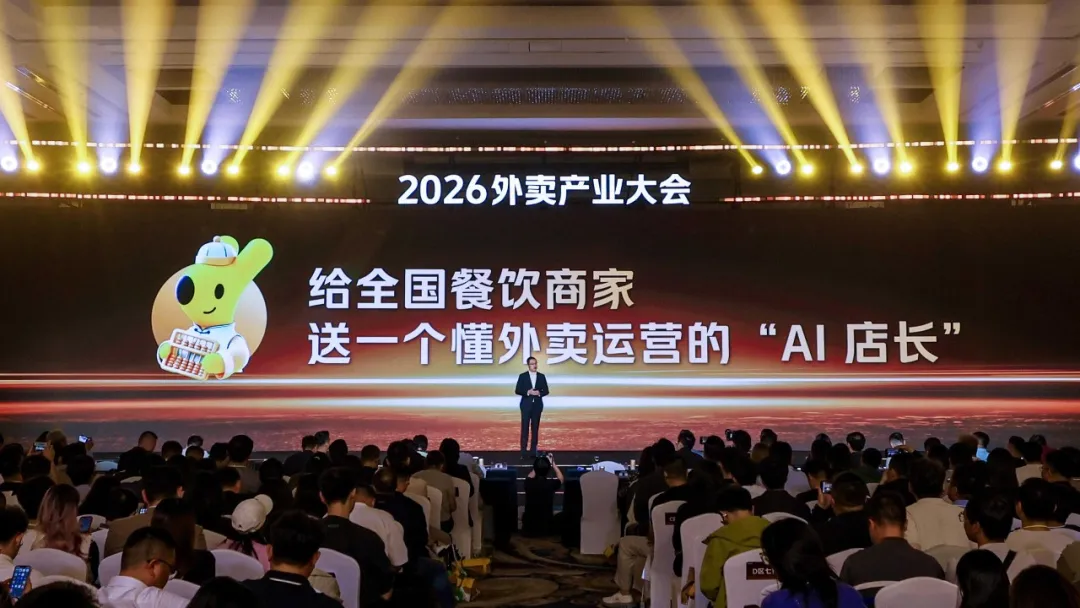
Figure: On October 22, Meituan announced it would provide a nationwide delivery of an "AI Store Manager" knowledgeable in takeout operations to all restaurant merchants across the country (Image source: Meituan)
During the Q2 2026 earnings call, Wang Xing explicitly stated that Meituan will not become a token factory. Models and AI products will exclusively support Meituan’s core business, enhancing user experience, merchant satisfaction, and corporate operational efficiency.
Recent operational data reinforces this trend. Meituan’s metrics reveal that over the past month, merchant adoption of the Meituan AI assistant in third-tier and lower cities surged over two hundred percent month-on-month, with spontaneous conversational volume tripling. An increasing number of physical small shop owners are testing the waters by entrusting their operational challenges to Meituan’s merchant-facing AI assistant.
Peeling back another layer of this phenomenon reveals a shifting paradigm in how operational capabilities are supplied within the commercial world.
For a long stretch of history, professional operational analysis and management skills were tightly bound to organizational structures. Large chain brands could afford dedicated data and operations teams, while independent small shops struggled to match such investments. Now, a portion of these capabilities is beginning to reach individual stores via AI tools at a significantly lower threshold. Operational expertise is decoupling from massive corporate structures—the most tangible meaning of technological democratization in commercial practice.
Once these capabilities decouple from organizations, the competitive logic of the tier-3 and lower markets inevitably shifts. Historically, the competitive advantage of chain brands against street-side shops heavily stemmed from standardized online operations. As these digital shortcomings are progressively rectified, small shops gain opportunities to redirect their focus back to product quality and craftsmanship.
As Ai Ze noted, decades of chain expansions and prepared ingredients industrialized and standardized the catering industry. With AI assistance now available, owners can offload the most tedious and time-consuming administrative tasks to algorithms. Small shop proprietors gain finer data granularity and enhanced operational leverage. The reclaimed time and reduced costs can be channeled into menu development and culinary refinement, making dishes more distinctive and substantial, ultimately returning to the essential nature of independent dining.
In 1991, computer scientist Mark Weiser wrote in "Computing for the Twenty-First Century": "The most profound technologies are those that disappear. They weave themselves into the fabric of everyday life until they are indistinguishable from it." In his vision, technology seamlessly merges into daily life, fading into the background until its presence no longer demands conscious attention.
Today, this transformation is quietly unfolding right here in the neighborhood shops lining our streets.
Join TechFlow official community to stay tuned
Telegram:https://t.me/TechFlowDaily
X (Twitter):https://x.com/TechFlowPost
X (Twitter) EN:https://x.com/BlockFlow_News
 极客公园