Trump's account executed 103 trades in Nvidia stock, with individual transactions reaching up to $97.5 million.
Author: Gold12
The relationship between U.S. President Donald Trump and Nvidia (NVDA.O) is coming under greater scrutiny following Jensen Huang's resignation.
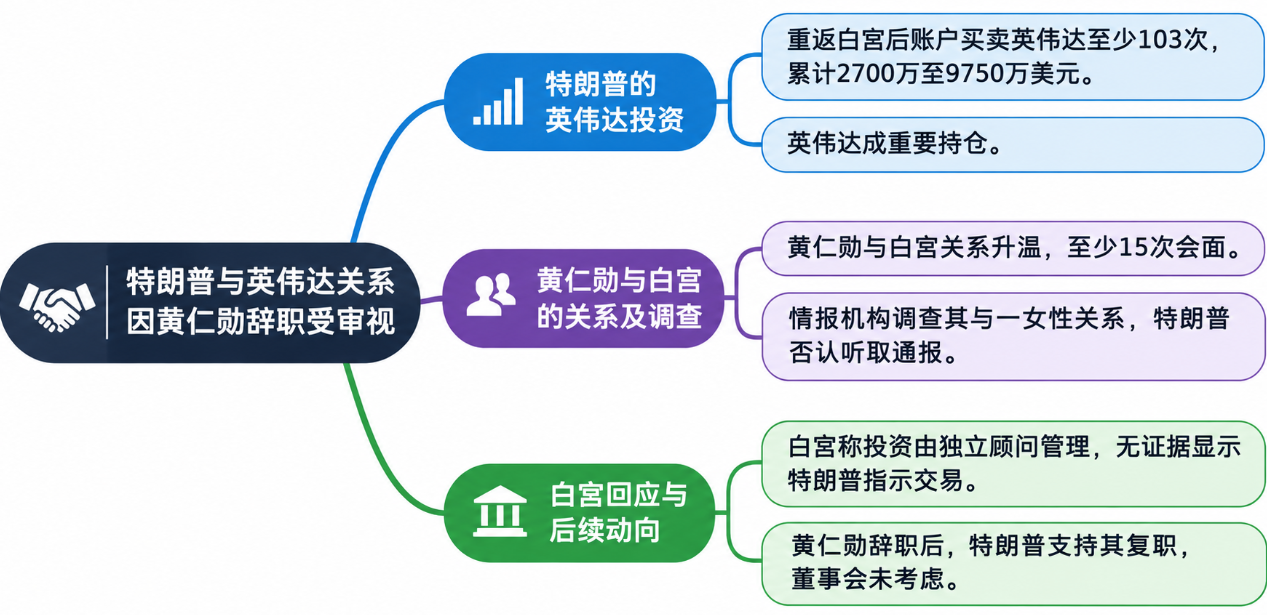
According to an analysis by CNBC of Trump’s annual and periodic financial disclosure filings, his investment account has bought and sold Nvidia stock at least 103 times since he returned to the White House, with cumulative trading volumes ranging from $27 million to $97.5 million. The relevant disclosures are current through August 2026.
Nvidia is not only a key beneficiary of the global AI boom, but has also become one of the most important holdings in Trump’s portfolio. By the end of 2025, Nvidia was one of Trump’s top three largest individual positions by market value, worth between $12.5 million and $58 million. A year earlier, that figure was only between $615,000 and $1.3 million.
Based on Nvidia’s share price of approximately $157 at lunchtime Monday in New York, and using the holding values reported by Trump in August, his Nvidia shares could now be worth between $4.5 million and $57.7 million. However, financial disclosure filings only provide ranges for holding values and do not disclose the exact number of shares held, making it impossible to determine the precise size of Trump’s current position.
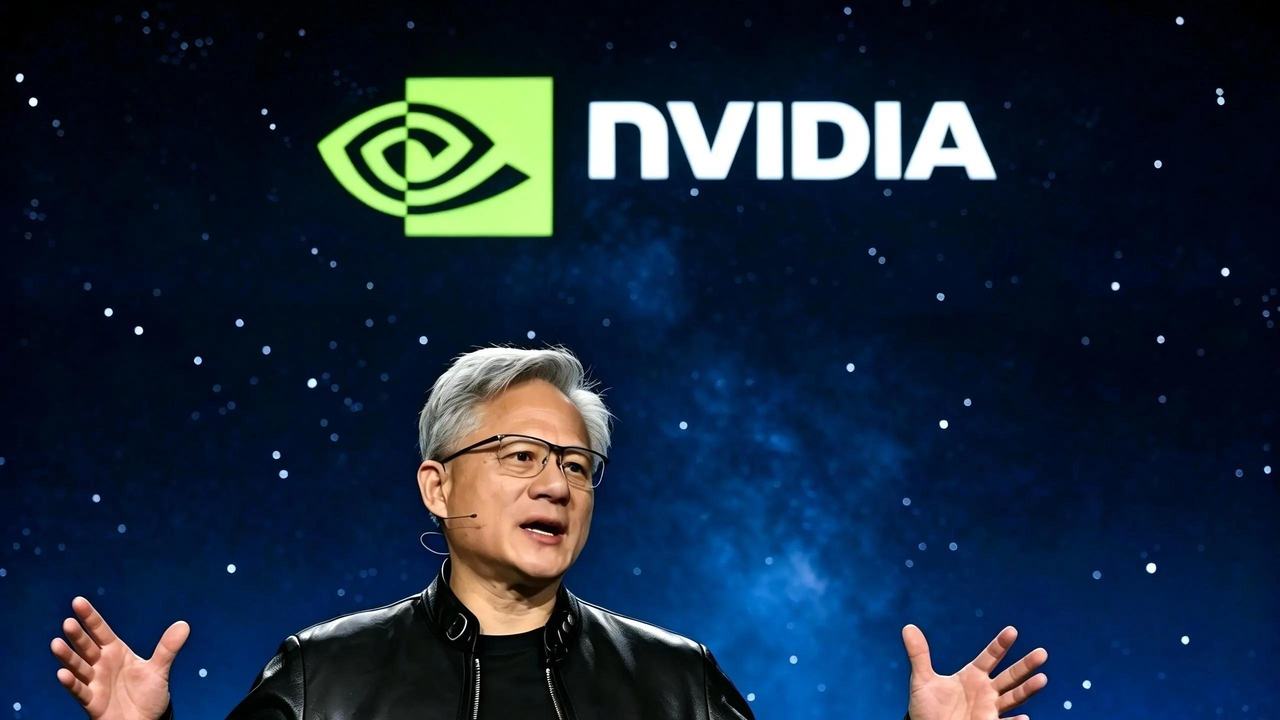
These trading records have drawn renewed attention after Jensen Huang stepped down as Nvidia’s chief executive officer last Thursday.
Frequent Stock Trades Make Nvidia a Key Holding
Frequent buying and selling of stocks has become a defining feature of Trump’s second presidential term. CNBC analysis shows that in 2025 alone, he disclosed more than 21,000 transactions, compared to roughly 500 during his entire first term.
Nvidia trades have spanned several key policy milestones since Trump returned to the White House.
On January 31, 2025, Jensen Huang visited the White House for the first time and met with Trump. Two days prior, Trump’s financial managers had purchased $1 million to $5 million worth of Nvidia stock. At the time, Nvidia had just endured a severe market shock. Concerns sparked by DeepSeek led investors to reassess the competitive landscape of the AI industry, wiping $593 billion off Nvidia’s market capitalization in a single day.
According to Reuters citing London Stock Exchange Group (LSEG) data, this was Nvidia’s largest single-day market capitalization loss at the time. Huang’s visit to the White House also helped bring an end to a difficult week for the company.
The relationship between the two gradually warmed thereafter.
Warming Ties Between Huang and the White House Spark Scrutiny Over Trade Timing
Trump and Huang were not close from the start.
When Trump took office on January 20, 2025, several Silicon Valley tech CEOs sat in prominent locations, but Huang did not attend. At the time, the two had never even met in person.
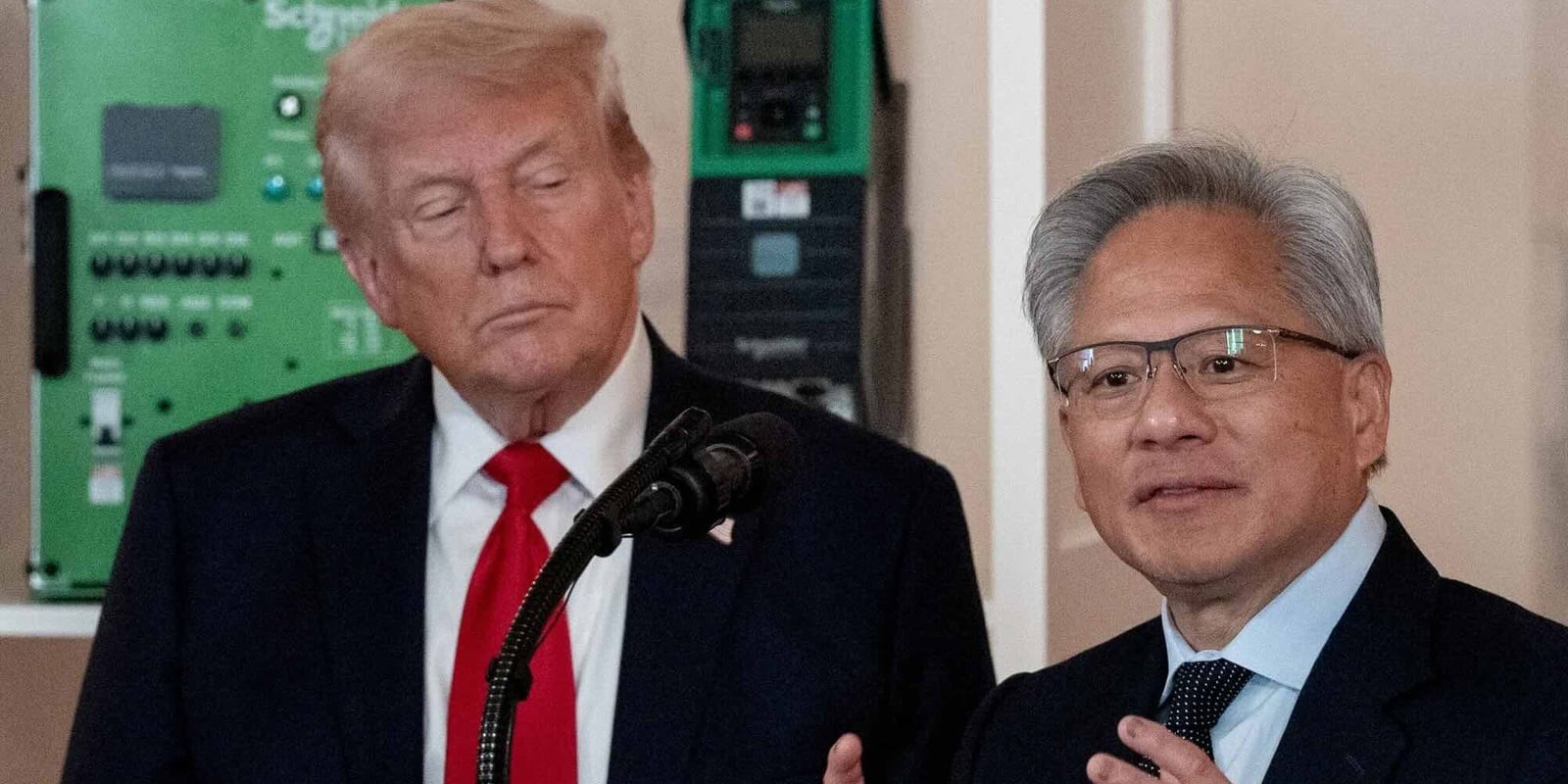
After that, Huang gradually became one of the tech executives who frequently interacted with Trump. A review by CNBC of public records and news reports found that since Trump returned to the White House, the two have met or made joint public appearances at least 15 times.
In June, Huang revealed in an interview with The Associated Press that Trump would even “call him in the middle of the night.”
Huang has also increasingly participated in Trump’s international diplomatic engagements, accompanying the president on visits to Saudi Arabia and the United Kingdom.
Nvidia previously donated $1 million to Trump’s inaugural fund. According to early reporting by The Washington Post, Nvidia also anonymously pledged $25 million toward a new White House ballroom planned by Trump.
However, as relations continued to warm, U.S. intelligence agencies were also investigating Huang’s relationship with a woman. The New York Times previously reported that U.S. intelligence officials first briefed Trump on this relationship as early as the fall of 2025.
A subsequent briefing occurred in May 2026. On May 13, before Huang was set to board Air Force One, then-Secretary of State Marco Rubio reportedly briefed Trump on information regarding Huang’s relationship with the woman. On May 18, Trump sold $500,001 to $1 million worth of Nvidia stock.
Nevertheless, Trump denied on Monday that he had received any such intelligence briefings. When asked whether Rubio had ever informed him of the situation, Trump stated, “I’ve never heard of it.”
Around the dates of the May 18 Nvidia sale, Trump’s investment account also purchased small amounts of Nvidia stock. These transactions were part of a larger wave of concentrated trading activity.
On December 8, 2025, Trump announced that he was allowing Nvidia to sell more powerful H200 chips to China. Four days before this announcement, Trump’s investment account sold up to $1 million worth of Nvidia stock; the following day, the account executed multiple buy orders.
During the first eight months of 2026, Trump’s investment account carried out 38 additional Nvidia trades, with cumulative transaction values ranging from $9.4 million to $28.3 million.
A financial disclosure filing released on October 8—the same day Trump awarded Huang the National Medal of Science—showed that in August alone, his account bought up to $1.6 million in Nvidia stock while simultaneously selling up to $1 million in shares.
White House Denies Conflicts of Interest, Huang Resignation Adds Uncertainty
As Trump’s investment trading record comes under scrutiny, both the White House and the Trump Organization have emphasized that the investments are managed by independent advisors.
A White House spokesperson told CNBC that Trump’s portfolio is managed by independent advisors without requiring his direct input.
Trump Organization spokesperson Kimberly Benza stated that this arrangement was designed to “avoid even the appearance of a conflict of interest.”
Currently public financial disclosure filings provide no evidence that Trump directed his advisors to trade Nvidia stock, nor any indication that his advisors had access to classified intelligence.
For years, Trump has treated stock market performance as a key indicator of the U.S. economy’s health, frequently touting record highs even when markets haven’t technically broken records. Meanwhile, his tariff policies and the war between the U.S. and Iran have at times triggered market volatility.
Last Thursday, during an interview with American sports broadcaster and political talk show host Stephen A. Smith, and despite questions about Republican losses in midterm elections, Trump maintained, “Look, our stock market is at its highest level in history.”
Nvidia’s contribution to overall market performance has also been highly notable. According to Choate Wealth’s analysis of the chip sector’s impact on the market, as of the end of September 2026, Nvidia alone accounted for approximately 13.5% of the S&P 500 Index’s gains for the year.
Even after Huang’s departure, Trump continued to publicly voice his support. Last Thursday, he praised Huang as a “truly exceptional talent” and said he is “going through absolute hell.”
Trump also urged Huang to fight to keep his CEO role. According to The New York Times, throughout the period when Nvidia’s board evaluated Huang’s fate, Trump remained a steadfast supporter of the entrepreneur.
On Monday, Trump further discussed publicly the possibility of Huang returning to his post. In an interview with reporters, he said that having Huang once again serve as Nvidia’s CEO is “surely not a bad idea.”
However, a person familiar with the matter told CNBC that Nvidia’s board is not considering bringing Huang back.