From Power Grids to Chips, Why Has the 115-Year-Old Eaton Become the True Lifeline of AI Data Centers?
Author: Crack The Market
Translated by: TechFlow
TechFlow Editor's Note: While the market chases Blackwell architecture computing power, the brutal bottleneck of the large model arms race has quietly shifted to the most fundamental physical reality: grid capacity and high-voltage distribution infrastructure. In this trillion-dollar reshaping, a 115-year-old traditional electrical giant has become the absolute protagonist.
Former hedge fund investment manager Ozeco points out in a deep-dive article that Eaton, leveraging its system-level integration capabilities ranging from direct high-voltage grid connections to chip-level racks, is monopolizing the core nodes of data center power restructuring. Its backlog orders spanning dozens of quarters constitute an insurmountable engineering moat.
This article systematically breaks down Eaton’s “Grid to Chip” business barriers, pricing power in microgrid and high-density liquid cooling architectures, and the profound restructuring of compute capital expenditure driven by data centers’ full transition to integrated power procurement. It is an essential hard-core research report for understanding the physical constraints of AI energy.
Core Investment Thesis: The True Physical Bottleneck of AI Data Centers
In the past twenty-four months, Wall Street’s attention has been almost entirely occupied by advanced process semiconductors and large model parameter competitions. From Nvidia’s high-performance GPUs to Super Micro Computer’s high-density racks, capital has flooded toward the furthest end of compute clusters with unprecedented fervor.
However, when the planned capacity of a single hyperscale data center skyrocketed from a mundane tens of megawatts (MW) to a staggering one gigawatt (GW) or even two gigawatts, the entire tech industry suddenly crashed into a cold physical wall: critical grid capacity shortages and severe supply disruptions of distribution equipment.
As a senior power industry expert noted: “You can spend millions to buy thousands of cutting-edge chips within three months, but if the utility company tells you that the delivery lead time for high-voltage transformers is four years, those chips will just gather dust in the warehouse.”
It is precisely within this super supply-demand mismatch dominated by power shortages that Eaton Corporation (NYSE: ETN), a century-old electrical giant founded in 1911, has quietly completed its strategic transformation from a traditional industrial blue-chip to the absolute core hub of AI infrastructure.
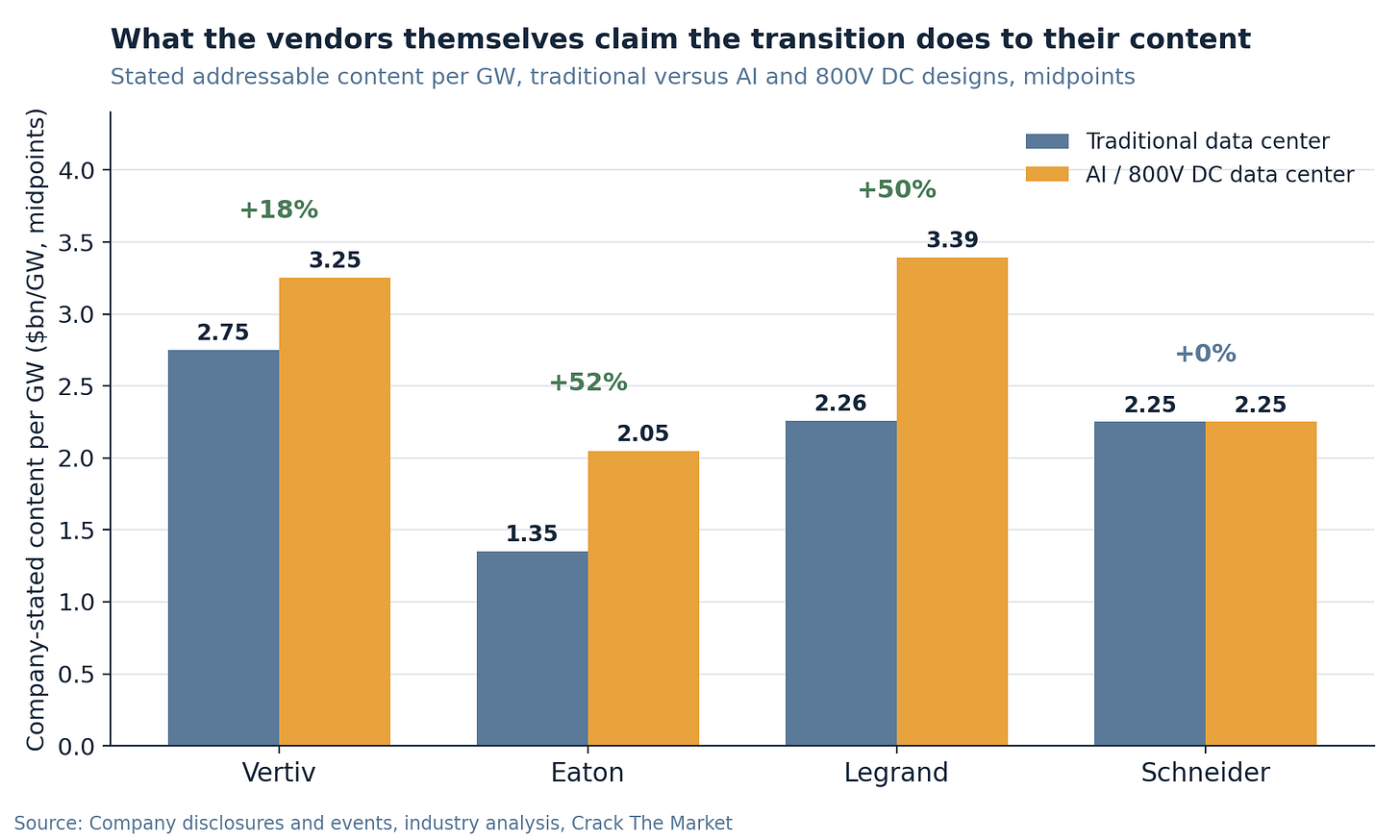
Fig: Eaton's global business revenue map in data centers and electrical infrastructure
From Axles to Grid: The Transformation History of a Century-Old Electrical Compounding Machine
For many traditional investors, Eaton was long stereotypically categorized as a traditional manufacturing enterprise producing automotive truck axles and conventional mechanical transmissions. However, over the past twenty years, management has completely reconstructed the company’s underlying DNA through a series of highly decisive capital operations.
They gradually divested low-margin, highly cyclical traditional internal combustion engine businesses, continuously channeling nearly all reinvestment capital into high-voltage electrical systems, smart distribution networks, critical power protection (UPS), and aerospace core electrical control systems.
Today, Eaton has transformed into a pure-play powerhouse providing electrical system-level solutions, with electrification accounting for over 70% of its business. The company has built deeply entrenched distribution channels and design certification barriers across major high-value industrial corridors in North America and Europe.
More importantly, this moat in hardware engineering cannot be rapidly replicated by simply throwing money at it in the short term. It is deeply interwoven with utilities' stringent access standards, decades-long usage habits of electrical engineers, and highly exclusive safety certification red lines.
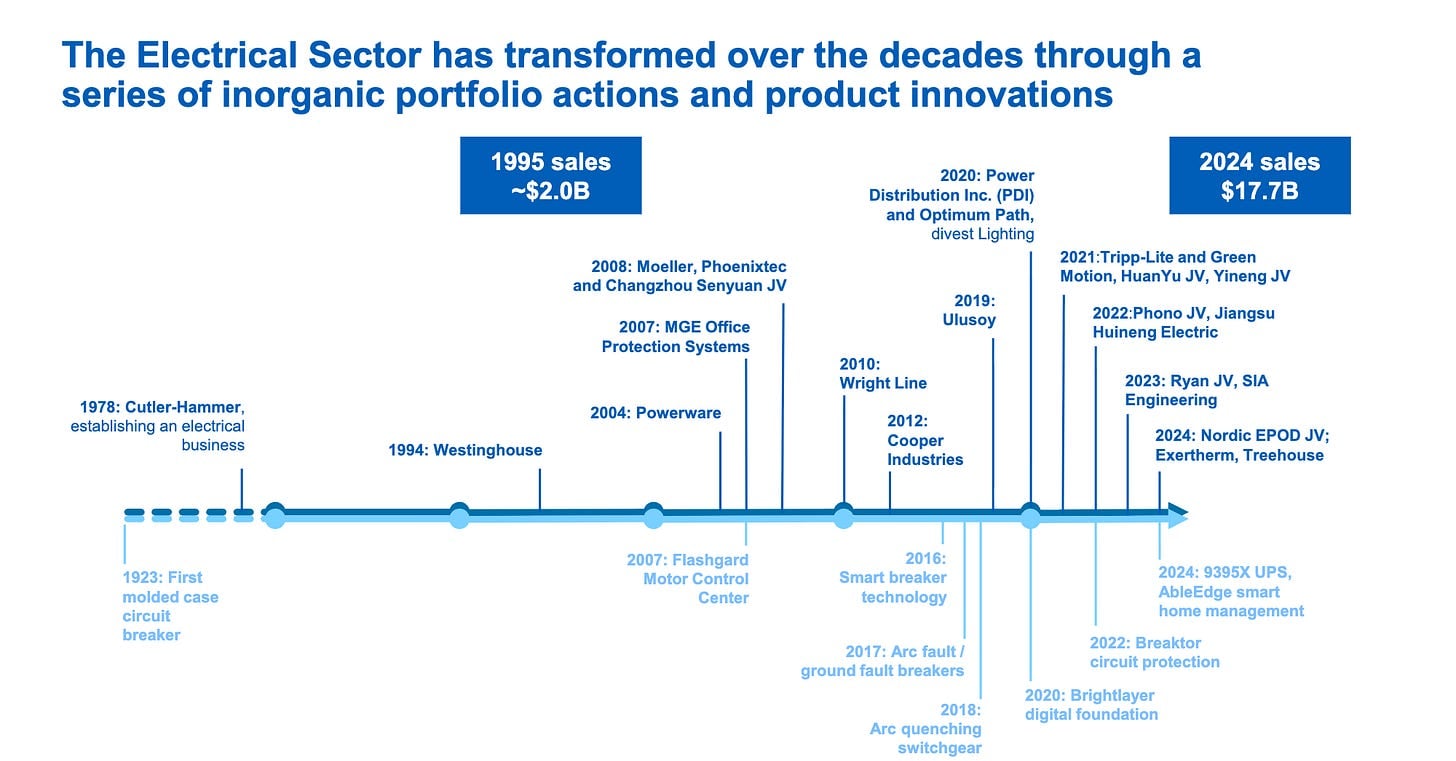
Fig: Historical ramp curve of North American data center power demand and Eaton's key order backlog
From Grid to Chip: The Monopoly Moat of Integrated Power Architecture
In traditional architectural and industrial design, power supply is typically fragmented into disconnected procurement silos: applying for a substation from a utility company is one thing, running wiring inside the building is another, and providing UPS backup power in the server room is yet another.
But facing hundred-megawatt-class high-density AI intelligent computing centers, this fractured patchwork model has completely failed. Ultra-high instantaneous current fluctuations, millisecond-scale load jumps, and massive waste heat from cooling require the entire facility's power supply system to be meticulously designed as a single, organically breathing entity.
Eaton CEO Paulo Ruiz summarizes its strategic core in four concise words: “Grid to Chip.”
From massive outdoor substation transformers stepping down 115-kV extra-high voltage AC to medium voltage, to large-capacity smart circuit breakers and ring main units on the exterior walls of server rooms, to uninterruptible power supplies (UPS), bus ducts inside the rooms, and power distribution units (PDUs) within the racks, Eaton can deliver every single critical power conversion node in between.
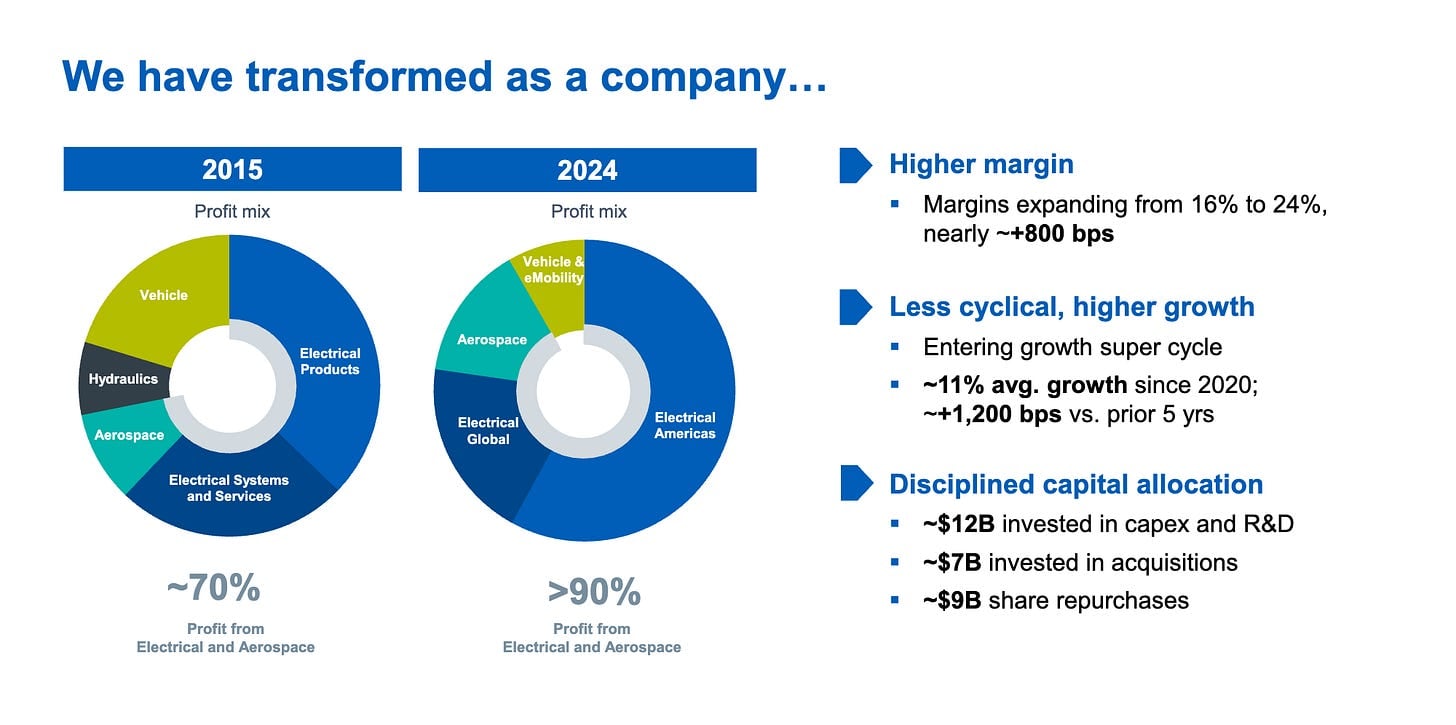
Fig: Integrated distribution and cooling closed loop from high-voltage grid substations to individual compute racks
Multi-Year Wait Times: Transformer Shortages and Exclusive Pricing Power
The severity of the power infrastructure shortage far exceeds the awareness of most secondary-market tech analysts.
Currently, the average delivery cycle for large high-voltage oil-immersed transformers in North America has stretched dramatically from forty weeks pre-pandemic to a daunting 160 weeks or even over 200 weeks (i.e., up to three to four years).
This extreme supply chain bottleneck stems from unique physical constraints: extremely rigid capacity for specialized grain-oriented electrical steel, a severe generational gap in experienced high-voltage coil winding technicians, and stringent safety validation processes. These factors make it impossible for global transformer production to scale up quickly like semiconductor foundries.
In this extreme seller's market, Eaton has demonstrated astonishing exclusive pricing power. Profit margins on new contracts have expanded significantly for consecutive quarters, with hyperscaler cloud providers even willing to pay enormous upfront deposits years in advance to lock in crucial future delivery quotas.
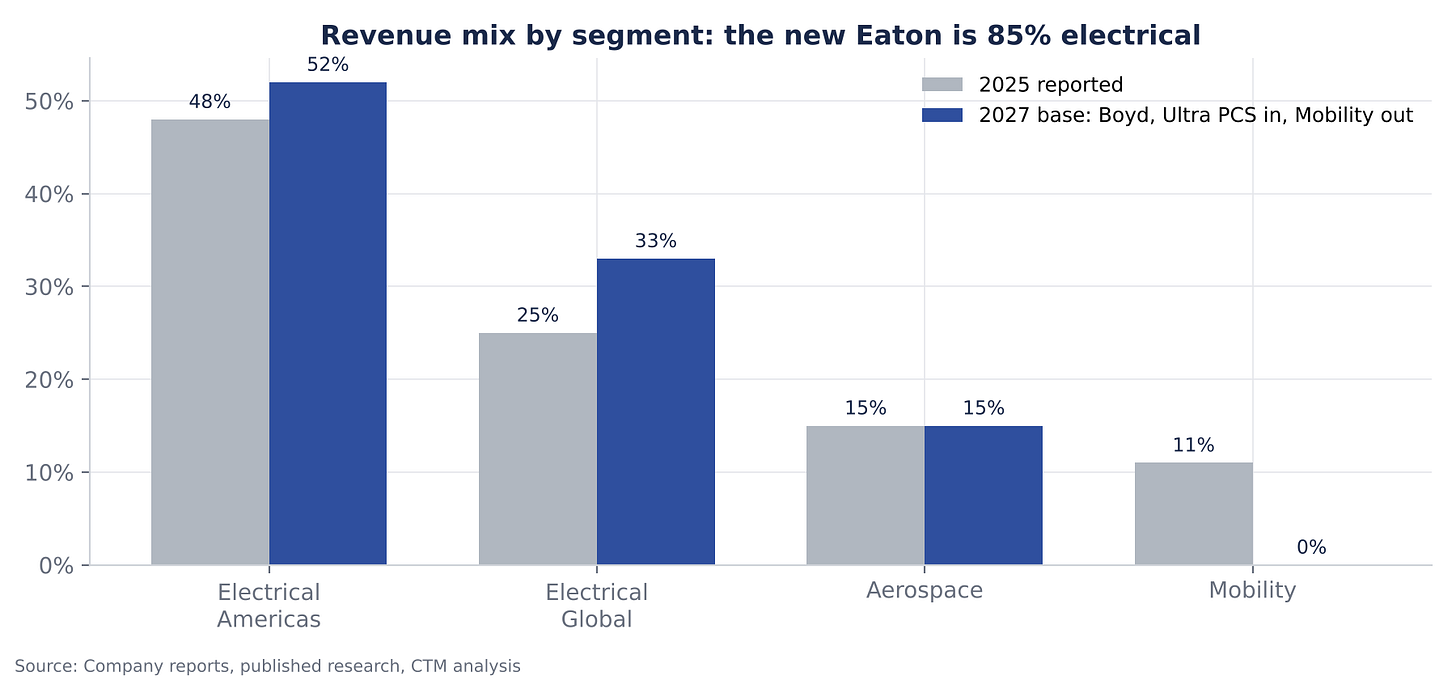
Fig: Long-term trend of delivery cycles for large high-voltage transformers and key medium-voltage distribution equipment
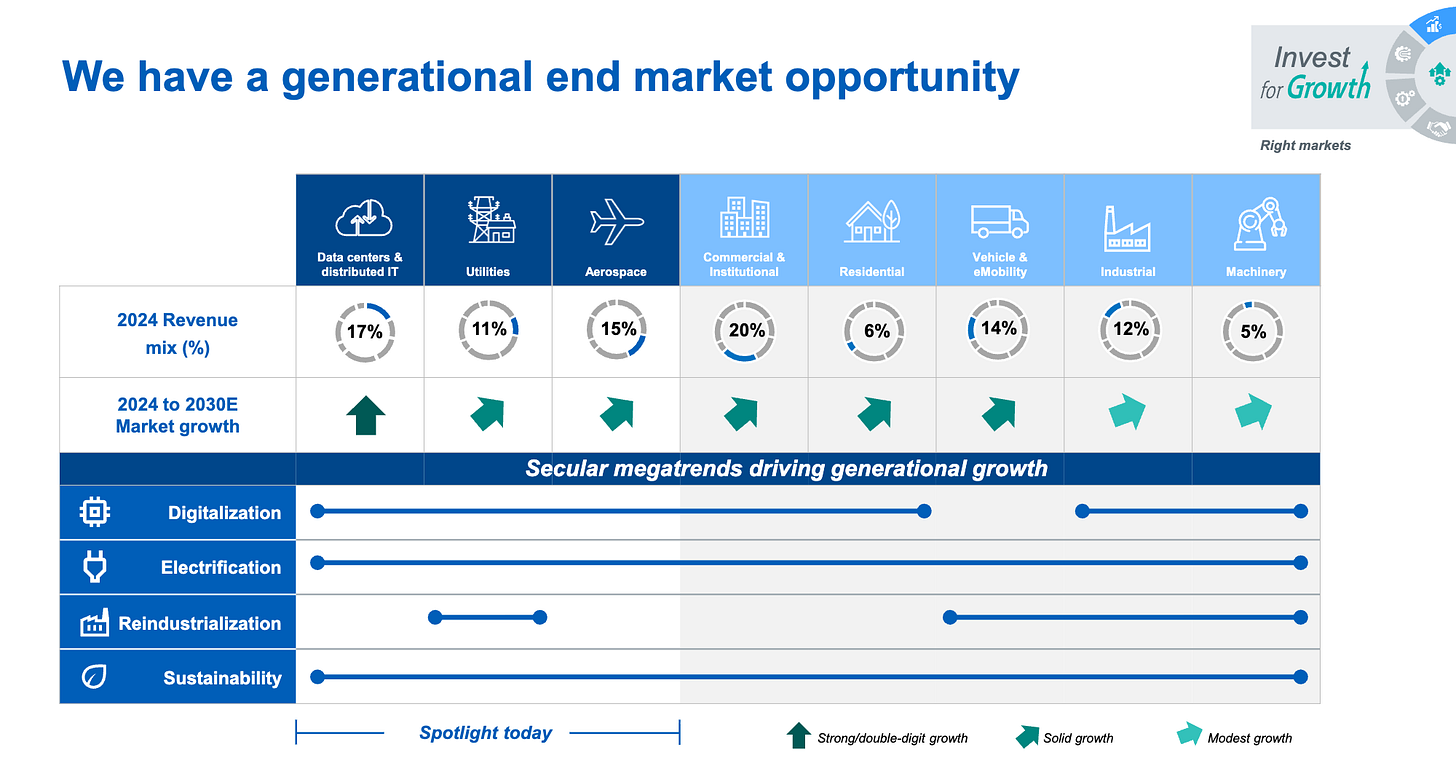
Fig: Eaton's backlog order reserve structure and data center business margin expansion guidance
Microgrids and High-Density Liquid Cooling: The Technological Commanding Heights of Next-Gen Data Centers
Beyond traditional substation equipment, the deeper restructuring of next-generation data centers occurs at the technological intersection of microgrids and high-density liquid cooling distribution systems.
As resistance to centralized grid approvals for new connection capacity grows, tech giants like Microsoft, Amazon, and Google are turning to self-built on-site generation facilities. Mixed deployment of gas turbines, solid oxide fuel cells (SOFC), and large-scale battery storage systems is becoming mainstream.
Through its proprietary microgrid intelligent management software and fast-grid-tie switching switches, Eaton can seamlessly coordinate power flows between the grid, onsite generators, and energy storage batteries within milliseconds, shielding intelligent compute clusters from fatal drops in voltage or power outages.
Inside the racks, as the total rack thermal design power of leading compute chips from Nvidia and others surpasses 100 kW, traditional air cooling has completely exited the stage. Tight physical integration of power distribution and coolant distribution units (CDUs) has become an engineering inevitability.
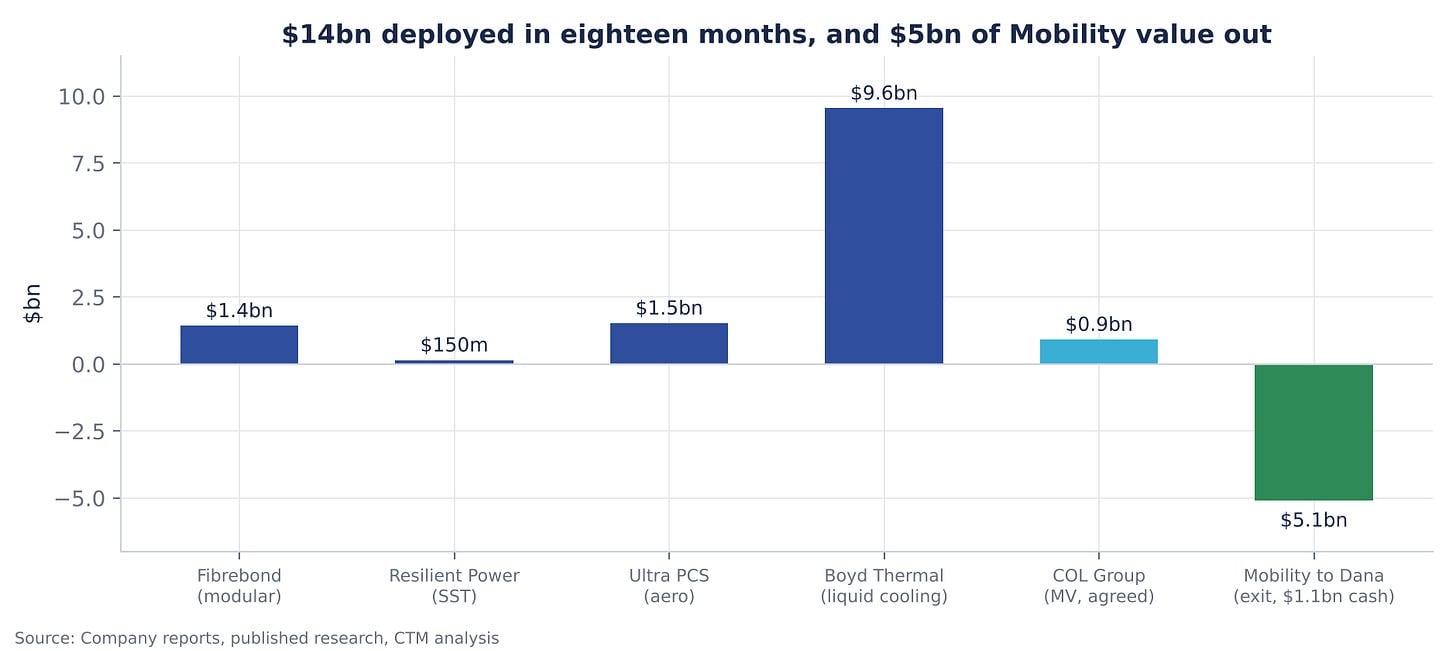
Fig: Dispatch and control logic for next-gen hybrid microgrids (grid, storage, on-site generation)
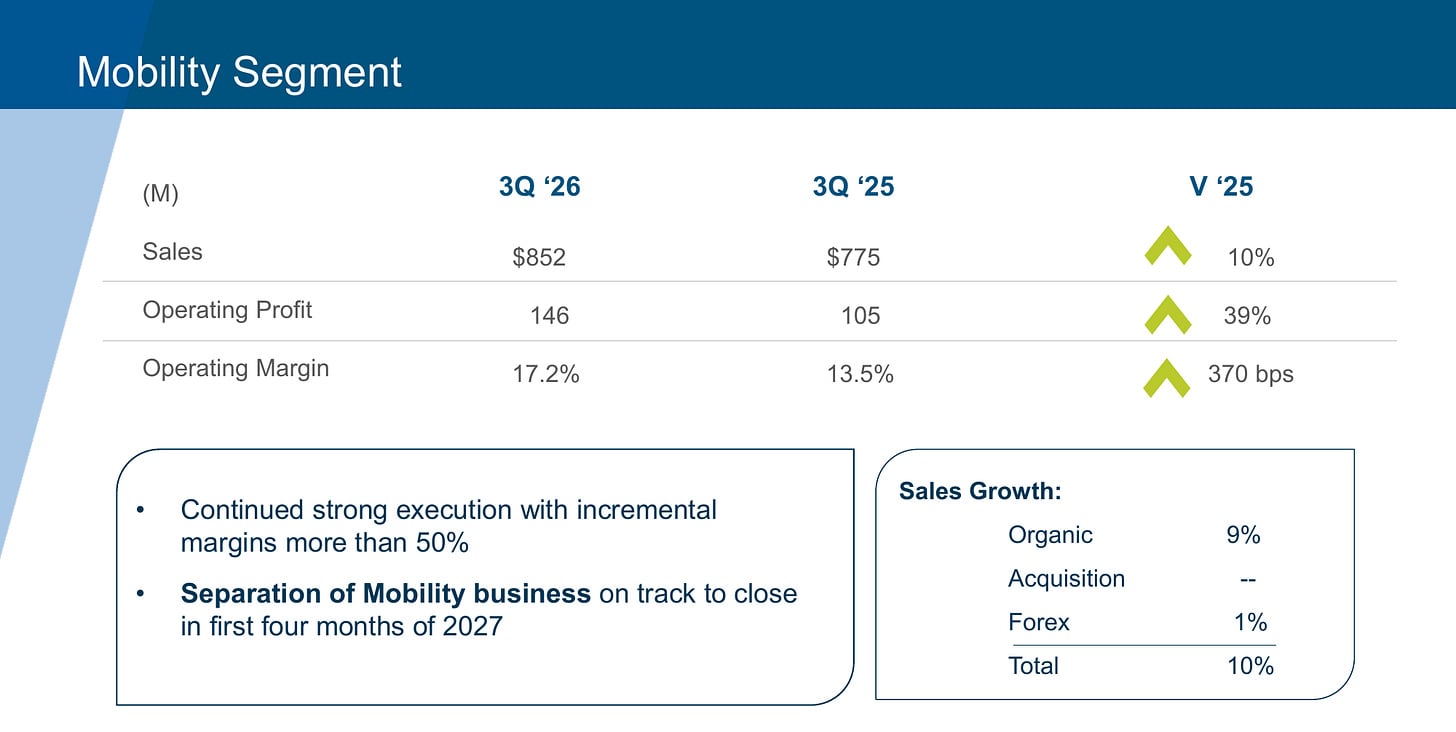
Fig: Escalation route of compute rack power density and the physical convergence evolution of power and liquid cooling systems
2028 Outlook: When Data Centers Are Procured as Power Generation Equipment
Looking ahead three to five years, the procurement logic for AI infrastructure is undergoing a fundamental reversal.
In the past, data centers were viewed merely as power consumers, following a logic of building the facility first and sourcing power later. In the future, data centers will essentially be designed and procured as integrated “power access nodes.”
As highlighted by frontier industry projections: by 2028, whoever can provide a one-stop system delivering direct connections from public transmission corridors to bare chips, along with complete power delivery, installation, and long-term maintenance, will capture the largest share of excess profits in the trillion-dollar compute infrastructure boom.
Leveraging a century of industrial accumulation and forward-looking system-level positioning, Eaton has erected an insurmountable moat against the grand era challenge of power reconstruction. This is not just a victory for an industrial corporation, but also the most profound response of physical laws to financial fever.
Fig: Forecast of total addressable market for future data center full-lifecycle power integration services
Join TechFlow official community to stay tuned
Telegram:https://t.me/TechFlowDaily
X (Twitter):https://x.com/TechFlowPost
X (Twitter) EN:https://x.com/BlockFlow_News