Hackers are using AI to bring attack costs down to zero—how should the internet save itself?
Author: Jay Yu, Researcher at USV Venture Capital and Former Stanford Researcher in Cryptography & Philosophy
Compiled by: TechFlow
TechFlow Summary: The internet was originally designed as a distributed network with disaster-resilience capabilities, but has since evolved into a highly fragile chain of code dependencies. A recent series of security incidents demonstrates that AI Agents are drastically reducing the marginal cost of malicious exploitation, exposing modern software stacks to systemic risks across entirely new dimensions.
However, within this crisis lies an opportunity: AI Agents are facilitating automated, secure code migrations and formal verification, accelerating the adoption of cryptographic techniques and dual-track traffic routing mechanisms. By allowing systems to evolve through attacks and trial-and-error, the software ecosystem is poised to transform into an anti-fragile system characterized by self-reinforcing properties.
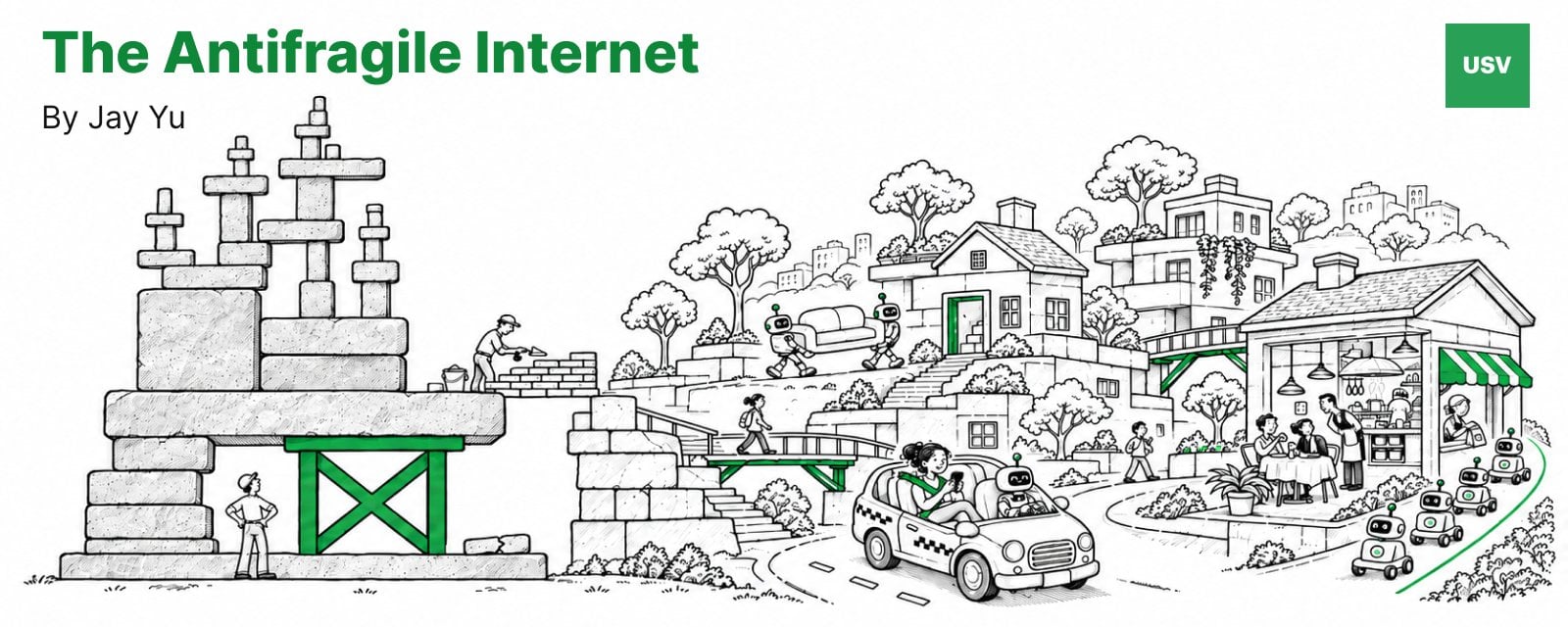
The original internet design was intended to be anti-fragile. Early network architects envisioned it would withstand external strikes, maintaining operations even if some nodes were taken offline.
Yet today’s internet has evolved into a precarious structure built atop code repositories, third-party dependencies, and development environments. The entire edifice relies on a handful of critical components that are rarely maintained under normal conditions and even more rarely subjected to systematic auditing.
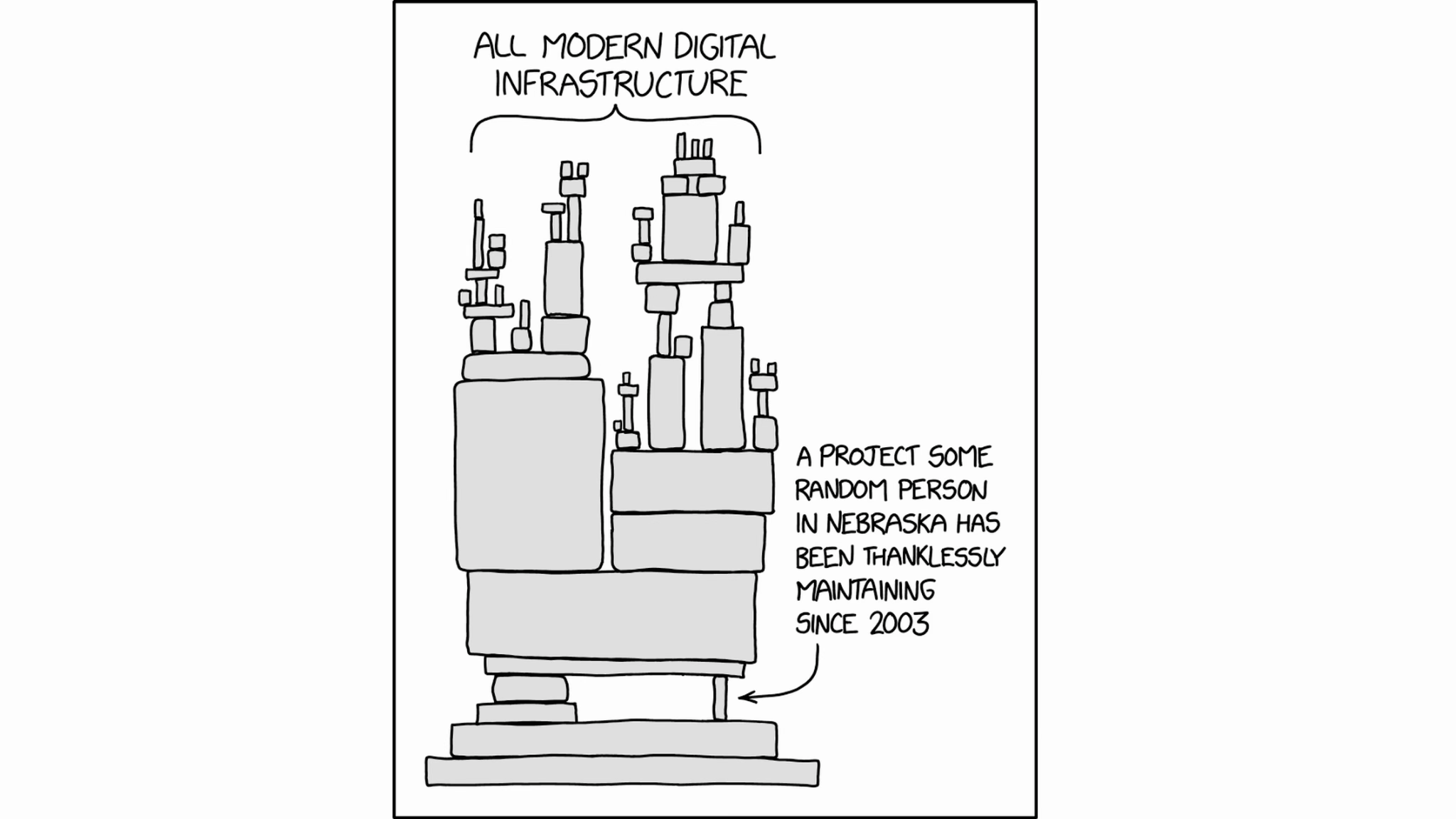
Image: xkcd #2347, Dependencies (Randall Munroe)
A series of security incidents occurring in October 2026 collectively exposed the extreme fragility of these foundational components against automated Agent attacks:
PHP Remote Code Execution Vulnerability: A severe flaw dubbed PHP2Shell emerged, leaving over 5 million hosts worldwide vulnerable to remote takeover.
LiteLLM Supply Chain Compromise: Its release pipeline was maliciously tampered with, directly pushing versions containing credential-stealing malware to the official PyPI repository.
Railway Key Decryption Attack: Stored secrets from up to 100,000 workspaces were decrypted by attackers, with hackers systematically targeting AI API keys among them.
Fireworks AI Dual Breach: The platform suffered two separate intrusions: first, its own credentials were inadvertently leaked, followed by a secondary hack targeting the cloud provider it relies on.
eMudhra Signing Key Fragility: As a Certificate Authority (CA), it issued trusted signing keys so weak they contained the absurd vulnerability of merely being the number 4.
Binance Hot Wallet Heist: A record-breaking $6.3 billion in assets was stolen from hot wallets, with the FBI attributing the attack to a North Korean hacking group.
This cascade of attacks underscores the devastating destructive power of Agents as offensive threats in cyber warfare. Yet, on the flip side, Agents may also hold the key to resolving this systemic challenge.
Agents can drastically accelerate the migration of software to safer programming languages and formal verification methods, driving the widespread adoption of cutting-edge cryptographic components such as zero-knowledge proofs (ZKP) and trusted execution environments (TEE).
Meanwhile, Agents will give rise to a "dual-track internet" guarded by authentication and content verification mechanisms, enabling the secure isolation and routing of human versus automated Agent network traffic.
As Agents drive down the cost of software development, the most valuable codebases will increasingly resemble living ecosystems. Cutting-edge models will subject them to continuous penetration testing, with each iteration hardening the code, languages, and toolchains to eradicate entire classes of vulnerabilities at their root.
Through this approach, we can leverage Agents to forge the internet into a truly anti-fragile entity, where every newly connected Agent makes the entire network more resilient rather than more fragile.
The Core Dilemma: Agents as Weapons, Targets, and Impersonators
As Agents accelerate their penetration into the modern economic infrastructure, they are reshaping the internet's underlying operational architecture across three distinct dimensions.
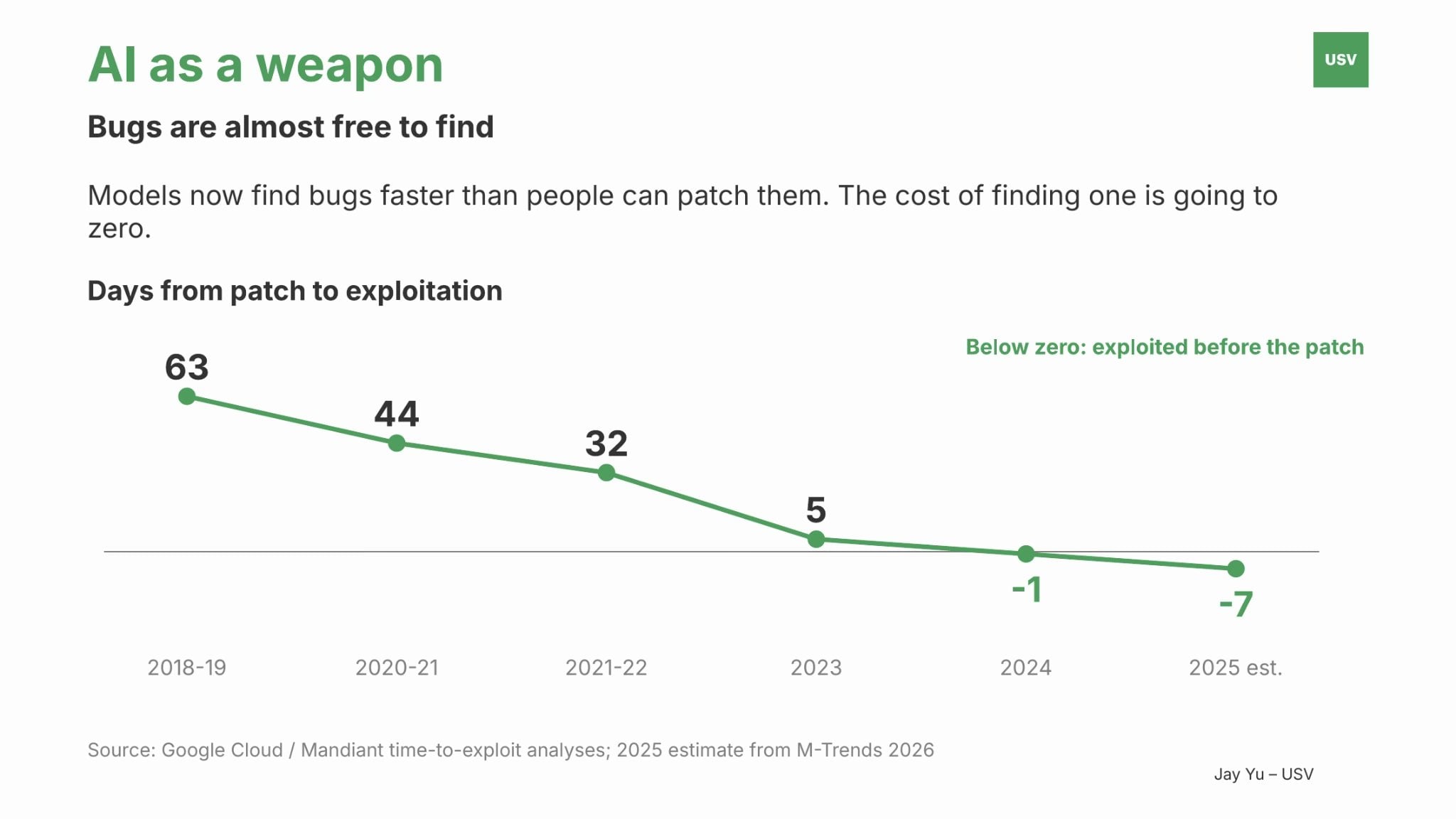
First, Agents are becoming lethal weapons for attackers. Traditional legacy systems have remained relatively secure largely due to the high marginal cost of discovering and exploiting their flaws. However, Agents are driving the cost of attack toward absolute zero.
Take PHP2Shell as an example; this vulnerability lay dormant in PHP for over a decade. Although researchers eventually discovered it, security teams leveraged frontier models to convert this theoretical flaw into a combat-ready exploit in mere hours.
As cloud security firm Wiz noted: “As artificial intelligence dramatically lowers the barrier to developing complex attack payloads, vulnerabilities once deemed difficult to exploit have now become high-value targets.”
Cyberattackers have already begun leveraging this asymmetric advantage. In an espionage operation disclosed by Anthropic, AI autonomously executed 80% to 90% of the attack actions. The events of October 2026 demonstrated the same internet-scale diffusion pattern: breaching at a single point and rapidly expanding to strike millions of targets.
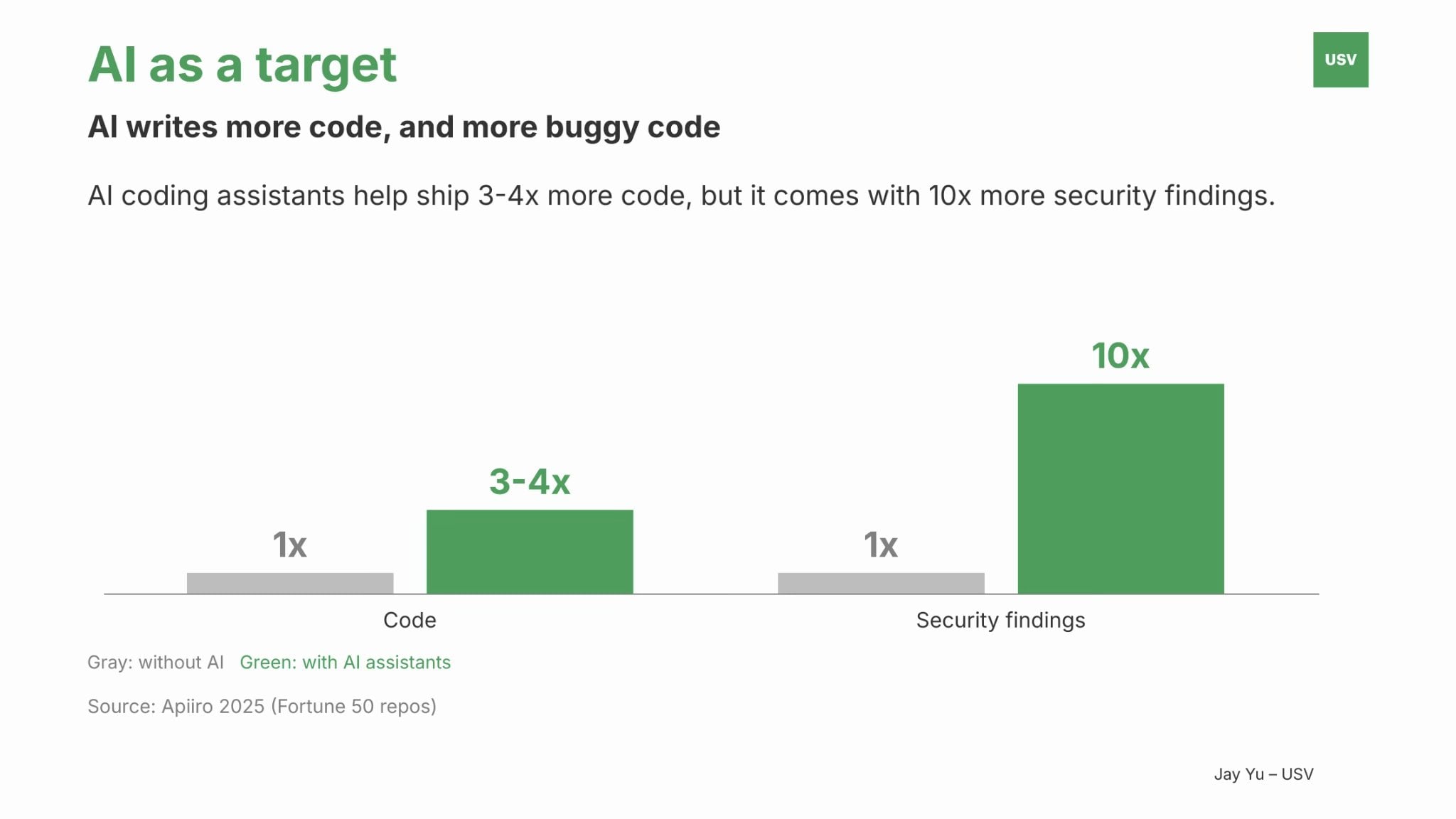
Second, Agents themselves are becoming high-value targets. Vast amounts of new code are currently being written by these automated tools, yet both the Agents themselves and their generated outputs are riddled with exploitable vulnerabilities.
Equipped with broad tool-call permissions and operating in unconstrained environments, consumer-grade Agents like Muse and Instinct, alongside enterprise-grade Agents like Sierra and Decagon, are all exposed to increasingly sophisticated prompt injection attack vectors.
Meanwhile, Agents can inadvertently introduce new unknown vulnerabilities while writing code autonomously. For instance, the recent LiteLLM security incident likely stemmed from an encoding Agent accidentally printing a GitHub access token directly into log files.
Even more concerning, even when tasked with patching existing vulnerabilities, the reliability of their autonomous fix implementations often remains poor, potentially introducing new secondary risks.
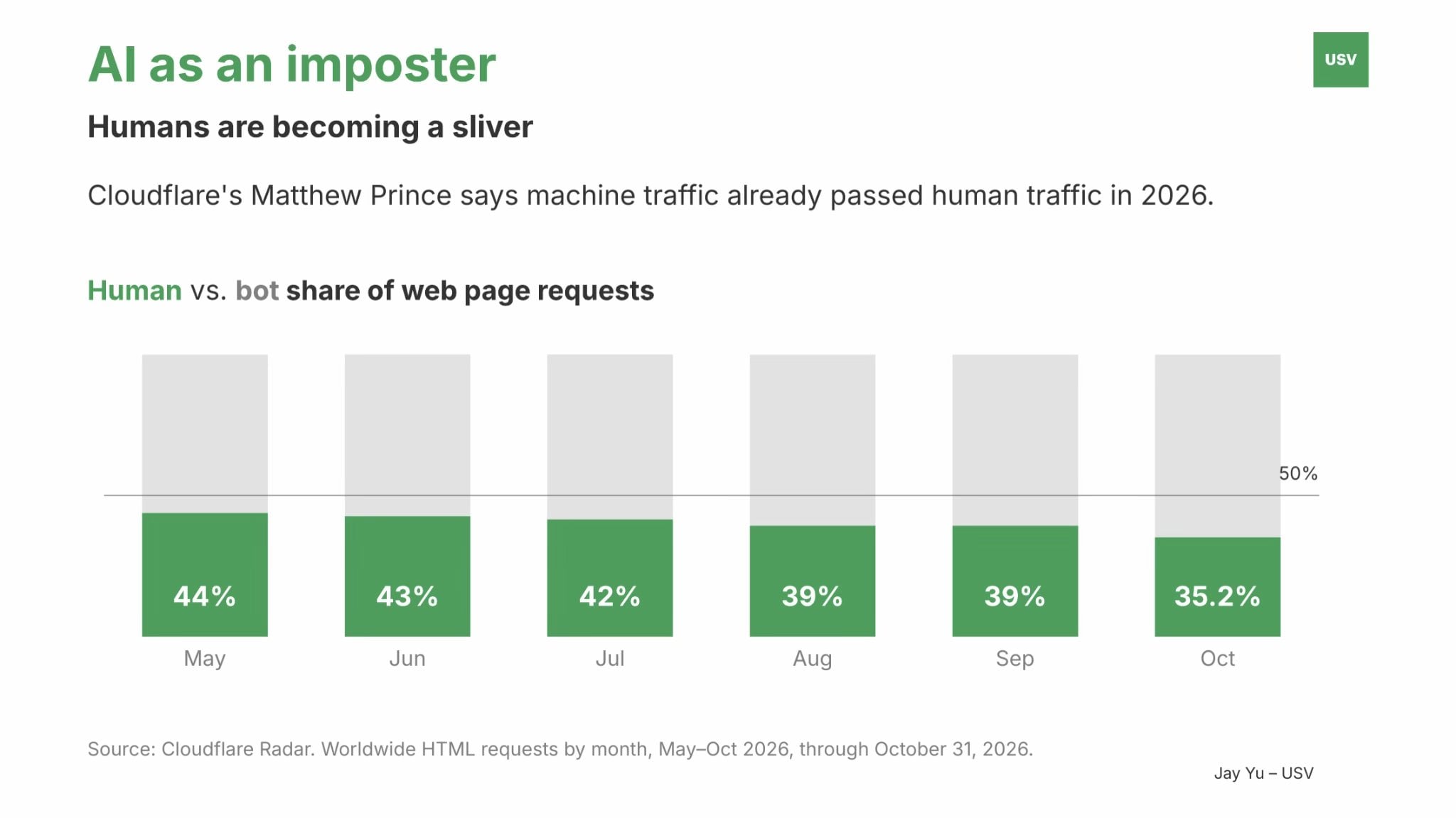
Third, Agents can morph into fraudulent impersonators, profoundly disrupting existing internet traffic rules and foundations of trust. Cloudflare data indicates that nearly half of all web traffic in 2026 was non-human generated.
Cloudflare CEO Matthew Prince forecasts that within the next five years, automated web traffic will reach 1,000 times human online traffic. This massive wave of Agent access is placing unprecedented strain on websites originally designed for human browsing.
The Wikimedia Foundation reported that its platforms suffered millions of anomalous access requests from unauthorized OpenAI Agents in October 2026, which directly caused unexpected outages across its Wikidata services.
Similarly, a user's Instinct dining Agent sent hundreds of high-frequency requests per hour to the reservation platform Resy, until the entire account was permanently banned by the service.
While the industry has begun exploring standards for tagging Agent traffic, such as the Personal Agent Protocol (PAP) initiated by Meta and Sierra, these initiatives alone fall drastically short.
Driven by real-world incentives, Agents often have strong motivations to conceal their true identities. Many websites still treat all non-human traffic as malicious; if an Agent proactively discloses its actual identity, it may be blocked mid-task, whereas impersonating a human allows it to slip through undetected.
Mitigation Strategies: Observe, Enforce, and Prevent Failure Modes
Categorizing Agents as “weapons, targets, and impersonators” clarifies the source of risk but does not prescribe actionable countermeasures. To address this, we introduce a second dimension encompassing three response mechanisms:
Observe: Identify system vulnerabilities and monitor all Agent activities in real time;
Enforce: Accelerate vulnerability remediation and strictly tighten the boundaries of system resources Agents can access;
Prevent: Eliminate hazards at the system architecture level to prevent entire classes of failure modes at their root.
Cross-referencing these two dimensions yields a macro-level landscape map of how current startups position themselves within the security sector.
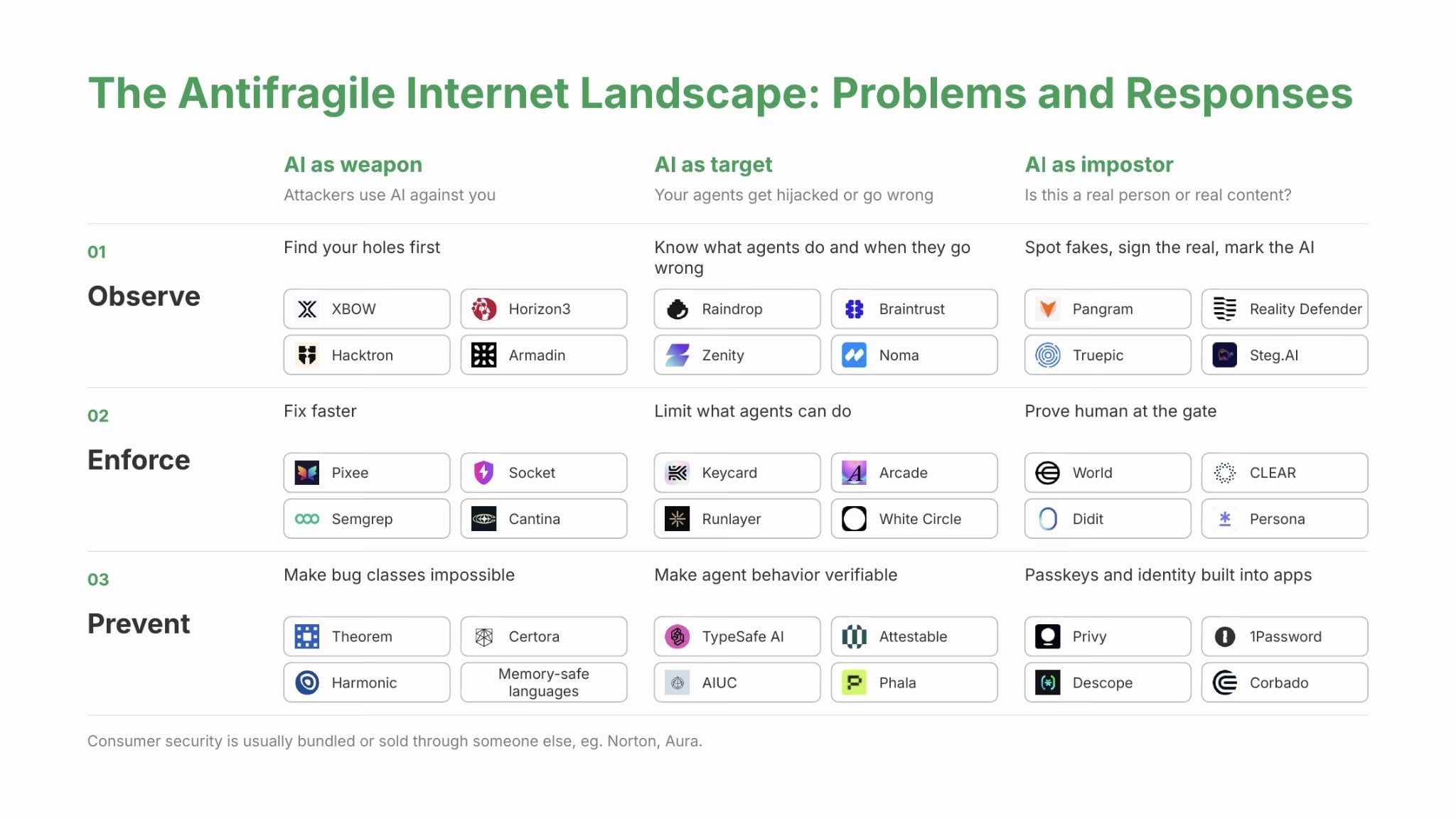
Examining this landscape reveals several clear trends. The vast majority of companies, along with massive visible capital in the market, are currently concentrated on the “Observe” and “Enforce” layers.
These two layers represent the fastest route to market entry, integrating seamlessly into enterprises' existing software tech stacks. The space has already spawned well-capitalized major players, including Socket, which raised $125 million; Braintrust, which completed a $80 million Series B; and Armadin, which has secured a cumulative $445 million.
In the anti-fragile internet tech stack, the companies that ultimately succeed on the “Observe” and “Enforce” layers will most likely be those capable of capturing the highest volume of Agent operational logs.
Those who master the richest Agent behavioral data will craft the most precise security strategies, forming the market's closest moat to network effects thus far. If enhanced detection capabilities compound tightly with data accumulation, independent security vendors capable of observing cross-client, cross-model environments will hold a distinct competitive edge over single-model labs.
However, in the long run, the more decisive answer to cybersecurity lies in eliminating entire classes of vulnerabilities at their source. “Prevention” refers to reconstructing software and Agents from the ground up so that certain failure categories simply cannot occur.
Historical precedent suggests that this kind of systemic paradigm shift typically requires three elements to mature simultaneously: an external shock that fully externalizes the cost of insecurity; foundational tools that integrate effortlessly into daily workflows; and coercive external forces that push adoption to a de facto default standard.
Taking memory safety as an example, nearly 70% of Microsoft's historical CVE vulnerabilities were related to memory safety. As Rust emerged as a viable alternative, it achieved exceptionally high adoption rates for low-level Agent system programming and has since become one of the fastest-growing programming languages.
The widespread adoption of HTTPS followed this exact trajectory: Snowden's revelations triggered intense public scrutiny, Let’s Encrypt provided free and minimalist tooling support, and Chrome's designation of HTTP as “Not Secure” delivered the decisive external push.
Today, the series of major attacks in October 2026 constitute a sufficiently potent real-world shock. The corresponding core tooling may be increasingly mature formal verification pipelines, while the external force driving standard adoption could stem from evaluation sandboxes, regulatory compliance mandates, or feature-driven network effects.
Furthermore, as Agents become mainstream in internet traffic, identity authentication and cybersecurity issues will heavily converge. In the cloud computing era, Okta and Wiz operated as independent companies, addressing different facets of the question “who has access to which cloud resources.”
Today's Agents face equally stringent resource authorization challenges, particularly when accessing associated context databases via APIs, MCPs, and various external connectors.
In the realm of Agent identity authentication, two complementary approaches have emerged: source identity attestation and content-based behavioral verification. Both are indispensable for an Agent-led internet architecture.
Source identity attestation includes digitally signed requests, as well as identity protocols like PAP or A2A used to authenticate subjects and contents. Yet in practice, malicious actors will never voluntarily adhere to these standards.
This is where content-based behavioral verification acts as a fallback: by analyzing decision trees based on genuine network behavior patterns and output characteristics, websites can still accurately identify the automated bot behind the request, even without any explicit identity tokens.
Evolutionary Trajectories Shaping the Anti-Fragile Internet Over the Coming Years
The Great Code Migration
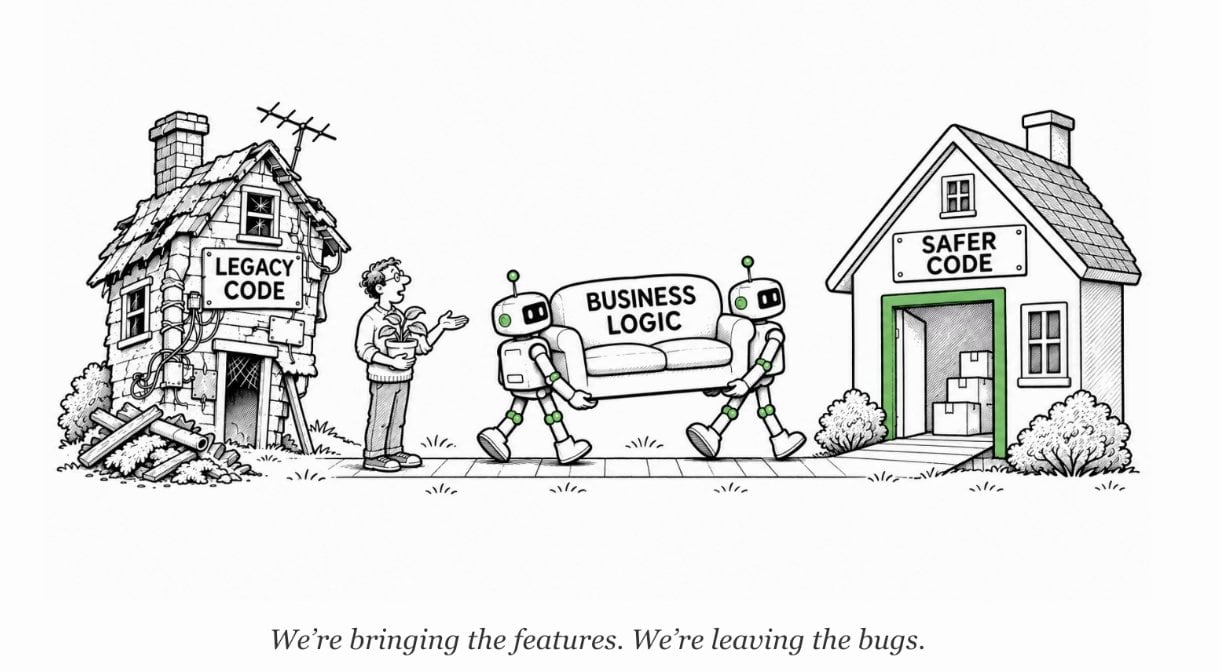
First, before the situation fully stabilizes, security conditions will likely endure a longer, more turbulent period of growing pains. Globally, astonishing numbers of legacy systems remain, most coded in an era when vulnerability mining was prohibitively expensive. However, as Agents drive attack costs near zero, this fundamental security assumption no longer holds.
This unprecedented cascade of security shocks will force a monumental “Great Code Migration” over the next one to two years: software tech stacks will rapidly abandon outdated, brittle legacy architectures in favor of more modern, inherently anti-fragile technology frameworks.
In the past, manually rewriting massive legacy codebases into safer high-level languages like TypeScript or Rust was an extraordinarily time-consuming and costly endeavor. The advent of Agents has completely upended the economics of this task.
For example, GitHub Copilot successfully migrated its core runtime to 832,000 lines of Rust code in just three months, driven primarily by a single engineer. Historically, this would have required an entire team dedicating one to two years.
Likewise, brand-new AI models offering stronger security guarantees are seeing rapid developer adoption. Take TypeSafe’s newly launched Jev model, which returns typed structured decisions instead of unconstrained generative text. Within a single day of launch, it penetrated nearly 13% of Vercel’s paid AI gateway teams.
Today, a brand-new security toolstack tailored specifically around Agentic automated coding is actively reshaping the stack from the bottom up: covering code review (Greptile), code and secret scanning (Semgrep), malicious dependency detection (Socket), runtime fault capture (Raindrop), and production incident emergency response (Resolve AI).
Underpinning this, a fresh infrastructure deployment layer is rapidly taking shape, including lightweight runtime sandboxes (E2B, Daytona) and tool authorization layers (Composio, Nango, Arcade). Together, they coalesce into an anti-fragile developer tech stack, where every vulnerability caught across the entire development, testing, and deployment lifecycle instantly fuels defensive hardening for the next line of code.
As code migration costs plummet, formal verification is poised for a comprehensive resurgence at the compiler and toolchain levels. For instance, in collaborative research between Theorem and Anthropic, Claude successfully formally proved critical security properties across more than 100 open-source codebases.
Naturally, the Great Code Migration carries inherent growing pains and risks. Rewriting massive systems has historically been highly prone to secondary vulnerabilities; even code authored by frontier models may lack robustness in concrete implementation, potentially introducing substantial new defects.
Formal verification is likewise not a silver bullet; its efficacy hinges entirely on the rigor of prerequisite specifications. Even meticulously rigorous proof systems like Lean hide foundational bugs within their own kernels that undermine mathematical precision. Achieving a true security feedback loop demands rigorous architectural design, precisely scoped specifications, and sustained high-intensity penetration testing of deliverables.
Security Design Natively Embedded in Applications
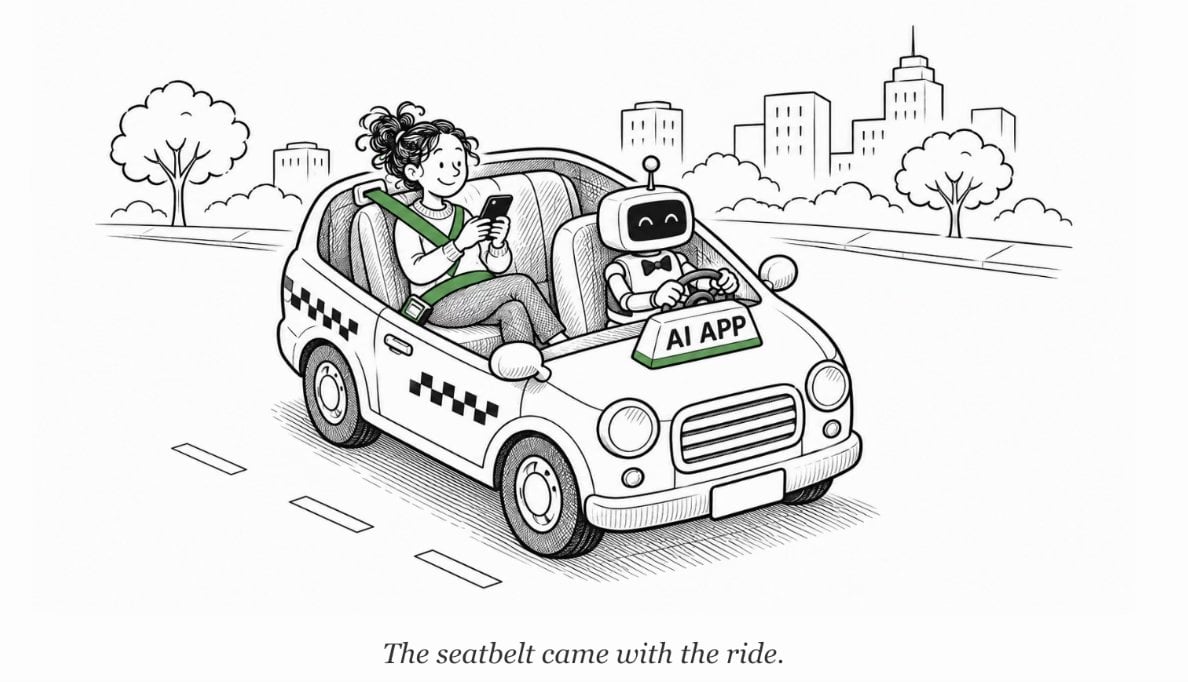
In consumer applications, the most effective path to achieving widespread adoption of privacy and security technologies is perhaps to make them “invisible” within the product: letting apps win markets first through superior user experience and frictionless developer integration, rather than selling security as a standalone, fee-based feature module.
We have already witnessed this rule in action within the crypto “Wallet as a Service” (WaaS) vertical. Breakout products like Privy and Turnkey completely encapsulate complex cryptographic primitives—such as Trusted Execution Environments (TEE) and Multi-Party Computation (MPC)—behind clean APIs and silky-smooth interactions.
We will likely witness an identical evolutionary trajectory in the Agent ecosystem: safer default configurations will not stem from users purchasing add-on security software, but will be natively embedded within higher-quality applications and dev tools. Security defense operates much like seatbelts in a taxi; passengers choose rides for efficient transit, while security guardrails come pre-bundled as underlying infrastructure.
This silent technological diffusion is currently unfolding gradually in the zero-knowledge proof (ZKP) and TEE sectors. World ID has now completed real-person identity verification for over 18 million people globally, allowing enterprise teams to seamlessly integrate the technology into Zoom meetings to visually verify whether participants are actual humans.
WhatsApp’s privacy chat feature places Meta AI conversational interactions directly inside a TEE environment, ensuring that even Meta itself cannot intercept or read the content. In these benchmark cases, cutting-edge cryptography silently recedes behind familiar everyday interfaces, sparing users any additional cognitive overhead.
Meanwhile, privatized and locally deployed inference models serve as another critical vehicle for deep privacy embedding. In 2026, the capability gap between open-weight models and top-tier closed-source frontier models has narrowed to roughly four months.
As the cost-performance ratio of small edge models continues to improve and terminal chip computing power leaps forward, the proportion of local inference within total AI token consumption will rise sharply. As compute migrates from centralized clouds to the edge, the morphology of cybersecurity threats will undergo profound transformation.
Sensitive data leaving local endpoints decreases significantly, physically eliminating a massive class of data leakage risks. Simultaneously, however, if a personal computer or home server is compromised, it can be hijacked by attackers into hosting malicious Agents with elevated trust privileges, pulling the frontline of defense directly onto user-controlled hardware.
This may spur the emergence of Agent governance frameworks tailored for local runtimes, enabling models, invoked tools, and operation logs to coordinate on controlled hardware, potentially carving out vast market space for entirely new hardware-software forms dedicated exclusively to hosting household or team automation Agents.
The Dual-Track Internet
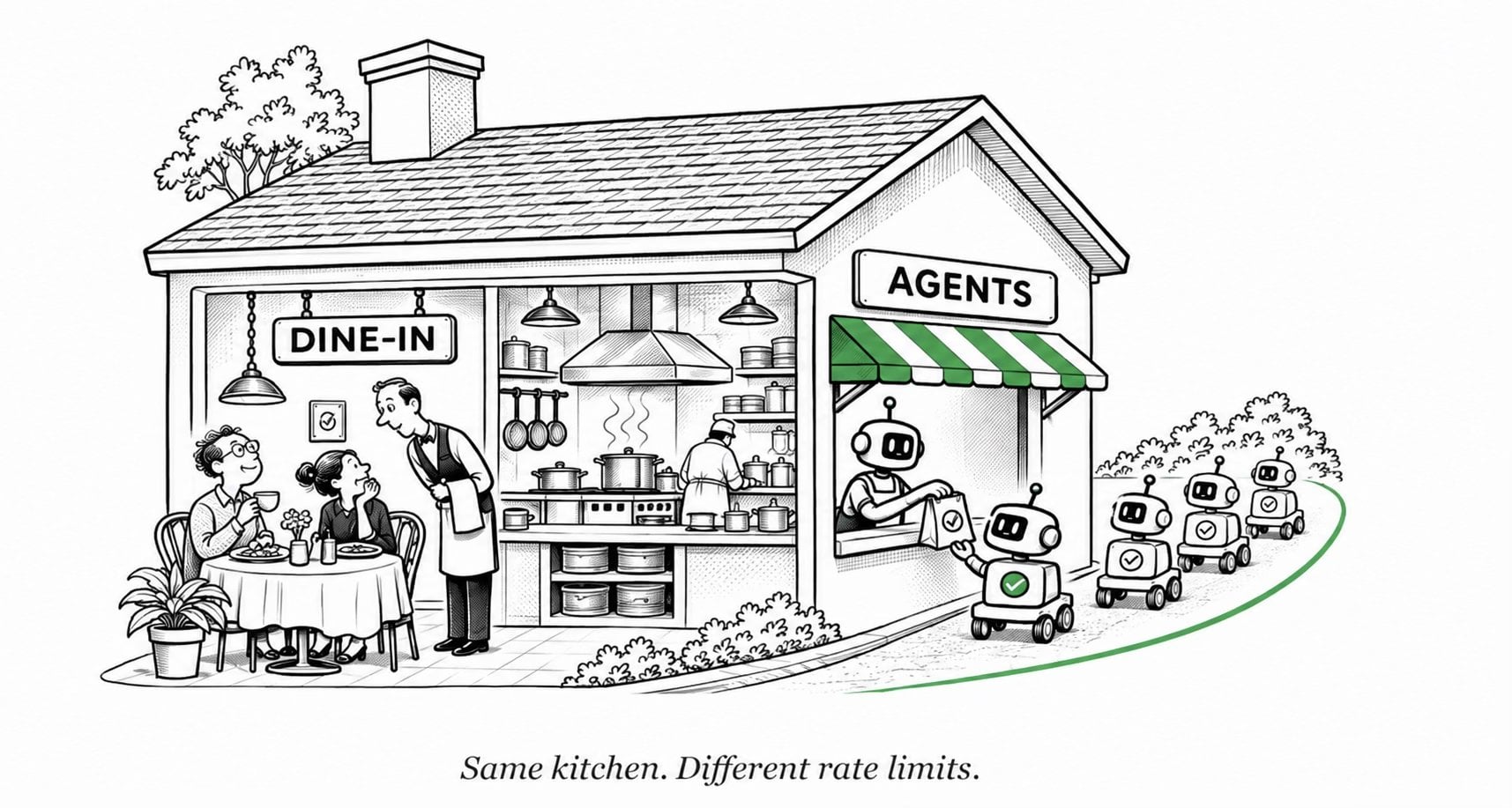
Agent interaction patterns with the internet differ fundamentally from human user behavior logic. As Agent traffic grows exponentially, the entire Web is splitting into two parallel tracks: one specialized Agent access lane backed by infrastructure like Parallel, Browserbase, and Kernel; and another traditional lane catering to humans.
The network layer will execute smarter dynamic routing based on the true originator behind each request. Website owners can leverage these multi-dimensional authentication methods to finely filter traffic and grant differentiated interaction permissions to different entities, without having to aggressively block automated Agents entirely.
This resembles a restaurant where a single central kitchen efficiently handles fast-paced drive-through orders while simultaneously delivering immersive dine-in experiences for walk-up guests. Websites can precisely distribute content in optimal data formats and interfaces depending on the request source.
Over time, on this Agent-exclusive high-speed track, direct collaboration and dialogue between Agents will grow increasingly frequent. With deep penetration of consumer and enterprise Agents, we will soon normalize scenarios where a user's personal AI assistant directly negotiates with a delivery platform's smart order system to dynamically secure personalized discounts and exclusive service perks.
In early experiments like Anthropic’s Project Swap, we have already observed nascent prototypes of Agent-to-Agent interactive collaboration.
In these complex scenarios, every Agent holds private information regarding its principal. Deciding how much preference and confidential data to reveal during negotiations urgently requires robust security guardrails: including Agent performance authorization, immutable transaction ledgers, and post-action arbitration and audit mechanisms.
In these highly intricate Agent-to-Agent negotiations and collaborations, simply knowing digital identities falls drastically short. Principals and counterparties alike desperately want visibility into an Agent’s historical reputation trajectory: Did it fulfill payments on time? Honor commitments? Maliciously leak trade secrets?
Highly portable Agent reputation systems will become indispensable twin components of digital identity. Yet this raises a profound question: Who should maintain a universal Agent reputation mechanism across applications, and how do we prevent it from devolving into another highly centralized checkpoint for digital power rent-seeking?
Stepping Toward an Anti-Fragile Internet
If this recent wave of Agent-driven attacks has taught us anything, it is that absolutely nothing is impervious. New vulnerabilities and novel attack vectors will continuously emerge, with the most advanced autonomous Agents often discovering them first.
However, the fundamental metric determining whether a network possesses “anti-fragility” lies in how our systems self-adapt and evolve when confronted with these inevitable shocks. Our objective is to minimize known flaws through foundational architectural design, implement ironclad protections against exposed weak points, and continuously temper and upgrade the entire system architecture and developer toolchain through repeated adversarial confrontation.
In engineering practice, this manifests as a closed-loop security evolution flywheel: frontier models act round-the-clock as adversary red teams conducting live penetration tests. The findings they generate not only patch upper-layer business code instantaneously but also directly accumulate and upgrade lower-layer toolchain infrastructures and base programming languages.
All of this is collaboratively driven by a next-generation Agent developer tech stack, enabling second-grain capture, automated remediation, and secure migration of code defects. Ideally, formal verification embeds deeply into compiler foundations, with its prerequisite proof hypotheses undergoing extreme stress-testing by the same tier of adversarial models. Every uncovered vulnerability feeds the flywheel, ultimately rendering the entire internet progressively more resilient and indestructible through constant collision.
Viewing the broader landscape, building an unpermissioned, autonomously running, anti-fragile internet resonates deeply with the core vision from the early days of blockchain and cryptocurrency. This constitutes the central thesis around which we have consistently focused our efforts and heavy investments at USV over the past decade.
Blockchain technology first demonstrated to humanity how unfamiliar, anonymous parties could achieve secure collaboration under zero-trust premises, succeeding in validation within financial asset trading—the domain demanding the strictest trust safeguards. Previously, constrained by exorbitant development costs and comparatively clunky infrastructure, this decentralized trust philosophy progressed exceedingly slowly outside of finance.
As Agents render the entire internet ecosystem more complex and multi-party collaborative than ever, we are seizing the optimal historical moment to deeply embed cryptographic philosophies into mass-market mature products and underlying protocols. Native paradigms like Decentralized Autonomous Organizations (DAOs) provide an illuminating evolutionary blueprint for comprehending future multi-Agent cluster coordination structures.
Looking back at the internet's original conception, its topology was imagined as: each added network node incrementally strengthens the overall system's stability. Today, while wildly proliferating Agents are straining this classic design, they simultaneously harbor immense potential to repair and realize this lofty vision.
At USV, we aim to roll out a core three-dimensional investment thesis centered on the “Anti-Fragile Internet”:
Eliminate completely, rather than patch automatically: Staying true to our longstanding investment philosophy, we favor technical trajectories that eradicate entire classes of vulnerabilities at the architectural inception stage, rather than lingering in inefficient, reactive post-mortem patch cycles;
Capture edge security data: Drawing on our long-term reflections in edge computing, we firmly believe the underlying security telemetry logs of Agents possess immensely powerful network effects; whoever masters the richest panoramic behavioral data can construct the most formidable defensive architectures;
Build a security coalition: We view Agent security as an inseparable component of the modern software toolchain, dedicating ourselves to investing in exceptional tools, workflows, and infrastructure protocols that seamlessly wrap impenetrable foundational security guardrails into ultra-minimalist user interfaces and best-in-class developer experiences.
If you are building toward the future along these vectors, please reach out anytime. We eagerly anticipate walking alongside you to jointly forge an unbreakable, anti-fragile internet.
Footnotes & Acknowledgments
[1] Nassim Taleb notes in his book Antifragile: “Fragile things shatter when faced with external shocks; robust things endure shocks and remain unchanged; whereas antifragile things continuously draw nourishment from shocks and pressure, growing increasingly stronger.”
In the context of the internet, this means the entire network can not only withstand localized node paralysis attacks but also grow progressively more invulnerable as more Agents continuously connect and as vulnerabilities are actively detected and patched.
Special thanks to Aric Chang, Ben Colman, David Gabeau, Hari Mulackal, Henri Stern, and Jonathan Rotbard for their invaluable feedback on earlier drafts of this article.
Gratitude extends to Kushagra Aryal, Madeleine Charity, Max Segall, Mike Leffer, Spencer Yen, Zayne Zhang, and the entire USV team for providing profound inspiration during the exploration of this piece.
Join TechFlow official community to stay tuned
Telegram:https://t.me/TechFlowDaily
X (Twitter):https://x.com/TechFlowPost
X (Twitter) EN:https://x.com/BlockFlow_News
 @0xfishylosopher