TechFlow US Stocks (October 9): OpenAI Annualized Revenue Lower Than Reported, AI Supply Chain Under Pressure, TSMC Drops 3.35%
Written by: Chaoxiang Research

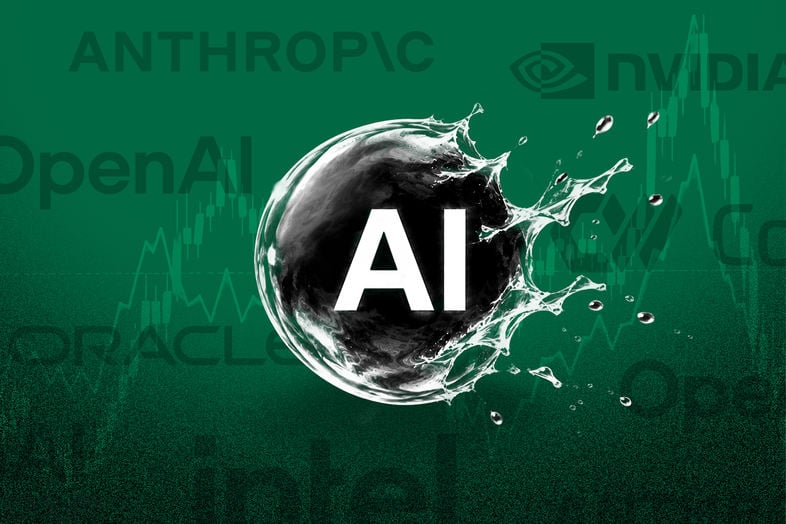
U.S. stocks showed mixed movement on Thursday. OpenAI's annualized revenue approached $50 billion, lower than previous reports of approximately $70 billion, weighing on the AI sector; NVIDIA fell nearly 3%, and the Philadelphia Semiconductor Index dropped 3.39%. Geopolitical risks in the Middle East and hurricane-driven production cuts pushed crude oil prices sharply higher. Subsequently, Trump stated there would be no attack on Iran before the midterm elections, prompting crude prices to recede from some gains. U.S. Treasury yields declined, yet tech stocks failed to rebound. Microsoft, Adobe, and other companies were removed from the U.S. PERM green card program, while NVIDIA announced a $1 billion investment over the next five years to support American scientific research.
Nasdaq Falls 1.25%; Energy and Consumer Staples Lead Gains
The S&P 500 fell 0.47% to close at 7,765.36, the Nasdaq Composite dropped 1.25% to 27,193.34, and the Dow Jones Industrial Average gained 0.10% to 51,231.64. The VIX index stood at 15.41, up 2.19%.
Six of the S&P 500's 11 sectors closed higher, while five declined. Energy rose 2.92%, consumer staples gained 2.12%, financials advanced 0.91%, real estate increased 0.58%, materials climbed 0.46%, and industrials edged up 0.30%. Information technology fell 1.78%, consumer discretionary dropped 0.47%, healthcare declined 0.41%, utilities fell 0.26%, and communication services decreased by 0.06%.
Among the Magnificent Seven, only Apple finished in the green, rising 1.11%. NVIDIA fell 2.94%, Amazon declined 2.25%, Microsoft dropped 1.35%, Tesla fell 0.74%, Alphabet slipped 0.63%, and Meta decreased by 0.06%. The Nasdaq New China Index fell 0.62%.
The Philadelphia Semiconductor Index dropped 3.35%. ARM fell 6.48%, Intel declined 5.34%, Micron dropped 4.79%, Broadcom fell 4.35%, and AMD slid 3.90%. Optoelectronics also faced pressure, with Coherent plummeting 9.62%, Corning falling 6.38%, and Marvell declining 3.52%.
Towards the close of fixed-income trading, the yield on the 10-year U.S. Treasury was approximately 5.23%, down about 5 basis points from the previous session; the 2-year yield stood at roughly 4.76%, falling approximately 1 basis point.
WTI crude oil futures rose 3.64%, settling at $91.49 per barrel; Brent crude gained 4.07%, closing at $104.28 per barrel. COMEX gold December contracts rose approximately 0.4%, settling at $4,157 per ounce. Bitcoin hovered around $81,800, and Ethereum traded near $2,480.
OpenAI's Annualized Revenue Hits $50 Billion; AI Supply Chain Under Pressure
Citing financial materials provided to investors, the Financial Times reported that as of the end of September, OpenAI's annualized revenue approached $50 billion, down from the approximately $70 billion figure previously reported by media outlets at the end of last month.
Annualized revenue converts current income levels into an equivalent yearly scale and does not equal fully realized full-year revenue. This report highlights a discrepancy with previous figures and should not be directly interpreted as a $20 billion drop in actual revenue.
With model developers continuously expanding their commitments to compute resources and infrastructure investment, investors must reassess how much procurement can be supported by actual revenue and how much external financing will be required for subsequent expansion.
Oracle fell more than 5% overnight, while Broadcom dropped 4.35%, with selling pressure simultaneously impacting chips, memory, and optoelectronics. Micron had risen 4.06% in the prior session but reversed to decline 4.79% overnight; Coherent tumbled nearly 10%, and Corning fell more than 6%.
Currently, there is insufficient evidence to conclude that OpenAI has reduced its procurement. The market reaction in overnight stock prices primarily reflects growing caution regarding previous growth assumptions. Future revenue disclosures, financing arrangements, and changes in actual orders will be key to determining whether this impact persists.
Trump Says No Attack on Iran Before Midterms; Oil Prices Surge Then Retreat
Previous media reports indicated that the U.S. military is drafting potential strike plans against Iran that could be executed prior to the midterm elections. Compounded by attacks on shipping in the Strait of Hormuz and hurricane-related disruptions to production in the U.S. Gulf of Mexico, crude oil prices surged significantly during intraday trading.
Subsequently, Trump stated that the U.S. is engaged in productive consultations with Iran and pledged no attack before the November 3 midterm elections. Iran's Foreign Minister also confirmed that both sides continue indirect negotiations through mediators.
The news prompted crude prices to give back some gains, gold turned bullish, and U.S. Treasury yields accelerated their decline. However, both major crude oil futures still closed noticeably higher, indicating that supply concerns stemming from shipping and production remain unresolved.
The accepted yield for the recent U.S. 30-year Treasury auction was 5.618%, with a bid-to-cover ratio of 2.54, exceeding the average of the previous six auctions. Strong subscription demand helped ease selling pressure on long-dated debt.
Treasuries recovered overnight for two reasons: strong auction demand and expectations of de-escalation following Trump's remarks. Tech stocks' failure to rebound in tandem suggests that the AI revenue report continues to suppress risk appetite.
Microsoft, Adobe Removed from PERM Green Card Program
The U.S. government announced on Thursday the suspension of Microsoft, Adobe, and several major IT services firms from the PERM Permanent Labor Certification program, citing alleged abuse of the related procedures and demanding that companies hire more American workers.
PERM serves as a critical step in many employment-based green card applications, typically requiring employers to demonstrate that there are no qualified, willing, and available U.S. workers to fill the relevant positions. This measure solely affects the process for companies applying for permanent residency on behalf of foreign employees and does not impact H-1B work visas.
Microsoft responded that approximately 80% of the company's H-1B applications in the previous fiscal year were used to renew visas or adjust status for existing employees, rather than to recruit new hires.
For tech companies, this development may increase uncertainty surrounding talent retention and recruitment. However, further clarification is needed on how long the suspension will last and how significantly it will affect pending applications.
NVIDIA Pledges $1 Billion Over Five Years; Firmus Postpones IPO
On Thursday, NVIDIA announced it will invest $1 billion in resources over the next five years to support American "superintelligence" research, focusing primarily on quantum computing, healthcare, and energy security.
The initiative includes funding U.S. universities to access computing infrastructure, investing in quantum computing, and supporting cloud service providers serving U.S. government missions. As a multi-year commitment, it should not be treated as current-period expenditures or new sales orders.
Meanwhile, Australian AI data center operator Firmus, backed by NVIDIA, announced it is postponing its Australian IPO due to recent market volatility and conditions, pivoting instead to seek private placement financing.
Research and infrastructure investments continue to move forward, but the financing market is raising its demands regarding valuation and returns. Firmus's listing setback does not represent the entire industry but can serve as a reference point for monitoring financing conditions.
Key Focus Today
At 22:00 tonight, watch for the preliminary reading of the University of Michigan Consumer Sentiment Index. Special attention should be given to one-year and long-term inflation expectations. With crude oil remaining elevated, if consumer inflation expectations continue to rise, U.S. Treasury yields may come under renewed pressure.
Join TechFlow official community to stay tuned
Telegram:https://t.me/TechFlowDaily
X (Twitter):https://x.com/TechFlowPost
X (Twitter) EN:https://x.com/BlockFlow_News
 @chaoxiangooo