Opinion: Value investing in the U.S. stock market is not the same as fundamental investing.
Author: 0xsmac
Translated by: TechFlow
TechFlow Summary: As the market chants "fundamentals are dead" and capital wildly piles into tech giants, the author dismantles the logical flaws behind this narrative using an astronomical discovery. Starting with the components of valuation multiples, the article reminds investors to distinguish a company's true quality from the premium the market is willing to pay, offering a particularly important warning for long-term allocations in crypto and technology.
I promise this introduction won't be as long as my previous one on the weather.
But give me 90 seconds.
Over a century ago, a woman named Henrietta Leavitt was doing tedious work: measuring the brightness of thousands of stars on photographic plates (the imaging method before film). She noticed a characteristic about a class of pulsating stars: the slower these stars pulsed, the intrinsically brighter they were.¹
This might seem mildly interesting today, like, "okay, that's cool." But back then, astronomers couldn't tell a dim star close to Earth from a very bright star far away. To them, both left identical smudges on the photographic plate. Apparent brightness was a muddled mix of two variables: how intrinsically bright the object actually is, and how far it is from us.
Henrietta’s work separated these two things: if you can observe the pulsation rate, you know its intrinsic luminosity; if you know its intrinsic luminosity, you can deduce the distance based on how dim it appears. Astronomers call these "standard candles."
A few years later, a man named Edwin Hubble observed one of these pulsating stars, applied Leavitt’s math, and discovered that what he had always thought was a cloud of gas within our Milky Way was actually an entire independent galaxy, a million light-years away. So simply put, the observable universe expanded by roughly a trillion times, just because one person figured out how to separate how something looks from how it actually is.
That’s obviously cool in itself.
But another fascinating thing happened around the same time: two other astronomers independently plotted scatter graphs with intrinsic luminosity on one axis and temperature on the other. They found that stars weren’t randomly distributed in this space but clustered into distinct families. The implication was profound: stars with identical apparent brightness could, and indeed did, belong to entirely different families, with completely different histories, and most importantly, entirely different futures…
So, What Do the Stars Reveal?
In recent years, there has been extensive debate surrounding markets, narratives, capital, company building, and financial nihilism. As the tech and finance worlds begin to face a future vastly different from past decades, this sentiment seems to have reached a frenzied crescendo. Most visibly, separating progress from asset prices has become louder in noise and more reflexive in many ways. But as an investor whose livelihood depends on buying assets that (hopefully) outperform, a simple framework is:
Forward returns ≈ Fundamental growth × Change in valuation multiples (× dividends collected along the way).
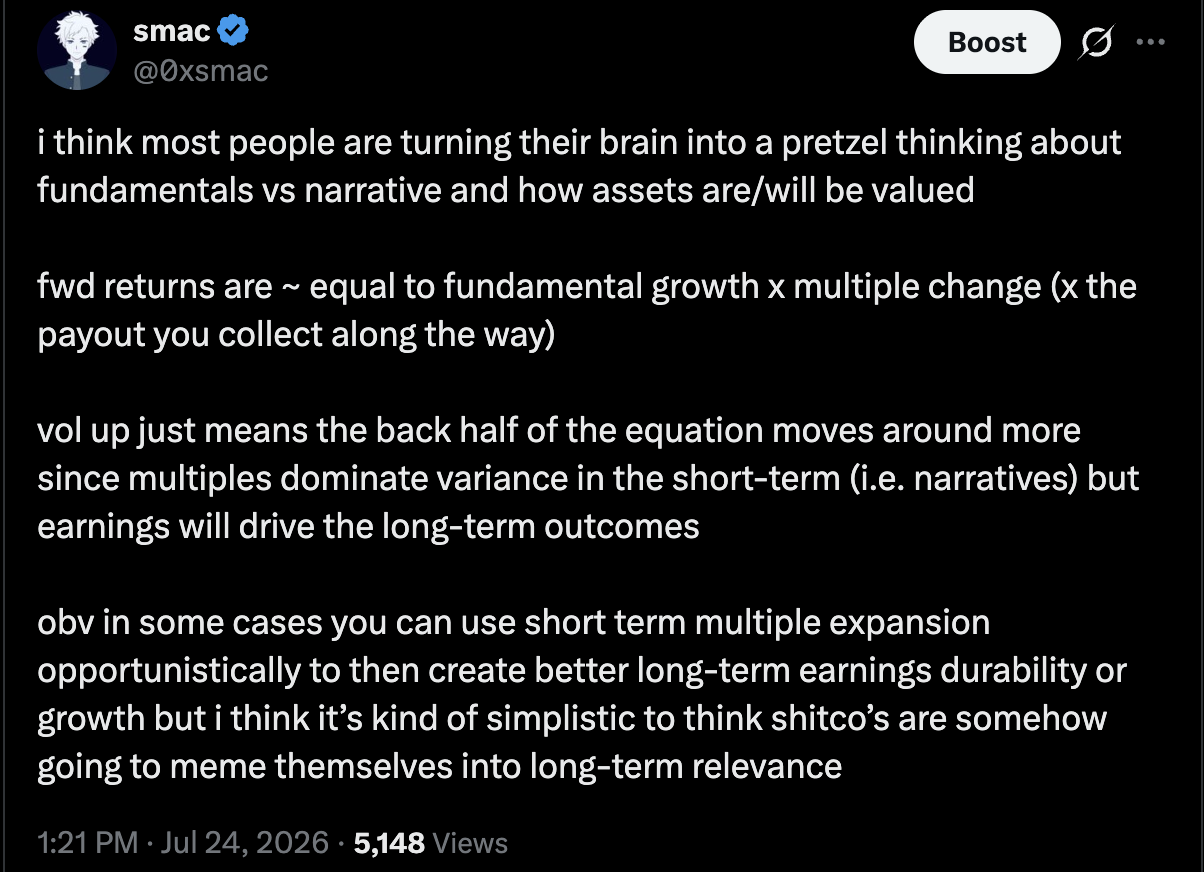
In this context, valuation multiples map neatly onto those smudges on the photographic plate. It’s an observable data point that entangles two things the market cannot directly see: how good the business actually is, and how far out (or how durable) its future cash flows are. I believe most of the money is made by investors most capable of untangling these two variables ahead of others (what we call "divergent perception"), while we’ll continue to watch investors who mistake smudges for stars suffer staggering capital destruction.
Value Investing Does Not Equal Fundamental Investing
There’s a misunderstood thesis I want to address: that fundamental investing historically drove excess return creation. This lore mostly stems from the Graham-Buffett-Tiger Global lineage and the massive narratives built around them. The belief was that at some point in the 2000s, this approach stopped working, and anyone sticking to it got crushed by momentum, trends, and "just buy the tech giants." The conclusion once was (and still is?) that "fundamentals are dead."²

The modern take that "fundamentals don't matter" isn't inherently foolish. It’s rooted in many ideas our Compound team has written about previously. The largest companies get the most mechanical buying, software exhibits winner-take-all economics, AI means incumbents can scale into moats faster than challengers, and there are market microstructure reasons that embed momentum deeper into our infrastructure. These are all true. Similarly, the Mag 7 run we know today outperformed because their actual CAGR in profits repeatedly justified, and then re-justified, their valuation multiples. Today, in August 2026, at least one viewpoint holds that we are in/nearing a new AI acceleration era, where labs and hyperscale cloud vendors with the capital to procure compute at scale will irreversibly pull ahead.⁶ No need to bother with valuation models, no need to ask how much growth is already priced in, no need to wonder how big the economy must get to support everyone’s expectations. Just hold a few names, catch the tailwind of the new technological paradigm, because fundamentals are just roleplay for those mourning the old world.
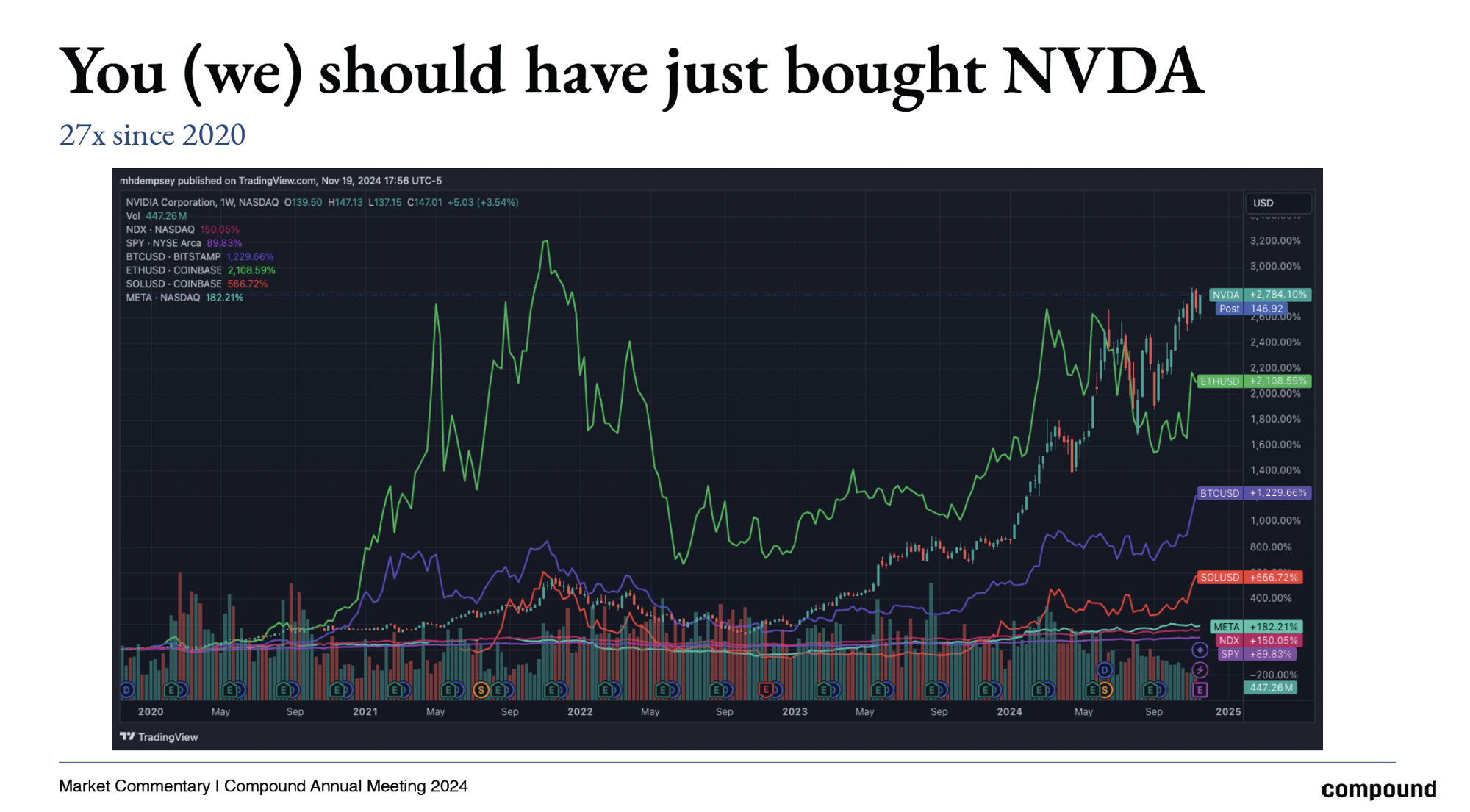
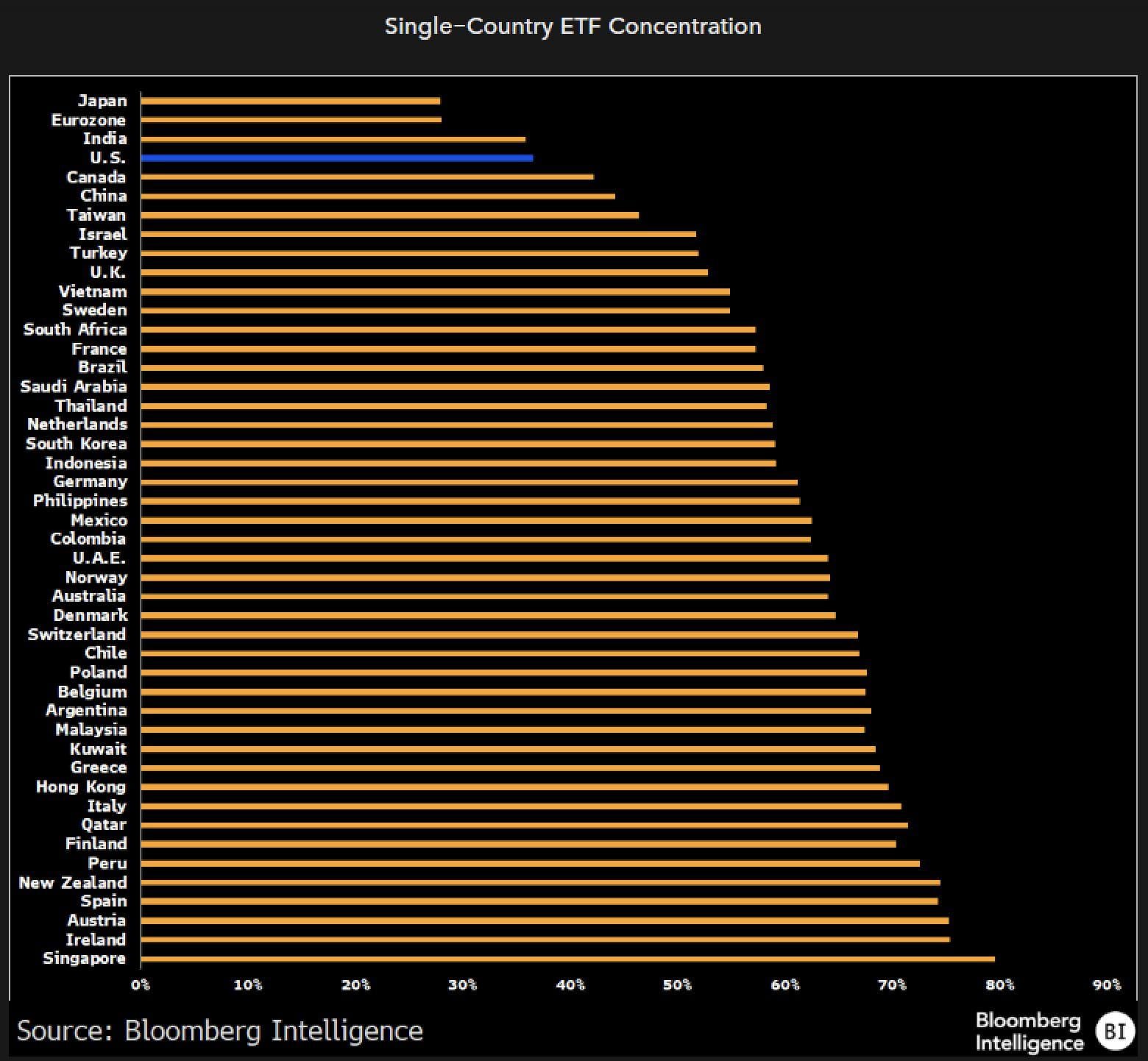
I’d even argue that despite the constant panic-mongering about how concentrated stock market tops have become, there’s still plenty of room for further concentration.⁷ So, preemptively shooting down my own argument here: I don’t think "it’s already at peak power-law distribution" is particularly convincing on its own.⁸
Still, the conclusion I laid out above—holding these giants as they grow from $1–4 trillion companies to $10–20 trillion companies—has several deeply entrenched flaws.
First, this narrative has been attempted countless times with clearly poor historical results.⁹ Critics will say "you don't understand," "this is our first time solving intelligence," "AGI," "computer god," "Do you really think Jensen Huang, Musk, and Altman are wrong while you know better about business and the world?" That’s a Pandora’s box for another day. But by definition, any truly disruptive technology triggers these hyperbolic forecasts, now amplified by massive social media engines. Plus, I largely agree that most jobs are artificially constructed, and we’ll keep making up new ones.¹⁰
Markets Are Becoming Less Efficient

We’ve consistently seen that even these massive, endlessly analyzed companies get severely mispriced. Meta is one of the most globally ubiquitous companies. It holds de facto oligopoly positions in virtually every operating market. Yet in late 2022, it traded at roughly 8x forward earnings. It was priced like a melting ice cube. Then it surged over 8x right in front of everyone’s eyes. The whole move was a valuation event. For such a household name, fundamentals were wildly divergent.
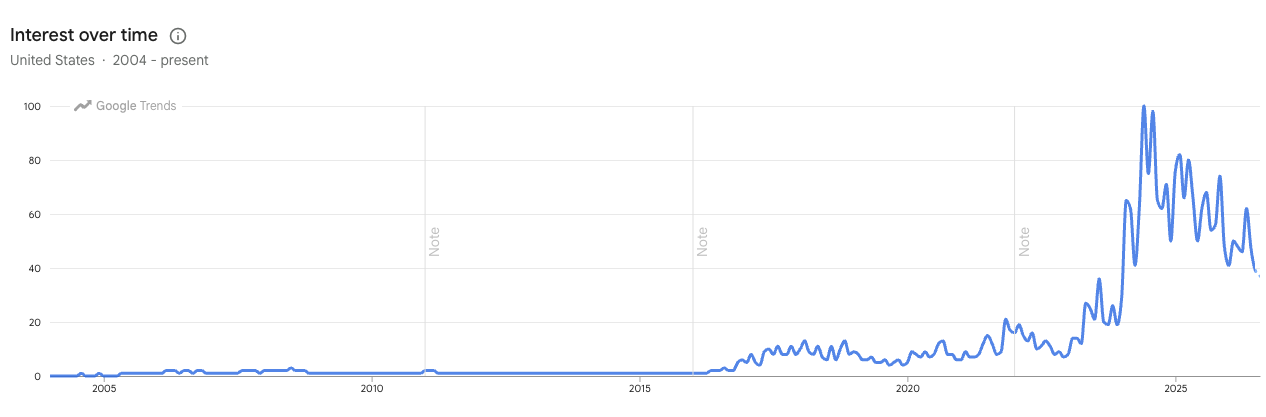
Perhaps the sharpest point is that this increasingly popular underlying belief is itself a trade. I’ve seen a lot of takes lately, but briefly, Silicon Valley’s growing influence on financial markets has distorted how they operate and how participants behave. Too many people are now crowding to the other side of the boat.¹¹

Alpha comes from other people’s errors and misjudgments. "Fundamentals are dead" has become consensus. I believe most investment camps only recently grasped the extent to which narratives drive security pricing. But as the Silicon Valley complex takes a prominent place in broader financial markets, this take is no longer fresh. Now even the dumbest person you know parrots "everything is memes" to appear clever.
Many fundamental long/short fund managers have been flushed out. Replaced by folks who bought QQQ fifteen years ago, or systematic pod shops. At the very least, consider this: when market consensus dismisses contrarian views as a waste of time, going against it might be precisely timed.
Side note: I love Gavin Becker’s podcast, but the latest episode gave me pause. He said everyone he met on his trip was more bullish than him. I’m not disbelieving him. In fact, that aligns with my experience visiting that city and many others. But there’s a clear disconnect when he claims literally zero data points aren’t bullish. Especially given this happens after memory stocks crashed 50%. That’s exactly my point: many things can be true simultaneously. He might be seeing strong secular demand and companies trading at "relatively cheap" forward P/E ratios. But meanwhile, many companies' valuation multiples could still be compressing as the market prices in upfront expectations.
Saying market pricing is usually wrong would be naive (arrogant). I tend to believe prices contain significant signals. It’s my (or any investor’s) responsibility to falsify this baseline. By the way, I do also believe the short-term market is becoming less efficient. But most of the time, "cheap" companies are cheap for a reason. Most companies that get expensive usually fail to deliver on those forward expectations. Thus, this tension remains whenever assessing forward returns at any given moment.¹²
The Cognitive Matrix
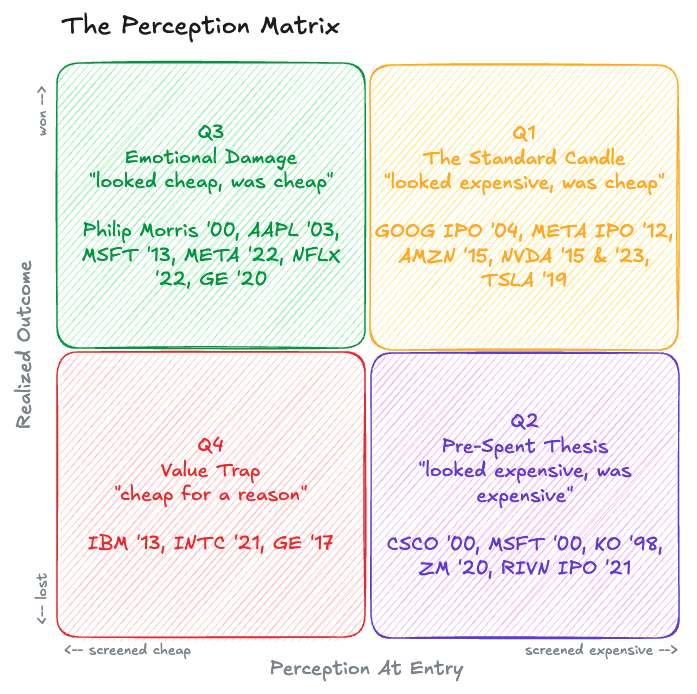
Quadrant 1 (Q1): Looked expensive at the time, ended up cheap in hindsight.
Quadrant 2 (Q2): Looked expensive at the time, stayed expensive.
Quadrant 3 (Q3): Looked cheap at the time, and indeed was too cheap.
Quadrant 4 (Q4): Looked cheap, and cheap for a reason. Classic value trap.
The most interesting aspect of this broad framework might be that companies can be timestamped. I mean, you can slot the same business into this matrix (we’ll do that shortly). Depending on the point in time, they get categorized into different quadrants. Watching how these companies migrate across quadrants is highly revealing. Microsoft at 60x in December 1999 versus Microsoft at 10x in 2013 obviously share the same ticker, but should absolutely never be placed in the same quadrant.
Another obvious point is that the outcome axis measures what you paid. This is entirely separate from company execution. Many in the crypto community should already feel this intuitively (hopefully). These quadrants express the gap between built-in expectations and actual future delivery.¹³
We’ll return to this shortly.
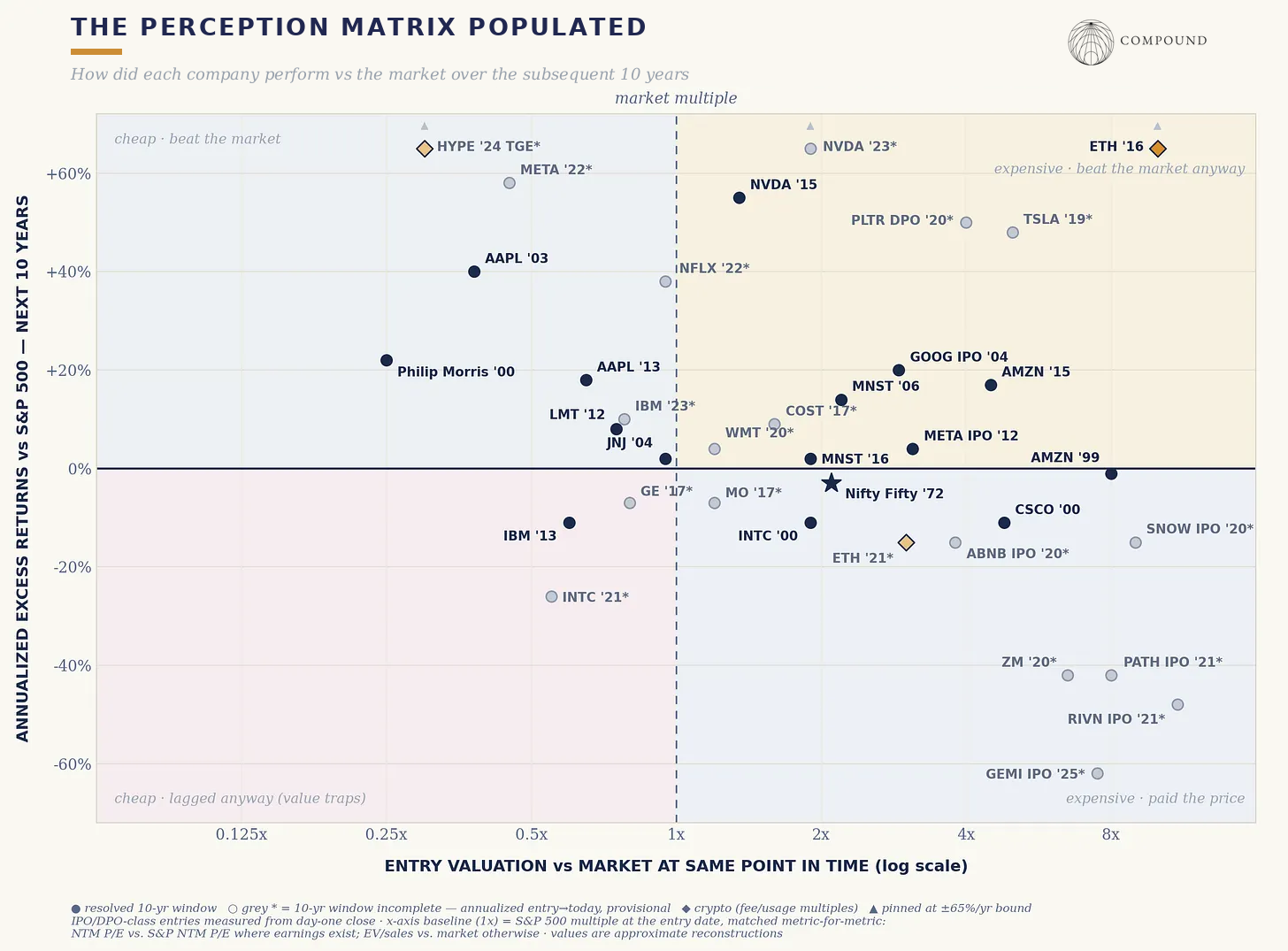
Take a moment with this chart, get familiar with what it shows, and form your initial impressions. I selected a cross-industry sample of companies, obviously biased toward tech. But I also designed a mini-game where you can explore a much broader historical set of companies.
We could sit here all day comparing companies clustering in similar spots. Cisco in 2000 and Amazon in 2015 both sat at the extreme far end of the expensive right tail. One underwent a 25-year round trip, while the other outpaced the market (a historic bull run) by roughly 8 percentage points annually. Nvidia in 2015 and Intel in 2000 hovered near mainstream market valuation multiples. The former outpaced the market by ~50% annually over a decade, while the latter wiped out ~60% for investors over the subsequent decade.
What’s Inside the Quadrants
Breaking down each quadrant quickly…
Q1: Looked expensive at the time, cheap in hindsight
This is the hot quadrant right now. Every VC wants you to believe their flagship company sits here. Some certainly do, and we’ll identify which ones later. But with rising Silicon Valley influence, we should examine what this means for asset pricing structures.
If tech optimists held far less sway 15 to 20 years ago, wouldn’t there have been massive opportunity to benefit from holding assets priced on underappreciated growth assumptions? If we were transitioning from atoms to bits back then, beating relative consensus on faster software adoption would’ve been a huge edge. But as that belief system diffuses and more capital allocators pivot to "growth is stronger than you think," expectations inevitably become stretched at some point. Or at least, demanding immediate observation of those growth projections becomes unreasonable.
My view is that companies in this specific quadrant will be fewer than in the past, with more shifting into the second quadrant.
This space is so fascinating because the best companies in history cluster here. It often seems to happen when a business fundamentally changes state.
Amazon in 2015. Tesla in mid-2019. Nvidia as late as May 2023.¹⁴
Then there’s a special set of companies marked by looking persistently expensive for over a decade, yet ending up remarkably cheap in hindsight.
HEICO — sells replacement jet parts. Has traded at 25–40x earnings for nearly twenty years, a multiple usually reserved for hyper-growth companies. Yet it’s compounded at over 20% annually for decades.
Old Dominion — trucking company, valued at 25–30x while peers hover near 10–14x. ODFL is up ~20x since 2012 due to continuous margin and network density improvement.
Constellation Software — clearly took a heavy hit from the recent software selloff. But the company is up 200x in public markets, consistently trading at 30–40x free cash flow over the past decade.
Monster Beverage — arguably the single greatest stock of the modern era in my book.
The consistent theme here is that for businesses with long-term reinvestment opportunities and high incremental returns, consensus systematically applies a mean-reversion prior to valuation multiples (e.g., compressing from 35x to 25x), keeping them perpetually one step behind the compounding of underlying earnings (provided the reinvestment engine continues to convert).
Quadrant 2: Looked Expensive at the Time, Indeed Remained Expensive
Intuitively, as AI destroys protected margins for certain companies, many will slide into here. Cisco is the archetypal example. The internet thesis was correct, and Cisco executed flawlessly: revenue grew from ~$12.5B to $57B, net income surpassed its 1999 peak by 2003, and earnings compounded at ~14% annually throughout the 2000s. Yet the stock didn’t recover its March 2000 high until December 2025.¹⁵
This zone is often filled with directionally correct arguments, just that the accompanying stock price has front-loaded a massive amount of future reality. Microsoft in 2000 was Cisco’s mild counterpart, but compressing from 60x to double digits cost shareholders an entire decade of returns. Coca-Cola is the non-tech version of the same story.
The cohort from 2020–2021 was a carnival of this exact morphology. Snowflake. Zoom. Beyond Meat. Peloton. And many more. Summarized broadly, the shared error here was failing to interrogate the entire correlation chain. We easily get swept up by the rhythm or scale of the market and its promised future.
"The internet will be huge" (true) — does not equal "Cisco was worth buying at 130x forward earnings"
"Remote work will persist" (partially true) — does not equal "Zoom was worth buying at 60x"
"Perps will cannibalize CEX volume" (correct) — does not mean dydx will win the category
At minimum, this sends a signal: if the bullish thesis rests primarily on category-level narratives, and valuation defense vaguely points to total addressable markets, then analytically speaking, it falls woefully short. Someone in the room needs to ask: what is the current price already implying?
Quadrant 3: Looked Cheap at the Time, and Indeed Was Too Cheap.
Honestly, this might be the least interesting quadrant for most readers. But bizarrely, cigarettes are back in play, regaining relevance. From the S&P 500’s inception (1957) to 2003, the best-performing stock was Philip Morris. Yet the ideal entry occurred at the height of litigation-driven hatred, when the stock collapsed to ~6–7x earnings (with a dividend yield hovering around 9%). Essentially priced for death.
This position is hard to play because these companies are either boring—cash flows relatively stable, capital return arithmetic fairly decent. But you need to pinpoint with extreme precision what catalyst will push marginal buyers in.
Apple in 2013 — ~10x earnings (before stripping cash reserves). Because people assumed iPhone was a hardware cycle destined for commoditization. Einhorn (then Icahn) presented the now-obvious thesis: retention and ecosystem lock-in, plus a balance sheet capable of buying back vast swaths of float.
Microsoft in 2013 — for a while, people thought it would be the next IBM
Exxon in 2020 — kicked out of the Dow (lol), priced for accelerated decline into ultimate obsolescence. Since then, it’s outpaced Salesforce (which replaced it in the Dow) by nearly 5x.
Meta in 2022 — touched on earlier
I think companies landing here might follow another morphology tied to a kind of despair. Philip Morris fits perhaps (at the peak of "smoking kills" sentiment), but others include AMD, Domino's, Carvana. Solana in late 2022 is another example. Even Hyperliquid looked incredibly cheap at its TGE.
For this group, consensus error tends to manifest as markets extrapolating temporary emotional states into permanent fundamental realities. Could be anything, but in these examples it’s aversion (tobacco, oil) and trauma (FTX blowup, Meta through 2022). In a sense, it might also be heavily career-risk affected; if holding these makes you feel embarrassed in front of peers, that’s likely a signal in itself.
Quadrant 4: Looked Cheap, and Cheap for a Reason.
Plenty of examples here. IBM in 2013 is the modern archetype. Revenue declined year over year, and cruelly, attracted repurchases that amounted to management fighting gravity with shareholders’ money. Intel in 2021 was similar. Countless articles have covered this dynamic, so I won’t dwell.
Deconstructing It All
This circles back to the earlier formula:
Expected Return ≈ Fundamental Growth × Change in Valuation Multiples (× Dividends Collected Along the Way)
Each cell in the matrix represents a tension between those first two factors. Over shorter horizons, the multiple term dominates variance, which is why these markets feel purely narrative-driven. But as we extend the timeframe, the fundamental term takes over.
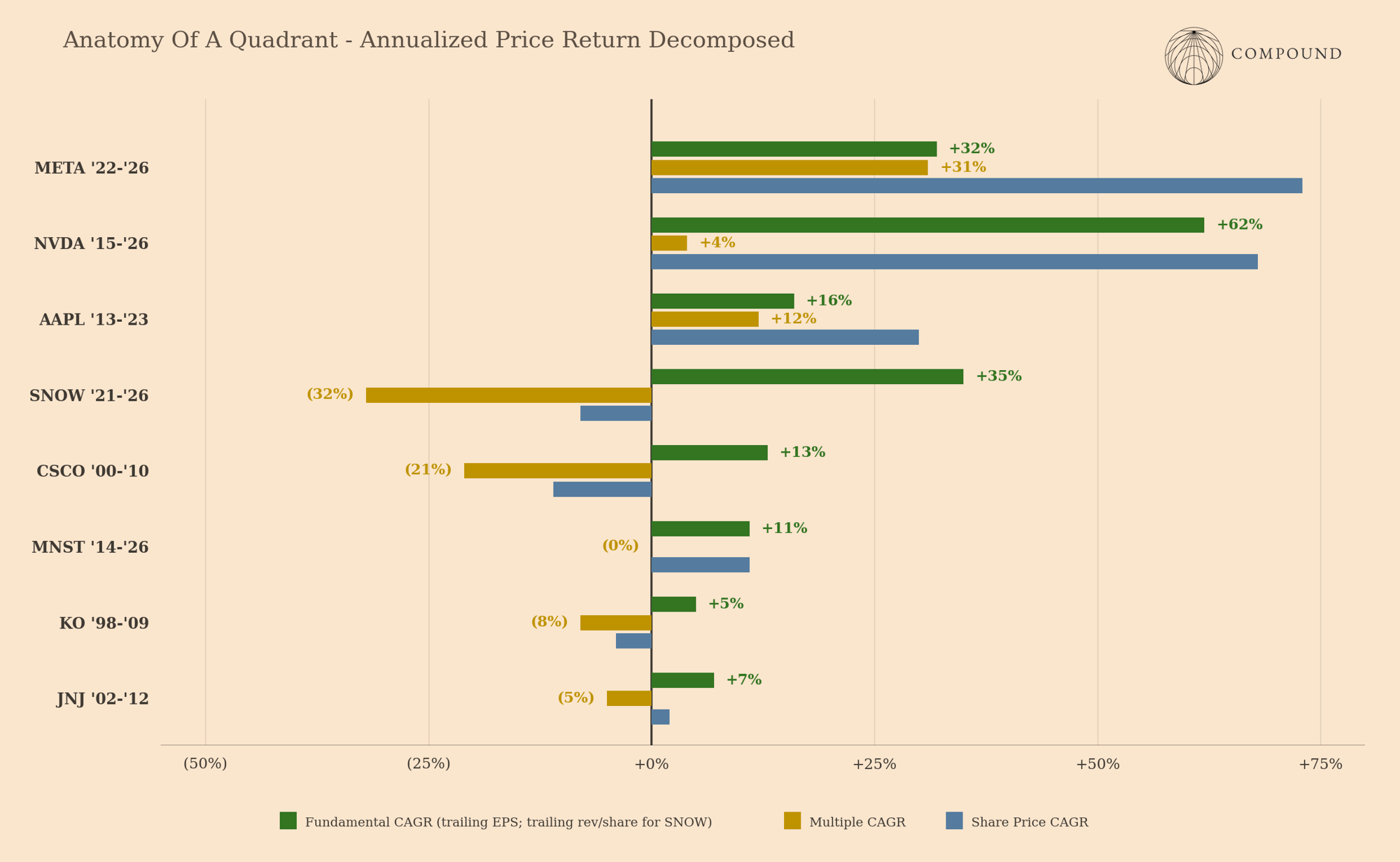
A few observations:
I don’t view clusters of pure multiple victims (like Cisco and MSFT around 2000, SNOW and ZM around 2021) as coincidental — positive fundamental legs paired with severe multiple contraction simply indicates entry prices front-loaded those outcomes and then some.
NVDA '15 is the purest earnings story on this chart
Double killers happen when you generate outsized alpha (AAPL '13, MSFT '13, META '22), combining earnings growth with valuation rerating
Coke and J&J are among the cruelest underachievers, massively lagging equity market CAGR at the time
Notably, even with persistent multiple compression, assets can still win as long as long-term fundamental earnings growth keeps paying the "de-rating" toll.
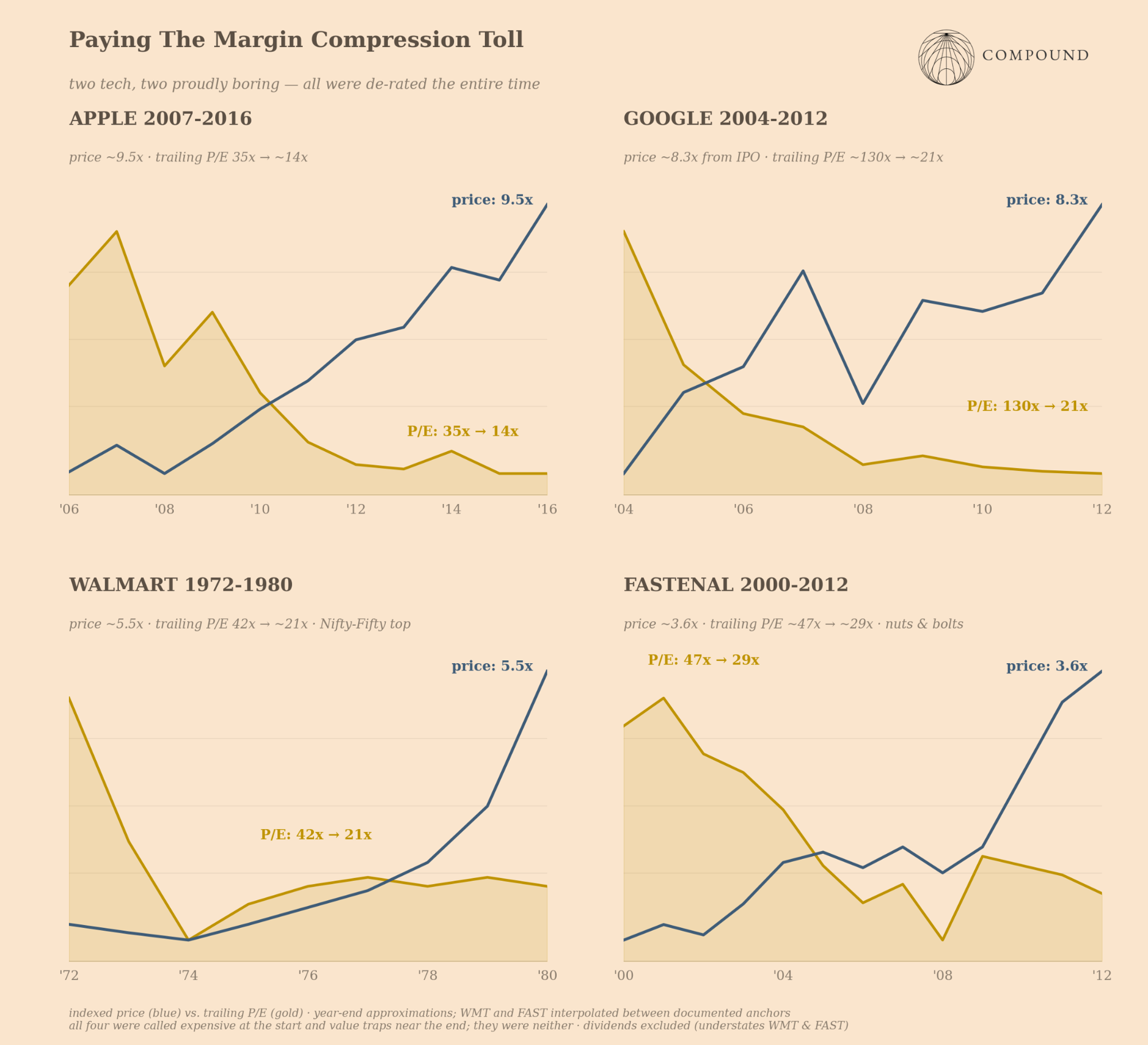
One final reminder: the common error across groups is failing to decompose the two variables within multiples, just in different forms. Two groups make opposite timing errors regarding duration, i.e., underestimating either a long runway or secular decline. Two other groups make opposite attribution errors regarding quality, e.g., assigning category-wide quality to the wrong asset, or stigmatizing "clean" assets with emotional baggage.
Will This Persist?
I actually think it will accelerate. There’s a viewpoint that as human decision-makers decrease and we gain access to near-limitless data, markets are becoming more efficient. I don’t buy it. If anything, markets are becoming less efficient and the world more volatile. This deviation between perception and reality isn’t a relic of older market eras. I’d be surprised if this gap doesn’t widen over the next 5 to 10 years.
Market composition has shifted toward enterprises with higher degrees of fundamental and growth opacity than ever. Commodity factories are structurally different from the business models we see now (and will see in the future). Nowadays, thanks to top-end concentration, even indices naturally carry longer durations.
The convective regimes I’ve written about before are essentially manufacturing these Q2 and Q3 companies at an industrial scale. Rotating narratives mean whoever stands in the current storm is prone to overshooting in both directions. Each cohort maturation spawns a new batch of these companies.
AI simultaneously kills off cheaper versions of jobs while pricing in "real" or harder versions. Everything screenable (multiples, comps, filings, call sentiment, etc.) has been commoditized. The window to harvest alpha via data-driven methods closes rapidly every time. But hypothetically, assuming everyone possesses equally perfect readable layers, all advantage derives from decisions and judgments around the unreadable layers.
Private markets are absorbing a larger slice of these companies’ most extreme cases. Without continuous pricing, multiple debates are temporarily shelved.
There are numerous reasons to frame this as a unique moment. But even as I write this, I lean toward saying: "In today’s world, the biggest risk is assuming these companies look expensive when they’ll grow far beyond current expectations." Though I’m unsure that fully holds. Mainly because, at least in public markets, these valuations aren’t historically rich.¹⁶ Their earnings are growing at nearly unimaginable speeds, which is why we’re actually seeing multiples contract.¹⁷ That’s the good news.
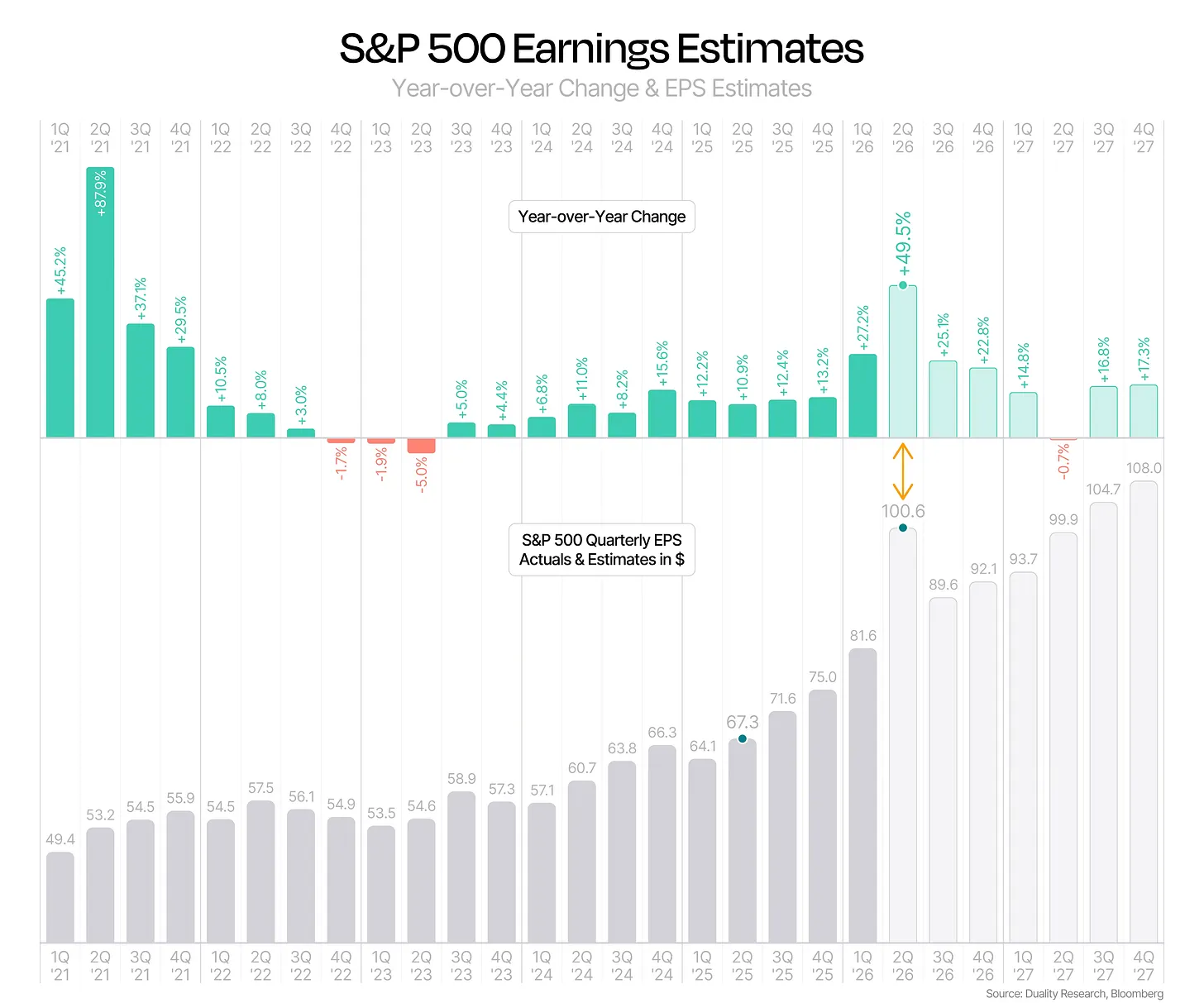
The bad news: what if we’ve already peaked on growth? In a world where growth is decelerating, would you expect multiple expansion? Do you truly believe we stand on the precipice of sustained 8% GDP growth? Do you know when the U.S. last saw this? Will this time be different? I’m being deliberately provocative here because reality is complex, and I suspect it will remain so. Beyond AI, there’s a lot happening in the macro backdrop.
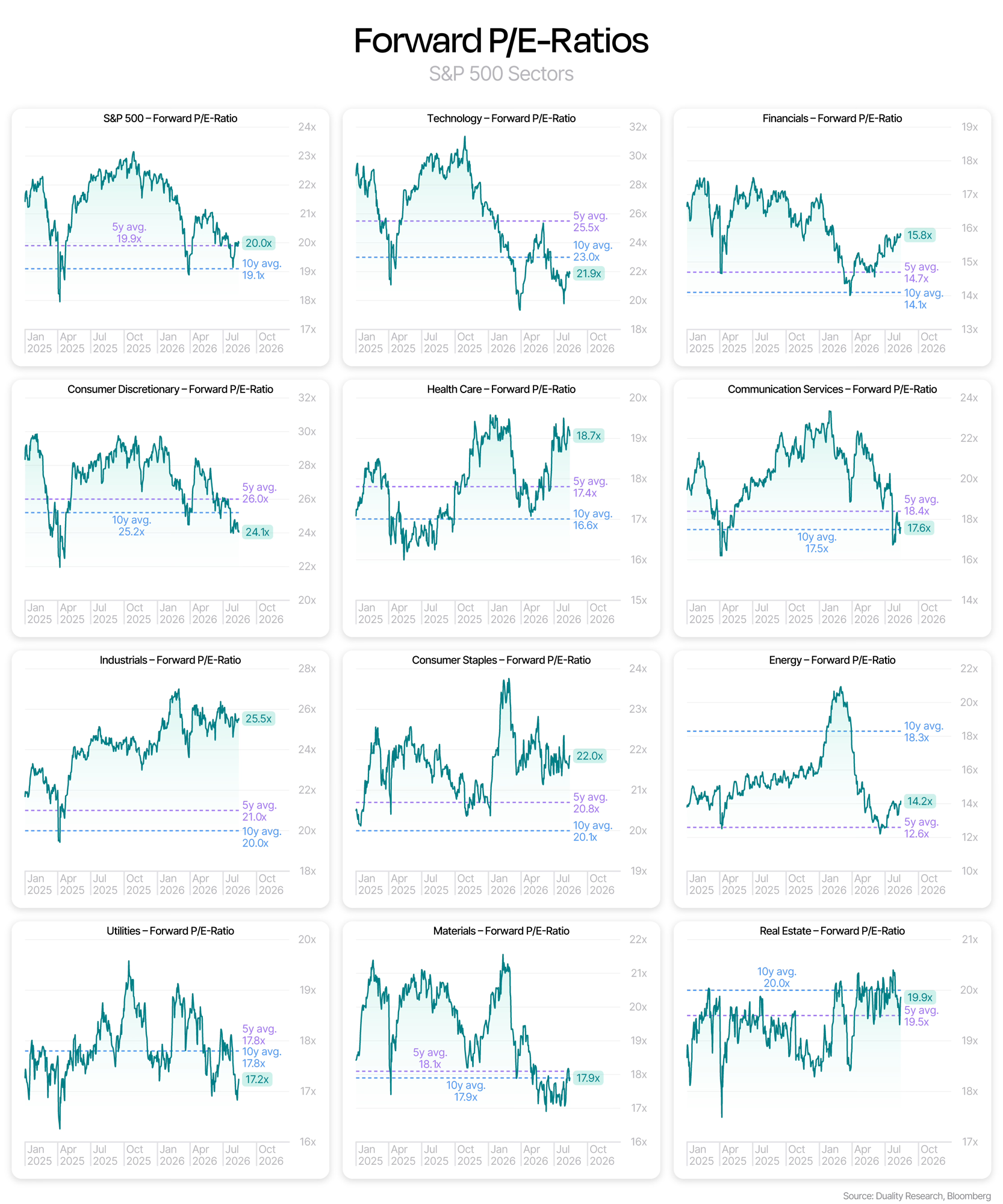
Every loud founder, investor, media brand, and philosopher has an incentive to sustain a narrative: accepting valuation risk (i.e., Q1) is mandatory in today’s new game. This keeps capital flowing. It lets people claim "we're democratizing intelligence." It raises the stakes of the final chicken game. But it also tilts the board toward momentum investing. When we’re talking about physical world constraints and supply chains rather than SaaS, it’s a far more fragile game. Massive leverage and prolonged duration assumptions are woven into this complex system. Even a slight stumble in timing or scale ripples significantly across the chain.
It’s possible everything works out. That would be the ideal scenario. But whether we arrive at euphoria or dystopia, markets’ path dependence ensures that looking back in 5 or 10 years, we’ll almost certainly laugh at [X] company at [Y] forward multiple. The only question is what kind of laugh it will be…
Thanks for reading Half Awake Thoughts. Subscribe if you want more. Don’t if you don’t.
Thanks to mike, jmo, and BR for feedback that helped sharpen these thoughts.
Disclaimer:
Content on this site is for educational and informational purposes only. Nothing herein constitutes an offer or solicitation to sell or purchase securities or interests. It does not substitute for professional advice. Investing involves risks, including potential loss of principal.
1. Intrinsically brighter refers to their actual output, regardless of how they appear from Earth.
2. I’m slightly exaggerating, as fundamentals for most large-cap tech have historically been excellent.
3. Holds true in the U.S. and 12 of 13 broad international markets.
4. Ken French Data Library
5. Most famously Ben Graham and Warren Buffett. Buffett famously pioneered the annual investor pilgrimage to Oklahoma to hear from "Oz."
6. Not coincidentally, when asked about moats in this emerging world, Sam starts from the concept of scale: "Superior intelligence can migrate from any product to any other product. Network effects still confer competitive advantage. Economic scale and the ability to build the cheapest compute clusters still confer competitive advantage."
7. A caveat exists: there’s a threshold where, despite growth, markets discount multiples for mega-caps due to the law of large numbers. I believe we’re already witnessing this with NVDA.
8. Slightly dated now.
9. Funny enough, while everyone buys into the 80/20 rule, we haven’t seen companies laying off >50% of headcount annually.
10. Here are two related tweets I find relevant to this broader discussion.
11. Saying now that you should’ve just held NVDA over the past 15 years is easy, but that’s exactly the point. In 15 years, people will say "You should’ve just held ____."
12. This is also why tops tend to form near "good" news and bottoms near "bad" news.
13. Stock doubled after its first blistering data center guidance, making static multiples look insane.
14. Even then, market cap was roughly 40% of bubble peaks.
15. I’m generalizing.
16. NVDA basically range-bound for two years from July 2024 to last month, despite executing exactly as well as anyone expected.