Mining Giant, Raises 2.7 Billion: Switches to AI Landlord, IPOs
TechFlow Selected TechFlow Selected
Mining Giant, Raises 2.7 Billion: Switches to AI Landlord, IPOs
Ionic Digital (IOND) Transforms from Celsius Bankrupt Mining Farm into AI Data Center Operator, Surges 26% on NASDAQ Debut on July 28
 Navigating Web3 tides with focused insights
A company that rose from the ruins of Bitcoin mining farms just made its debut on Nasdaq.
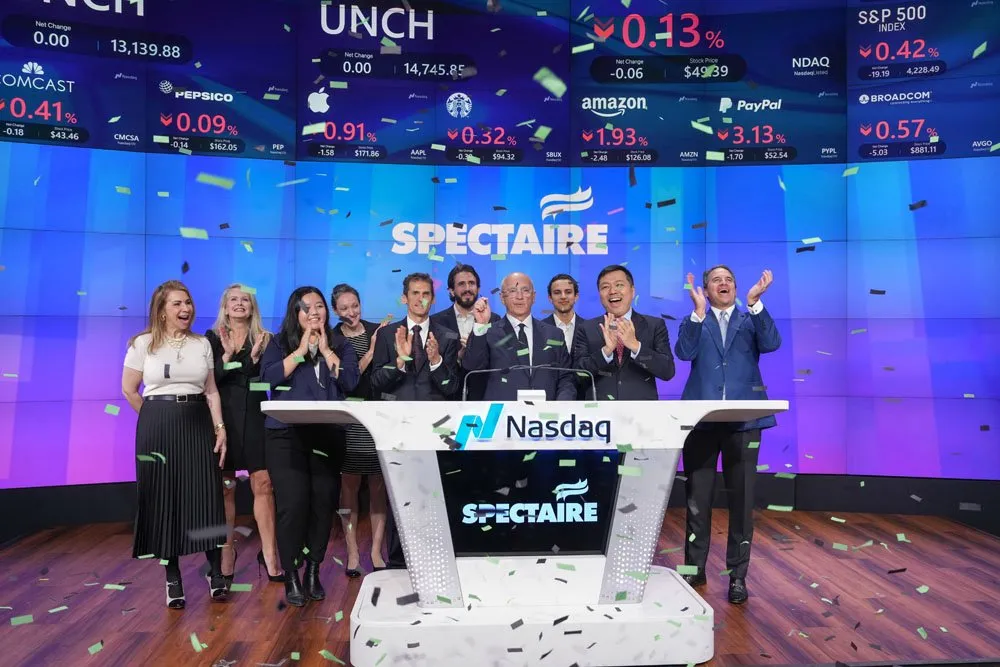
On July 28, 2026, Ionic Digital landed on Nasdaq with the stock ticker "IOND." On its first day, it surged 25%, with its market cap reaching approximately $2.4 billion.
Just a few weeks prior, it secured $400 million (2.7 billion yuan) in private financing—jointly led by Attestor, Oaktree Capital, and Sachem Head, with Citadel participating.
The pre-money valuation for this financing was $2 billion.
What Ionic Digital does is straightforward: it transforms cheap electricity and land in Texas into AI data centers, then leases them entirely to cloud providers and AI companies.
More critically—even before the server rooms were fully built, orders worth $2 billion were already locked in.
On the listing day, the CEO spoke a plain truth: "The market is rewarding us for transforming Bitcoin mining farms into AI data centers."
The story of this company is worth unpacking: it emerged from the bankruptcy of crypto giant Celsius Network in 2022, grew out of a mess, and has now become a new player in the AI computing infrastructure sector.
Orders Arrive Before Server Rooms
Ionic Digital's approach differs from most AI computing companies—sign contracts first, then build server rooms.
In October 2025, it signed a lease lasting 10.5 years with global cloud provider Nscale. Ionic's flagship data center in Ward County, Texas, with a total capacity of 234 megawatts, was leased entirely to Nscale. The total contract value is approximately $1.95 billion.
In February 2026, both parties renewed the agreement: Nscale committed to leasing an additional 89 megawatts under similar conditions. If expansion proceeds smoothly in the second half of 2027, the total contract value will rise to approximately $2.6 billion.
To translate: a 234-megawatt data center, still under construction, has already locked in at least $2 billion in revenue for the next decade. Moreover, it is a "triple net lease"—the tenant bears taxes, insurance, and maintenance themselves, so Ionic basically collects rent passively.
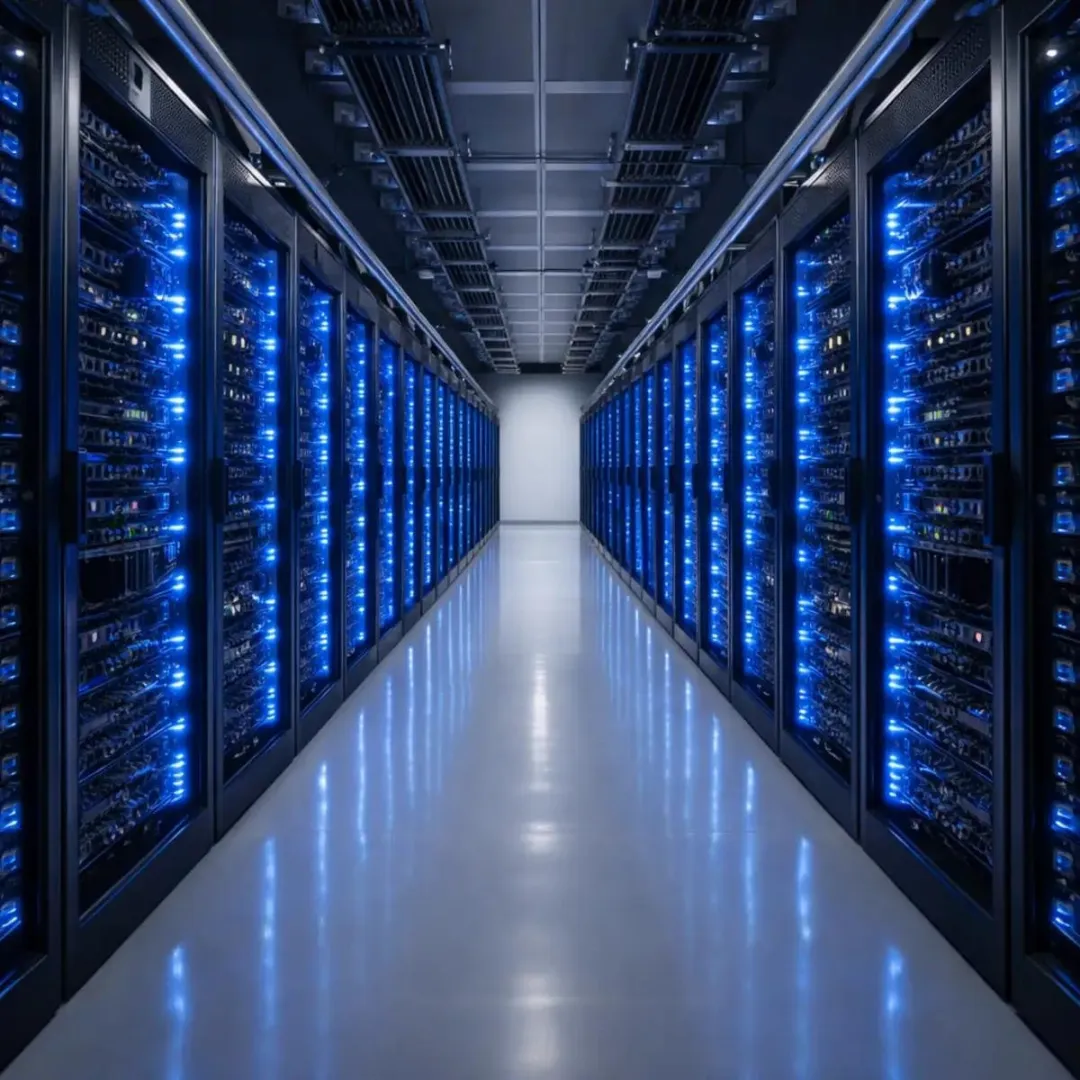
The effects of the transformation are already reflected in the books. In the first quarter of 2026, the company's revenue was $51.4 million, of which data center leasing accounted for $44 million, while Bitcoin mining remained at only $7.4 million. A year ago, its income was entirely from mining—Q1 2025 was $41.1 million.
The company expects full-year 2026 revenue to be between $190 million and $195 million. Although there are still losses—mainly one-time investments in building server rooms upfront—cash flow returns are already foreseeable.
The logic is straightforward: electricity in Texas is cheap, high-power computing server rooms are scarce, rents are rising, and Ionic has already locked in long-term leases. As long as the server rooms operate normally, money will keep flowing in.
The listing method is also worth mentioning. Ionic did not take the traditional IPO route but instead opted for a direct listing—no new shares issued, no new funds raised, existing shareholders directly selling old shares.
Since it raised $400 million in June, the company is not short on cash for now. The benefits of a direct listing are: no dilution for old shareholders, and no need to pay high underwriting fees. JPMorgan, Jefferies, and BTIG provided advisory services for this listing.
At the same time, Ionic also announced guidance for the second quarter of 2026: expected revenue between $48 million and $51 million, and adjusted EBITDA between $10 million and $12 million.
Others Grab GPUs, Ionic Grabs Electricity
This sector is not empty; there are many top players.
CoreWeave—a GPU cloud service provider built for high-performance computing, focusing on supporting large-scale AI and machine learning workloads, has signed a multi-year agreement with Core Scientific to expand its infrastructure to Texas, Nebraska, and Ohio, with a total capacity of up to 1.3 gigawatts.
Lambda Labs—provides AI computing cloud services, with H100 GPUs at $2.99 per hour and API services charged at $0.3 per million tokens, taking the cost-effective route.
Vast Data—focuses on AI data center infrastructure, collaborates with both CoreWeave and Lambda, and handles underlying storage and data management.
Core Scientific—Ionic's most direct competitor. Also transforming from Bitcoin mining farms to AI data centers, on July 27, 2026, it just signed a 15-year, 529-megawatt infrastructure cooperation agreement with AMD, expected to generate over $14 billion in base contract revenue.
Each has its own focus, but the core logic is consistent: making computing power available for AI companies.
What distinguishes Ionic is—its starting line is electricity, not computing power.
Building data centers itself means heavy assets and slow money, but strong cost control. In a business where electricity prices determine profit margins, whoever has cheap electricity calls the shots.
For that data center in Ward County, Texas, the 234-megawatt power capacity alone is already the biggest moat.
Electricity is becoming the scarcest resource in the AI industry. Whoever occupies large-scale power first has pricing power.
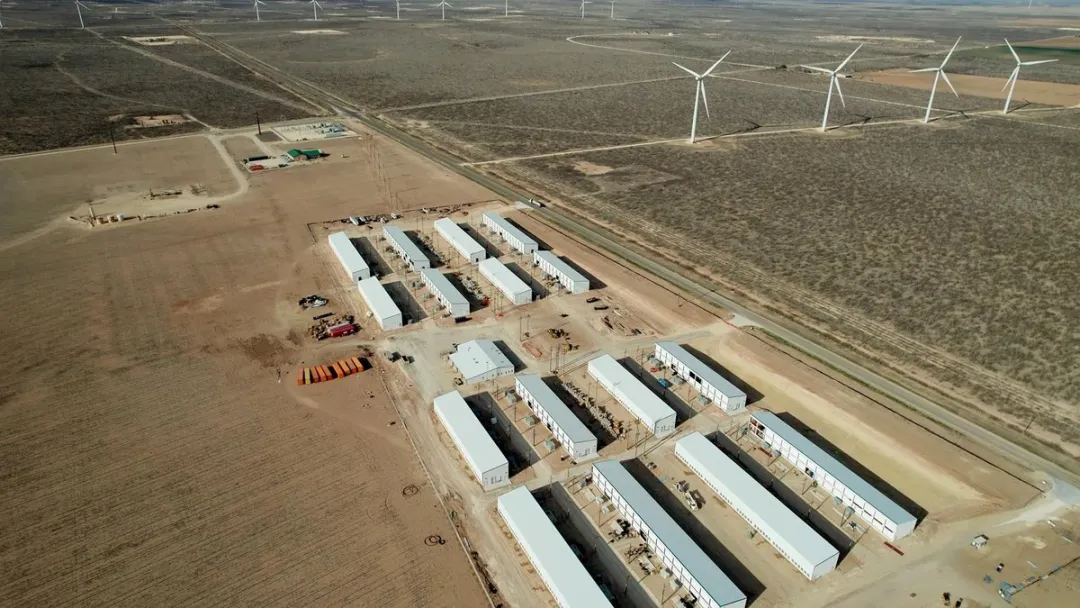
Ionic is still expanding. It plans to increase the capacity in Ward County from 234 megawatts to 700 megawatts, expecting to invest another $40 million in the first half of 2027.
Where will the money come from? Cash on hand, or selling some of the Bitcoin held. CEO Prusack stated after the listing: "We are already one of the largest power data center campuses in Texas and are actively exploring partnerships to advance multi-gigawatt scale expansion in Ward County."
Speaking of Bitcoin—as of March 31, 2026, Ionic held approximately 120,600 mining machines, but only about 23,200 were operational, with total computing power dropping to 2.0 EH/s, mainly due to aging mining machines and economic considerations in a high electricity price environment.
In the first quarter of 2026, it mined 95.7 Bitcoins, none of which were sold, holding 2,861 Bitcoins at the end of the period. At the market price at the time, this was worth approximately $250 million. Its strategy is "mine first, sell later," equivalent to holding a call option on Bitcoin.
However, the Bitcoin mining business is accelerating its contraction. Bitcoin mining revenue in the first quarter of 2026 plummeted 82% year-over-year, accounting for less than 15% of the company's total revenue.
The company still retains mining operations at four sites in the Midland, Texas area, totaling 112 megawatts of power capacity, but the focus has completely shifted to AI data center leasing.
Additionally, there is a familiar face on Ionic's board—former Core Scientific CEO Mike Levitt. He joined the Ionic Digital board in April 2026, serving as a member of the Audit Committee and Compensation Committee.
A senior executive from a competitor company joining the board indicates that Ionic is taking this transformation battle seriously.
Capital is Shifting from "Betting on Models" to "Betting on Electricity Meters"
Ionic's financing and listing sent a clear signal: capital is shifting from "betting on models" to "betting on electricity meters."
In the past two years, money has flowed into AI companies building large models. But the pace at which large models burn money is getting faster, while the path to commercialization is becoming increasingly blurred. Computing power leasing is different—its logic is simple: use electricity to build server rooms, lease the server rooms to AI companies, and collect rent. Revenue is predictable, and cash flow is calculable.
Just look at Ionic's order structure: a 10.5-year lease locking in $2 billion in revenue. This kind of "revenue visibility" is extremely rare in the AI industry. OpenAI doesn't even know how much money it will make next year, but Ionic knows how much rent it will collect each year for the next decade.
This is also why traditional asset investors like Oaktree Capital would place bets—they are not betting on technical routes, but betting that "where electricity is cheap, computing server rooms will always be leased."
The story of Ionic Digital tells us: out of the Bitcoin mining disaster grew the scarcest asset of the AI era—electricity.
It did not turn things around through technological breakthroughs, but rather turned the heaviest, least sexy assets (electricity, land, server rooms) into the most valuable entry ticket of the AI era. From bankrupt mining farms to Nasdaq, there was only one transformation in between.
For entrepreneurs, the lesson of this case is: the AI industry is undergoing a shift from "model competition" to "resource positioning." Whoever locks in large-scale, low-cost electricity first gets a head start.
Of course, the risks are also there—tenants are too concentrated, with Nscale alone accounting for almost all revenue. If Nscale encounters problems someday, that $2 billion order becomes paper wealth.
Ionic also explicitly listed "tenant default risk" as one of the most important risk factors in its prospectus.
The company currently relies heavily on Nscale's rent payment ability, and any tenant credit event could have a significant adverse effect on the company's financial status.
Another risk is construction progress. Ionic's Ward County data center is still in the expansion phase. If construction is delayed, costs overrun, or equipment delivery is delayed, it will affect the timing of revenue recognition.
But at least for the next decade, Ionic Digital has firmly tied itself to the ship of AI computing infrastructure. How far the ship can sail depends on how much electricity it can grab and how many server rooms it can build.
As CEO Prusack said: "Now is the best time to leverage the incredible tailwinds of artificial intelligence, and we are excited to execute our growth plans through our innovative business model."
Join TechFlow official community to stay tuned
Telegram:https://t.me/TechFlowDaily
X (Twitter):https://x.com/TechFlowPost
X (Twitter) EN:https://x.com/BlockFlow_News