
Market taking a breather? Use your on-chain wallet to buy a coffee: What problems does Neobank actually solve?
TechFlow Selected TechFlow Selected
Market taking a breather? Use your on-chain wallet to buy a coffee: What problems does Neobank actually solve?
Neobank focuses on everyone's most fundamental need: whether you have a 100% win rate on-chain or unfortunately get liquidated, when returning to off-chain life, you still need to eat well.
 Navigating Web3 tides with focused insights
Author: Cecelia, TechFlow
Introduction
It's only when the tide goes out that you discover who's been swimming naked.
In 2025, amid narrative inflation, wave after wave of grand visions have been proven false—those stories claiming to change the world, do they solve real pain points or merely manufacture demand?
Even if imagination allows great potential, reality is harsh. The most pressing question is whether we can build truly practical applications that generate revenue.
Recently, major assets have pulled back, market sentiment has fluctuated, and nearly all previous high-quality narratives have already been heavily traded.
If you're still in this space, it's time to ask: what new opportunities are worth paying attention to? The answer lies in those applications with real-world utility closely tied to daily needs—they will regain attention.
Neobank is one such direction.
Next, let’s explore this emerging narrative capable of generating tangible returns, and examine the projects and potential investment opportunities it harbors.
Concept Overview
Neobank isn't a new concept—it emerged around 2015 driven by the complex monetary systems in the eurozone and the real needs of global travelers making overseas purchases.
The original Neobank was simple and straightforward: provide banking services to the unbanked.
Sounds unremarkable, but in practice, revolutionary.
Anyone who has opened an overseas bank account knows the cumbersome identity verification, income documentation, and risks of data leakage can be daunting.
Yet Neobanks solved these issues a decade ago. In theory, if a Neobank partners with enough banks, it could even enable a globally usable payment card without requiring individual bank accounts.
But why has this brilliant idea only recently evolved from niche obscurity into a potentially powerful alpha narrative?
Traditional Neobanks operating solely as "digital banks" remain constrained by legacy financial infrastructure, efficiency, and cost. The optimal solution lies in combining with crypto—leveraging on-chain infrastructure alongside compliant banking partnerships to achieve:
-
High-speed, real-time transactions: Swipe-to-pay with near-instant settlement, eliminating the complexity and delays of traditional exchange deposits and withdrawals.
-
Secure and compliant: User fiat funds are held by partner banks, while on-chain assets are managed by the Neobank. On-chain technology and compliance frameworks jointly ensure fund security, transparency, and efficiency.
-
Broad application scenarios: Usable anywhere Visa/Mastercard and traditional clearing networks are accepted.
Revenue Mechanism
And of course, the most important part: high profitability
The revenue model consists of three components:
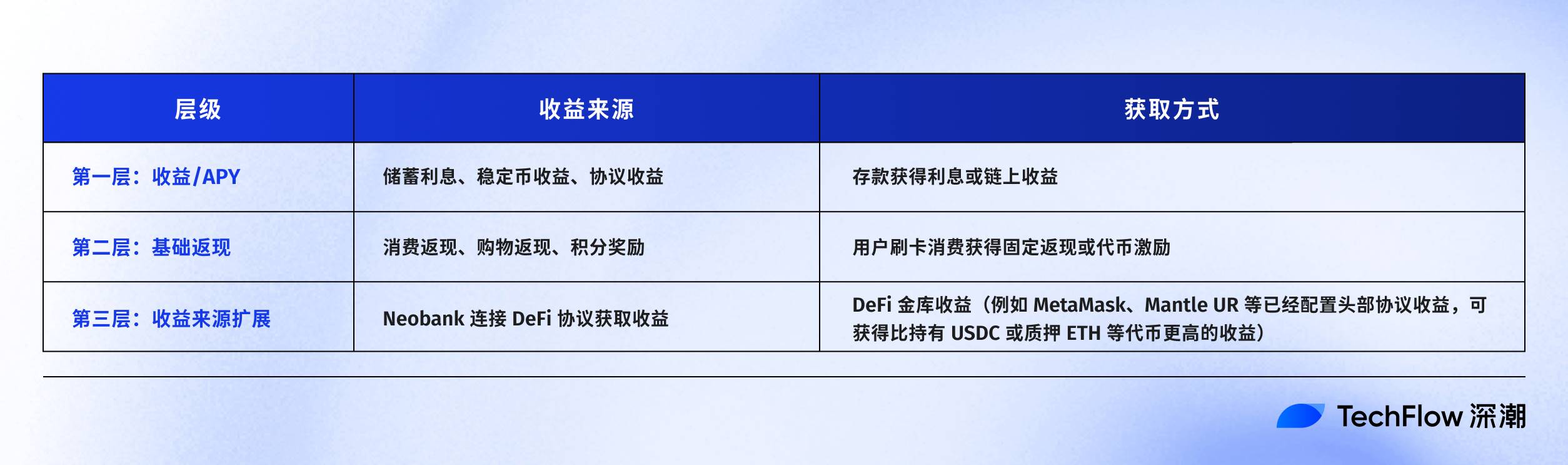
Payment Process
Where exactly is revenue generated? What truly differentiates Neobanks from traditional banks?
Neobanks are not actual “banks” in the legal sense—they don’t hold banking licenses directly. Instead, they rely on partner banks for core regulated functions like fund custody and payment clearing, wrapping traditional banking services into a superior fintech experience.
To make it easier to understand, think of AI startups building apps based on ChatGPT—not rebuilding the underlying tech, just packaging and optimizing it for better user experience.
Still, this may sound too abstract. So we’ve broken down the payment process of a Neobank step by step:
-
Funding: Users can deposit via on-chain channels or custodial accounts. The system ensures fund safety, transparency, and redeemability through a clear correspondence between on-chain assets and fiat reserves.
-
Spending: When users swipe their card, the system instantly converts crypto assets into fiat, which is then settled through partner banks, enabling a “swipe-and-settle” experience.
-
Earnings: Neobanks integrate payment settlements with on-chain yield protocols. Part of the cashback comes from protocol yields or payment revenue sharing, allowing users to earn ecosystem growth rewards while spending.
In short, compared to traditional banks, Neobanks offer clear advantages:
For consumers
-
Low cost: Offers more competitive foreign exchange rates and cross-border payments, typically at much lower fees than traditional banks.
-
High efficiency: Proprietary global settlement systems significantly improve transfer speed, delivering near-instant transaction experiences.
-
Flexible assets: Holding crypto assets is equivalent to holding multiple currencies simultaneously, without needing manual currency conversion.
For cashback
-
High yield: By integrating with DeFi protocols, savings, stablecoins, and idle funds automatically generate returns, with annualized yields far exceeding traditional bank deposit rates.
Project Overview
Now that we've covered the basics, let’s review key projects.
We’ve compiled the most discussed Neobank projects in the market for comparison, helping you quickly grasp their positioning and differences.
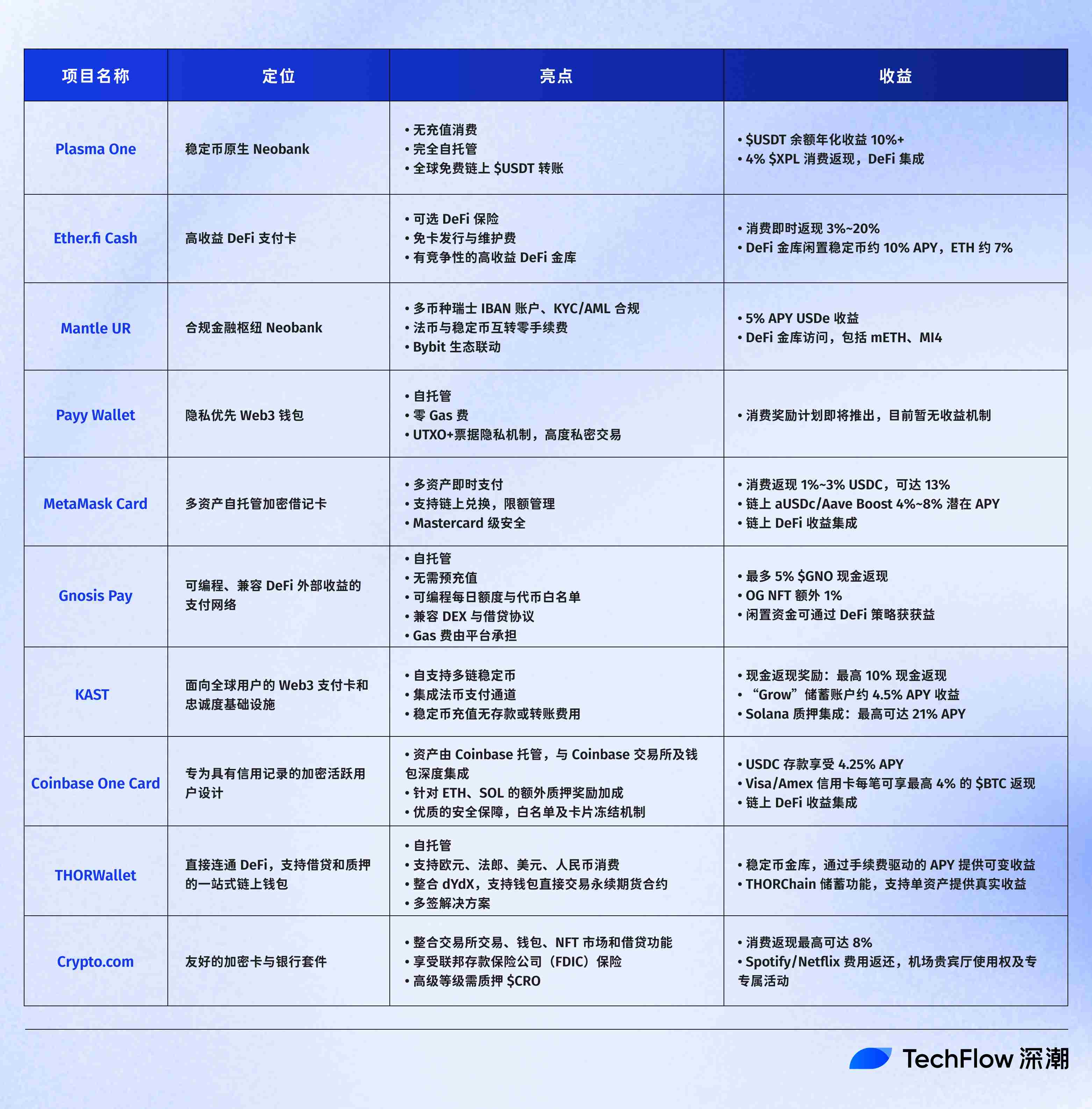
Plasma One: Building the World’s First Stablecoin-Native Neobank
Plasma One initially supports $USDT and plans to expand to more stablecoins. It has backing from Peter Thiel’s Founders Fund and Tether executives, with cards issued through Visa partner Signify Holdings.
Highlights: A no-deposit-required spending model allows users to spend directly from yield-generating stablecoin balances. Full self-custody. Free global on-chain $USDT transfers.
Yield:
-
High-yield savings: $USDT balances earn over 10% APY, with interest accruing continuously before spending.
-
4% cashback on spending: Paid in $XPL, with higher reward tiers for frequent users and partners.
-
Seamless DeFi integration: Yield sources are linked to EtherFi and other liquid staking strategies.
Plasma One is more than just a Neobank app—it serves as Plasma’s gateway to its stablecoin payment system and real-world value network.
-
Infrastructure layer: Built on Plasma’s native architecture, leveraging its own consensus mechanism and LayerZero’s cross-chain infrastructure to achieve ultra-low transfer costs and high throughput.
As of October 31, Plasma achieved a single largest cross-chain transfer via LayerZero of $800 million, with users paying only $0.81 in fees—virtually negligible.
-
Ecology layer: Plasma has integrated core protocols including USDT₀, Aave, Ether.fi, and Ethena, ensuring liquidity while offering users high-yield lending and liquid staking opportunities.
Currently, the supply of USDT₀ on Plasma has surpassed $5 billion, providing a solid financial foundation for its stablecoin payments and DeFi ecosystem.
All funds in Plasma One are stored on the Plasma mainnet, inheriting Bitcoin-level security while enabling Ethereum-like programmability. This ensures asset safety while offering greater flexibility and scalability for stablecoin payments, lending, and cross-chain applications.
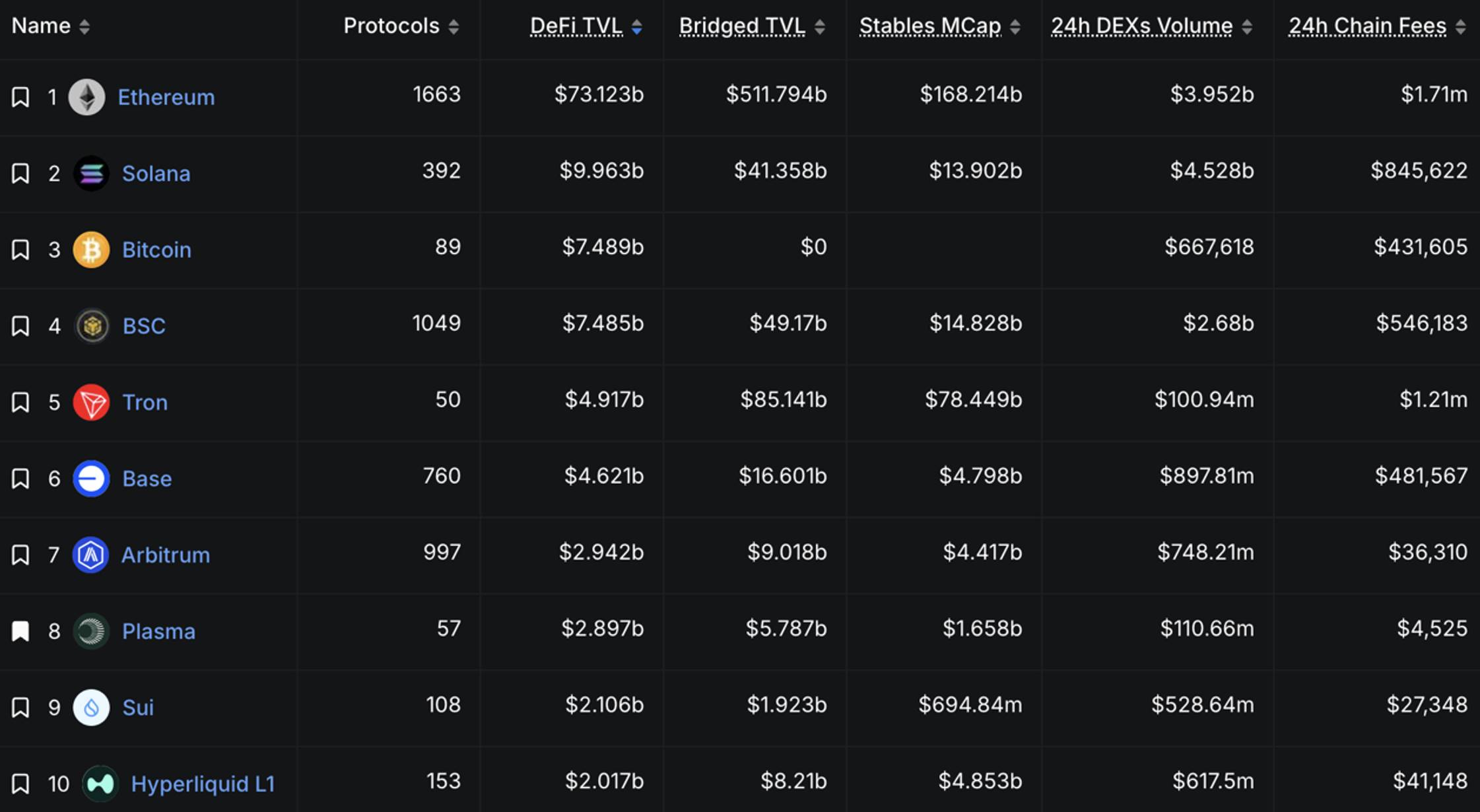
According to DefiLlama data, Plasma ranks eighth in ecosystem size, and its native token $XPL has seen $373 million in oversubscription.
From an investment perspective, Plasma is actively building a high-potential, tightly integrated ecosystem. Given its strong performance metrics, users interested in stablecoin use cases or on-chain payments should consider experiencing its ecosystem firsthand to better feel the momentum of this emerging chain.
Ether.fi Cash: 3% Instant Cashback, High-Yield, Stable DeFi Vault
Since its mid-2025 launch, Ether.fi Cash has become one of the most active crypto card products. As of November 7, cumulative spending has approached $100 million, transaction count has exceeded 1.1 million, UserSafe account balances exceed $187 million, total cashback exceeds $4 million, and active cards number close to 40,000—demonstrating strong market growth.

Highlights: Offers optional DeFi insurance, no card issuance or maintenance fees, supports auto-staking yield repayment, and uses a fully non-custodial model to ensure user control over assets.
Yield:
-
Instant cashback: All purchases receive 3% cashback, up to 20% under certain conditions.
-
Direct spending: Spend directly from DeFi yield vaults, earning yield while spending.
-
Competitive high-yield DeFi vaults: Deposit funds into EtherFi’s liquidity pool; idle stablecoins can earn up to 10% APY, while $ETH earns about 7%, allowing assets to “earn while idle.”
The reason DeFi vault yields stand out is because EtherFi specializes in “liquid staking/re-staking.” Measured by TVL, it currently ranks seventh—proving itself as a reliable, established project.

Ether.fi’s steadily growing protocol revenue provides the confidence for Ether.fi Cash’s high cashback and yield offerings. The platform also generously rewards user engagement:
This month, Ether.fi Cash Card launched a "Triple Rewards" campaign, distributing a total of 400,000 ETHFI tokens (worth ~$360,000) across three activities: on-chain deposits, off-chain spending, and fiat on-ramps. With 3% cashback, the rewards are substantial.
The campaign enables multi-layered, high-return strategies. For example, users can use Borrow Mode to collateralize assets and earn continuous yield while enjoying 3% cashback; then deposit into the Liquid pool for ~9% APY, minus 4% borrowing costs, resulting in a net gain of 5%.
Mantle UR: Compliant Financial Hub, Integrated with Bybit Ecosystem
Mantle UR aims to connect CeFi and DeFi through a borderless smart financial application, enabling seamless spending, saving, and asset withdrawal.
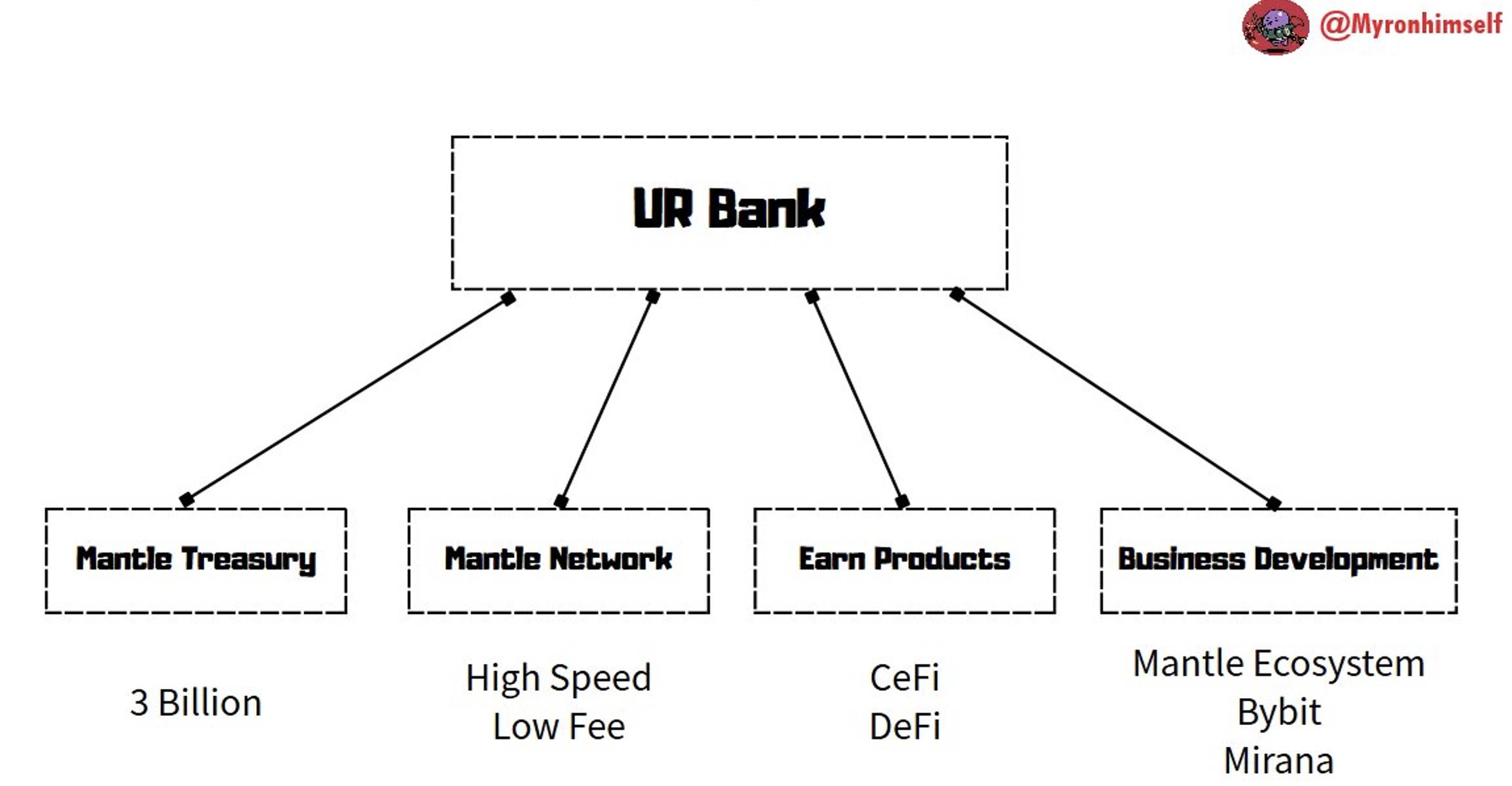
The underlying Mantle public chain emphasizes enterprise-grade high security, while Mantle UR, as a Neobank, focuses on compliance, holding KYC/AML-compliant licenses. Backed by Mantle DAO (formerly BitDAO), it manages a treasury of billions of dollars.
Highlights: Mantle offers multi-currency Swiss IBAN accounts supporting USD, EUR, CHF, RMB, etc.; users can earn $MNT tokens via the rewards portal; zero-fee conversions between USDe and fiat; funds are 1:1 backed and protected under a Swiss fintech license regulated by FINMA, ensuring safety and compliance.
Yield:
-
5% APY native yield: Enabled through Ethena integration with USDe.
-
DeFi yield vaults: Access to Mantle’s DeFi yield vaults, including products like mETH and MI4.
-
Ecosystem synergy: Can funnel into Bybit’s new coin pools and Mantle’s rewards portal, accessing high-yield opportunities powered by exchange and Mirana investment resources.
Total accounts have reached 13,598, and transaction volume has stabilized, rising from around 300 in September to about 900, indicating a growing and increasingly stable user base.

Leveraging Mantle’s treasury of over $2.3 billion and strategic support from partners like Bybit, UR integrates stablecoin yields, compliant banking services, and global payment capabilities within the Mantle ecosystem.
Payy Wallet (not yet tokenized): Privacy-first, Zero Gas Fees
In TradFi, many scenarios demand extreme privacy—transaction content and participants must remain fully confidential; compliance-related privacy requires minimal or selective disclosure.
This is precisely the problem Payy Wallet aims to solve.
Compared to other high-yield Neobanks, Payy Wallet prioritizes privacy protection first.
Based on its proprietary Payy Ethereum Layer 2 network, Payy Wallet uses a ZK-validium architecture and UTXO state model to enable private, compliant, gas-free stablecoin transactions.
Highlights: A Web3 wallet focused on privacy and global payments, supporting stablecoin transactions, self-custody, and zero-knowledge proof privacy protection. Uses a UTXO + ticket mechanism for high privacy. Usable at over 80 million Visa merchants worldwide.
Yield: Spending rewards—planning to launch a rewards points program; currently no built-in yield mechanism.
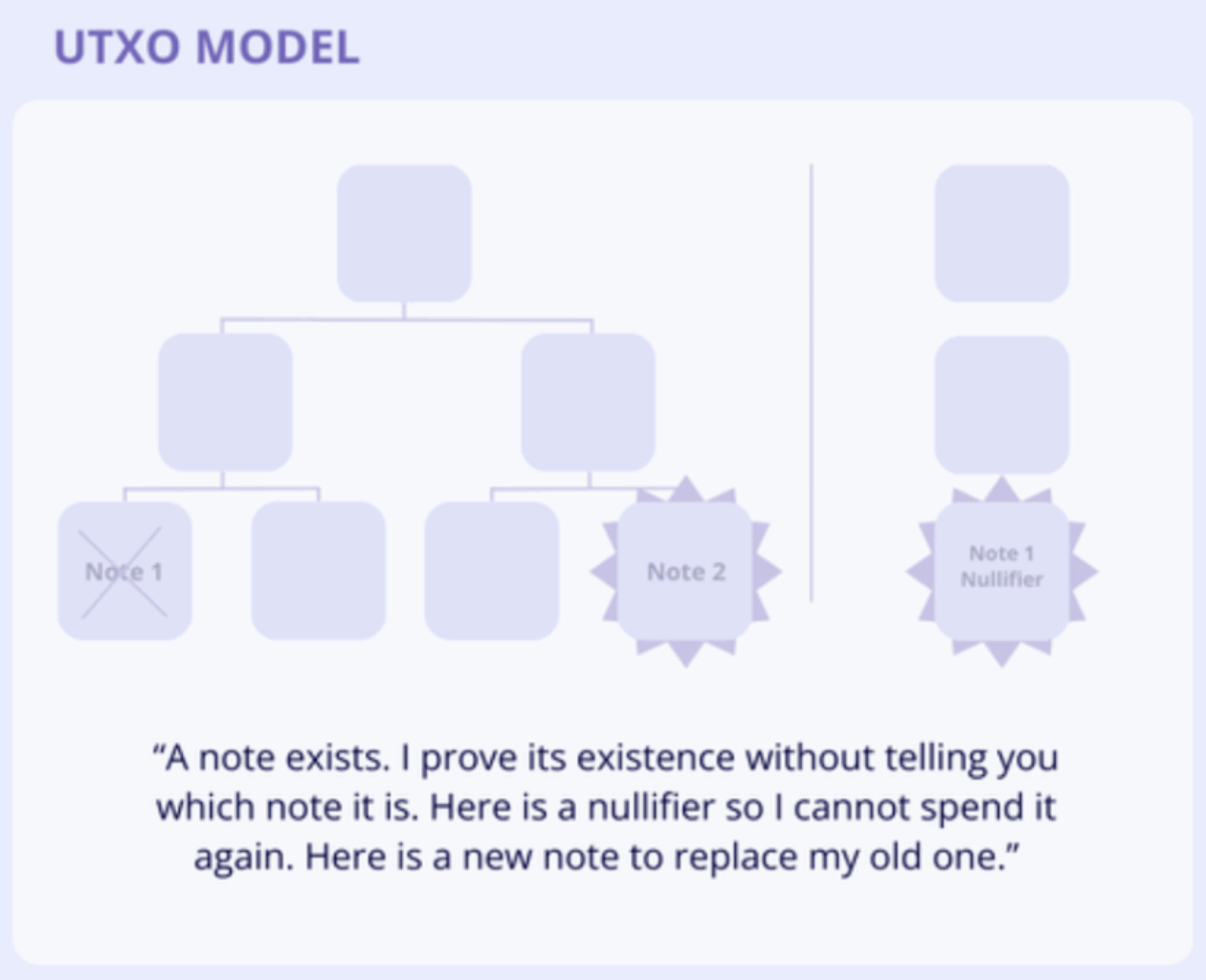
A brief explanation of Payy’s core privacy mechanism: UTXO + Ticket System
Payy uses a UTXO model similar to Bitcoin, eliminating account balances—each transaction “consumes old outputs and creates new ones.”
Unlike Bitcoin, however, Payy’s plaintext UTXOs are not visible. Instead, encrypted tickets are used—others only see the hash of the ticket.
Think of it like mailing a letter: the ticket hash is like a sealed envelope containing money. No one sees the amount inside, but each envelope has a unique seal proving the money was spent by you and preventing fraud.
Once verified, the post office sends your transaction information—after which your transaction is recorded on-chain as an immutable fact.
Throughout this process, except for the Visa provider—who requires necessary KYC information—no one can access your transaction details, maximizing privacy protection.
MetaMask Card: Multi-asset Card Combining Banking Functions with Wallet Sovereignty
Developed by ConsenSys in partnership with Mastercard and Baanx, MetaMask Card is a self-custodial crypto debit card for DeFi users. It allows direct payments from wallets, supports on-chain conversion, stablecoin yields, and cashback rewards—merging banking functionality with wallet sovereignty.
Highlights: A self-custodial wallet supporting real-time multi-asset payments. Enables instant conversion from ETH, USDC, USDT on the Linea network into fiat. Features real-time spending limits and Mastercard-grade security. The issuing company is affiliated with Mastercard.
Yield:
-
Crypto cashback rewards: Earn 1%-3% USDC per transaction, up to 13% with partner promotions.
-
Yield-bearing stablecoin features: Supports aUSDC and Aave Boost, offering 4%-8% potential APY.
-
Integrated DeFi yield: Includes Aave, Linea platform, and Coinmunity token rewards, enhancing capital efficiency.
Building on high-yield capabilities, MetaMask Card also thoughtfully addresses everyday consumer needs. Recently launched the MetaMask Card Travel campaign, offering travel discounts, enhanced rewards, and additional benefits.
MetaMask airdrop approaching (for full interaction guide, see: Airdrop Imminent: MetaMask Season One Points Reward Guide). Virtual cards (free version) and physical metal cards are available—worth trying out now.
Gnosis Pay: Self-custodial, Programmable, Compatible with External DeFi Yields
Gnosis Pay is a self-custodial payment network based on Gnosis Chain, offering a Visa debit card that can be directly linked to a Gnosis Safe smart account. It enables users to spend stablecoins as easily as cash, while maintaining non-custodial control.
Highlights: No pre-funding required, self-custodial; supports programmable spending controls via daily limits and token whitelists; connects to DEXs, lending protocols, and external DeFi yield sources; gas fees are covered by Gnosis Pay; includes a security module that delays suspicious transactions.
Yield:
-
Up to 5% cashback: Paid in $GNO, with tiered rates based on $GNO holdings. OG NFT holders get an extra 1%.
-
Idle balance: No built-in APY; users can deploy funds via Gnosis Safe to external DeFi strategies for yield generation.
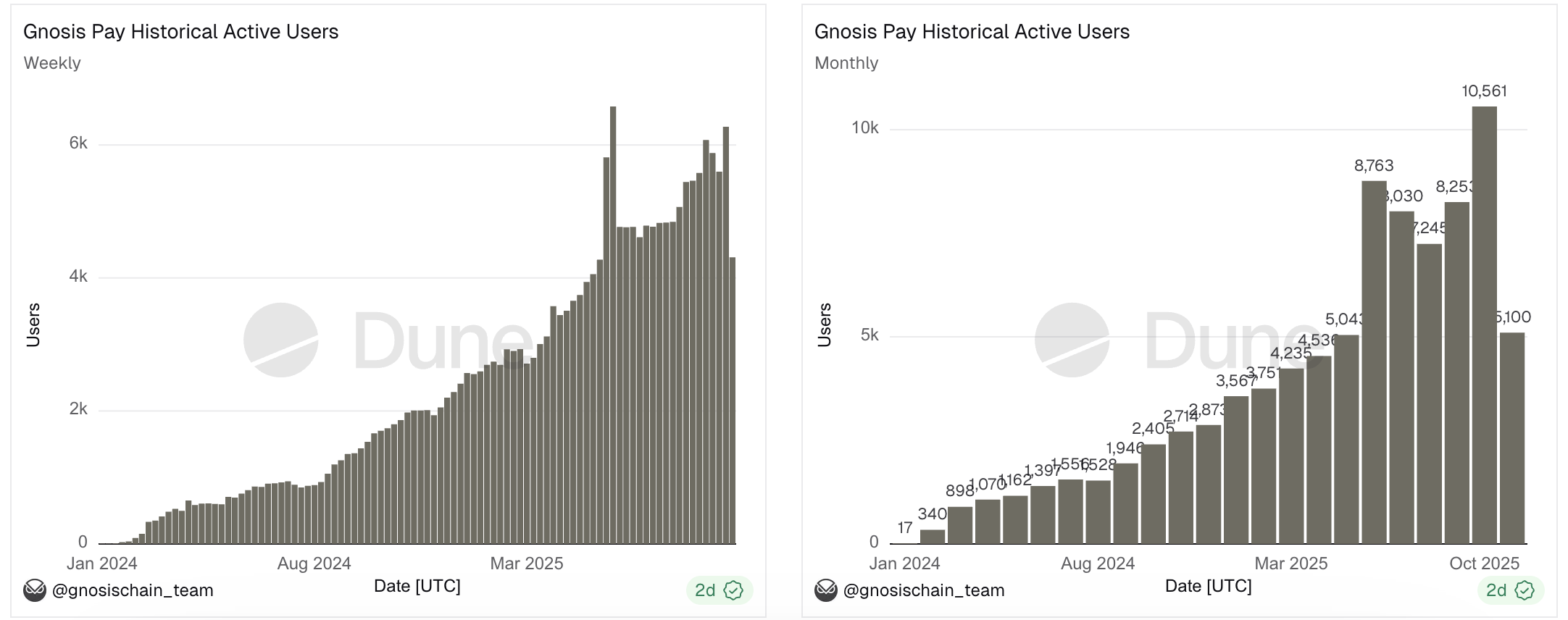
Since launch, Gnosis Pay has shown strong performance: over 1.7 million payments processed, total transaction value exceeding $1.7 million, and more than 21,000 funded addresses supported. Weekly and monthly active users continue to grow steadily, indicating rising and sustained product demand.
Current State of the Sector
Markets may fluctuate, but life goes on.
For users whose funds are primarily on-chain, the ability to seamlessly transition between profit-taking and everyday expenses—to solve small withdrawals, to travel the world with just a card without opening accounts or exchanging currencies—would be ideal.
To meet these needs, we’re seeing a surge of Neobanks emerging rapidly, each attracting users with unique strengths.
Compared to protocols with short-term spikes in trading volume, Neobanks represent a more subtle transformation—one with greater long-term potential.
Once you’ve experienced the convenience of card-based spending, who would go back to traditional deposit and withdrawal processes?
Corresponding to this potential, such opportunities are also more hidden and harder to spot. Judging purely by metrics, they’re easily underestimated: a $1 billion AMM swap doesn’t directly create GDP, but a $1 million Neobank transaction represents real consumption of goods and services.
What Neobanks truly aim to do is become the key driver pushing crypto assets into real-world economies.

Fortunately, we won’t have to wait long. We’ve already observed rising interest in Neobanks in English-speaking communities, increasing investments from public chains and exchanges, high user retention, and steady growth in transaction volumes.
Few anticipated privacy as the dark horse of this cycle—perhaps in another quiet corner, the Neobank sector is quietly preparing for its next moment in the spotlight.
Conclusion
At any given moment around the world, thousands of Neobank transactions may be taking place—thousands of dreamers in crypto converting their on-chain success into real-life joy, turning it into consumption, taking a brief rest, then returning on-chain to chase the next goal.
Neobank focuses on the most fundamental human need: whether your on-chain record is 100% winning or marred by liquidation, when you return to real life, you still need to eat well.
Join TechFlow official community to stay tuned
Telegram:https://t.me/TechFlowDaily
X (Twitter):https://x.com/TechFlowPost
X (Twitter) EN:https://x.com/BlockFlow_News
 深潮TechFlow