Asia's largest comic convention, no "AI invasion"
TechFlow Selected TechFlow Selected
Asia's largest comic convention, no "AI invasion"
If AI truly wants to reach passionate, devoted, aesthetically sensitive, discerning, and loyal anime fans, it cannot merely be a "higher-performance tool."
 Navigating Web3 tides with focused insights
Author: Zheng Xuan
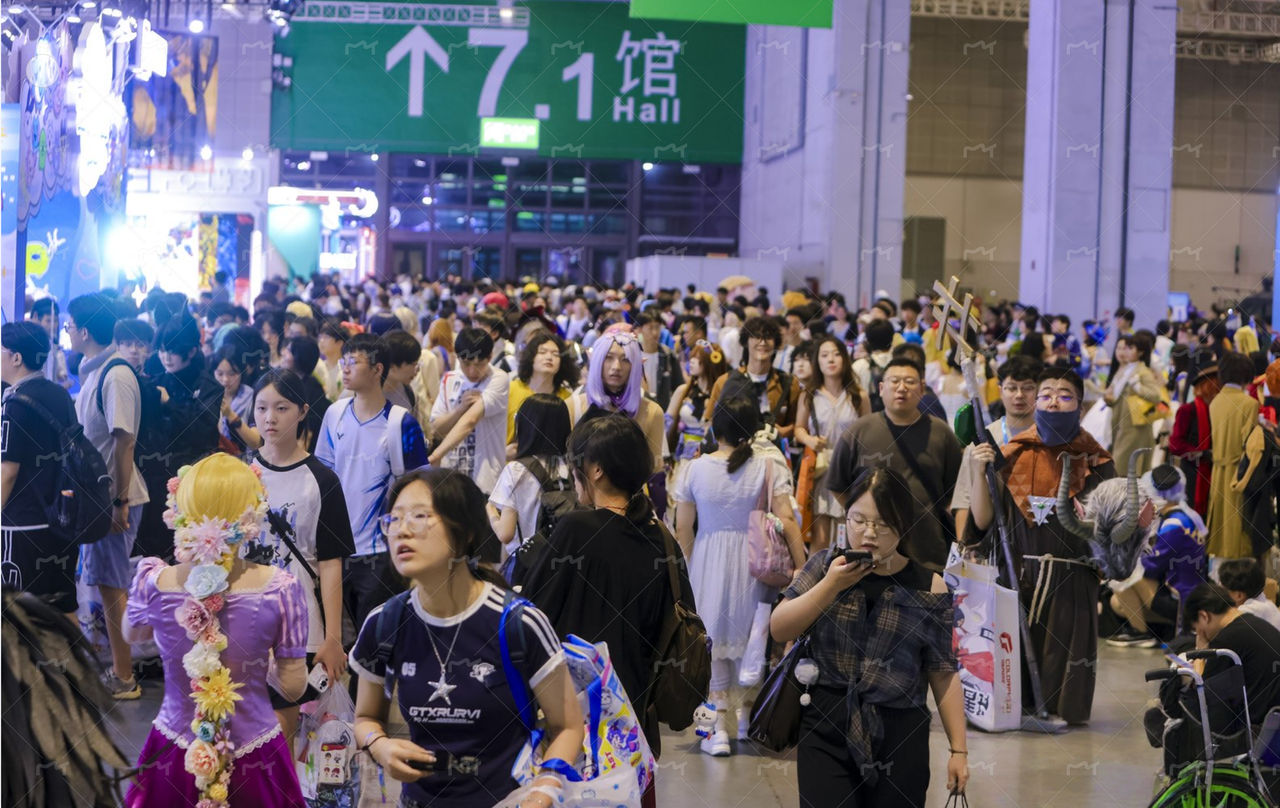
Before attending Bilibili World 2025 (BW2025), aside from games, anime, and cosplayers, I was especially looking forward to seeing some "AI + anime" content.
In the past six months, as AI applications have accelerated their rollout, “AI + anime” has become a hot topic. Anime-style AI image generators launched by OpenAI, MiniMax, and others briefly went viral. Chat apps focused on companionship have seen rapid growth, and AI-powered toys have emerged as a minor trend this year. Some entrepreneurs have even started developing AI waifus, attempting to bring beloved collectibles like figurines and standees—known affectionately as "guzu"—to life...
It seems AI technology is rapidly infiltrating the anime world. So I expected that at Asia’s largest anime convention, I’d see plenty of new AI-related innovations. But once I actually stepped into BW, I realized these were almost entirely absent. AI wasn’t the star—it wasn't even really visible to attendees.
New technologies have always been powerful draws at major exhibitions. At other events I’ve attended this year, AI and humanoid robots were practically standard. Yet at BW, both technologies were completely missing—and it didn’t affect the event’s popularity one bit. In fact, I noticed that the few AI-related booths scattered across the venue attracted far fewer visitors than other areas, standing in stark contrast to the packed crowds elsewhere.
This made me wonder: in an industry eagerly exploring “AI + anime,” why hasn’t this wave truly resonated with young fans who love anime culture?

Young audiences gathered around a stage丨Source: BW2025
The Anime World Has No Room for AI Invasion
An outsider might struggle to imagine just how passionate young people can be about anime conventions.
This year, BW2025 expanded further, taking over all exhibition halls at the Shanghai National Convention and Exhibition Center, covering a total area of 240,000 square meters. The organizers estimated 300,000 visitors over three days, with more than 900,000 people pre-registering for tickets. Tickets sold out within seconds of going on sale. Nearby hotels raised prices by one to two times during the event, and many attendees had booked accommodations two months in advance.
BW ran from July 11 to 13. According to the official schedule, entry opened at 8:30 AM daily. When I arrived promptly at 8:30 AM on the 11th, the venue was already packed. Talking with a familiar exhibitor, he told me that when he left at 2:30 AM after finishing setup, long queues had already formed outside.
Arriving at 8 AM to queue since 2 AM—these enthusiastic young fans have clear goals: grabbing *wuliao* (free merch). For example, Papergames’ *Infinity Nikki* offered only 500 sets per day. Staff told me you’d need to arrive before 8 AM to have any chance. A quick browse on Xianyu showed full *Infinity Nikki* wuliao sets resold for 80–100 RMB; even more sought-after items like *Love and Deepspace* paper bags sold for 100 RMB each, while complete character merchandise auctions routinely started at 400–500 RMB.
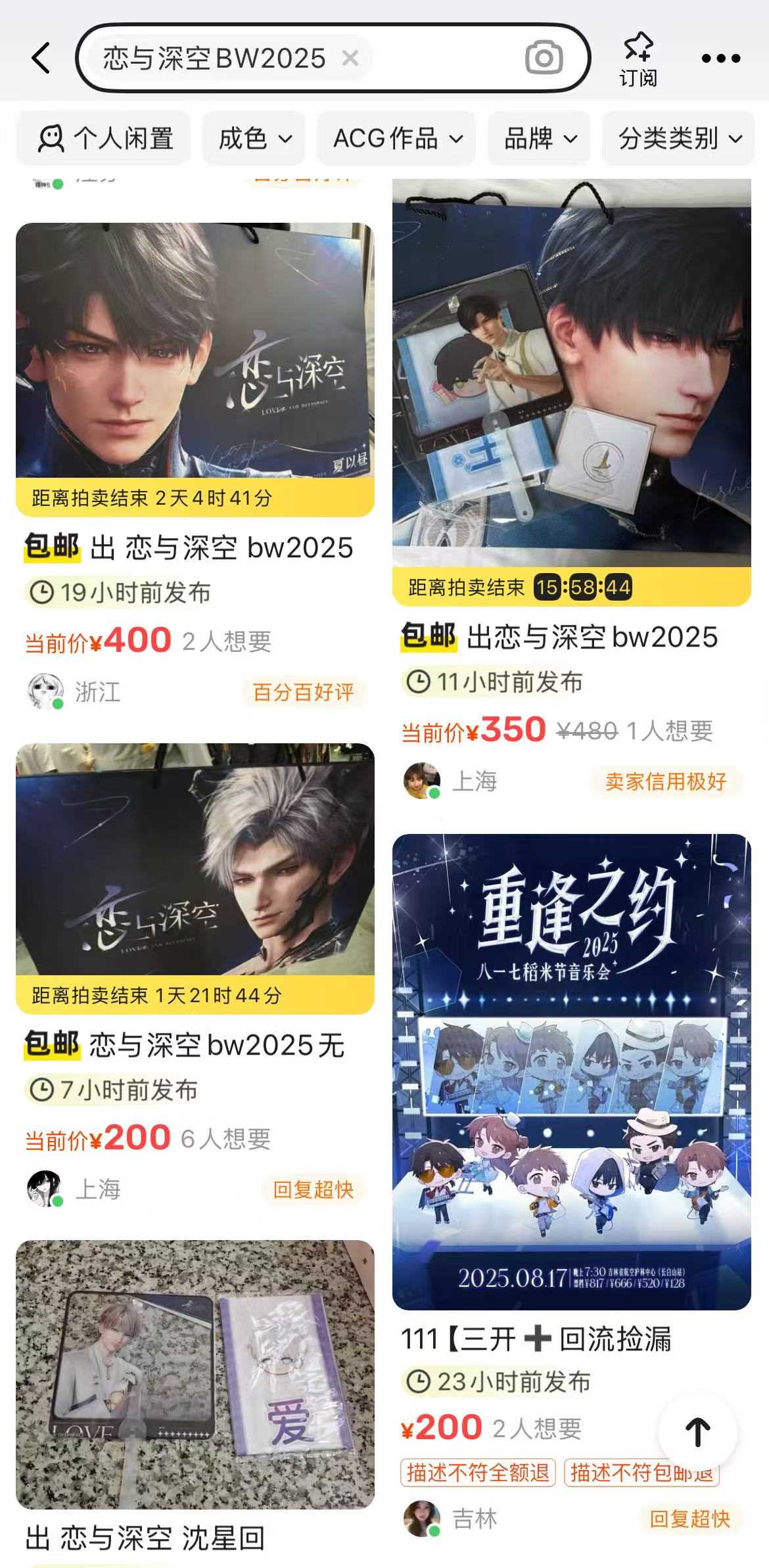
Auction of *Love and Deepspace* BW2025 merch on Xianyu丨Source: Xianyu
This inevitably brings to mind Pop Mart’s breakout success this year: IP economics is essentially the most intense part of anime culture. High-quality content (anime, games) breeds strong IPs, which then drive continuous fan spending—from gacha monetization in games to buying animations and limited-edition merchandise. This model has been proven countless times.
From an industry perspective, combining AI with IPs has long been seen as a highly promising direction. From the sudden popularity of AI toys to rumors that domestic IP leader Pop Mart is preparing to launch AI-powered figures, it feels as if “AI + anime” is the next inevitable growth curve. But when you step into Asia’s largest anime convention—the core consumption space—you realize: so far, this remains confined to PowerPoint decks and imagination.
Virtually no AI-related exhibits were visible. Unlike tech expos where you encounter AI chatbots, AI-generated art, or voice interaction demos, hardly any exhibitors here attempted such experiences. The CrossFire booth was one of the few featuring “AI generation”: visitors could sketch a rough design, which Tencent’s Yuanbao would turn into personalized gear and print onto stickers to take home. Yet the experience zone remained quiet, sharply contrasting with the bustling crowds at traditional interactive stations elsewhere in the CF area.
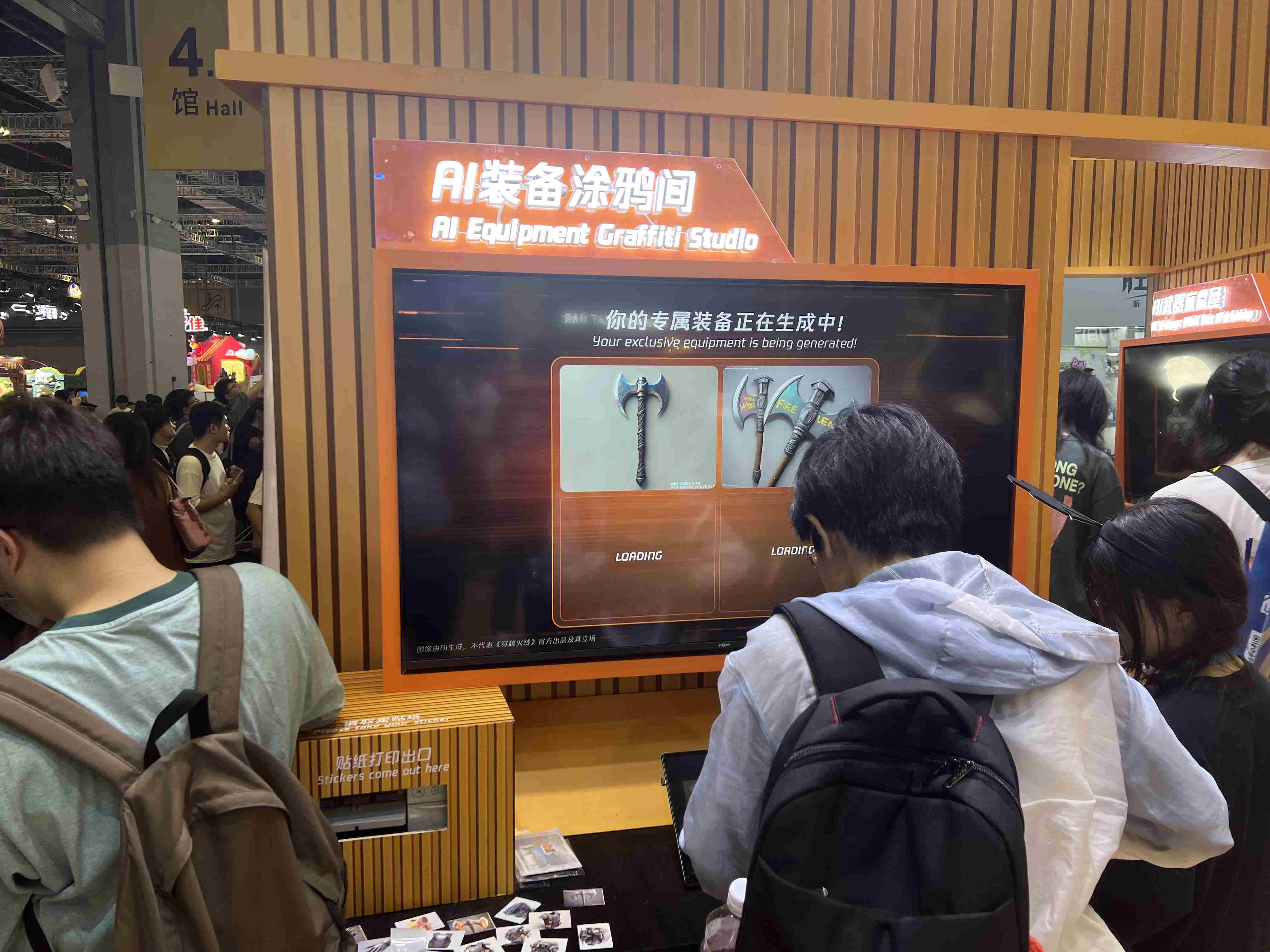
AI doodle station at the *CrossFire* booth丨Source: GeekPark
Why is this? As I wandered the show and chatted with fellow attendees while waiting in lines, I identified several key observations:
First, most current “AI + anime” products are fundamentally tools. They generate images or hold conversations, but no matter how lifelike, they remain bots that “talk.” At high-intensity emotional events like offline anime conventions, what makes people willing to wait hours isn’t functionality—it’s “connection.” Photo ops with cosplayers, standee check-ins, immersive interactions—these are crucial moments through which fans construct the feeling of “interacting with real characters,” creating tangible proof of participation: “I was there.”
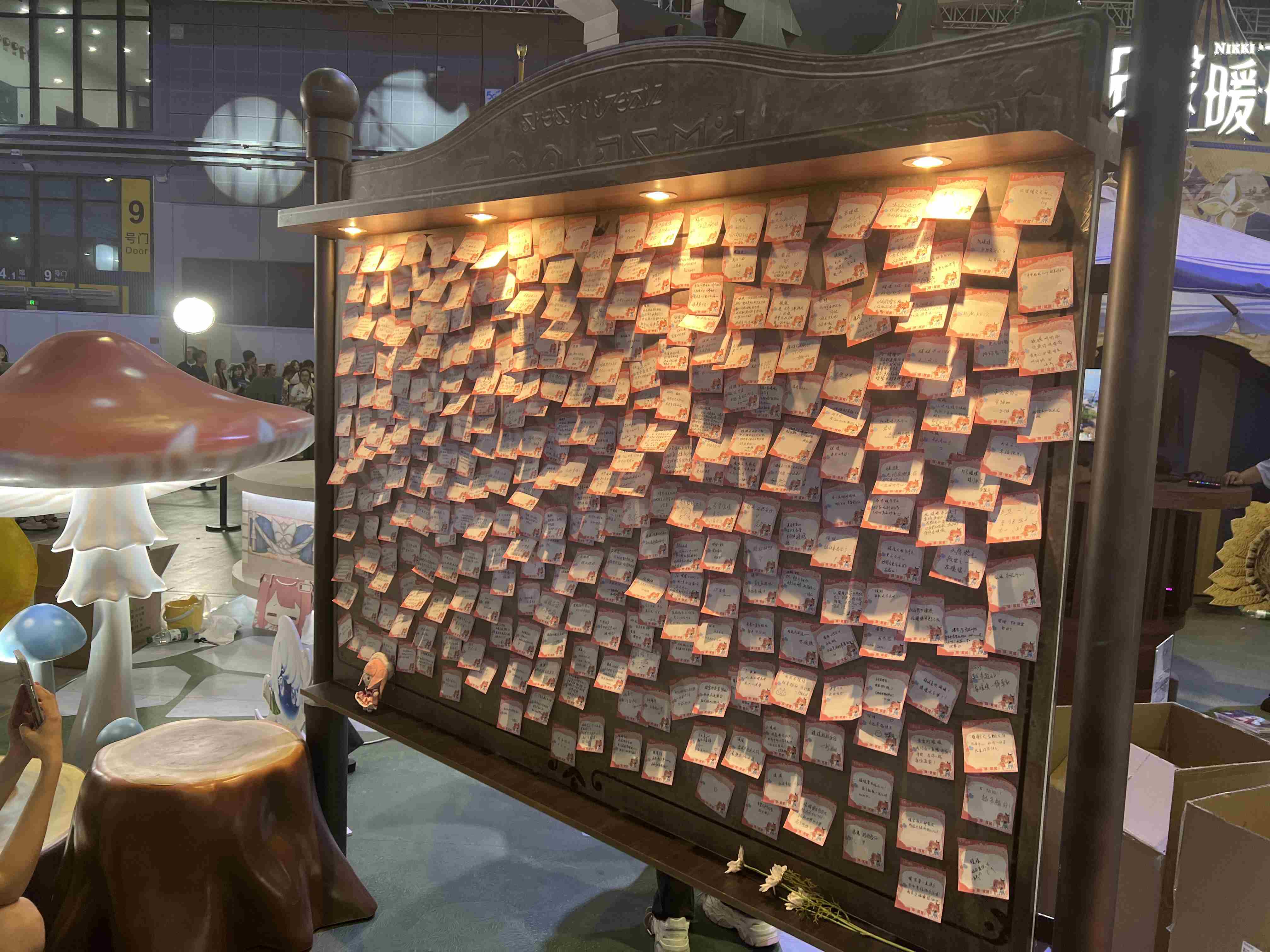
Fans writing messages at the *Infinity Nikki* booth丨Source: GeekPark
Second, I seriously considered whether it would be possible to deploy a fully AI-driven anime or game character at a booth—say via voice call, earpiece connection, or even robotics. Technically, it's feasible. But even with perfect execution and costs multiplied tenfold, it still wouldn’t deliver the same sense of authenticity as an excellent cosplayer. Cosplayers enter the scene with emotion—they embody “living personas.” AI, for now, remains simulation.
The third and perhaps most critical issue: AI lacks “show-off value.” AI’s strength lies in accessibility and ubiquity, whereas offline anime consumption often revolves precisely around scarcity. Limited-edition wuliao obtained after three-hour waits, photos with decorated cars (*tanche*), exclusive autographs—these are valuable because they’re irreplaceable, limited, and worth sharing. Generating a sticker or exchanging a line of dialogue, no matter how advanced the tech, currently carries little “social capital” weight. It doesn’t qualify as a trophy-worthy post for Xiaohongshu, WeChat Moments, or Bilibili.
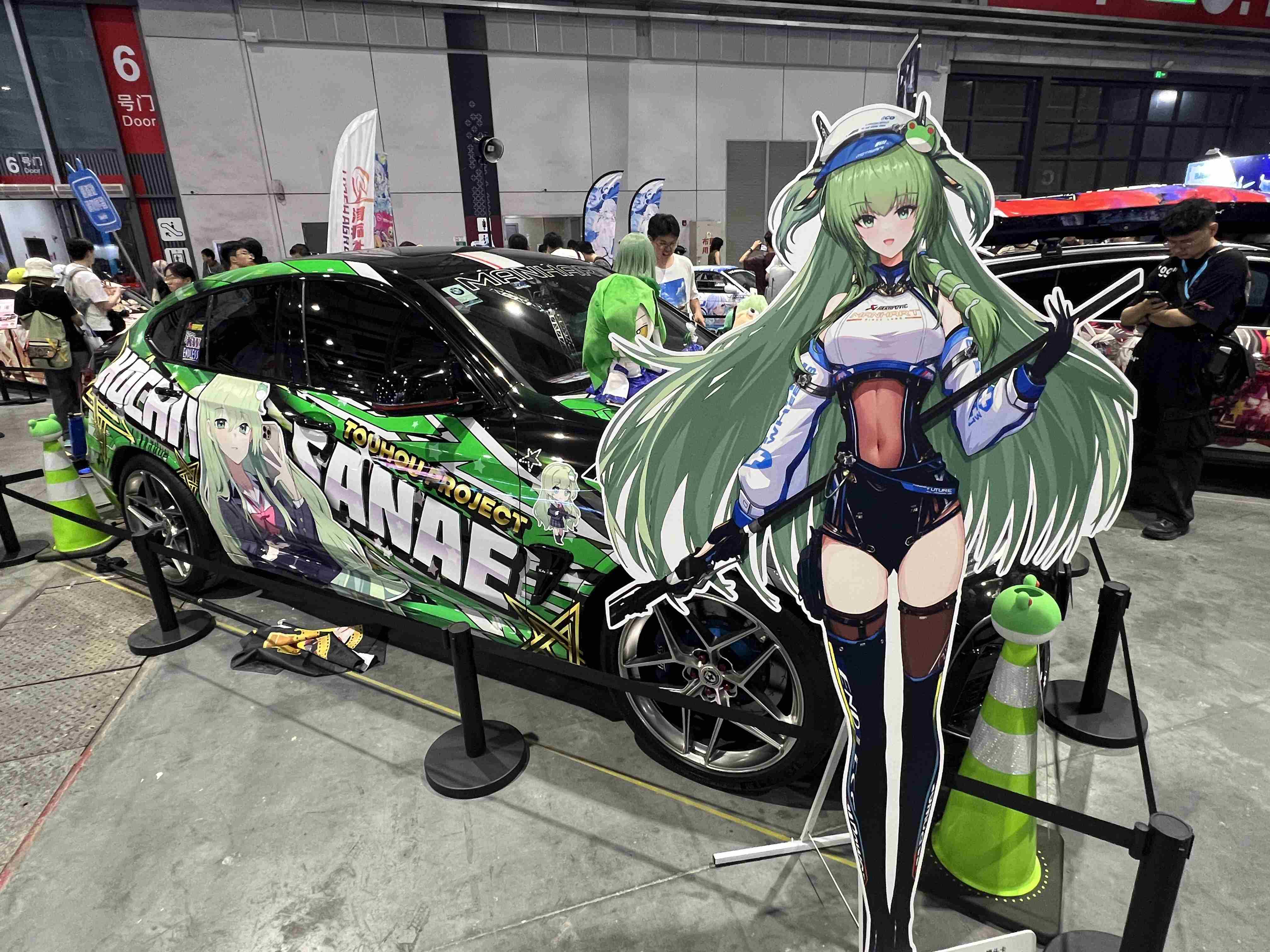
Decorated cars (*tanche*) are among the most popular photo spots at anime events丨Source: GeekPark
So the problem isn’t that AI isn’t powerful enough—it’s that it hasn’t yet integrated into anime culture’s ecosystem. In the anime world, deep emotional bonds exist between “characters–fans–communities.” Despite rapid advancements in AI technology, it hasn’t found a way to gain fan acceptance, excitement, or willingness to spend time and money.
This isn’t to say anime culture rejects AI. In fact, AI-assisted drawing, scripting, and voice synthesis have already permeated creative workflows behind the scenes. The real challenge arises when AI attempts to move from backstage support to front-facing roles aimed at end users—it’s simply not ready yet.
Black Myth is Hot—China Becomes the 'New Continent' for 3A Studios
While AI lingers at the door, another type of content has boldly entered the arena.
If in previous years, console games (excluding mobile games, bimoe titles, and esports) played more of a background role in ACGN culture at BW, this year at BW2025, console games—including AAA blockbusters and Chinese indie hits—truly became headliners. Booth scale, player enthusiasm, and developer investment surpassed anything seen before.
This shift stems from two converging forces.
One is domestic developers increasingly treating console gaming seriously—especially in developing and publishing high-quality original content.
Take Bilibili-published Chinese console title *Late Ming: Feather of Emptiness*. Set in an alternate late-Ming dynasty, it’s a hardcore action game offering its first playable chapter demo at the show. I tried it at BW—the overall polish impressed me. Whether combat mechanics, artwork, or capturing an “Eastern fantasy” atmosphere, the team clearly aims to follow in the footsteps of *Black Myth*, crafting a globally competitive product.
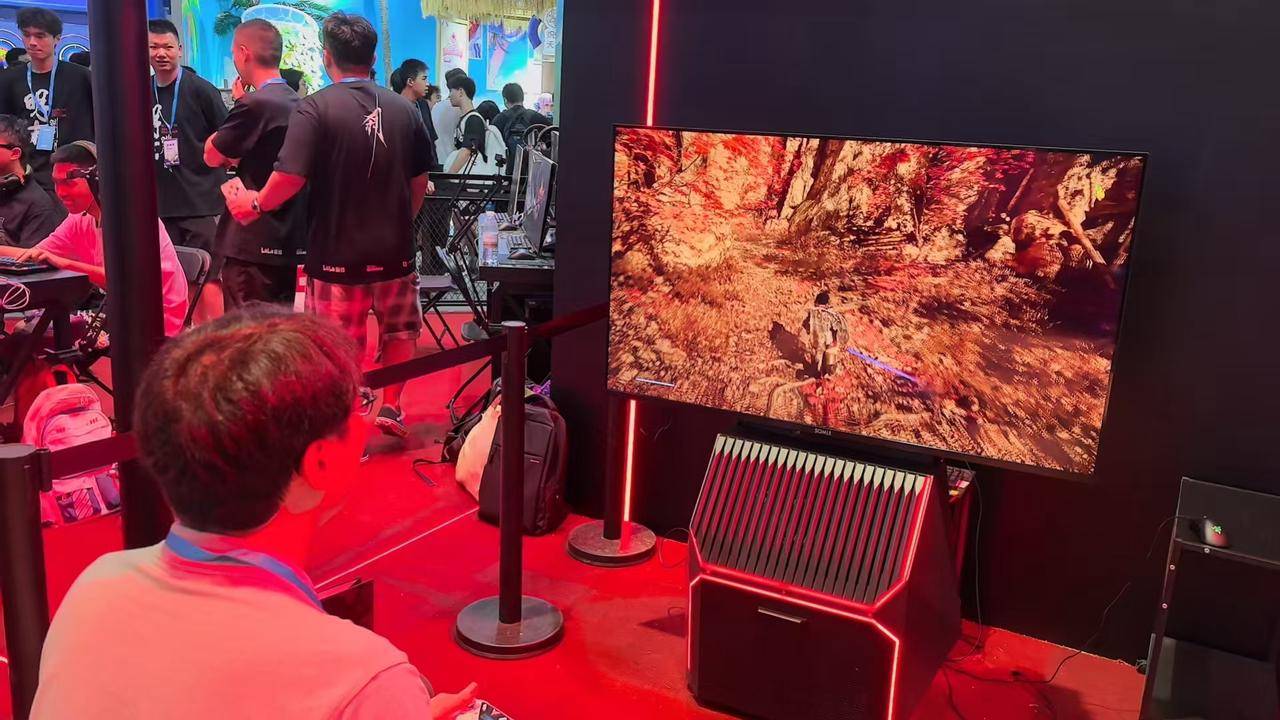
The author trying *Late Ming: Feather of Emptiness* at the BW booth丨Source: GeekPark
There were many others too. Beyond AAA titles, indie games gained significant visibility—this year’s hits like *Palworld* and *Game of Sultans* drew large crowds.
These aren’t traditionally “anime-style” works, yet their presence and popularity at an anime-centric event like BW signals something important: Chinese developers now view console games as essential components of IP culture—not just confined to mobile or light-interaction formats.
On the other side, global AAA studios are beginning to treat China as a vital market for distribution.
The visit of renowned creator Hideo Kojima to China for the first time was a landmark moment. *Death Stranding 2* became one of BW2025’s centerpiece exhibits—not only its sole mainland China stop but also the first time Kojima Productions genuinely positioned China as a key promotional territory. From Bilibili and Xiaohongshu to Twitter, fans and game professionals alike shared photos of meeting Kojima or playing *Death Stranding 2*.
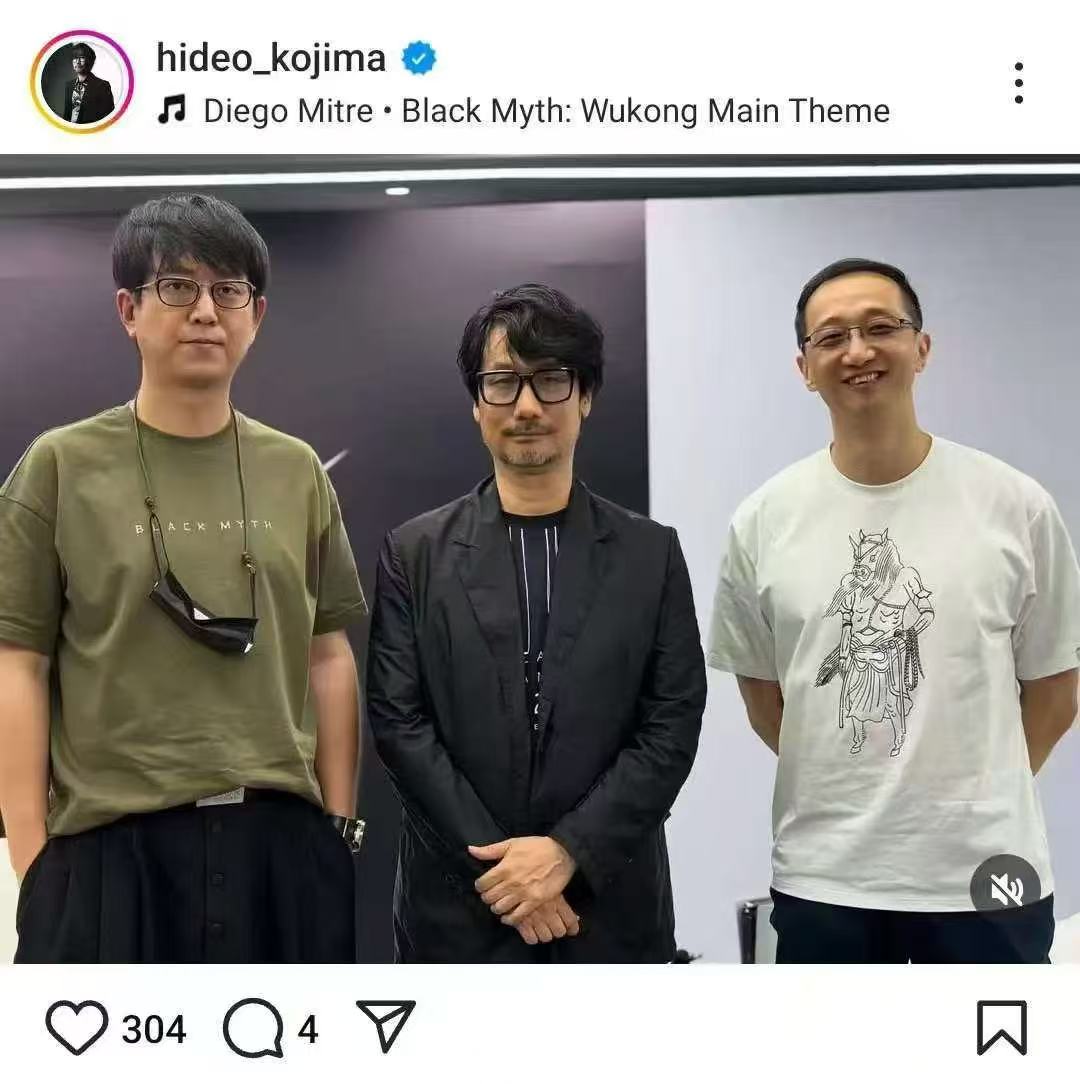
Hideo Kojima shares photo with Yang Qi and Feng Ji at BW2025 on X丨Source: X
Beyond Kojima, more foreign studios are entering China. Platform giants like Sega and Sony PlayStation aside, Pearl Abyss—the Korean studio known for *Black Desert*—debuted its open-world title *Red Desert* with a booth nearly as large as that of *Late Ming*. These moves indicate that beyond top Japanese creators, mainstream Asian developers are reevaluating China’s potential in the console gaming space.
So why now?
A pivotal catalyst explains it all: Black Myth: Wukong.
This AAA project developed by Game Science not only brought “Chinese single-player games” back into the mainstream spotlight but also made global players realize: Chinese studios can make, dare to make, and have a market capable of supporting truly high-quality content.
Looking back over recent years, Chinese console and indie games are undergoing a genuine period of “accumulated potential breaking through.”
On one hand, domestic developers’ technical capabilities are maturing, artistic styles becoming more localized, and system completeness improving markedly. On the other, platform ecosystems have grown richer—Steam, Bilibili, TapTap, even Xiaohongshu and Bilibili video channels—are forming a complete pipeline from development to exposure, discovery to monetization. This creates a virtuous cycle: better games attract more players, which incentivizes higher quality. Games are now “viable as content businesses,” so creators naturally focus more on content quality and uniqueness.
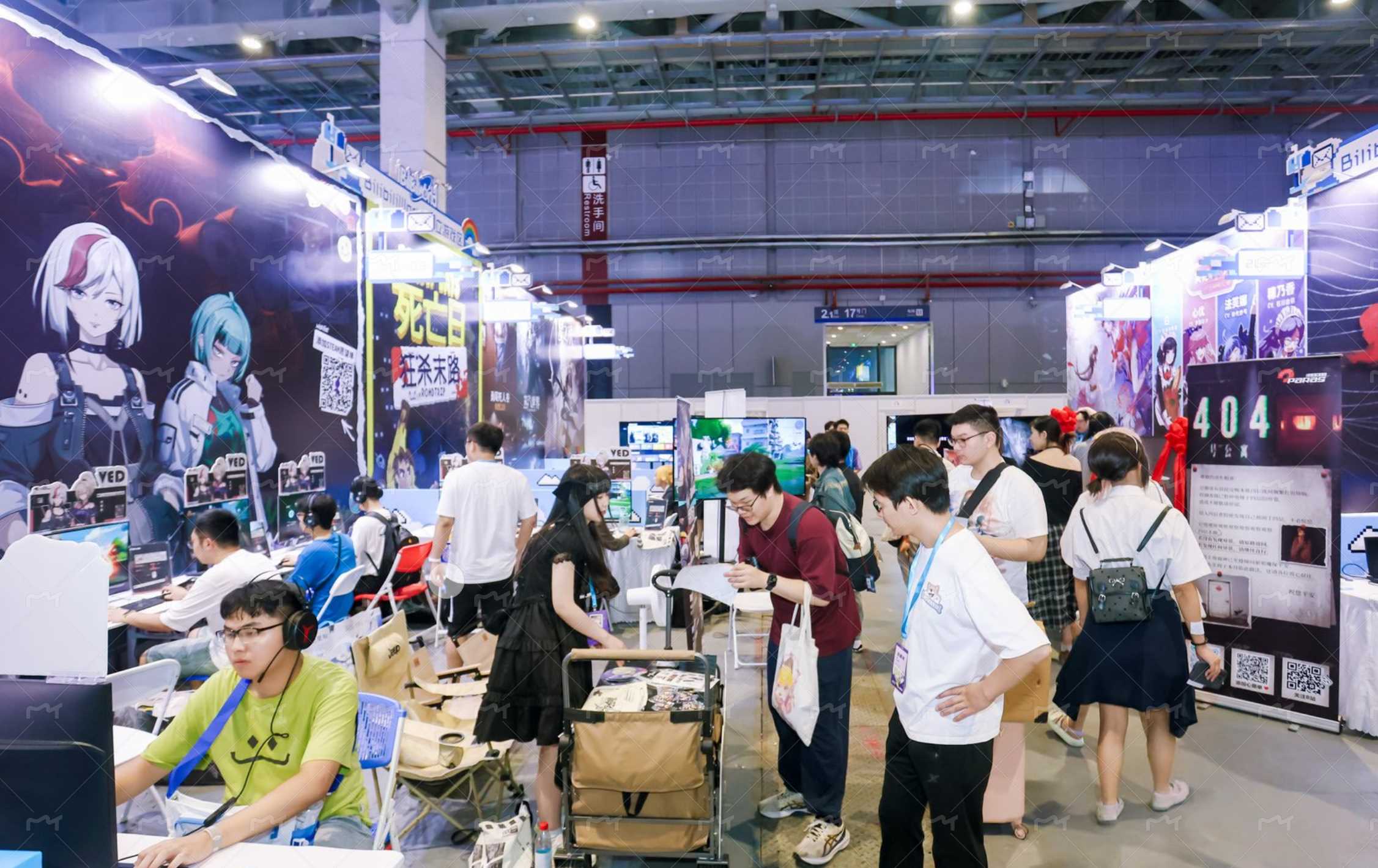
Players experiencing indie games at BW丨Source: BW2025
Thus, when we say “China has become the new continent for 3A studios,” it means far more than just “distribution channels” or “large player base.” It signifies that the Chinese market is emerging as a birthplace for the next wave of imagination and creativity in the global gaming industry.
Anime, Powered by AI
AI isn’t the protagonist—that was my immediate impression after touring BW2025. But viewed differently, AI wasn’t truly absent either.
For instance, Hall 3 and Hall 4 hosted numerous gaming hardware vendors—Lenovo, Galax, Shadow Knight, ROG—many co-exhibiting with NVIDIA and Intel. Their booths prominently featured AI-related slogans. While they showcased high-fidelity games, console demos, and real-time rendering tech, the underlying message was clear: today’s gaming experiences cannot exist without foundational AI support.
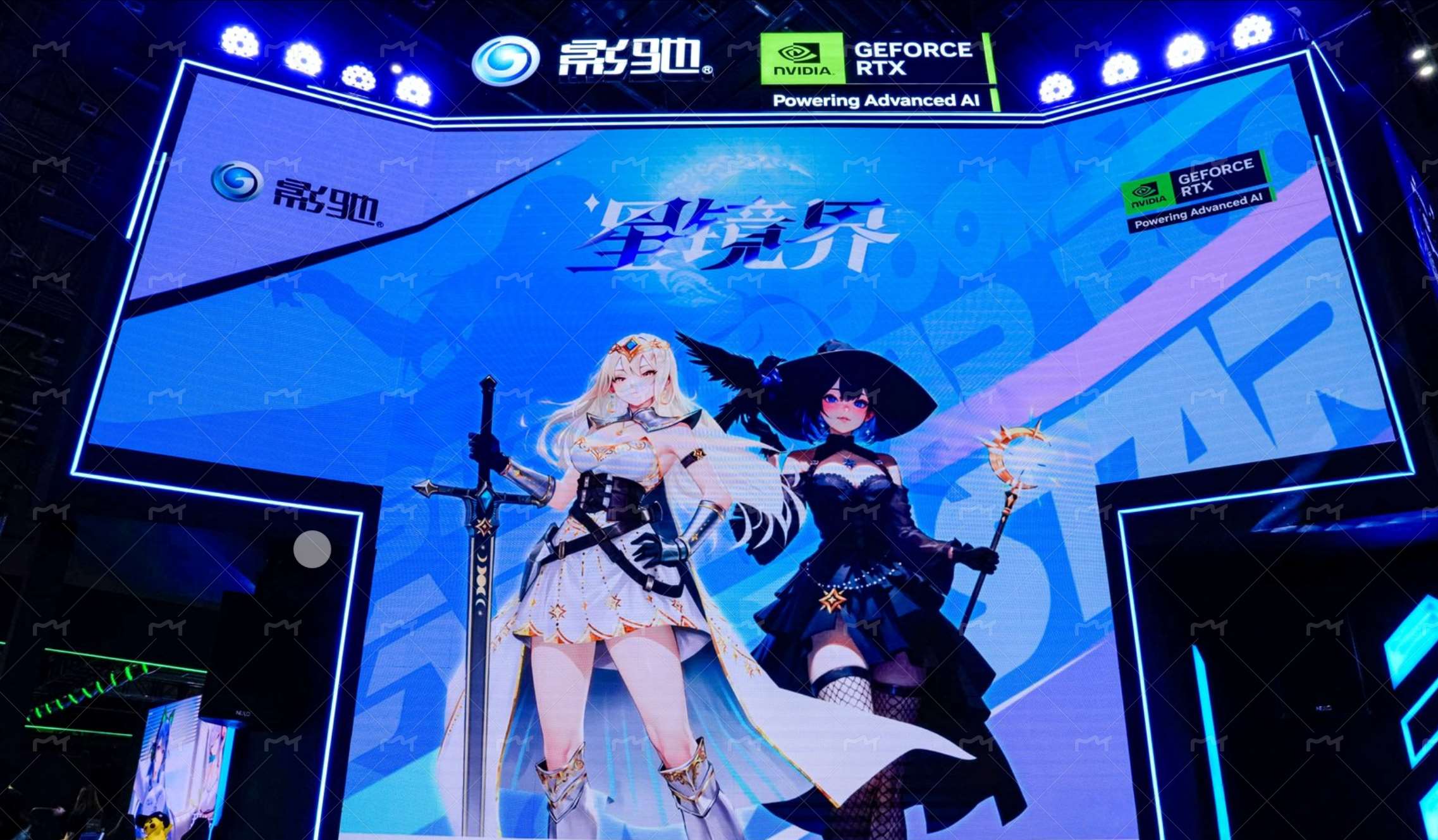
NVIDIA's "Powering Advanced AI" slogan丨Source: BW2025
Whether physics simulations in Unreal Engine, ray tracing, dynamic scene construction, or complex character behavior systems—AI is quietly becoming essential for optimizing game engine performance and automating creative workflows. Many of the visually stunning, mechanically intricate, and smoothly operating titles seen at BW owe their existence not just to raw creativity, but to enhanced CPU/GPU performance enabled by AI.
Similar shifts are happening in creators’ daily workflows. More and more ACGN professionals—illustrators, concept artists, indie developers—are adopting AI as an assistant. From sketch composition and character references to background generation, storyboard help, and even drafting plot outlines, AI is gradually becoming the “junior designer” in anime content production.
Of course, this path isn’t without controversy.
For example, Yuewen recently publicly banned authors from using AI-generated content in novels, explicitly restricting it in platform agreements. In game development, projects heavily relying on AI-generated art often face player criticism online for being “insincere,” “low-effort,” or “obviously AI-made”—with “instantly recognizable as AI” now a common critique.
Questions around the boundaries of AI creation, copyright ownership, originality, and fan acceptance remain unresolved.
Yet despite this, an industry consensus has begun to form: AI will keep getting stronger. It won’t “replace creation,” but it will transform it. Just as we no longer judge a game’s quality solely by whether it uses AI, we’ll instead ask: what previously impossible things does AI enable?
Therefore, reflecting on AI’s near-total invisibility on the consumer side at BW, the issue isn’t technological—it’s about product design and user psychology:
-
In an anime ecosystem so sensitive to emotional connection, why hasn’t AI found a more compelling way to touch hearts?
-
Why has it seamlessly integrated into creation workflows, yet failed to become a highlight for consumers?
-
When designing “AI + anime,” are we focusing too much on technical showcase and too little on what users truly want to connect with?
I’m increasingly convinced that this technological revolution is forcing the content industry to confront an old question: what defines “great content”?
Is it efficiently generated piles of “decent enough” text and images? Or is it that one character who gives you goosebumps, making you willingly wait two hours just to take a photo?
Standing amid the crowds at BW, I’m more certain than ever: it’s the latter.
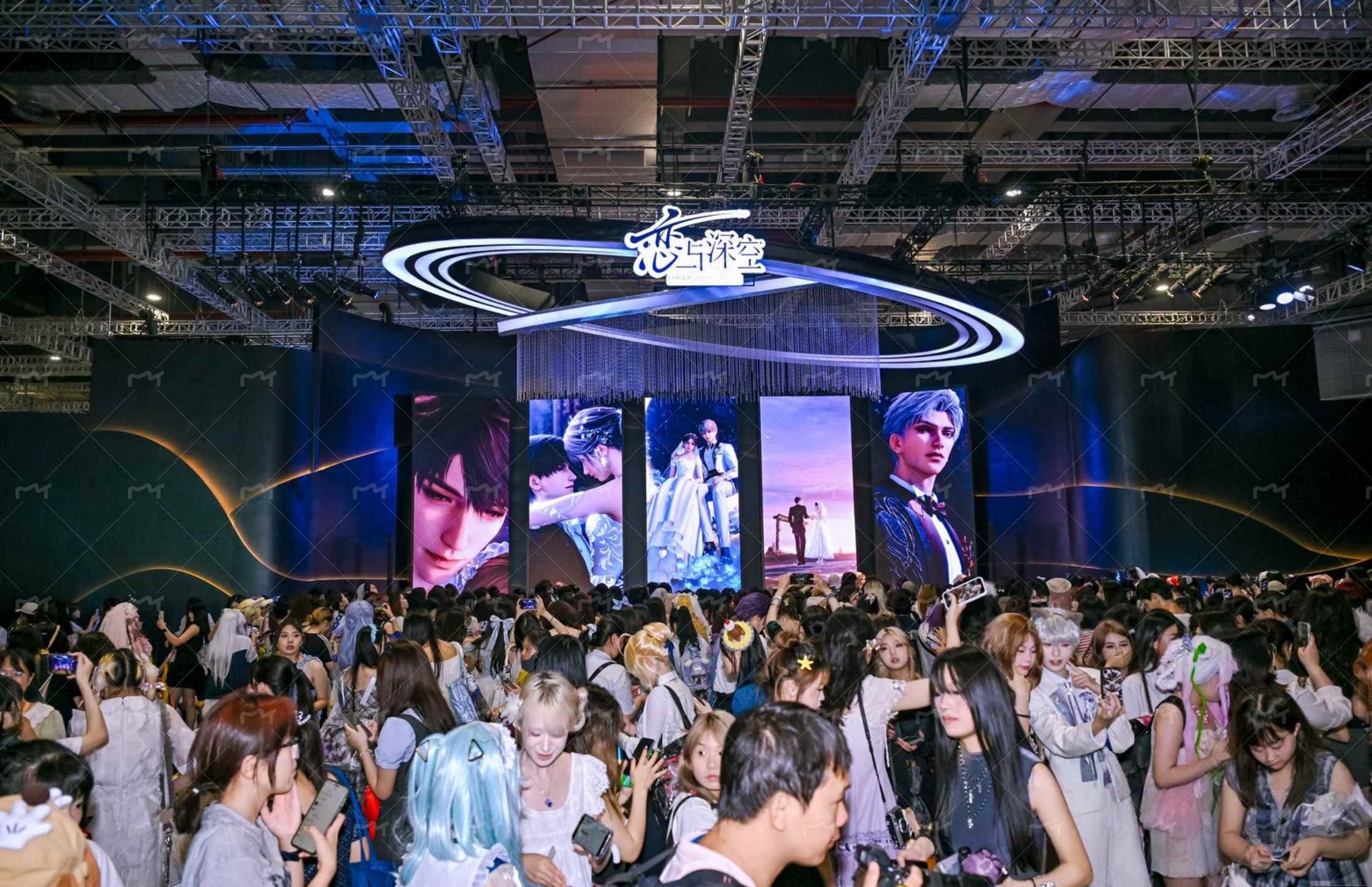
The packed *Love and Deepspace* booth丨Source: BW2025
So if AI truly wants to enter the anime world—to win over this passionate, dedicated, aesthetically discerning, picky yet loyal audience—it can’t just be a “higher-performance tool.” It must learn to tell stories, convey emotion, build characters, create awe, and foster connection.
This isn’t something solved by “writing better prompts” or upgrading parameters.
It’s a long-term challenge. For AI to become a true part of anime culture, it must learn, like human creators, how to move humans.
Join TechFlow official community to stay tuned
Telegram:https://t.me/TechFlowDaily
X (Twitter):https://x.com/TechFlowPost
X (Twitter) EN:https://x.com/BlockFlow_News
 极客公园
极客公园