A $200,000 "brain computer" might be humanity's only way to defeat AI?
TechFlow Selected TechFlow Selected
A $200,000 "brain computer" might be humanity's only way to defeat AI?
Not only requires less power, but is also scalable and capable of learning.
 Navigating Web3 tides with focused insights
Author: Moonshot
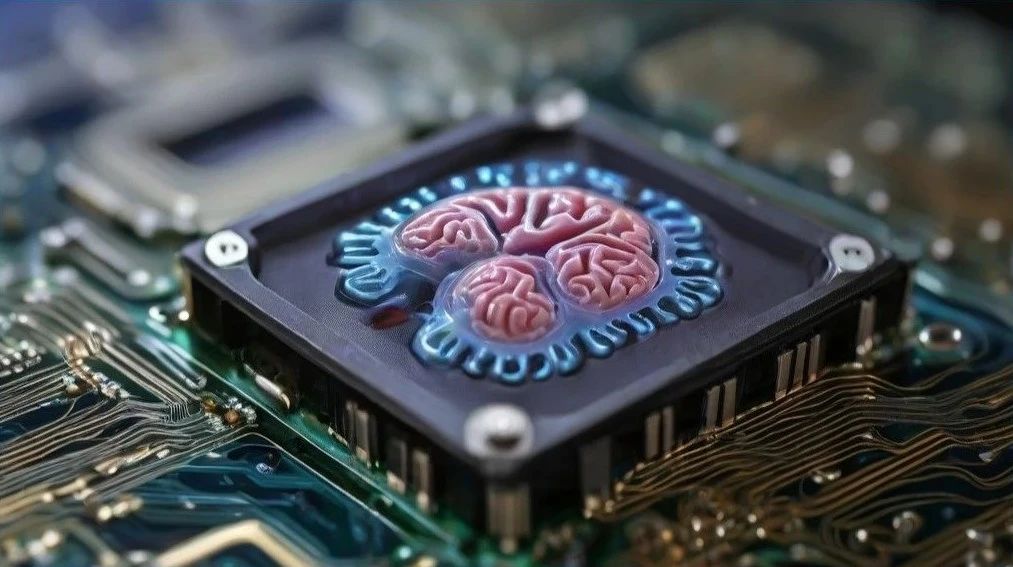
In the first episode of the latest season of *Black Mirror*, titled "Beyond the Sea," after the female lead accidentally suffers brain death, the male protagonist connects her to a "cloud brain" service. Part of her brain is removed and replaced with a chip linked to the cloud, requiring a monthly subscription fee of several hundred dollars to a software company to keep her "consciousness online."
This may be the most biting satire of tech giants since *Silicon Valley*.
Yet merely two months after *Black Mirror* aired, real-world prototypes of similar technologies have quietly emerged.
An Australian startup called Cortical Labs has announced the official launch of CL1, the world's first commercial biological computing platform.
CL1 is not an ordinary computer. It contains 800,000 living human neurons, precisely connected via electronic interfaces to traditional silicon chips, forming a "hybrid intelligence." It can not only process information but also learn autonomously and adapt to environments, exhibiting certain characteristics of "quasi-consciousness."
Yes, you read that right:
This is a **living** computer.
Theoretical neuroscientist Carl Friston said: "From a certain perspective, CL1 can be seen as the first commercially available bionic computer—the ultimate brain-like computer using real neurons."
While people are still worried about carbon-based beings being outmatched by silicon-based AI, could this kind of "silicon-carbon fusion" approach become the path Elon Musk envisioned—where "humans + AI" evolve into superhumans?
01 When Silicon Meets Cells
Biological computing is not a new concept. Over the past few decades, scientists have imagined using DNA, proteins, or even cells as computational media. But CL1 is the first system to truly apply human neural cells in a commercial computing platform.
Imagine 800,000 living human neurons carefully suspended above a custom silicon chip. Whenever external systems send electrical signals, these neurons respond within sub-millisecond timescales—just as naturally, quickly, and randomly as a human brain receiving and reacting to stimuli.
This is the core of CL1’s technology: rather than having chips mimic the brain, it directly integrates actual parts of a “brain” into the chip. By combining silicon chips with living human neurons, it creates a hybrid intelligent system capable of learning like a human brain while efficiently processing information like a computer.
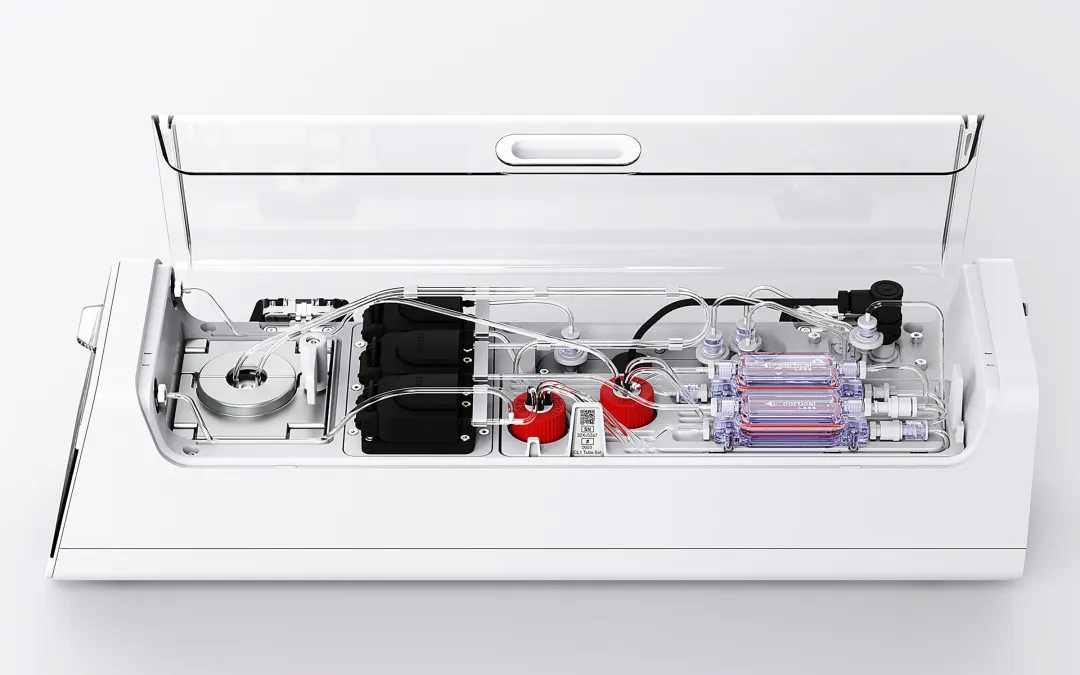
Externally, CL1 resembles a high-tech petri dish more than a conventional computer. Its internal structure consists of three components:
A standard rack-mounted computing node;
A microelectrode array (MEA) system for recording and stimulating electrophysiological signals;
And the most vital—and most “alive”—component: a temperature-controlled culture unit.
Neurons + silicon chip|Image source: IEEE Spectrum
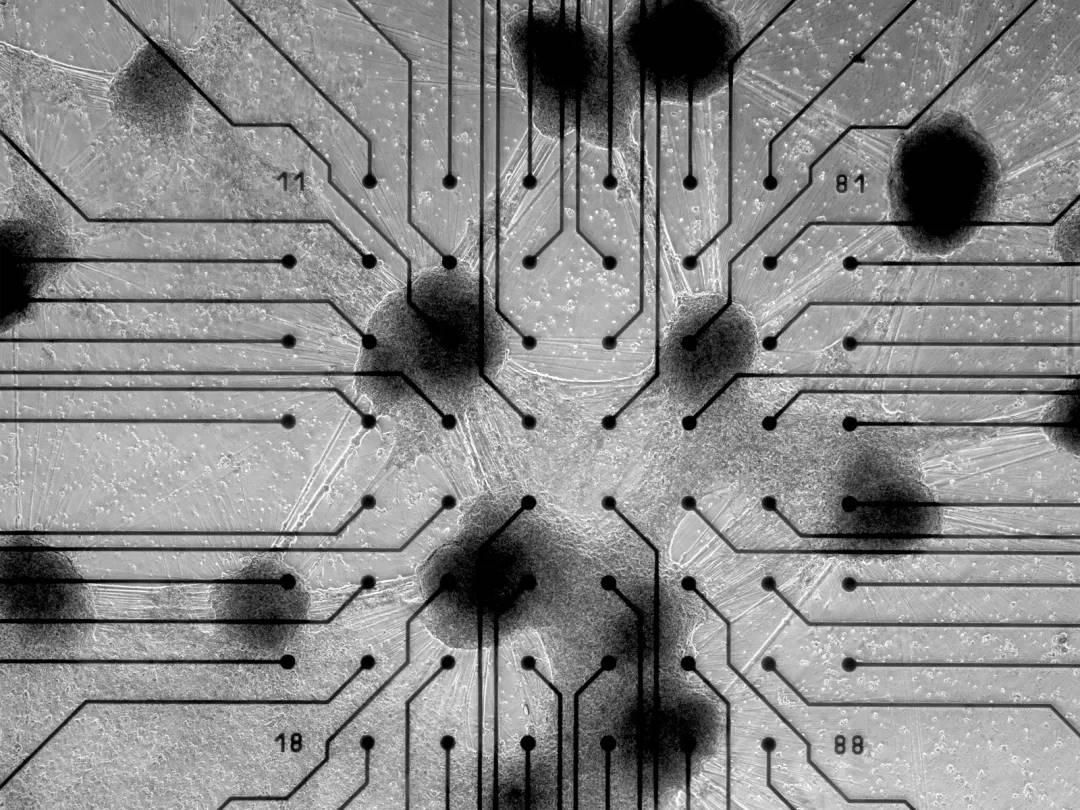
The MEA acts as a bridge between the “human brain” and the “machine brain,” enabling free flow of electrical signals between silicon chips and neurons while simultaneously recording their activity patterns.
The temperature-controlled culture unit is key to keeping CL1 “alive.” Each CL1 device contains 800,000 lab-grown human neurons derived from adult donor skin or blood samples. The culture unit provides nutrients, controls temperature, filters waste, and maintains fluid balance, ensuring the neurons survive up to six months.
These 800,000 neurons are not just passively responding—they possess a degree of autonomy and plasticity, dynamically adapting based on feedback.
A 2022 study published in the journal *Neuron* showed that Cortical Labs’ earlier system, DishBrain, trained these neurons to play *Pong*—one of the earliest electronic games (*Tennis for Two*).
At first, the neurons had no knowledge of the rules. But through continuous feedback—different electrical signals indicating “hit” or “miss”—they quickly learned how to control the paddle to respond to varying ball speeds. The developers did not pre-program them; instead, the neurons adjusted their own behavior to achieve goals. This exemplifies what neuroscientists call a “minimal consciousness system” and represents genuine learning behavior.
In some scenarios, CL1’s learning efficiency even surpasses deep reinforcement learning algorithms, because its neurons can grow, rewire, and learn in real time—exhibiting dynamic adaptability similar to biological brains.
You could say they’re not just neural tissue, but highly malleable “living algorithms.”

The world's first electronic game|Image source: The Week
By merging neurons with silicon chips, CL1 gains advantages from both digital and biological domains: the adaptability and "generalization ability" of biological brains (the capacity to extract rules from limited experience and apply them to new situations), combined with the observability, controllability, and programmability of digital systems.
Cortical Labs provides a full software development kit (SDK), allowing users to interact with neurons through programming, making CL1 the world’s first “programmable biological computer.”
The code written by programmers doesn’t just run on silicon chips—it runs on living neurons.
Thus, CL1’s “intelligence” differs fundamentally from any traditional hardware system. While less complex than the human brain, it is far more flexible than silicon chips. It represents an alternative vision of intelligence—one that Friston calls the “ultimate form of a biological analog computer.”

How neurons connect with silicon chips|Image source: Cortical Labs
Unlike traditional computers relying on digital logic circuits, CL1 performs tasks through training neurons, resulting in extremely low power consumption and high operational efficiency.
Reports indicate that an entire rack of CL1 units consumes only 850 to 1,000 watts. In contrast, training even a medium-scale neural network model like GPT or an image recognition network typically requires GPU clusters consuming thousands to tens of thousands of watts, often needing active cooling to prevent overheating.
The energy efficiency stems from neurons themselves: each neuronal spike uses minimal energy. The total power consumption of an adult human brain is only around 20 watts, yet it performs data processing, perception, and decision-making tasks far beyond today’s supercomputers.
Although CL1 currently cannot write essays, code, or tell jokes like GPT-4, it demonstrates intelligent potential in specific tasks—such as perceptual decision-making and neural feedback simulation—without requiring massive computational resources.
Even more strikingly, CL1 might be able to “evolve.”
02 Who Would Buy a “Living Computer”?
Even if CL1’s current specs don’t seem impressive enough to compete head-on with an NVIDIA H100 at the same price point, it benefits from natural biological scalability. Cortical Labs says scaling from 100,000 to 1 million neurons adds little cost, and expanding to hundreds of millions remains economically feasible.
The more neurons, the greater the potential intelligence. While silicon-based computing scales by burning electricity and stacking GPUs, CL1 improves performance by “growing brains.”
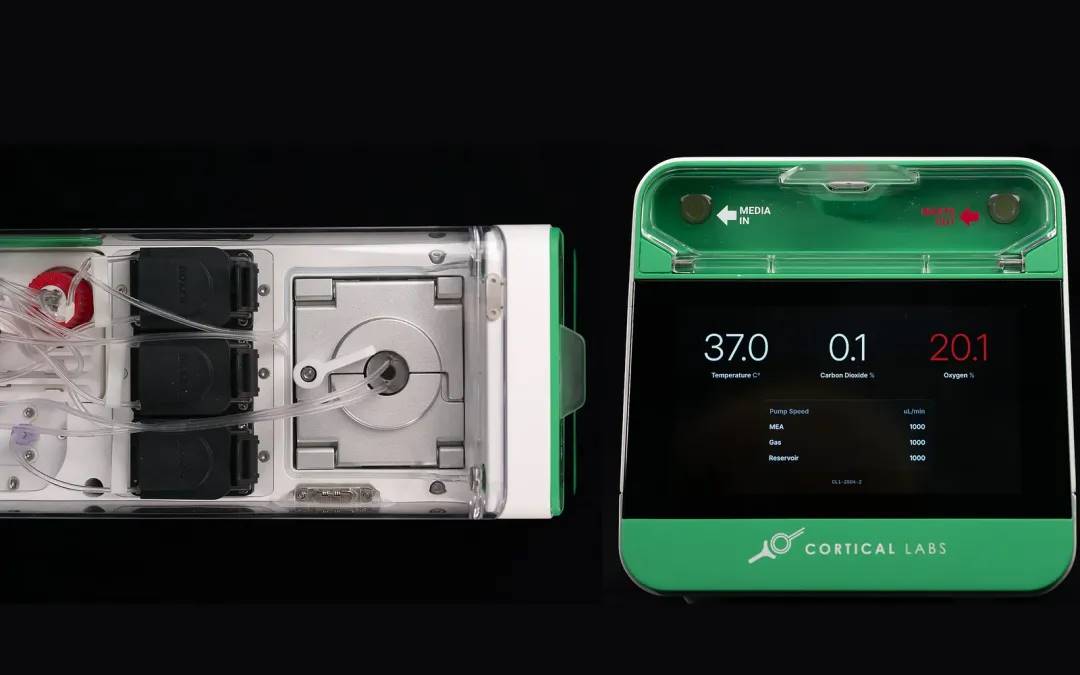
“Brain in a dish”|Image source: CL1
The first batch of 115 CL1 units will ship this summer, priced at $35,000 each, dropping to $20,000 per unit for bulk purchases. The target customers are clear: neuroscientists, pharmaceutical R&D companies, and teams researching AI and brain-inspired computing.
But Cortical Labs isn't content with selling CL1 only to elite labs.
They’ve introduced a “Wetware as a Service” (WaaS) model. Here, “wetware” refers to human or other biological brains and nervous systems.
Under this model, researchers don’t need to own physical CL1 devices. Instead, they can remotely log into Cortical Labs’ platform and access a live neuronal computing node in real time—adjusting stimulation parameters, collecting data, and even conducting remote training. Weekly rental for one CL1 unit is $300.
This feels eerily reminiscent of *Black Mirror* becoming reality.
In other words, for $300 a week, you can rent 800,000 programmable living human neurons. This isn’t subscribing to software or renting server space—it’s renting a “living” biological intelligence. While CL1 is nowhere near the complexity of human consciousness, it is indeed a form of life.
WaaS turns the building blocks of consciousness into tradable commodities—each neuron costing about $0.00005 per day. Could this eventually mean the 50–100 billion neurons in a human brain might one day be priced individually?
Bolder still: could WaaS evolve into LaaS—Life as a Service?
When it comes to human-machine integration, CL1 is certainly not the first. Neuralink has already entered clinical trials. Though their paths differ completely, both stand precisely at the boundary between carbon and silicon.
Neuralink aims to “connect humans to computers,” extending human cognitive capabilities. CL1, by contrast, seeks to “transform human cells into computation,” extracting neural capabilities to enhance machine systems.
In Neuralink’s vision, consciousness remains inside the brain—merely extended outward. In CL1’s logic, fragments of consciousness, learning abilities, and even possible “sensations” become modular, commodifiable functions.
Ultimately, technological questions morph into philosophical ones: Can the human brain truly be reshaped, activated, and commodified?
Or perhaps, when technology ceases to build only cold intelligence and begins learning how to live, how to survive—what then should we do?
On a hopeful note, this may simply represent one technical pathway. Like Guan Yifan and Cheng Xin in *The Three-Body Problem*, who, trapped in a black domain where electromagnetic wave speeds are drastically slowed and computational power nearly zero, were forced to manually perform celestial mechanics calculations using their brains. After decades, they finally adjusted their spacecraft’s trajectory and escaped the black domain.
When traditional computing stalls at physical limits, perhaps “growing a brain” is exactly where breakthroughs toward the technological singularity begin.
Join TechFlow official community to stay tuned
Telegram:https://t.me/TechFlowDaily
X (Twitter):https://x.com/TechFlowPost
X (Twitter) EN:https://x.com/BlockFlow_News
 极客公园
极客公园