








The arrival of the "invisible" crypto era: How to position for the next market boom?
TechFlow Selected TechFlow Selected
The arrival of the "invisible" crypto era: How to position for the next market boom?
We are facing not a knowledge gap, but a design gap.
 Navigating Web3 tides with focused insights
Author: arndxt_xo
Translation: Baicai Blockchain
Why I no longer recommend friends to "learn crypto first"?
Last month, I tried again to onboard a non-crypto user. Ten minutes in, she was lost between "choosing a wallet" and "paying gas fees with another token." I realized: the problem isn't a knowledge gap—it's a design gap.
It’s obvious—speculation brought the first wave of users, but it won’t attract the next billion. True mass adoption will begin when crypto products become "invisible"—users benefit without even realizing it. From the rise of stablecoins and institutional staking to AI’s growing role in shaping the digital economy, the foundation for scale is already laid. But to unlock this future, we must stop expecting users to learn crypto, and instead build products where they don’t even notice they’re using crypto.
Here are my thoughts on eight key trends:
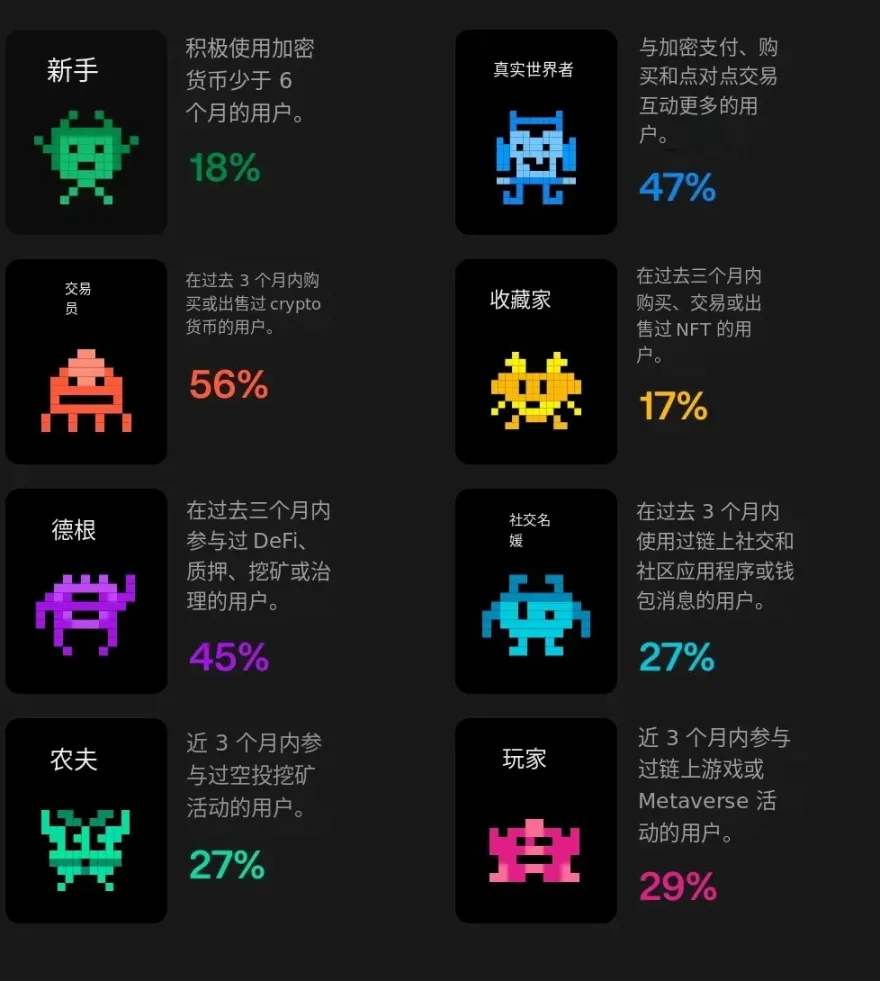
The next-gen wallets will win by focusing on doing one thing well
We’re witnessing a structural shift: users prefer two complementary wallets—one acting like an everyday fintech app, the other like a vault or “bank” app.
Wallet experiences are diverging. Developers who try to cram all features into a single interface will lose to the combo of (a) frictionless onboarding and (b) high-security storage.
Status quo:
Over half of users operate 2–5 wallets simultaneously. Nearly 48% say it’s because each blockchain remains a siloed “walled garden.”
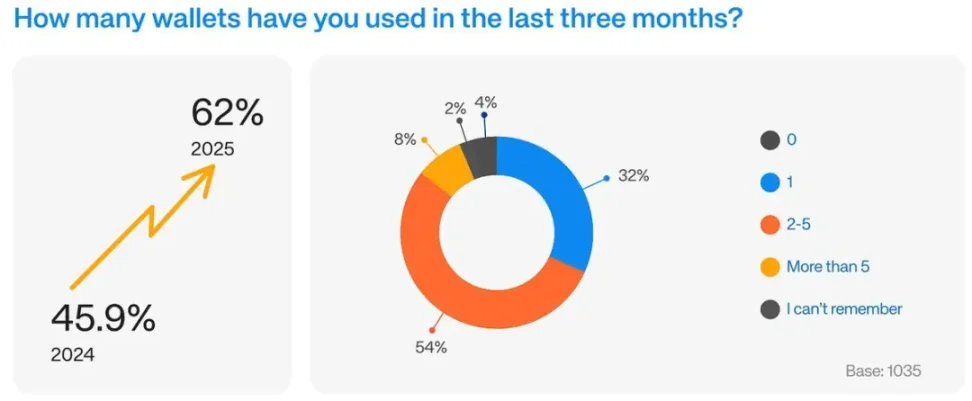
Concentration at the top: Among users with over two years of experience, 54% stick to Binance, Coinbase, MetaMask, or Trust Wallet, while new users show less than 20% market share for any single wallet.
Self-custody remains intimidating: Even within trusted ecosystems (e.g., Binance Web3 Wallet), only 22% opt for self-custody.
Multi-wallet fatigue: Users don’t want to manage multiple wallets—they just have no choice.
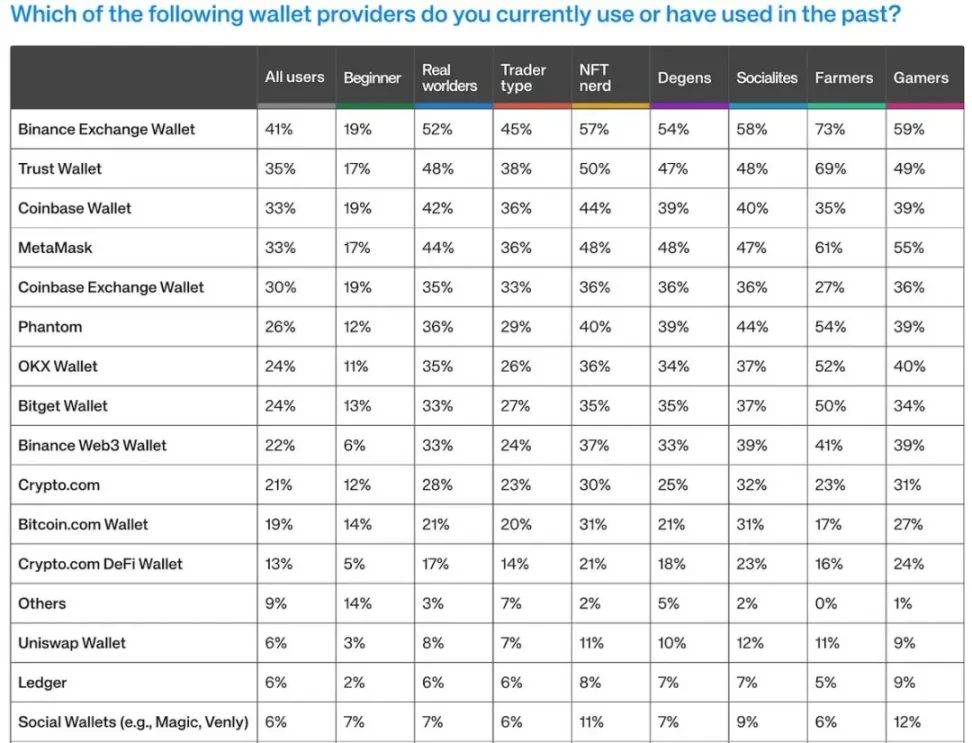
The “seamless multi-chain future” hasn’t arrived—48% use multiple wallets due to fragmented blockchain ecosystems.
44% intentionally separate wallets for security reasons, up from 33% last year.
Insights:
-
The industry has failed to deliver true interoperability, pushing operational complexity onto end users.
-
Users are becoming savvier and no longer blindly trust a single wallet for every use case.
Misalignment between behavior and belief
54% of users used crypto for payments or peer-to-peer transfers in the past quarter, yet only 12% list payments as their favorite activity.
In contrast, trading (spot, Meme, DeFi) remains the weekly mainstay for nearly all user groups (with few exceptions).
Three barriers suppressing utility over speculation:
-
Cost barrier: 39% cite high L1 network gas fees as the biggest adoption hurdle.
-
User experience barrier: Only 11% believe current onboarding is good enough to attract mainstream users.
-
Network effect barrier: Payments require smooth flow between merchants and friends, but fragmented wallets and chains break this loop.
Blockchains become the new infrastructure layer—but users shouldn’t notice
Multi-chain is a division of labor:
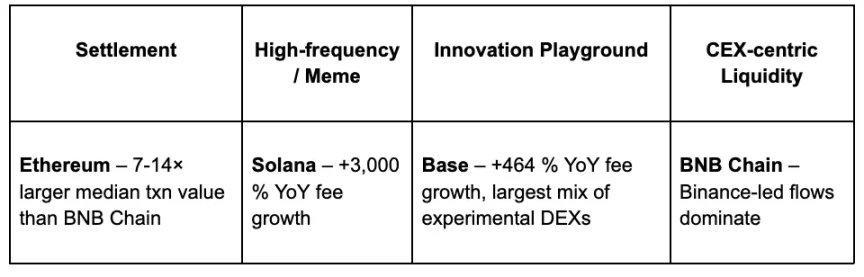
Ethereum: Institutional-grade settlement layer.
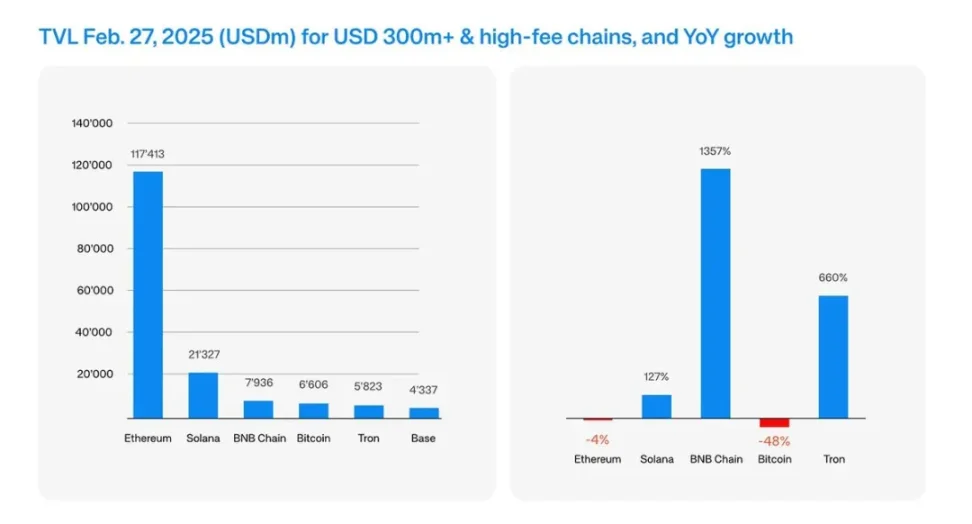
Solana: Rapidly becoming the chain of choice for high-frequency, high-engagement retail activity due to speed and low cost.
Chain abstraction is the winning model: Wallet sessions seamlessly route orders, balances, and identities across backends optimized for latency, cost, and security—users never manually pick a chain.
Data:
Solana stands out: +3000% YoY fee growth, +127% TVL increase—the highest among all L1s.
User preference: 43% primarily use Ethereum, 39% choose Solana, only 10% mainly use L2s—proving interoperability remains theoretical.
False sense of user confidence
Users claim to feel safer on-chain, but their wallet behaviors tell a different story.
Paradox explained: Users conflate personal security measures (e.g., hardware wallets, multisig) with systemic risks.
Reality: Attackers have industrialized “phishing-as-a-service,” and malicious contract lifecycles have shortened fourfold.
Product priority: Anti-phishing UX—clear signature interfaces, real-time transaction simulation, MPC transaction firewalls—must shift from advanced add-ons to default features in everyday wallets.
NFTs as infrastructure for digital culture
The NFT market is undergoing a necessary correction—from speculative PFP projects toward real digital goods and utility-driven experiences—finally showing signs of sustainability.
Trends:
Low-cost, high-frequency engagement: Examples like Rodeo.Club and Base’s low-cost collectibles mirror in-game purchase models.
NFTs as participation infrastructure in the digital economy: Loyalty points, badges, and membership perks will be tokenized as NFTs, portable and tradable across platforms.
Rise of cultural capital: NFTs become mechanisms for users to express identity and cultural belonging in digital spaces.
New metrics: NFT success will no longer be defined by floor price, but by user retention and engagement.
AI + NFT: AI-generated dynamic NFTs will evolve based on user behavior, emotions, or community events, delivering personalized experiences.
Bitcoin as a macro asset class
Bitcoin has evolved from a speculative asset into a macro financial tool and is emerging as a transaction layer for global settlements.
Trends:
From hedge to strategic reserve: De-dollarizing nations are quietly exploring Bitcoin as part of reserve diversification strategies.
L2 unlocks payment utility: The Lightning Network matures into a scalable payment layer; new protocols like Fedimint and Ark address privacy and UX issues.
Bitcoin as collateral: Institutions are beginning to use Bitcoin in structured financial products such as credit instruments and derivatives.
Global settlement network: Bitcoin serves as a neutral, censorship-resistant trade settlement layer, complementing—not competing with—fiat currencies.
Institutional staking as a strategic capital allocation model
After establishing its role as a macro hedge, institutions are now exploring how to generate yield from Bitcoin holdings.
Retail chases speculation, institutions choose staking: Institutional capital is steadily flowing into staking ecosystems on Ethereum and Solana.
Bitcoin staking potential: Through protocols like Babylon, Bitcoin is also entering the yield-generating arena.
Infrastructure over validators: The next wave of institutional capital will favor platforms offering institutional-grade custody, compliance reporting, and risk-managed staking products.
Yield diversification: As traditional fixed-income yields decline, staking returns are emerging as a new category of risk-adjusted returns.
Regulation, stablecoins, and AI: the next gateway
Regulatory optimism: 86% of users believe clearer rules will accelerate adoption, while only 14% think they’ll hinder innovation.
Stablecoin surge: Ownership rates nearly doubled YoY to 37%, and stablecoins are now the default payment rail in over 30 Stripe markets.
AI synergy: 64% believe AI will accelerate crypto development, and 29% anticipate a two-way flywheel effect.
Summary
Users are no longer fascinated by "Web3." They expect Web2-level simplicity, Web3-level ownership, and AI-level intelligence—all in one.
Teams that can abstract chain selection, eliminate fee friction, and embed predictive safety nets will transform crypto from a speculative playground into the connective tissue of an on-chain internet. The next billion users won’t even know they’re using Web3 products—this invisibility will be the ultimate UX victory.
Join TechFlow official community to stay tuned
Telegram:https://t.me/TechFlowDaily
X (Twitter):https://x.com/TechFlowPost
X (Twitter) EN:https://x.com/BlockFlow_News
 @arndxt_xo











