








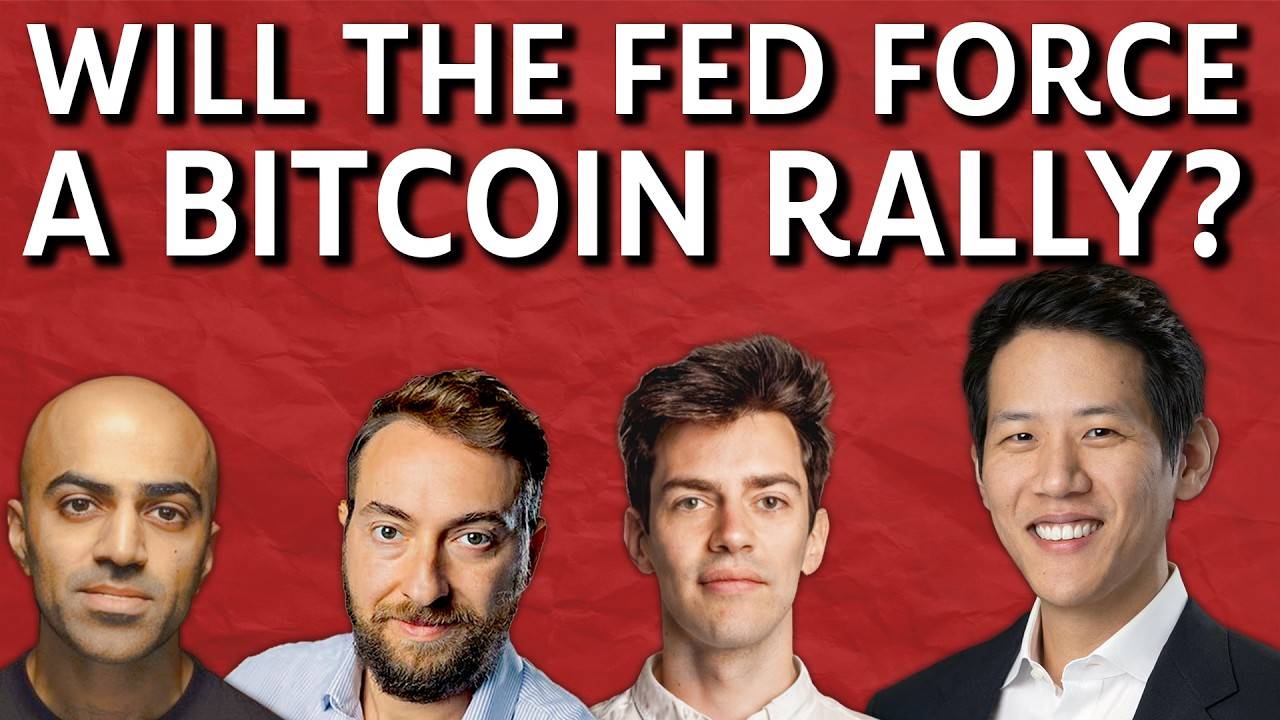
Interview with Bitwise Alpha Strategy Head: Bitcoin Will Reach $200,000 by Year-End
TechFlow Selected TechFlow Selected
Interview with Bitwise Alpha Strategy Head: Bitcoin Will Reach $200,000 by Year-End
Even in stagflation, Bitcoin can still become the fastest-growing asset.
 Navigating Web3 tides with focused insights
Compiled & Translated: TechFlow
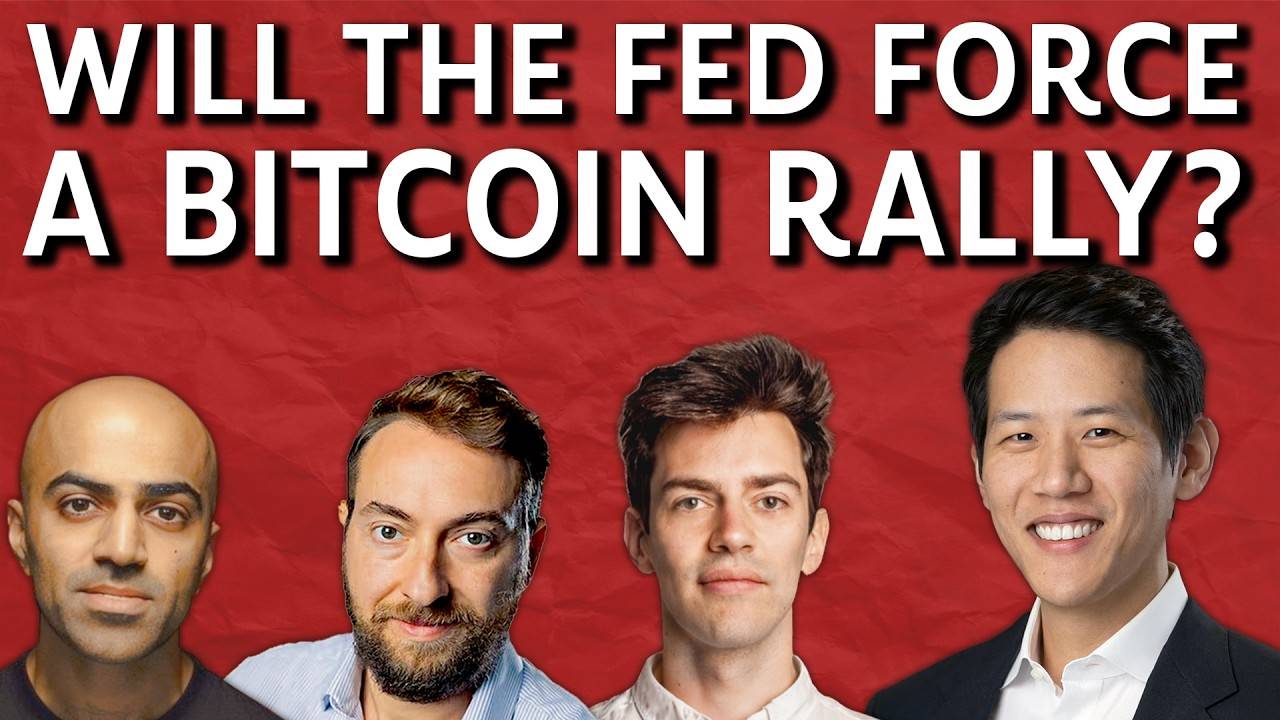
Guest: Jeff Park, Head of Alpha Strategies and Project Manager at Bitwise Asset Management
Hosts:
Haseeb Qureshi, Managing Partner at Dragonfly
Robert Leshner, CEO & Co-founder of Superstate
Tom Schmidt, Partner at Dragonfly
Podcast Source: Unchained
Original Title: Market Crash. But at Least We Get a $200K Bitcoin? - The Chopping Block
Release Date: April 11, 2025
Key Takeaways
-
Bitwise Alpha Strategy Outlook – The target price for Bitcoin by year-end is $200,000.
-
Bitcoin vs. Gold – Bitcoin shares similarities with gold as a store of value, with investor preference largely driven by volatility. Older investors tend to favor gold, while younger ones prefer Bitcoin—partly because they embrace its volatility. If you believe this is a key driver of Bitcoin’s value, that makes sense.
-
"TradFi Altcoins" – MicroStrategy plays the role of an altcoin in traditional finance, effectively combining crypto and Bitcoin exposure.
-
Circle Delays IPO – Circle's financial position is stronger than it initially appears. Despite high costs, their revenue now significantly exceeds levels from a year ago.
-
Ripple Acquires Hidden Road – A strategically meaningful move for Ripple, enabling more efficient use of its balance sheet and expanding market reach for its new stablecoin RLUSD.
-
Bitcoin Market Reversion – Some argue Bitcoin reacts differently based on interest rate changes. Lower rates benefit Bitcoin by increasing financial repression and inflation, reinforcing its role as a store of value.
-
The Impossible Trinity – After the end of the Bretton Woods system, we face an impossible trinity: only two of the following three can coexist—open capital flows, independent central banks, and floating exchange rates. Sacrifice one, and the other two must adjust accordingly.
-
Crypto Macro Decoupling – The Fed and global central banks are engaging in real stimulus to shield economies from shocks, which will distort asset prices. In such an environment, Bitcoin may decouple from other tokens.
Impact of Tariffs on Crypto & Bitcoin’s Role in Portfolios
Haseeb:
Jeff, you work at Bitwise Asset Management and have deep macro insights. Let’s talk about how tariffs affect crypto. What’s changed in the crypto market? Why should we expect tariffs to have such a big impact on crypto, even though crypto itself isn’t directly affected by tariffs—since there’s no import or export involved? So why does the crypto market care about tariff-related issues?
Jeff:
On a positive note, I hope to mark the bottom of the market here so we can look back at this episode favorably.
Overall, cryptocurrencies and Bitcoin have remained focal points for investors, and their role in portfolios continues to evolve. Since the launch of ETFs, mainstream investors can now incorporate Bitcoin into their global asset allocation more efficiently. This is why Bitcoin has become increasingly correlated with risk-on and risk-off sentiment.
In particular, Bitcoin as a store of value behaves similarly to gold, with volatility being the main differentiator in investor choice. Typically, older investors lean toward gold, while younger ones prefer Bitcoin. The reason younger investors favor Bitcoin is largely due to its volatility—if you believe that volatility is a core driver of its value, then this makes perfect sense.
On the other hand, if other macro assets become more volatile, the opportunity cost of holding Bitcoin rises, as you’re competing with these non-traditional assets. Traditional asset volatility, transmitted through ETFs, influences institutional interest in Bitcoin. Therefore, I see Bitcoin as often the best expression of risk appetite—but timing matters, especially given path dependencies in other asset classes. Undoubtedly, as volatility indices like the VIX shift, many start looking for discounts in equities—they might find opportunities in Tesla or Nvidia and sell Bitcoin to rebalance. I believe these dynamics are exactly what caused market fluctuations over the past few months.
Haseeb:
We’ve seen a clear market drop over the past few days. If you calculate Thursday and Friday—the trading days immediately after the tariff announcement—you’ll see a 4% to 5% decline. Then by Monday, or rather Tuesday’s close, another 2% was wiped out. So overall, we're down nearly 16% to 17% from the year’s highs. Depending on the index you follow, it could be worse. So far, Bitcoin hasn't truly acted as a safe haven—it’s traded closely in line with major equity indices.
Retail vs. Institutional Investors & Bitcoin’s Sensitivity to Interest Rates
Haseeb:
In the stock market, retail investors are actually buying while institutions are selling. JPMorgan reported that last Thursday and Friday were among the largest retail buying days in decades—an astonishing record. Retail investors are stepping in to buy the dip, believing the market will rebound, and seizing the opportunity.
I wonder if the same dynamic applies to the crypto market—is crypto still primarily retail-driven? While institutions participate in crypto, retail remains the dominant holder, even within the complex ETF landscape. Given that crypto is still largely retail-dominated, is that why Bitcoin has held up relatively well? Would things be worse if Bitcoin were more of an institutional asset?
Jeff:
I think Bitcoin has historically served as a leading indicator of global liquidity channels—its movements often reflect expectations around shifts in global liquidity. Now, institutional capital may react faster than retail did two years ago, but that’s still a key factor today.
A unique challenge with Bitcoin is its complexity in investor objectives. I typically frame Bitcoin in two ways when discussing it with institutional investors: positive rho Bitcoin and negative rho Bitcoin. Here, “rho” refers to Bitcoin’s sensitivity to interest rate changes. Some believe Bitcoin performs differently depending on interest rate movements. Negative rho Bitcoin means lower rates benefit Bitcoin, as they lead to financial repression and inflation, making Bitcoin a stronger store of value.
Positive rho Bitcoin, on the other hand, emerges in scenarios of collapse or extreme deflation, where Bitcoin becomes a safe-haven asset sought during crises. Yesterday’s developments in China exemplify this complex relationship. In response to Trump’s actions, China expanded the range of yuan depreciation, allowing the currency to appreciate in ways previously unseen. Today, we see the yuan depreciating rapidly—almost back to 2008 levels. If you consider the implications, real yuan depreciation leads to deflationary pressure, which tends to lower global prices and increases the likelihood of imported deflation. This is a positive rho Bitcoin world—a scenario neither the U.S. nor China wants. They’re essentially escalating this confrontation.
An alternative approach China could have taken is large-scale domestic fiscal stimulus to boost consumption—an inflationary path, essentially releasing the Bitcoin valve via negative rho Chinese QE. Yesterday, Bitcoin initially rose, but later reversed as markets priced in deflation risks.
Overall, Bitcoin’s sensitivity to interest rates remains unstable during global adoption. I believe we’re currently in a negative rho Bitcoin environment, where expectations of inflation and loose policy drive its value. Yet, without a doubt, in times of extreme chaos, Bitcoin will emerge as the ultimate store of value.
Haseeb:
In the Bitcoin world, two forces are at play. As Bitcoin matures, this duality may become clearer. Its reactions sometimes seem erratic and unpredictable. Sometimes it ignores macro shocks, then drops sharply over a weekend. Today, we see it moving almost in lockstep with Nasdaq.
Altcoins and Institutional Investor Interest
Haseeb:
In the current market environment, altcoins have taken a harder hit. How do you view altcoins in this context? There’s growing anticipation of policy easing—not just tariffs, but potentially significant tax cuts. Additionally, markets now expect the Fed to cut rates more frequently than previously anticipated. As far as I know, CME currently prices in five rate cuts this year, up from just a few—or even one—earlier. How do you interpret these shifts, and what impact will they have on the altcoin market?
Jeff:
Altcoins are quite complex and face two major challenges.
First, beyond Bitcoin, most altcoins differ significantly in consensus mechanisms, requiring more maintenance. Bitcoin is like cold storage under your mattress—it usually just works. With altcoins, especially proof-of-stake tokens, investors must actively participate in the ecosystem to earn yield, which lowers barriers. But if you're an institutional investor whose custodian doesn’t allow on-chain activity, you miss out—like missing a special dividend because your shares are held in a restrictive account. This creates natural resistance, as investors don’t want to be at a competitive disadvantage. And yes, such imbalances exist in the altcoin space.
The second factor is that many investors treat altcoins as leveraged bets. They enjoy Bitcoin’s volatility but seek even higher returns, leverage, and volatility from altcoins.
But the fundamental shift came in December last year with Bitcoin ETF options. Now, through regulated markets, investors can trade Bitcoin options—offering similar thrills of speculation and hedging. This allows for more strategic leverage without exposure to the risks of "narratives" or insider dynamics.
MicroStrategy: Alternative Investment in Traditional Finance
Haseeb:
So it sounds like you're saying altcoins appeal to institutions because Bitcoin isn't exciting enough—they want higher-risk plays. Altcoins are like gambling versions of Bitcoin. Now, institutions can access leveraged exposure via CME Bitcoin and ETF options, making Bitcoin options more attractive than altcoins.
Jeff:
That might explain MicroStrategy’s rise. In my view, MicroStrategy plays the role of an altcoin in traditional finance—it’s essentially a hybrid of crypto and Bitcoin.
MicroStrategy offers extra excitement. Its volatility exceeds Bitcoin’s. When Bitcoin trades between $45,000 and $55,000, MicroStrategy’s stock can swing from $100 to $200. For liquid investors, MSTR provides a more thrilling experience than altcoins, without the risk of diving into unfamiliar projects. Plus, MicroStrategy uses financial engineering—issuing convertible bonds and structured preferred shares—to offer various risk profiles. It’s like choosing your preferred level of altcoin risk from a Bitcoin buffet.
I believe MicroStrategy becoming one of the most traded stocks and options, along with the success of 2x leveraged MSTR ETFs, shows how Bitcoin’s financialization attracts traditional investors via MSTR—reducing demand for actual altcoins.
Haseeb:
I find this story a bit hard to believe. While MSTR’s derivative structure may be valid, in the ETF market, institutions mainly access altcoins through Ethereum—and the ETH ETF market has never exceeded $10 billion. That’s not a large market. Most altcoins are still held by retail, not institutional investors. So any explanation for the altcoin market must start with retail. Retail isn’t driving the narrative here. Institutions may be trading Bitcoin ETF options or leveraged MSTR positions, but that’s not why altcoins are falling.
Jeff:
Yes, if you talk to most crypto traders and investors, they’ll say they’re trying to generate yield from their tokens. Even if Ethereum underperformed Bitcoin last year, if you account for additional yield from productive use—like re-staking via Eigenlayer or EtherFi Rent—the total return picture looks very different. Participating in re-staking means ETH’s total market return isn’t just about price. That’s my point. So if you’re an institution that can’t access Renzo or EtherFi…
Haseeb:
If I may rephrase your point: Right now, global capital is flooding into U.S. equities. This is somewhat paradoxical—despite the U.S. being a relatively slow-growth economy, it’s absorbing global savings. We’re trying to fix trade imbalances and redirect dollar inflows, but we still need a market where investors are willing to take risk. That market might no longer be U.S. stocks—it could be crypto.
Jeff:
In that case, I think it benefits Bitcoin, because at least then we can begin thinking about building strategic Bitcoin reserves—as Bitcoin may help redefine the social contract behind dollar dominance.
Haseeb:
Now we’re clearly in uncertain territory—no one knows how tariffs will unfold, and markets are reacting accordingly.
Geopolitical Impact of Tariffs
Tom:
Jeff, about two months ago you wrote an article on "Plaza Accord 2.0," suggesting tariffs could be used to adjust the dollar’s exchange rate and lower interest rates. We’re seeing a version of this now. Obviously, this situation existed ten years ago—has it unfolded as you expected? Anything surprise you? How do you think we’ve diverged from that path?
Jeff:
Since sharing my views on the long-term impact of tariffs on Bitcoin, I’ve become less certain about Trump’s ultimate goal.
In an ideal world, pursuing a Plaza-like or Core Accord 2.0 strategy makes sense. The dollar does need to depreciate to boost U.S. competitiveness, but you want foreign creditors to keep buying Treasuries—requiring some kind of coordinated agreement. This requires strategy, not blind consensus. That would be the ideal outcome.
What shook my confidence was when Trump started attacking nearly everyone indiscriminately—including allies I thought were untouchable, like Japan. If any country deserves special treatment, it’s Japan, currently the largest holder of U.S. Treasuries. You need to tread carefully. Yet Trump didn’t show that sensitivity—he lumped Japan with China, calling both currency manipulators. That shocked me, because Japan typically manipulates its currency in America’s interest. This lack of nuanced handling toward allies made me realize the endgame might be much higher protectionism—something I didn’t think possible.
Robert:
I’ve developed a theory: This isn’t just about protectionism—it’s about creating conditions for a shift toward protectionism. Many companies are now thinking: Maybe we should reshore some production, due to uncertainty and desire to be closer to markets. Many are pulling demand forward. I know people buying cars, furniture, and durable goods ahead of tariffs. The government likely wants to see manufacturing jobs return—there’s lots of discussion and jokes about whether we’ll make sweaters, socks, or Nikes here.
Realistically, no one expects low-end manufacturing to return to the U.S. If anything, it’d be highly specific sectors—semiconductors and chips, for example.
Haseeb:
But we haven’t imposed tariffs on semiconductors—the only part of this policy that seems geopolitically strategic is excluded.
Robert:
We can’t shock the system that much—imagine the fallout if we taxed them. But I do think one underdiscussed aspect is that this isn’t just about trade geopolitics. It’s about shifting manufacturing from China to countries more aligned with us.
Haseeb:
We’ve been pushing companies to build factories in Vietnam, Malaysia, Mexico—but our tariffs on them are higher than on China.
Robert:
But we’ll negotiate agreements and find friendly solutions with those countries. We likely won’t do the same with China—rhetoric and escalation toward China are in a different category. So the likely end state is high tariffs on China, none on allies. If you’re a company in China, you start thinking: I need to relocate—to Vietnam, Japan, or another U.S.-aligned nation.
Jeff:
I agree, Robert. That’s a path we Americans must envision—it’s the most effective and ideal outcome. But we also can’t assume the path to get there is free of negative consequences.
For instance, I believe the White House recently signaled Japan would get a priority channel in tariff negotiations. Part of that may be compensation—America offended Japan, so giving them strategic advantage as an ally. They’re playing these games. But in the past week and a half, while Japan felt slighted and received no priority, China announced it’s exploring a trilateral trade relationship with South Korea and Japan. The public nature of this statement suggests backchannel talks already happened—a way for China to benefit, as they wouldn’t make such a statement lightly.
These three Asian nations rarely cooperate—they’re not exactly friendly. So you can’t rule out edge-case deals in America’s path dependency that might ultimately undermine U.S. influence—that’s my biggest concern. These moves could cause collateral damage in a multilateral world, and we should proceed cautiously.
Haseeb:
I think these tariff policies are deeply flawed and lack coherent strategy. While we exempt semiconductors—deemed critical for military and geopolitical reasons—we impose higher tariffs on many allies than on openly hostile nations. Russia and Belarus are the only countries excluded from the tariff list, giving them a clear path to free trade with us. Meanwhile, China, by positioning itself as a stable partner, is increasingly committing to free trade and becoming a reliable partner for more and more nations.
Global Monetary System & Bitcoin’s Role
Haseeb:
I think Trump prioritizes power over alliances and diplomacy in negotiations and policymaking. Sometimes that’s tactical. But doing so in peacetime—when the economy is strong, unemployment is at historic lows, growth is rapid, and we’re on the brink of AI and crypto tech revolutions—picking fights and turning everyone into enemies is terrible timing.
Jeff:
My concern is that if the world starts reevaluating the dollar’s role and the U.S.-led financial system, various alternatives could emerge. One framework we can discuss is the “trilemma” theory: After the end of the Bretton Woods system, we face an impossible trinity—only two of the following three can coexist: open capital flows, independent central banks, and floating exchange rates. Give up one, and the other two must adapt.
For example, the U.S. chose open capital flows and an independent Fed, so the dollar must float freely. China took a different path—closed capital accounts, PBOC-managed exchange rates, allowing fixed rates. The eurozone chose open capital flows and floating rates, but lacks an independent central bank—policy is aggregated across member states. So there are multiple designs for global monetary systems, and now people are questioning whether there are more effective models than the freely floating system the U.S. promotes.
Bitcoin’s Performance in Different Economic Environments
Haseeb:
The risk of recession is high. If we enter stagflation—recession plus high inflation—likely due to tariffs, how do you think Bitcoin would perform?
Jeff:
I still expect Bitcoin to reach $200,000 by year-end—I believe that target remains highly achievable. Even in stagflation, Bitcoin could still be the fastest-growing asset and perform well.
Haseeb:
So you think Bitcoin wins in speculative markets. But if instead, the Fed cuts rates sharply and launches quantitative easing, reviving the economy while inflation stays high—how would Bitcoin perform then?
Jeff:
I think it would do even better. The direction of these events may vary greatly—it’s really just a matter of time. As a liquid asset, no one knows exactly where this ends—it’s a commodity.
I’m an extremely path-dependent options pricer, so I evaluate the entire local volatility surface—we may need to recalibrate.
Haseeb:
Suppose tariffs are revoked—courts strike them down, Congress lacks the courage to reimpose them. So the entire tariff strategy collapses. Do you think Bitcoin would be higher or lower compared to a world where tariffs remain, we enter stagflation, and the Fed expands?
Jeff:
I think it’s still a good outcome—still bullish for Bitcoin, maybe ending at $175,000.
Haseeb:
So revoking tariffs is worse, while keeping tariffs with Fed expansion is better—what do you all think?
Robert:
I think that’s almost impossible. Revoking tariffs has little real impact—just like going back two weeks. The only real change is trust between the U.S. and its trade partners. I do think this could become a lingering problem for the U.S., but it might also benefit alternative economic structures—even good news for Bitcoin. People might lose confidence in U.S. Treasuries and the dollar.
Haseeb:
Do you think Bitcoin fares better if tariffs stay and the Fed expands—or the opposite?
Robert:
I think unchanged tariffs might be better. Markets typically react to current changes, not future two-step outcomes—they operate on what’s happening now.
Tom:
Even if tariffs are fully revoked and we go back two weeks, the dollar is still weakening—I think that could be more bullish for Bitcoin. I keep thinking about global liquidity and its link to Bitcoin. We’ve discussed this many times—Bitcoin still behaves like a risk asset. I wish it were more like an alternative to gold, but that hasn’t materialized yet. Maybe now’s the time. There’s always a first time. Look at price action over the past three to four years—it feels like we’re approaching a final transformation.
Haseeb:
So, would reversing tariffs be better? I’m not sure—because keeping tariffs may bring more pain and instability, potentially pushing Bitcoin higher by year-end. I think there’s a chance crypto decouples from real economy—because the Fed and global central banks are launching real stimulus to protect their economies, distorting asset prices. I think this is more likely to happen with Bitcoin than with other tokens.
In that case, Bitcoin could decouple from other tokens. I’m uncertain about both outcomes. It feels deeply counterintuitive—on any given day, Bitcoin doesn’t behave as expected, nor do other tokens. Correlations are breaking down. Sometimes Bitcoin trades with gold, sometimes with Nasdaq, sometimes it breaks away entirely—this asset is clearly evolving.
I think by 2025 or 2026, we’ll talk about Bitcoin very differently, and we’ll have a new mental model. I suspect by year-end, we’ll understand crypto’s behavior in times of macro dislocation in a completely new way.
Jeff:
I agree. Global liquidity is the same. I think people will start understanding leverage in these discussions more granularly. Tom, as you said, one issue with global liquidity is that dollar depreciation actually benefits global liquidity. But I’m not sure whether increased global liquidity from a weaker dollar will necessarily lift Bitcoin’s valuation.
Circle’s IPO and Business Viability
Haseeb:
I want to discuss two capital market stories tied to the broader backdrop. First, Circle announced its IPO filing. Circle plans to go public at a $4–5 billion valuation. Clearly, Circle has been striving to enter public markets, but faced hurdles from Gensler and the prior SEC, making it hard for crypto firms to list. Now they finally got approval, but due to tariff concerns, they’ve delayed the IPO—officially withdrawing the application. Still, debate continues around the company’s viability—how capital markets will view it, and whether it can achieve its target valuation—all still unresolved.
What are your thoughts on Circle’s prospects? How do you think it will be received in public markets? Clearly, all IPOs are paused now—every company planning to go public is waiting for stability. But setting that aside, how do you view Circle as a public-market-bound business?
Robert:
I think their financials don’t fully reflect USDC’s growth over the past few months. USDC has been growing. Since they earn interest on stablecoin reserves, there’s a lag effect. If a business grows steadily over a year, revenue doesn’t spike immediately—there’s an averaging effect. So I believe their financials are better than they appear. Despite high costs, their revenue is now far above a year ago. If USDC supply keeps growing, it’ll disproportionately benefit them. I think this is underestimated.
Also, observing crypto Twitter, I notice Circle is a massive organization compared to Tether. People say Circle is tiny next to Tether, but they have 40 times more employees. This suggests they could eventually allocate human capital more efficiently. Executive pay is also high. All signs point to suboptimal operations—possibly a “good times syndrome,” where they earned over 4% effortlessly during boom times. So if the economy stays strong, their business could soar; if it weakens, tough decisions await.
Haseeb:
A core question about Circle is: How will public markets classify it? As an asset manager or a tech company? That directly impacts the valuation multiple. Robert, how do you think public markets will view Circle at IPO?
Robert:
I see it as an asset manager—each dollar of revenue is substantial, consistently above 4%. They share fees with Coinbase, but margins remain healthy.
They earn huge fees from managing assets behind stablecoins. Whatever add-on features they launch for developers won’t materially change revenue. Their profit engine is simply how much USDC they issue and the target interest rate. That’s the whole business.
Jeff:
It is an asset management structure, but possibly with an inverted asset management multiple. In high-rate environments, it can be extremely profitable—unlike most listed asset managers like BlackRock, which thrive in low-rate worlds. So its relationship to traditional asset management differs fundamentally, with deeper implications. I’d even say pairing a Bitcoin portfolio with Circle could serve as a useful hedge.
But I want to emphasize the revenue split with Coinbase—because the valuation multiple hinges on whether there’s a defensible moat. If a distribution partner takes such a large cut, how defensible is Circle’s model? Makes me wonder: Is this really a tech play, or more of a distribution game? If it’s distribution, the underwriting approach changes entirely. We’ll see.
Haseeb:
Tom, what’s your take on Circle?
Tom:
I’ll hold back a bit—I don’t want to sound anti-Circle. I think their team is great, and I deeply respect their industry contributions. But last year, I half-joked that Tether could easily buy Circle with just one quarter of profits. Frankly, that joke feels less exaggerated over time. I think Tether has a better structural cost model. No one in D.C. messes with them. They could tear up the Coinbase deal or shut down products, switch everything to USDT, and end up with a cleaner, stronger company.
Watching their evolution over the past year, their margins keep shrinking, profitability declining. I genuinely don’t see their strong upside. The tech story sounds cool, but hasn’t materialized. It looks more like an asset manager.
Haseeb:
I admit I haven’t studied Circle’s S-1 closely, but I’ve noticed a few things. When rates rose, stablecoin supply declined—understandable, since at zero rates, there’s no opportunity cost to keeping money on-chain. As rates fall, more capital should flow into stablecoins. But is this inverse force symmetrical? I’m not sure—it might not be. With tighter regulation, stablecoins are now seen as safer than in 2021–2022, which could shift dynamics.
Second, Circle can charge high fees on issuance and redemption. If you control the stablecoin people use for payments, and Circle gains regulatory advantages—easier licensing, favor with regulators under a stablecoin bill—they could gain a major edge over Tether. Can they monetize that? Possibly—especially as other firms rush to integrate stablecoins into domestic operations. Beyond banking—holding assets and liabilities, earning float—there’s more to the story. I agree with you: right now, it looks like that, because rates are high. As rates fall, they’ll need new monetization paths. After all, right now, it’s basically a duopoly between Circle and Tether. I think we might see segmentation—like in DeFi, where USDC dominates. In emerging markets, Tether rules.
If that happens, each issuer could aggressively monetize their niche without worrying about price competition. In DeFi, few alternatives exist. In emerging markets, few choices either. You must use their token—so they can extract higher fees upstream and downstream. Take Tron—historically high fees. Check Tron blockchain fees today: most chains have low fees now (it’s a bear market, low volume, focus on macro), but Tron’s fees are still high.
Why? Not due to congestion—validators voted to raise fees. You can see this as Justin Sun exploiting the fact that people must use Tron. So Tron extracts massive profits from every payment on its network. To me, that’s a perfect example of monopoly power on payment infrastructure. Could Tether and USDC find ways to create similar fee structures? I don’t see why not—especially if the Treasury-based core model becomes less attractive.
Tom:
I think that’s a narrative—part of the value capture story. But the balance sheet tells a different story: What percentage of USDC is on Coinbase? It’s not being used as payment infrastructure. So I see this as aspirational—I really hope it happens. I’d love to see more duopoly formation, more competition. But unless they make Tether illegal, I just don’t see it happening.
Jeff:
I think that’s nearly impossible—U.S. strategic interest lies in keeping both entities independent. The privilege you mentioned reflects foreigners’ willingness to hold dollars and pay any price for it. The U.S. can treat foreign holders differently from domestic citizens—that privilege itself is the premium. Philosophically, even if the U.S. wants to assert superiority, it still benefits from two independent players. Merging them would be bad—new entrants might challenge Tether, creating bigger problems for the U.S.
Significance of Ripple Labs’ Acquisition of Hidden Road
Haseeb:
Today we learned about the largest M&A deal in crypto history—Ripple Labs acquiring Hidden Road for $1.25 billion. Hidden Road is an institutional product provider, serving mostly institutional clients—most retail investors aren’t familiar with them. As the second-largest prime broker in crypto, Hidden Road processes about $3 trillion in annual trading volume and serves over 300 institutional clients. In M&A, headline numbers often combine multiple factors or complex earn-out structures. But this deal is undeniably significant. Strategically, it makes sense for Ripple: First, they can deploy their balance sheet more effectively, clearly sitting on large cash reserves; second, the acquisition helps expand market reach for their new stablecoin RLUSD.
This deal is fascinating. We’re actually investors in Hidden Road—so now we’re investors in Ripple Labs too. Congratulations to us—the Hidden Road team executed brilliantly. For the industry, this is an interesting moment—especially against the current macro backdrop of widespread instability, with nearly all crypto assets falling. This year has been rough, but stablecoins are growing, more institutions are entering, and the ETF ecosystem looks strong. So I’d like to hear your thoughts on this major deal. Robert, what went through your mind when you heard the news?
Robert:
Full disclosure—I’m CEO of Superstate, and we’re a Hidden Road client. We use their execution services—the team is excellent, the product great. When I heard the news, I had a “huh” moment. Rumor had it Falcon X was considering the acquisition—I could imagine Coinbase or other exchanges buying them. So seeing Ripple as the acquirer surprised me. I think it makes sense for Ripple—given Hidden Road’s market share, the price isn’t excessive. If this boosts XRP Ledger usage, they can pitch that story and sell enough XRP to fund the entire deal. So it’s a smart move for Ripple. Just not the outcome I expected.
Jeff:
I was surprised, but not entirely—integration between crypto and traditional financial services is clearly trending. Offering multi-asset solutions is a logical next step.
What surprised me is that I saw Hidden Road as Citadel’s “down payment” on crypto. I expected Citadel to either bring it in-house—especially with clearer regulation—or keep funding it externally without direct involvement.
It confirms my view: It’s much easier for traditional firms to enter crypto with auxiliary services than vice versa. I noticed Hidden Road tried expanding into non-crypto areas—offering crypto shorting, but also aiming to be a full multi-asset solution, a fixed-income clearing partner or market maker—things Citadel already does.
It reminds me of Goldman Sachs now offering prime brokerage to compete with Falcon X. In reality, it’s tough for crypto firms to enter TradFi, but easy for TradFi to enter crypto. This deal likely reflects that trend.
Haseeb:
Tom, what’s your take?
Tom:
I was genuinely surprised—given it’s a portfolio company—but thrilled. As a Ripple Labs investor, this is exciting.
Haseeb:
I think for most listeners, the average person might not even know what a prime broker is. So when they hear “biggest M&A in crypto,” it sounds impressive—but only 300 clients use it. So in a way, this marks the maturation of crypto’s financial infrastructure. In part, Hidden Road emerged as a response to FTX—after that collapse, more institutional traders didn’t want counterparty risk. They wanted a neutral party between them and exchanges—that’s the core function of a prime broker. Hidden Road offers many other services to boost capital efficiency, but that’s a key story. As you noted, they spun out of Citadel, a major hedge fund and asset manager. So this is truly a convergence of TradFi and crypto market structure.
To me, the biggest takeaway is that beyond Ripple gaining distribution via Hidden Road, Hidden Road must remain neutral and operate independently to stay useful as a prime broker. That’s also why Coinbase can’t truly own a prime broker—they’re an exchange themselves, so not seen as neutral. So I think the biggest thing is: This proves crypto is maturing. Real M&A deals like this, and a company achieving such success, are signs of an industry coming of age. I think it’s a positive signal for the future of this space.
Right now, with global turmoil and steep market declines, staying positive is hard. But events like this are bright spots—reasons to be optimistic. I think long-term capital sees this and is willing to make big bets. To me, that’s the key insight: M&A is still happening—and that’s a good sign.
Join TechFlow official community to stay tuned
Telegram:https://t.me/TechFlowDaily
X (Twitter):https://x.com/TechFlowPost
X (Twitter) EN:https://x.com/BlockFlow_News
 深潮TechFlow


