Crypto in a Boring Market: Temporarily Transitioning into the "Entertainment Industry"
TechFlow Selected TechFlow Selected
Crypto in a Boring Market: Temporarily Transitioning into the "Entertainment Industry"
What matters most is that someone is willing to watch.
 Navigating Web3 tides with focused insights
Written by: TechFlow

The market has been sluggish over the past week, and sentiment remains stubbornly "lukewarm." Amid mixed news flow, people's enthusiasm is clearly waning. It seems the market has once again entered that quiet, lifeless phase typical of a bear market.
Yet even in this dull environment, China’s crypto community still has its own unique buzz.
KOLs and project teams—pulling out all the stops for traffic?
In recent days, Twitter chatter hasn’t focused on which project raised funds or achieved technical breakthroughs. Instead, from tech discussions to gossip, from project analysis to social trends, the Chinese crypto X-space is quietly evolving into a lighthearted atmosphere of “melon-eating” (obsessively following drama).
Chasing attention has become the core content strategy for KOLs. Many now attract followers through personal appearances or lifestyle content—selfies, body shots, even humorous short videos. And admittedly, it works: engagement metrics have visibly improved.
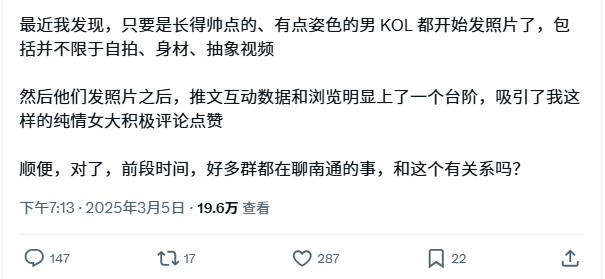
Indeed, there's little excitement around debates like which L2 is most legitimate or which DeFi protocol generates the highest yields. Instead, gossip and social dynamics dominate conversations—personal relationships and private feuds have become the talk of the town. In Spaces with 5,000–6,000 participants, heated discussions revolve around which business KOL offers better value, or which after-party had underwhelming quality. Apparently, KOLs’ private lives and interpersonal drama resonate more than technological innovation. Even educational content remains popular—but instead of teaching “how to quickly get started with a project,” it now teaches “how to climb the social ladder.”
Clearly, the cost of capturing attention is inflating. Not only are KOLs exhausting every trick to grab eyeballs, but some project teams are also resorting to bizarre marketing tactics. Simply asking users to change their names, as projects like LENS or IP did before, no longer cuts it. ANON (@HeyAnonai), a DeFai concept project, tried a tactic involving multiple female influencers simultaneously posting selfies with identical captions to draw attention.
But the campaign didn’t end there. The next day, many KOLs who appeared to be “left out” of the campaign joined in with parody posts—using meme images and copying the same caption—to mock ANON’s marketing stunt. The farce culminated when project founder @danielesesta paid various KOLs to delete their posts (though most kept the jokes up despite receiving payment). In terms of traffic generation, this reverse publicity significantly boosted ANON’s visibility—an arguably genius marketing move.

Not everyone enjoys the “traffic circus”
Facing a social media environment distorted by attention-seeking behavior, not everyone appreciates seeing their feeds polluted by this wave of entertainment-driven content. Many have expressed quiet frustration and dissatisfaction:

Twitter user 0xWizard called for renewed focus on on-chain trends and market movements, urging others to avoid getting lost in the noise of “crypto江湖 (jianghu)” drama.
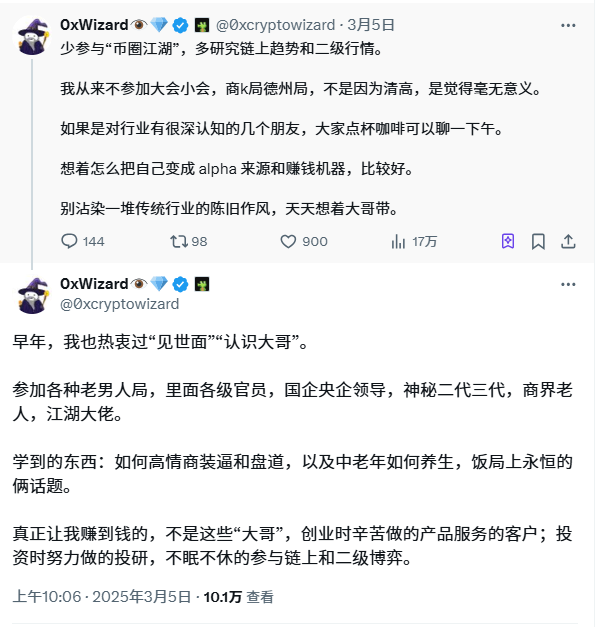
A large part of crypto’s appeal lies in the wealth effect generated by technological innovation and value creation—not celebrity gossip or social maneuvering. But with poor market conditions and no new catalysts emerging, the environment has grown increasingly restless. High-quality content is being pushed to the margins, while fast, shallow, entertainment-focused material dominates. This reflects a kind of “bad money drives out good” trend: truly promising projects and innovations go unnoticed, while content purely designed for clicks takes center stage. Some worry that if this continues, it could erode the market’s technological foundation and harm long-term development. These voices aren’t loud, but they carry a hint of resignation.
Summary
Objectively speaking, this current obsession with traffic and hype is a natural reaction during market downturns. A volatile environment breeds impatience. Deep project analysis and technical discussions—requiring time and patience—struggle to ignite immediate excitement. By comparison, entertainment-style content easily grabs attention and delivers better account traffic metrics.
This phenomenon isn’t entirely negative. Especially during bear markets, adding some entertainment to boost engagement and maintain account activity is understandable. However, when KOLs increasingly rely on pure traffic plays, when project teams prioritize short-term visibility, and when users grow accustomed to chasing drama, high-quality, substantive content inevitably gets sidelined.
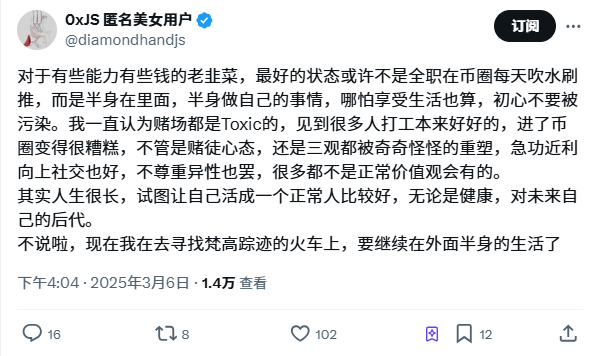
In the face of such restlessness, we might borrow words from Twitter user @diamondhandjs:
“Gambling environments are toxic. I’ve seen many people doing fine with regular jobs, then entering crypto and deteriorating rapidly—whether it’s developing a gambler’s mentality, or having their values oddly reshaped. Being obsessed with quick wins and upward social climbing, disrespecting the opposite sex—it’s just not what normal values should look like. Life is long. It’s better to live like a normal person, for your own health and for the sake of future generations.”
As desires and attention demands accelerate within the crypto space, perhaps we can move beyond “no-limits hype,” and instead aim for content that balances entertainment value with quality. Audiences would surely welcome that. And as consumers of this content, if you simply can’t stand the prevailing format, maybe it’s best to step away from the noisy social apps for a while—and focus on your own growth.
Join TechFlow official community to stay tuned
Telegram:https://t.me/TechFlowDaily
X (Twitter):https://x.com/TechFlowPost
X (Twitter) EN:https://x.com/BlockFlow_News
 深潮TechFlow