








External Innovation and Internal Dilemmas: Crypto Navigating Through the Fog
TechFlow Selected TechFlow Selected
External Innovation and Internal Dilemmas: Crypto Navigating Through the Fog
Behind the retreat of MemeCoin might lie a turning point, suggesting that humanity's future may not be solely about AI.
 Navigating Web3 tides with focused insights
Author: Zeke, Researcher at YBB Capital
1. AI is Inevitable, But Crypto x AI?
At the beginning of 2025, DeepSeek, developed by China's hedge fund High-Flyer Quantitative, dropped a "nuclear bomb" on the AI industry. A Chinese AI model trained using only 2,048 NVIDIA H800 GPUs at a cost of $5.58 million—about one-tenth of Meta’s budget—achieved performance comparable to GPT-4o and Llama 3.1 on benchmark tests like MMLU and GPQA, even slightly surpassing these top Silicon Valley models in complex reasoning and Chinese semantic understanding. Despite years of U.S. chip restrictions against China, DeepSeek has dramatically deconstructed this technological blockade. Behind the walls, Chinese-style AI has finally forged a domestically suitable yet globally competitive technical path—an open-source, low-cost, standardized combination that directly breached America’s computational moat.
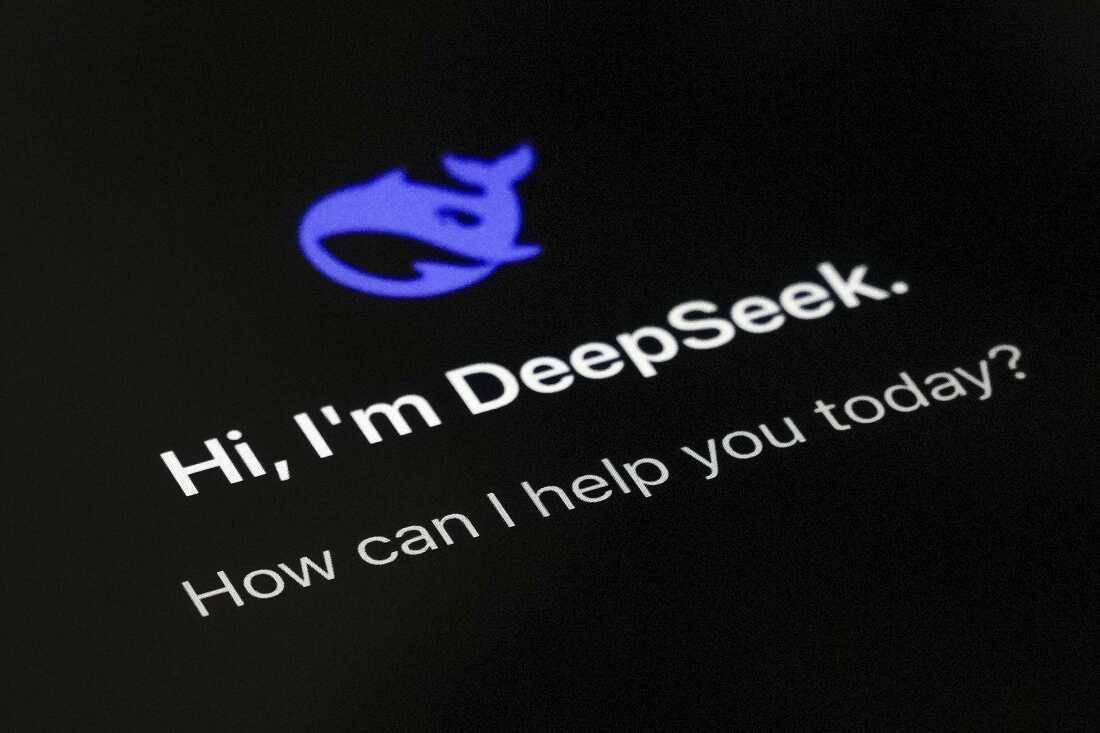
Chinese tech products, often perceived as inferior copies offering lower performance than their American counterparts, have long carried a stereotype of being cheap and unoriginal. I believe this is also most people’s intuitive perception of Chinese internet companies. But this time, DeepSeek is different. Without diving into subjective comparisons with ChatGPT in terms of user experience, just observing the tense reactions from U.S. political circles and tech giants frequently referencing this event shows clearly that China is no longer playing the role of a mere technology follower—and the global shockwaves are strong.
Although my wallet was hit first—partly due to misjudging traditional AI development—I still want to share my thoughts on how DeepSeek impacts Crypto.
1. NVIDIA took the hardest hit in this incident. First, demand for AI computing power is now under scrutiny. Second, its unified software-hardware architecture “CUDA” was bypassed. Those familiar with AI should know CUDA well—it’s one of the key pillars enabling modern AI advancement. When large model developers use NVIDIA GPUs, they typically build upon CUDA. Using CUDA lowers barriers for developers since many functions are pre-packaged, requiring minimal attention to detail—but inevitably sacrificing execution efficiency.
Because CUDA is a general-purpose programming framework, it sacrifices some flexibility during model training. DeepSeek’s approach uses PTX (NVIDIA’s intermediate instruction set architecture designed for GPUs) directly, circumventing hardware limitations on training speed and shortening training time. While other models may take 10 days to train, DeepSeek completes the task in just 5. This also means that if DeepSeek chooses to adapt to domestically produced Chinese GPUs in the future, hardware compatibility will be much smoother—potentially shaking NVIDIA’s dominance in AI chips. (This analysis comes from Korea’s Mirae Asset Securities’ report on DeepSeek’s training process.)
Besides stock price declines affecting crypto markets closely tied to U.S. equities, I personally believe this could actually benefit decentralized computing projects in the long run. First, more individual GPUs could find renewed utility. Second, if DeepSeek’s small-and-efficient open-source model path proves successful, it may force many AI companies to go open-source, increasing demand for local deployment and secondary development. Looking at DeepSeek R1’s hardware requirements—from minimum parameters of 1.5B to maximum of 70B—even consumer-grade GPUs like the NVIDIA GeForce GTX 1660 Super, 40-series, or 50-series, up to professional A100 and H800s, all have opportunities to contribute excess computing power again. For currently invisible and somewhat irrelevant decentralized computing projects, this might be a turning point (assuming latency can be kept low enough).
2. Before DeepSeek dropped its "nuclear bomb," AI framework projects were the hottest emerging sector in Crypto—the last one I wrote about before Chinese New Year. Now, nearly all such projects are trending toward zero. After all, someone built a system capable of competing with OpenAI at less than $6 million, while our leading projects with FDVs in the billions haven’t delivered any practically useful AI Agents.
Since the Inscriptions era, we’ve obsessively pursued assetization. The crypto space today is extremely open to assetization—projects completely off-chain can launch tokens based solely on an open-source GitHub repository and a social media account. This “codebase-to-token” model comes at a cost: vulnerability to sudden, devastating disruption ("flatland strikes") from traditional AI companies.
In this golden age of AI, major counterattacks from traditional internet firms won’t stop at DeepSeek alone. With intensifying U.S.-China competition, AI development will only accelerate. The real question is which directions Crypto should integrate within AI’s ecosystem to highlight decentralization’s advantages—and avoid being wiped out by unpredictable AOE attacks. Broadly categorizing the Crypto x AI tech stack, we can divide it into compute layer, data layer, middleware layer, and application layer. Across these layers, I still struggle to see where Crypto truly adds necessity. From a forward-looking perspective, privacy and security could be promising angles—after all, AI agents replacing or assisting human work is already reality. Ensuring privacy for sensitive work documents and personal data may be a problem traditional internet companies cannot solve. Further, if an AI agent gains payment capabilities, securing wallets becomes critical. Using blockchain as a compliance audit layer for AI models should be a primary direction for future development.
On the other hand, what should incentives target? Beyond stimulating computing power supply and model sharing, incentives can help humans teach AI how to interact with virtual worlds. Unlike LLMs, which naturally inherit decades of global internet text during training, teaching AI correct behaviors requires continuous human annotation—just like training vision models to distinguish animals from cars. This isn't something you can outsource to college students. Creating an AI agent capable of interacting with virtual environments demands a vast decentralized network where countless individuals collectively train the AI. This is another viable path—one I've discussed in greater detail previously. What else can incentives achieve? Combining with DePIN to teach agents real-world interaction, incentivizing AI attention acquisition, rewarding AI-related creative works (e.g., Bittensor’s incentive mechanism serves as a great example), or having token incentive mechanisms automatically adjusted by AI (an idea stemming from a past article of mine: When a decentralized project grows massive and goes mainstream, how should it handle inflation and deflation? Should it rely on simple code rules, a small team of founders, or charismatic leaders? Oh right—we have governance tokens. But governance tokens are meaningless until Sybil attacks are solved. Democratic voting rarely reflects true community will when a16z can veto majority approval with just a few wallets. So what’s the point of voting? Etc.)
We certainly can’t match traditional internet companies in assembling elite AI talent or renting massive GPU clusters to train models. Recreating DeepSeek on blockchain is pure fantasy. The value of Crypto lies in providing irreplaceable decentralization to another domain—just as we once enabled financial freedom. AI is humanity’s inevitable narrative—but what role can Crypto play within it?
3. This is the first time I’m writing about Worldcoin, Sam Altman’s crypto-utopian project, which still seems absurd even now. Whether to register your iris scan forces a choice between state surveillance and corporate surveillance—it feels like choosing between the red pill and blue pill in The Matrix.
Yet universal basic income or inclusive finance may no longer seem laughable today. DeepSeek, deployable locally and rivaling top-tier models, is already powering AI agents in Chinese hospitals and government offices. According to McKinsey’s 2024 forecast, up to 50% of jobs could be replaced by AI within six years. Future versions of Worldcoin might even be issued uniformly by governments. If this trend accelerates, tokens related to inclusive finance concepts may proliferate and be heavily speculated upon. Given a five- to six-year window, this aligns with Trump’s potential term—so would this “crypto president” issue a similar token? I think it’s highly possible.
4. Based on recent statements by Elon Musk, AI may sweep the Nobel Prizes in 2025. Therefore, raising funds via blockchain (or contributing computing power, storage, methods, and other resources) to advance AI research seems far more interesting and effective than current DeSci efforts. Perhaps I could call it Decentralized AI Science—DeAIS.
2. Meme Coins Are No Longer Just Memes
Once, analyzing meme coins meant discussing subcultures, community consensus, and viral effects. Now, sitting idle in front of GMGN, I spend each day dissecting conspiracy groups, whale addresses, and dev rug-pulls. When a contract address (CA) gets posted across every low-tier group, it’s time to pump. Today’s memes are more absurd than ever—on platforms like Pump.fun, forget finding a token you can hold peacefully overnight; you might just step away to use the restroom and come back to see the chart plunge off a cliff.
Continuously lowered barriers to asset issuance, combined with blockchain’s high anonymity, fuel this escalating casino culture. Unknown amateur teams treat crypto as an ATM. Meme evolution grows increasingly arbitrary—not only “codebase-to-token” as mentioned earlier, but any event, person, or even AI can be tokenized. Without cultural core or shared consensus, so-called flagship projects can vanish from memory within weeks. The celebrity coin craze sparked by Trump lasted barely a month. With one tweet from President Milei, hundreds of millions flowed out from Solana back into the mainstream world—marking the start of meme decline. Milei’s response was simple: delete the tweet and reply, “I wasn’t aware.”
AI’s rapid rise has captured too much attention, leaving little room for technical progress. Retail investors abandoning value investing now gamble in pig-slaughtering schemes, hoping to be among the lucky few. Liquidity, growing increasingly scarce, is repeatedly drained—reflected in the endless red candles on CEXs and DEXs alike, and in traditional capital and outsiders’ dismissive attitude toward altcoins.
3. You Can’t Find a Sword by Marking the Boat
Cycle theory has clearly failed. Every attempt to “mark the boat to find the sword” is doomed. BTC going bullish doesn’t mean alts will follow, but when BTC turns bearish, alts always crash harder. Our understanding of altcoins must evolve. The alt market is no longer sustainable on whitepapers alone. Large projects listed on top-tier CEXs must reach sufficient maturity to support their valuations.

Looking back at token growth over the past seven years, there were fewer than 2,000 listed tokens in 2017, compared to nearly 25,000 in 2024 (data from CoinGecko, including delisted tokens). This exponential explosion in token count represents an irreversible evolution from blockchain’s low-entropy value system to a high-entropy noise system. Where each 2017 token carried the ideal of “changing the world,” by 2024 tokens had become mere instruments for liquidity exits. More tokens don’t mean more innovation or real-world adoption, but the soaring valuations of star projects exponentially increase demand for market liquidity.
As stated above, without recognition from the outside world, retail investors cannot sustain these valuations. For most alt projects, listing marks their all-time high—and Binance is often the final stop. Crypto needs reform. Star projects must justify their massive funding rounds. Bybit’s pilot program of publicly disclosing project financial reports might be part of the solution. But in my humble opinion, the market needs a deep bear cycle to reshape the valuation framework and listing standards for alt projects.
4. Lost
I once saw a glimmer of hope in Ton, believing we were witnessing the dawn of consumer-grade Crypto applications. But that brief light faded as the Tap-to-Earn trend collapsed. Five years ago, DeFi’s yield farming propelled Crypto to unprecedented heights. Five years later, our only real success remains DeFi.
Conversations among insiders today are depressingly simple: Did you buy BTC? Did you short? Got a CA? Everyone is lost. We can’t find a clear direction. Beyond BTC, holding any other token brings no peace of mind—that’s the current state of Crypto. “Diamond Hands” is no longer a compliment; if you’re not holding BTC, it’s practically synonymous with foolishness.
When I open various chain media apps on my phone, it feels like reading both The New York Times and tabloids. These phenomena reflect how much hope this community now pins on policy shifts and attention-grabbing headlines. From a VC perspective, perhaps we should only invest in tool-based products in the future—asset issuance platforms becoming shovel sellers and rent collectors just to survive.
Conclusion
Clearly, this isn’t the future we wanted. Although Crypto appears lost in directionless fog, DeepSeek’s success proves that innovation and renewal remain the most effective ways to break through dead ends. Crypto currently enjoys the best-ever policy environment, attention, capital inflow, and robust infrastructure. In the near future, multiple altcoin ETFs could inject fresh liquidity into the ecosystem. We are already inside the mainstream—but trapped within our own walled garden. Perhaps behind the retreat of meme coins lies a turning point. The future of humanity may not belong to AI alone.
Join TechFlow official community to stay tuned
Telegram:https://t.me/TechFlowDaily
X (Twitter):https://x.com/TechFlowPost
X (Twitter) EN:https://x.com/BlockFlow_News
 @YBBCapital


