Trump impersonator or hacker trick? Central African Republic president caught in cryptocurrency controversy
TechFlow Selected TechFlow Selected
Trump impersonator or hacker trick? Central African Republic president caught in cryptocurrency controversy
Regulatory and technological evolution in tandem may be the ultimate solution to this game.
 Navigating Web3 tides with focused insights
By: Alex Liu, Foresight News
Timeline of Events and Token Price: The Birth of a Surge Myth

In the early hours of February 10, 2025, Faustin-Archange Touadéra, President of the Central African Republic, posted a video on his official X account announcing the launch of a state-backed Meme coin CAR and revealing its contract address. The statement described CAR as an "experiment to promote national development, unite the people, and enhance international influence," with the president emphasizing his long-standing belief in the potential of cryptocurrency, having previously become the second world leader to adopt Bitcoin as legal tender.
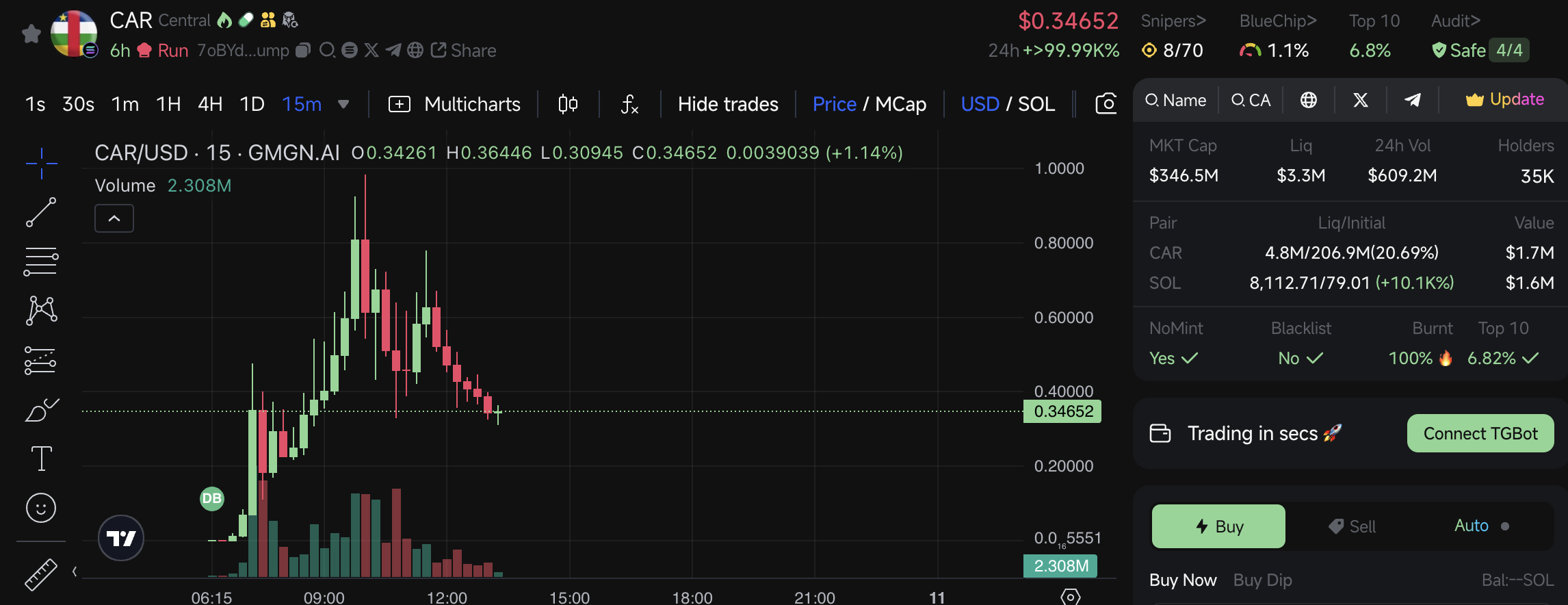
Image source: GMGN
Following the announcement, the price of the CAR token surged rapidly. According to GMGN data, the token's market cap briefly spiked to $700 million and is now stabilizing around $300 million. During this surge, one trader purchased 46.57 million CAR tokens for 25 SOL (approximately $5,000) just one second after the president released the contract address, later selling part of the holdings within three hours and making over $12 million in profit—a return of 2,450 times their initial investment.

Image source: GMGN
The Central African Republic and the President’s Crypto Background: From Bitcoin Legalization to Meme Coin Controversy
The Central African Republic has a population of about 5.5 million and a GDP of approximately $5.5 billion, with a per capita GDP of only around $1,000. As of 2017, the country ranked last globally in terms of per capita GDP when adjusted for purchasing power parity. In 2019, it ranked second to last in the Human Development Index, ahead of only Niger. According to Wikipedia, studies have shown that the Central African Republic is the unhealthiest country in the world and the least suitable nation for youth.
The Central African Republic adopted Bitcoin as legal tender in 2022, becoming the second country globally after El Salvador. President Touadéra has consistently positioned himself as a supporter of cryptocurrencies, believing they can enable economically underdeveloped nations to achieve "leapfrog development." However, the country has previously faced criticism due to weak infrastructure and poor policy implementation, and the adoption of Bitcoin has not significantly improved its economic struggles.
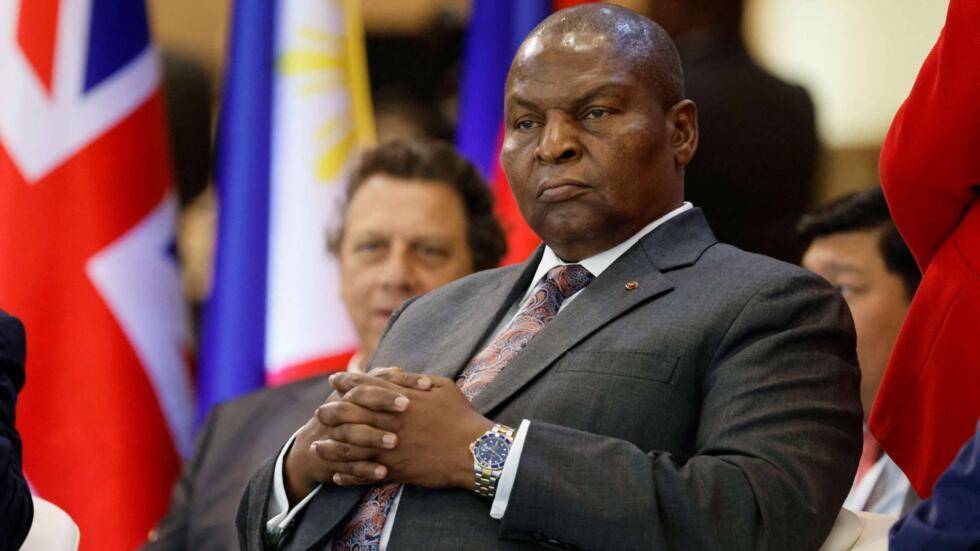
The launch of the CAR token was described by the president as a "new chapter in national experimentation," but controversy quickly followed. After the video was published, two AI deepfake detection tools—including Deepware—indicated an 82% probability that the video was synthetic, while the project's domain name had been registered via Namecheap only three days earlier (and is now blocked), which does not conform to standard government procedures.
Additionally, the statement was released at midnight local time and written in English rather than French, the country’s official language, further fueling skepticism.
Tokenomics and Key Controversies: Centralization Risks and Liquidity Concerns
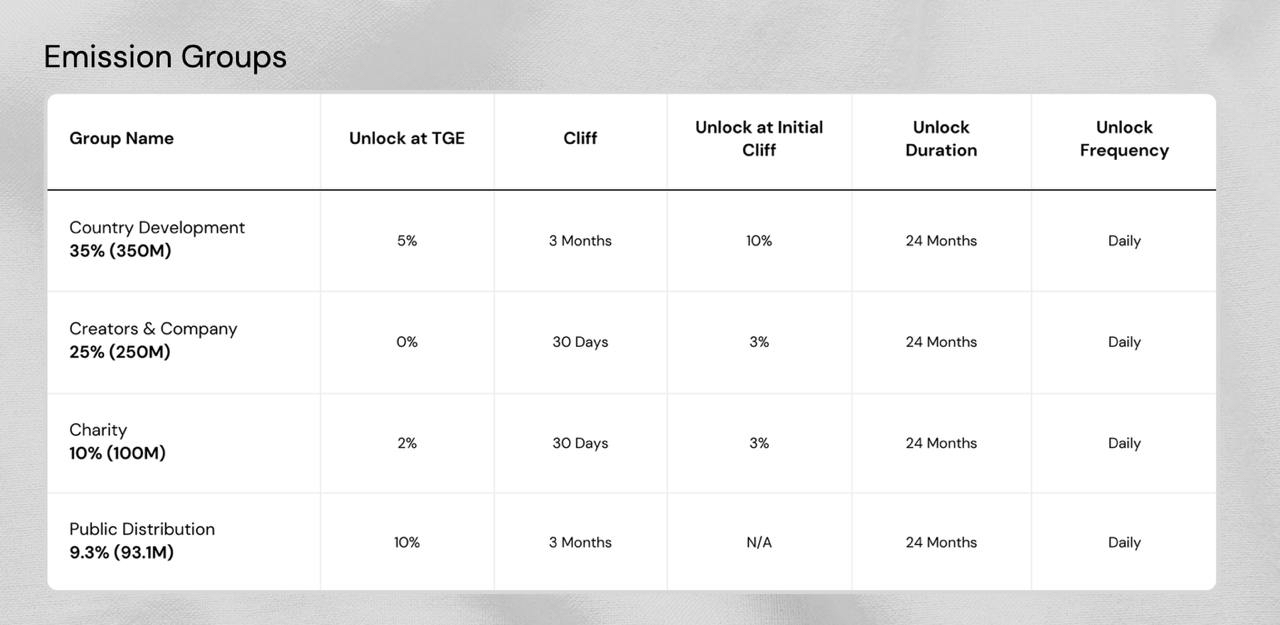
According to the CAR token whitepaper, the total supply is one billion tokens, allocated as follows:
-
35% for national development;
-
25% distributed to creators and enterprises;
-
20.7% allocated to liquidity pools (though on-chain data shows none has been deposited yet);
-
10% for charity;
-
9.3% publicly distributed.
However, on-chain token distribution reveals centralization risks: the top wallet holds 33.31% of tokens, the second-largest holds 25%, and the top four addresses collectively control over 70% of the total supply. Although the president claimed the tokens were locked via Streamflow and distributed according to schedule, the lack of liquidity and high concentration of holdings continue to raise market concerns.
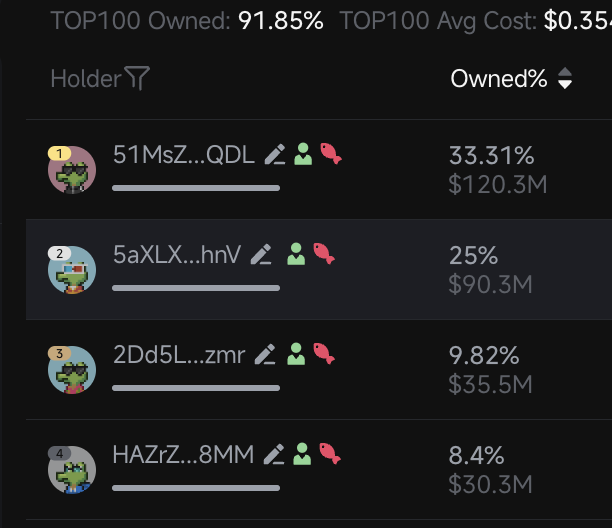
Data source: GMGN
Broader Implications: Challenges of Cryptocurrency Politicization and Trust Reconstruction
The CAR incident is more than just a crypto market frenzy—it highlights the complexities of merging cryptocurrency with political power. After the event gained traction, meow, co-founder of Jupiter, tweeted that his team had contacted the developer who deployed the CAR token and verified certain information through on-chain transactions. For example, the developer re-deployed the initially revocable contract and burned 0.06924 SOL to prove ownership of the deployment address.
Nevertheless, meow admitted that while some on-chain details could be verified, the team could not confirm whether the CAR token truly had official backing from the Central African Republic presidential office or verify the accuracy of its tokenomics. This underscores the deeper crisis of trust at the heart of the incident.
The crisis of trust and technological cat-and-mouse games have become central issues. The widespread availability of deepfake technology has lowered the barrier to forging authoritative statements—the president’s X account video was flagged by AI detection tools as having an “82% likelihood of being synthetic,” raising serious doubts about whether “national endorsement” in the crypto world can still be taken at face value. In the future, the battle between AI detection tools and malicious actors may become routine, posing a major challenge for investors trying to make informed decisions amid ambiguous information.
Secondly, speculative frenzies in regulatory vacuums are deeply concerning. Cases like Donald Trump launching the TRUMP token show how political endorsements can be exploited as tools for market manipulation. The sharp rise and fall of the CAR token once again proves that unregulated crypto markets easily become playgrounds for speculators, with ordinary investors often left holding the bag.
Finally, the challenges facing crypto experiments in emerging markets deserve deeper reflection. The Central African Republic seeks to break free from economic stagnation through cryptocurrency, but its weak infrastructure and governance capacity may prevent this vision from materializing. The failure of Bitcoin legalization has already exposed such problems—whether the launch of the CAR token will repeat history remains to be seen.
The Jupiter co-founder urged investors to remain cautious, emphasizing that “token legitimacy requires secondary confirmation from official sources.” (However, CAR has already been certified by Jupiter and appears on its Strict List.)

Conclusion
The dramatic rise of the CAR token continues the myth of wealth creation in crypto markets, while also reflecting the darker sides of technological abuse and eroding trust. In this new era where political narratives intersect with decentralized ideals, investors must scrutinize the allure of “national endorsement” with greater rationality. Perhaps only through simultaneous evolution of regulation and technology can we find a lasting resolution to this ongoing game.
Join TechFlow official community to stay tuned
Telegram:https://t.me/TechFlowDaily
X (Twitter):https://x.com/TechFlowPost
X (Twitter) EN:https://x.com/BlockFlow_News
 Foresight News