









69,000 Bitcoin to Be Sold? What Impact Will the Silk Road Coin Sale Have on the Market?
TechFlow Selected TechFlow Selected
69,000 Bitcoin to Be Sold? What Impact Will the Silk Road Coin Sale Have on the Market?
The negative impact of OTC auctions on prices may not last long.
 Navigating Web3 tides with focused insights
By shushu
Just ten days after the U.S. government once again pledged $6 billion in military security assistance to Ukraine, the U.S. Department of Justice is preparing to liquidate a massive stash of Bitcoin.
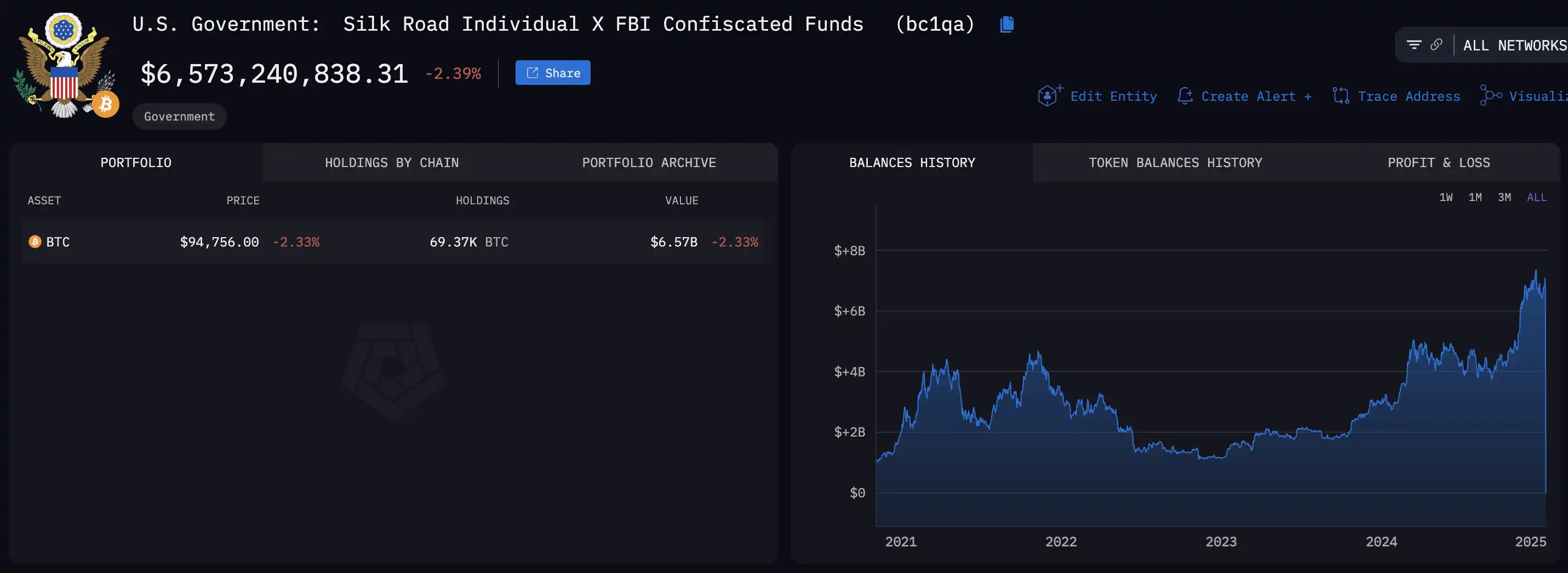
On January 9, an official confirmed to DB News that the Department of Justice has received approval to dispose of 69,370 Bitcoins seized in connection with the high-profile Silk Road case. The current market value of this holding is approximately $6.5 billion.
The DOJ cited Bitcoin's price volatility as the reason for requesting authorization to sell these assets. When asked about next steps, a DOJ spokesperson said: "The government will proceed according to the court’s ruling in this case."
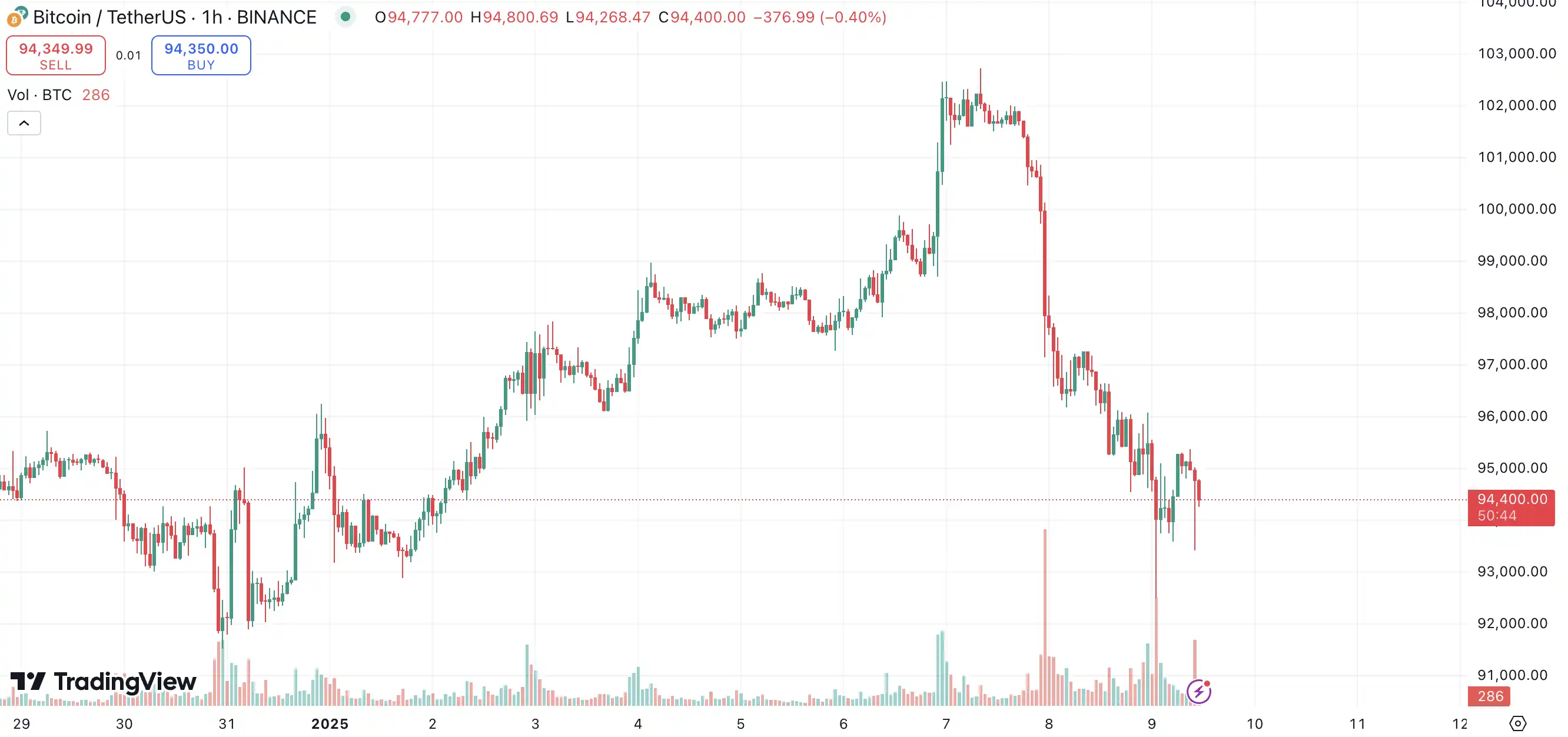
Following the news, Bitcoin dropped over 2.5% within 24 hours. At the time of writing, the price stood at $94,400.
Silk Road: One of the Most Influential Milestones in Bitcoin History
In October 2013, a young man named Ross Ulbricht was arrested at a library in San Francisco under the alias “Dread Pirate Roberts” (DPR), marking the end of the notorious drug and weapons marketplace known as Silk Road. In 2015, Ross Ulbricht was sentenced to life in prison.

Launched in 2011, the dark web platform initially operated as an “eBay-like” marketplace offering various illegal goods and services such as drugs, counterfeit documents, and hacking tools. Thanks to the anonymity of the dark web and Bitcoin as its primary payment method, Silk Road rapidly expanded and became one of the most famous and largest illegal markets on the dark web.
From 2012 to 2013, U.S. law enforcement agencies including the FBI and DEA began closely monitoring Silk Road and secretly deployed undercover agents. Due to the platform’s frequent transactions, large scale, and involvement in illegal activities across multiple countries, it was designated a top enforcement priority.
During the investigation, the FBI recovered approximately 170,000 Bitcoins from Silk Road’s servers and Ross Ulbricht’s personal digital wallets—one of the largest Bitcoin seizures in history at the time.
Upon arresting Ulbricht, law enforcement obtained access to encrypted wallets through his seized laptop and server data. Since Bitcoin transactions require private keys for transfer, once authorities acquired valid private keys, they were able to move the associated Bitcoins from the suspect’s address to official government-controlled “custody” wallets.
The U.S. Government Has Sold Bitcoin Before
Since 2014, the U.S. government has conducted multiple auctions of Bitcoin seized from the Silk Road case. The timing and impact on market prices are worth reviewing.
In June 2014, the U.S. government held its first public auction of Silk Road-seized Bitcoin. The U.S. Marshals Service auctioned around 30,000 BTC. Bidders included numerous investment firms and individuals, with well-known investor Tim Draper winning several lots. Over subsequent auctions, the government gradually sold off the remaining holdings.
After the auction concluded, Bitcoin prices—hovering around $600—did not collapse but remained stable. The auction process, showing strong institutional demand, helped reinforce Bitcoin’s legitimacy to some extent.
A second round in December 2014 auctioned 50,000 Bitcoins—nearly double the size of the first sale—with similarly pessimistic market expectations. Yet once completed, Bitcoin continued trading within a range of $300–$400 without sustained decline.
In March 2015, another 50,000 Bitcoins were auctioned. By then, Bitcoin had already begun recovering from earlier lows. Market panic further diminished, with prices fluctuating slightly between $280 and $300 before quickly stabilizing.
By November 2015, the cumulative sale of hundreds of thousands of Bitcoins seized from Silk Road ultimately did not trigger major market disruption. On the contrary, competitive bidding was interpreted as a sign that Bitcoin was gaining broader recognition as a legitimate investment asset.
To date, the Department of Justice has been authorized to liquidate the remaining 69,370 BTC ($6.5 billion) seized in the Silk Road case. The wallet address labeled as Silk Road, “bc1qa5,” has lain dormant for over four years.
Based on past sales history, Bitcoin may experience short-term price panic. However, in the long run, since the U.S. government has typically used OTC auctions rather than dumping directly onto exchanges, the negative impact on Bitcoin’s price is unlikely to last long.
Could Trump’s Pardon and Bitcoin Reserves Pledge Delay the Sale?
In May 2024, during his presidential campaign, Donald Trump promised at the Libertarian National Convention in Washington, D.C., that if re-elected, he would commute the sentence of Silk Road founder Ross Ulbricht on his first day in office. On July 28, Trump reiterated this commitment during his speech at the Bitcoin 2024 Conference.
On November 14, Ross William Ulbricht posted on X for the first time since the U.S. election, saying: “I sincerely thank everyone who voted for President Trump. I believe he will keep his promise and give me a second chance. After more than 11 years in darkness, I finally see the light of freedom at the end of the tunnel. Thank you all so much.”
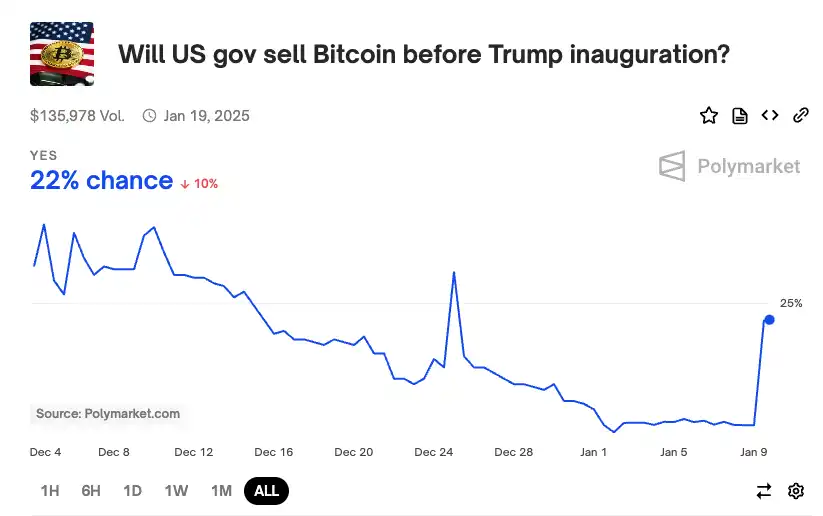
As of now, the Polymarket prediction “Will the U.S. government sell its Bitcoin before Trump takes office?” has become a popular betting topic, with $136,310 wagered. The probability of a sale before Trump’s inauguration stands at 22%.
Given Trump’s repeated promises to commute Ross Ulbricht’s sentence and his pledge to make America the global hub for cryptocurrency by embracing digital assets, many believe Ulbricht could be commuted or even pardoned.
This sentiment is reflected on Polymarket, where the odds of Trump pardoning someone within his first 100 days are highest for Ross Ulbricht, currently standing at 73%.
Due to Trump’s stated intention to build a national Bitcoin reserve, if the government does not sell the Silk Road Bitcoin before January 20—the date of Trump’s formal inauguration—markets speculate that the seized Bitcoin may never be sold at all.
How Much Bitcoin Does the U.S. Government Hold?
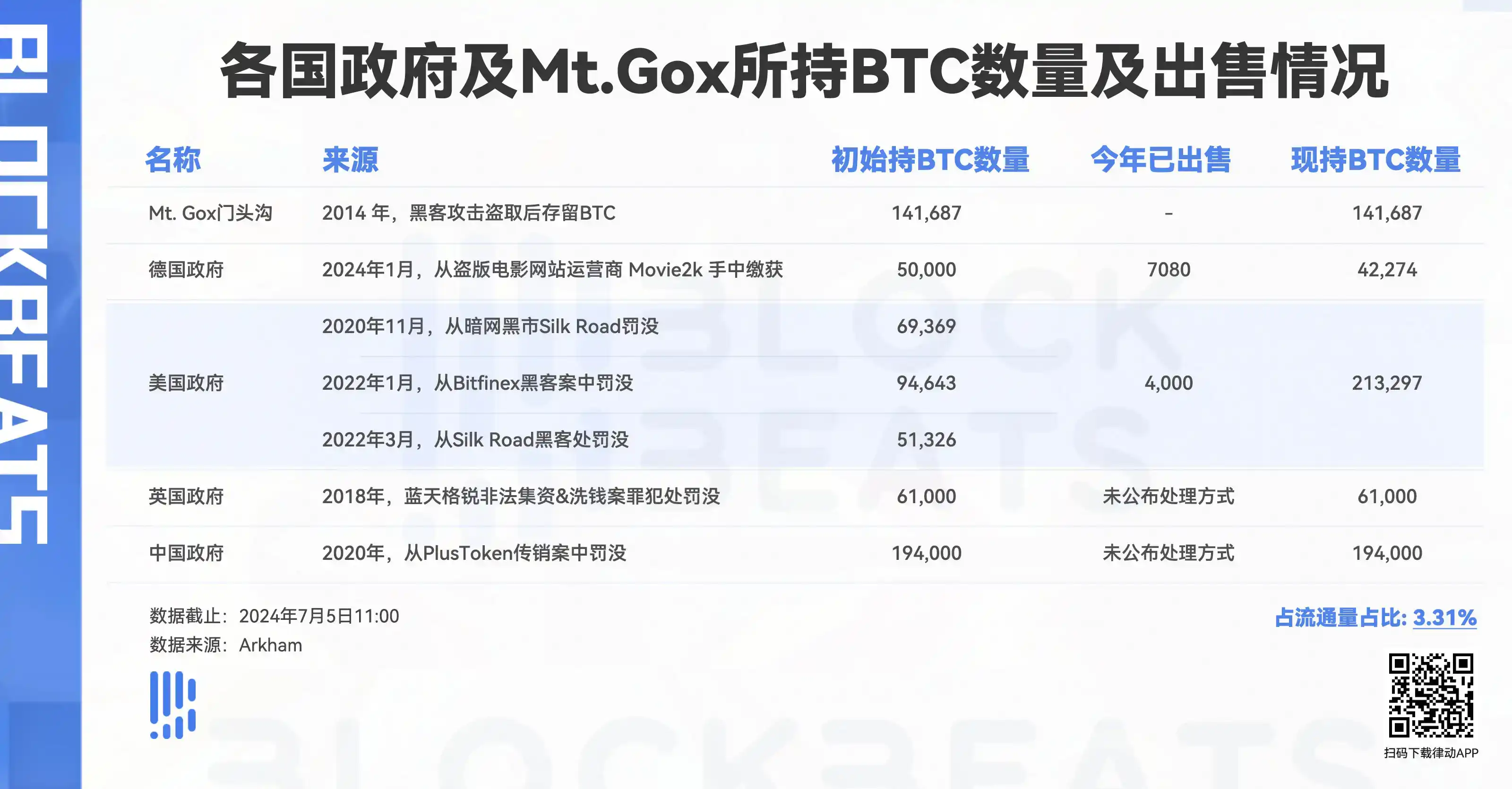
According to Bitcoin Treasuries data, the U.S. government holds 207,189 Bitcoins, representing 0.987% of the total supply. Based on current Bitcoin prices, the total value of the U.S. government’s Bitcoin holdings amounts to $19,544,018,200.
Join TechFlow official community to stay tuned
Telegram:https://t.me/TechFlowDaily
X (Twitter):https://x.com/TechFlowPost
X (Twitter) EN:https://x.com/BlockFlow_News
 BlockBeats








