









2024's most absurd crypto news has arrived
TechFlow Selected TechFlow Selected
2024's most absurd crypto news has arrived
Happy New Year! May you continue to prosper in 2025.
 Navigating Web3 tides with focused insights
The annual absurd news from the crypto world is back (it didn't happen in 2022 because that year was just too miserable). This year still had plenty of jaw-dropping moments that made everyone stand up and cheer. Wishing you all a happy new year, and may you keep making money in 2025.
Renzo Graduates in Statistical Misrepresentation
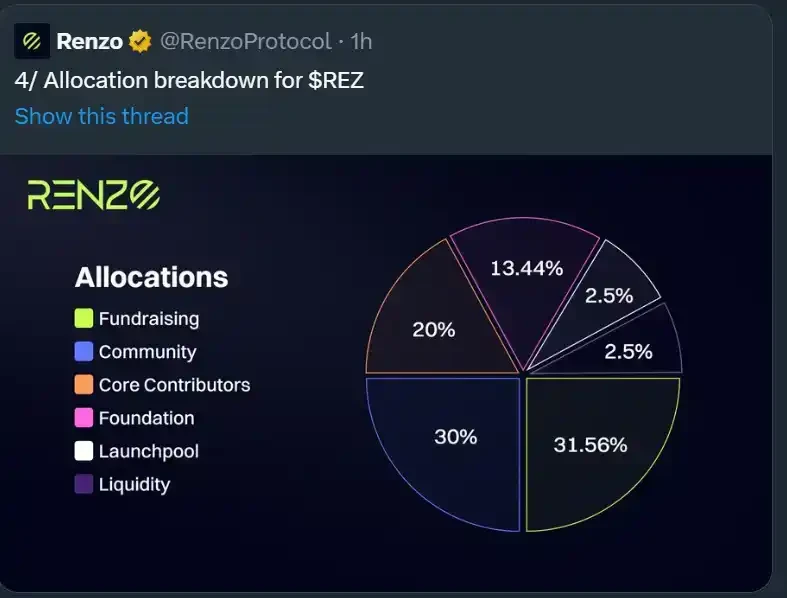
On April 23, restaking project Renzo released its token distribution details. In Renzo's first announcement, their allocation pie chart looked like something out of a statistics textbook—two 2.5% portions for Binance Launchpool and liquidity were drawn nearly as large as the 20% segments, while the bottom "half" labeled as 62% was visually undersized. The community called it out as “chart crime,” saying it was no different from falsifying tokenomics.
A Well-Known Project with Initial S Delivers an Epic Candlestick
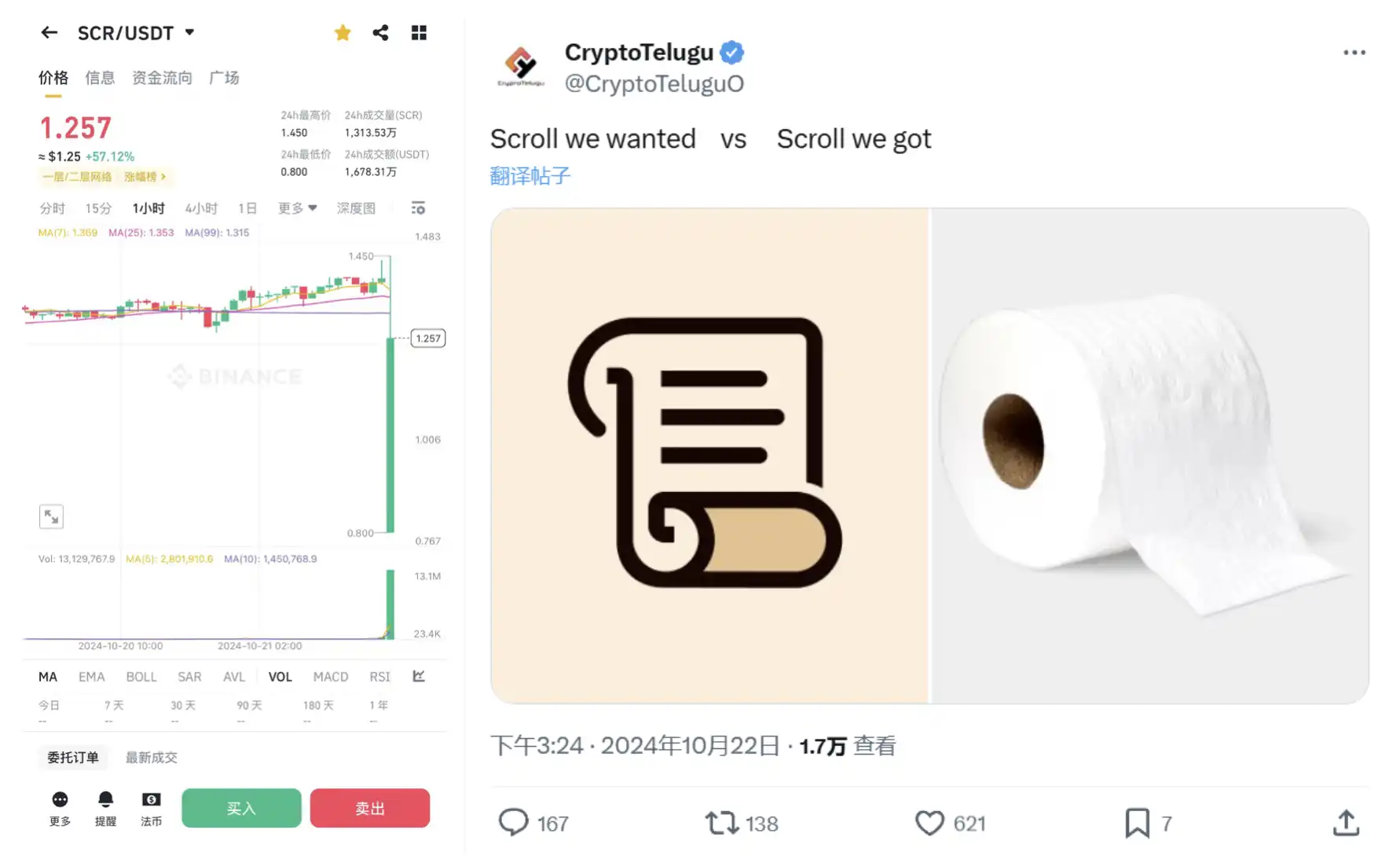
After ending pre-market trading on Binance, a prominent project starting with S officially went live. Looking at its candlestick chart, it was momentarily impossible to tell whether the price surged or crashed—an extremely rare sight in market history.
Project Hires Four Developers Online, Turns Out All Were One North Korean Hacker
On March 27, Munchables, a project in the Blast ecosystem, suffered a hack resulting in a $62.5 million loss. According to blockchain investigator ZachXBT’s findings, one of their developers was a North Korean hacker. Furthermore, all four developers hired by Munchables were linked to the attacker—likely all being the same individual. They referred each other for roles, regularly transferred funds to the same two exchange deposit addresses, and their wallets showed inter-transfers among the so-called “four people.”
Judging by annual earnings, this North Korean hacker probably made more than many publicly listed companies.
A Famous Cross-Chain Project Starting with L Asks Sybils to Confess—Historic First
On May 4, a well-known cross-chain project starting with L announced that users identified as Sybils could self-report: surrender their Sybil addresses and receive 15% of the originally allocated tokens. If they didn’t come forward and were later caught, they’d lose all allocations.
But it didn’t stop there. The project stated that whistleblowers must provide at least 20 clearly involved Sybil addresses, with rewards prioritized for the first successful submission. Later, they further updated the reporting mechanism by introducing a bond system.
Now that’s something you don’t see every day.
Crypto Custodian Copper Apologizes for Serving Nigiri on Naked Models at Event
A person familiar with Copper said the models were one man and one woman “wearing swimsuits,” adding that it was “quite dazzling…”
Clearly, some teams really made bank this year.

Slerf Accidentally Burns Tokens and LP, Teaching the Whole Internet 'Oh Fuck'
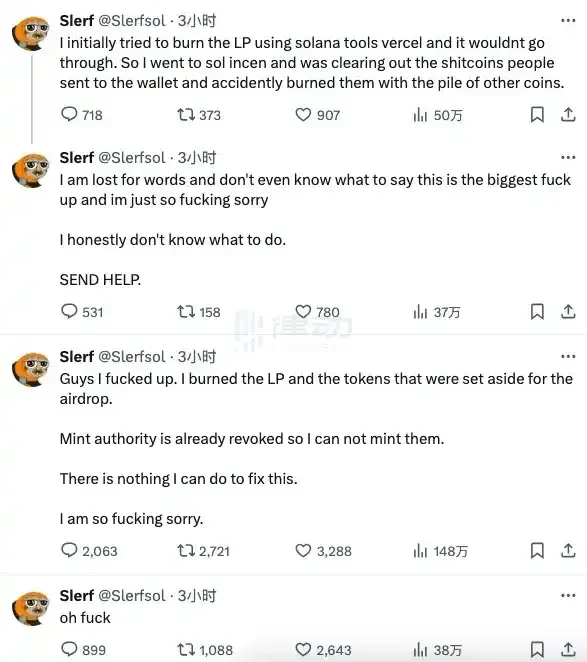
On March 18, Slerf founder @Slerfsol posted on X that he had accidentally burned the LP tokens and airdrop reserves due to a misoperation, and that minting rights had already been revoked—he was powerless to fix it, even breaking down emotionally during a live Space session.
Initially thought to be the end of SLERF—a meme coin that raised over 50,000 SOL—it unexpectedly skyrocketed past BOME’s previous record of reaching a $100 million market cap in 9 hours. SLERF hit that mark in just 30 minutes, becoming the new king of memes. Since then, any meme project burning its liquidity pool has adopted the “Slerf narrative” for community hype.
Burning Himself for the Community’s Entertainment
A developer on Pump.Fun soaked himself in isopropyl alcohol and live-streamed firing fireworks at himself to pump his meme coin. The token price surged 2,000% within hours, hitting a $2 million market cap. However, lacking proper fire safety measures, he was instantly engulfed in flames, suffering third-degree burns and hospitalization, unable to sell his tokens. After recovering, he found he could no longer use his hands properly, and even facial recognition on his phone failed to recognize him. Eventually, he exited the project—most likely because he never managed to sell his tokens in time.

Easter Egg: Selling Early, Eternally Profitable
On March 8, the WIF developer sold WIF worth $29,000 (511 SOL) within two days of launch. That amount of WIF is now worth $693 million.
The German government previously held 49,858 bitcoins. In July, they sold their holdings for $2.89 billion at an average price of $57,900. After Bitcoin surpassed $100,000, they missed out on nearly $3 billion in potential profit.
On September 28, a trader spent 196 SUI ($368) to buy 2.53 billion HIPPO. Less than a day later, he sold all of it for $7,500. A week later, that holding would have been worth over $30 million.
On October 10, a trader bought 21.26 million GOAT for 2.07 SOL and sold them for 2.8 SOL—making only 0.7 SOL ($108). A week later, those GOAT tokens were worth $8.9 million.
On November 13, a trader bought 19.4 million Pnut for 8 SOL ($1,392), then sold them for 4.09 SOL ($711), taking a $681 loss. These Pnut tokens are now worth over $24.69 million.
On November 17, a trader bought 59 million FARTCOIN for 19.8 SOL ($3,000), but later sold them for 7.16 SOL ($1,100), losing $1,900. Those FARTCOIN tokens are now worth over $18.42 million.
On November 21, a trader sold early holdings of 33.95 million CHILLGUY—which he bought for 1 SOL—at 1.6 SOL. They’re now worth over $10 million.
Join TechFlow official community to stay tuned
Telegram:https://t.me/TechFlowDaily
X (Twitter):https://x.com/TechFlowPost
X (Twitter) EN:https://x.com/BlockFlow_News
 BlockBeats








