Huobi Growth Academy | In-Depth Research Report on AI Agents: The Core of the Intelligence Revolution, Set for a Major Breakthrough in 2025
TechFlow Selected TechFlow Selected
Huobi Growth Academy | In-Depth Research Report on AI Agents: The Core of the Intelligence Revolution, Set for a Major Breakthrough in 2025
This report will provide a detailed analysis of the technical foundations, application scenarios, challenges, and future development trends of AI Agents.
 Navigating Web3 tides with focused insights
Introduction
Artificial intelligence (AI) has entered a new phase, evolving from early single-task models into intelligent agents—AI Agents—with autonomous decision-making and collaboration capabilities. Behind this transformation lies not only advances in algorithms and computing power but also the enabling role of blockchain technology in decentralization, transparency, and immutability. AI Agents are not only profoundly impacting traditional industries but also demonstrating strong potential in finance, Web3 ecosystems, automated services, and gaming.
As the central hub of future intelligent economic systems, AI Agents—with their self-driving and cross-domain collaboration abilities—will redefine business models and social structures. With continuous technological evolution, AI Agents are expected to experience explosive growth by 2025, becoming a core force driving the intelligent revolution. This report provides a detailed analysis of the technical foundations, application scenarios, challenges, and future development trends of AI Agents, aiming to offer comprehensive insights for practitioners, investors, and researchers in related fields.
1. What is an AI Agent?
1.1 Definition
An AI Agent is an intelligent entity with autonomy, environmental awareness, and goal-oriented capabilities. It can make decisions based on external environments and internal objectives, executing tasks to achieve those goals. Compared to traditional AI systems, AI Agents possess stronger self-driving and autonomous decision-making abilities, capable of independent thinking and dynamic adaptation in complex environments. Its core characteristics include:
Autonomy: AI Agents can independently make decisions and execute tasks without human intervention, guided by goals and contextual conditions.
Environmental Awareness: By collecting external data, AI Agents can adjust their behavior in real time to respond to changing circumstances.
Goal Orientation: The actions of AI Agents are centered around achieving predefined objectives, optimizing decision pathways for efficient task completion.
1.2 Classification
Single Agent: This type performs relatively simple and independent tasks, typically without interacting with other agents. Examples include control systems in autonomous vehicles or assistant functions in smart home devices.
Multi-Agent Systems (MAS): Multiple agents collaborate to accomplish complex tasks, commonly used in distributed systems. Through information sharing and coordinated cooperation, multiple intelligent entities handle more sophisticated operations, such as automated supply chain management.
Autonomous Agent: In addition to standard agent features, these agents have economic autonomy, enabling on-chain transactions, token transfers, and other financial operations, making them significant within blockchain ecosystems.
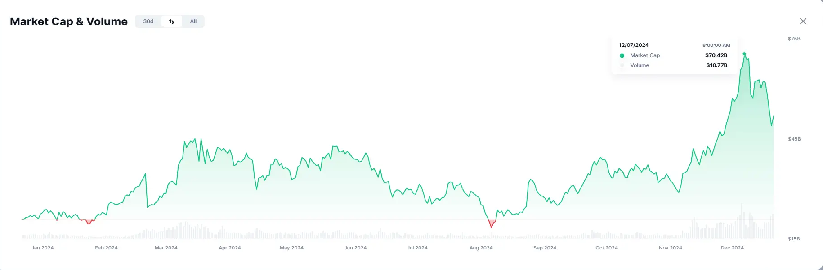
Figure: Market cap of AIxCrypto has surged significantly since the beginning of the year
2. Core Technologies and Architecture
2.1 Core Technologies
The implementation of AI Agents relies on the integration of multiple advanced technologies, including:
Machine Learning and Deep Learning: These technologies enable AI Agents to extract knowledge from large datasets and continuously optimize decision-making models. Through reinforcement learning, AI Agents improve themselves over repeated decision cycles, enhancing decision quality.
Reinforcement Learning (RL): RL allows AI Agents to interact with environments and refine strategies through reward and penalty mechanisms to achieve task objectives. For example, DeepMind's AlphaZero mastered Go at the highest level using reinforcement learning.
Natural Language Processing (NLP): Based on large language models like GPT, AI Agents can understand and generate natural language, enabling effective user interaction. ChatGPT, for instance, uses NLP to provide consultation services or perform tasks.
Blockchain and Smart Contracts: Blockchain provides a decentralized infrastructure that ensures transparency and security when AI Agents execute tasks. Smart contracts offer an automated protocol execution environment, allowing AI Agents to conduct financial transactions without third-party intermediaries.
Distributed Computing: As multi-agent systems become widespread, distributed computing becomes essential. Frameworks like Swarm accelerate collaboration and data sharing among multiple agents, improving task execution efficiency.
Knowledge Graphs: Knowledge graphs equip AI Agents with background knowledge and reasoning capabilities, enabling them to integrate multiple sources of information during complex decision-making processes for more accurate judgments.
2.2 Architectural Design
The architectural design of AI Agents typically includes the following core modules:
Perception Module: Responsible for gathering information from the external environment, including data inputs and sensor feedback. For example, in finance, this module can collect real-time market data to support investment decisions.
Decision Module: Generates action plans and sets priorities based on goals and environmental data. Using algorithms and models, it automatically selects optimal action paths.
Execution Module: Implements strategies generated by the decision module, carrying out actual operations. This module often interacts with external systems such as blockchains or trading platforms.
Learning Module: During task execution, AI Agents use feedback mechanisms to continuously refine their decision strategies. By learning from historical data, they enhance execution efficiency and accuracy.
3. Application Scenarios
3.1 Finance
AI Agents are increasingly common in the financial industry, particularly in the following areas:
Smart Investment: AI Agents analyze global market data and dynamically adjust investment portfolios to maximize returns. For example, wealth management platforms can deploy AI Agents to execute asset allocation based on big data analytics.
Automated Trading: Using high-frequency trading algorithms, AI Agents can quickly capture profit opportunities arising from market fluctuations. Combined with blockchain technology, the trading process becomes decentralized and automated.
Decentralized Finance (DeFi): In DeFi, AI Agents can act as liquidity providers, optimizing asset configurations in liquidity pools to increase user yields.
3.2 Web3 Ecosystem
NFT Markets: AI Agents can autonomously manage the minting, trading, and auctioning of digital assets. Integrated with smart contracts and blockchain technology, each transaction is transparent and secure.
DAO Management: In decentralized autonomous organizations (DAOs), AI Agents can provide decision recommendations and execute governance actions such as voting and asset distribution. Every operation performed by the agent is traceable and verifiable via blockchain, ensuring DAO transparency and fairness.
3.3 Automated Services
Customer Support: AI Agents like ChatGPT offer 24/7 customer service, automatically handling inquiries and complaints, reducing manual involvement, and improving user experience.
Logistics and Supply Chain: AI Agents play a key role in automated logistics, optimizing transportation routes and inventory management to ensure efficient supply chain operations.
3.4 Gaming and Virtual Worlds
In the gaming industry, AI Agents are playing an increasingly important role:
AI NPCs: In metaverse and GameFi ecosystems, AI-driven non-player characters (NPCs) deliver dynamic interactive experiences, enabling players to engage in more natural and deeper conversations with intelligent entities in virtual worlds.
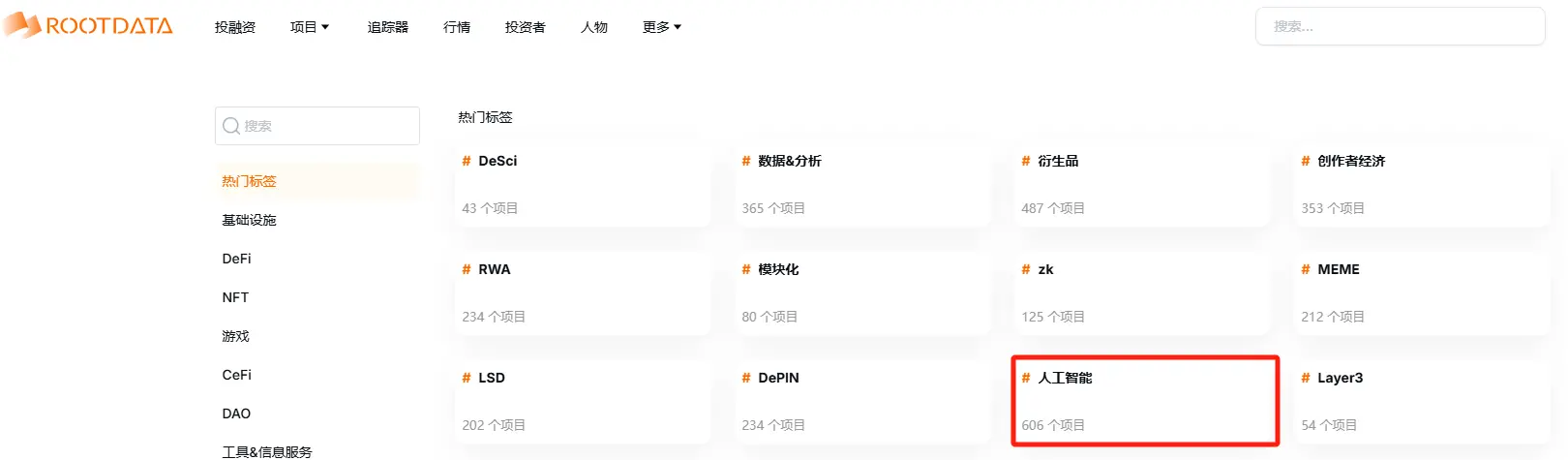
Figure: Investment and financing in AI-related projects have exceeded all other sectors this year
4. Business Models
As AI Agent technology continues to evolve, business models are diversifying and shifting toward decentralization. The commercial potential of AI Agents extends beyond traditional industries, revealing unprecedented opportunities in Web3 and decentralized economies. Below are the primary business models that drive practical applications of AI Agents and create value for innovative economic activities.
4.1 Tokenomics
Tokenomics refers to economic models operating under blockchain and digital token systems. In decentralized applications, AI Agents often rely on tokens as mediums of exchange to participate in economic activities. Autonomous Agents can issue or use tokens to perform various platform functions and generate commercial value. Key components of this business model include:
Token Incentive Mechanisms: Many AI Agents issue tokens to incentivize user participation in platform activities. For example, on decentralized finance (DeFi) platforms, AI Agents serve as liquidity providers, earning token rewards by supplying liquidity or executing trading strategies. These rewards are closely tied to ecosystem growth and user engagement.
4.2 Data Economy
Data is one of the most valuable resources in the modern economy. Driven by technologies like AI and blockchain, its economic value is further amplified. AI Agents leverage powerful computational and information-processing capabilities to collect and process diverse data, forming the foundation of a data economy.
4.3 Infrastructure Services
As AI Agent technology matures, more companies are focusing on providing technical and computational infrastructure services. Such service models include computing power, storage resources, API interfaces, and more.
4.4 Smart Contracts and Decentralized Markets
AI Agents use smart contracts to automatically execute transactions and business behaviors, reducing human intervention and increasing efficiency. On decentralized markets, smart contracts provide AI Agents with a more reliable execution environment:
Decentralized Market Platforms: AI Agents can directly trade on decentralized markets without third-party intermediaries. Smart contracts ensure transparency and fairness, with fully automated transaction processes. For example, in NFT markets, AI Agents can independently manage the creation, trading, and auctioning of digital assets, enabling autonomous and decentralized market activities.
Decentralized Autonomy: Decentralized autonomous organizations (DAOs) can use AI Agents to automatically execute governance tasks, reducing reliance on human input. The combination of smart contracts and AI Agents helps DAOs improve decision efficiency, boost community participation, and promote self-sustained innovation.
5. Challenges
5.1 Technical Challenges
Performance Bottlenecks: As the number of AI Agents increases, improving system computational efficiency becomes critical. When multiple agents collaborate, demand for computing power rises sharply, posing a current bottleneck in technological development.
Data Privacy: In decentralized environments, balancing data privacy protection with transparency remains a major challenge. This is especially crucial in sensitive fields like finance and healthcare, where personal data must be protected.
5.2 Regulation and Law
Legal Liability: The autonomous nature of AI Agents makes their behavior unpredictable, creating challenges in assigning legal responsibility. Currently, there is no clear legal framework defining liability for actions taken by AI Agents during task execution.
Economic Autonomy and Regulatory Oversight: The economic independence of AI Agents may lead to regulatory issues, particularly in cross-border payments and cryptocurrency transactions.
5.3 Community and Ecosystem
User Education and Adoption: Despite showing promise across multiple domains, user education remains a significant hurdle. Many potential users lack understanding of how Agents work, directly affecting mainstream adoption.
Competition and Collaboration: With the emergence of numerous AI Agent projects and platforms, achieving a balance between competition and cooperation within open ecosystems will be key to future development.
6. Case Studies
Driven by the convergence of artificial intelligence and blockchain technology, AI Agents have made notable progress across various fields and applications. Analyzing specific cases helps us better understand how this technology is applied in practice and how it drives industry transformation. The following representative examples demonstrate the powerful capabilities of AI Agents and reveal how technology integrates with different domains to bring profound impacts to entire ecosystems.
6.1 TruthGPT Agent
TruthGPT is a fully autonomous AI Agent built on blockchain technology, specifically designed to execute automated investment and arbitrage strategies in decentralized finance (DeFi). Its key advantage lies in full decentralization and zero human intervention, enabling autonomous market analysis and on-chain transaction execution. The launch of this project marks a new stage in the application of AI Agents within the DeFi space.
Core Functions and Applications
Automated Arbitrage: TruthGPT Agent leverages algorithms to identify arbitrage opportunities—whether price differences across exchanges or yield variations across DeFi protocols—and swiftly executes trades. Its rapid response maximizes returns in the DeFi ecosystem while eliminating emotional biases inherent in human decision-making.
Intelligent Risk Management: To avoid excessive risk, TruthGPT incorporates smart risk controls. The AI Agent monitors market volatility in real time, analyzes historical data, and adjusts investment strategies to ensure capital safety and stable returns.
Decentralized Execution: By integrating blockchain and smart contracts, TruthGPT Agent directly executes contract operations without human oversight. This decentralized model ensures transaction transparency, security, and immutability, removing costs and risks associated with intermediaries.
Token Economic Incentives: TruthGPT employs a token-based incentive model. Users can access agent services by holding the platform’s native token or earn rewards by providing liquidity and participating in governance.
6.2 Swarm Framework
Swarm Framework is an open-source distributed computing framework designed to efficiently process complex tasks through coordinated work among multiple AI Agents. More than just a platform for building AI systems, it is an ecosystem focused on multi-agent system (MAS) collaboration. Its introduction signifies further expansion of AI Agents in collaboration and distributed computing.
Core Functions and Applications
Multi-Agent Collaboration: Swarm Framework enables grouping multiple AI Agents into collectives that jointly complete complex tasks via distributed computing. These tasks span data processing, information sharing, and collaborative decision-making, greatly improving execution efficiency and precision.
Task Allocation and Optimization: Swarm Framework allows users to assign tasks to different AI Agents according to their specific capabilities and expertise.
Fault Tolerance and Adaptability: The framework exhibits strong fault tolerance. If any AI Agent fails or cannot complete its task, others automatically take over, ensuring uninterrupted system operation.
Blockchain Integration: By combining with blockchain technology, Swarm Framework provides tamper-proof records and a decentralized execution environment for AI Agents.
Through the application of Swarm Framework, we see the advantages of AI Agents in multi-agent systems—particularly in collaboration, fault tolerance, and adaptability. It not only promotes efficient cooperation among agents but also opens new directions for distributed computing.
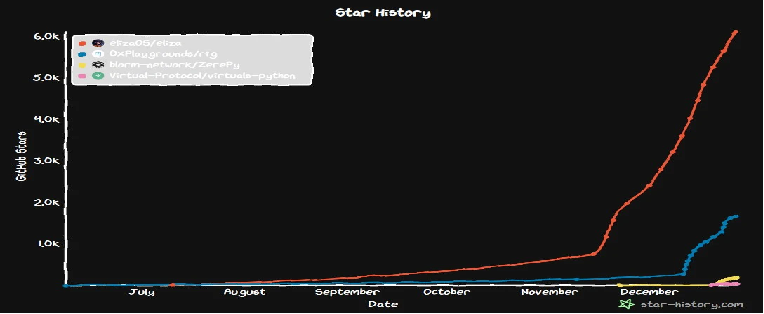
Figure: GitHub star count changes for leading projects since launch
6.3 AI NPCs in GameFi
The application of AI Agents in the gaming industry is becoming increasingly prevalent, especially in the convergence of GameFi (gaming + finance) and virtual worlds, where AI-powered non-player characters (NPCs) have become vital for enhancing gameplay. GameFi platforms not only deliver entertainment but also incorporate blockchain technology to enable economic activity in virtual worlds, with AI NPCs providing intelligent and automated support for these virtual economies.
Dynamic Interaction and Intelligent Behavior: Traditional game NPCs rely on pre-scripted dialogues, whereas AI NPCs possess autonomous learning and decision-making abilities. They react dynamically to player behavior, environmental changes, and mission requirements.
Virtual Economy and Transactions: In GameFi platforms, AI NPCs contribute to building virtual economies—for example, through automated trading, asset management, and resource allocation—providing players with real-time market interactions.
Metaverse and Social Interaction: With the rise of the metaverse concept, AI NPCs are entering virtual social spaces. In virtual reality worlds, they can serve as social companions, offering entertainment, education, or collaboration services.
Decentralized Game Governance: In GameFi platforms, AI NPCs can participate in game governance and decision-making via decentralized autonomous organizations (DAOs). These AI Agents can automatically adjust game rules, task rewards, and resource distributions based on player feedback and engagement, promoting healthy community development.
7. Future Development
The integration of AI Agents and crypto assets will witness critical breakthroughs in the coming years. As technology advances and market demands shift, AI Agents will drive innovation across multiple layers in the crypto asset domain—including cross-chain collaboration, resource sharing, and efficient computation methods. Future developments will emphasize greater intelligence, automation, and security, leading to more efficient and flexible ecosystems.
7.1 Technology Directions
7.1.1 Cross-Chain Collaboration
The heterogeneity of blockchain technology means technical barriers exist between different chains, limiting the flow of resources and information. Cross-chain collaboration capability will be a key technical direction for the future development of AI Agents. Using cross-chain bridging technologies, AI Agents will transcend limitations between blockchains, leveraging the strengths of different chains to expand their applications across multiple crypto asset networks.
Asset Management and Optimization: AI Agents can intelligently allocate assets across different chains, moving funds between chains to maximize returns or reduce transaction costs.
Cross-Chain Data Collaboration: Different blockchain platforms usually have distinct consensus mechanisms, data structures, and transaction models. AI Agents will act as intermediaries, facilitating data processing and interaction across chains.
DeFi Interoperability: Currently, most DeFi platforms and protocols operate in isolation. The cross-chain capability of AI Agents enables automated asset management and decision execution across multiple DeFi protocols, optimizing interoperability and user experience in DeFi services.
7.1.2 More Efficient Swarm Computing
As blockchain networks grow and task complexity increases, traditional computing methods struggle to meet rising demands. Swarm computing, a form of distributed computing, coordinates multiple AI Agents to process large-scale data and execute complex tasks. In the crypto asset field, swarm computing holds immense potential, particularly in data analysis, smart contract execution, and trading decisions.
The advantage of swarm computing lies in accelerating computation through cooperation among multiple agents, improving efficiency and lowering costs.
Smart Contract Execution and Optimization: Swarm computing can distribute execution tasks within smart contracts, with multiple agents collaboratively verifying terms, performing calculations, and executing transactions.
Distributed Risk Assessment: AI Agents can predict market trends and assess risks based on distributed computing. Multiple agents jointly process vast amounts of market data, reducing the risk of relying on a single forecasting model and improving overall accuracy and reliability.
Decentralized Data Analytics: AI Agents will efficiently gather and analyze data from multiple decentralized sources using distributed computing methods, delivering fast and accurate market insights to help users make smarter investment decisions.
7.2 Emerging Fields
7.2.1 Agent x IoT (Integration of Internet of Things and Crypto Assets)
The convergence of IoT technology and crypto assets—especially in applications involving smart contracts and blockchain—will open new frontiers for AI Agent innovation. By seamlessly connecting with IoT devices, AI Agents can advance the application of crypto assets within the IoT ecosystem.
Smart Contracts and Automated Payments: AI Agents can collaborate with IoT devices to enable automatic payments and smart contract execution based on IoT-generated data.
Decentralized Transaction and Settlement Systems: In crypto markets, IoT devices can serve as entry points for transactions, with AI Agents responsible for automatically executing and settling trades based on device data, enhancing the utility and flexibility of decentralized trading platforms.
IoT Device Assetization: IoT devices themselves can become part of crypto assets. AI Agents can help convert device usage rights or data streams into digital assets, advancing the digitization and liquidity of IoT assets.
7.2.2 Agent x Social Networks (Convergence of Social Networks and Crypto Assets)
Social networks are now integral to daily life. Here too, the fusion of AI Agents and crypto assets will unlock new development opportunities. By tightly integrating crypto assets with social networks, AI Agents can offer users more personalized, secure, and intelligent services.
Privacy Protection and Data Management: AI Agents can assist users in managing personal data on social platforms, ensuring privacy protection and compliant data usage.
Decentralized Markets Based on Social Networks: AI Agents can analyze content and user behavior on social platforms to identify potential crypto investment opportunities.
Social Tokenization and Reward Mechanisms: AI Agents can automatically generate cryptocurrencies or social tokens based on user interactions and content creation on social platforms.
Decentralized Identity Management: AI Agents will help users manage their digital identities, using decentralized identity verification systems to ensure secure and private identity information on social platforms.
8. Conclusion and Recommendations
The future development of AI Agents is full of potential. From smarter autonomous decision-making to deep integration with various industries and cross-domain intelligent collaboration, AI Agents will undoubtedly become a key force transforming all levels of society. As technology continues to break through and ethics and governance frameworks mature, the widespread adoption of AI Agents will bring unprecedented innovation opportunities to humanity. However, finding the right balance between technological advancement and ethical, legal considerations will be the most critical challenge ahead.
AI Agents represent the convergence of artificial intelligence and decentralized technology, serving as a vital component of the Web3 ecosystem. Despite facing numerous challenges, their potentially revolutionary impact cannot be overlooked. In the future, with technological breakthroughs, improved regulatory frameworks, and enhanced user education, AI Agents are expected to experience rapid growth.
We recommend that developers, enterprises, and investors in relevant fields closely monitor the development of AI Agent technology, actively participate in this intelligent revolution, and promote its broad application and innovation across industries.
Join TechFlow official community to stay tuned
Telegram:https://t.me/TechFlowDaily
X (Twitter):https://x.com/TechFlowPost
X (Twitter) EN:https://x.com/BlockFlow_News
 @HTXAcademy