Interview with MicroStrategy Founder: Bitcoin Will Reshape the Global Wealth Landscape and Serve as an Exit for Those Facing Economic Instability
TechFlow Selected TechFlow Selected
Interview with MicroStrategy Founder: Bitcoin Will Reshape the Global Wealth Landscape and Serve as an Exit for Those Facing Economic Instability
You only need 0.1 BTC.
 Navigating Web3 tides with focused insights
Compiled & Translated: TechFlow
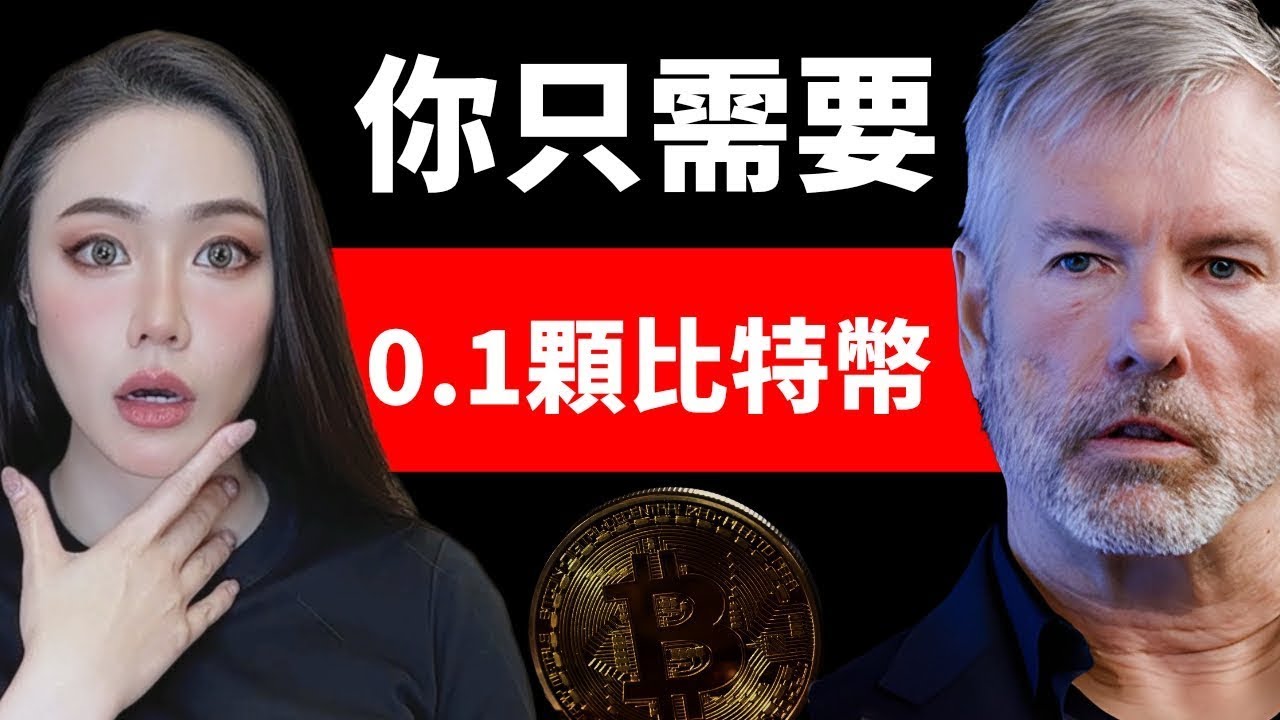
Guest: Michael Saylor, Founder of MicroStrategy
Host: Bonnie
Podcast Source: Bonnie Blockchain
Original Title: Michael, the "Jesus of Bitcoin": This Generation's Chance to Turn Things Around! Here's All You Need to Do!
Release Date: November 16, 2024
Background Information
Michael, known as the "Jesus of Bitcoin," and his U.S.-listed company MicroStrategy, are considered among the most visionary bitcoin issuers globally. With bold investment strategies and unwavering faith in Bitcoin, he has transformed the company from a traditional software business into one of the best-performing stocks on the U.S. market in 2024. Below, we explore his path to success and his unique insights into enterprises, individuals, and the future of Bitcoin.
A Childhood Reading Competition
Michael’s Early Life
-
At the start of the podcast, Michael shares memories of reading during his childhood. His father served in the Air Force, so he lived in various countries including Japan and New Zealand, as well as multiple states across the U.S. He recalls loving comic books in first grade, though each cost 25 cents—too expensive for him at the time. To encourage reading, his parents offered a 10-cent reward for every book he finished.
The Spark of a Reading Contest
-
His teacher held a reading contest that ignited his competitive spirit. Realizing he could borrow up to seven books at once, he began borrowing science fiction titles. Over the summer, he read extensively to earn money for comics. In the end, not only did he win the contest, but he also developed a genuine love for reading—especially science fiction—and discovered authors like Robert Heinlein, Arthur C. Clarke, and Isaac Asimov.
The Lasting Impact of Reading
-
Michael says this experience accelerated his intellectual development and profoundly influenced his later life. Although he no longer reads many comics today, his passion for reading remains strong.
Diversification vs. Concentration
MicroStrategy’s Investment Strategy
-
Bonnie asks Michael about MicroStrategy’s investment strategy, particularly its concentrated bet on Bitcoin.
-
Michael confirms that MicroStrategy currently holds 252,220 bitcoins, while his personal holdings have slightly increased from the 17,730 BTC he disclosed four years ago. He notes that while traditional finance emphasizes diversification, concentration can be wiser under certain circumstances.
The Logic Behind Concentrated Investment
-
Michael explains his view on risk dispersion. Diversification makes sense when there are multiple viable options with high uncertainty. But if only one option is truly sound, then concentrating your investment is smarter. He uses the metaphor of a sinking ship and lifeboats: if only one lifeboat is safe, spreading people across others isn’t wise. In times of hyperinflation, diversifying assets only increases risk.
The Uniqueness of Bitcoin
-
Michael elaborates on why MicroStrategy chose Bitcoin. When the company had $500 million in cash, it earned 0% interest while facing capital costs of 15–20%. Holding cash meant losing value, so they needed an investment with higher returns. Bitcoin, he argues, is the world’s only truly scarce digital commodity capable of outperforming the S&P 500 over the long term.
Bitcoin’s Investment Advantages
-
He emphasizes that Bitcoin is not just the only digital commodity—it has no issuer, giving it regulatory advantages. For public companies, rules limit holding more than 40% of assets in securities, making Bitcoin an ideal choice. Facing existential threats, MicroStrategy innovated by adopting new investment ideas and turned its fate around.
I Had to Convince Myself First
The Challenge of Convincing Others
-
Bonnie asks whether it was hard to convince others about Bitcoin, given that many still saw it as a scam.
-
Michael shares how he convinced himself back in 2013. Initially skeptical, he thought Bitcoin might fail. He notes that Bitcoin’s value often depends on need—many see it as odd unless they’re in urgent need.
From Doubt to Trust
-
Michael describes his evolving perspective. Everyone starts as a skeptic. After a few hours of study, you may realize Bitcoin is an asset. Then you become a trader. After about 100 hours of learning, he began viewing Bitcoin as an investment—an internet-based bank enabling peer-to-peer transfers without intermediaries.
The Philosophy of Bitcoin Investing
-
After 1,000 hours of deep research, Michael became an “extreme believer” in Bitcoin. He sees Bitcoin not just as an investment, but as a tool granting property rights to all 8 billion people globally. Unlike traditional assets, Bitcoin gives everyone equal financial rights regardless of location. Buying Bitcoin means joining a global network where participants collectively enhance your wealth.
The Ethical Significance of Bitcoin
-
Michael believes Bitcoin is not merely an economic tool but a form of economic empowerment, offering opportunities to individuals, nations, and institutions alike. For the first time in human history, property rights can be transferred in a way that cannot be easily taken away. This idea, he says, is profound and deeply meaningful.
Maintaining Optionality
Why Choose Bitcoin?
-
Bonnie expresses her view: if you want to buy an asset that can last generations, choose one governments can’t arbitrarily inflate—like Bitcoin. She references recent news about a wallet linked to the U.S. government being hacked, losing $20 million—prompting reflection on Bitcoin storage methods.
Best Ways to Store Bitcoin
-
Michael responds that there’s no single “best” storage method—it depends on individual time horizons and needs. The longer your timeframe, the more important flexibility becomes. He gives examples:
-
Short-term investors: If you're 75 and use a stockbroker, you might prefer buying Bitcoin ETFs through firms like Fidelity or BlackRock via phone orders.
-
Large corporations: Regulated enterprises may prefer direct Bitcoin purchases over ETFs, using compliant custodians.
-
Individuals in unstable countries: If living under currency collapse or political instability, self-custody is better. Michael suggests using offshore entities or full self-custody.
-
Choosing Based on Context
-
Michael stresses that the key factors are entity type (individual, family, church, union, city, bank) and environment (war zone vs. stable nation). Time horizon matters too. For example, if leaving Bitcoin to a granddaughter who may live abroad, self-custody ensuring full control is optimal.
The Importance of Flexibility
-
Michael concludes that maintaining optionality is crucial. If he had to summarize business school in one sentence, it would be: “Keep your options open.” Therefore, owning Bitcoin and knowing how to self-custody is the best way to maintain flexibility.
MicroStrategy as the Top-Performing U.S. Stock
Bitcoin vs. MicroStrategy Performance
-
Bonnie highlights striking numbers: Bitcoin rose 97% in the past year, TSMC 116%, NVIDIA 222%, while MicroStrategy surged 455%. She asks how investors should interpret this gap and why MicroStrategy trades at a premium above its underlying asset value.
Multiple Layers of Value in Holding Bitcoin
-
Michael uses oil as an analogy to explain the difference between investing in Bitcoin versus Bitcoin-related companies. Owning a barrel of oil has clear value, but if a company owns refineries producing petrochemicals, its value exceeds mere oil reserves. MicroStrategy, holding $17 billion worth of Bitcoin, inherently possesses significant intrinsic value.
What Makes MicroStrategy Unique
-
Michael points out that MicroStrategy uniquely securitizes Bitcoin. It creates financial instruments attracting capital markets investors unwilling to hold Bitcoin directly. These investors prefer higher-performance tools over plain Bitcoin. For instance, MicroStrategy stock offers 1.5x leverage on Bitcoin—amplifying both volatility and returns.
High-Leverage Investment Options
-
Michael adds that different investors seek varying levels of exposure. Some want amplified Bitcoin exposure—products like MSTU and MSTX derivatives offer 2x leverage on MicroStrategy stock, effectively delivering 3x Bitcoin exposure. Additionally, MicroStrategy’s options market shows massive open interest exceeding $40 billion.
-
MicroStrategy issues convertible bonds to create leverage, offering relatively safe investments. Bondholders get principal protection at maturity while participating in upside if the stock rises. Michael notes one recent convertible bond gained 45% in just four weeks.
Liquidity and Volatility
-
Michael emphasizes that MicroStrategy’s high liquidity and volatility allow it to borrow at low rates because lenders desire this volatility. If MicroStrategy invested in low-volatility Treasuries, it would undermine value creation. He compares volatility to engine temperature: to drive fast, the engine must run hot.
Volatility Is Not Risk
Defining Volatility and Risk
-
Bonnie asks whether Michael feels nervous during Bitcoin price drops.
-
Michael replies he does not, highlighting the distinction between volatility and risk. Volatility refers to price swings; risk means expecting an asset’s value to go to zero. Bitcoin is volatile, but that doesn’t make it risky.
Bitcoin’s Liquidity and Leverage
-
Michael further explains Bitcoin’s liquidity and leverage. If on a Saturday night you need to sell $1 billion of Bitcoin with 10x leverage, you only need $100 million in collateral—something impossible with gold or real estate.
-
Michael stresses that Bitcoin’s network provides unmatched liquidity and leverage, making it attractive even amid market turbulence.
Limits of Other Assets
-
He notes that other assets like gold and real estate lack liquidity and credit during crises, reducing their usefulness. During emergencies, selling large positions is difficult. In contrast, Bitcoin’s volatility reflects its utility and flexibility as a financial instrument.
Volatility Equals Energy
-
Michael likens Bitcoin’s volatility to heat in a jet engine—this energy drives financial performance. While jet engines roar and emit hot air, it’s not scary because it enables flight from New York to Tokyo. Similarly, Bitcoin’s volatility is the energy powering its superior returns.
-
Michael maintains that volatility ≠ risk. High volatility reflects liquidity and leverage—enabling flexible trading when markets shift. This gives Bitcoin unique value and appeal in finance.
Extreme Financial Engineering
Features of Convertible Bonds
-
Bonnie asks what happens when convertible bondholders reach maturity and MicroStrategy must repay principal.
-
Michael explains that bondholders can convert their bonds into MicroStrategy stock. The first batch had a conversion price around $39, while the current share price is far above that—delivering huge capital gains.
Bond Conversion and Corporate Strategy
-
Michael notes that nearly all issued bonds now trade above their conversion prices. He expects almost none will be repaid in cash—instead, they’ll convert to equity. As Bitcoin rises, conversions become increasingly likely.
Bitcoin Growth Expectations
-
Michael forecasts Bitcoin will grow ~29% annually on average. Even today, growth exceeds this. At 21% annual growth, assets double every ~3 years. Debt durations (~5 years) align well with expected appreciation.
Leverage and Investment Strategy
-
Michael emphasizes maintaining moderate leverage to stay competitive. Without leverage, MicroStrategy would mirror Bitcoin’s volatility—but its investors are already Bitcoin believers. Like a real estate firm, using low-cost debt is more attractive than operating unleveraged.
Goal: Increase Bitcoin Per Share
-
Bonnie summarizes: MicroStrategy’s ultimate goal is increasing Bitcoin per share.
-
Michael agrees, saying the company focuses on creatively acquiring more Bitcoin. He introduces “BTC yield”—a metric measuring growth in Bitcoin per share.
Calculating BTC Yield
-
Michael explains BTC yield: divide total Bitcoin held by fully diluted shares to get Bitcoin growth per share. If Bitcoin holdings increase and BTC yield is positive, shareholders aren’t diluted—they benefit.
How Much Will You Have in 10 Years?
Long-Term Bitcoin Outlook
-
Bonnie asks Michael about Bitcoin’s future price and growth potential.
-
Michael expects Bitcoin to continue growing as digital capital and become a primary long-term store of value. Currently, Bitcoin represents ~0.1% of global assets ($1.4 trillion out of ~$900 trillion). He estimates the addressable market for long-term capital at ~$450 trillion—indicating vast room for growth.
Bitcoin’s Target Price
-
Michael predicts Bitcoin will eventually capture 7% of global assets, implying a price of $13 million per coin by 2045. While recent annual growth averaged ~50%, he expects this to slow as adoption widens. Comparing to the U.S. dollar’s ~7% annual money supply growth over the past century, he anticipates Bitcoin following a similar trajectory over the next 20–30 years.
Bitcoin vs. Other Asset Classes
-
Michael analyzes Bitcoin against other assets. He believes Bitcoin will surpass gold, real estate, and some stock indices as the preferred wealth reserve for the rich. Its growth rate will gradually converge toward S&P 500 returns (~10–12%). As more companies adopt Bitcoin, the line between traditional and digital capital will blur.
Volatility and Opportunity
-
Michael notes Bitcoin’s volatility (~55) remains much higher than traditional markets (~15–16). He attributes this to Bitcoin’s high trading volume and global accessibility, which enable greater return potential. He suggests downloading the “Bitcoin 24 Model” to simulate personalized financial forecasts based on macroeconomic and technical variables.
Advice for Young Investors
-
Michael advises young investors: every Bitcoin bought today could be worth $13 million in 21 years. Owning five BTC could mean $65 million in the future. Despite inflation, Bitcoin remains a superior investment compared to alternatives.
Does Bitcoin Enrich the Rich—or Empower the Poor?
Empowering Everyone
-
Bonnie asks whether Bitcoin enriches the rich or empowers the poor.
-
Michael firmly believes Bitcoin empowers all 8 billion people—especially the working class—in ways no other financial asset can. Its uniqueness lies in enabling anyone with a smartphone to participate at low cost, gaining the same property rights as billionaires.
Equality Through Bitcoin
-
Michael argues that ordinary people using Bitcoin enjoy better property rights than the world’s richest—like Jeff Bezos, Elon Musk, or Bill Gates. Bitcoin’s liquidity and tradability let anyone transact anytime, free from traditional financial constraints.
Wealthy Holdouts in the Digital Economy
-
For wealthy individuals rejecting Bitcoin and crypto-economics, Michael warns of wealth erosion. They may cling to traditional returns (7–12%), while those embracing the digital economy grow richer—and help workers and the poor share in that prosperity.
Bitcoin’s Impact on Capital Markets
-
Michael believes Bitcoin will drive the digitization of capital markets. Any security tied to Bitcoin will deliver superior returns. Indirectly, Bitcoin benefits pension funds, retirees, and anyone holding related assets. Today, ~250 million people hold Bitcoin directly or indirectly—a number expected to grow to 1 billion.
Want to Make a Lot of Money?
Building Wealth with Bitcoin
-
When discussing wealth creation, Michael proposes a radical strategy: position your podcast as a Bitcoin-focused show valued at $10 million. Sell 25% to venture investors who believe in Bitcoin and the digital future to raise capital.
Invest in Bitcoin
-
Assume you raise $3 million—invest it all in Bitcoin. Michael believes Bitcoin doubles roughly every three years. So in three years, you’d have $6 million, and your podcast might be worth $15 million. Raise another $5 million, reinvest in Bitcoin—within ten years, you could grow assets to $30–40 million.
High-Leverage Investing
-
Michael stresses “active leveraged investing.” By channeling corporate cash flows and capital into Bitcoin, profits can double or triple. He explains how taking calculated risks and leveraging Bitcoin’s high-return potential accelerates wealth accumulation.
Comparison with Real Estate
-
He contrasts this with real estate, which typically appreciates slowly. Bitcoin grows faster. Simply allocating all capital to Bitcoin instead of selecting specific properties allows quicker wealth growth.
Advice for Ordinary People
-
For regular people, Michael recommends allocating part of long-term capital to Bitcoin. Spend time learning about it and decide investment size based on risk tolerance. Smart investors should shift their capital structure toward Bitcoin for higher returns.
Embrace Volatility
-
Michael also emphasizes that conventional finance wrongly equates volatility with risk. Instead, volatility is vitality. Embracing Bitcoin’s volatility attracts more capital and fuels faster growth. MicroStrategy exemplifies how putting Bitcoin on the balance sheet dramatically increases enterprise value.
Rescuing Taiwan’s Companies
Challenges Facing Taiwanese Manufacturing
-
Bonnie mentions that Taiwan’s economy relies heavily on small and medium-sized manufacturers. As manufacturing shifts overseas, these firms face survival challenges.
-
Michael observes many are “zombie companies”—still profitable but stagnant, uninteresting, and trapped.
Finding Transformation Opportunities
-
Michael suggests that if a board discusses rescuing a $500 million revenue company growing only 2% annually, he’d propose a transformative acquisition. Imagine finding a $2.5 million company growing 50% yearly, projected to grow 20–40% annually over 20 years—one dominating its market with unstoppable products.
Bitcoin as the Solution
-
He proposes viewing Bitcoin as a “global tech company” acquirable at 1x revenue. Michael calls Bitcoin a “universal merger partner” that can globalize a business, boost growth, and enhance stock appeal. Bitcoin’s value lies in its growth potential and global market access.
Breaking Traditional Thinking
-
Michael notes many companies hesitate during transformation, preferring slow decline over risk. Using the electricity revolution as a metaphor, he urges embracing new technology boldly—just as society adopted electricity. He believes “digital energy” (Bitcoin) can revitalize businesses and products.
-
Michael's core message: Taiwanese manufacturers must rethink their business models, take bold risks, and embrace new technologies like Bitcoin to grow and transform. Adding Bitcoin to the balance sheet enhances value and competitiveness, preventing obsolescence.
Opportunity
The Lesson of Fire
-
Michael uses fire as a metaphor for technology. When humans first discovered fire, not everyone immediately grasped its uses. Over time, they learned to cook, clear land, forge tools—eventually building skyscrapers and civilizations.
Adopting and Learning New Technology
-
Michael stresses that civilizational progress depends on adopting and mastering new technologies. He encourages people everywhere—Taiwan, Africa, South America—to embrace new tech rather than fear it. In a globalized world, many nations can’t invest in U.S.-style tech or real estate—so finding new opportunities is critical.
Bitcoin as Opportunity
-
He notes Bitcoin offers access to top-tier markets for those excluded from the U.S. financial system. It not only opens doors to the best markets but may allow leapfrogging into even better ones. Michael sees Bitcoin as a universal solution—especially for those feeling marginalized or insecure.
Finding Those in Need
-
Michael observes that the rich and powerful often ignore their problems due to complacency. He advises targeting those aware of their struggles and offering Bitcoin as a solution. For people in economically unstable countries like Argentina or Nigeria, Bitcoin could be their escape route.
Join TechFlow official community to stay tuned
Telegram:https://t.me/TechFlowDaily
X (Twitter):https://x.com/TechFlowPost
X (Twitter) EN:https://x.com/BlockFlow_News
 深潮TechFlow