








Turkey's Crypto Market Under Policy Guidance: $170 Billion Annual Trading Volume, License Applications Surge to 76
TechFlow Selected TechFlow Selected
Turkey's Crypto Market Under Policy Guidance: $170 Billion Annual Trading Volume, License Applications Surge to 76
In recent years, Turkey's cryptocurrency market has been rapidly globalizing, evolving from a regional market into a significant component of the global crypto industry.
 Navigating Web3 tides with focused insights
Author: Aiying
In recent years, Turkey's cryptocurrency market has rapidly globalized, evolving from a regional hub into a key component of the global crypto industry. International crypto firms such as Coinbase and KuCoin have entered the Turkish market, reflecting its immense potential and strategic importance.
The Capital Markets Board (CMB) of Turkey recently updated its regulatory framework for cryptocurrencies, triggering a surge in licensing applications—from an initial 47 to 76 companies. This legislation provides clearer regulatory guidelines for crypto asset service providers in Turkey, encouraging businesses to pursue legal operation pathways. However, being listed on the "active companies list" does not mean these firms have received final operating licenses. The CMB clarified that ultimate authorization requires board approval, which hinges on the issuance of secondary legislation. Aiying previously covered this in "Turkey Passes New Law: Unauthorized Crypto Service Providers Face Up to 22 Years in Prison." But what exactly has driven Turkey’s market growth over the years? Aiying takes a deep dive below.
1. Turkey’s Market Uniqueness
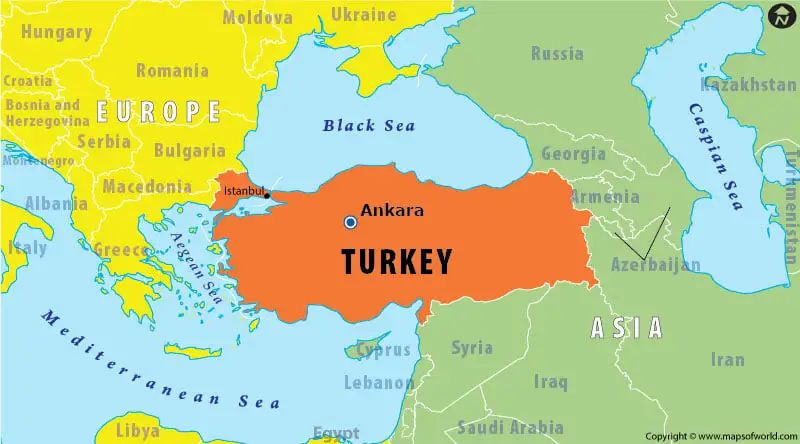
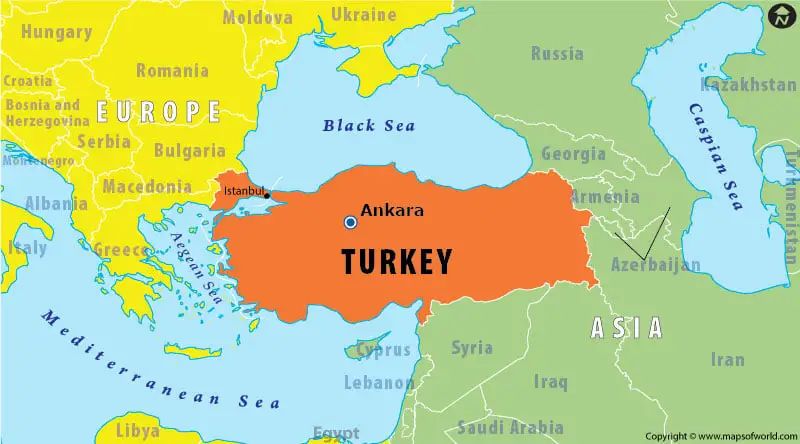
Turkey sits at the crossroads of Europe and Asia, giving it exceptional strategic value. Crypto companies establishing operations here can efficiently reach markets across Europe, the Middle East, and North Africa, expanding their global footprint.
Turkey’s crypto market is increasingly significant worldwide, now ranking as the fourth-largest. According to Chainalysis, annual crypto transaction volume in Turkey reaches approximately $170 billion—a staggering figure surpassing traditionally prominent markets like Russia and Canada. Aiying presents relevant data from Kaiko’s report:
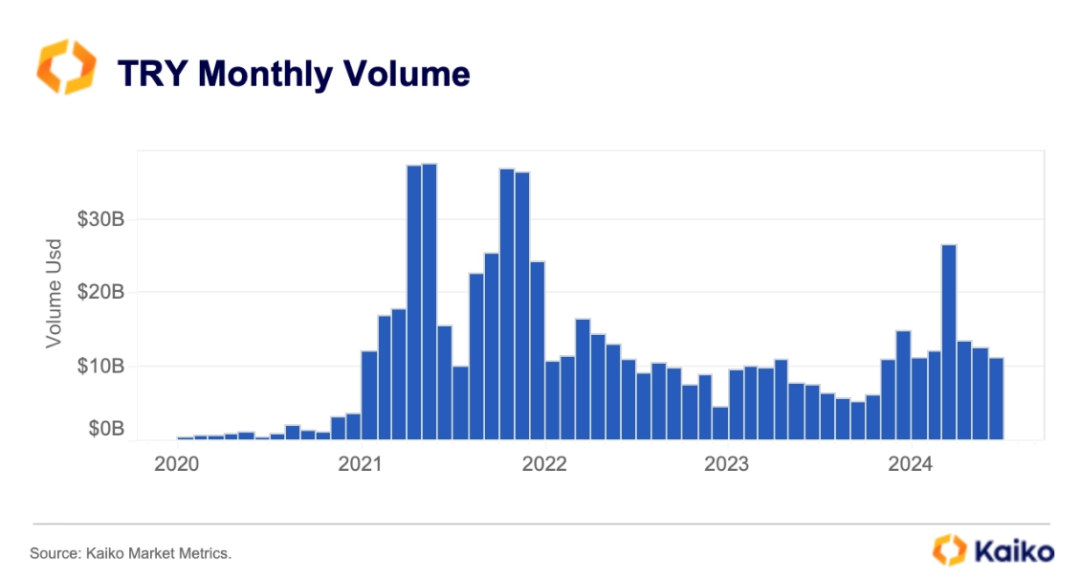
1. Growth of Turkish Lira in Crypto Trading: Over the past four years, TRY-denominated trading volume has surged from mere millions to over $10 billion. In 2024, monthly trading volume for TRY pairs exceeded $10 billion for eight consecutive months—the longest sustained high-volume period on record. Annual cumulative volume reached around $95 billion, nearly matching the total for all of 2023.
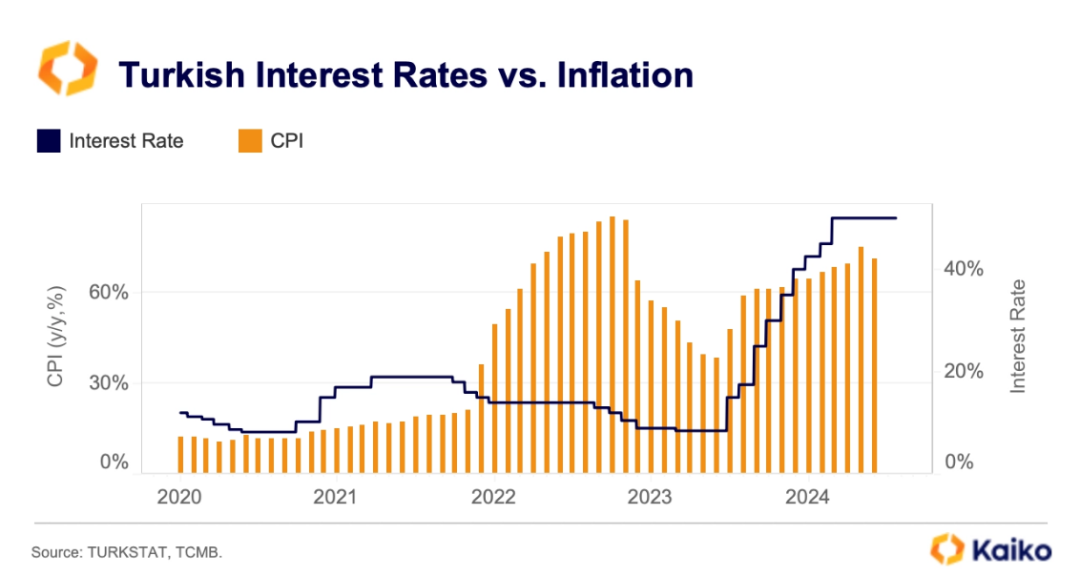
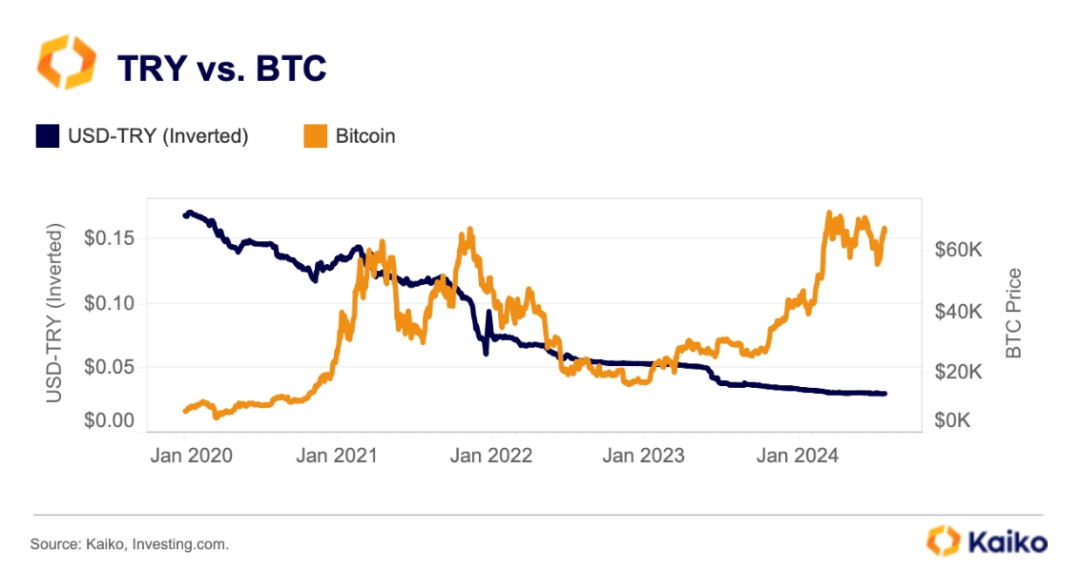
2. Persistent High Inflation and Currency Depreciation: Turkey has long struggled with inflation and lira depreciation. Under so-called "Erdoğan economics," the central bank maintained rate cuts until 2023, worsening lira devaluation. Although policy shifted after the 2023 elections, depreciation only slowed without restoring confidence. From late 2020 to late 2023, the Turkish lira lost over 300% of its value.
3. Cryptocurrency as a Hedge: In contrast to the lira’s decline, Bitcoin’s price has risen significantly since 2021, making it a vital store of value for Turkish investors. This fueled explosive growth in BTC-TRY trading volume, up more than 800% since 2021.
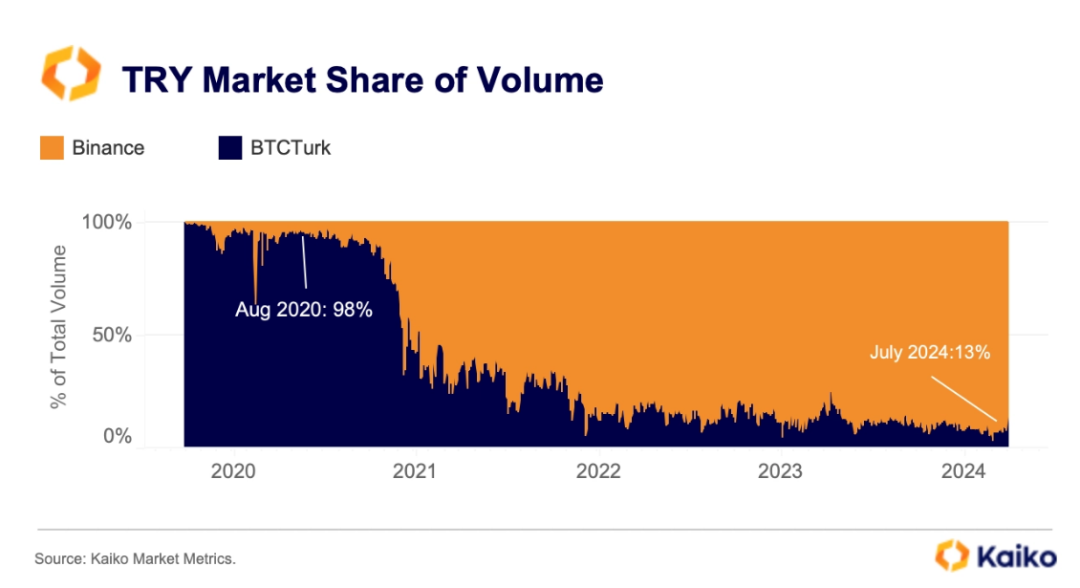
4. Binance’s Dominant Position: While platforms like Gate.io, KuCoin, and OKX have recently entered Turkey, their market share remains under 1%. Binance and BTCTurk are the most widely used exchanges among Turkish traders. Although BTCTurk was once the largest local platform, its market share dropped from 95% in 2020 to just 13% in 2024. Binance has gradually taken the lead due to deeper liquidity and lower fees.
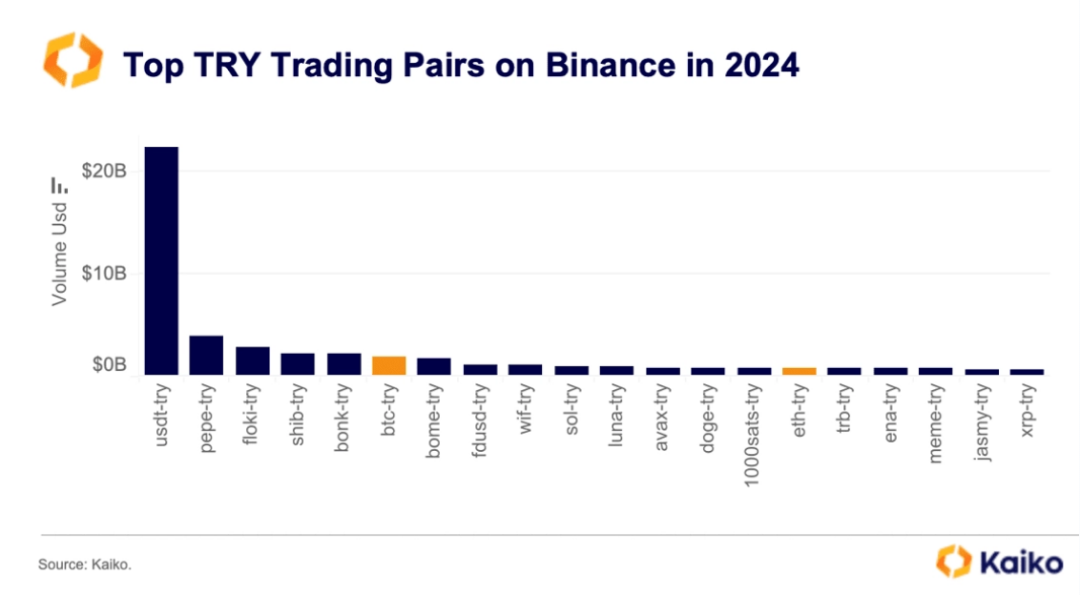
5. Expansion of Stablecoin Usage: Due to Turkey’s inflationary environment, stablecoin adoption has surged. In 2024, USDT-TRY became the most traded pair on Binance, exceeding $22 billion in volume.
Aiying understands that crypto transactions are now deeply embedded in daily life in major cities like Istanbul. For example, some small shops near the Grand Bazaar allow customers to directly exchange cash for Bitcoin or USDT. Additionally, certain real estate developers and agents accept Bitcoin as payment for property transactions. In tourism, including travel agencies, hotels, and tour operators, more businesses are adopting crypto payments. The number of cryptocurrency ATMs in Istanbul is also rising, enabling users to conveniently buy major cryptocurrencies like Bitcoin and Ethereum using cash. These trends indicate growing crypto adoption in Turkey, where digital assets are becoming part of everyday commerce—making it an attractive base for many crypto institutions.
2. Turkey’s Capital Markets Law Amendment
Turkey officially implemented the revised Capital Markets Law Amendment on July 2, 2024. This regulatory update brings significant changes to the crypto market, aiming to better govern this fast-growing sector. Below is a simplified breakdown of the law’s key points, as summarized by Aiying:
1. Licensing System and Compliance Requirements
The new regulation mandates that all crypto-related service providers—including exchanges and custodial services—must obtain operational licenses from Turkey’s Capital Markets Board (CMB). In other words, both domestic and international companies must secure approval and a license before legally conducting business in Turkey. Furthermore, these entities must adhere to stricter compliance standards such as anti-money laundering (AML) and know-your-customer (KYC) protocols, aligning with international norms to ensure transparent and secure operations. See "To Escape the 'Grey List,' Turkey Proposes Stricter Crypto Regulation."
2. Mandatory Fee Payments
The amendment requires all crypto platforms to pay an annual fee equal to 2% of their revenue—1% to the CMB and 1% to the Scientific and Technological Research Council of Turkey (TÜBİTAK). These fees support government oversight efforts and help maintain market order and stability. While this may burden smaller enterprises, it contributes overall to a fairer and more sustainable market environment.
3. Transition Period and Rules for Existing Businesses
For crypto companies already operating in Turkey, the new law establishes a transition period. Firms must submit a declaration to the CMB within one month of the law taking effect—either applying for a license to continue operations or completing liquidation within three months, ensuring no harm to customer interests. During this period, companies cannot onboard new clients and must focus solely on meeting regulatory requirements.
4. Classification of Crypto Assets
The law introduces detailed classifications for crypto assets:
-
Security-type crypto assets: Digital assets similar to traditional securities.
-
E-money-type crypto assets: Cryptocurrencies used for electronic payments.
-
Utility-type crypto assets: Tokens granting access to specific services or products, such as NFTs.
-
Technology-driven crypto assets: Such as Bitcoin and Ethereum, whose value is intrinsically tied to their underlying blockchain technology.
This classification system clarifies regulatory expectations for different types of crypto assets, ensuring each operates under an appropriate legal framework.
5. Requirements for Foreign Platforms
The new regulation sets clear rules for foreign crypto platforms. If a platform uses Turkish-language websites or specifically targets Turkish customers through marketing, it must cease such activities within three months of the law’s enactment unless it obtains a CMB license. This measure prevents unauthorized foreign platforms from operating in Turkey and ensures a level playing field under uniform regulatory oversight. Aiying learned that Binance has announced service updates in line with Turkey’s new regulations, halting all direct marketing to local users and phasing out Turkish language options on Binance.com within three months.
6. Trading and Customer Protection
Under the new law, the CMB will establish detailed rules for trading and customer protection. All contracts between service providers and customers must be in writing, and any clauses limiting or disclaiming provider liability will be deemed invalid. The CMB will also regulate contract content to fully safeguard customer rights.
7. Penalties for Violations
Strict penalties are imposed on unauthorized crypto service activities, including fines and imprisonment. Employees or shareholders involved in illegal operations face severe legal consequences.
Turkey’s role in the global crypto industry continues to grow, especially given its large market demand and strategic location. As the world’s fourth-largest crypto market, Turkey holds a significant position not only in transaction volume but also due to its economic conditions and young, tech-savvy population, positioning it at the forefront of crypto adoption. As the market matures and regulations become clearer, Turkey is poised to play an even greater role in driving innovation and development in the global crypto space. Aiying continues to monitor developments closely—feel free to connect via WeChat.
Join TechFlow official community to stay tuned
Telegram:https://t.me/TechFlowDaily
X (Twitter):https://x.com/TechFlowPost
X (Twitter) EN:https://x.com/BlockFlow_News
 Aiying Compliance








