








Will Ethereum's continuous decline be reversed—can the Pectra upgrade bring new upward momentum?
TechFlow Selected TechFlow Selected
Will Ethereum's continuous decline be reversed—can the Pectra upgrade bring new upward momentum?
Has the timing for a rebound arrived?
 Navigating Web3 tides with focused insights
Author: IGNAS | DEFI RESEARCH
Translation: TechFlow
It's common to be bearish on Ethereum (ETH) right now. Since the market bottom in early 2023, ETH has underperformed Solana (SOL) by 6.8x, and over the past two years, ETH has declined 47% against Bitcoin (BTC).
So, is a rebound finally due?
Bearish Arguments for Ethereum
There are many debated reasons behind ETH’s poor performance, but I believe several key factors stand out:
-
First, Bitcoin is known as “digital gold”—a simple narrative that resonates well with new retail users and institutions alike. Ethereum’s story, in contrast, is more complex. The popular “digital oil” analogy is neither compelling nor accurate.
-
Second, Solana is catching up fast—sometimes even surpassing Ethereum in active users, transaction volume, and media attention.
-
As a result, in crypto adoption, Bitcoin becomes the safer bet, while Solana offers a higher-risk (lower market cap) investment in smart contract platforms. Ethereum sits uncomfortably in between.
-
Additionally, Ethereum’s modular approach combined with Layer 2 (L2) solutions has led to fragmented liquidity and a more complicated user experience.
-
Speculators betting on the modular thesis spread their capital across multiple ETH beta tokens—various L2s, LRTs, and DA tokens. In contrast, betting on Solana means simply buying SOL.
I once believed ETH would outperform BTC as market participants recognized the high yields from airdrop farming. Indeed, thanks solely to re-staking protocol airdrops, my realized returns on ETH far exceeded what spot price alone would suggest.
However, this didn’t generate FOMO around ETH—possibly because of excessive exposure during the bear market, leading many to assume ETH couldn’t fail, so they didn’t rush to buy.
In contrast, relatively few in the crypto community hold SOL. When SOL rebounds, more crypto natives rotate from ETH into SOL. Without significant inflows from retail capital, ETH’s price remains stagnant.
Another issue is the decline in ETH’s revenue and burn rate.
After the EIP-4884 Proto-danksharding upgrade, fees paid by L2s dropped significantly, reducing ETH’s burn rate. Although ETH’s inflation rate remains below 1%, this is a setback for those who view ETH as "ultrasound money."
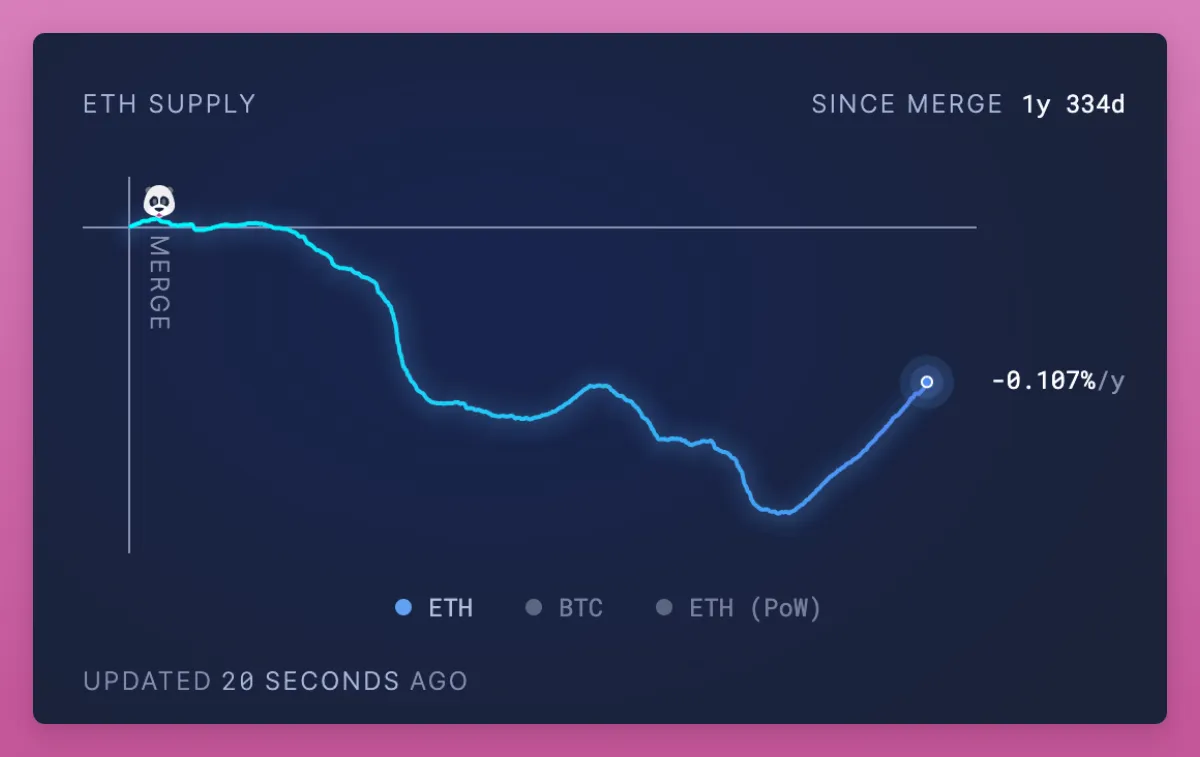
Following the March release of EIP-4844, ETH’s burn trend clearly reversed.
Currently, there’s almost no discussion about “ultrasound money” on Twitter.
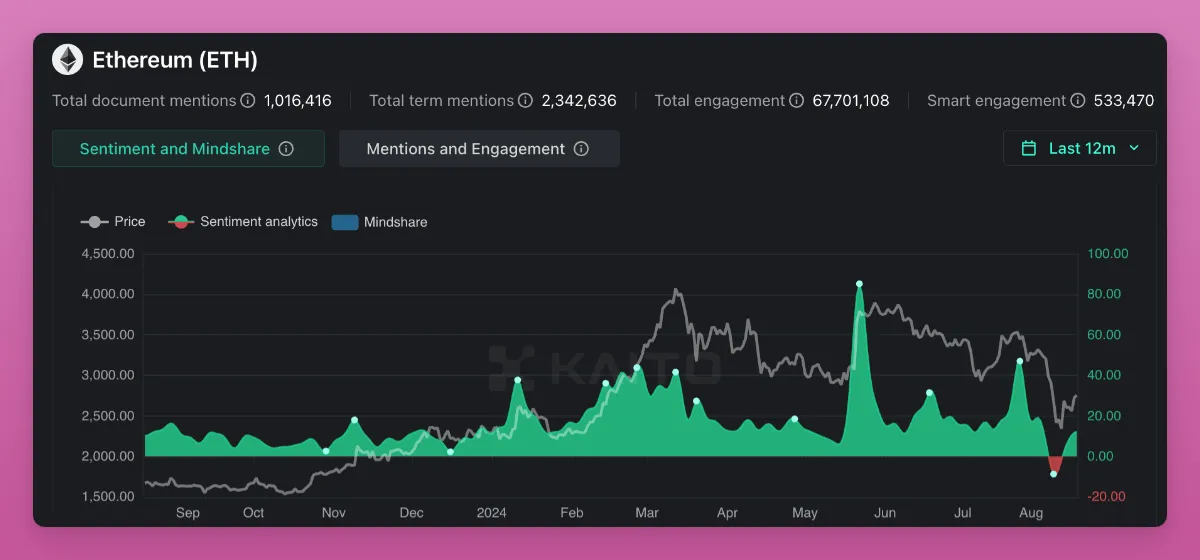
While bearish arguments flood X (formerly Twitter), sentiment toward ETH remains cautiously optimistic—though not as strong as for BTC.
On the flip side, let’s explore the bullish case for Ethereum.
Bullish Arguments for Ethereum
There are many reasons to be optimistic about ETH. I asked my followers on X for their thoughts.

-
If gas prices can remain around 20 gwei, Ethereum will be seen as both deflationary and scalable—an attractive and efficient network. Notably, since March, ETH gwei has consistently stayed below 20.
-
Retail users can now independently stake ETH at home, increasing decentralization and attracting individual investors and validators using consumer-grade hardware.
-
Ethereum’s strong developer community and accumulated intellectual capital support continuous innovation and network resilience.
-
Ethereum remains the leading smart contract platform with no true competitor, maintaining reliability and decentralization.
-
Ongoing developments like Layer 2 solutions and interoperability improvements are key bullish catalysts, with active efforts to reduce fragmentation and enhance network efficiency.
-
An increasingly clear regulatory environment, especially in the U.S. and EU, boosts confidence and enables institutional adoption—e.g., by BlackRock.
-
Improved staking options allow all ETH holders to participate in network security without needing deep technical knowledge or large resources.
-
Major institutions like Coinbase and BlackRock signal growing adoption of real-world asset (RWA) tokenization on Ethereum.
-
Ethereum’s potential to expand DeFi capabilities and stablecoin dominance opens considerable room for growth and market leadership.
-
Renewed enthusiasm and collective pride among ETH holders and users contribute to a positive outlook and increased market interest.
I also reached out to notable Ethereum figures to hear why they’re bullish. Respondents included Camila Russo (founder of The Defiant) and Christine Kim (researcher at Galaxy).
Here are Camila’s reasons for being bullish on ETH:
-
Mature DeFi Ecosystem: Ethereum and its L2s host the most mature DeFi ecosystem in crypto, measured by aggregate Total Value Locked (TVL) and trading volume. This concentration of liquidity and dapps will attract more users, whose activity will eventually reflect on Layer 1, driving up gas fees and burning more ETH. DeFi remains one of the few crypto use cases with meaningful product-market fit in finance.
-
Decentralization & Security: Ethereum’s decentralization and security make it trustworthy for the world’s largest institutions: BlackRock via its BUIDL fund, PayPal launching PYUSD, JPMorgan, Santander, and other major banks are testing blockchain settlements and tokenization on Ethereum. Large institutions cannot afford blockchain downtime or validator/miner attacks and misconduct—they will continue choosing Ethereum. This will drive activity and price appreciation.
-
ETH ETF: ETH is one of only two cryptocurrencies accessible via ETFs in the U.S., providing long-term price support.
Christine Kim emphasized Ethereum’s network effects:
-
I believe one of Ethereum’s main advantages over competitors is its network effect. As the first general-purpose blockchain (first-mover advantage) with the largest developer attention (strong community/ecosystem), both contribute significantly to the network’s value.
Indeed, Ethereum is where I personally prefer to store long-term assets. In contrast, Solana has suffered multiple outages, while Ethereum has demonstrated solid reliability over the years.
I’m particularly bullish on Ethereum as a chain for real-world asset (RWA) tokenization. For example, 52% of stablecoins and 73% of U.S. Treasuries are tokenized on Ethereum.
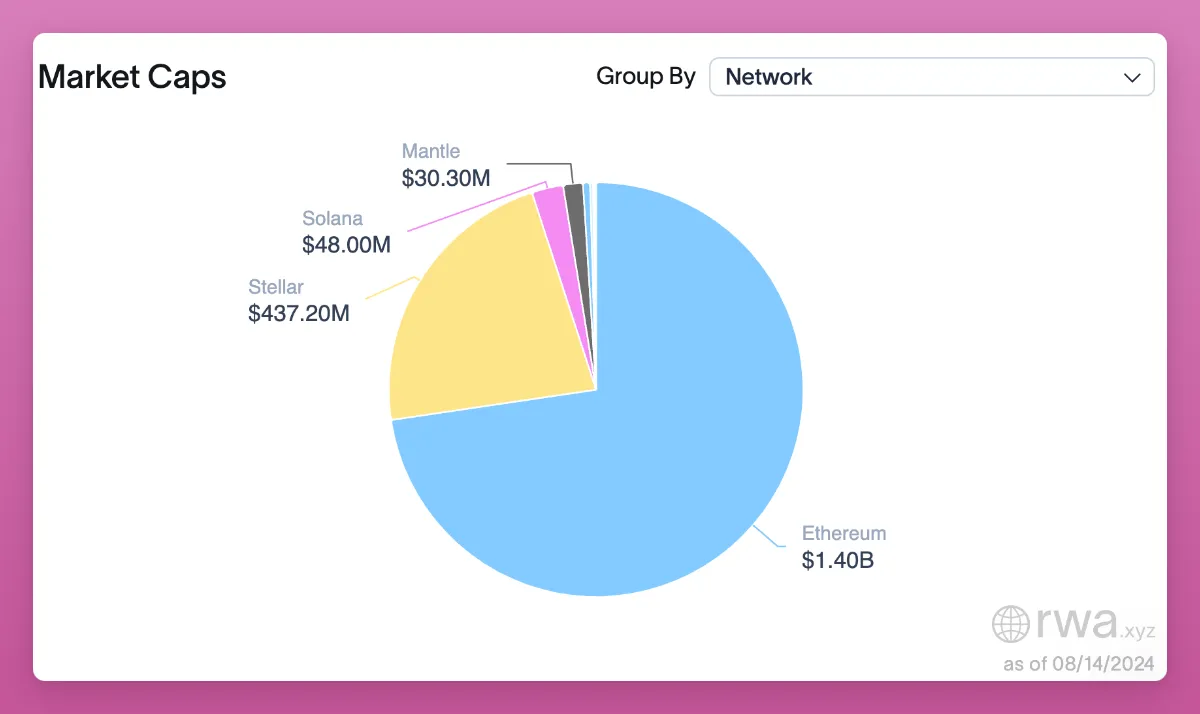
U.S. Treasury tokenization – rwa.xyz
If you're bullish on memecoins, Solana might be your pick—but for tokenizing billions in real-world assets, Ethereum is the safest choice.
Next, we address a critical topic: Layer 2s (L2s).
As a monolithic chain, Solana is fast and low-cost, but may still face scalability limits.
Modular scaling via L2s provides a long-term solution, allowing near-infinite scalability by spinning up dedicated L2s for specific use cases. L2s offer greater flexibility, simplicity, and cultural sovereignty. Cygaar articulates this well in the post below:
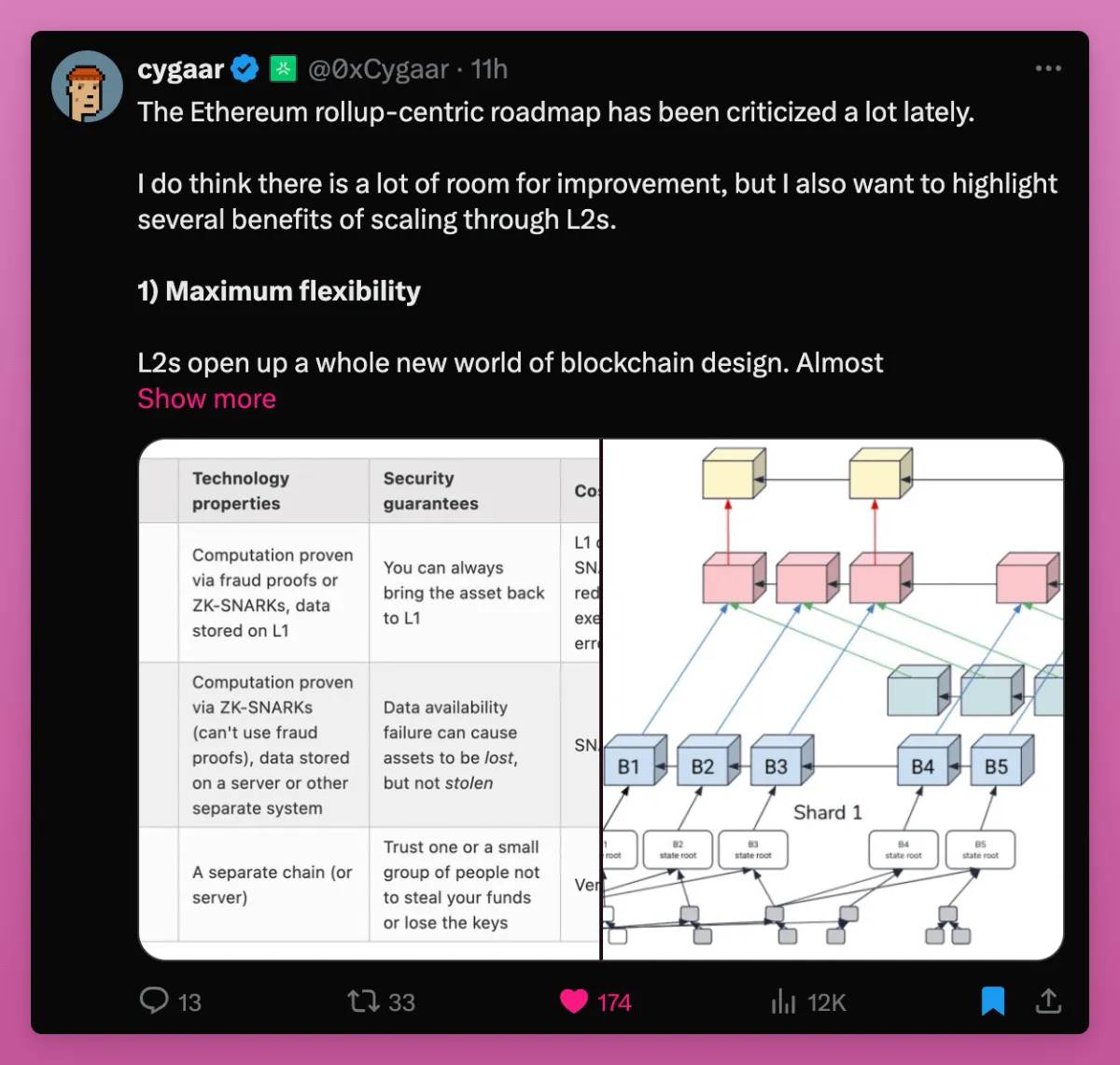
The current issues of liquidity fragmentation and degraded UX due to reliance on bridges are hopefully temporary. For instance, Catalyst AMM will enable atomic swaps across chains—eliminating the need to bridge assets. In this model, liquidity remains fragmented, but end users still get optimal pricing as liquidity pools across multiple chains. More solutions like Catalyst are in development.
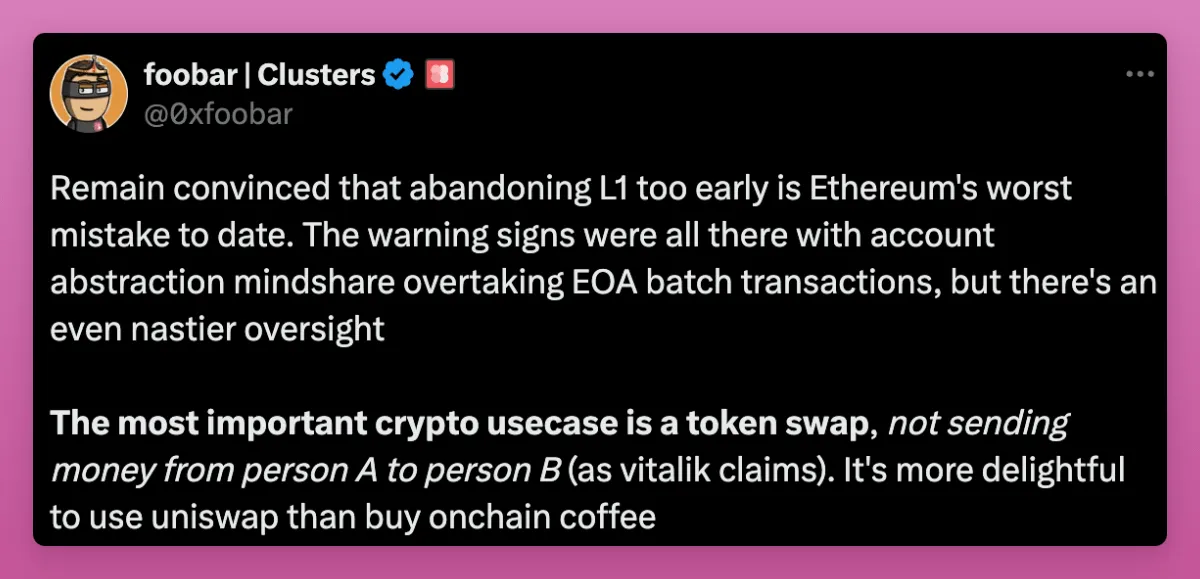
Moreover, L2s themselves are making significant progress.
Optimism is working on "integrating ERC-7683 to enable Superchain interoperability with other Ethereum L2s at the application layer," meaning all Optimism ecosystem L2s will feel like a single unified network.
Likewise, Polygon is building an AggLayer, which "enables one-click transactions across chains. It recreates the web experience, except within a protocol network."
Other projects include Caldera’s Metalayer, Avail Nexus, and Hyperlane.
Multiple aggregation solutions present a challenge, but liquidity and UX issues should resolve over time.
I think people underestimate how quickly this will happen.
In fact, Vitalik himself said people would be surprised when the “cross-L2 interoperability problem” ceases to exist.
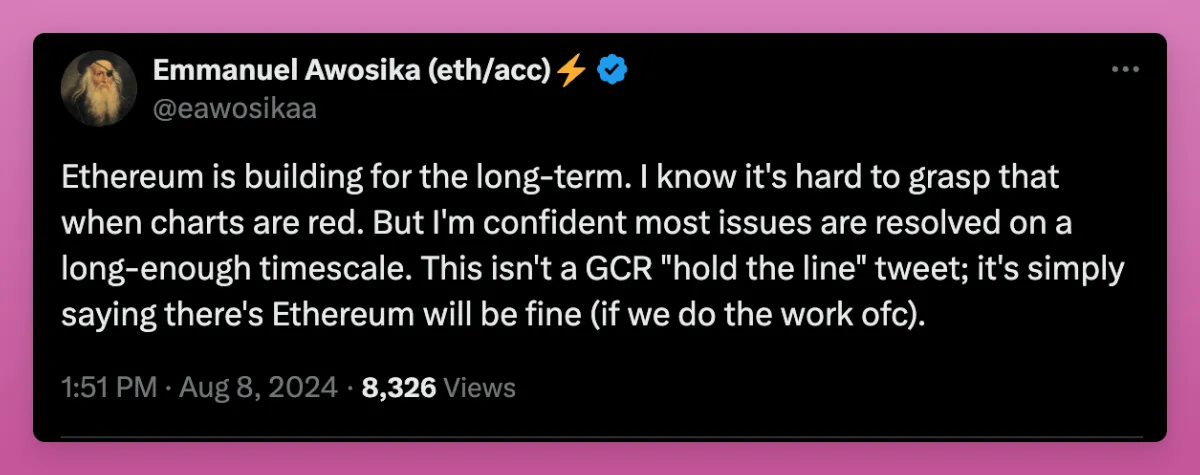
If you want more optimism, check Emmanuel’s thread. He’s bullish on Ethereum’s strong community, ongoing innovation, and long-term adaptability.
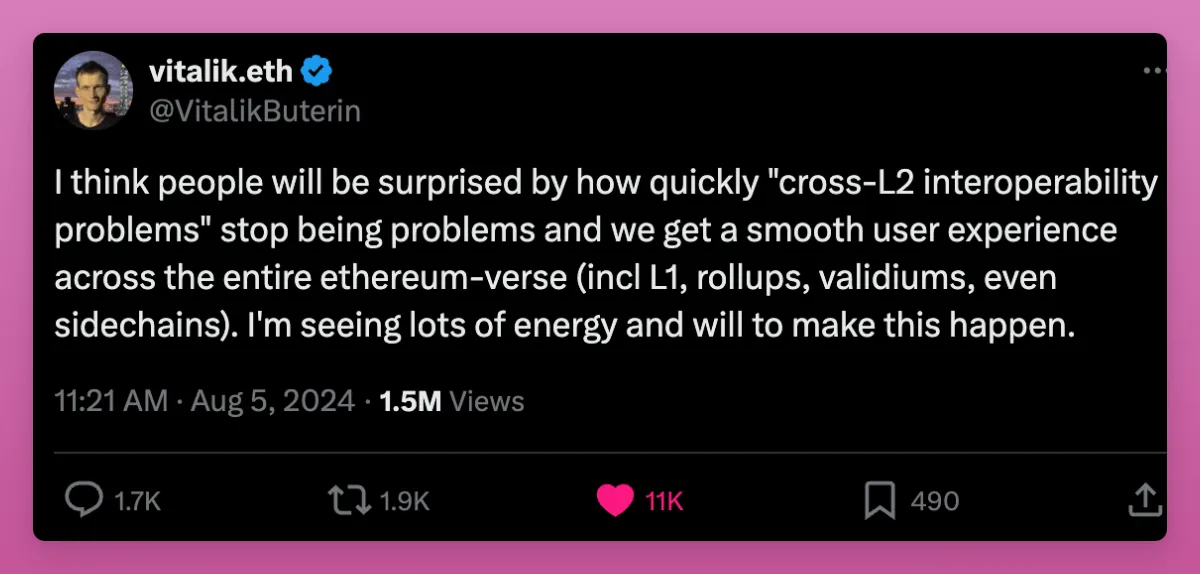
If L2 fragmentation is resolved and RWA/tokenization adoption continues growing on Ethereum, I’d be very bullish—but these are long-term drivers.
In the short term, there’s a catalyst few discuss: the Pectra upgrade.
What is the Pectra Upgrade?
The Pectra upgrade is Ethereum’s next major milestone, expected in Q1 2025. It will combine updates from Prague (execution layer) and Electra (consensus layer).
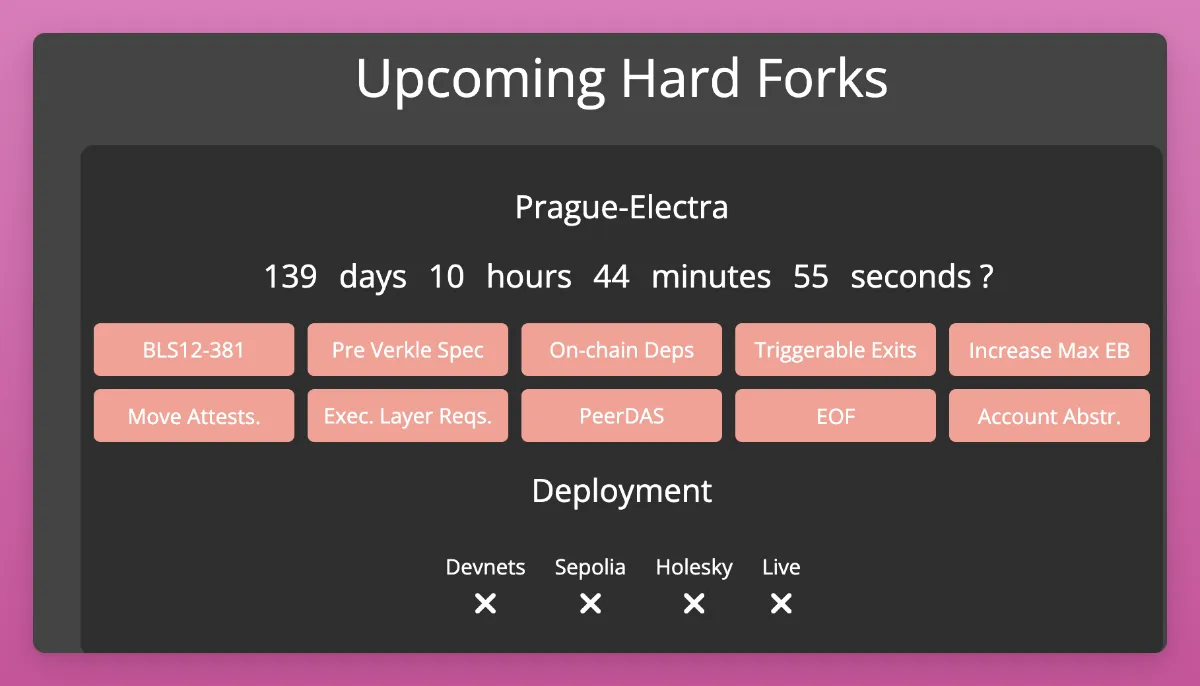
For detailed timelines and specific EIPs, visit Ethroadmap.com.
Previously, every major Ethereum upgrade received widespread attention, but Pectra seems to be progressing quietly.
I understand why. Ethereum has undergone multiple transformative changes—from PoW to PoS migration, introducing ETH burning, and EIP-4884. Yet Pectra brings equally exciting upgrades.
-
Account Abstraction: Finally Improving User Experience
A key change in Pectra is how it handles account management.
Currently, wallet management involves many tedious steps—signing transactions, managing gas across networks. Account abstraction in Pectra simplifies this.
EIP-3074 and EIP-7702 are two proposed upgrades. EIP-3074 allows traditional wallets (externally owned accounts or EOAs) to interact with smart contracts—enabling batch transactions and sponsored transactions.
EIP-7702 goes further, allowing EOAs to temporarily act as smart contract wallets during a transaction. This means your EOA becomes a smart contract wallet just for that transaction, implemented by adding smart contract code to the EOA address. It’s a fascinating concept—I look forward to seeing it in practice.
In practice, this brings several benefits:
-
Approve USDC and swap for UNI in a single transaction.
-
dApps can sponsor gas fees for users, lowering entry barriers.
-
Pre-approve dApps you wish to use and set spending limits.
Notably, EIP-3074 appears prioritized, while Vitalik drafted EIP-7702 in just 22 minutes! EIP-7702 is also compatible with future account abstraction implementations.
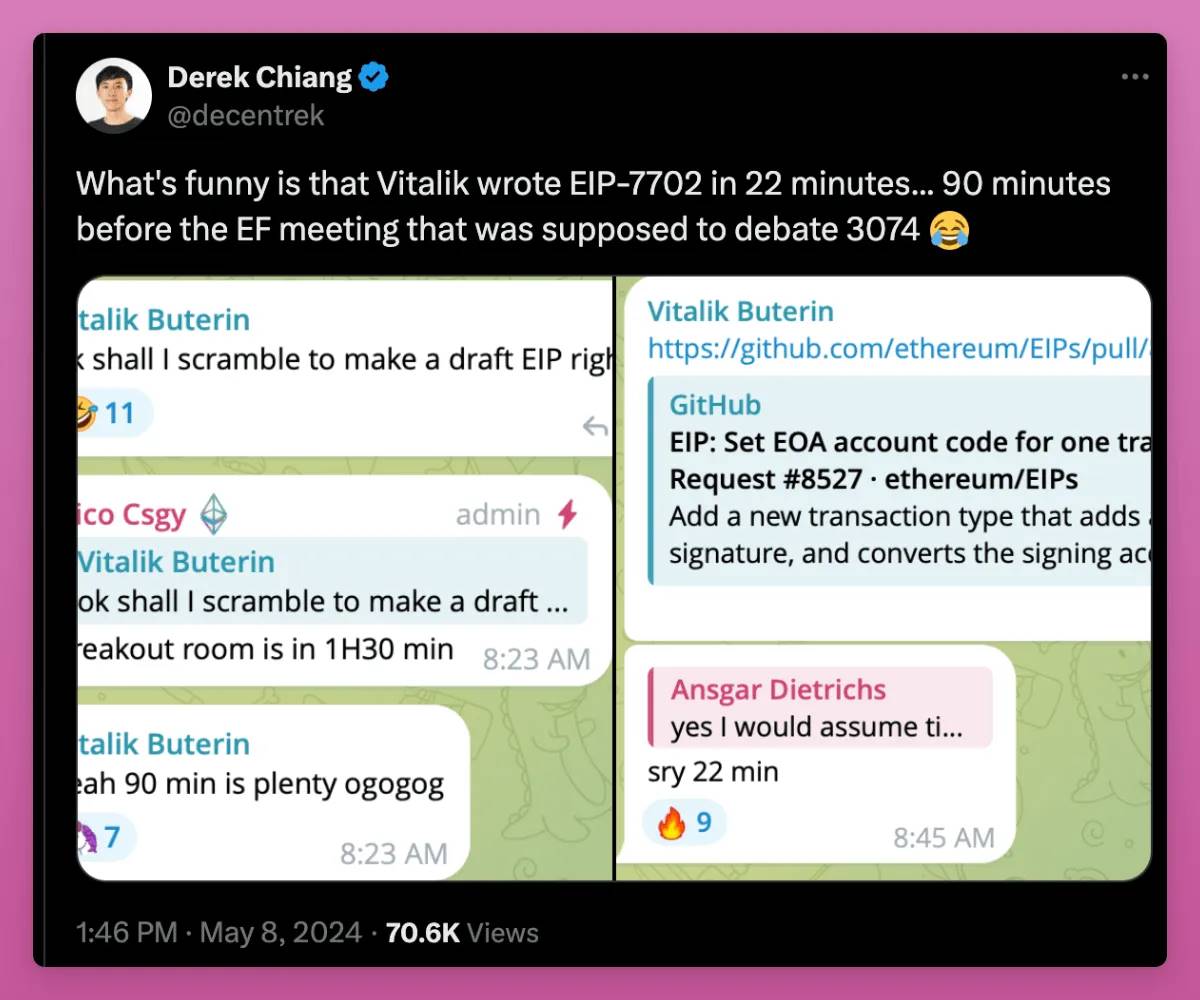
The idea of “EOA temporarily becoming a smart contract wallet” is cool because many dApps currently aren’t compatible with smart account wallets (e.g., multisig via Safe or Avocado). Hopefully, account abstraction gains more traction post-upgrade.
-
Staking Improvements
For node operators, Pectra brings major enhancements.
EIP-7251 increases the maximum stake per validator from 32 ETH to 2048 ETH, enabling large staking providers to consolidate stakes, reducing the number of validators and easing network load.
This is good news for small stakers too, offering more flexible staking options—like staking 40 ETH or compounding rewards. Additionally, ETH staking queue times will drop from hours to minutes.
I was previously excited about major MEV (Maximal Extractable Value) mitigation updates, but they don’t appear to be part of Pectra.
-
Scalability Improvements
Pectra introduces Peer Data Availability Sampling (PeerDAS) via EIP-7594.
Similar to Proto-Danksharding in the previous Dencun upgrade, PeerDAS will make L2 transactions cheaper. However, I haven’t found exact figures on cost reductions (though PeerDAS should be especially useful during high usage). 0xBreadguy mentioned Pectra will increase blob capacity by 2x–3x.
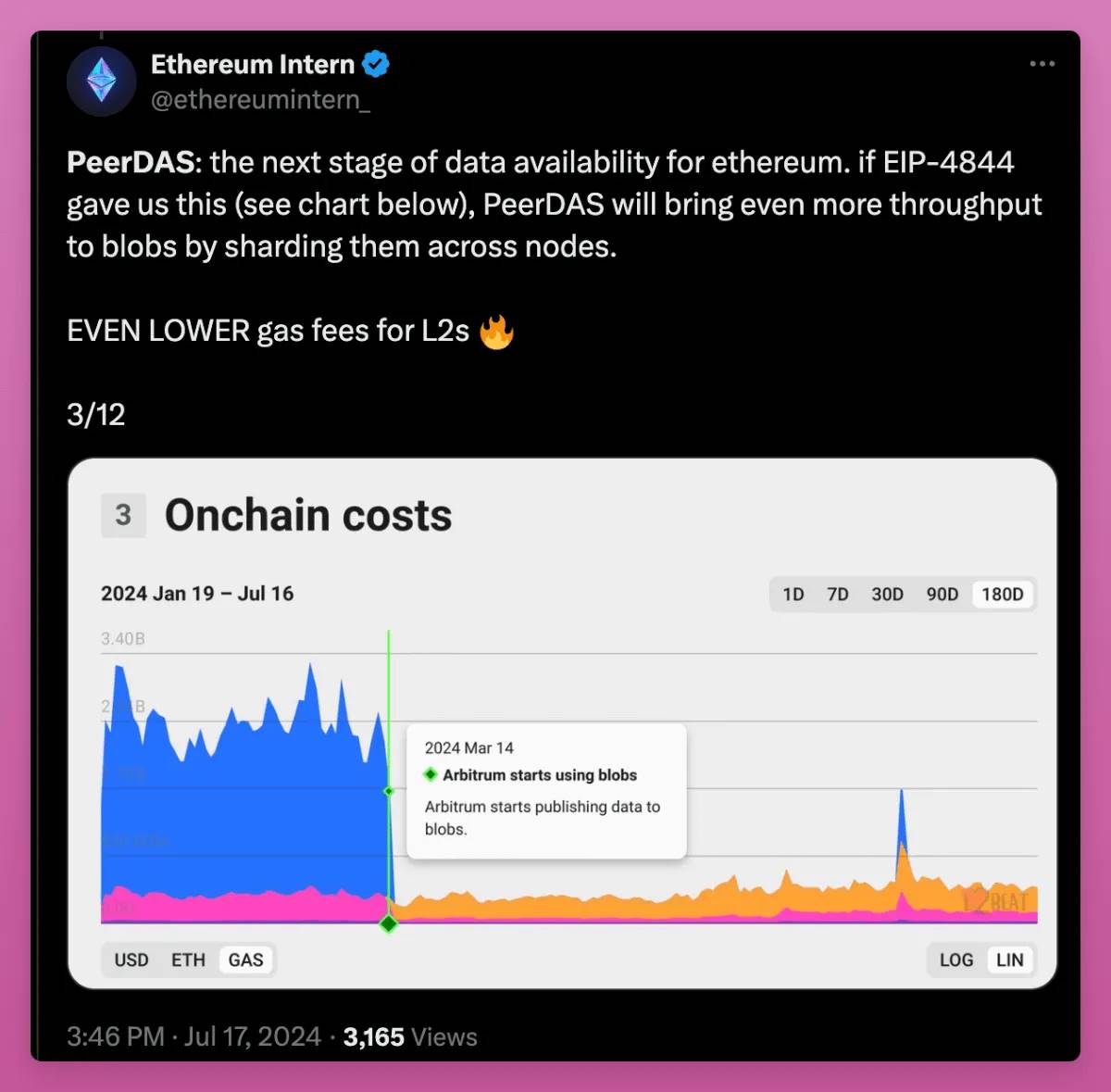
Additional technical upgrades include BLS12-381 for shorter BLS signatures (reducing gas fees) and EIP-2935 for transaction verification without requiring full blockchain history.
Coupled with the transition to Verkle Trees (EIP-6800), which will eventually replace Merkle Trees, these EIPs will make light clients more secure and lower the barrier for node participation—enhancing decentralization.
Another key change is EVM improvements involving 11 EIPs, making smart contract writing and deployment easier, cheaper, and more efficient. In short, developing on Ethereum will become smoother.
Check this post by Ethereum Intern for a simple explanation of the technical impact.
I was eager for Single Slot Finality (SSF) to launch alongside Pectra, but it’s not included in the upcoming Osaka upgrade.
Vitalik shared in December 2023 that SSF is the simplest way to fix most flaws in Ethereum’s PoS design.
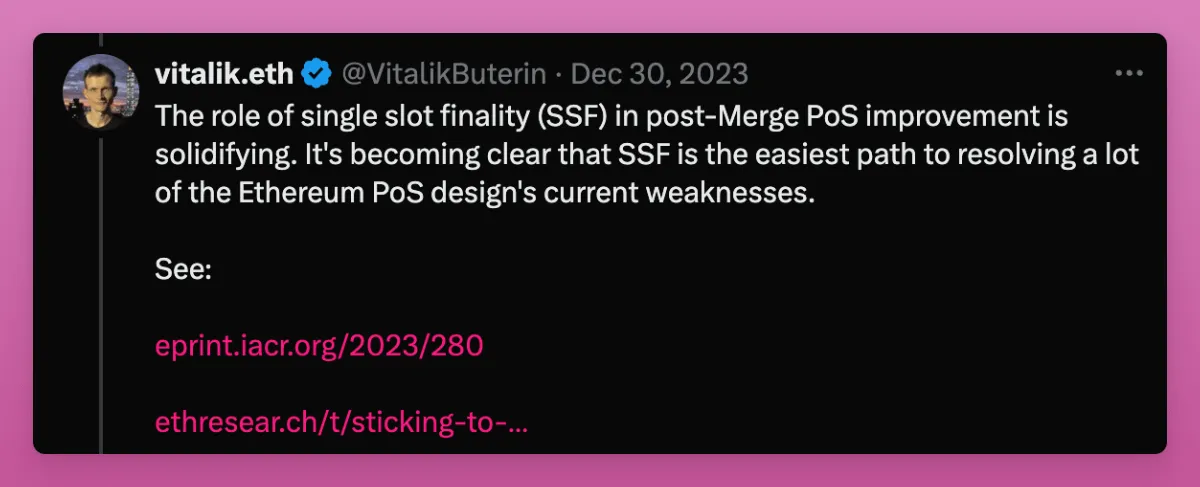
Currently, Ethereum’s PoS consensus takes about 15 minutes for block finality—meaning blocks can’t be altered without severe economic penalties. SSF aims to reduce this to one slot (~12 seconds), ensuring near-instant finality upon block creation.
In practice, this would mean faster, more secure bridging and quicker CEX deposits. It’s disappointing this hasn’t happened yet. Excluding SSF from the upgrade is bearish—it suggests Ethereum developers still aren’t prioritizing L1 scalability. If there were clearer signs that the core ETH community is focusing on L1 scaling, I’d be far more optimistic. For now, it doesn’t seem to be a priority.
That said, Pectra is a technical upgrade, but I believe the market is underestimating its significance.
Now, let’s talk about ETH’s price.
VanEck’s base price forecast for ETH is $11,800 by 2030.
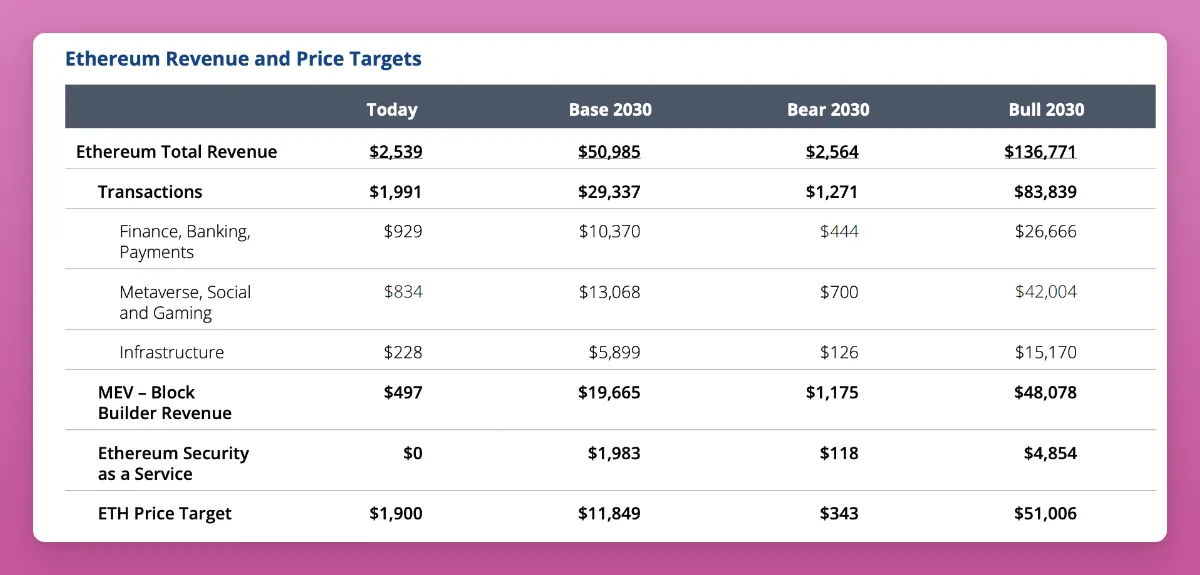
To be honest, $11,800 feels relatively conservative (I’d hope for higher in five years), but note that VanEck’s base forecast for Solana by 2030 is only $335.
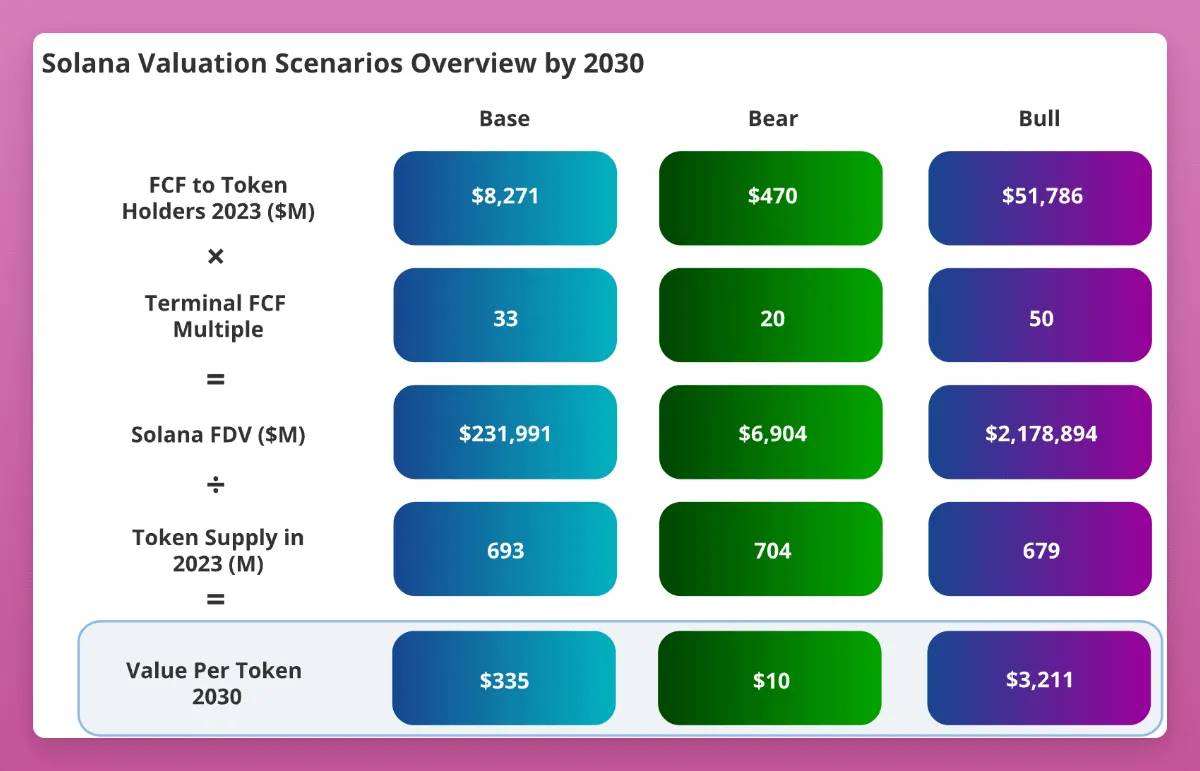
Thus, based on base scenarios, ETH has 4.4x upside potential versus SOL’s 2.2x. These forecasts were made a year ago—before the ETH ETF launched—so I look forward to updated projections.
By the way, if you want more optimism, ARK Invest CEO Cathie Wood predicts ETH could reach $166,000 and BTC $1.3 million by 2030.
Still, I’m more intrigued by VanEck’s $51,000 bull-case scenario. Either way, VanEck’s ETH price forecast is based on the following assumptions:
VanEck assumes Ethereum will capture 70% of the smart contract platform market by 2030, leveraging its position as the dominant open-source global settlement network.
-
Ethereum’s annual revenue is projected to grow from $2.6B to $51B, driven by rising transaction fees, MEV (Maximal Extractable Value), and the introduction of “security-as-a-service” (SaaS)—using ETH to secure other protocols (re-staking).
-
Ethereum is expected to capture increasing economic activity across finance, banking, payments, metaverse, social, gaming, and infrastructure.
-
Ethereum’s potential as a store of value is also considered, enhanced by programmability via smart contracts and cross-chain messaging (smart collateral).
Below is a summary of base, bear, and bull scenarios.
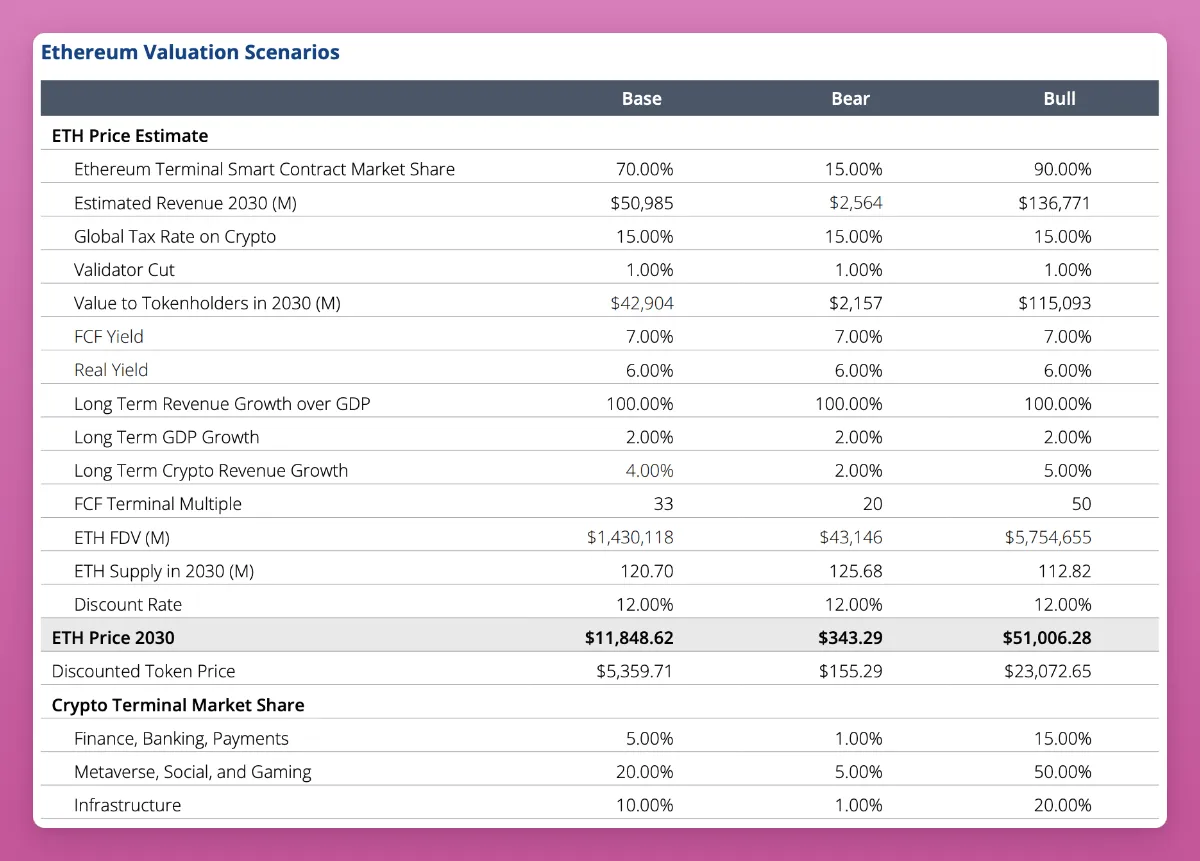
A 70% smart contract market share in the base case seems reasonable to me, though current dominance is 58% (or ~65% including all L2s). Despite SOL’s explosive run, its dominance has remained unchanged since early 2022.
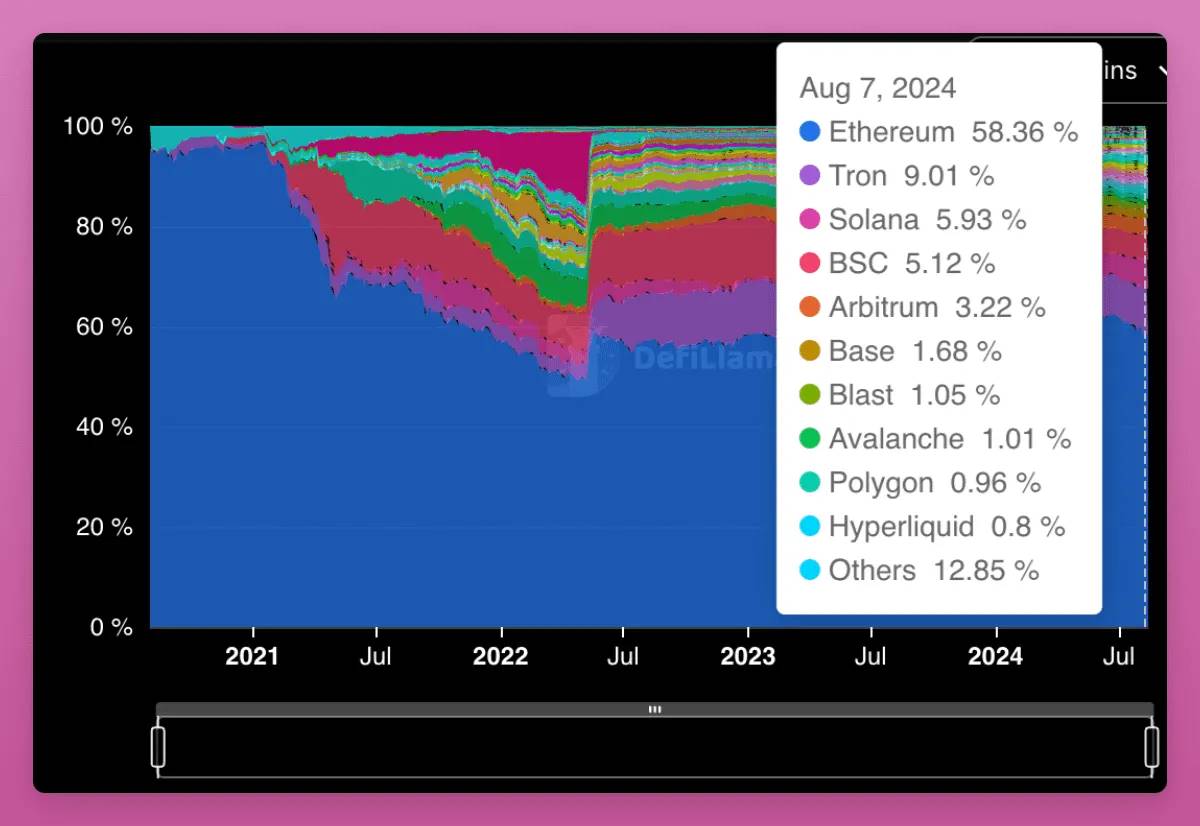
TVL (Total Value Locked) dominance will be a key metric, as institutions appear highly focused on it.
Another metric watched closely by both institutions and retail investors is ETH ETF flows.
Ethereum ETF
If someone had told me months ago that ETH would have an ETF but trade below $3,000, I’d have assumed crypto was in a bear market.
While it’s too early to conclude, ETH ETF trends are looking increasingly positive. Grayscale’s outflows are rapidly slowing, with net inflows turning positive for three consecutive days. This suggests those needing to exit Grayscale have already done so.
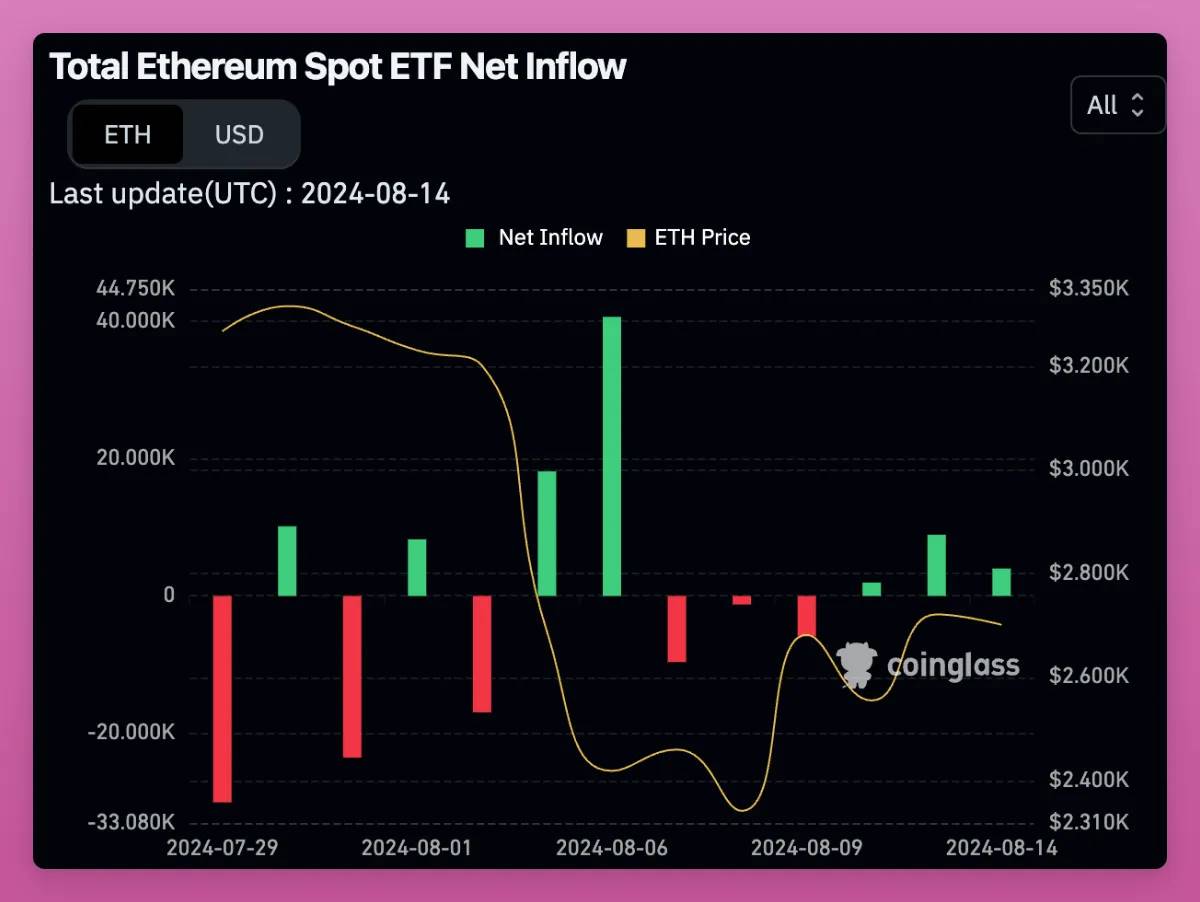
We’ve seen the scale of Grayscale’s potential impact—but the upside could be the real surprise. If this trend continues, ETH’s outlook looks quite bullish!
So, given everything happening on Ethereum, are you bullish?
Join TechFlow official community to stay tuned
Telegram:https://t.me/TechFlowDaily
X (Twitter):https://x.com/TechFlowPost
X (Twitter) EN:https://x.com/BlockFlow_News
 Ignas | DeFi Research


