








How can you use one data point to demonstrate that Web3 is still in its early stages of development?
TechFlow Selected TechFlow Selected
How can you use one data point to demonstrate that Web3 is still in its early stages of development?
In Gartner's 2022 Hype Cycle, Web3 was categorized in the "Peak of Inflated Expectations," with an estimated 5 to 10 years required for it to reach maturity.
 Navigating Web3 tides with focused insights
Author: Blockchain Knight
When discussing the development stage of Web3, most industry participants tend to describe it as "early." However, there has never been a particularly clear way to define what exactly this "early" means.
In the field of emerging technologies, one particularly well-known framework is the Gartner Hype Cycle for Emerging Technologies. As shown in the chart below, in Gartner's 2022 report, Web3 was placed in the "Peak of Inflated Expectations" phase, with an estimated 5 to 10 years before reaching maturity.
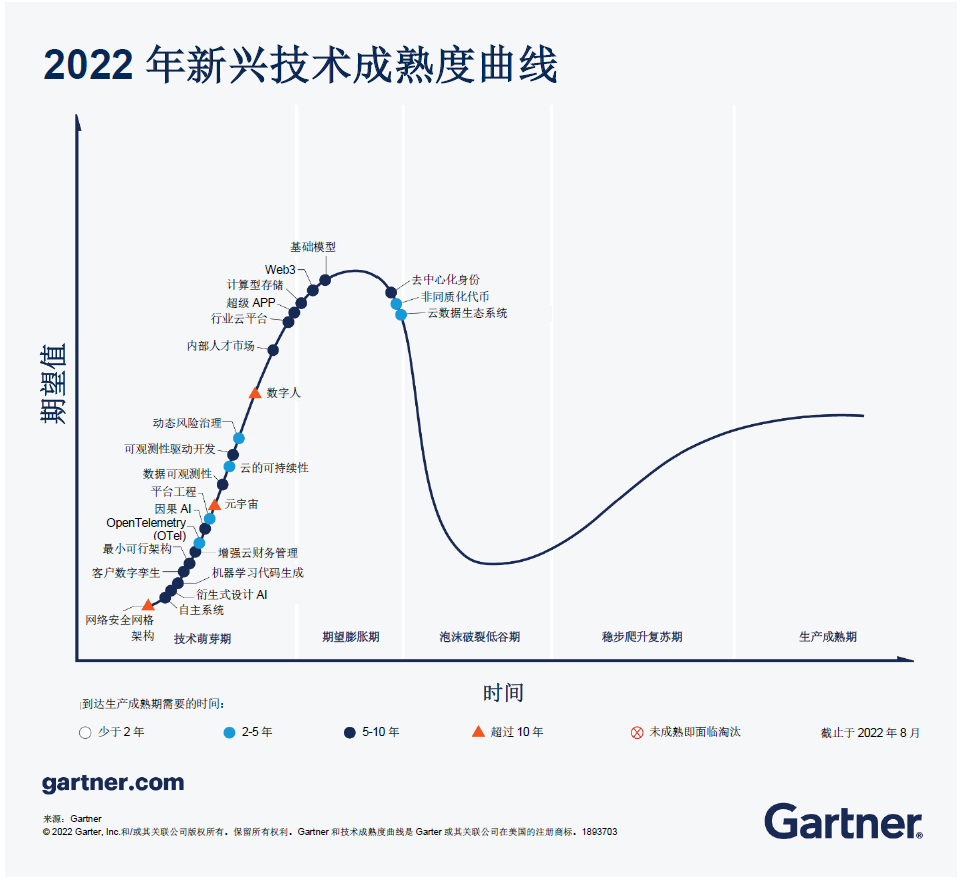
Readers might wonder why we aren't using the most recent year's curve. The reason is that when reviewing Gartner’s reports over the past few years, terms related to Web3—such as blockchain, NFTs, decentralized identity, and decentralized finance—have gradually disappeared. Blockchain last appeared in 2018, labeled as "descending into the trough of disillusionment." By the 2023 edition, no Web3-related terms remained; instead, the focus shifted almost entirely to AI. It's unclear how Gartner now defines the state of Web3 industry development.
As the most recognized model for describing technology life cycles in the tech industry, Gartner has effectively “moved on” from Web3. So, what should we use instead to assess the current state of industry development?
Let’s return to one of the most fundamental metrics in technological advancement—market penetration rate. This measures the extent to which a new technology or product is adopted and used within an industry or market. It compares current demand against potential future demand and is considered the most basic strategic indicator for business growth. Ultimately, any new technology must be evaluated by its utility—how many users are adopting it, or how widely it is being implemented by enterprises and organizations.
According to general statistical interpretations, when a new technology’s market penetration exceeds 5%, it signifies that the technology or product has begun gaining market acceptance and usage is accelerating rapidly. The phase from 5% to 15% represents accelerated growth. Once penetration surpasses 30%, the industry is generally considered to have entered a mature development phase.
Take China’s recently booming new energy vehicle (NEV) market as an example. From 2005, it took ten years for NEVs in China to achieve just over 1% market penetration. But then, within only five more years, by 2020, penetration crossed the critical threshold of 5%, reaching 5.4%. In the following four years, NEV adoption exploded. Most recently, in July, China witnessed a historic milestone: NEV market penetration exceeded 50% for a full calendar month—the latest landmark moment for the industry.
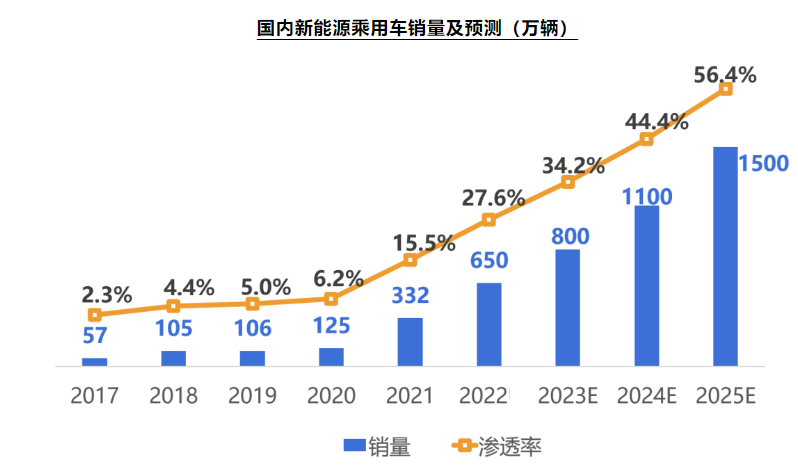
From this data analysis, it's clear that new energy vehicles serve as an excellent case study for illustrating the development trajectory of a new industry. Similarly, we can apply the same analytical approach to Web3—simply replacing vehicle market share with public adoption rates.
In June 2024, Singapore-based payments firm Triple-A released its "2024 State of Global Crypto Ownership Report," revealing that global crypto users reached 562 million (approximately 6.8% of the world’s population, based on 8.2 billion), up from 420 million in 2023 (just over 5%). Another supporting data point: Binance, the world’s largest crypto exchange, also reported surpassing 200 million users in June.
Therefore, measured by the number of people using crypto assets, market penetration has already surpassed 5%, entering a period of rapid growth. This milestone comes after nearly 15 years—almost identical to the timeline of NEV development. By this logic, Web3 is indeed still in its early stages. Of course, strictly defining Web3 users only as those holding crypto assets may not be entirely reasonable. The actual figure could be slightly higher, though likely not by more than 0.5%.
Thus, for those who are already involved in or considering entering the Web3 space, there is reason for optimism—it remains a rapidly growing industry. But how long this growth phase will last is uncertain. Perhaps the pace of NEV adoption offers a useful reference, although one refers to a global market while the other is domestic. Statistical trends suggest the slopes may differ, but the overall direction could be similar.
For industry builders, the real question may be whether to aim for the global market of over 8 billion people or focus narrowly on a small niche. In this industry, the tension between long-term vision and short-term gains is ever-present. Who will emerge as Web3’s “BYD”? That, it seems, will require time and perseverance.
Join TechFlow official community to stay tuned
Telegram:https://t.me/TechFlowDaily
X (Twitter):https://x.com/TechFlowPost
X (Twitter) EN:https://x.com/BlockFlow_News









