Behind Biden's Withdrawal: Seen as a "Campaign Burden," A Decision Made Within 48 Hours
TechFlow Selected TechFlow Selected
Behind Biden's Withdrawal: Seen as a "Campaign Burden," A Decision Made Within 48 Hours
Biden's biggest problem in voters' minds is that they believe he is not capable of fulfilling the duties of president for the next four years.
 Navigating Web3 tides with focused insights
Source: CNN
Translation: Mary Liu, Bitpush News
In the end, President Joe Biden exited the political stage in isolation.
After a disastrous debate performance, Biden insisted he would not step down. Yet weeks later, his abrupt exit did not come from a speech at the White House or a campaign rally, but from an open letter posted on X from his beachside home in Delaware while recovering from Covid-19.
One of the most historically significant decisions in modern American politics was announced in such a low-key manner—Biden didn’t even have time to personally deliver or announce it himself.
Never before has a president withdrawn from a re-election campaign so close to Election Day—and just 24 days earlier, he was still stubbornly planning how to quell the backlash following the June 27 Atlanta debate.
For three weeks after the debate ended, he repeatedly reaffirmed his intention to continue running against former President Donald Trump with firm determination.
He insisted he could defeat Trump, relying only on his closest aides and family members.
Yet he was forced to return to his home in Delaware, where over the past day and a half, he made his final decision and ultimately conceded: a man who had served the Democratic Party loyally for more than half a century was now seen as a liability to the campaign.
Mounting pressure—from party leaders, rank-and-file lawmakers, and donors—combined with opinion polls showing Biden falling further behind Trump, proved too great to overcome.
Biden was described as “more isolated than ever,” facing growing pressure both behind the scenes and in public. The harsh reality became an avalanche of calls urging the president to step aside—an unstoppable force gaining momentum like a boulder rolling downhill.
The president’s team had hoped that the June CNN debate with Trump—held months earlier than usual presidential debates—would help Biden regain ground. They succeeded—but not in the way they intended.
Instead, Biden’s campaign began unraveling over the next 24 days. The president and his team tried to calm Democrats’ fears, but failed to dispel widespread concerns about Biden’s age, health, and ability to continue campaigning.
On Sunday afternoon, Biden posted two messages on X announcing he was dropping out of the race and endorsing Vice President Kamala Harris, hoping the Democratic Party could quickly unite and move past the chaos triggered by the debate.
For Democrats, this is a high-risk, high-reward gamble: restarting the campaign with a new nominee just 107 days before the election, entering the race already at a disadvantage. Trump is riding a wave of strength in his campaign, energized after surviving an assassination attempt, with support surging at the Republican National Convention and his base rallying tightly around him.
Behind the Decision to Withdraw
A senior campaign adviser said Biden made his final decision within the past 48 hours, consulting family and top advisers by phone while recovering from Covid-19. One source said plans to withdraw began taking shape Saturday night and were finalized on Sunday.
The adviser said the president “wasn’t dug in,” but was reviewing incoming data and concluded he would “drag down” the ticket and become an obstacle to defeating Trump.
A senior White House official told CNN that Biden’s decision was unrelated to any medical issues.
Another person familiar with the situation said that on Saturday, when Biden met with his two closest advisers, polling data and input from top Democratic officials made clear that Biden’s path to victory was “essentially nonexistent.”
According to this source, during meetings with longtime aides Mike Donilon and Steve Ricchetti, no single poll number, wavering Democratic official, or fundraiser delivered a decisive push toward Biden’s decision.
Rather, the message emphasized that declining national and swing-state polls, combined with the risk of rapid party defections, severely damaged Biden’s chances of a comeback. This included polling data and detailed feedback gathered through outreach beyond Biden’s inner circle.
Unlike in 2015, when Biden wrote in his book *Promise Me, Dad* that Donilon advised then-Vice President Biden not to run in 2016 due to grief over losing his son Beau, this time neither aide explicitly urged him to step down, the source said.
Before the meeting ended, Biden clearly indicated his intention to withdraw and asked his aides to begin drafting the letter to be released Sunday afternoon and prepare for its announcement.
Still recovering from his coronavirus diagnosis, Biden spent the entire weekend with First Lady Jill Biden at their home in Rehoboth Beach, Delaware.
Biden did what he always does before making major decisions: He held a family meeting Saturday night. According to sources, he had spoken with all his family members since deciding to drop out, and his daughter Ashley and son-in-law Howard drove to Rehoboth earlier Sunday morning.
Another source said he confirmed the decision Sunday morning and, accompanied by Ricchetti, began calling key figures beyond his senior staff and immediate family.
Biden consulted only a small handful of trusted confidants. Some core team members learned of the news only minutes before he posted the statement on social media, including Anita Dunn, one of his closest communications advisers.
Multiple sources told CNN that Dunn and a small group of senior aides knew about Biden’s announcement just minutes before the post went live. Most regular staff learned only after the post was published. Dunn and her husband Bob Bauer, members of Biden’s debate prep team, faced criticism from the president’s family after the debate. A Biden aide denied her absence was related to the debate and told CNN that she and other senior aides were not in Rehoboth Beach, adding: “The president told his aides that he and his family do not blame them for the poor debate performance.”
Sources said Biden spoke multiple times with Harris on Sunday before announcing her candidacy. Biden also called Chief of Staff Jeff Zients and campaign co-chair Jen O’Malley Dillon separately to inform them of his decision.
On Sunday afternoon, Zients hosted a conference call in Washington between senior White House staff and all of the president’s aides and also spoke with members of Biden’s Cabinet. Zients is expected to hold a full White House staff call on Monday morning and speak with political appointees across the administration.
But even his chosen vice president and successor, Harris, did not know until the day he announced his decision.
A “Bad Night” That Changed Everything
Ultimately, Biden faced a path forward that was no longer viable: more than three dozen Democrats publicly called on him to step aside. Party leaders told him he couldn’t win. Donors pulled back funding, saying they felt betrayed by the lack of transparency about Biden’s health.
Before Biden dropped out, a major Democratic donor told CNN: “I don’t know of any big donor writing a check for $100,000 or more. But I know many people like that.”
Biden and his team tried to frame the debate performance as a “bad night.” He and his aides blamed it on the president’s overseas trip. He said he’d debate again and do better. Then he immediately returned to campaigning, heading to North Carolina the next day to deliver an energetic speech while acknowledging his debate shortcomings.
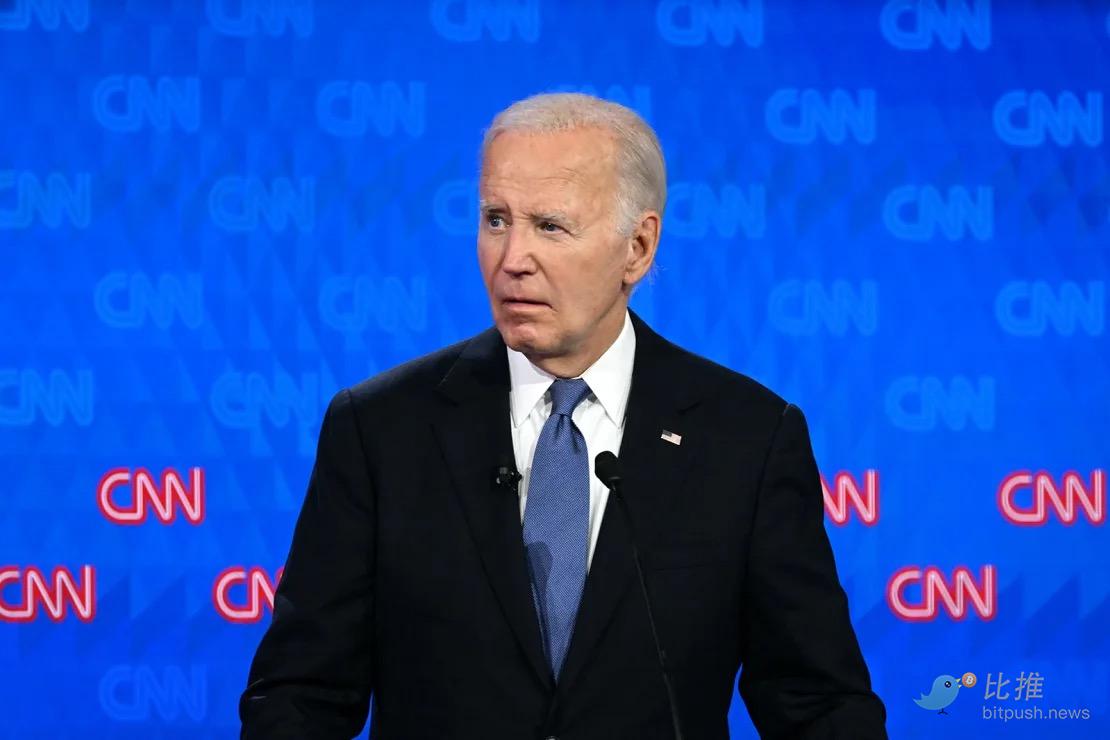
“I know I’m not young anymore. I don’t walk as easily as I used to. I don’t talk as smoothly as before. I don’t debate as well as I once did. But I know what I know. I know how to tell the truth,” Biden said.
The weekend after the debate, Biden held a previously scheduled family gathering at Camp David, where they encouraged him to stay in the race.
But panic had already begun spreading among Democrats. The central issue was clear: voters believed Biden was no longer capable of serving another four years as president. The debate confirmed those fears and exposed Biden’s greatest political vulnerability to the public.
No policy, statement, or criticism of Trump could change that.
Even as Biden insisted nothing would convince him to leave the race, Democrats began laying groundwork and opening doors for change. Former House Speaker Nancy Pelosi said on MSNBC: “I think it’s a fair question whether this is an isolated incident or an underlying condition.”
On July 2, Texas Representative Lloyd Doggett became the first elected Democratic lawmaker to call for Biden to step down. The next day, Biden met with a group of Democratic governors and told them he needed more sleep and should stop scheduling events after 8 p.m.
On July 5, Biden sat for an interview with ABC News’ George Stephanopoulos, attempting to prove he could continue his campaign. During the interview, Biden said only “Almighty God” could persuade him to drop out—a remark that angered many Democrats.
This was the first of several failed attempts by Biden’s team to put the president back in the public eye and quell rising discontent.
Troubling Signs
After July 4, Virginia Senator Mark Warner quietly attempted to organize a group of Democrats to meet with Biden and urge him to step down. However, the idea quickly fizzled.
House Democratic Leader Hakeem Jeffries held calls with House Democrats that weekend, during which several lawmakers expressed that Biden needed to step aside.
On July 8, Biden sent a passionate letter to Democratic members of Congress, declaring he would remain in the race. “I am firmly committed to continuing this campaign, seeing it through, and defeating Donald Trump,” he wrote.
Calls for Biden to step down soon came from outside Washington. On July 10, George Clooney published a column in *The New York Times* urging Biden to withdraw. More shocking for the president was Clooney’s assertion that the Biden he saw at a June fundraiser was the same man the world saw during the June debate—that the president had been in decline since entering the White House.
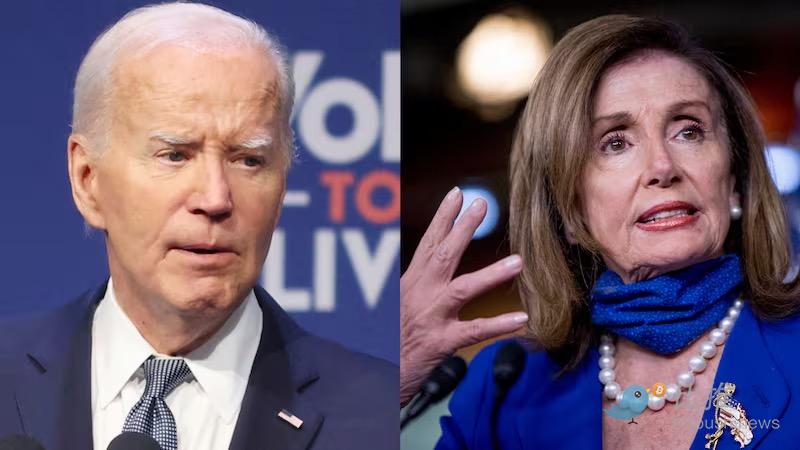
Pelosi seemed to keep “stabbing Biden in the back”—on the same day Clooney’s column ran, she declined to endorse Biden during an MSNBC interview, saying: “That decision rests with the president.”
Multiple news outlets, including CNN, reported that Pelosi and former President Obama had privately expressed concerns about the future of Biden’s campaign.
On July 11, during a solo press conference in Washington amid the NATO summit, Biden further hinted at the possibility of stepping down, saying he would consider it if data showed he couldn’t win.
Biden also made several minor verbal slips, including referring to Harris as “Trump’s vice president.” Earlier that day, he had mistakenly called Ukrainian President Volodymyr Zelenskyy “President Putin” before correcting himself.
After Biden’s press conference, a few more Democratic lawmakers in Congress called for him to step down, bringing the total to 15. Among them was Connecticut Representative Jim Himes, the top Democrat on the House Intelligence Committee, who said he deliberately waited until after the NATO summit to join the effort.
That weekend, Biden held meetings and calls with various Democratic caucuses, including the Congressional Progressive Caucus and the moderate New Democrat Coalition. The call with moderates grew tense when Biden clashed with Colorado Representative Jason Crow, who bluntly told him voters were worried about his vitality and strength, especially on the world stage.
The president responded to Crow—a former Army Ranger who served twice in Afghanistan and once in Iraq and received the Bronze Star, like Biden’s late son Beau—by saying, “But he didn’t rebuild NATO.”
When responding to Crow’s concerns, Biden told him: “I don’t want to hear that bullshit.”
Calls for Biden to Step Down Briefly Subsided—But Not for Long
More Democrats were expected to publicly call for Biden’s withdrawal that weekend, but the discussion abruptly halted when Trump narrowly escaped death at a rally in Butler, Pennsylvania.
The failed assassination dramatically shifted the political landscape. Public attention turned from Biden’s fitness for re-election to the bullet that grazed Trump’s ear, raising urgent questions: How could a gunman fire at the Republican presidential nominee just five days before his formal nomination?
The pause didn’t last long.
Behind the scenes, Democratic pollsters circulated memos warning Biden could lose the election—and crucially for congressional Democrats—this would also harm other candidates on the ballot. Some polls showed other Democrats outperforming Biden in key battleground states.
“Losing everything,” one Democrat described a polling memo from Democratic strategist Stanley Greenberg sent to Biden’s inner circle.
On Wednesday, whispers resumed. California Representative Adam Schiff, a Democratic Senate candidate and lead manager of Trump’s first impeachment, became the first lawmaker to publicly call for Biden to step down after the assassination attempt.
Schiff holds high standing within the party—as a potential senator and close ally of Pelosi—making his voice one of the most influential at that moment.
In a statement, Schiff said: “While stepping down is a personal choice for President Biden, I believe now is the time for him to pass the torch.”
More Party Leaders Speak Out
Soon, more voices joined. And perhaps more importantly, private calls for Biden to step down turned into public demands.
Maryland Representative Jamie Raskin, lead manager of Trump’s second impeachment, confirmed he sent a letter to Biden on July 6 encouraging the president to “step down from the 2024 presidential race with honor,” comparing him to George Washington and Red Sox pitcher Pedro Martinez.
CNN reported Wednesday that Pelosi privately told Biden that polls showed he couldn’t beat Trump and that he might destroy Democrats’ chance of winning back the House in November. Biden countered that he had seen polls showing he could win. At one point, Pelosi asked Biden’s longtime adviser Donilon to get on the phone to discuss the data.
On the same day, Schumer told Biden during a Saturday meeting that he should best step aside. One person familiar with Biden and Jeffries’ meeting said the House Democratic leader didn’t directly demand Biden step down but passed the suggestion to his members.
White House and congressional officials tried to suppress these reports and issued denials. But stories of party leaders sending messages to Biden had an effect. On Friday, a dozen New Democrats issued statements saying Biden should step down.
Among them was Zoe Lofgren, another close ally of Pelosi from California. A source directly familiar said Biden was “furious” at Pelosi on Friday, and Lofgren’s letter intensified those feelings.
Disillusioned Donors
Public statements from Democrats revealed one challenge Biden faced in his campaign—but equally critical was donor flight, threatening to dry up fundraising in the final stretch.
Major Democratic donors doubted Biden’s viability, with several saying their concerns were dismissed by Biden’s campaign officials.
“How do you think we feel?” a Democratic donor closely tied to the Democratic National Committee and the White House told CNN before Biden dropped out, describing donor sentiment. “We all feel betrayed because they didn’t come clean about his health.”
Two sources told CNN on Thursday that angry donors informed the House and Senate Democratic campaign committees they would freeze contributions unless party leaders took stronger action to remove Biden.
A senior House Democrat told CNN Thursday night: “Yes, that card has been played.”
“They believe if Biden becomes the nominee, both the House and Senate will be lost,” said a Democratic strategist deeply involved in major fundraising. “They don’t want to waste money.”
According to sources involved in discussions, shortly after Biden announced he was dropping out of the 2024 race, donors suddenly began contacting advisers and pouring in donations. Three people familiar said multiple donors had proactively reached out to Harris’s team before Biden’s decision, indicating willingness to support her if she became the nominee.
An Abrupt, Forced Concession
Until the very moment he stepped down, Biden and his team insisted he would stay.
Over the past week, Biden’s team had crafted a public schedule aimed at demonstrating his ability to continue campaigning.
On Monday, he gave another televised interview with NBC News’ Lester Holt, acknowledging his poor debate performance while criticizing the media for focusing on his gaffes rather than Trump’s falsehoods. Biden reiterated he had no intention of stepping down.
Then, Biden traveled to Las Vegas for campaign events, delivering speeches at the NAACP national convention and UnidosUS annual conference and giving interviews to BET and Univision. Biden told BET News’ Ed Gordon that the only thing that would make him reconsider re-election was “a health issue.”
The president spoke at the NAACP conference, but suffered another setback before delivering a speech at UnidosUS on Wednesday: he tested positive for Covid-19.
He returned home to Rehoboth Beach that day to isolate, and his public schedule was indefinitely suspended during recovery.
On Friday, Biden said he would return to campaigning next week, and campaign chair O’Malley Dillon said on MSNBC’s Morning Joe that Biden would “absolutely” remain in the race.
The campaign also released a memo stating there was “no plan for an alternative nominee.”
Over the weekend, Biden called several Democrats who had publicly defended him on television. Two of them told CNN the president first expressed gratitude, then vented anger at those trying to push him out. “There was some sadness in his voice, but more anger,” said one loyal supporter.
Even on Sunday, Biden’s team continued to publicly insist he wouldn’t leave. South Carolina Representative James Clyburn, a key Biden ally, told CNN on “State of the Union”: “Biden and Harris have earned over 14 million votes to be our standard-bearers. That’s where we are.” The congressman had backed Biden ahead of the South Carolina primary, widely seen as pivotal to Biden’s victory.
Biden spoke with Harris before announcing his decision on Sunday. His message contained two parts: first, that he would withdraw; second, that he endorsed his vice president as the Democratic nominee.
A source familiar with the timeline told CNN that Biden told his top team he would sign off around 1:45 p.m., when the open letter was sent out.
The same source said: “Right up until then, his campaign momentum was strong.”
Join TechFlow official community to stay tuned
Telegram:https://t.me/TechFlowDaily
X (Twitter):https://x.com/TechFlowPost
X (Twitter) EN:https://x.com/BlockFlow_News
 @CNNPolitics