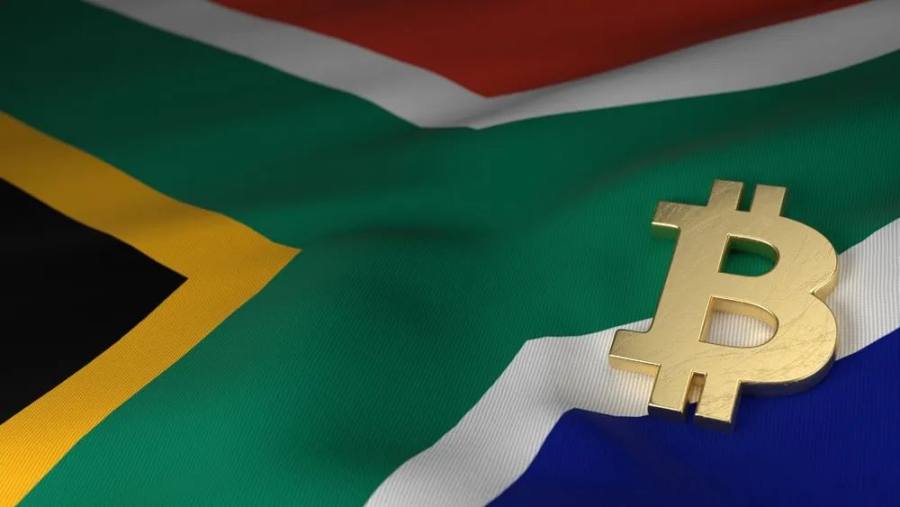
A Study on South Africa's Taxation and Regulatory Framework for Cryptocurrency Assets
TechFlow Selected TechFlow Selected
A Study on South Africa's Taxation and Regulatory Framework for Cryptocurrency Assets
This article analyzes South Africa's cryptocurrency-related systems from the perspectives of the classification of crypto assets, basic tax regime, crypto asset taxation framework, regulatory policies for crypto assets, and provides a summary and outlook, along with predictions on its future development direction.
 Navigating Web3 tides with focused insights
Author: TaxDAO
1. Introduction
The Republic of South Africa (English: The Republic of South Africa), abbreviated as "South Africa", is located at the southernmost tip of the African continent. It is Africa's second-largest economy and a middle-income developing country, as well as the most economically advanced and industrialized nation in Africa. South Africa has a relatively sound financial and legal system, with well-developed infrastructure in communications, transportation, and energy. In recent years, there have been significant developments regarding the classification of crypto assets and industry licensing. The South African Revenue Service (SARS) has progressively clarified its stance on the classification and tax treatment of crypto assets. Crypto assets are regarded in South Africa as “assets of an intangible nature,” rather than currency or tangible property, resulting in unique tax implications. This article analyzes South Africa’s regulatory framework for crypto assets from the perspectives of asset classification, basic tax system, crypto-specific taxation, regulatory policies, and provides a summary and outlook with predictions on future development directions.
2. South Africa’s Classification of Crypto Assets
SARS considers crypto assets to be digital representations of value that are transmitted and stored electronically, not issued by a central bank, but traded, transferred, and held electronically by individuals and legal entities for purposes such as payment, investment, and other forms of intangible assets. The Intergovernmental FinTech Working Group (IFWG) reiterated that although crypto assets perform functions similar to money, they are not considered “currency” in the legal tender sense. Additionally, according to the Explanatory Memorandum on Taxation Laws Amendment released on January 20, 2021, the term “cryptocurrency” has been replaced with “crypto assets” under the proposed unified definition of crypto assets within South Africa’s regulatory framework.
3. Overview of South Africa’s Basic Tax System
3.1 South Africa’s Tax System
Taxation is the primary source of fiscal revenue in South Africa. According to the South African Constitution, the country operates a three-tier government taxation system consisting of national, provincial, and local governments. The national government is primarily responsible for levying major nationwide taxes such as income tax and value-added tax (VAT). Provincial and local governments also possess taxation authority, though their tax bases and applicable taxes are more limited.
South Africa’s tax system centers on income tax and VAT, supplemented by other taxes including capital gains tax, corporate tax, and excise duties.
3.1.1 Income Tax
South Africa’s income tax system applies to both individuals and companies and uses a progressive tax rate structure. Individual income tax rates range from 18% to 45%, depending on income levels, with the highest marginal rate of 45% applying to annual income exceeding 1.657 million rand. The standard corporate income tax rate is 27%. South African residents are taxed on worldwide income, while non-residents are taxed only on income sourced within South Africa. For businesses, South Africa follows a worldwide taxation principle, meaning all income earned domestically and abroad is subject to tax. Taxpayers must file annual income tax returns and make provisional tax payments based on their income. Certain expenses and donations may be deducted when calculating taxable income, thereby reducing tax liability.
3.1.2 Capital Gains Tax
Capital gains tax (CGT) in South Africa is levied on the profit portion arising from the sale or disposal of capital assets. Profit is defined as the net appreciation calculated as the selling price minus the acquisition cost and other related expenses. CGT applies to individuals, companies, and trusts, covering a wide range of asset types. The effective tax rate for individuals is capped at 18%, 22.4% for companies, and 36% for trusts. Individuals are taxed on capital gains realized globally, whereas non-residents are taxed only on gains derived within South Africa. Taxable assets include real estate, stocks, precious metals, artworks, business and investment assets, and cryptocurrencies. Individuals enjoy an annual capital gains exemption of the first 40,000 rand, and the first 2 million rand of capital gains from the sale of a primary residence is exempt. Taxpayers must report capital gains in their annual income tax return and pay the corresponding tax based on the reported amount.
3.1.3 Value-Added Tax (VAT)
Value-added tax (VAT) in South Africa is imposed on the value added to goods and services and applies to almost all goods sold and services provided within the country. South Africa’s VAT system is governed by the Value-Added Tax Act, with a standard rate of 15% applicable to most goods and services, including imported and exported goods. A zero rate applies to exports, basic food items, and certain medical services, while financial services, educational services, and public transport are fully exempt. VAT is calculated as output tax minus input tax; if output tax exceeds input tax, the enterprise must pay the difference; otherwise, it may claim a refund. Tax filing cycles are typically monthly or bi-monthly, depending on the company’s annual turnover. Enterprises must file returns via SARS’s electronic systems and remit taxes by the due date. SARS ensures compliance through regular audits and information sharing, imposing penalties and interest for inaccurate reporting or unpaid taxes.
4. Tax Policies Applicable to Crypto Assets in South Africa
South Africa’s tax policy toward crypto assets has gradually matured, encompassing individual and corporate income tax, VAT, and capital gains tax. Since 2014, SARS has studied crypto assets and announced in 2018 that normal income tax rules apply to cryptocurrency transactions, requiring taxpayers to declare all taxable income related to crypto assets. Taxpayers who fail to report accurately face interest charges and penalties. In 2021, SARS strengthened tax enforcement on crypto transactions and required South African cryptocurrency exchanges to provide transaction data to ensure tax compliance. The Income Tax Act grants SARS broad powers, enabling it to compel third-party service providers—both locally and internationally—to disclose financial information and submit financial data.
As previously mentioned, SARS classifies crypto assets as intangible assets and taxes gains arising from holding and trading them. Gains from individuals selling or trading crypto assets are treated as taxable income, with short-term holdings subject to ordinary income tax rates and long-term holdings subject to capital gains tax. Companies must report gains or losses from crypto asset transactions in their annual income tax filings, with relevant income included in taxable income. Although South Africa does not impose VAT on crypto asset transactions themselves, businesses accepting cryptocurrency as payment must charge VAT on the goods or services sold. Furthermore, South African residents must pay tax on global crypto asset income, while non-residents are taxed only on income generated within South Africa. SARS ensures tax compliance through information sharing, audits, and inspections, imposing fines and interest on those who underreport or fail to pay taxes. Like most countries, South Africa does not tax the purchase of crypto assets, but taxes apply upon selling, exchanging, using crypto for payments, or mining activities.
5. Regulatory Framework for Crypto Assets in South Africa
Among African nations, South Africa is one of the most crypto-friendly countries. The South African Reserve Bank (SARB), the country’s central bank, has never explicitly banned the use of cryptocurrencies, allowing individuals and enterprises to buy, sell, and trade cryptocurrencies through various exchanges and platforms.
Regarding the regulatory framework for crypto assets, South Africa has made several adjustments in recent years concerning taxation and oversight. In 2019, the South African Reserve Bank (SARB) published a consultation paper on crypto assets and related activities, establishing a clear regulatory framework—a milestone indicating South Africa’s move from no formal regulation to building a structured oversight system for crypto assets. In 2020, SARS began enforcing crypto asset tax policies more strictly, requiring taxpayers to report all crypto-related transactions in detail, signaling the government’s intent to strengthen tax compliance and combat tax evasion. In June 2021, two of South Africa’s most prominent cryptocurrency exchanges, Luno and VALR, confirmed that SARS had contacted them to request customer information they are legally obligated to provide. In 2021, South Africa adopted the Common Reporting Standard (CRS) to combat tax evasion and money laundering involving crypto assets. In March 2023, South Africa signed onto the Crypto-Asset Reporting Framework (CARF) standard, which has been adopted by 48 countries and is scheduled for implementation by 2027, after which South African crypto exchanges will gradually meet these reporting requirements.
Additionally, in financial regulation, South Africa’s financial sector has undergone further reforms requiring crypto asset service providers (CASPs) to register and comply with anti-money laundering (AML) and counter-terrorist financing (CFT) regulations to standardize the crypto market, protect investors, and enhance market transparency. The Intergovernmental FinTech Working Group (IFWG) highlighted several risks stemming from the ongoing lack of regulation over crypto assets and CASPs in South Africa, noting that combating tax evasion and illegal tax avoidance schemes is among the stated objectives of regulating crypto assets.
In October 2022, the Financial Sector Conduct Authority (FSCA) determined that crypto assets—referred to as “digital representations of value”—are financial products regulated under Section 1(h) of the Financial Advisory and Intermediary Services Act (FAIS). Every crypto asset service provider must obtain authorization from the FSCA to operate in this space and apply for such licenses, with existing providers required to submit applications by the end of 2023. Cryptocurrency exchanges must register with the FSCA and comply with specific regulatory requirements, including AML and Know Your Customer (KYC) obligations. The FSCA oversees compliance and enforcement, requiring these entities to maintain minimum capital and financial resources to fulfill their financial obligations to clients, and holds the authority to penalize or sanction exchanges failing to comply. On December 19, 2022, amendments to the Financial Intelligence Centre Act (FICA) designated crypto asset service providers as “accountable institutions,” effectively ending the legality of anonymous crypto asset transactions in South Africa.
South African regulators have created a balanced, positive, and transparent regulatory environment, collaborating with industry stakeholders to pave the way for a thriving cryptocurrency ecosystem. At the same time, persistent currency depreciation and inflation in South Africa have driven many citizens to explore alternative investment and financial transaction methods. With growing promotion and awareness by crypto companies, cryptocurrencies—with their decentralized and borderless nature—have attracted widespread attention. Today, people can conveniently purchase cryptocurrencies using South African rand through exchanges, crypto ATMs, broker intermediaries, peer-to-peer (P2P) markets, and other channels. These factors have undoubtedly propelled South Africa into an era of cryptocurrency payments.
6. Summary and Outlook on South Africa’s Crypto Asset Tax Regime
Overall, South Africa’s tax policy toward crypto assets is relatively flexible, aiming to ensure tax fairness and prevent tax evasion. Compared to some countries, South Africa adopts a more pragmatic approach. Specifically, unlike developed nations such as the United States and the United Kingdom, South Africa emphasizes tax compliance in its crypto regulation and taxation policies, requiring individuals and businesses to include crypto-related gains in income declarations. Transactions and holdings of crypto assets are subject to capital gains tax and income tax, but not VAT. Regulation focuses more on preventing financial crimes and protecting investor interests rather than imposing blanket restrictions or bans on crypto trading.
Despite its relatively open stance toward crypto assets, the South African government recognizes associated risks such as money laundering and tax evasion. By establishing detailed tax and regulatory frameworks, South Africa seeks to strike a balance between fostering innovation and safeguarding the integrity of its financial system.
Looking ahead, South Africa may further refine its regulatory policies on crypto assets, particularly in areas of tax reporting and anti-money laundering. Additionally, as technology evolves, the government may explore regulatory frameworks for stablecoins and tokenized assets to keep pace with rapid changes in financial technology.
Join TechFlow official community to stay tuned
Telegram:https://t.me/TechFlowDaily
X (Twitter):https://x.com/TechFlowPost
X (Twitter) EN:https://x.com/BlockFlow_News
 TaxDAO