








Trading Opportunities in Data Protocols: The Graph Query Volume Surges, AO Deposits Exceed 400 Million, Covalent Token Migration, Pyth Staking Stabilizes
TechFlow Selected TechFlow Selected
Trading Opportunities in Data Protocols: The Graph Query Volume Surges, AO Deposits Exceed 400 Million, Covalent Token Migration, Pyth Staking Stabilizes
PYTH is stabilizing and appears to be on an upward trend, with strong conviction surrounding the Pyth Network and its token.
 Navigating Web3 tides with focused insights
Author: ON-250
Compiled by: TechFlow
Exclusive on-chain report:
Data Protocols
The Graph, Arweave, Pyth & Covalent
1. The Graph
Ricky Esclapon | Website | Dashboard
The Graph's monthly query fees exceed $1.4 billion, with over 7,000 subgraphs on the decentralized network
-
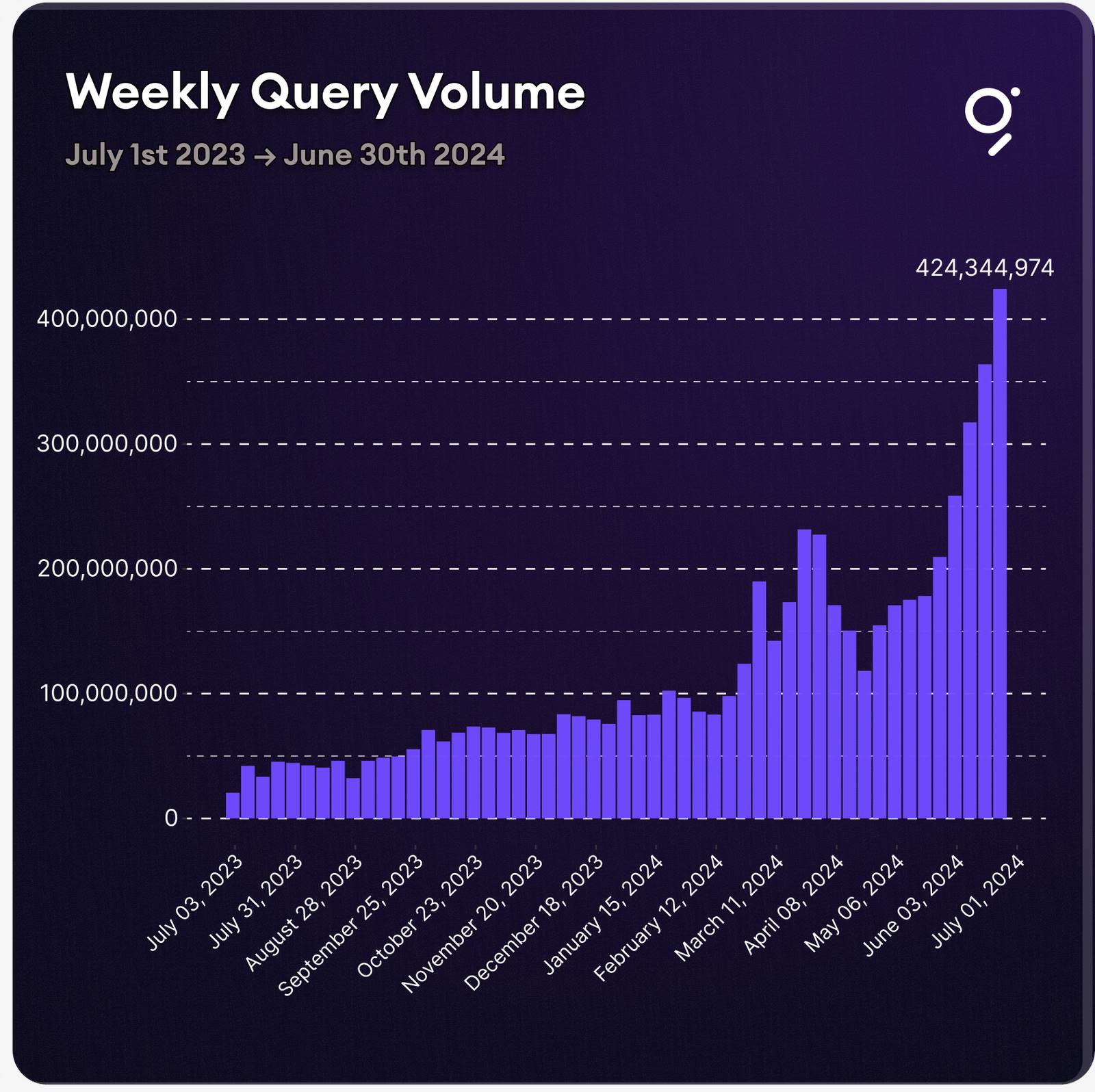
Since January 2019, The Graph has provided critical web3 data infrastructure for decentralized applications (dapps) through its subsidized hosted service. Today, it has fully transitioned to a decentralized network. Although the migration has been ongoing for months, traffic surged as rate limits were introduced on the hosted service. Query volume reached 1.36 billion in June, an 85.9% increase from May, which itself saw a 23.4% rise from April. The chart below illustrates the accelerating growth in queries leading up to the deadline.
-
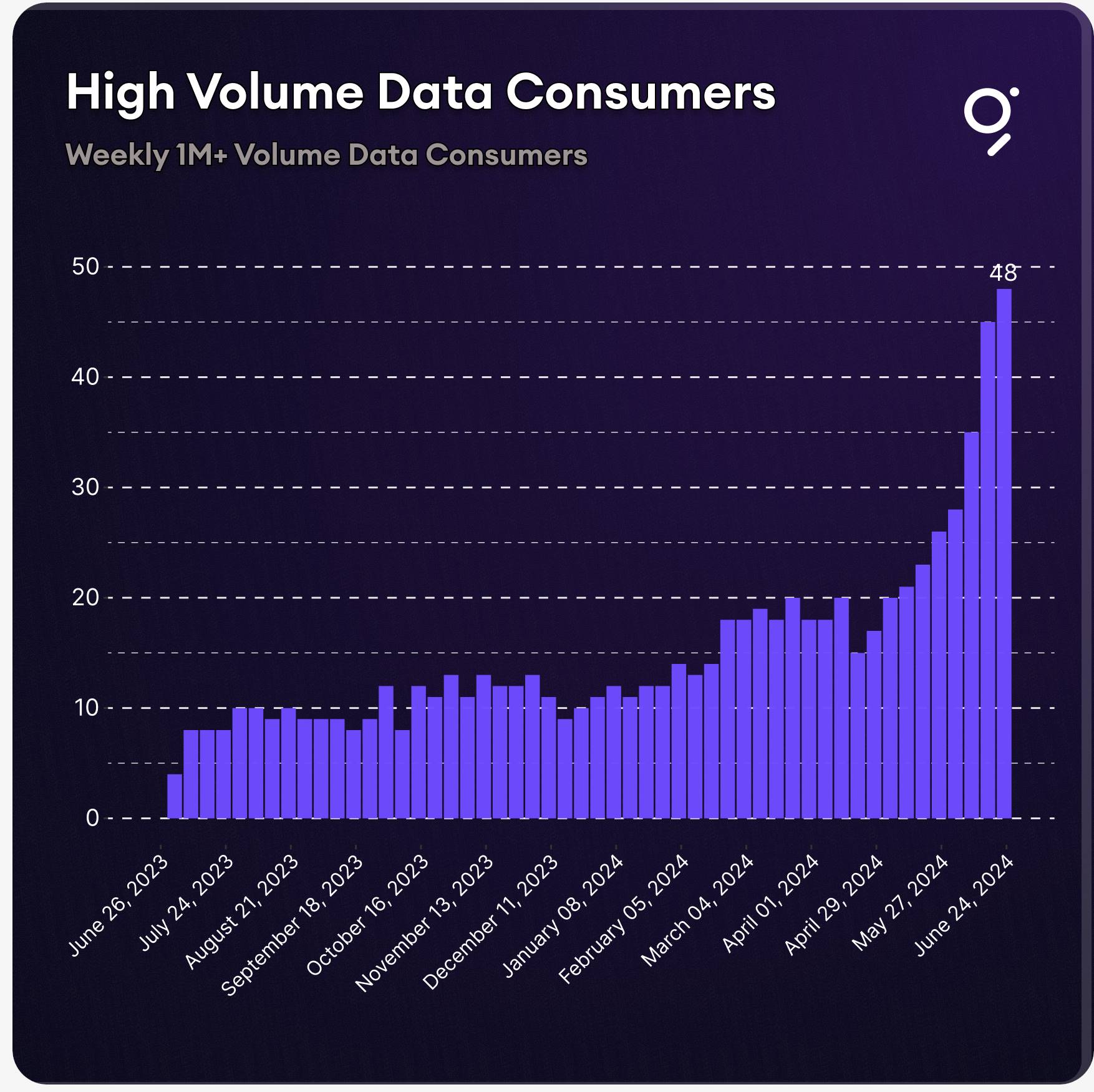
Not only overall query volume shows the shift from hosted to decentralized services, but also the number of users making at least one million queries per week is increasing. This growth has continued for nine weeks, indicating more clients are moving production data onto the decentralized network ahead of the deadline.
-
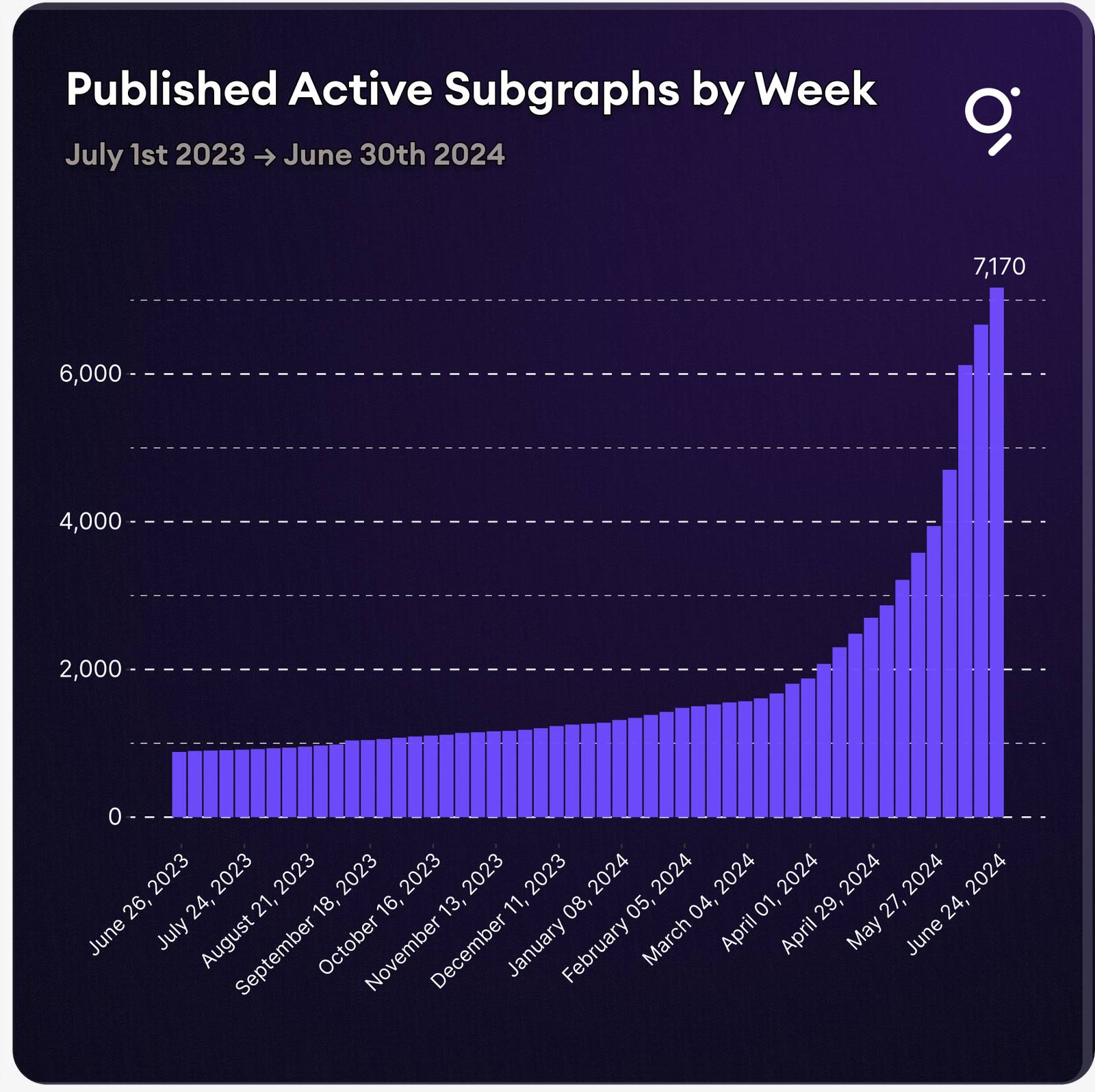
This growth is not only reflected in query volume but also in the number of subgraphs deployed to the network. Active subgraphs surged from 3,942 at the beginning of June to 7,170 by June 30. Compared to query growth, subgraph migration showed the strongest momentum within one to two weeks before the deadline.
-
Transaction-level Alpha: Core developer StreamingFast uses smart contracts to charge GRT tokens for its Substreams data service. The Graph is expanding its scope to include new data services. This transaction marks the first value transfer on the network for a data service beyond core subgraph indexing. New data services from core developers and third parties may enable The Graph to offer developers more use cases for accessing blockchain data.
2. Arweave
Garrett MacDonald | Website | Dashboard
Arweave’s parallel compute layer AO reaches $447 million in deposits with over 8,000 users
-
AO is Arweave’s native parallel computing platform capable of executing arbitrary processes, each with up to 16GB of memory. This advancement is pivotal for Web3, as it enables the first fully decentralized execution of large language models (LLMs), allowing autonomous agents to natively leverage AI. Processes can be launched on demand and self-instantiate. AO is 100% allocated to the community—specifically to AR holders and liquidity stakers—with a total deposit value of $447 million.
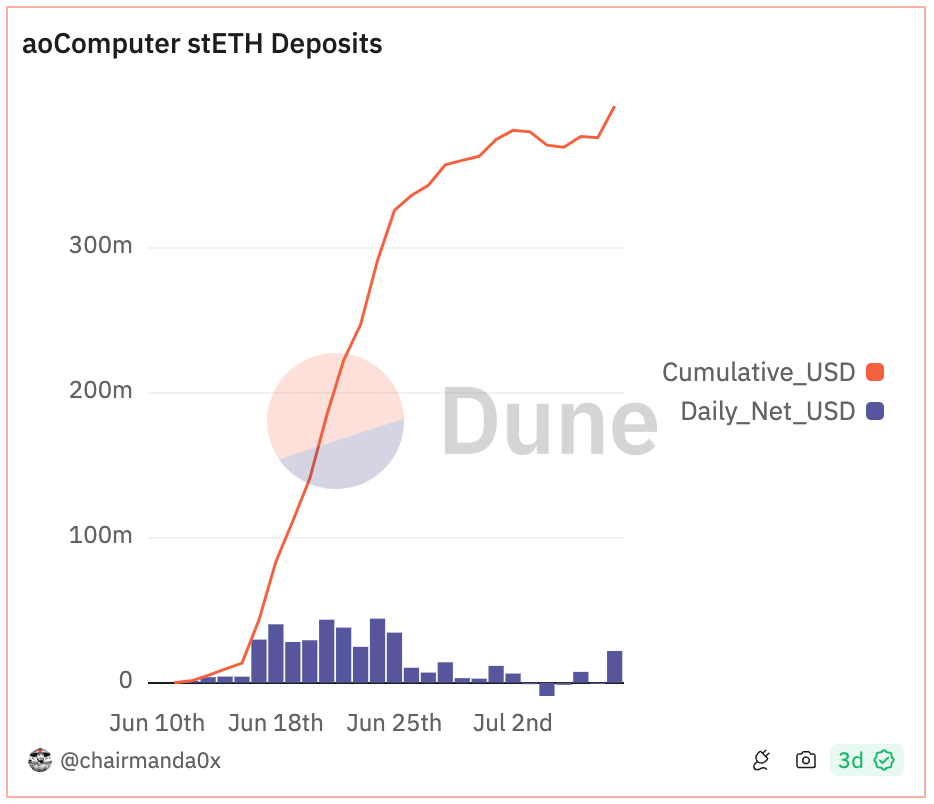
Figure: Dune Analytics - @chairmanda0x
-
Over 100,000 processes have been created on the AO testnet so far. All these processes can execute in parallel without shared memory constraints. The only current limitation is that each process must run within a WASM64 virtual machine, restricting memory to 16GB—but even this will eventually be lifted.
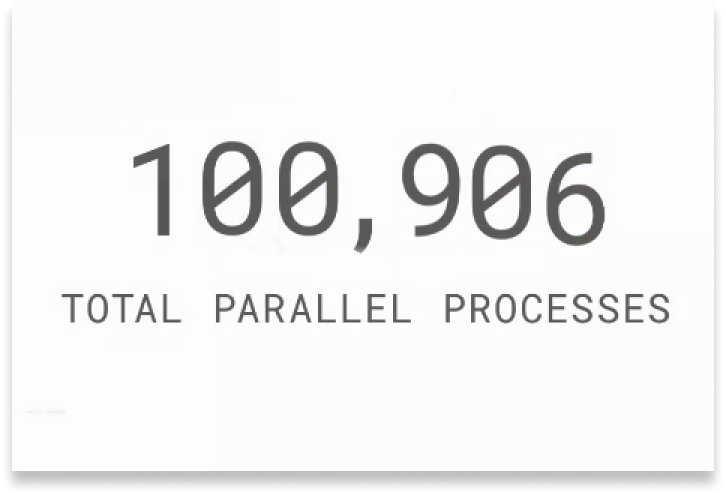
Figure: ao.link
-
Since the launch of the AO testnet, data stored on Arweave—the crypto-native permanent data storage protocol—has doubled weekly on average, rising from approximately 1TB to 2TB per week.
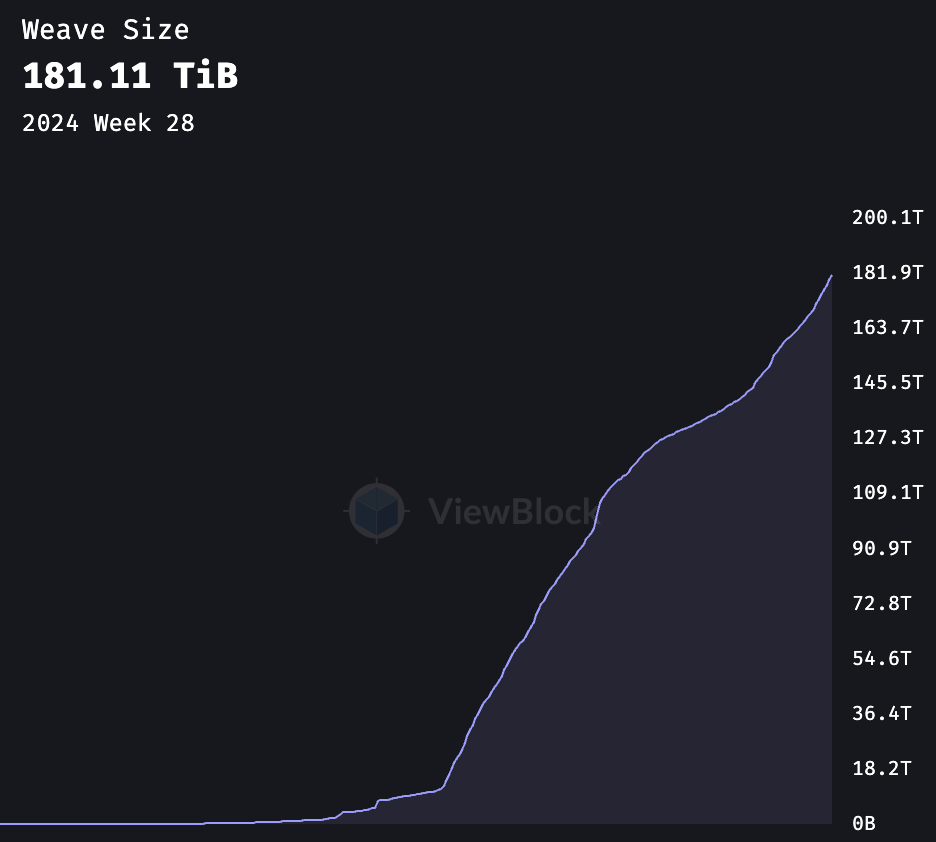
Figure: ViewBlock
-
Transaction-level Alpha: The first public large language model (LLM) has been deployed on AO in the form of an engaging game, signaling the dawn of the next era of computing: autonomous agents capable of self-instantiating LLMs to make decisions, generate revenue, and sustain themselves indefinitely.
3. Covalent 🟢
Covalent delegation space nears 100%, CQT transitioning to CXT
-
Covalent currently has 32 operators: 18 Block Specimen Producers, 14 Block Results Producers, and 1 Query Node Operator. Total network staked amount is 188,931,763.89 CXT, out of a total supply of 1 billion CXT—representing 22.06% of the circulating CQT supply now staked. On the delegation front, only 6.5562 CXT remains available for delegation, meaning delegation capacity is nearly fully utilized, approaching 100%.
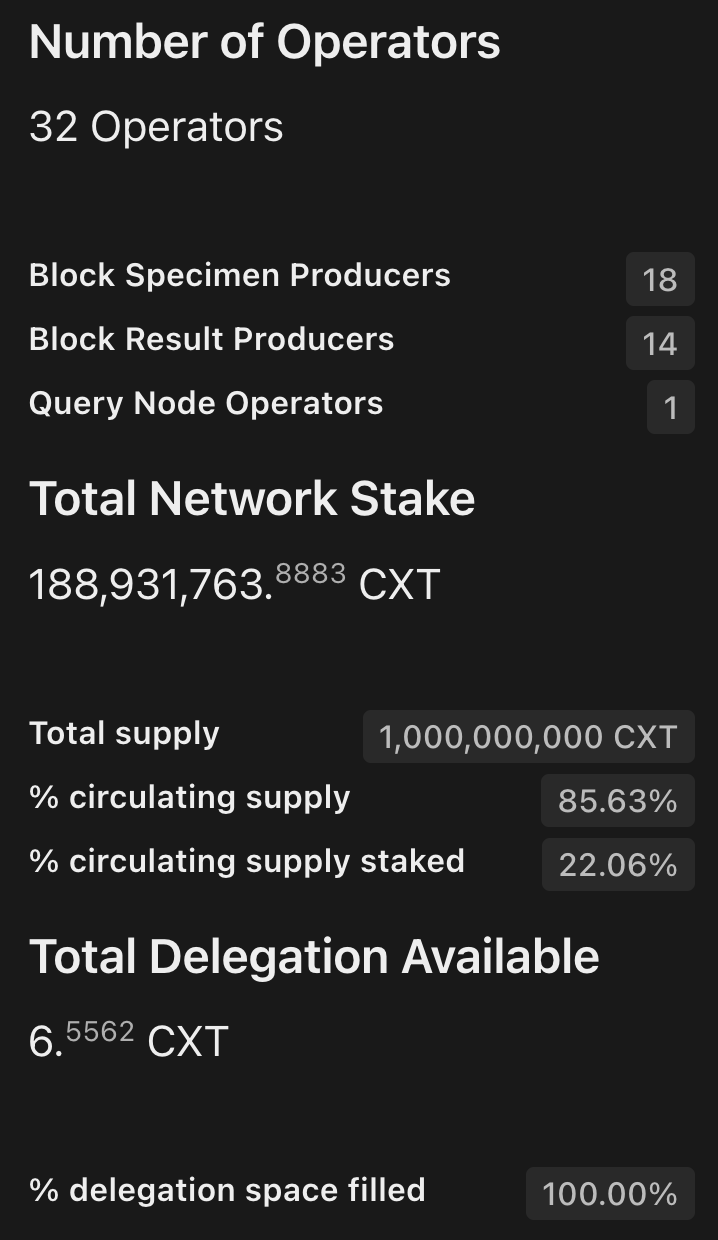
Figure: covalenthq.com/staking
-
Top validators each hold 12.25M CXT, yielding approximately 13% annual returns. StakeWithUs and Allnodes have the lowest commission at 5%, while 11(k9) charges the highest at 20%. The scarcity of delegation slots indicates strong demand. The top staker holds 13.08M CXT, and the top redeemer withdrew 50,615.7 CXT.
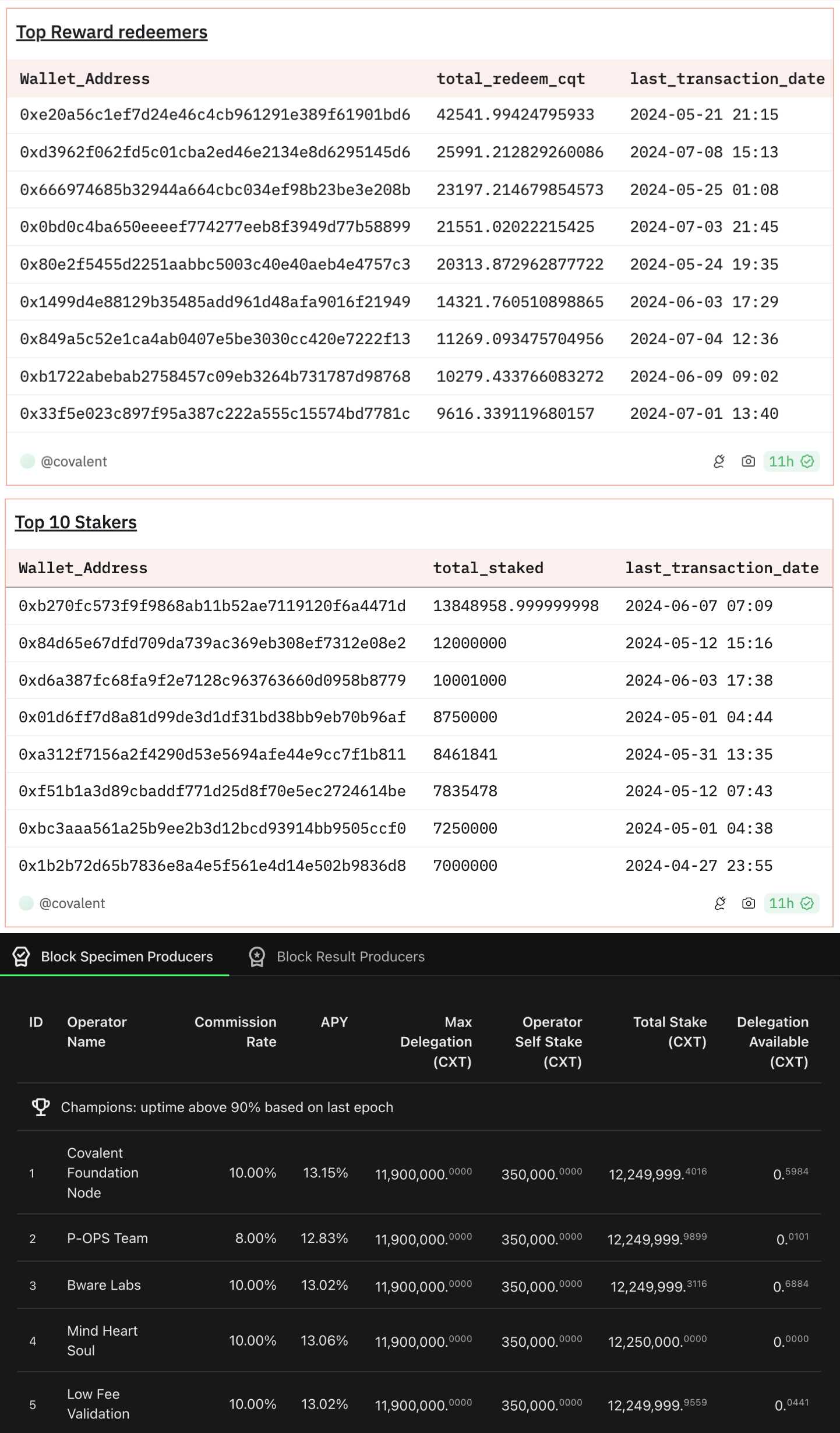
Figure: Dune Analytics - @covent & covalenthq.com/staking
-
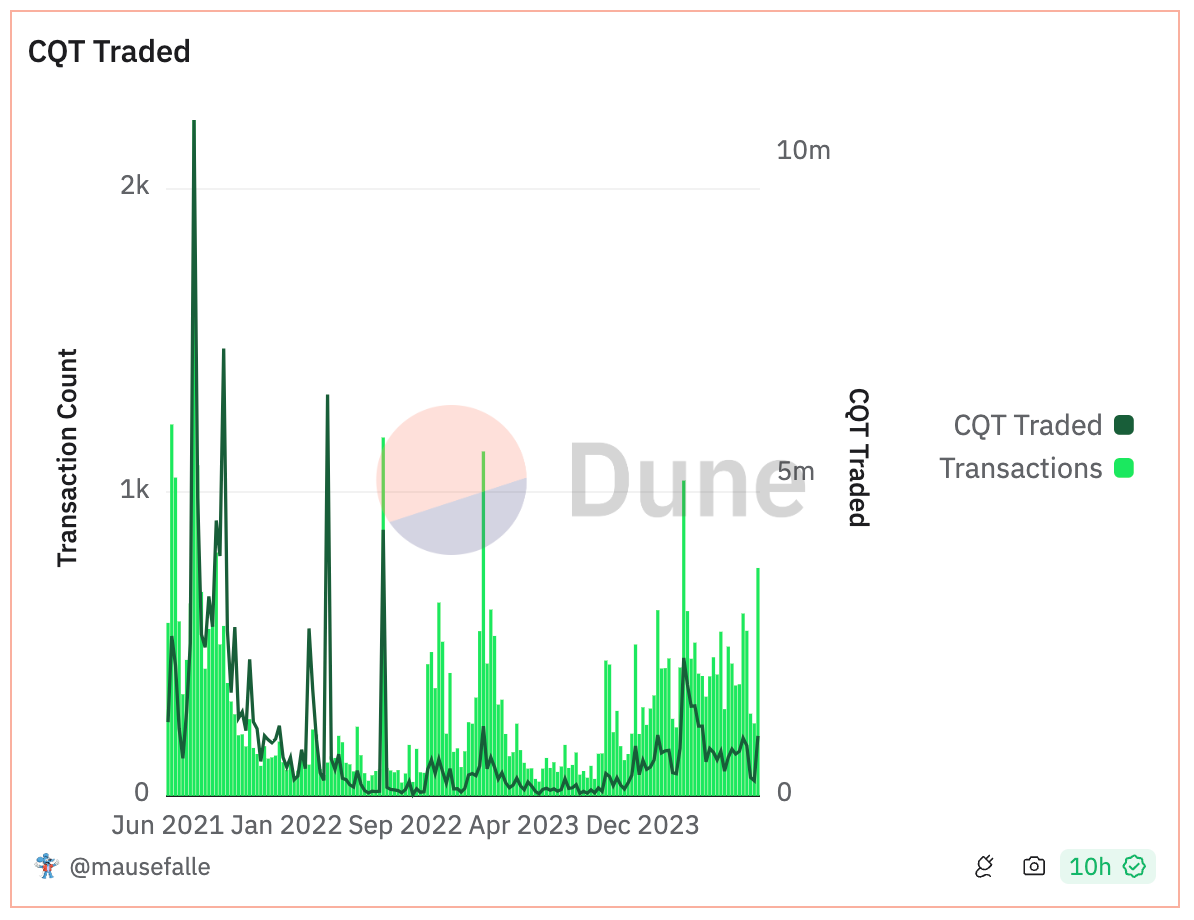
Weekly trading volume and number of transactions for CQT peaked at the end of 2021, exceeding 2,000 trades and 10.5 million CQT traded on decentralized exchanges (DEXs), after which activity declined. Overall volumes remained low until early 2024 when both metrics began rising again—recent peaks aligning with the announcement of the CQT-to-CXT transition.
-
Transaction-level Alpha: On July 10, Covalent migrated its native token from CQT to CXT. This transition includes moving staking and governance to Ethereum, enhancing token security and liquidity. Current CQT holders, stakers, and exchanges will have their balances automatically migrated.
4. Pyth
Anthony Loya | Website | Dashboard
Pyth Network’s staked $PYTH drops below $350 million, stakers decline to 133.59k
-
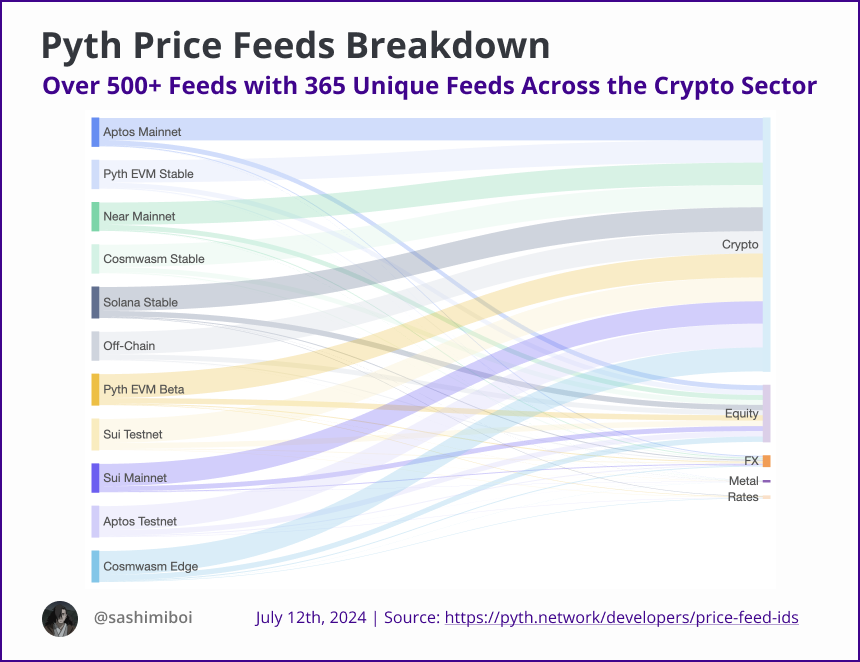
Pyth Network recently expanded support for additional price feeds, now offering over 500 real-time price feeds covering multiple asset classes including cryptocurrencies, equities, foreign exchange (FX), interest rates, and metals. You can explore Pyth’s diverse range of price feeds here. Pyth has over 650 upcoming price feeds across multiple chains.
-
The price of Pyth Network’s token (PYTH) declined primarily due to a large token unlock in May 2024, which increased the circulating supply of PYTH by 140%. The surge in supply likely contributed to selling pressure, driving down the price. Additionally, broader market conditions and a downturn in the wider cryptocurrency market further impacted the depreciation of PYTH. Currently, $351.84 million worth of PYTH is staked, with a market cap of $1.08 billion. Staked amounts have decreased by approximately 14.48% over the past 30 days. The price also fell from $0.39 to $0.30 during the same period, a 23.08% drop.

Figure: DeFiLlama
-
Since April 9, 2024, the number of PYTH stakers has declined by about 30,000, with net stakers now at 133.69k. Since January 2024, there have been 248.77k unique stakers in total. The average stake per user is $2,631.76. While staker numbers have declined since May, they appear to have stabilized in recent weeks.
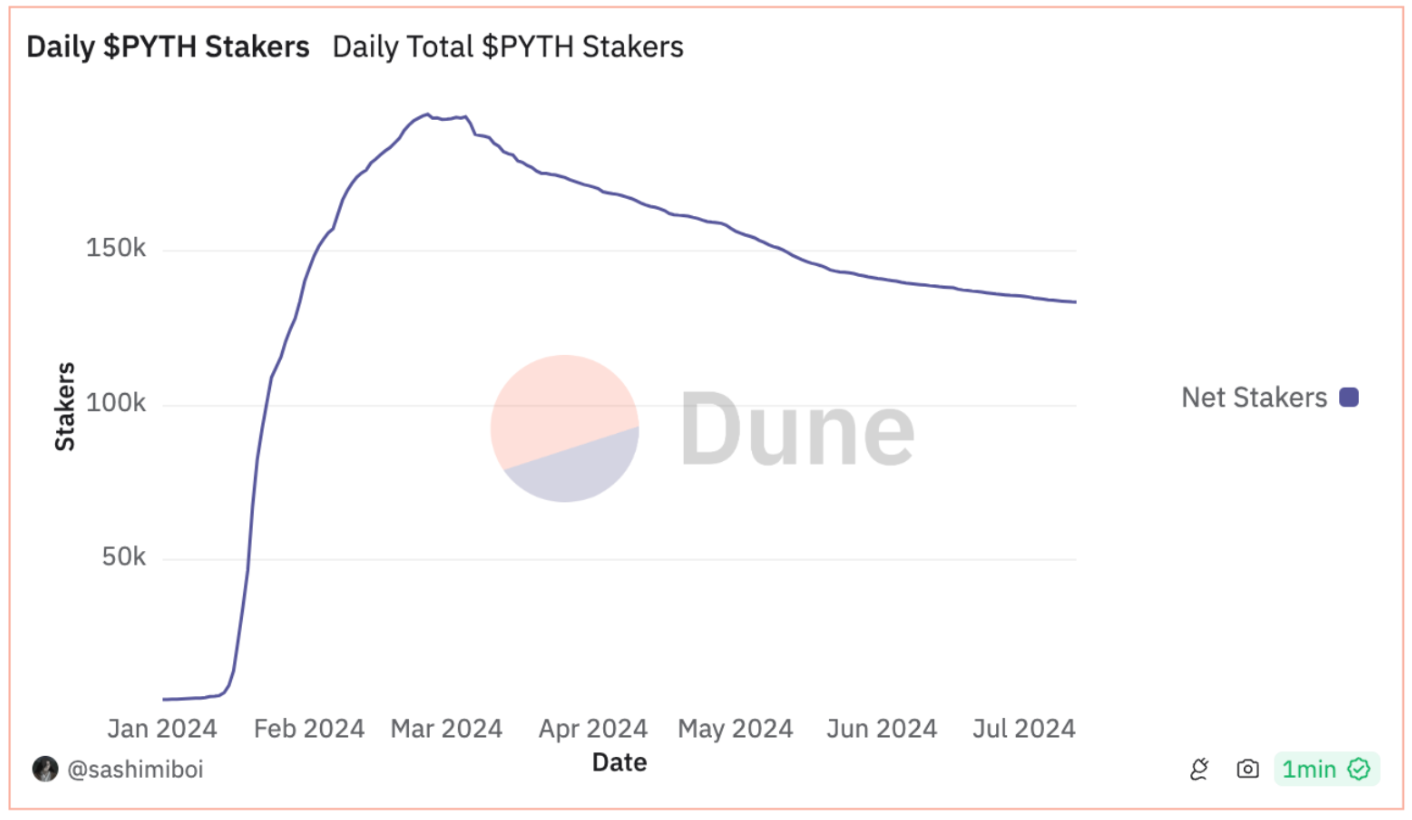
Figure: Dune Analytics - @sashimiboi
Join TechFlow official community to stay tuned
Telegram:https://t.me/TechFlowDaily
X (Twitter):https://x.com/TechFlowPost
X (Twitter) EN:https://x.com/BlockFlow_News
 @ournetwork__











