









A Comprehensive Analysis of the DA Ecosystem and Competitive Landscape
TechFlow Selected TechFlow Selected
A Comprehensive Analysis of the DA Ecosystem and Competitive Landscape
With the widespread adoption of these DA solutions and differences in DA layer choices across various projects, we are seeing a range of unique technological and market positioning.
 Navigating Web3 tides with focused insights
Author: IOSG Ventures
Background
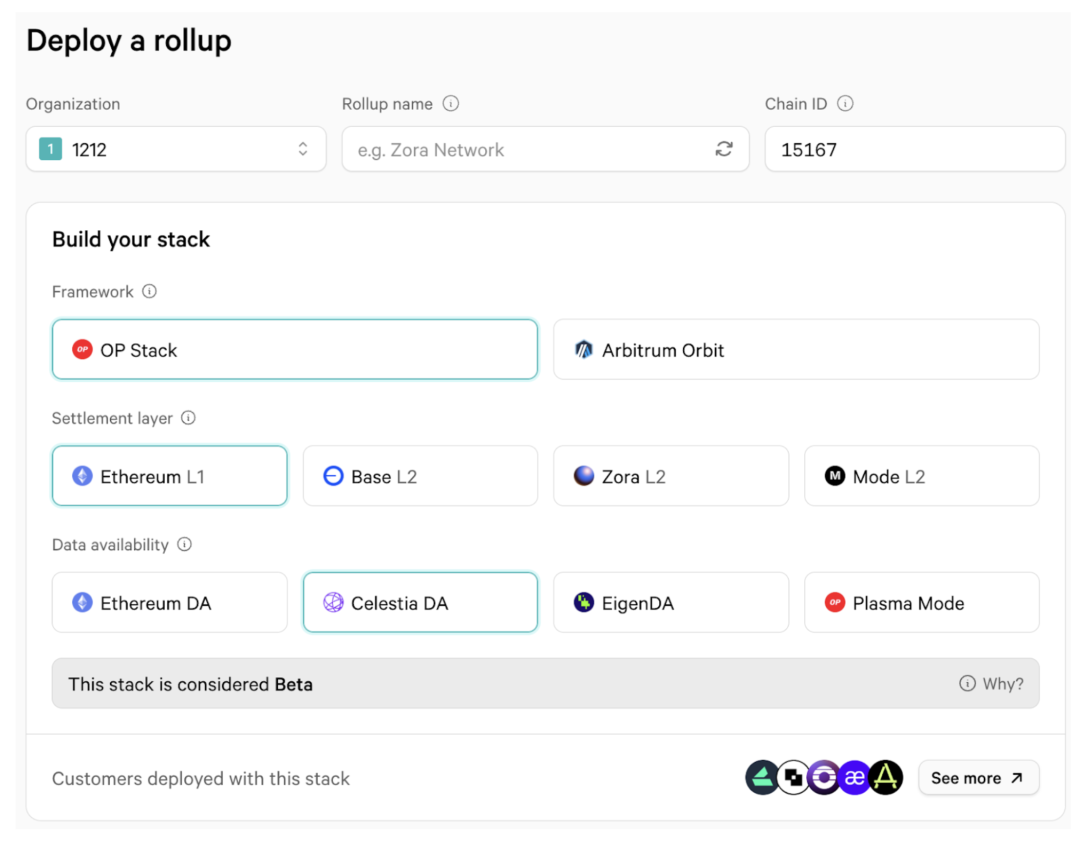
Two years ago, at the dawn of the modular blockchain narrative, we published an article outlining our views and predictions on the Data Availability (DA) landscape. As anticipated, the modular blockchain narrative has gained traction, driving infrastructure innovation, enhancing network interoperability, and fostering greater collaboration and integration within the ecosystem. A wave of Rollup-as-a-Service (RaaS) solutions—such as Altlayer, Caldera, Conduit, and Gelato—has emerged. The image below shows the interface of Conduit, a rollup development toolkit, illustrating how deploying a rollup and selecting a DA solution has become remarkably simple and convenient.
Source: Conduit
Over the past two years, alternative DA (Alt-DA) solutions such as Celestia, EigenDA, Avail, and NearDA have made significant progress, each showcasing unique technical advantages and capturing market share. Simultaneously, with the launch of Ethereum’s EIP-4844, blobs have replaced calldata, substantially reducing the cost for rollups using Ethereum’s native DA layer. Today, developers and projects face more complex trade-offs when choosing a data availability layer. This article tracks and analyzes existing DA solutions, delves into their performance, costs, technical characteristics, and market dynamics, and presents our outlook and reflections on the future evolution of the DA sector.
1. Current Adoption of DA Solutions
Rollups using Ethereum’s native on-chain DA are primarily those mainstream Layer 2s that have transitioned from calldata storage to blob-based formats, including Arbitrum, Optimism, Base, Starknet, zkSync, and Scroll. By leveraging Ethereum as their DA layer, these rollups benefit from Ethereum's security, decentralization, protocol upgrade continuity, and economic incentives, as all full nodes validate and store the data. General-purpose L2s occupy a central role in the Ethereum ecosystem and rely on the legitimacy conferred by native DA as a core differentiator. (As Vitalik notes, the essence of a rollup is unconditional security: even if everyone turns against you, you can still withdraw your assets. If data availability depends on external systems, this equivalent level of security cannot be guaranteed.)
However, publishing data to the Ethereum mainnet incurs high costs, especially before EIP-4844 (where calldata cost 16 gas per byte). In December 2023 alone, L2s spent over 15,000 ETH on DA costs. This has led to the emergence of various off-chain Alt-DA solutions—such as launched projects like Celestia and EigenDA, and upcoming ones like Avail—that reduce data storage and transmission costs through techniques like Data Availability Sampling (DAS), erasure coding, and KZG commitments.
Among them, Celestia—the pioneer modular blockchain dedicated solely to DA—launched its mainnet in October 2023 and has since become the leading project in the DA space. Its primary customers include projects requiring modular architecture: cross-chain bridges, settlement layers, DeFi protocols, gaming platforms, sequencers, and Layer 2 solutions beyond just the Ethereum ecosystem. Existing clients include the omnichain DEX protocol Orderly, Manta Pacific (a modular L2 tailored for EVM-native ZK applications), Hokum (an L3 built on Base), and derivatives-focused DEXs Lyra and Aevo. As a modular DA layer not confined to a single ecosystem, Celestia’s design advantages make it the preferred choice for many emerging Layer 2 projects.
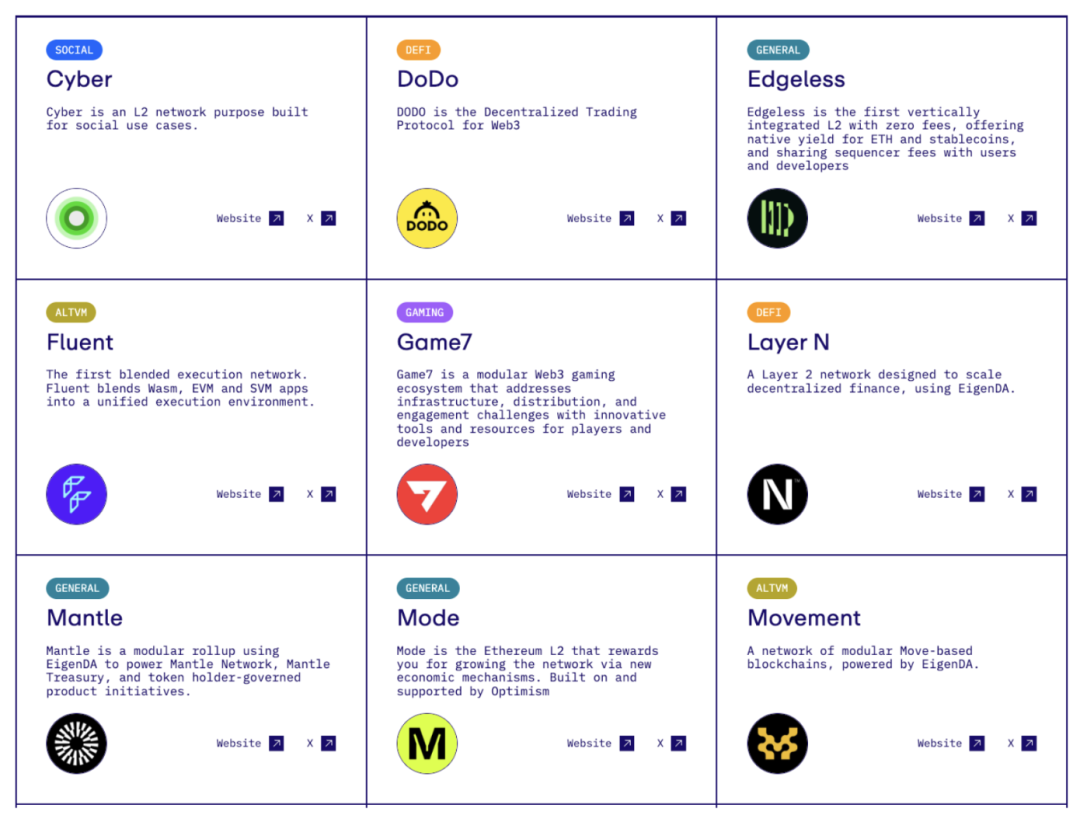
EigenDA, developed by EigenLabs, leverages EigenLayer’s restaking mechanism to deliver an efficient, secure, and scalable DA service, inheriting some of Ethereum’s security and vast validator network. EigenDA focuses specifically on providing high-performance DA solutions for the Ethereum ecosystem. As the first Active Validation Service (AVS) on EigenLayer, EigenDA launched alongside the EigenLayer mainnet in April. Its client base is diverse, including Ethereum L2 Swell, Celo, Mantle Network, and multiple other AVSs built on EigenLayer—such as the decentralized compute stack Versatus, Polymer, DEX protocol DODO, and CyberConnect, a Social L2.
Source: EigenDA
2. Trade-offs Between Native DA (EIP-4844) and Existing Alt-DA Solutions
2.1 Ethereum Native DA
To briefly recap the evolution of Ethereum’s native DA: prior to the Cancun upgrade, rollups relied heavily on calldata for data storage and transmission. Due to permanent storage requirements and frequent network congestion, the associated high fees became a major bottleneck for scalability and adoption. EIP-4844 introduced a new data structure—blobs—which can carry large volumes of data but would increase node storage burdens if stored permanently. Over time, unbounded storage demands could raise hardware requirements for running nodes, threatening decentralization. Hence, blobs are only required to be stored for approximately 18 days (~4096 epochs) before being pruned.
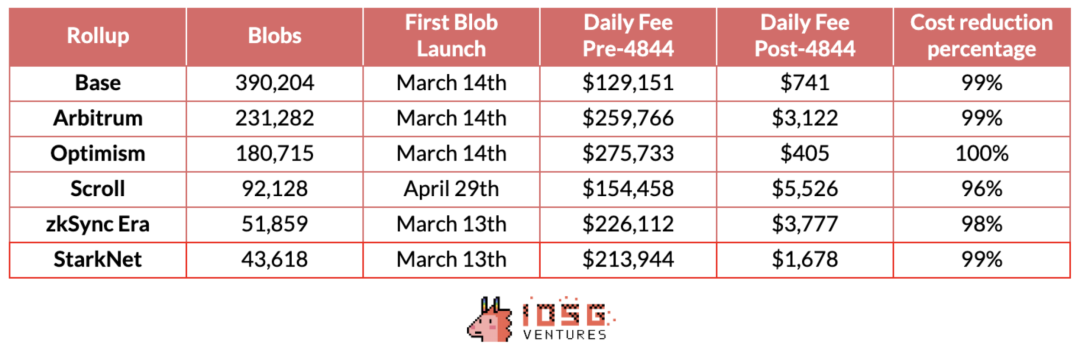
Because blobs are temporarily stored and use a separate fee market, the implementation of EIP-4844 led to an average ~99% reduction in daily DA costs across major L2s (using a 60-day window around blob adoption; 30 days for Scroll and Starknet). OP Rollups benefited more significantly from this cost reduction than ZK Rollups, due to differences in the type of data uploaded (transaction data vs. state diffs).
Source: Dune & Growthepie
EIP-4844 Blob Capacity, Storage Characteristics, and Pricing Mechanism
Blob capacity and storage characteristics:
-
Each block can contain up to 6 blobs
-
Each blob can store up to 128KB of data (senders pay full blob fees even if less than 128KB is used)
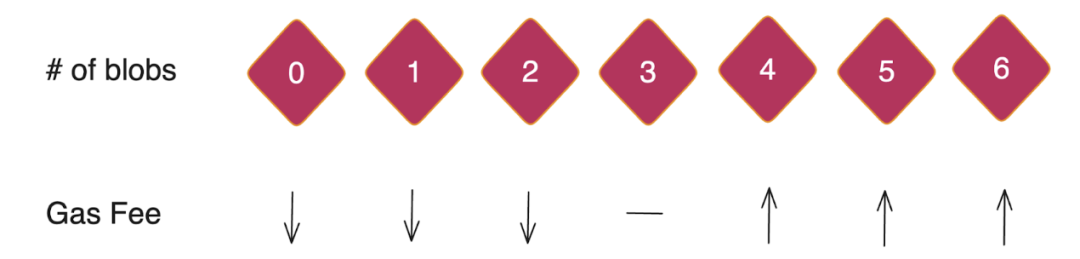
The new blob gas market operates similarly to EIP-1559, dynamically adjusting the blob base fee based on supply and demand:
-
If the number of blobs in a block exceeds the target (currently 3), the blob base fee increases.
-
If the number of blobs is below the target, the blob base fee decreases.
Source: IOSG Ventures
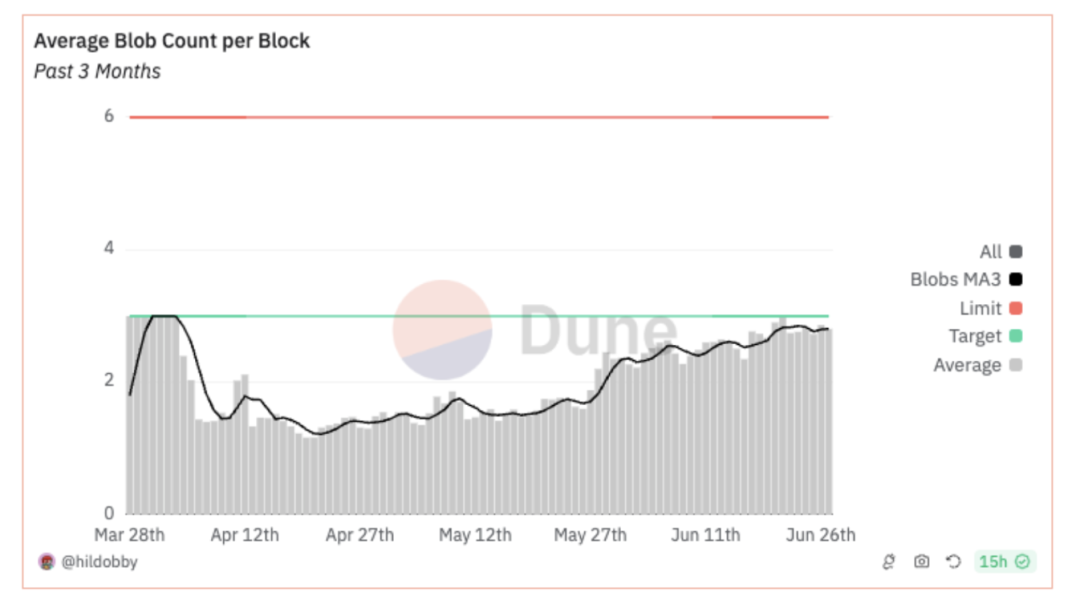
Source: Dune / 3-day moving average of blobs per Ethereum block
L2s primarily use the newly introduced Type 3 transactions, which add the fields max_fee_per_blob_gas and blob_versioned_hashes to regular transactions—representing the maximum fee per blob gas the user is willing to pay and a list of KZG commitment hashes, respectively.
This new pricing mechanism means Type 3 transactions still require max_fee_per_gas and max_priority_fee_per_gas fields and remain subject to the existing EIP-1559 market. In addition to blob space, Type 3 transactions must also pay for the EVM execution space they consume.
Thus, blobs still compete for limited block space, leading to cost uncertainty. With only six blobs allowed per block and blob gas fees dynamically adjusted based on demand, price volatility remains a concern.
As a general-purpose chain, Ethereum’s weakness lies in the unpredictability of block space—sudden surges in activity such as NFT mints or airdrop claims can cause congestion, spiking blob prices. This makes it difficult for rollups to forecast their cost base, introducing budget uncertainty and unstable profit margins. It raises barriers for early-stage projects and questions whether Ethereum DA can serve as a long-term solution. While blobs are typically about 98% cheaper than calldata, there are periods—shown in the chart below—where blobs are only 59% cheaper.
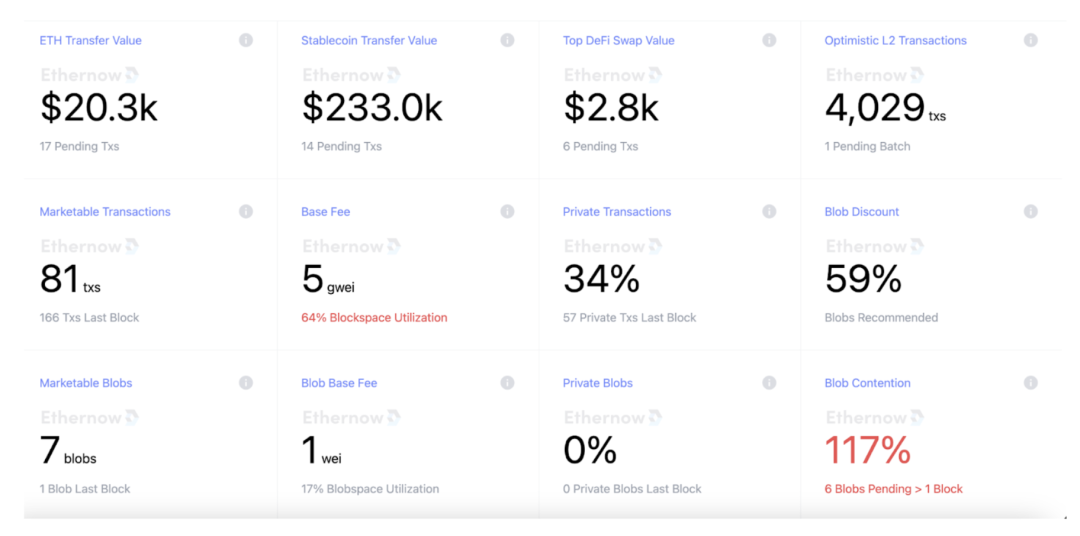
Source: Ethernow
We calculate the cost of two blob transmissions as examples:
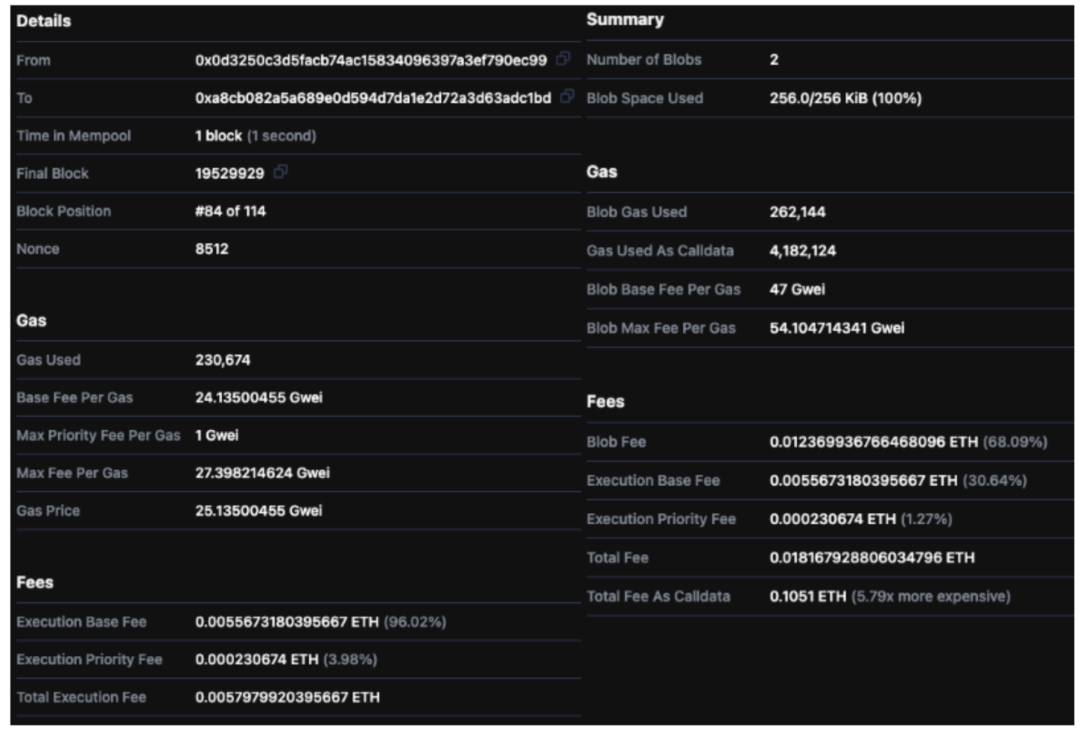
Source: Ethernow
The image above shows a Type 3 transaction from Zksync’s Validator Timelock in a block on March 28, 2024. We break down its data cost using blob fees, base execution fees, and priority fees:
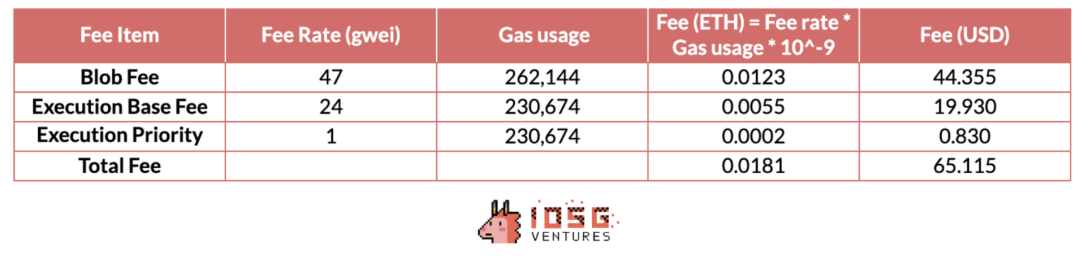
Assuming ETH price at $3,600, the cost of transmitting 1 MiB via blobs was approximately:
4 × 0.018 ETH × 3600 USD/ETH = 259.2 USD
Now consider a Type 3 transaction from zkSync Era on June 24:
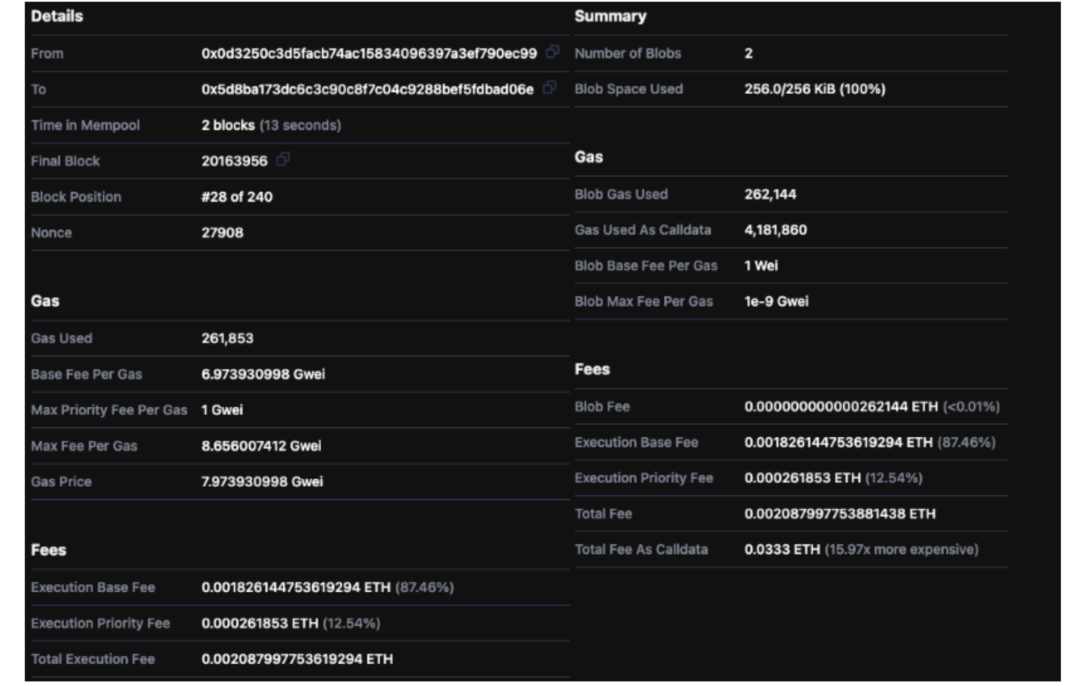
Source: Ethernow
At that time, mainnet activity had slightly decreased. Breaking down the data cost:
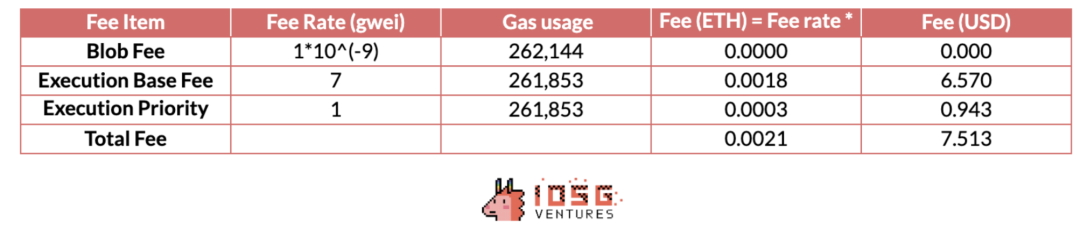
Cost of transmitting 1 MiB via blobs was approximately:
4 × 0.0021 ETH × 3600 USD/ETH = 30.24 USD
This illustrates the cost volatility of using blobs for data transmission, which remains relatively high. For any rollup, however, stability in cost structure is a key consideration when selecting a DA solution.
2.2 Celestia
As the pioneer of modular blockchains, Celestia focuses exclusively on providing the DA and consensus layers, decoupling execution to optimize data availability for greater efficiency and scalability. Unlike Ethereum’s on-chain approach, Celestia—a Layer 1 off-chain solution—offers distinct technical features that reduce data availability costs while providing higher flexibility and scalability. Its modular design grants exceptional versatility, allowing developers to freely choose their execution environment without being tied to a specific virtual machine (VM), enabling support for diverse application scenarios.
For rollups integrating Celestia as their DA layer, transaction data (Data Blobs) generated by the execution layer are submitted to the Celestia network instead of the original Layer 1 (e.g., Ethereum) to ensure data availability for verification and state reconstruction. Celestia employs Data Availability Sampling (DAS), using a 2D Reed-Solomon erasure coding scheme to re-encode block data. This allows light nodes to verify data availability by randomly sampling small portions of the data over multiple rounds, while enabling parallel processing across nodes to boost overall efficiency.
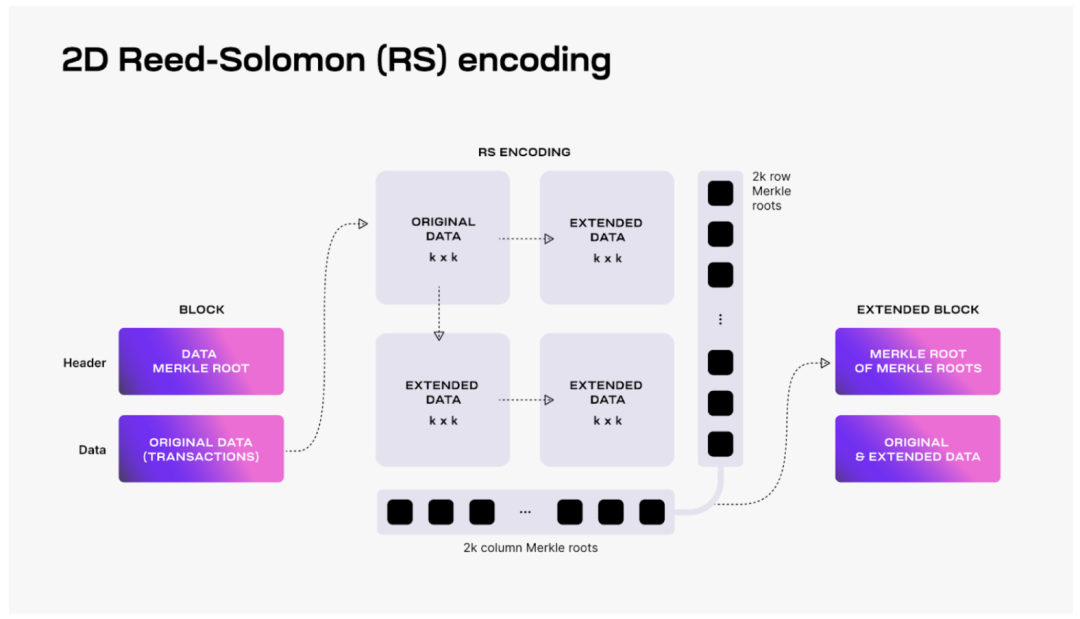
Source: Celestia.org
Another key technology is Celestia’s Namespaced Merkle Trees (NMTs), which allow individual rollups to download only the transaction data relevant to them, improving data processing efficiency. NMTs reduce data redundancy, enhance system performance, and offer developers a more efficient way to handle data.
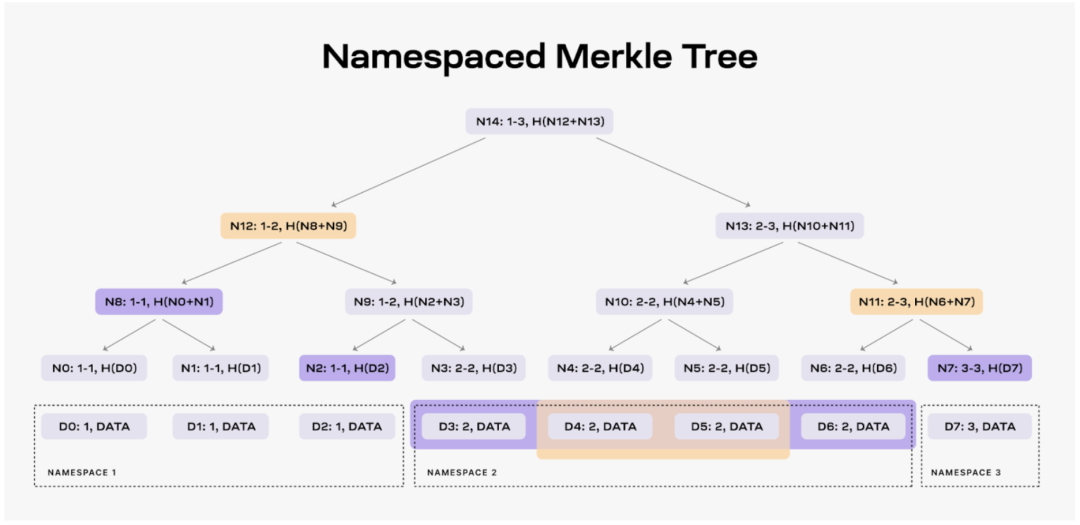
In terms of security, Celestia uses the Tendermint consensus mechanism, where validators reach agreement on Data Blobs, ensuring data availability and consistency across the network—even tolerating up to one-third of faulty or malicious validators. Validators stake TIA tokens and are economically incentivized to act honestly, with penalties (slashing) imposed for malicious behavior or misbehavior, thereby securing the network. Currently, Celestia’s TVL is approximately $6.44 billion, with around 100 full nodes.
Regarding scalability, Celestia’s block size can be dynamically adjusted based on the number of active light nodes. As more nodes join, Celestia can safely increase block size, theoretically enabling infinite throughput and scalability. Current data shows a throughput of approximately 6.67 MB/s.
Celestia Blob Capacity, Storage Characteristics, and Pricing Mechanism:
For cost comparison, let’s briefly examine Celestia’s performance and pricing model. Users submit data to Celestia via BlobTx transactions, with fees composed of blob space usage and gas.
Each Blob is limited to slightly under 2 MiB (1,973,786 bytes), and blocks can contain multiple blobs depending on total size limits. The current maximum block size is 64×64 shares (about 2 MiB), totaling 4096 shares—one reserved for PFB (PayForBlobs) transactions, leaving 4095 shares for data storage. Celestia’s fee market resembles Ethereum’s EIP-1559, using a gas-price-based priority mempool. Transactions with higher fees are prioritized by validators. Fees consist of a fixed base cost plus a variable cost based on Blob size.
According to aggregated rollup data from Celenium (as of June 17), DA costs for clients using Celestia range between 0.02–0.25 TIA/MiB. At the $TIA price of $7.26 on that date, major clients’ DA costs ranged from $0.15 to $1.82 per MiB. Compared to Ethereum’s on-chain native DA, Celestia offers a competitive and stable cost structure.
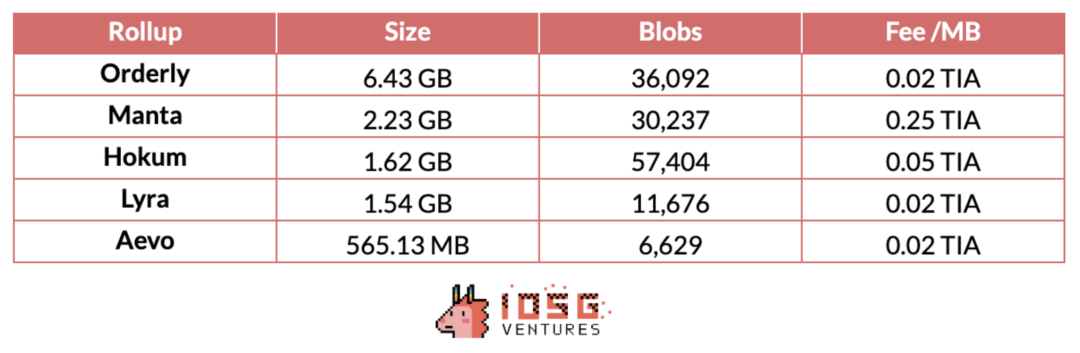
Source: Celenium
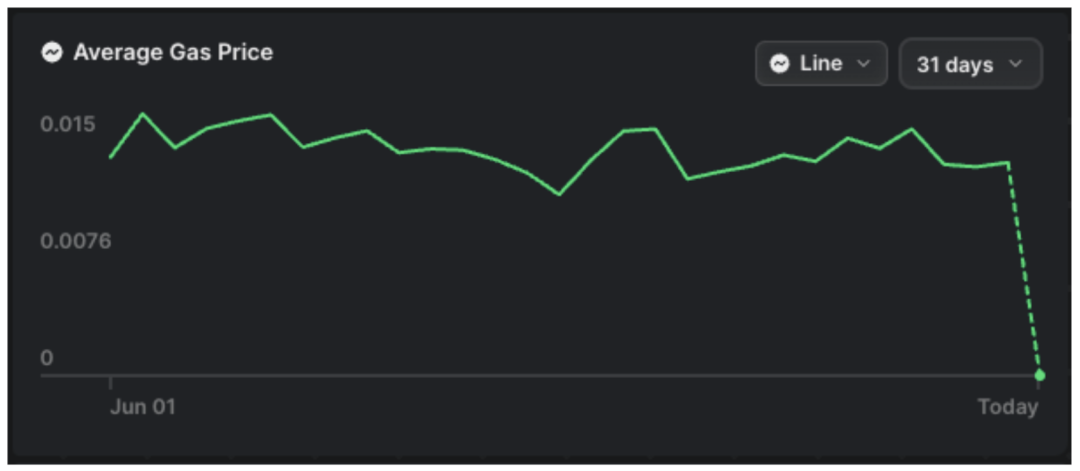
Source: Celenium, gas price stabilizes around 0.015 uTIA (1 uTIA = TIA × 10⁻⁶)
However, Celestia itself is a Layer 1 blockchain requiring a P2P network to broadcast and achieve consensus on Data Blobs. Although light nodes use DAS to verify availability, full nodes face high bandwidth requirements (128 MB/s download, 12.5 MB/s upload), posing challenges to decentralization and future throughput scaling. In contrast, EigenDA adopts a different architecture—requiring neither consensus nor a P2P network.
2.3 EigenDA
As an Active Validation Service (AVS) built on EigenLayer, EigenDA leverages restaking to inherit Ethereum’s security—without needing a new validator set. Ethereum validators can opt-in freely, making EigenDA’s restaked nodes a subset of Ethereum’s validator set—thus directly utilizing existing infrastructure. The workflow is as follows: after a rollup sequencer generates Blob Data, it sends it to a Disperser (run by the rollup or a third party like EigenLabs). The Disperser shards the data, generates erasure codes and KZG commitments, and distributes them to EigenDA nodes. These nodes then validate attestations and ensure data availability. After verification, nodes store the data and send digital signatures back to the Disperser. Finally, the Disperser aggregates these signatures and submits them to the EigenDA smart contract on Ethereum for final validation of the aggregated signature.
The core idea remains reducing node requirements for data storage and verification computation. However, EigenDA aligns with Ethereum’s upgrade path by adopting KZG commitment verification. Additionally, EigenDA avoids consensus protocols and P2P propagation, instead using unicast to further accelerate validation speed.
To ensure EigenDA nodes actually store the data, the protocol uses Proof of Custody. If a lazy validator is detected, anyone can submit proof to the EigenDA smart contract, which will verify it. Upon successful verification, the lazy validator is slashed.
Therefore, EigenDA’s entire validation process occurs on Ethereum, relying on Ethereum for consensus guarantees. This eliminates bottlenecks from consensus protocols and low-throughput P2P networks. Nodes don’t wait for sequential ordering and can process data availability proofs in parallel, greatly improving network efficiency.
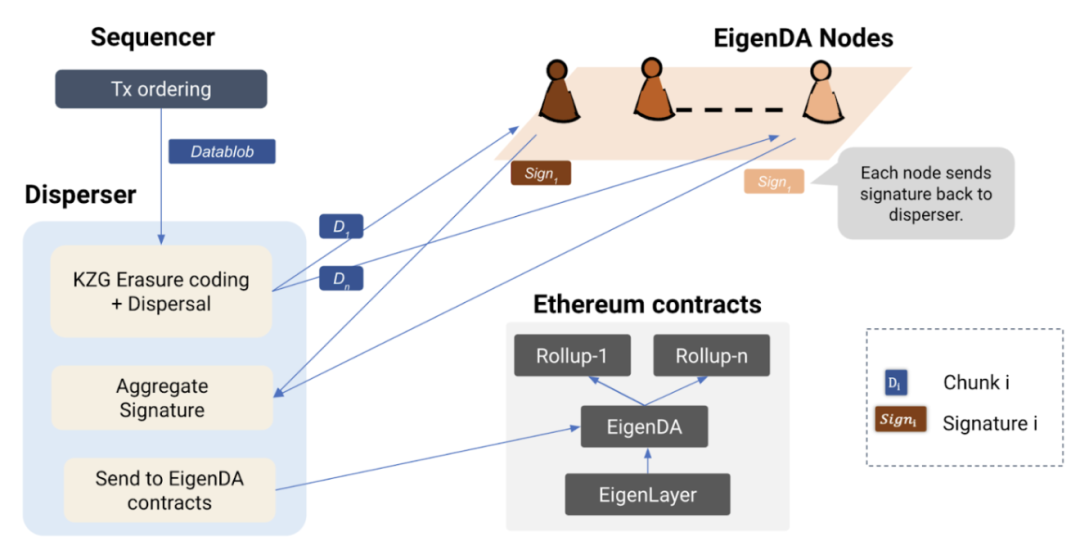
Source: Eigenlayer
EigenDA Capacity, Performance, and Costs:
EigenDA currently has 266 node operators. Its maximum throughput target is 10 Mbps. Based on 7-day averages, EigenDA achieves a data throughput of 0.685 MiB/s, with data storage and transmission costs around 0.001 gas/byte. Assuming a gas price of 10 gwei and ETH at $3,600, the cost per 1 MB of data is approximately $0.038. Total staked TVL stands at 3.33 million ETH—nearly $1.2 billion.
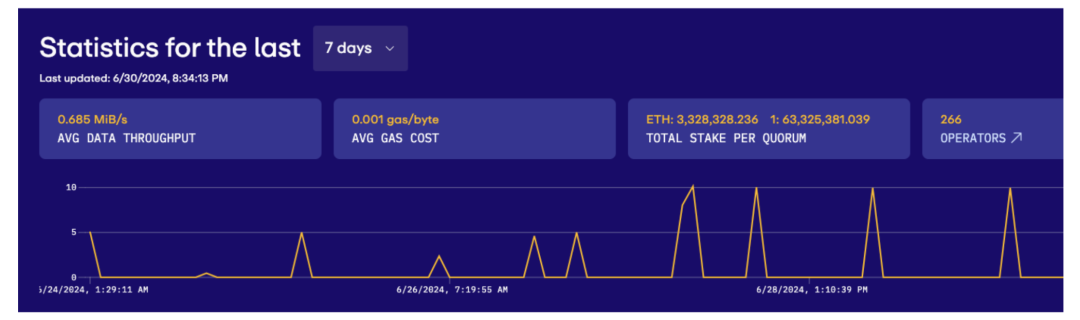
Source: EigenDA.xyz
Comparative Analysis: Celestia vs. EigenDA
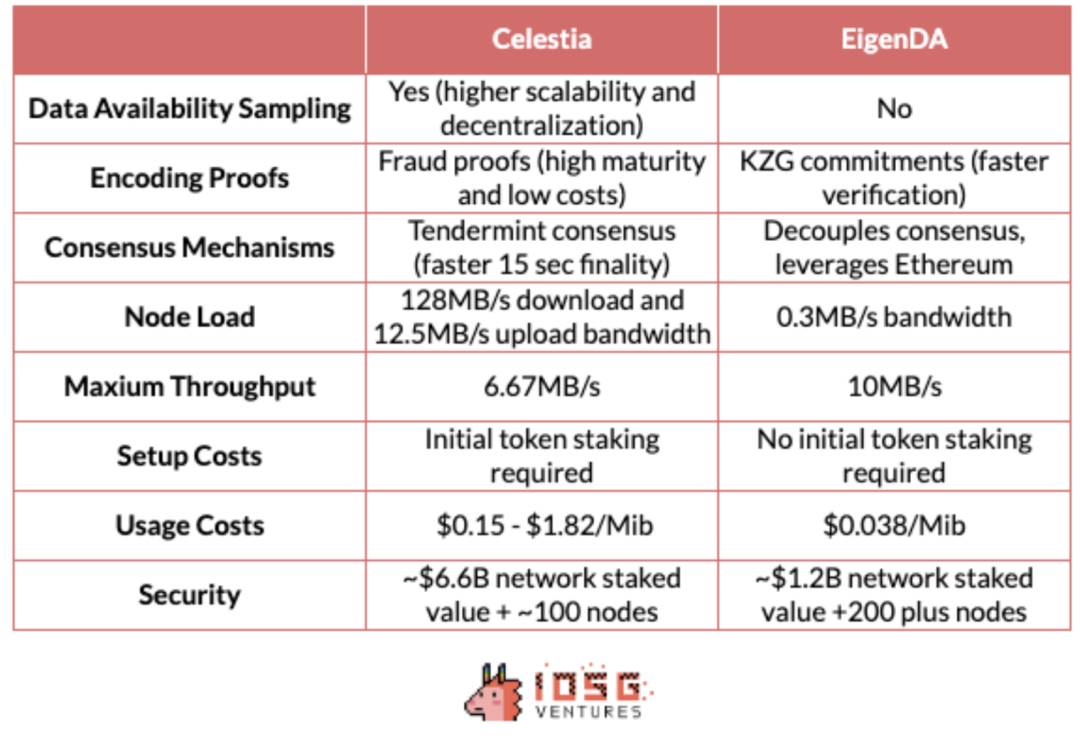
From a technical standpoint, Celestia and EigenDA differ significantly. First, in node load: Celestia’s full nodes must handle broadcasting, consensus, and validation, requiring 128 MB/s download and 12.5 MB/s upload bandwidth. In contrast, EigenDA nodes do not participate in broadcasting or consensus, with bandwidth needs as low as 0.3 MB/s, and can leverage a subset of Ethereum nodes. Second, in throughput: Celestia’s peak throughput is ~6.67 MB/s, while EigenDA targets up to 10 MB/s. In security: Celestia’s security stems from its network value, with ~$6.65 billion staked, implying an attack cost exceeding $4 billion. EigenDA inherits part of Ethereum’s security through restaked assets and operator overlap, with current TVL near $1.2 billion—approximately 2% of Ethereum’s security.
Overall, Celestia’s competitive edge lies in its flexible modular design and high data throughput, making it popular among mid-sized L2s and app chains. EigenDA’s strength lies in leveraging Ethereum’s infrastructure and decoupling data availability from consensus, offering canonical legitimacy. Going forward, as both modularization and app chain trends evolve, Celestia may benefit from incremental market growth, while EigenDA could capture larger shares in the Ethereum-centric market demanding higher security.
3. Avail and NearDA
Although Celestia and EigenDA currently dominate the data availability market, the competitive landscape may shift. With the potential launches of Avail and NearDA, competition in the DA space is expected to intensify.
Avail is a blockchain network focused on data availability, aiming to provide efficient transaction ordering and data storage services for EVM-compatible blockchains and rollups. It uses Polkadot SDK-derived BABE and GRANDPA consensus mechanisms, employs KZG polynomial commitments for validity proofs, supports up to 1,000 validators via Nominated Proof-of-Stake (NPoS), and ensures reliable redundancy through a unique light client P2P network sampling mechanism.
NearDA, launched by the NEAR Foundation, is a data availability solution primarily targeting Ethereum rollups and developers. It aims to deliver a cost-effective DA solution with decentralization comparable to the NEAR Protocol. It has already established strategic partnerships with key players in the Ethereum ecosystem, including Polygon CDK, Arbitrum, and Optimism.
In the short term, for rollups, the most effective way to build sustainable moats is to efficiently reduce marginal costs—adjusting revenue and cost models according to market conditions is a promising strategy.
4. Use-Case-Specific DA Solutions
Beyond general-purpose DA solutions for rollups, the DA landscape is seeing early-stage, niche-focused projects emerge—such as ZeroGravity (0G), a high-throughput DA solution tailored for AI, and Nubit, a Bitcoin-focused DA solution.
4.1 ZeroGravity (0G)
AI applications have different data availability needs compared to traditional blockchain apps. AI model training and inference involve massive data—including model parameters, training datasets, and real-time requests—requiring fast, reliable storage and transmission to maintain efficiency and performance. However, existing general-purpose DA solutions like Celestia and EigenDA are primarily designed for standard blockchain workloads and face limitations in handling ultra-high throughput and low-latency large-scale data transfers.
ZeroGravity (0G) aims to meet AI-specific needs through modular design and high-performance data transfer. It splits the DA workflow into two channels: data publishing and data storage. This enables linear scalability as more nodes join. The storage channel focuses on high-speed data transfer, enabling near-instantaneous data access. The publishing channel ensures data availability, verified via a quorum-based arbitration system assuming majority honesty. 0G Storage is an on-chain database formed by a network of storage nodes. These nodes participate via “Proof of Random Access” (PoRA) mining, ensuring data availability and integrity. It supports storage of various AI-related data types, including models, training data, user queries, and real-time RAG (Retrieval-Augmented Generation) data.
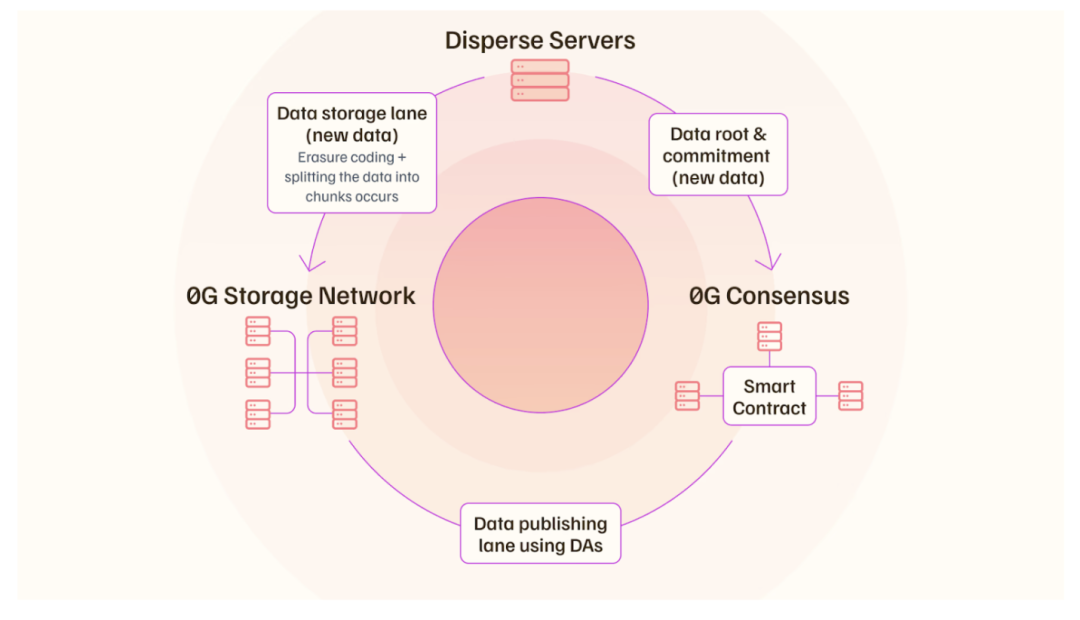
Source: 0G
Through innovative system design, 0G claims a target of GB/s-level on-chain data transfer—far surpassing current MB/s-level solutions like Celestia and EigenDA. Specifically, 0G asserts it can achieve 50–100 GB/s throughput, supporting data-intensive AI model training and inference workflows.
4.2 Nubit
As the Bitcoin ecosystem gains momentum, various technical approaches are emerging. With this growth, applications like Ordinals, Layer 2s, and oracles increasingly demand efficient, secure data availability solutions. These apps require fast, reliable data storage and transmission to function properly and deliver good user experiences. For example, Ordinals need efficient DA to support digital art creation and trading, Layer 2s require high throughput and low latency for scalability, and oracles depend on reliable data feeds for accuracy and timeliness.
Nubit is the first native data availability (DA) layer in the Bitcoin ecosystem, designed to address Bitcoin’s limited throughput and provide foundational infrastructure for long-term growth. Nubit’s workflow includes data submission, validation, broadcasting, storage, sampling, and consensus—ensuring efficient processing and high availability. User-submitted data is encoded via RS coding, validated by validators using the NuBFT consensus algorithm, and accompanied by KZG commitments. Validated blocks are broadcast network-wide, with storage nodes keeping full copies and light clients verifying availability via DAS. Even during network failures, data can be recovered via full storage nodes and KZG commitments on Bitcoin.
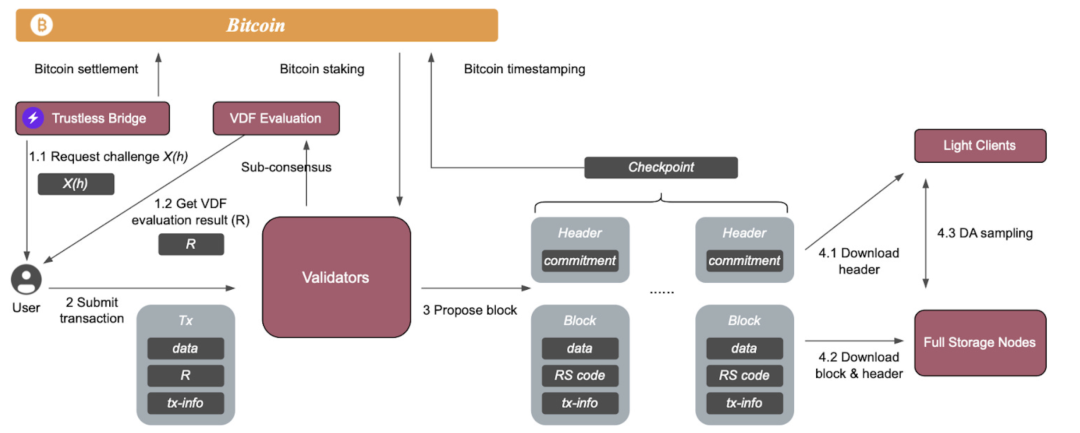
Nubit aims to serve as infrastructure for Bitcoin ecosystem projects and has partnered with Babylon, Merlin Chain, Polyhedra, and others. By lowering data storage costs—especially during spikes in inscription demand—Nubit can help Bitcoin Layer 2s drastically reduce data publishing costs, making data storage and processing on Bitcoin more economical.
5. Closing Thoughts
Analyzing differences among DA projects across dimensions such as security (data integrity, network consensus), customizability and interoperability, performance, and cost, we observe distinct technological and market positioning as these solutions gain adoption and projects make varied choices in DA layer selection.
Looking ahead, we believe many more App-Rollups will enter the market. While the potential market is expanding, the DA sector exhibits strong headwinds: Celestia, EigenDA, and others will likely dominate market share, leaving limited room for mid- and tail-end players amid intensifying competition. Current capacity exceeds rollup demand—for instance, after mainnet launch, Celestia’s network bandwidth utilization has remained below 0.1%, far under its maximum daily capacity of 46,080 MB. Yet compared to Ethereum’s current 15 rollups and ~700 MB/day of data, Celestia still has ample headroom for growth.
That said, future high-performance networks may drive demand for high DA bandwidth, or sectors like AI could create new opportunities. Additionally, early-stage, niche-focused DA solutions—such as Bitcoin DA—may capture solid market share in specialized domains. However, DA is fundamentally a B2B business—project revenue is closely tied to the number and quality of ecosystem projects. At present, we believe the market does not need numerous off-chain DA solutions unless they achieve order-of-magnitude improvements in cost and efficiency.
In summary, while DA supply appears abundant today, the sector’s evolution continues. Different solutions exhibit varying degrees of competitiveness in technology and market positioning. Future developments will hinge on sustained technological innovation and shifting market demands.
Join TechFlow official community to stay tuned
Telegram:https://t.me/TechFlowDaily
X (Twitter):https://x.com/TechFlowPost
X (Twitter) EN:https://x.com/BlockFlow_News
 IOSG Ventures








