









Operating a Telegram group leads to prison sentence—how can Web3 communities operate compliantly?
TechFlow Selected TechFlow Selected
Operating a Telegram group leads to prison sentence—how can Web3 communities operate compliantly?
As regulatory policies on Web3 gradually become clearer across countries and regions, who can say when the Web3 community will become the next target?
 Navigating Web3 tides with focused insights
Author: Liu Honglin
Recently, a case released by the Hong Kong Securities and Futures Commission (SFC) saw an individual surnamed Huang sentenced for sharing securities investment information and advice in a Telegram group without holding the required license. In response, ManQin Law Firm issued a rapid analysis, suggesting that crypto communities should also be vigilant about such compliance risks.
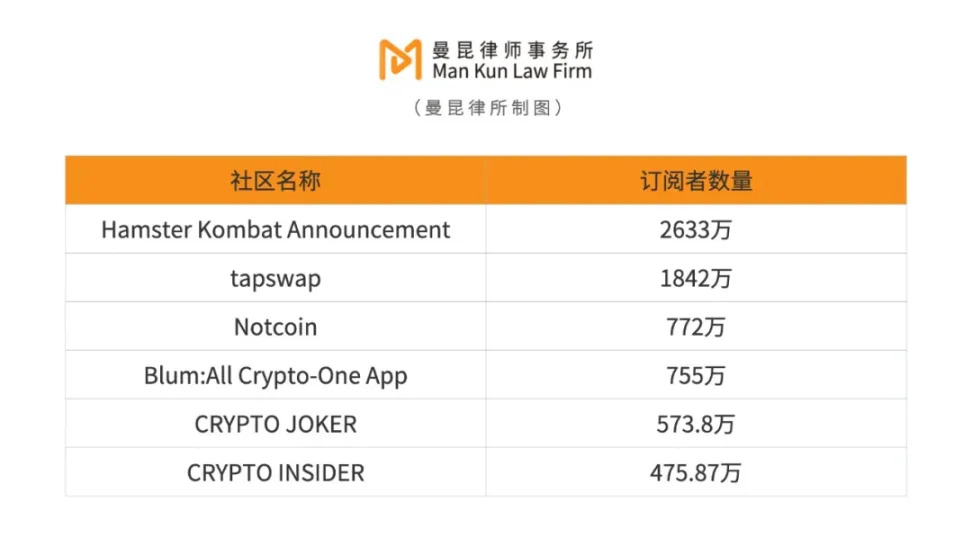
Previously, according to the latest data from TGStat, six of the top ten global Telegram channels are Web3.0 communities, including Hamster Kombat Announcement, tapswap, and Notcoin.
In mainland China, although users theoretically cannot participate in overseas crypto communities, various types of domestic Web3.0 communities still exist across social media platforms such as WeChat, Xiaohongshu (Little Red Book), Zhihu, and Weibo, where discussions and content related to Web3.0 are frequently shared.
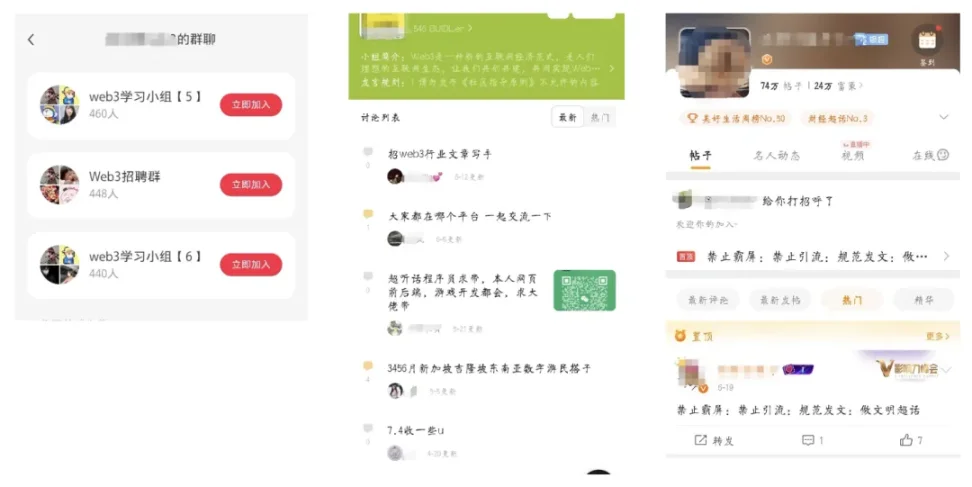
Image source: Screenshots of selected domestic platform crypto communities
However, managing these communities is both easy and difficult. It's easy because simply giving away money or sharing profit-making tips can quickly attract users. But it’s hard because operational models and community guidelines must carefully consider compliance issues to avoid legal disputes.
Therefore, ManQin Law Firm aims to discuss key compliance aspects of Web3.0 community operations to help operators build more compliant community management frameworks.
Web3.0 Community Operations
Operating a Web3.0 community often requires considering multiple complex elements to establish a private user base and achieve profitability. Several core components commonly involve compliance considerations. For example:
(1) Community Platforms
Web3.0 communities are typically built on Telegram or Discord. The former is low-barrier with abundant tools, making it easier to operate, but often hosts mixed content including scams and advertisements. The latter has higher entry barriers and better suits niche enthusiasts, such as blockchain gamers and NFT collectors. Additionally, some within the crypto space have developed decentralized community dApps like DeBox and friend.tech—though these generally have smaller user bases and higher technical thresholds.
In mainland China, Web3.0 communities are usually established and managed via common social platforms such as WeChat, QQ, Zhihu, Xiaohongshu, and Weibo. Groups on WeChat or QQ often implement invitation-only systems with verification mechanisms. On other platforms, communities naturally form around shared topics through engagement under specific hashtags or discussion threads.
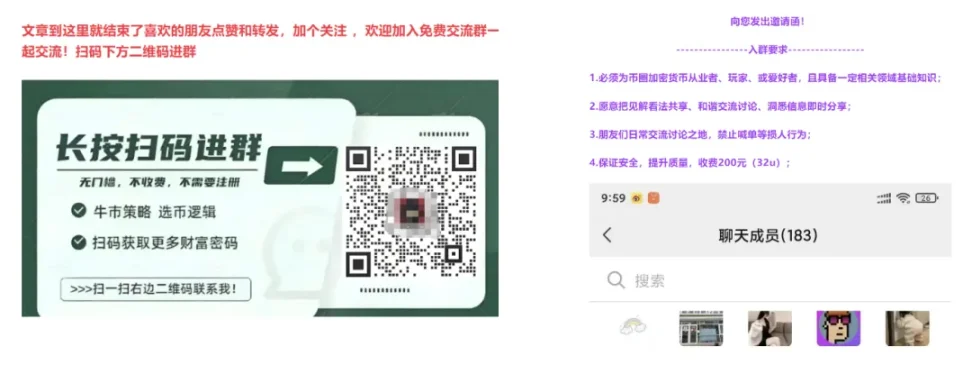
Image source: Crypto community traffic diversion screenshot
Notably, investment advice or trading signal-based Web3.0 communities often choose platforms with access restrictions or review mechanisms, charging fees for membership. Some communities collect membership fees in RMB, while others accept payment in cryptocurrencies such as USDT.
(2) Revenue Models
Sustained operation of a community requires cost coverage or revenue generation—after all, running on passion alone applies only to a small number of pioneers. Therefore, choosing a viable revenue model is essential for long-term sustainability. Common models include:
Collaboration with Projects
As natural sources of private traffic, some Web3.0 communities partner with crypto projects by providing educational content, promotional support, or co-hosting events in exchange for compensation or reciprocal resources.
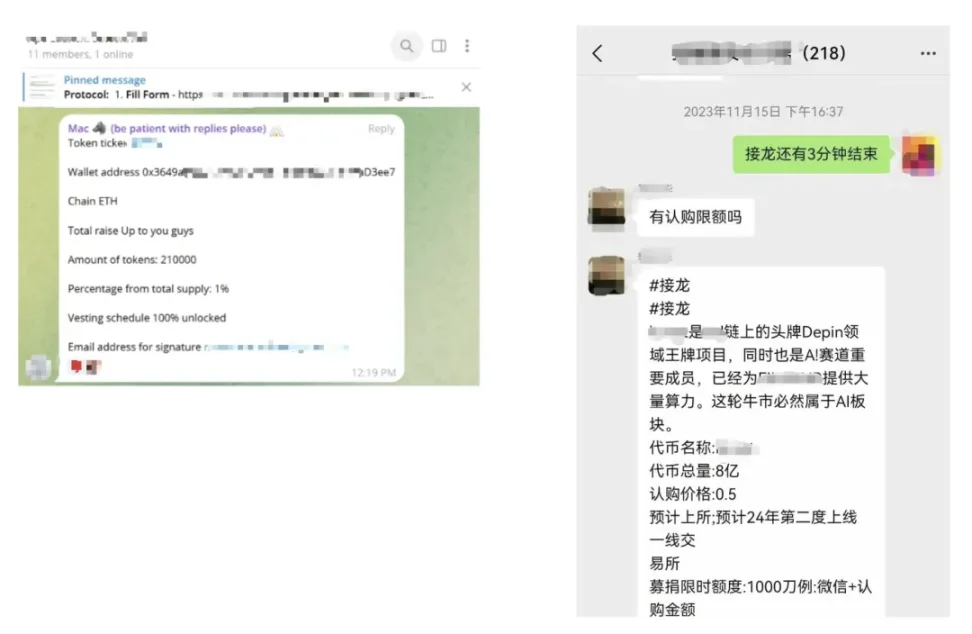
Image source: Selected community content screenshots
Paid Courses
Some Web3.0 communities offer paid guidance and courses related to cryptocurrency, including translated premium content, investment advice, and analyses of tokens or projects.
(3) Community Engagement
As users join the community, operators need strategies to manage interactions. On one hand, they must determine what type of content will engage users, boost activity, and guide community sentiment.
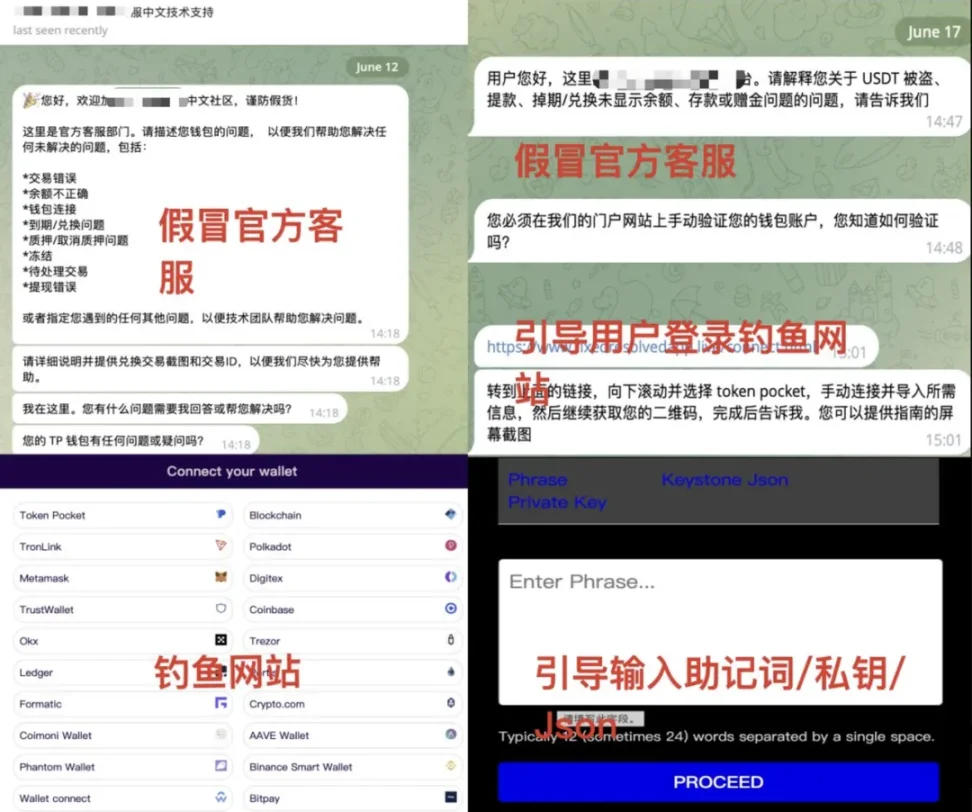
Image source: Security warning from a project team on X
On the other hand, operators must monitor for scam or advertising messages. For instance, in many pre-token launch communities, phishing links often appear, luring users with fake airdrop offers. If not promptly removed, such links can lead to financial losses for users—and potentially hold community managers liable for damages.
How to Operate a Web3.0 Community Compliantly?
Given the multiple stages involved in operating a Web3.0 community, ManQin Law Firm highlights several critical compliance points that operators and managers should pay special attention to:
(1) Platform Setup
When establishing a Web3 community, platform selection is crucial. Some countries impose strict regulations on the crypto industry. Operators must comprehensively assess regulatory policies, user profiles, and platform rules, paying close attention to user access controls and geographic targeting to determine target audiences and appropriate platforms.
Secondly, operators need to decide on their payment model: accepting RMB or cryptocurrency? Under Chinese regulations, paid communities are generally seen as forming service contracts between operator and user—where users pay for valuable information and guidance. In disputes, courts typically apply contract law principles to resolve conflicts. However, using cryptocurrency for settlement may present practical challenges in judicial proceedings, primarily because, under Chinese regulation, cryptocurrencies do not have legal tender status or legal equivalence to fiat currency.
Moreover, when collecting fees, operators should conduct KYC (Know Your Customer) procedures. China’s anti-money laundering oversight is increasingly stringent. Whether receiving RMB or cryptocurrency, if operators unknowingly receive illicit funds or tainted USDT, their bank or exchange accounts could be frozen, and they might face criminal liability for offenses such as concealing criminal proceeds ("masking concealment" crimes) or aiding information network criminal activities ("helping crime" charges).
(2) Revenue Model Compliance
Regarding revenue models, if income comes from collaborations with projects, operators must scrutinize both the legitimacy of the project and its promotion methods.
Particularly concerning promotion methods, some communities use multi-tier referral models. That is, the community operator promotes a project and earns rewards when User A participates; User A then refers others, and the operator earns additional commissions from those downstream referrals—creating a layered referral structure.
Under Chinese criminal law, if such reward structures exceed three tiers, they may constitute the crime of organizing or leading pyramid schemes. There are precedents in judicial practice. For example, in case (2023) Shaanxi 01 Criminal Final No. 368, the defendant promoted a cryptocurrency project via WeChat groups, induced others to purchase digital assets, structured participants into 14 hierarchical levels, and used recruitment numbers as the basis for rewards—ultimately being convicted of organizing and leading a pyramid scheme.
Therefore, during collaboration with projects, community operators must carefully design referral commission structures. Any model exceeding three commission layers risks being classified as a pyramid scheme, exposing operators to criminal liability.
(3) Content Management
Community operators bear certain editorial responsibilities for content posted within the group. However, given the large number of users with diverse identities and backgrounds, individually verifying each member’s authenticity is impractical. Thus, in daily management, operators should fulfill the following duties:
-
Timely review: Implement shift-based moderation to monitor text content and immediately remove suspicious posts;
-
Access control: Utilize tools available on international platforms to filter and automatically block or delete messages containing suspicious keywords or URLs;
-
Repeated warnings: Continuously alert members about potential risks through recurring announcements and reminders.
For example, OTC traders ("U merchants") frequently appear in Web3.0 communities. If operators fail to exercise due diligence or allow discussions about U merchants and cryptocurrency trading, they could become entangled in legal issues—especially if users later encounter fraud or get involved in criminal cases related to such transactions.
Conclusion
Whether in overseas markets or domestically, Web3.0 communities have proliferated widely. Yet not every community maintains adequate compliance safeguards. As regulatory frameworks around Web3.0 become clearer across jurisdictions, who can say when community operators might become enforcement targets? At minimum, the Hong Kong SFC has already begun tightening scrutiny on unlicensed investment advisory groups.
Join TechFlow official community to stay tuned
Telegram:https://t.me/TechFlowDaily
X (Twitter):https://x.com/TechFlowPost
X (Twitter) EN:https://x.com/BlockFlow_News









