
How Does Cathie Wood View Crypto? ARK's 2023/4 Big Ideas Disruptive Innovation Report
TechFlow Selected TechFlow Selected
How Does Cathie Wood View Crypto? ARK's 2023/4 Big Ideas Disruptive Innovation Report
This article extracts and organizes content related to cryptocurrency and blockchain from two research reports dated April 2023, presenting a view of crypto from the perspective of Wall Street funds.
 Navigating Web3 tides with focused insights
Author: Will Wang
At the beginning of 2024, Cathie Wood, the Wall Street investment manager famously known as "ARK" or "the woman who bets on disruption," released her ARK team’s “Big Ideas 2024” report. This report covers global “disruptive innovation” areas and is highly regarded as a key reference for technology entrepreneurs and investors worldwide.
This article extracts and organizes content related to cryptocurrency and blockchain from ARK's 2023 and 2024 research reports, presenting a view of crypto through the lens of a Wall Street fund.
From this perspective, we can see how public blockchains may transform money, finance, and the internet; how smart contracts/DeFi offer real-world solutions; and how digital wallets, when combined with crypto/blockchain payments, could significantly accelerate value creation.
1. Convergence of Five Technologies Leading the Next Revolution
ARK believes that the convergence of disruptive technologies will define development over the next decade, potentially triggering macroeconomic changes deeper than those brought by the first and second industrial revolutions.
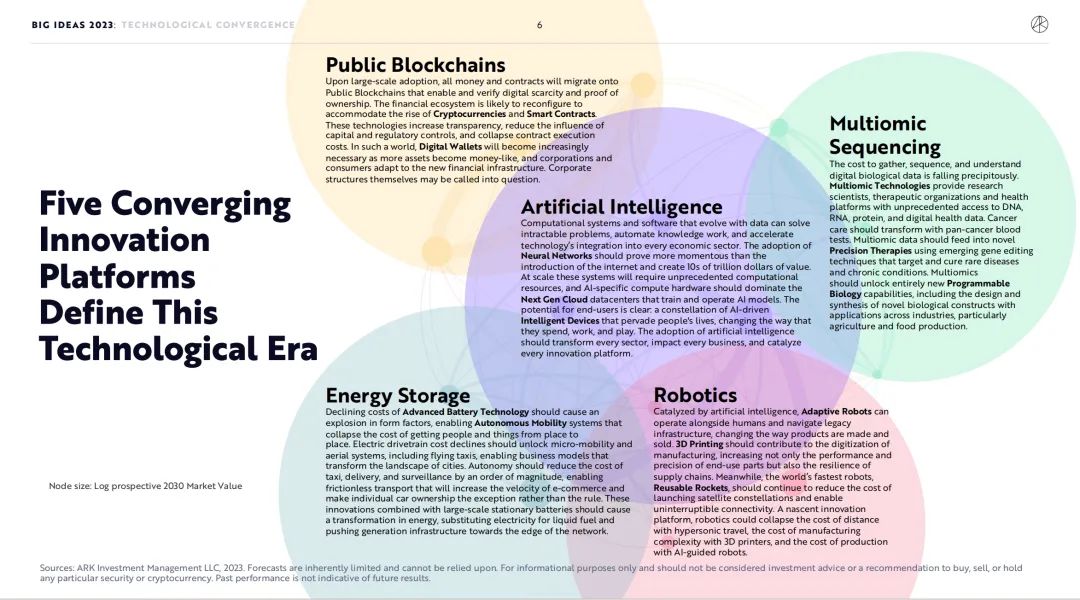
Artificial intelligence (AI), public blockchains, multi-omics sequencing, energy storage, and robotics—these five major technological platforms are converging and will reshape global economic activity. Economic growth could accelerate from an average of 3% over the past 125 years to 7% in the next seven years.
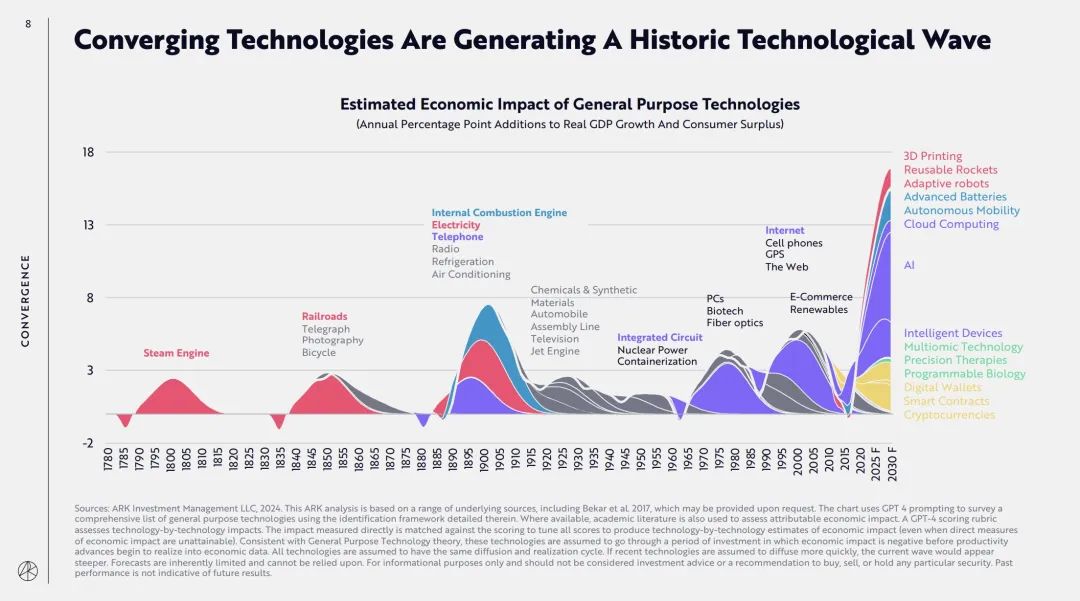
The chart below illustrates the economic impact of previous technological revolutions such as steam engines, railways, telegraphs, electricity, telephones, and radio. Today, the convergence of AI, public blockchains, multi-omics sequencing, energy storage, and robotics may have an even greater impact.
As one of the five core technologies, once widely adopted, public blockchains will migrate all currencies and contracts onto decentralized networks, enabling verification of digital rights and proof of ownership. The financial ecosystem may reconfigure itself to accommodate the rise of cryptocurrencies and smart contracts/decentralized finance (DeFi).
These technologies enhance transparency, reduce the influence of capital and regulatory control, and lower contract execution costs. In such a world, as more assets become monetized/tokenized, businesses and consumers will gradually adapt to new financial infrastructure. Digital wallets—the carriers of these assets—will become increasingly important. Traditional corporate governance structures will also face challenges.
2. Transformations Enabled by Public Blockchains
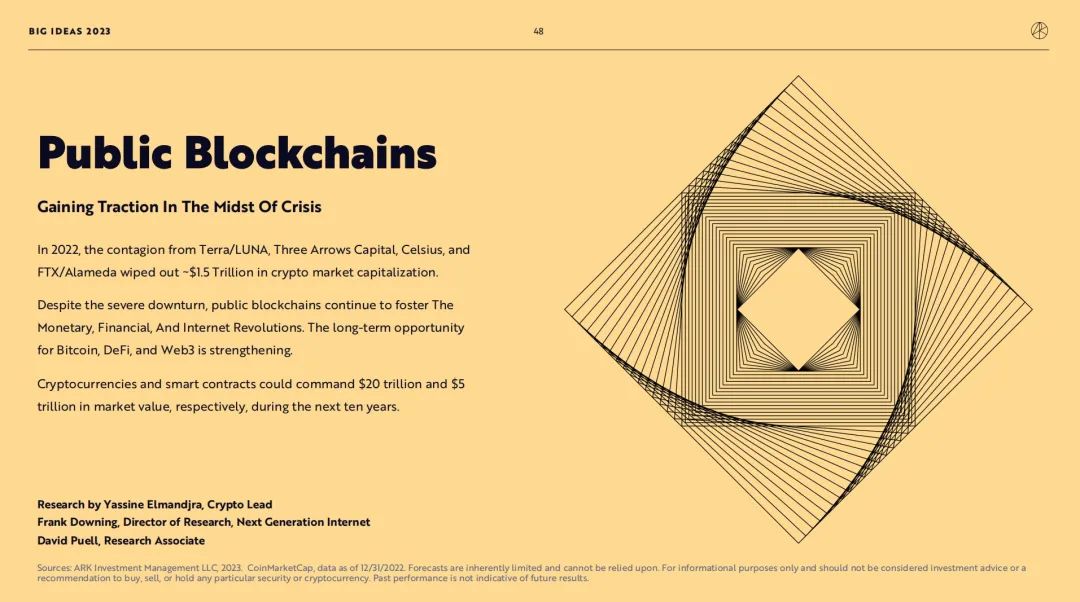
The concept of public blockchains was emphasized in ARK’s 2023 report. Despite the turmoil in the crypto industry in 2022, public blockchains continue to drive transformation in money, finance, and the internet. Long-term opportunities in Bitcoin, DeFi, and Web3 are strengthening. Over the next decade, the market cap of cryptocurrencies and smart contracts could reach $20 trillion and $5 trillion respectively.
2.1 Transformation of Money (The Money Revolution)
Public blockchains enable coordination of value and ownership transfer outside government and centralized institutional control, driving a shift from centralized, sovereign-based monetary systems toward global, decentralized, non-sovereign ones.
Existing problems: Centralized monetary systems fail to provide strong guarantees for the global economy:
1) 4 billion people live under authoritarian regimes;
2) Over 2 billion people suffer double-digit inflation;
3) Over 1 billion lack access to traditional payment and transfer apps;
4) Over 1 billion rely on remittances.
The transformative force primarily comes from cryptocurrencies like Bitcoin:
1) Bitcoin ensures independent property rights through cryptography and self-custody;
2) Bitcoin is inflation-resistant. Its supply is mathematically fixed and predictable—currently at 19 million BTC, capped at 21 million;
3) Bitcoin is censorship-resistant. Transaction entry requires only possession of a private key;
4) Bitcoin is auditable and transparent.
2.2 Transformation of Finance (The Financial Revolution)
Public blockchains can rebuild a decentralized financial infrastructure (DeFi) outside the traditional system, meeting unmet needs and solving persistent issues.
Existing problems:
1) Over 2 billion lack basic banking services including accounts and credit;
2) Opacity in financial systems has led to repeated crises;
3) Counterparty risk from traditional institutions often leads to single points of failure; centralized decision-making enables rampant rent-seeking.
The transformative force mainly comes from newly built DeFi infrastructure:
1) DeFi eliminates traditional intermediaries—smart contracts execute automatically without trusted third parties;
2) DeFi is global—financial services deployed on open protocols are accessible to anyone with internet access for custody, trading, and lending;
3) DeFi is interoperable—services are open-source and composable, enabling rapid innovation and experimentation;
4) DeFi is auditable and transparent—users manage their own risks; collateral and cash flows are recorded on ledgers and open to scrutiny.
2.3 Transformation of the Internet (The Internet Revolution)
Public blockchains help individuals reclaim sovereignty over identity, reputation, and data beyond traditional corporations and big tech companies, shifting ownership from corporate to personal control.
Existing problems:
1) Current internet giants profit by exploiting and monetizing user data;
2) Digital identities and reputations across platforms are not interoperable;
3) Centralized gatekeepers control information discovery and subjectively moderate content and communication.
The transformative force primarily comes from Web3’s value economy:
1) Web3 emphasizes individual sovereignty and introduces the concept of personal digital property rights;
2) Web3 relies on protocols, not platforms. Decentralized protocols support distributed data management and open access, limiting central aggregators’ control;
3) Web3 introduces new business models by embedding economic systems into ecosystems, allowing users to monetize and participate in network development;
4) Web3 merges consumption and investment. As economies digitize, consumer behavior evolves, giving rise to new business models centered around buying, owning, and using.
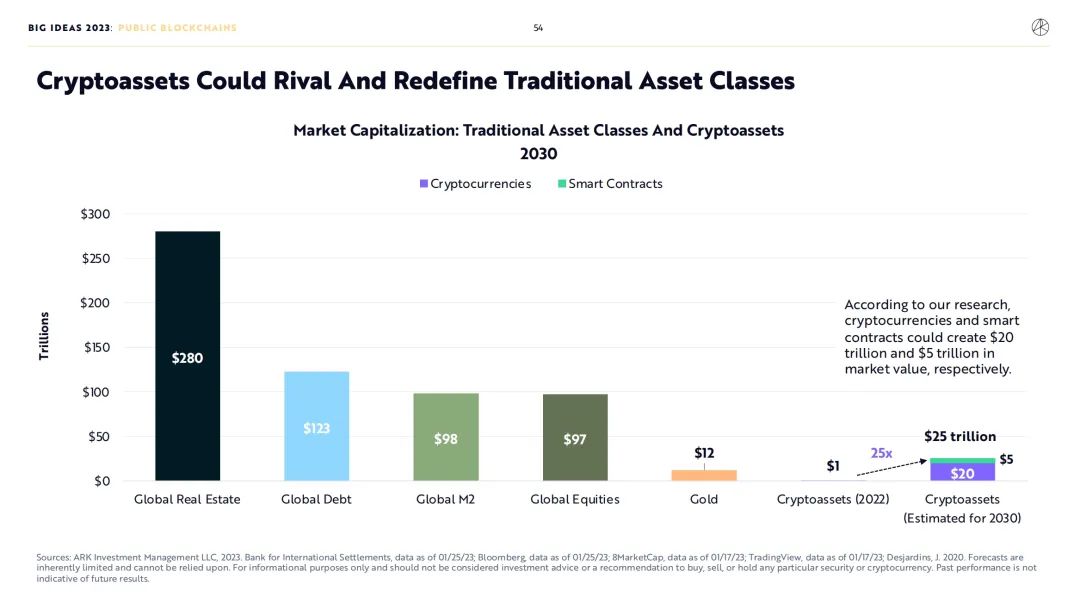
This integration of Bitcoin/crypto networks, DeFi, and Web3 via public blockchains will further redefine traditional assets, potentially reaching a combined market value of $25 trillion by 2030 ($20 trillion in crypto assets and $5 trillion in smart contract/DeFi protocols).
3. Smart Contracts—Driving the Financial and Internet Revolutions
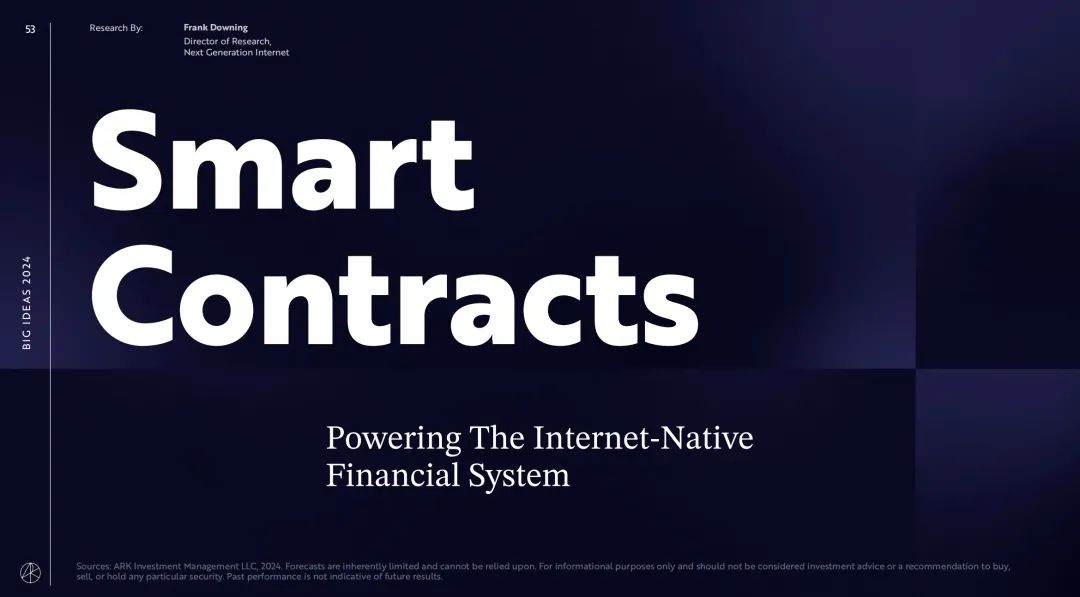
After the catastrophic failures of centralized crypto institutions in 2022/2023, smart contracts deployed on public blockchains offer a global, automated, and auditable alternative to traditional financial infrastructure.
Decentralization proves essential to maintaining the original value proposition of public blockchain infrastructure.
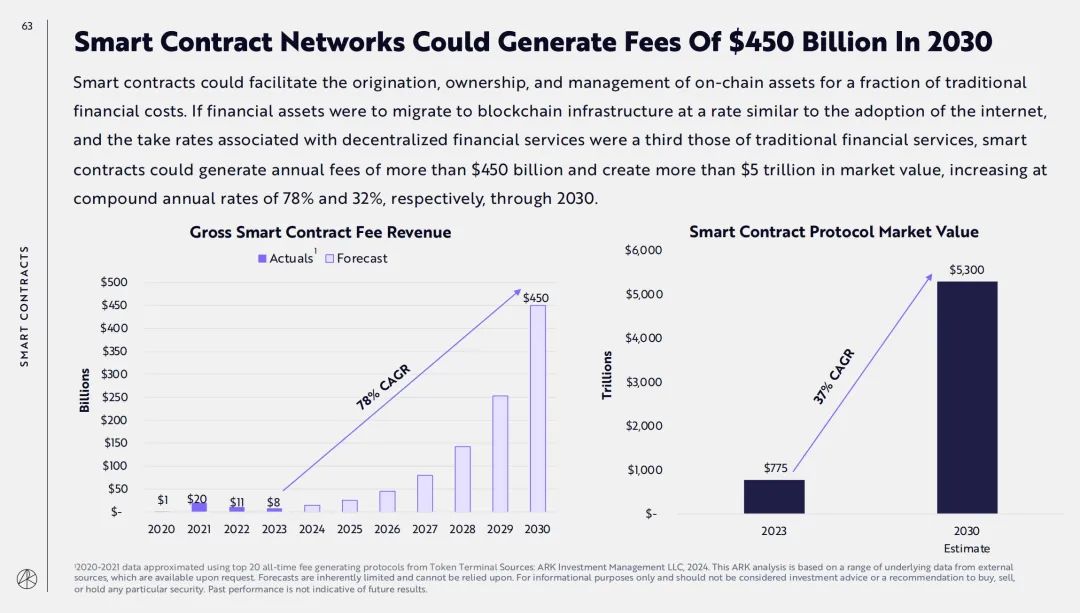
According to ARK research, as tokenized financial assets gain attention (e.g., stablecoins, tokenized U.S. Treasuries), on-chain asset volumes have grown significantly. The market value related to decentralized applications is expected to grow at 32% annually—from $775 billion in 2023 to $5.2 trillion by 2030.
Key insights include:
3.1 Smart Contracts Are the Foundation of the Financial System for the Internet of Value
Still in early stages, smart contracts are powering a new, internet-native financial system. Multiple networks, led by Ethereum—the largest smart contract blockchain—are supporting on-chain activity and competing for market share.
3.2 Stablecoins Highlight the Value Proposition of Smart Contracts
Given hyperinflation in emerging markets and rising global instability, demand for dollar-denominated digital channels via stablecoins is surging. Over the past three years, the number of daily active stablecoin addresses globally has grown 93% annually—from 171,000 to 1.2 million. In 2023, stablecoin transaction volume exceeded that of Mastercard.
3.3 Traditional Financial Assets Are Moving On-Chain
Tokenization enables asset management on public blockchains, making it easier to verify, track, trade, and leverage funds compared to traditional financial markets. In 2023, tokenized Treasury funds grew more than sevenfold to $850 million. Early funds launched on the Stellar blockchain, but Ethereum became the largest market for tokenized Treasuries in 2023.
3.4 Developers Improved Protocols During the Bear Market
In response to the 2022 crisis and its aftermath, core developers proposed technical roadmaps and strengthened protocols to prepare for the next bull cycle. Ethereum successfully transitioned to Proof-of-Stake (PoS) consensus, while Solana set new records for continuous uptime.
3.5 Layer 2s Expand Transactions in the Ethereum Ecosystem
Since early 2021, over 20 Layer 2 projects have launched, enabling Ethereum to scale average daily transactions fourfold at lower fees. Despite early success, most Layer 2s remain centrally controlled, creating complexity for users and developers.
3.6 Lower Costs Enhance On-Chain User Stickiness
As transaction costs decline, on-chain engagement—measured by the ratio of daily active addresses (DAU) to monthly active addresses (MAU)—has increased.
3.7 Monolithic Chains Like Solana Offer Alternative Vertical Scaling
Smart contract networks involve design trade-offs. By prioritizing base-layer decentralization, the Ethereum ecosystem becomes more complex at scale. By contrast, Solana prioritizes scalability within a single layer, maintaining a simpler architecture for users and app developers, achieving阶段性 success.
3.8 Smart Contracts Can Reduce Financial Service Costs
Global financial asset value surged from $140 trillion in 2000 to $510 trillion in 2020—a result of global economic growth, increased financialization, and rising equity multiples. As financial asset values rise, so do operational costs of the global financial system. The financial services industry generates $20 trillion in annual revenue—3.3% of total financial asset value. Smart contracts could drastically reduce this drag on the global economy.
3.9 By 2030, Smart Contract Networks Could Generate $450 Billion in Fees
Smart contracts can facilitate the creation, ownership, and management of on-chain assets at far lower cost than traditional finance. If tokenized assets migrate to blockchain infrastructure at a pace similar to internet adoption, and DeFi-related service fees are one-third of traditional financial services, smart contracts could generate over $450 billion in annual fees—creating over $5 trillion in market value by 2030, growing at CAGRs of 78% and 32% respectively.
4. Digital Wallets—Eliminating Traditional Financial Intermediaries
As mentioned in ARK’s 2023 report, public blockchains can transform existing systems across money, finance, and the internet. One key solution is smart contracts/DeFi. But who will hold these tokenized assets on public blockchains? That brings us to digital wallets.
Interestingly, ARK’s definition of digital wallets does not equate directly to crypto wallets based on public blockchains, although some of the growth drivers discussed below can be achieved precisely through crypto/blockchain payment methods.
From ARK’s perspective, digital wallets use blockchain-like mechanisms to reform traditional payment systems (both internal and external), reducing costs and improving efficiency (closed-loop payment ecosystems), while leveraging the massive consumer/merchant benefits already accumulated by digital wallets—thus increasing value for the companies behind them.
4.1 Overview of the Current State of Digital Wallets
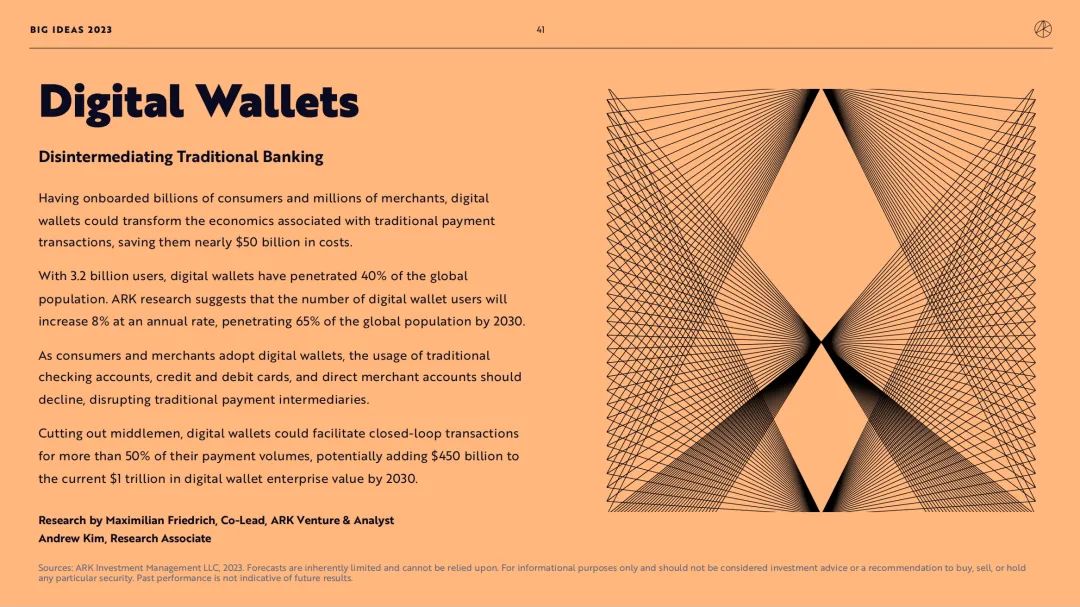
Digital wallets have attracted billions of consumers and millions of merchants—currently serving 3.2 billion users, covering 40% of the global population. As consumers and merchants increasingly adopt digital wallets, usage of traditional checking accounts, credit cards, debit cards, and direct merchant accounts will decline.
Digital wallets can fundamentally change the nature of traditional payment transactions—by eliminating financial intermediaries.
Digital wallets can enable closed-loop processing for over 50% of payment transactions, saving nearly $50 billion in market-wide costs. By 2030, the enterprise value of digital wallet companies could increase by an additional $450 billion from current levels. ARK research indicates digital wallet users will grow at 8% annually, reaching 65% of the global population by 2030.
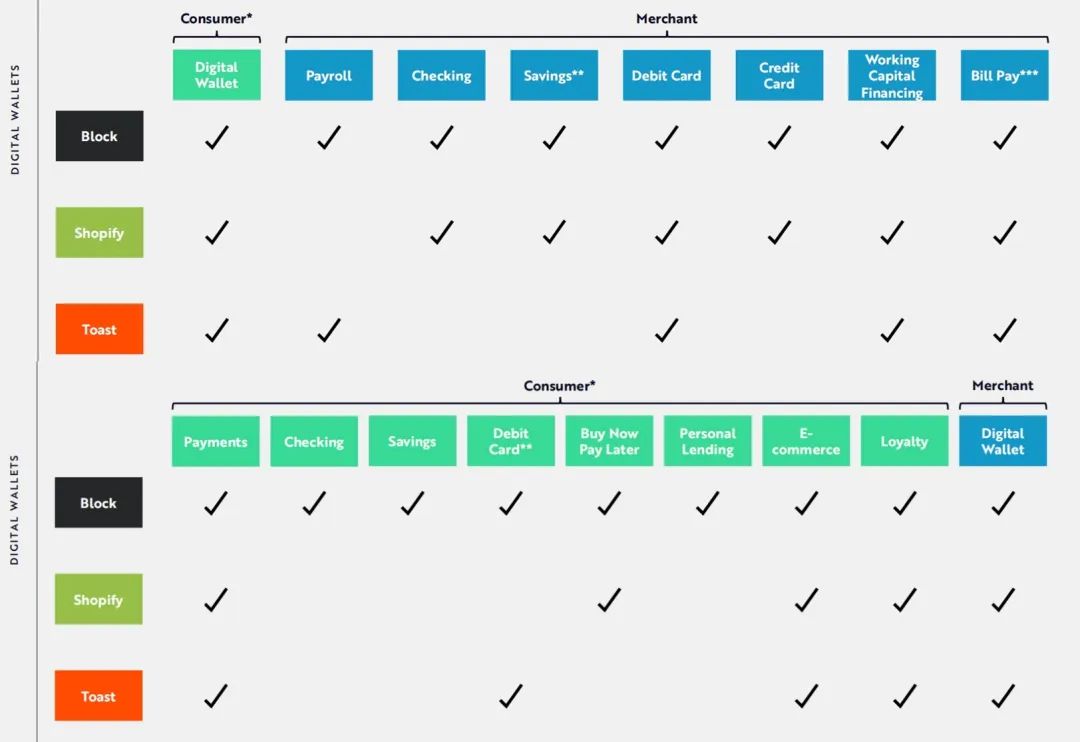
Vertical software applications are tailored solutions for specific industries—such as Block, Shopify, and Toast. Leading vertical software platforms are rapidly expanding financial services on both consumer and merchant sides. Through two-way networks, these platforms can enable closed-loop transactions—from consumers to merchants, merchants to employees, and employees back to merchants.
ARK believes digital wallets integrated into these platforms will create fully closed payment ecosystems. According to ARK research, over the next seven years, revenue from closed-loop consumer payments, commercial banking, and employee wages/payments will grow 22%-33% annually—from $7 billion in 2023 to $27–50 billion by 2030.
Key insights include:
4.2 Consolidating Business Financial Services, Expanding Consumer Offerings
Block, Shopify, and Toast are highly attractive platforms likely to position digital wallets as the core connecting consumers, merchants, and employees. Beyond supporting core operations, they use digital wallets to partner with banks and fintech firms—or activate their own banking licenses—to eliminate inefficient traditional financial services used across countless merchant interactions.
Meanwhile, vertical software apps not only build robust backend business networks but also front-end consumer networks via digital wallets. By expanding both networks simultaneously, these platforms are closing loops and becoming operating systems for bilateral ecosystems.
4.3 Closed-Loop Payment Ecosystems
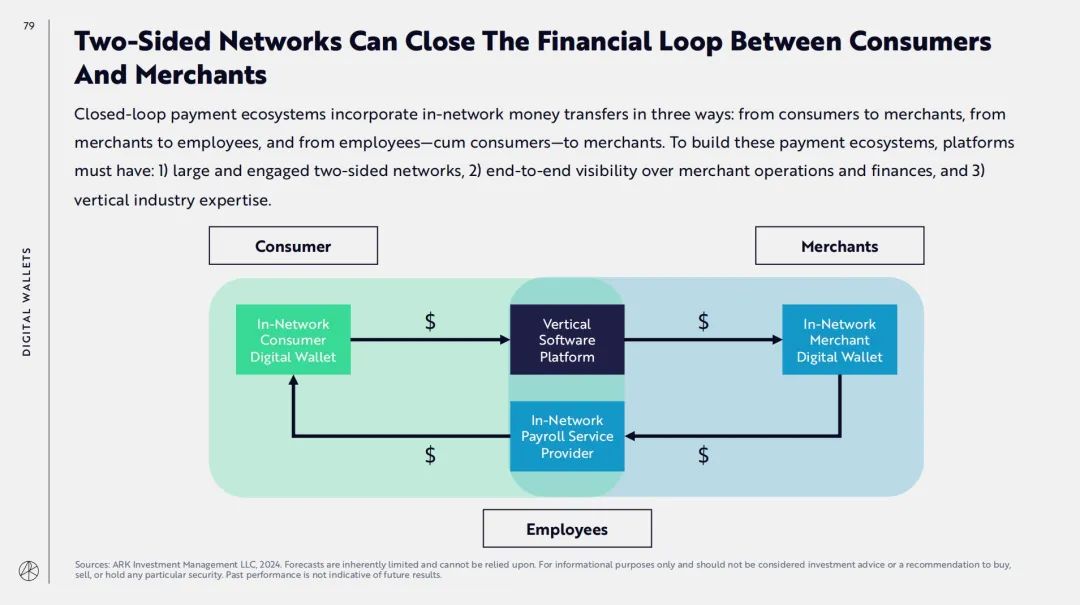
Closed-loop payment ecosystems integrate three types of intra-network fund transfers: from consumers to merchants, merchants to employees, and employees/consumers back to merchants. To build such ecosystems, platforms must have: 1) a large, active two-sided network; 2) end-to-end visibility into merchant operations and finances; and 3) deep vertical industry expertise.
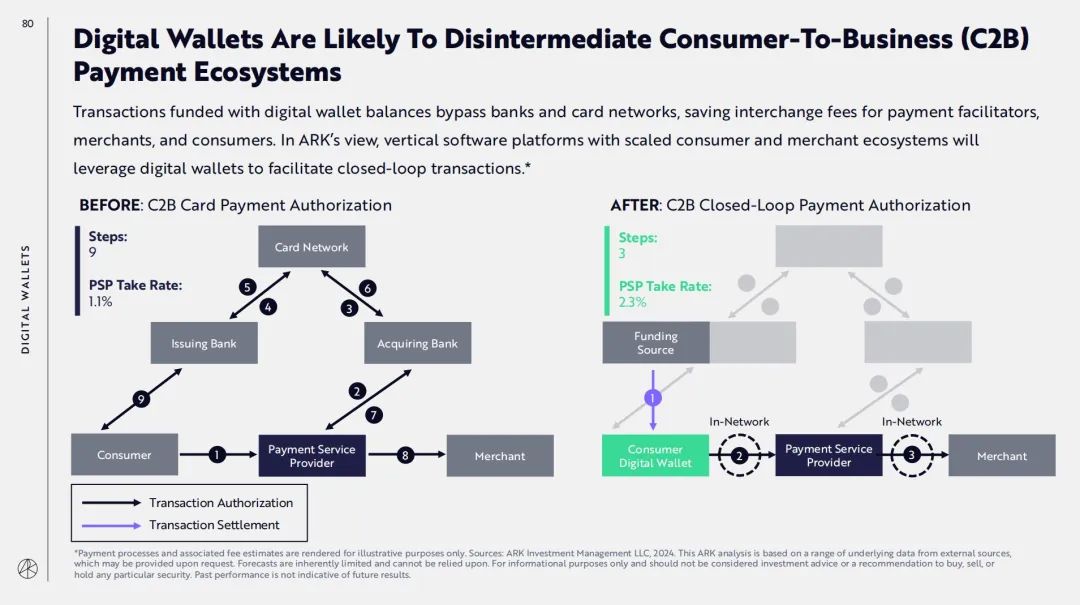
Transactions using digital wallet balances bypass banks and card networks, saving fees for payment providers, merchants, and consumers. In ARK’s view, vertical software platforms with scaled consumer and merchant ecosystems are best positioned to leverage digital wallets for closed-loop transactions and maximize gains.
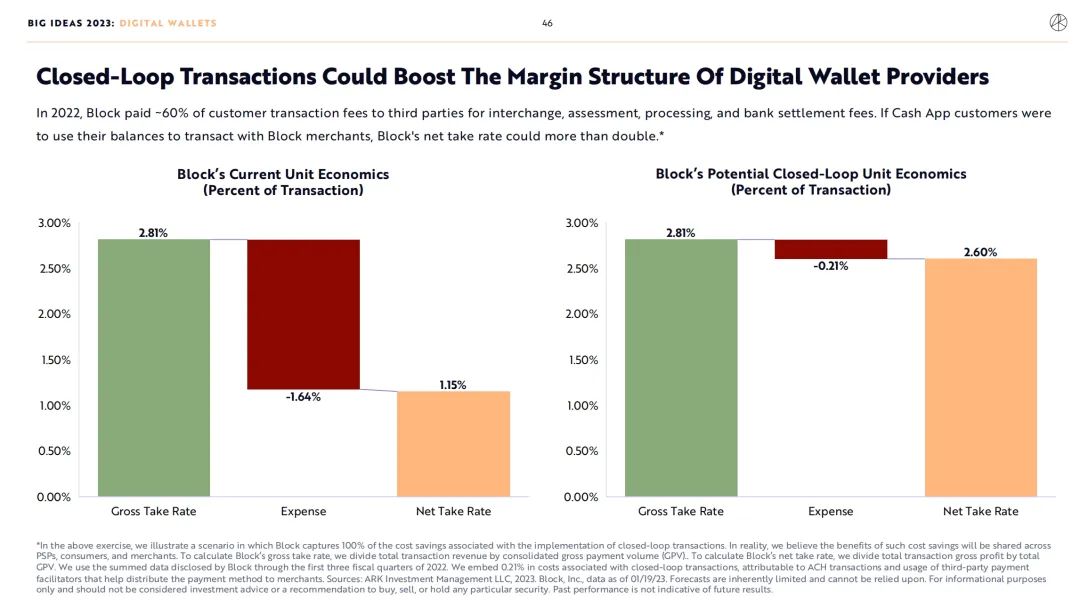
In 2022, Block paid about 60% of customer transaction fees to third parties for exchange, clearing, processing, and settlement. If Block’s front-end consumer app Cash App allows users to transact with Block merchants using their wallet balance, Block’s net take rate could more than double.
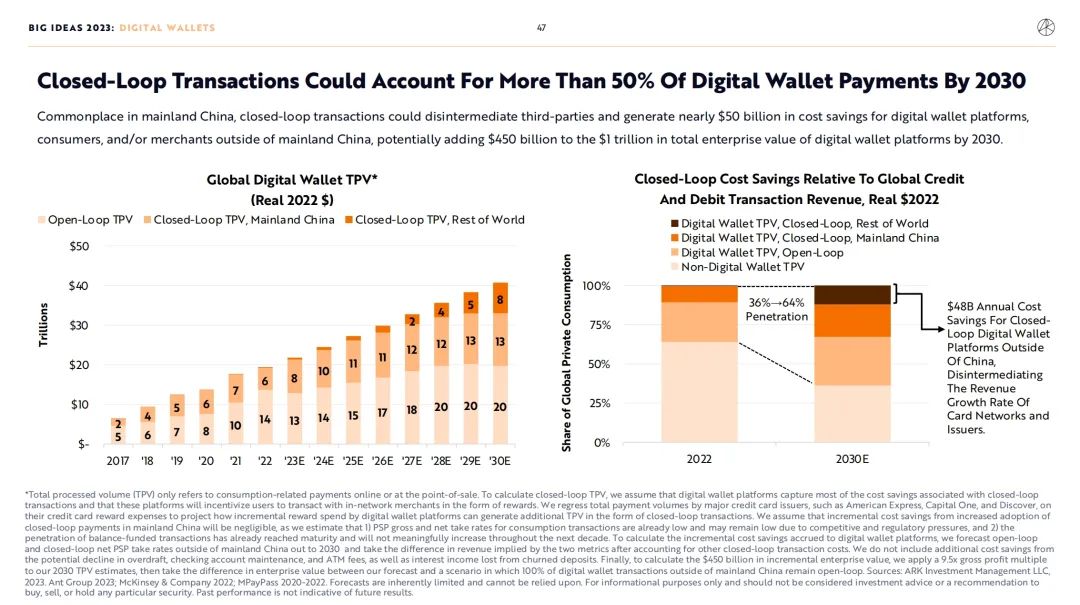
Closed-loop payment ecosystems are common in mainland China, where they eliminate third-party intermediation. Outside China, such models could save nearly $50 billion in costs for digital wallet platforms, consumers, and/or merchants. By 2030, the total enterprise value of digital wallet platforms could increase by $450 billion.
Moreover, in the 2024 report, ARK specifically added merchant financial services and employee wages/payments to the scope of closed-loop payment ecosystems.
According to ARK research, over the next seven years, core revenues of Block, Square, Shopify, and Toast will grow 22% annually—from $7 billion in 2023 to $27 billion by 2030. By 2030, closed-loop businesses—including consumer payments, merchant financial services, and employee wages/payments—could generate an additional $23 billion in revenue, raising annual growth from 22% to 33%.
5. Final Thoughts
Although the public blockchain industry may not experience a defining “iPhone moment” like AI, its impact on transforming traditional architectures—especially legacy financial systems—will be profound, albeit along a long-term trajectory.
This transformation will begin with financial payments, and the most direct and value-capturing beneficiaries will be payment companies.
From the perspective of Wall Street funds, digital wallet companies that already command massive consumer and merchant bases stand to gain tremendous value growth when enhanced with crypto/blockchain payment capabilities—whether through stablecoins or internal settlement networks—ultimately reflected in their stock prices.
This path offers the most immediate value capture for Wall Street funds and represents the clearest route for crypto to achieve mass adoption via the off-chain world—a strategy evident in PayPal’s launch of its stablecoin on Solana.
Join TechFlow official community to stay tuned
Telegram:https://t.me/TechFlowDaily
X (Twitter):https://x.com/TechFlowPost
X (Twitter) EN:https://x.com/BlockFlow_News
 0xWillmfer